
Productivity Best in category 1 results Multilingual Communication AI Tool

Popular AI tools in the Multilingual Communication field of Productivity include Doctranslate Live, etc., helping you quickly improve efficiency.

Doctranslate Live

Doctranslate Live

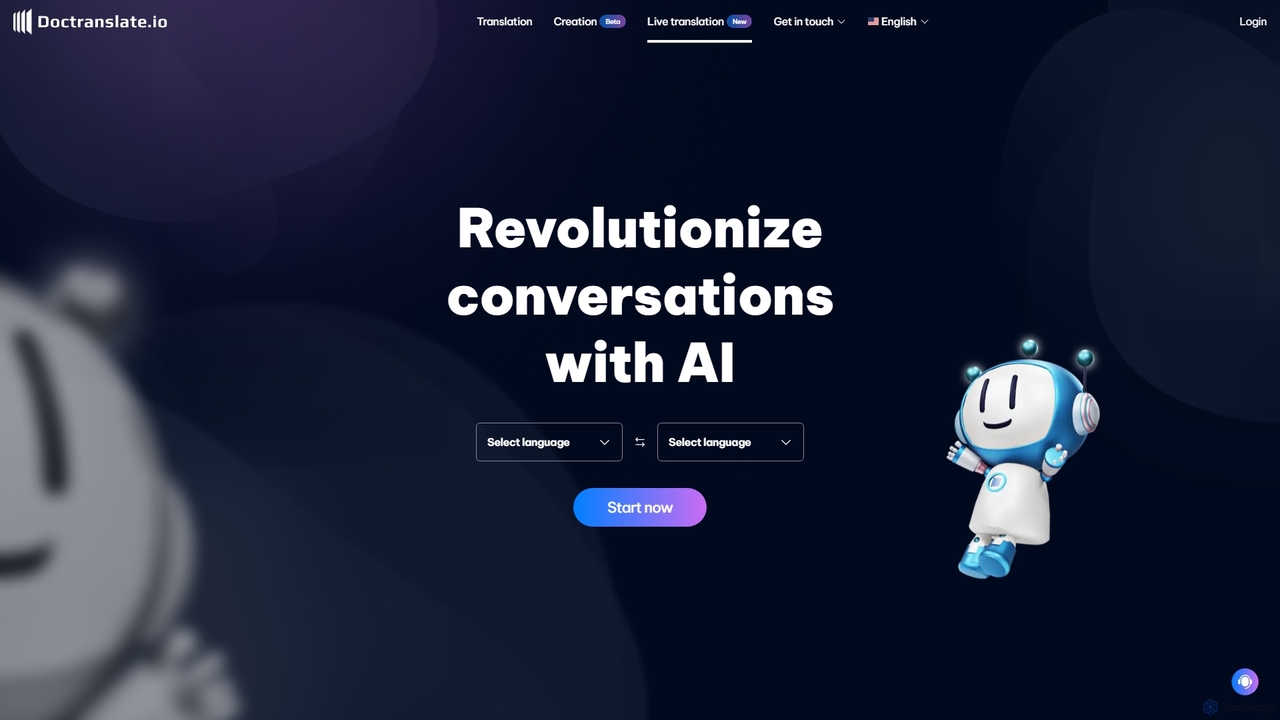
Doctranslate Live is an AI-powered platform designed to revolutionize multilingual communication through real-time simultaneous interpretation and document translation. …

2.8K

About Multilingual Communication

Multilingual Communication tools are AI-powered platforms designed to break down language barriers in real-time conversations and text-based interactions. Leveraging advanced Natural Language Processing (NLP) and machine translation, these tools provide instant, context-aware translation across various channels like chat, email, and video conferencing. They are essential for global teams and international businesses, enabling seamless collaboration and expanding customer reach without language constraints. Unlike simple translators, these integrated solutions often preserve conversational flow and support industry-specific terminology, directly enhancing productivity in a globalized environment.

Core Features

  • Real-time Translation: Instantly translates spoken and written language during live conversations, meetings, and chats.
  • Cross-Platform Integration: Seamlessly works within existing communication tools like Slack, Microsoft Teams, Zendesk, and email clients.
  • Terminology Management: Allows for the creation of custom glossaries to ensure consistent and accurate translation of specific industry or company jargon.
  • Voice & Speech Recognition: Accurately transcribes spoken words into text for translation, often supporting multiple accents and dialects.
  • Multi-Language Channels: Creates communication spaces where users can write in their native language and others can read it in theirs.

Use Cases

These tools are invaluable for multinational corporations with distributed teams, enabling clear communication in daily stand-ups and project discussions. They are also critical for customer support departments serving a global audience, allowing agents to assist customers in their native language. Additionally, sales and marketing teams use them to engage international clients and localize campaigns effectively.

How to Choose

When selecting a Multilingual Communication tool, consider the accuracy and number of supported languages. Evaluate its integration capabilities with your current software stack. Assess the quality of its real-time speech translation and transcription. Finally, review its security protocols and data privacy policies, especially if handling sensitive business information.

Multilingual CommunicationUse Cases

1

Real-time Translation for Global Team Meetings

A project manager leading a distributed team across Japan, Germany, and the United States uses a multilingual communication tool integrated into their video conferencing platform. During a weekly sync, the tool provides real-time translated captions for each speaker. This allows the Japanese engineer to follow the German designer's feedback instantly, and the US-based manager can understand technical questions without delay. The result is a reduction in meeting time by 25% and a significant decrease in misunderstandings, ensuring all team members are aligned on project goals regardless of their native language.

2

Automated Multilingual Customer Support

A global e-commerce company integrates a multilingual communication tool with its customer support ticketing system (e.g., Zendesk). When a customer from Spain submits a support ticket in Spanish, the tool automatically translates it into English for the support agent. The agent writes their reply in English, and the tool translates it back into Spanish before sending. This process eliminates the need for a dedicated Spanish-speaking support team, reduces response times by 40%, and improves customer satisfaction by providing support in the user's preferred language.

3

Cross-Language Collaboration in Slack/Teams

A software development team with members in Brazil and Poland uses a multilingual plugin within their Slack workspace. A Polish developer can post a technical update in a shared channel in Polish. The Brazilian quality assurance engineer instantly sees the message translated into Portuguese. They can then reply in Portuguese, and the Polish developer sees the response translated back into Polish. This maintains a single, unified channel for project communication, preventing information silos and ensuring context is preserved across all discussions without anyone needing to leave their primary communication app.

4

Live Event Interpretation for Webinars

A marketing agency hosts a webinar for a global audience. They use a multilingual communication tool that provides live audio interpretation. Attendees can select their preferred language from a dropdown menu and hear a real-time, AI-generated audio translation of the presenter's speech. The tool also generates translated subtitles simultaneously. This makes the event accessible to a much wider, non-English-speaking audience, significantly increasing registration numbers and global lead generation without the high cost of hiring multiple human interpreters.

5

Localizing Internal Training Materials

An HR department in a multinational corporation needs to roll out a new compliance training program to all employees worldwide. Instead of manually translating training documents and videos into 10+ languages, they use a multilingual communication platform. The platform can ingest the English source material, automatically translate the text, generate translated voice-overs for videos, and create localized versions of interactive quizzes. This reduces the localization project timeline from months to days and ensures consistent messaging across all regions.

6

Facilitating International Sales Negotiations

A sales executive is negotiating a high-value contract with a potential client in Korea. They use a real-time speech translation device or app during their video calls. The executive speaks in English, and the client hears a clear, low-latency Korean translation. The client's responses in Korean are instantly translated back into English. This allows for a natural, fluid negotiation process, helping to build rapport and trust by communicating directly, rather than relying on a slower, third-party human interpreter. The tool's glossary feature ensures that key product names and technical terms are translated correctly every time.

Multilingual CommunicationFrequently Asked Questions