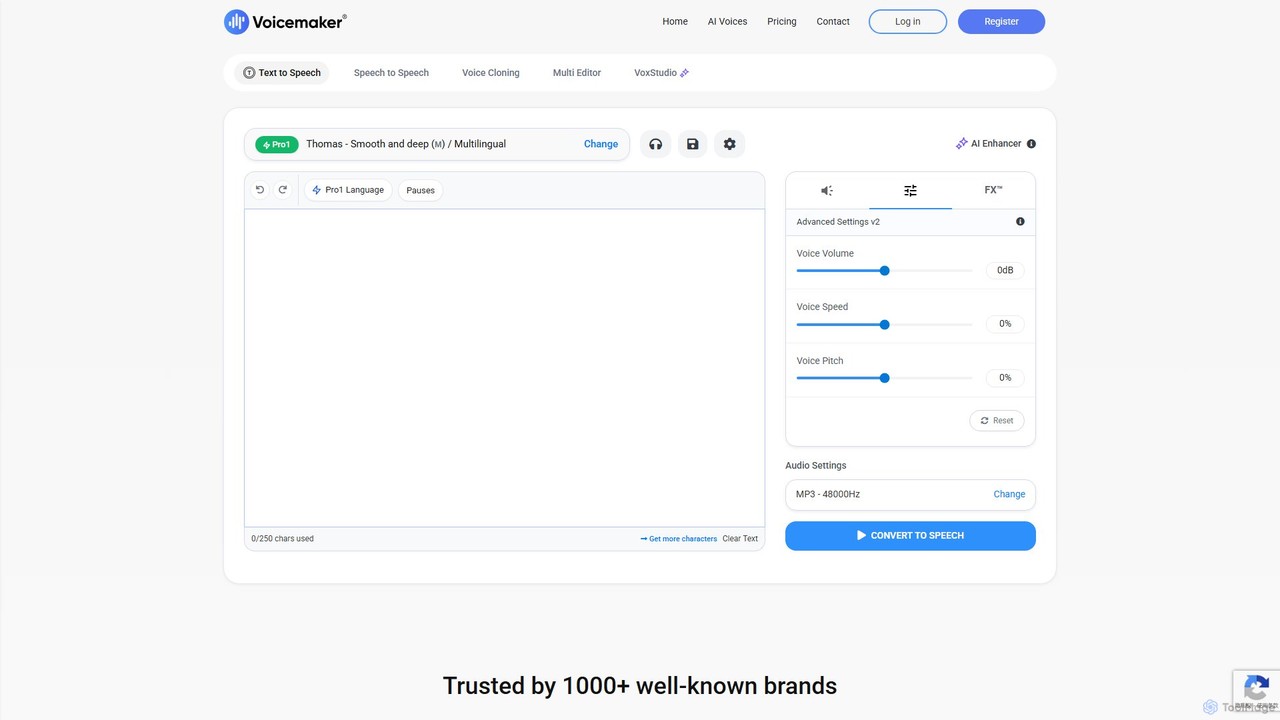
Narration AI tools are specialized applications that transform written text into natural-sounding spoken audio, enhancing content accessibility and engagement. Leveraging advanced text-to-speech (TTS) technology, these tools offer a range of customizable voices, tones, and emotional expressions, making them invaluable for diverse media projects. They streamline the creation of high-quality voiceovers, significantly boosting productivity for content creators, educators, and businesses by automating a traditionally time-consuming process.
Core Features
- Text-to-Speech (TTS) Conversion: Converts written text into lifelike spoken audio using AI models.
- Voice Customization: Adjusts pitch, speed, volume, and selects from a variety of male, female, and child voices.
- Emotional & Stylistic Expression: Infuses speech with specific emotions (e.g., happy, sad, angry) or speaking styles (e.g., newscaster, conversational).
- Multi-language & Accent Support: Generates narration in numerous languages and regional accents to reach global audiences.
- SSML Integration: Supports Speech Synthesis Markup Language for fine-grained control over pronunciation, pauses, and emphasis.
Use Cases
These tools are widely adopted across various sectors, from individual content creators producing YouTube videos and podcasts to large enterprises developing e-learning modules and marketing campaigns. They are particularly useful for automating voiceover production, creating accessible content for visually impaired users, and localizing audio for international markets.
How to Choose
When selecting a Narration AI tool, prioritize naturalness and quality of voices, ensuring they align with your brand or content tone. Evaluate the breadth of language and accent support, customization options for emotion and style, and integration capabilities with existing workflows. Consider pricing models and the ease of use, especially for teams without specialized audio production skills.