Hellometer
Hellometer is an AI-powered platform that uses computer vision to analyze camera feeds in quick-service restaurants (QSRs). It …
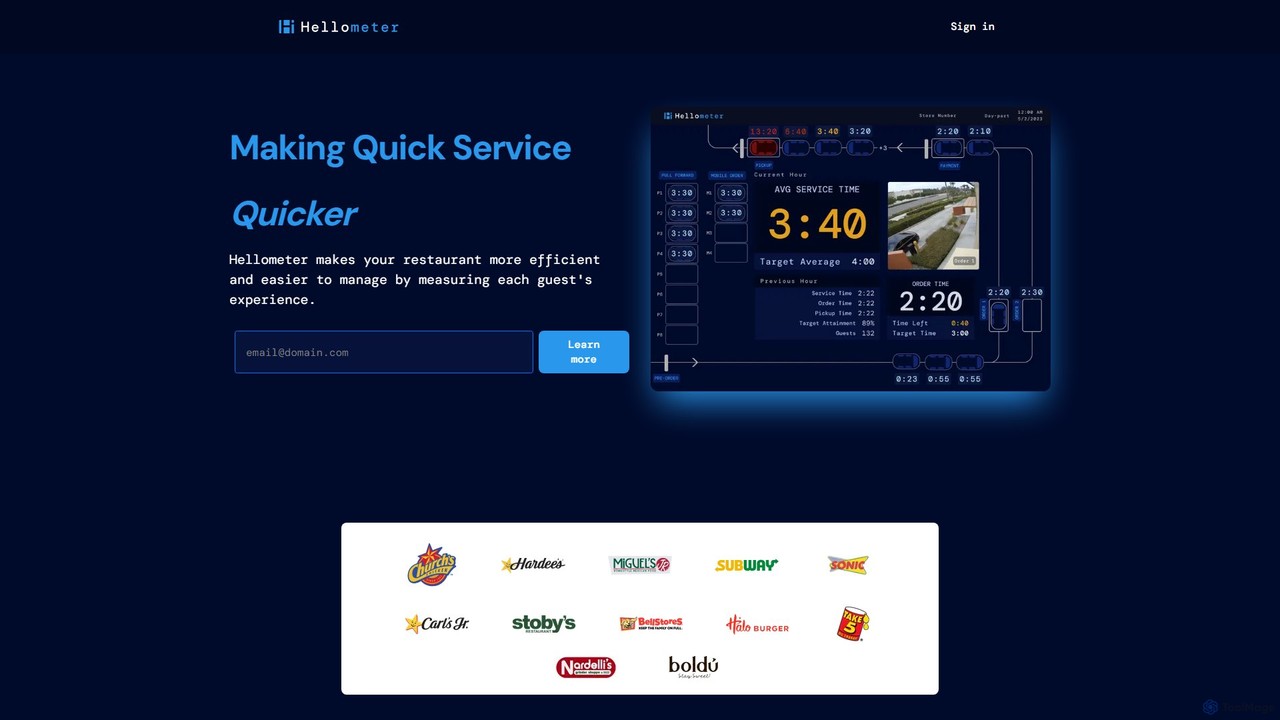
Hellometer is an AI-powered platform that uses computer vision to analyze camera feeds in quick-service restaurants (QSRs). It provides a drive-thru and dining room timer, helping businesses improve service speed, enhance guest experience, and increase revenue by optimizing operations.
About Operations Analytics
Operations Analytics tools are AI-powered solutions designed to analyze operational data, providing actionable insights to optimize business processes. These tools leverage machine learning and statistical models to identify patterns, predict outcomes, and enhance decision-making across various operational functions. They help organizations streamline workflows, reduce costs, improve efficiency, and drive strategic growth within the broader context of productivity enhancement.
Core Features
- Performance Monitoring: Real-time tracking and visualization of key operational metrics and KPIs.
- Predictive Modeling: Forecasting future operational trends, demand, and potential bottlenecks using AI algorithms.
- Root Cause Analysis: Automatically identifying underlying causes of operational inefficiencies or failures.
- Process Optimization: Recommending data-driven improvements to workflows, resource allocation, and supply chain management.
- Anomaly Detection: Flagging unusual patterns or deviations in operational data that may indicate issues or opportunities.
Applicable Scenarios
Operations Analytics is crucial for manufacturing, logistics, retail, and service industries. Operations managers use these tools to monitor production lines, optimize inventory, and manage supply chains. Service delivery teams apply them to analyze customer service metrics and improve response times, while IT operations leverage them for system performance and incident management.
How to Choose
When selecting Operations Analytics tools, consider the breadth of data integration capabilities, the accuracy and explainability of AI models, and the ease of customization for specific operational needs. Evaluate the real-time processing power, the clarity of visualization dashboards, and the vendor's support for implementation and ongoing optimization. Scalability for future data volumes and user growth is also a critical factor.

Operations AnalyticsUse Cases
Optimizing Supply Chain Logistics
Logistics managers use Operations Analytics to analyze shipping routes, warehouse efficiency, and delivery times. By integrating data from various touchpoints, AI models predict potential delays, identify optimal inventory levels, and suggest more efficient transportation methods, leading to reduced shipping costs and faster delivery to customers.
Enhancing Manufacturing Production Efficiency
Production supervisors deploy Operations Analytics to monitor machine performance, detect anomalies in real-time, and predict equipment failures. This proactive approach minimizes downtime, optimizes resource allocation, and improves overall production output, ensuring higher quality products and reduced operational expenses.
Improving Customer Service Operations
Customer service directors utilize these tools to analyze call center data, ticket resolution times, and agent performance. AI identifies common customer pain points and inefficient processes, enabling targeted training for agents and optimization of service workflows, resulting in higher customer satisfaction and lower operational costs.
Streamlining IT Operations and System Performance
IT operations teams leverage Operations Analytics to monitor server health, network traffic, and application performance. The tools detect unusual activity or potential bottlenecks before they impact users, allowing for proactive maintenance and resource scaling, ensuring system stability and minimizing service disruptions.
Optimizing Retail Inventory Management
Retail operations managers use Operations Analytics to forecast demand, track stock levels across multiple locations, and identify slow-moving or fast-selling products. This data-driven approach helps optimize purchasing decisions, reduce overstocking or stockouts, and improve overall sales and profitability.
Managing Field Service and Maintenance Schedules
Field service companies employ Operations Analytics to optimize technician dispatch, route planning, and maintenance schedules. By analyzing historical data and real-time conditions, the tools ensure technicians are efficiently deployed, parts are available, and preventive maintenance is scheduled effectively, improving service delivery and asset uptime.