ToolMage
Sign in

Best 1 Personal Optimization AI tools for Productivity

Popular Personal Optimization AI tools in Productivity include Arvo, helping you work more efficiently.

Arvo
Free

Arvo

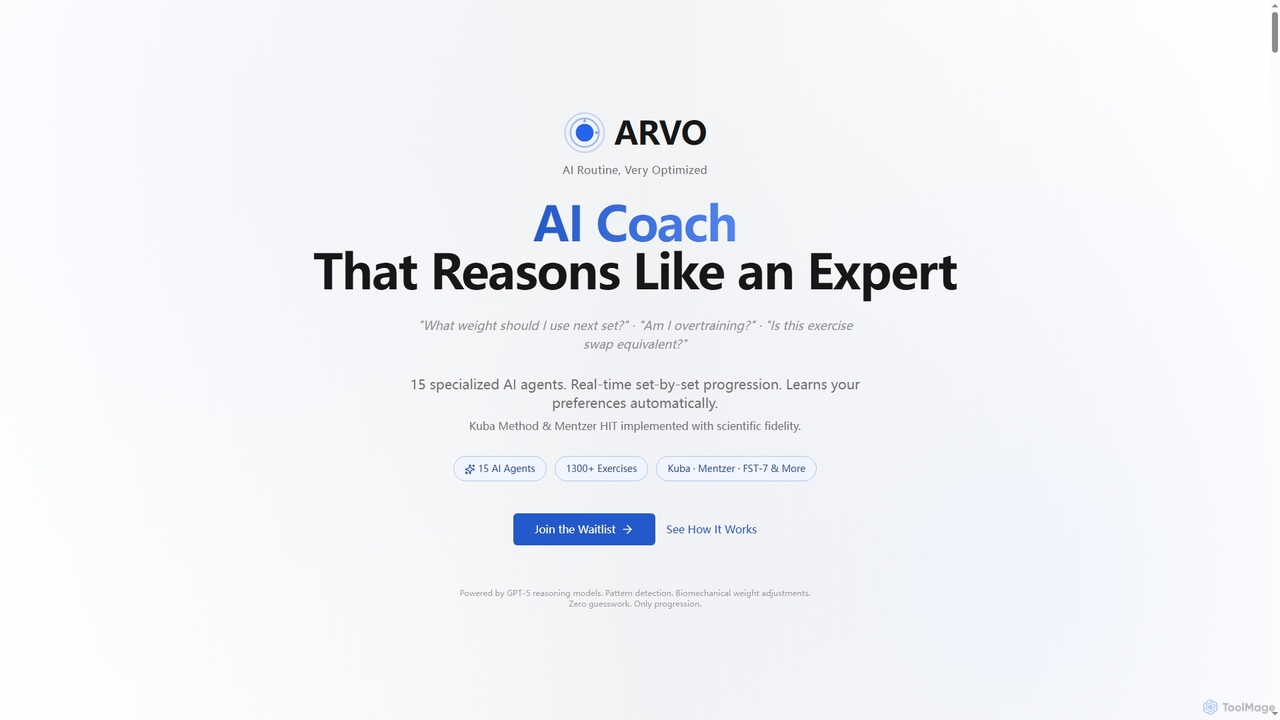
Arvo is an advanced AI-powered smart workout tracker and coach that leverages GPT-5 reasoning to provide real-time, set-by-set guidance, adaptive training plans, and biomechanical adjustments. It learns from your performance and notes to optimize progression, prevent overtraining, and ensure scientific fidelity to established training methodologies.

Workout Tracking
Visits 77.8KFavorites 179Likes 176

About Personal Optimization

Personal Optimization tools are AI-powered applications designed to enhance individual well-being, efficiency, and personal growth. These tools leverage machine learning and data analysis to understand user patterns, offering personalized insights and recommendations. They help individuals manage time, improve habits, boost learning, and maintain mental clarity, extending productivity beyond professional tasks into daily life.

Core Features

  • Personalized Goal Setting: AI assists in defining achievable personal goals and breaking them into actionable steps.
  • Habit Tracking & Coaching: Monitors daily routines and provides intelligent nudges or feedback to build positive habits.
  • Adaptive Learning Paths: Tailors educational content and study schedules based on individual learning styles and progress.
  • Mental Wellness Support: Offers AI-driven journaling, mood tracking, and guided meditation or cognitive behavioral therapy (CBT) exercises.
  • Time & Task Management: Optimizes daily schedules, prioritizes tasks, and identifies productivity bottlenecks based on user data.

Applicable Scenarios

Individuals seeking to improve their daily routines, students aiming for more effective study habits, or professionals looking to balance work-life and personal development can greatly benefit. For example, a busy entrepreneur might use these tools to manage their personal health goals alongside business tasks, or a lifelong learner could leverage AI to master new skills more efficiently.

How to Choose

When selecting Personal Optimization tools, consider the specific area you wish to improve (e.g., mental health, learning, habits). Evaluate the level of personalization offered, the data privacy policies, and the integration capabilities with other apps you use. User interface intuitiveness and the availability of expert-backed content are also crucial for long-term engagement.

Personal Optimization use cases

1

Building Consistent Fitness Habits

An individual aiming to improve physical health uses an AI personal optimization tool to set daily workout goals and track progress. The AI analyzes their activity levels, sleep patterns, and dietary input, then provides personalized recommendations for exercise routines and meal plans, along with gentle reminders to stay on track, fostering long-term adherence.

2

Mastering a New Language Efficiently

A student wants to learn Spanish for an upcoming trip. An AI personal optimization tool assesses their current proficiency, identifies weak areas, and creates an adaptive learning path. It schedules practice sessions, suggests relevant vocabulary and grammar exercises, and provides real-time feedback on pronunciation, accelerating their language acquisition.

3

Enhancing Focus and Reducing Digital Distractions

A remote worker struggles with maintaining focus during deep work sessions. They use an AI optimization tool that monitors their digital activity, identifies common distractions (e.g., social media, non-work apps), and offers personalized strategies like timed focus blocks, website blockers, and ambient soundscapes, helping them achieve sustained concentration.

4

Managing Personal Finances and Budgeting

An individual wants to gain better control over their spending and savings. An AI personal optimization tool connects to their bank accounts (with consent), categorizes transactions, and visualizes spending habits. It then provides proactive budgeting advice, identifies areas for potential savings, and helps set realistic financial goals, promoting fiscal responsibility.

5

Improving Sleep Quality and Energy Levels

Someone experiencing inconsistent sleep patterns utilizes an AI personal optimization app. The tool tracks their sleep cycles, analyzes environmental factors (e.g., light, sound), and logs daily activities. Based on this data, it suggests personalized interventions like optimal bedtime routines, relaxation techniques, or adjustments to their sleep environment, leading to improved rest.

6

Developing a Daily Mindfulness Practice

A person seeking to reduce stress and improve mental clarity integrates an AI personal optimization tool into their routine. The AI offers guided meditation sessions tailored to their mood, prompts for reflective journaling, and breathing exercises. It tracks their emotional state over time, providing insights into triggers and progress in their mindfulness journey.

Personal Optimization FAQ

What are Personal Optimization tools?

Personal Optimization tools are AI-powered applications designed to enhance individual well-being, efficiency, and personal growth. They leverage machine learning to provide personalized insights, recommendations, and support across various aspects of life, from habit formation and learning to mental wellness and time management.

How do AI Personal Optimization tools differ from general productivity apps?

While general productivity apps focus primarily on work-related tasks and efficiency, AI Personal Optimization tools extend beyond professional tasks to encompass holistic individual development. They use AI to understand personal patterns, offer tailored advice for habits, learning, mental health, and overall well-being, rather than just task management.

What are the key benefits of using AI for personal optimization?

AI for personal optimization offers several key benefits, including highly personalized recommendations based on individual data, adaptive learning paths that adjust to your progress, and proactive nudges for habit formation. It helps identify hidden patterns, saves time through automation, and provides objective, data-driven insights for continuous self-improvement.

How can I choose the best Personal Optimization tool for my needs?

To choose the best Personal Optimization tool, first identify your primary goal (e.g., fitness, learning, mental health). Then, evaluate tools based on their specific features, the depth of personalization, data privacy practices, and user interface. Consider if it integrates with other apps you use and if it offers a free trial to test its suitability.

Are Personal Optimization tools secure with my personal data?

Data security is a critical concern for Personal Optimization tools. Reputable tools employ robust encryption, adhere to privacy regulations like GDPR, and clearly outline their data handling policies. Always review a tool's privacy policy to understand how your personal data is collected, stored, and used before committing to its use.