ToolMage
Sign in

Best 5 Podcasting AI tools for Productivity

Popular Podcasting AI tools in Productivity include Outcast, Spacemake, shownotesgenerator, LaunchPod, and GoodListen, helping you work more efficiently.

Spacemake
Freemium

Spacemake

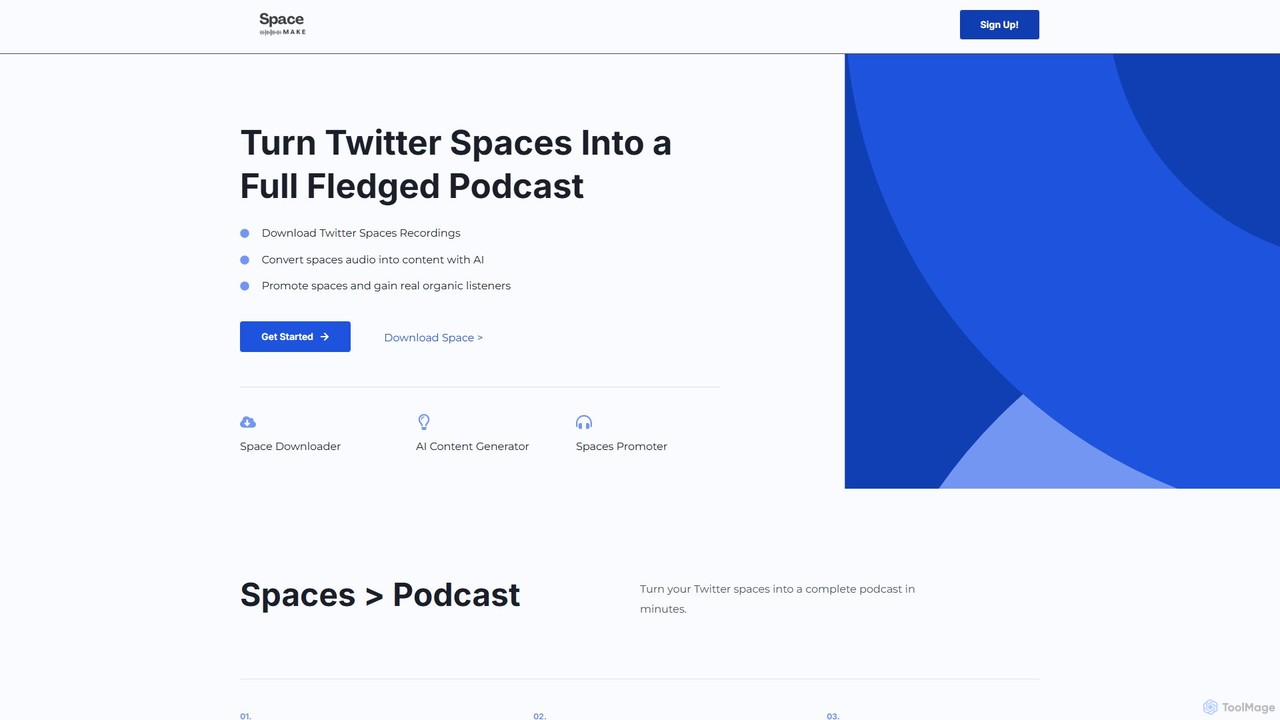
Spacemake is an AI-powered platform that transforms Twitter Spaces into full-fledged podcasts and various content formats. It allows users to download Spaces recordings, generate summaries, blog posts, and social media content with AI, and promote their Spaces to attract organic listeners. It's designed for creators and marketers to maximize their content's reach and save time.

Transcription
Visits 21.4KFavorites 168Likes 151
shownotesgenerator
Freemium

shownotesgenerator

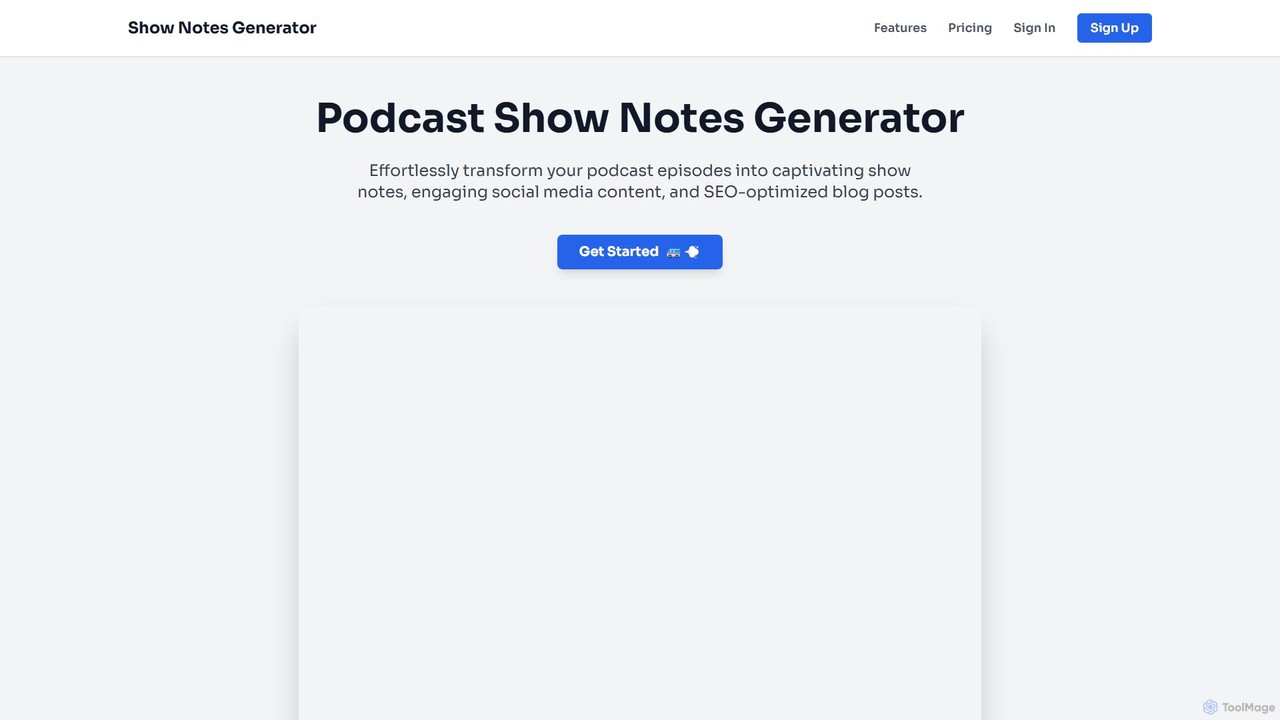
An AI-powered platform that transforms podcast audio into comprehensive show notes, SEO-optimized blog posts, engaging social media content, and email newsletters. It automates content repurposing for podcasters to save time and expand their reach.

Transcription
Visits 8.2KFavorites 83Likes 65
Outcast
Freemium

Outcast

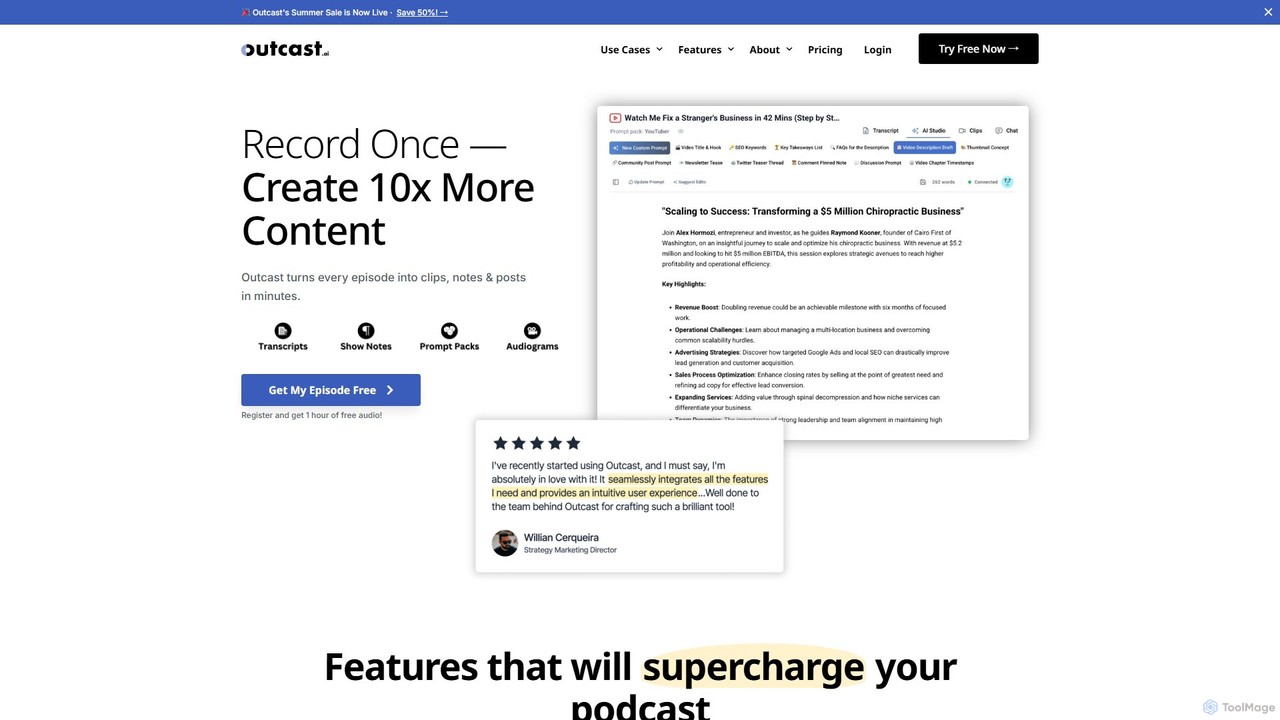
Outcast is an AI-powered platform for podcasters to repurpose content effortlessly. Record once and generate 10x more content, including social media clips, show notes, blog posts, and audiograms. It features an AI writer, a clip creator, and a chatbot to interact with your entire episode library, streamlining your content creation workflow and maximizing your reach.

Transcription
Visits 22.4KFavorites 122Likes 115
LaunchPod
Freemium

LaunchPod

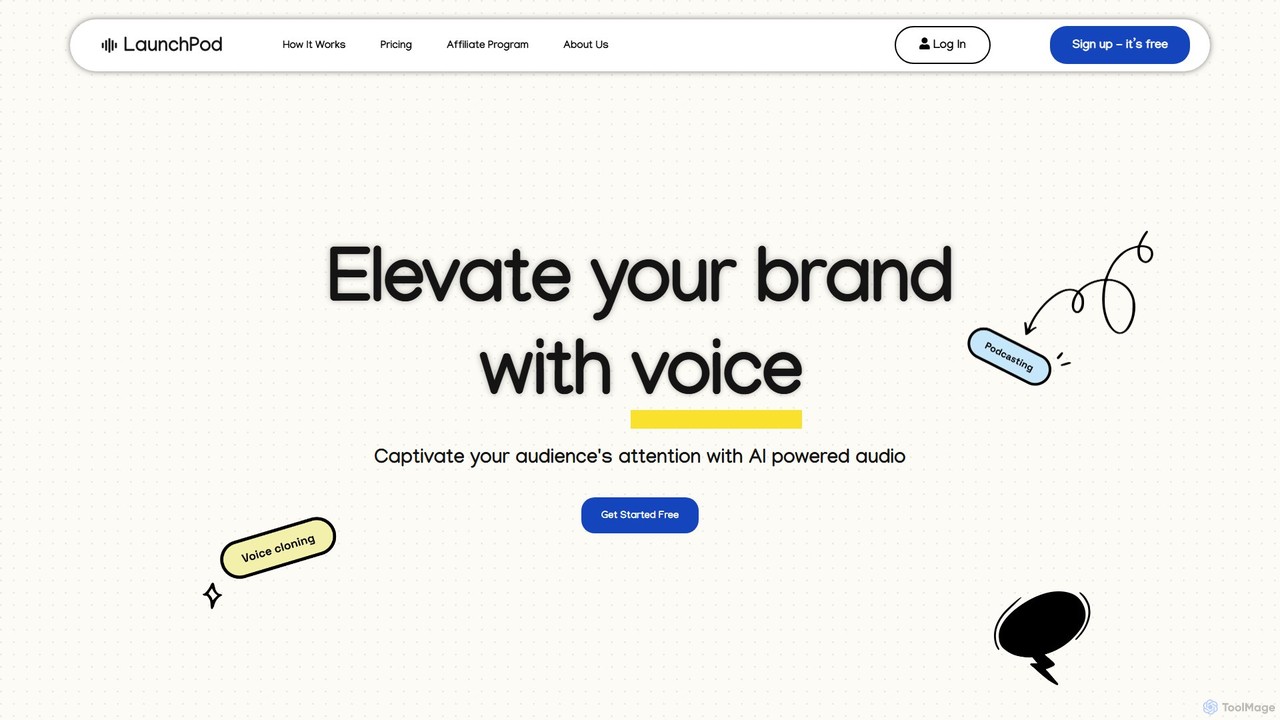
LaunchPod is an AI-powered audio content creation platform that effortlessly transforms text into high-quality podcasts, audioblogs, and audiobooks. It features a vast library of realistic voices, voice cloning, an AI script assistant, and direct distribution to major platforms like Spotify.

Text To Speech
Visits 4.9KFavorites 111Likes 118
GoodListen
Freemium

GoodListen

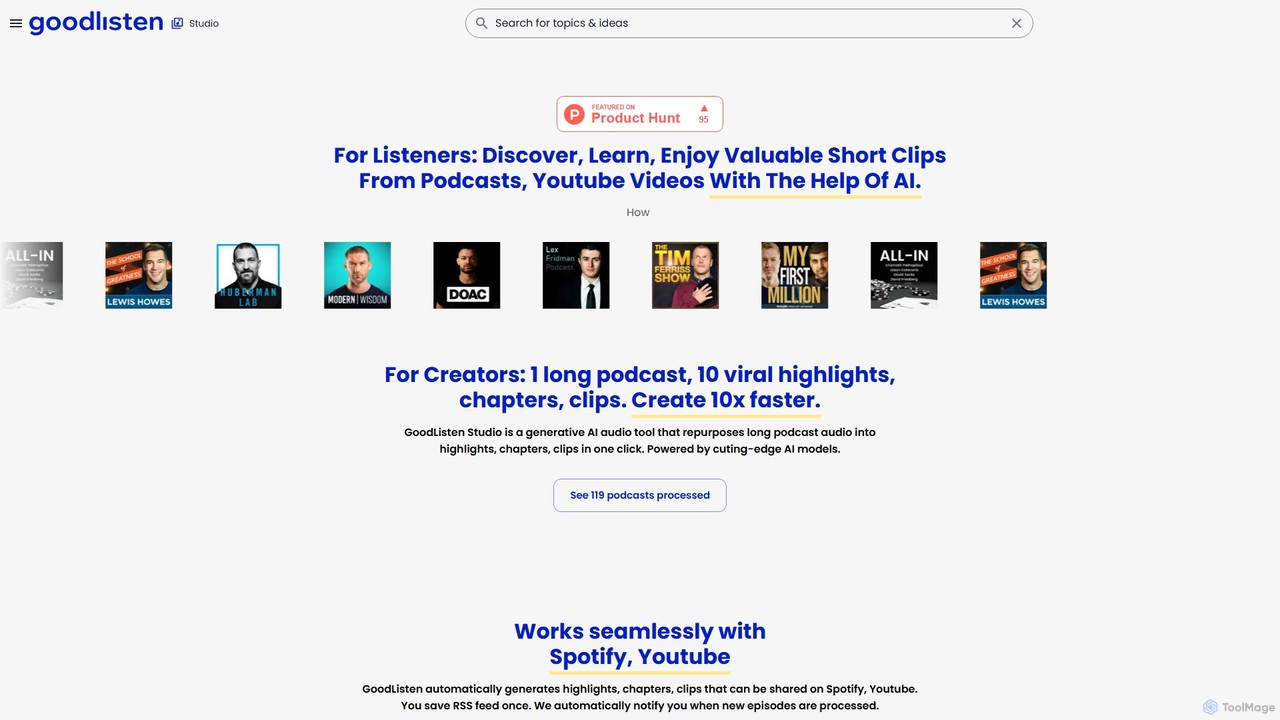
GoodListen is a generative AI platform for podcasters and listeners. It automatically repurposes long audio from podcasts and YouTube videos into shareable highlights, chapters, and short clips. This helps creators 10x their content output and allows listeners to discover and consume valuable information efficiently.

Audio Editing
Visits 4.9KFavorites 136Likes 131

About Podcasting

Podcasting AI tools are specialized applications that leverage artificial intelligence to streamline and enhance various stages of podcast production. These tools utilize advanced algorithms for audio processing, natural language understanding, and content generation, enabling creators to produce high-quality audio content more efficiently. They automate tasks from scriptwriting and voice generation to audio editing, transcription, and distribution, significantly reducing the time and effort required for podcast creation and management.

Core Features

  • AI Audio Enhancement: Automatically removes background noise, equalizes sound levels, and improves vocal clarity for professional-sounding audio.
  • Automated Transcription: Converts spoken audio into accurate text transcripts, facilitating show notes generation, content repurposing, and accessibility.
  • Script & Content Generation: Assists in brainstorming topics, generating episode outlines, or even drafting full scripts using AI-powered writing assistants.
  • Voice Cloning & Synthesis: Creates realistic AI voices for narration, character voices, or even cloning a host's voice for editing and corrections.
  • Smart Editing & Chaptering: Identifies filler words, silences, and key topics, allowing for quick edits and automatic chapter marker generation.

Use Cases

Podcasting AI tools are invaluable for independent creators, media companies, and businesses looking to establish a strong audio presence. They are used to accelerate content production, ensure consistent audio quality across episodes, and expand audience reach through multilingual content. These tools help podcasters focus more on creative storytelling and less on technical post-production.

How to Choose

When selecting Podcasting AI tools, consider the specific features you need, such as advanced audio editing, transcription accuracy, or content generation capabilities. Evaluate the ease of integration with your existing workflow, the pricing model, and the quality of AI output, especially for voice synthesis and audio enhancement. User-friendliness and support for multiple languages are also crucial factors.

Podcasting use cases

1

Automating Podcast Post-Production

Independent podcasters often spend hours on audio editing, noise reduction, and mastering. AI podcasting tools can automatically clean up audio, remove filler words, and balance sound levels, transforming raw recordings into polished episodes in minutes. This allows creators to focus on content development and audience engagement, drastically cutting down post-production time and ensuring professional audio quality without extensive technical expertise.

2

Generating Accurate Transcripts and Show Notes

Content creators and marketers need transcripts for accessibility, SEO, and repurposing content into blog posts or social media snippets. AI tools can automatically transcribe podcast episodes with high accuracy, then summarize key points and generate detailed show notes. This saves significant manual effort, improves content discoverability, and provides valuable text-based assets for wider distribution.

3

Creating Multilingual Podcast Episodes

Businesses and global content creators aim to reach diverse audiences beyond their primary language. Podcasting AI tools can translate episode audio into multiple languages using AI voice synthesis, creating localized versions without needing human voice actors for each language. This expands market reach, makes content accessible to a broader demographic, and opens new avenues for audience growth.

4

Enhancing Audio Quality for Remote Interviews

Podcasters frequently conduct interviews remotely, leading to inconsistent audio quality due to varying recording environments and equipment. AI audio enhancement tools can process individual tracks, removing echoes, background noise, and normalizing volume across all speakers. This ensures a consistent, high-fidelity listening experience for the audience, regardless of the original recording conditions.

5

Drafting Episode Scripts and Content Outlines

For podcasters who prefer scripted content or need help with brainstorming, AI writing assistants integrated into podcasting platforms can generate episode ideas, create detailed outlines, or even draft full scripts based on a given topic. This accelerates the pre-production phase, helps overcome creative blocks, and ensures a structured, coherent narrative for each episode.

6

Repurposing Podcast Content for Social Media

Marketers and content teams need to extract engaging snippets from long-form podcasts for promotion on social media platforms. AI tools can automatically identify highlight moments, generate short video clips with animated waveforms and captions, or create text summaries suitable for posts. This streamlines content repurposing, maximizes the value of each episode, and drives traffic back to the full podcast.

Podcasting FAQ

What are Podcasting AI tools?

Podcasting AI tools are software applications that use artificial intelligence to automate and enhance various aspects of podcast creation, editing, and distribution. They leverage technologies like natural language processing (NLP), machine learning, and advanced audio processing to simplify complex tasks, improve audio quality, and generate content efficiently. These tools aim to make podcasting more accessible and less time-consuming for creators.

How do Podcasting AI tools improve audio quality?

Podcasting AI tools improve audio quality by employing sophisticated algorithms to analyze and process sound. They can automatically detect and remove unwanted background noise, reduce echoes, equalize sound levels across different speakers, and enhance vocal clarity. Some tools also offer features like de-essing and compression, all performed automatically to achieve a professional, broadcast-ready sound without manual intervention.

What's the difference between AI Podcasting tools and traditional audio editing software?

Traditional audio editing software (like Audacity or Adobe Audition) requires manual input for every edit, effect, and adjustment, demanding significant technical skill and time. AI Podcasting tools, in contrast, automate many of these processes. They can perform tasks like noise reduction, transcription, filler word removal, and even script generation automatically, often with a few clicks. While traditional software offers granular control, AI tools prioritize speed, efficiency, and ease of use, making professional results more accessible to non-experts.

Can AI generate a full podcast episode, including voice?

Yes, AI can generate significant portions of a podcast episode, including the voice. AI writing assistants can draft scripts or outlines, and advanced text-to-speech (TTS) engines can convert these scripts into realistic, human-like voices. Some tools even offer voice cloning, allowing creators to generate content in their own synthesized voice. While fully AI-generated podcasts are possible, many creators use AI to assist with specific tasks, combining AI efficiency with human creativity for a more authentic touch.

Who benefits most from using Podcasting AI tools?

Podcasting AI tools benefit a wide range of users. Independent podcasters and small teams gain immense value by automating time-consuming tasks like editing and transcription, allowing them to produce more content with limited resources. Businesses and media companies can scale their podcast production, localize content for global audiences, and maintain consistent brand voice. Even experienced podcasters can use AI to streamline workflows and enhance specific aspects of their production, such as audio cleanup or content repurposing.