Productivity Best in category 1 results Process Optimization AI Tool

Popular AI tools in the Process Optimization field of Productivity include Vectense, etc., helping you quickly improve efficiency.

Vectense

Vectense

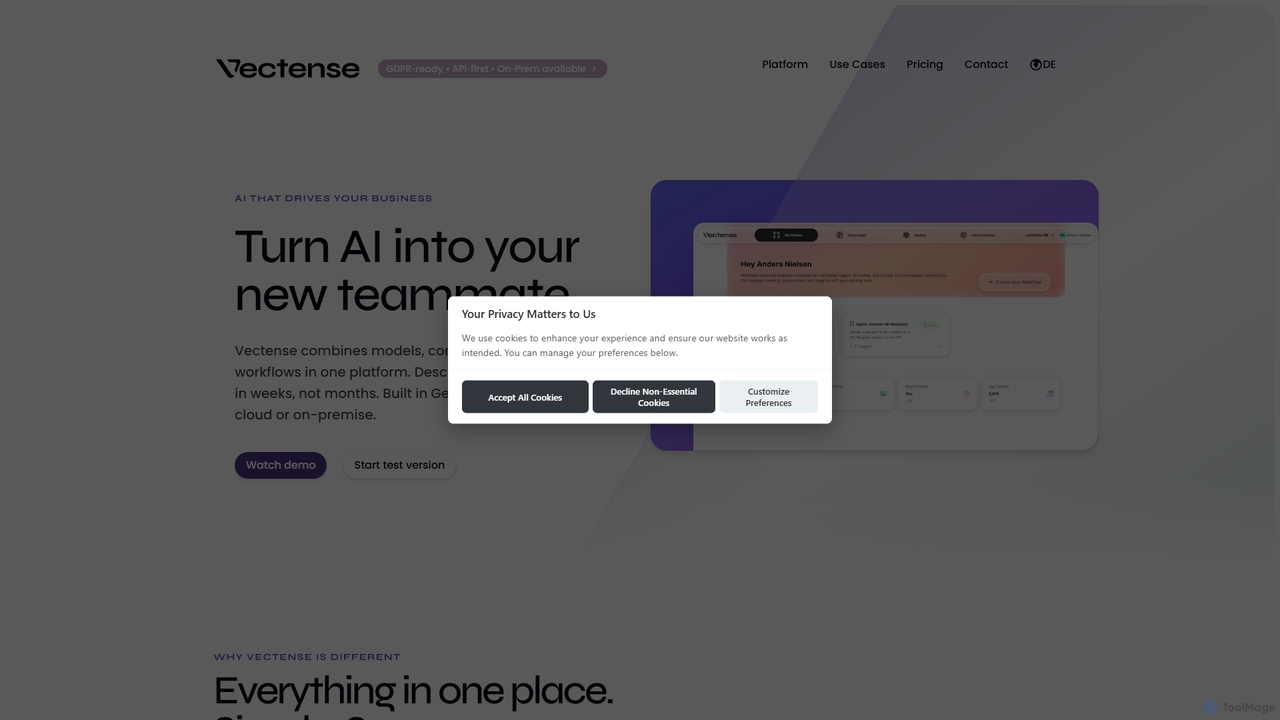
Vectense is an all-in-one AI platform designed to boost business efficiency by automating workflows. It combines AI models, …

73

About Process Optimization

Process Optimization tools are AI-powered solutions designed to streamline, automate, and enhance business and operational workflows. These tools leverage advanced artificial intelligence techniques, such as machine learning, robotic process automation (RPA), and natural language processing (NLP), to analyze data, identify bottlenecks, predict outcomes, and automate repetitive tasks. By continuously learning and adapting, they go beyond simple automation to drive significant improvements in efficiency, cost reduction, error minimization, and accelerated decision-making across various departments, positioning them as a key component within the broader Productivity category.

Core Features

  • Workflow Automation: Automates repetitive, rule-based tasks across systems, reducing manual effort and increasing throughput.
  • Process Mining & Analysis: Discovers, monitors, and analyzes actual business processes from event logs to identify inefficiencies and compliance gaps.
  • Predictive Analytics: Forecasts future process outcomes, potential bottlenecks, and resource needs, enabling proactive decision-making.
  • Intelligent Document Processing (IDP): Automates data extraction, classification, and validation from unstructured and semi-structured documents using AI.
  • Decision Support Systems: Provides AI-driven recommendations and insights to guide process improvements and strategic operational choices.

Applicable Scenarios

These tools are vital for organizations seeking to enhance operational efficiency and agility. They are widely adopted in finance for automating invoice processing and reconciliation, in customer service for intelligent ticket routing and automated responses, and in supply chain management for optimizing inventory and logistics. Any department with repetitive, data-intensive tasks can benefit from AI-driven process optimization.

How to Choose

When selecting a Process Optimization tool, consider its integration capabilities with existing ERP or CRM systems to ensure seamless data flow. Evaluate its scalability to handle growing data volumes and process complexity, along with the specific AI capabilities (e.g., ML, NLP, computer vision) relevant to your needs. Prioritize solutions offering a user-friendly interface and robust customization options to adapt to unique workflows, and always assess security features and compliance with industry regulations.

Process OptimizationUse Cases

1

Automating Invoice Processing for Finance Departments

Finance teams often spend considerable time manually processing invoices, leading to delays and errors. AI process optimization tools can automatically extract data from invoices, validate it against purchase orders, and initiate payment workflows. This reduces manual effort by up to 70%, accelerates payment cycles, and minimizes human error, allowing finance professionals to focus on strategic analysis rather than repetitive data entry.

2

Automating Invoice Processing in Finance

Finance departments utilize AI process optimization tools to automatically extract key data from incoming invoices, validate it against purchase orders, and initiate payment workflows. This significantly reduces manual data entry, minimizes human errors, and accelerates the entire accounts payable cycle, allowing finance professionals to focus on strategic analysis rather than repetitive tasks.

3

Streamlining Customer Onboarding in Financial Services

Onboarding new clients in banking or insurance involves numerous steps, document verification, and compliance checks. AI-driven process optimization can automate data collection, perform identity verification, and route documents for approval based on predefined rules. This significantly reduces onboarding time from days to hours, improves customer experience, and ensures regulatory compliance with greater accuracy.

4

Optimizing Customer Support Ticket Routing

Customer service centers deploy AI to analyze the content and sentiment of incoming support requests. The system then intelligently categorizes tickets and routes them to the most appropriate agent or department based on expertise and availability. This leads to faster resolution times, improved customer satisfaction, and more efficient allocation of support resources.

5

Optimizing Supply Chain Logistics and Inventory Management

Logistics managers face challenges in managing inventory levels, predicting demand, and optimizing delivery routes. AI process optimization tools analyze historical data, real-time market conditions, and sensor data to forecast demand more accurately, automate reordering, and dynamically optimize shipping routes. This leads to reduced carrying costs, minimized stockouts, and faster delivery times, enhancing overall supply chain resilience.

6

Streamlining New Employee Onboarding Workflows

HR teams leverage AI-powered tools to automate various tasks involved in new employee onboarding. This includes automatically collecting necessary documents, provisioning system access, assigning mandatory training modules, and sending welcome communications. The result is a smoother, more consistent onboarding experience for new hires and reduced administrative burden for HR staff.

7

Automating IT Service Request Fulfillment

IT departments frequently handle a high volume of service requests, from password resets to software installations. AI tools can automate the classification, routing, and even resolution of common IT tickets. By integrating with existing IT Service Management (ITSM) systems, these tools can reduce resolution times by 50%, free up IT staff for more complex issues, and improve user satisfaction through quicker responses.

8

Enhancing Supply Chain Demand Forecasting

Logistics and supply chain managers use AI to analyze vast amounts of historical sales data, market trends, seasonal fluctuations, and external economic indicators. The AI generates highly accurate demand forecasts, enabling optimized inventory levels, reduced carrying costs, minimized stockouts, and more efficient production planning across the entire supply chain.

9

Enhancing Healthcare Patient Admission Workflows

Patient admissions in hospitals involve extensive data collection, insurance verification, and record updates. AI process optimization can automate the pre-registration process, verify insurance eligibility, and integrate patient data across various hospital systems. This streamlines administrative tasks, reduces wait times for patients, and ensures accurate data capture, allowing medical staff to focus more on patient care.

10

Automating Data Entry and Validation from Forms

Businesses dealing with high volumes of forms, contracts, or applications employ AI-powered process optimization to automatically extract relevant information. The AI not only performs data entry but also validates the extracted data against predefined rules or external databases, drastically reducing manual effort, improving data accuracy, and accelerating processing times for critical business documents.

11

Accelerating Content Approval and Publishing for Marketing Teams

Marketing and editorial teams often deal with complex content creation and approval workflows involving multiple stakeholders. AI process optimization tools can automate the routing of content drafts for review, track feedback, and ensure all necessary approvals are obtained before publishing. This significantly shortens the content lifecycle, ensures brand consistency, and allows marketing professionals to publish campaigns faster and more efficiently.

12

Improving IT Incident Management and Resolution

IT operations teams utilize AI to continuously monitor system logs, network traffic, and application performance for anomalies. When an incident is detected, the AI automatically triggers alerts, categorizes the issue, and can even suggest or initiate automated remediation steps based on historical data, significantly reducing downtime and improving IT service reliability.

Process OptimizationFrequently Asked Questions