
ToolMage
Sign in

Best 1 Proctoring AI tools for Productivity

Popular Proctoring AI tools in Productivity include yunkaoai, helping you work more efficiently.

yunkaoai
Paid

yunkaoai

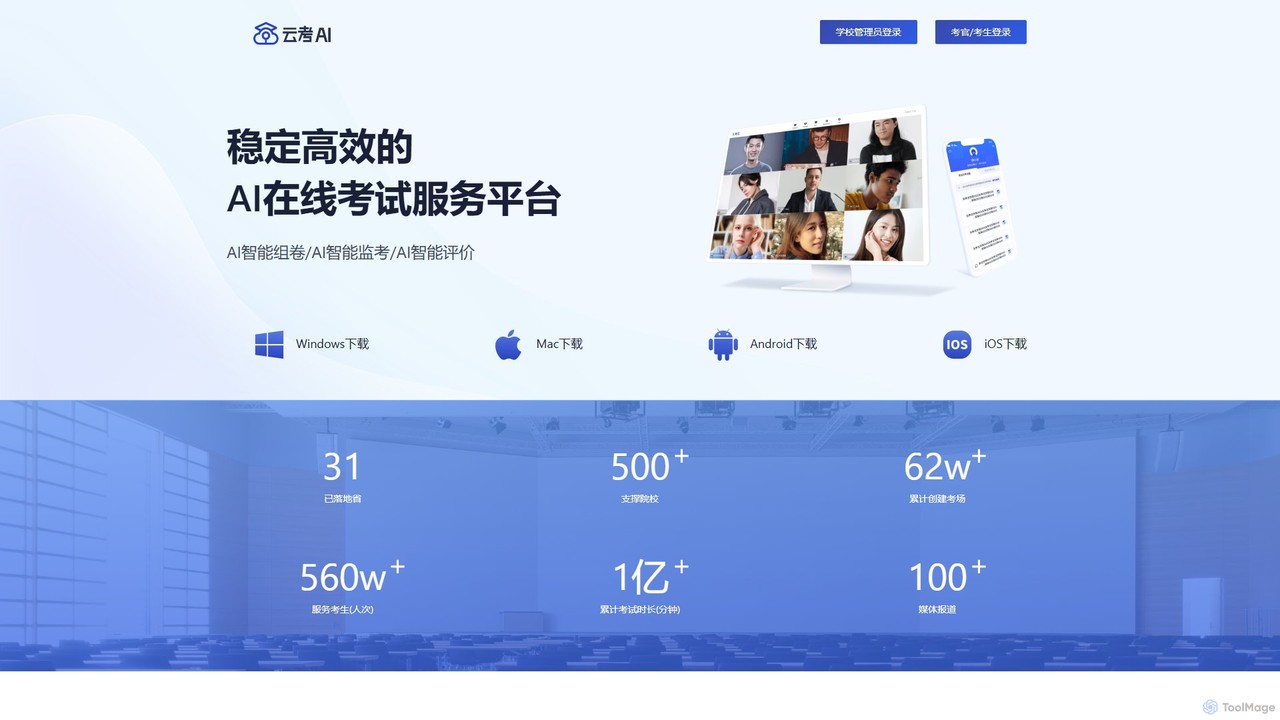
yunkaoai is an AI-powered online examination platform designed for educational institutions. It offers a comprehensive solution for creating, proctoring, and evaluating remote exams, leveraging AI to ensure fairness, security, and efficiency throughout the entire testing process.

Human Resources
Visits 27.5KFavorites 112Likes 98

About Proctoring

Proctoring tools are AI-powered solutions designed to monitor and supervise online exams and assessments, ensuring academic and professional integrity. These tools leverage advanced computer vision, machine learning, and behavioral analytics to detect suspicious activities in real-time. By automating the supervision process, AI proctoring enhances the security and fairness of remote evaluations, significantly boosting the productivity of assessment administration for educational institutions and certification bodies.

Core Features

  • Identity Verification: Uses facial recognition and ID checks to confirm the test-taker's identity before and during the exam.
  • Anomaly Detection: Identifies suspicious behaviors such as eye gaze shifts, multiple faces, unauthorized objects, or unusual sounds.
  • Secure Browser Lockdown: Prevents access to unauthorized applications, websites, or screen sharing during the assessment.
  • Real-time Alerts & Reporting: Notifies proctors of potential violations and generates detailed reports for post-exam review.
  • Audio & Video Monitoring: Continuously records and analyzes audio and video feeds from the test-taker's environment.

Applicable Scenarios

AI proctoring is crucial for organizations requiring high-stakes online assessments. Educational institutions use it for university entrance exams, online courses, and final assessments. Professional certification bodies deploy it for industry-specific qualifications, ensuring candidates meet strict standards. Corporate training programs also utilize these tools to validate employee knowledge and compliance in remote settings.

How to Choose

When selecting an AI proctoring solution, prioritize accuracy in anomaly detection to minimize false positives and negatives. Evaluate its integration capabilities with existing Learning Management Systems (LMS) for seamless workflow. Consider data privacy and compliance with regulations like GDPR or FERPA. Finally, assess scalability to handle varying numbers of test-takers and the level of human oversight required alongside AI.

Featured tool rankings

Proctoring use cases

1

Ensuring Integrity of Online University Exams

University administrators utilize AI proctoring to maintain the academic integrity of large-scale online final exams. The system verifies student identities, monitors for unauthorized materials or communication, and flags suspicious behavior, allowing faculty to confidently administer remote assessments to hundreds or thousands of students simultaneously.

2

Securing Professional Certification Tests

Certification bodies employ AI proctoring to safeguard the credibility of professional qualification exams. This ensures that candidates adhere to strict testing protocols, preventing cheating and upholding the value of the certification. The tools provide detailed audit trails for compliance and dispute resolution.

3

Monitoring Remote Corporate Training Assessments

HR departments and corporate trainers use AI proctoring for mandatory compliance tests or skill assessments for remote employees. This guarantees that employees complete training modules and assessments honestly, validating their understanding and adherence to company policies or new skill acquisition.

4

Facilitating Accessible Online Admissions Tests

Admissions offices leverage AI proctoring to conduct secure and fair entrance examinations for prospective students globally. This expands access to education by allowing candidates to take high-stakes tests from their location while ensuring the integrity and comparability of results across all applicants.

5

Validating Skills for Remote Job Interviews

Recruitment teams integrate AI proctoring into technical or aptitude tests administered during remote job interviews. This helps verify the candidate's identity and ensures they complete the assessment independently, providing a reliable measure of their true skills before proceeding to further interview stages.

6

Preventing Plagiarism in Online Coursework Submissions

Educators use AI proctoring not just for exams, but also for monitoring students during the submission of critical coursework or projects. While not direct plagiarism detection, it ensures the student is the sole author working on the assignment during designated periods, complementing other academic integrity tools.

Proctoring FAQ

What are AI Proctoring tools?

AI Proctoring tools are software solutions that use artificial intelligence, primarily computer vision and machine learning, to supervise online exams and assessments. Their main purpose is to detect and prevent cheating, verify test-taker identity, and ensure the overall fairness and security of remote testing environments. They provide a scalable and automated alternative or supplement to human proctoring.

How do AI Proctoring tools detect cheating?

AI Proctoring tools detect cheating by continuously analyzing various data points during an exam. This includes monitoring eye movements, head movements, facial expressions, and body posture for suspicious patterns. They also listen for unauthorized sounds, detect multiple faces in the camera frame, identify unauthorized objects, and prevent access to external applications or websites through browser lockdown features. Any anomalies are flagged for review.

What are the key benefits of using AI Proctoring for online assessments?

The key benefits of AI Proctoring include enhanced security and integrity for online exams, scalability to supervise a large number of test-takers simultaneously, and significant cost and time savings compared to traditional human proctoring. It also offers greater flexibility for test-takers to complete assessments remotely, while providing detailed audit trails and objective evidence for academic or professional compliance.

What privacy concerns should I consider with AI Proctoring?

Privacy is a significant concern with AI Proctoring. Key considerations include data collection (video, audio, screen activity), data storage, and who has access to this sensitive information. It's crucial to choose solutions that comply with relevant data protection regulations (e.g., GDPR, FERPA), offer transparent data handling policies, and provide clear consent mechanisms for test-takers. Anonymization and secure data deletion policies are also important.

How does AI Proctoring differ from traditional human proctoring?

AI Proctoring differs from traditional human proctoring primarily in its automation and scalability. While human proctors rely on direct observation, AI proctoring uses algorithms to monitor and flag suspicious behavior, often in real-time across many test-takers simultaneously. AI can detect subtle anomalies that a human might miss and provides objective, data-driven evidence, though human review is often still part of the process for final decisions.