ToolMage
Sign in

Best 4 Resource Hub AI tools for Productivity

Popular Resource Hub AI tools in Productivity include EntreResource, ConquerortheCrown, JobsRemote, and RemoteSpace Resource Center, helping you work more efficiently.

JobsRemote
Free

JobsRemote

JobsRemote is an AI-powered platform designed to streamline the search for remote work. It aggregates and curates fraud-free remote job listings from numerous sources, providing personalized recommendations to save job seekers time. Additionally, it offers a resource center with detailed evaluations of remote work tools and a suite of free utilities, including a salary insights tool and an AI text detector, to enhance productivity for remote professionals and teams.

Job Board
Visits 5.3KFavorites 162Likes 155
ConquerortheCrown
Free

ConquerortheCrown

ConquerortheCrown is a global initiative providing grants, mentorship, and resources to individuals and early-stage startups with innovative ideas aimed at creating a positive societal impact. It supports extraordinary dreams and helps turn them into reality.

Funding
Visits 6KFavorites 153Likes 140
RemoteSpace Resource Center
Freemium

RemoteSpace Resource Center

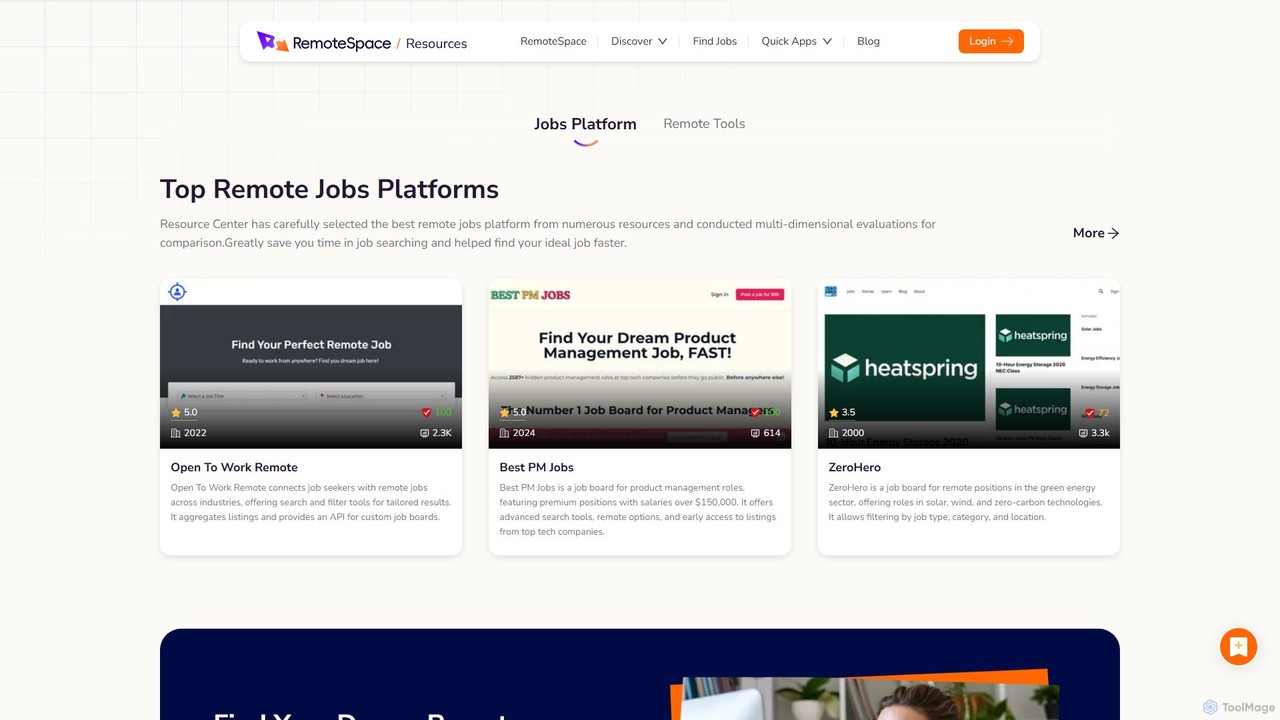
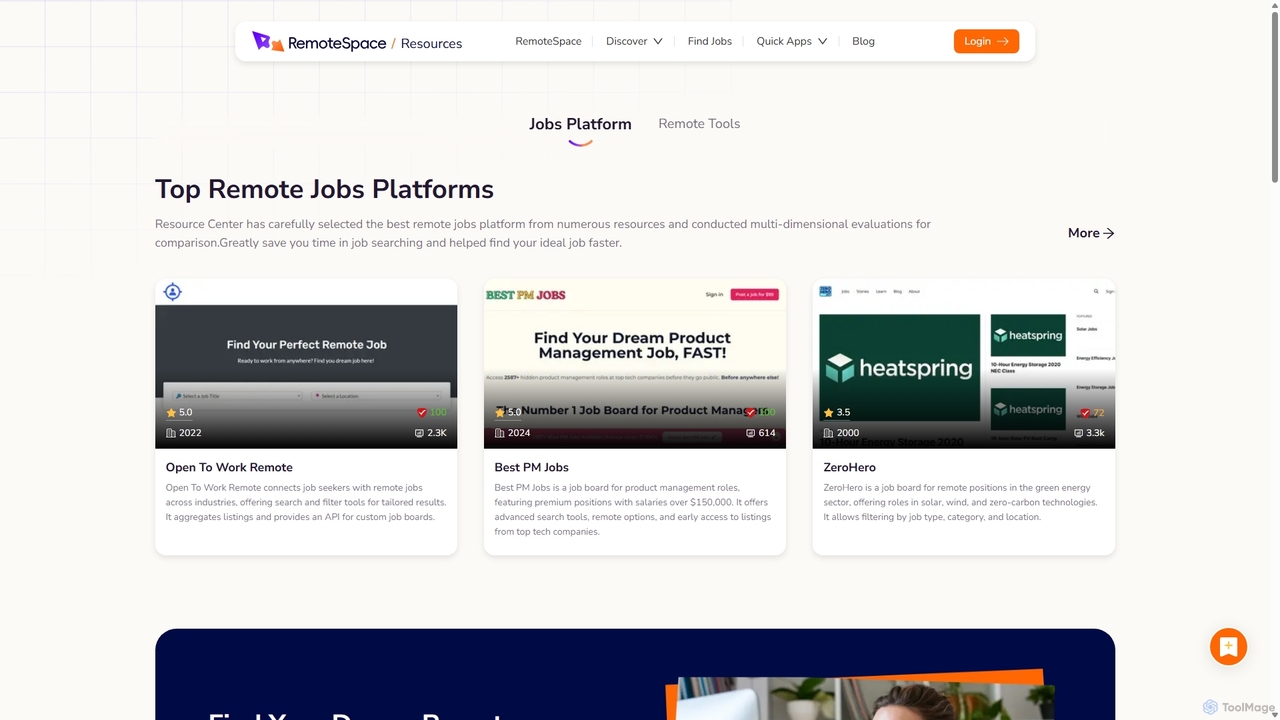
RemoteSpace Resource Center is an AI-powered platform for remote work. It aggregates fraud-free remote job listings, provides personalized recommendations, and offers a curated collection of remote work tools. It also includes free utilities like a salary insights tool and an AI text detector to support both job seekers and remote teams.

Job Board
Visits 5.3KFavorites 148Likes 149
EntreResource
Free

EntreResource

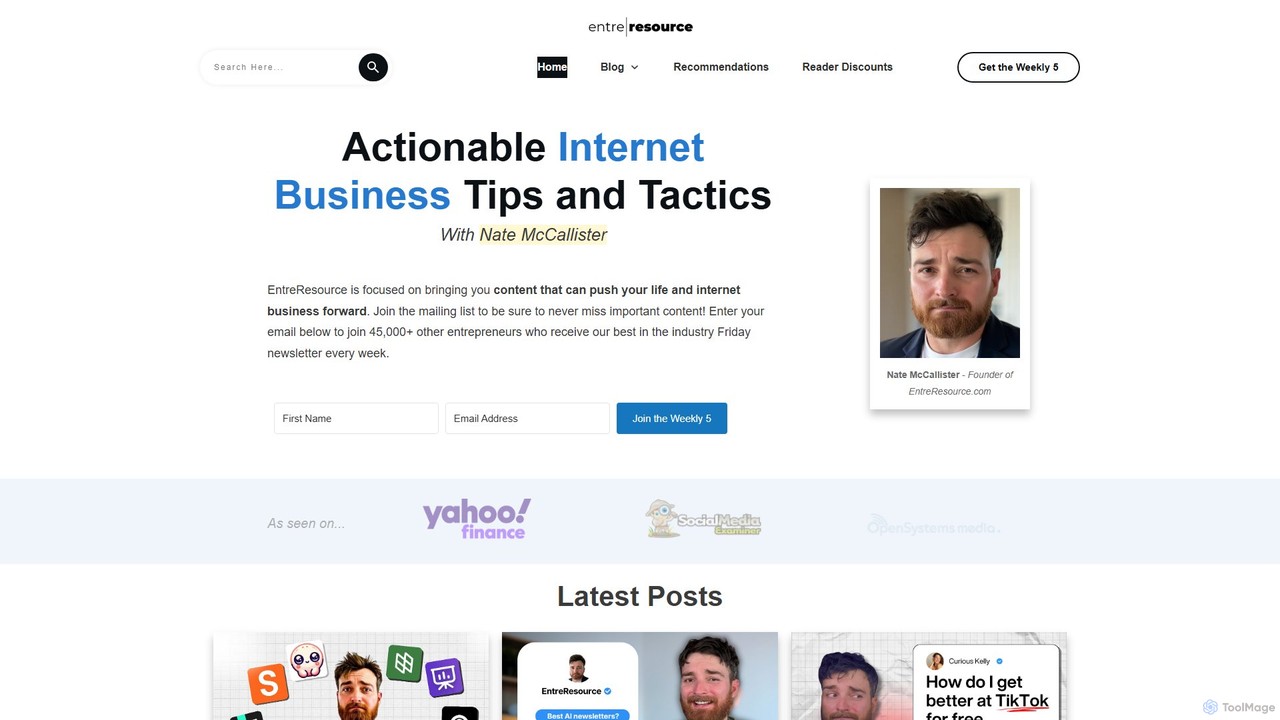
EntreResource is a comprehensive online knowledge hub for entrepreneurs, offering expert guides, in-depth tool reviews, and actionable strategies for building and scaling internet businesses. It focuses on areas like Amazon FBA, affiliate marketing, SEO, and leveraging AI tools for growth.

Amazon Fba
Visits 82.6KFavorites 132Likes 128

About Resource Hub

An AI Resource Hub is a centralized platform that provides curated access to essential AI assets like datasets, pre-trained models, APIs, and prompt libraries. These hubs function by aggregating and organizing foundational components, making them readily available for developers, researchers, and creators. This approach significantly accelerates the AI development lifecycle and enhances the capabilities of other productivity applications by offering a solid foundation to build upon. As a key part of the productivity toolkit, these hubs reduce redundant work and foster innovation by democratizing access to powerful AI building blocks.

Core Features

  • Model & Dataset Libraries: Offers a wide range of pre-trained models and structured datasets for various machine learning tasks.
  • API Access & Integration: Provides standardized APIs to easily integrate advanced AI capabilities into custom applications.
  • Prompt Engineering Resources: Features curated collections of effective prompts and templates for optimizing generative AI outputs.
  • Knowledge Base & Tutorials: Includes comprehensive documentation, guides, and tutorials to support learning and implementation.
  • Development Environments: Offers sandboxed or cloud-based environments for experimenting with and fine-tuning models.

Use Cases

AI Resource Hubs are primarily utilized by AI developers, data scientists, machine learning engineers, and advanced content creators. They are critical in projects involving custom application development, academic research, training specialized AI models, and creating sophisticated generative AI workflows. For instance, a developer can use a hub's API to add image recognition to an app, while a researcher can access benchmark datasets to validate a new algorithm.

How to Choose

When selecting an AI Resource Hub, first assess the variety and quality of its resources—does it have the specific models or datasets you need? Next, evaluate the API documentation, reliability, and rate limits for seamless integration. Consider the strength of the community and the quality of support for troubleshooting. Finally, analyze the pricing model (e.g., pay-per-use, subscription, free tiers) to ensure it aligns with your project's budget and scale.

Resource Hub use cases

1

Accelerate AI Application Development

A software developer at a startup is tasked with building a customer feedback analysis tool. Instead of spending months developing a sentiment analysis model from scratch, they access an AI Resource Hub. They find a well-documented, pre-trained sentiment analysis API. Within a few hours, they integrate this API into their application. The tool can now automatically categorize thousands of customer reviews as positive, negative, or neutral, providing immediate insights and saving the company significant development time and resources.

2

Train a Custom Machine Learning Model

A data scientist in a healthcare research institute needs to build a model to detect early signs of a specific disease from medical images. Collecting and annotating a large, high-quality dataset is a major bottleneck. By using an AI Resource Hub, she gains access to a vast, anonymized, and pre-labeled medical imaging dataset. This allows her team to bypass the lengthy data collection phase and immediately start training and validating their custom machine learning model, accelerating their research timeline by several months.

3

Optimize Generative AI Workflows

A marketing team regularly uses AI image generators for their social media campaigns but struggles with inconsistent results. A content strategist explores an AI Resource Hub and finds a comprehensive prompt library. They use this library to learn advanced prompt engineering techniques and discover well-structured prompts for various art styles. By creating a standardized set of prompts based on these resources, the team achieves more consistent, high-quality visual outputs, improving brand consistency and reducing the time spent on trial-and-error generation.

4

Enable Academic Research and Benchmarking

A university research group is developing a new natural language processing algorithm. To prove its effectiveness, they need to compare its performance against existing state-of-the-art models on standardized datasets. They use an AI Resource Hub to access both the benchmark datasets (like GLUE or SQuAD) and pre-trained baseline models (like BERT or GPT). This allows them to conduct rigorous, reproducible experiments and publish their findings with confidence, knowing their results are directly comparable to others in the field.

5

AI Skill Development and Learning

A student majoring in computer science wants to gain practical experience with machine learning. Setting up a local development environment with all the necessary libraries and dependencies can be complex and time-consuming. They sign up for an AI Resource Hub that offers cloud-based notebooks and development environments. They can immediately start running code from tutorials, experimenting with different models, and completing projects for their portfolio without any setup friction, greatly accelerating their learning curve.

6

Build AI-Powered Content Creation Tools

A startup founder wants to create a new platform for podcasters that automates show note generation and audio transcription. Instead of building these complex AI features internally, they leverage an AI Resource Hub. They integrate a high-accuracy speech-to-text API for transcription and a text summarization model API for generating show notes. This allows them to build a feature-rich product and go to market much faster, focusing their own engineering resources on the user experience and core platform features rather than on deep AI model development.

Resource Hub FAQ

What is an AI Resource Hub?

An AI Resource Hub is a centralized platform that provides developers, researchers, and creators with access to fundamental AI building blocks. Instead of being a single-purpose tool, it acts as a library or marketplace for assets like pre-trained models, large datasets, APIs, and prompt collections. The primary goal is to accelerate AI development and integration by providing ready-to-use components, saving users from the time-consuming process of building everything from scratch. They are a key productivity driver for anyone working technically with AI.

How do I choose the right AI Resource Hub?

Choosing the right hub depends on your specific needs. Consider these factors:

  • Resource Specificity: Does the hub specialize in the type of asset you need, such as computer vision models, natural language datasets, or generative AI prompts?
  • Quality and Documentation: Are the models well-maintained and are the datasets and APIs thoroughly documented? Good documentation is crucial for effective integration.
  • Cost Structure: Analyze the pricing. Is it a subscription model, pay-per-API-call, or are there free/open-source options available that meet your needs?
  • Community and Support: A strong community forum or dedicated technical support can be invaluable when you encounter issues or need implementation guidance.
What's the difference between a Resource Hub and a finished AI tool like a chatbot?

The key difference lies in the target user and purpose. A finished AI tool, like a chatbot or an image generator, is a ready-to-use application designed for an end-user to solve a specific problem (e.g., answer customer questions). An AI Resource Hub, on the other hand, is a platform for developers and builders. It provides the underlying components—like the natural language understanding model for a chatbot or the image generation API—that are used to create those finished applications. In short, you use a resource hub to *build* an AI tool, whereas you use a finished AI tool to *perform* a task.

Who are the primary users of AI Resource Hubs?

The primary users are individuals and teams who build, train, or integrate AI technologies. This includes:

  • Software Developers: Who integrate AI capabilities into applications via APIs.
  • Data Scientists & ML Engineers: Who need datasets to train custom models or benchmark performance.
  • Researchers: Who require access to standard models and datasets for academic work.
  • Advanced Content Creators: Who use prompt libraries and specialized models to create sophisticated content.

These hubs are generally not intended for non-technical users who are looking for a simple, out-of-the-box solution.

Are the resources in these hubs free to use?

It varies significantly from one hub to another. Many platforms offer a hybrid model. You can often find a wide range of free and open-source models and datasets, which are excellent for learning, research, and small-scale projects. However, the most powerful, state-of-the-art models or highly specialized, curated datasets are typically offered as premium resources. Access to these is often managed through a pay-per-use API model (e.g., paying per 1,000 tokens processed) or a monthly subscription that provides a certain quota of usage. Always check the pricing page of a specific hub for details.