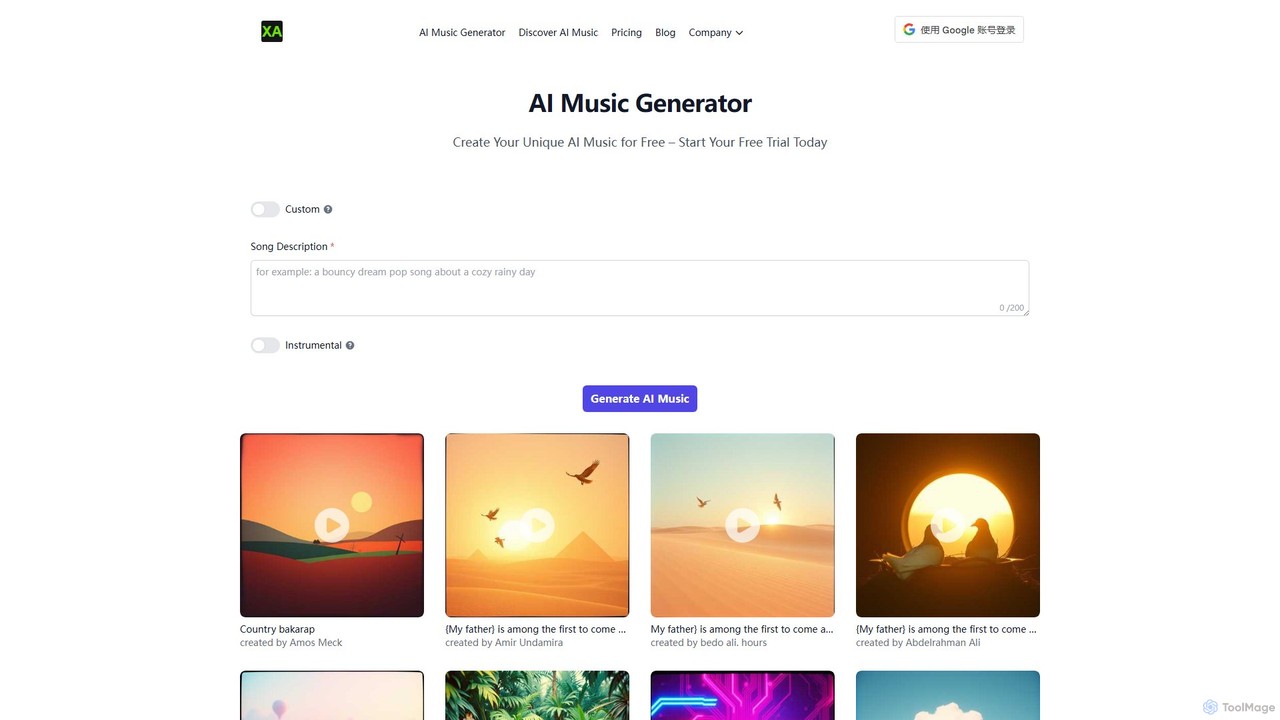
AI Royalty Free Music tools are applications that use artificial intelligence to generate unique musical tracks, which can be used in projects without paying recurring royalties. These platforms leverage deep learning models to compose music based on user inputs such as genre, mood, tempo, and instrumentation. This provides content creators, filmmakers, and developers with a fast and cost-effective method to obtain custom background music, ensuring legal compliance and creative originality. The key advantage is the ability to produce tailored soundscapes on-demand, fitting specific project needs precisely.
Core Features
- Generative Music Composition: Creates original music from text prompts, mood selections, or genre parameters.
- Style and Mood Customization: Allows users to define the musical style (e.g., cinematic, lo-fi, corporate) and emotional tone (e.g., uplifting, dramatic, calm).
- Tempo and Instrumentation Control: Provides options to adjust the beats per minute (BPM) and select or exclude specific instruments.
- Track Length and Structure Adjustment: Enables users to set the duration of the track and sometimes define its structure (e.g., intro, verse, chorus).
- Stem Exporting: Offers the ability to download individual instrument layers (stems) for advanced mixing and editing.
Use Cases
These tools are widely used by video producers for YouTube content, social media managers for short-form videos, podcast creators for intro/outro music, and independent game developers for in-game soundtracks. They are also valuable for marketers creating background music for advertisements and corporate presentations, where custom, rights-cleared audio is essential.
How to Choose
When selecting an AI Royalty Free Music tool, consider the quality and realism of the generated audio. Evaluate the breadth of available genres and customization options to ensure they match your creative needs. Review the licensing terms carefully to confirm they cover your intended use (e.g., commercial, broadcast). Finally, assess the user interface's ease of use and the available export formats (e.g., MP3, WAV, stems).