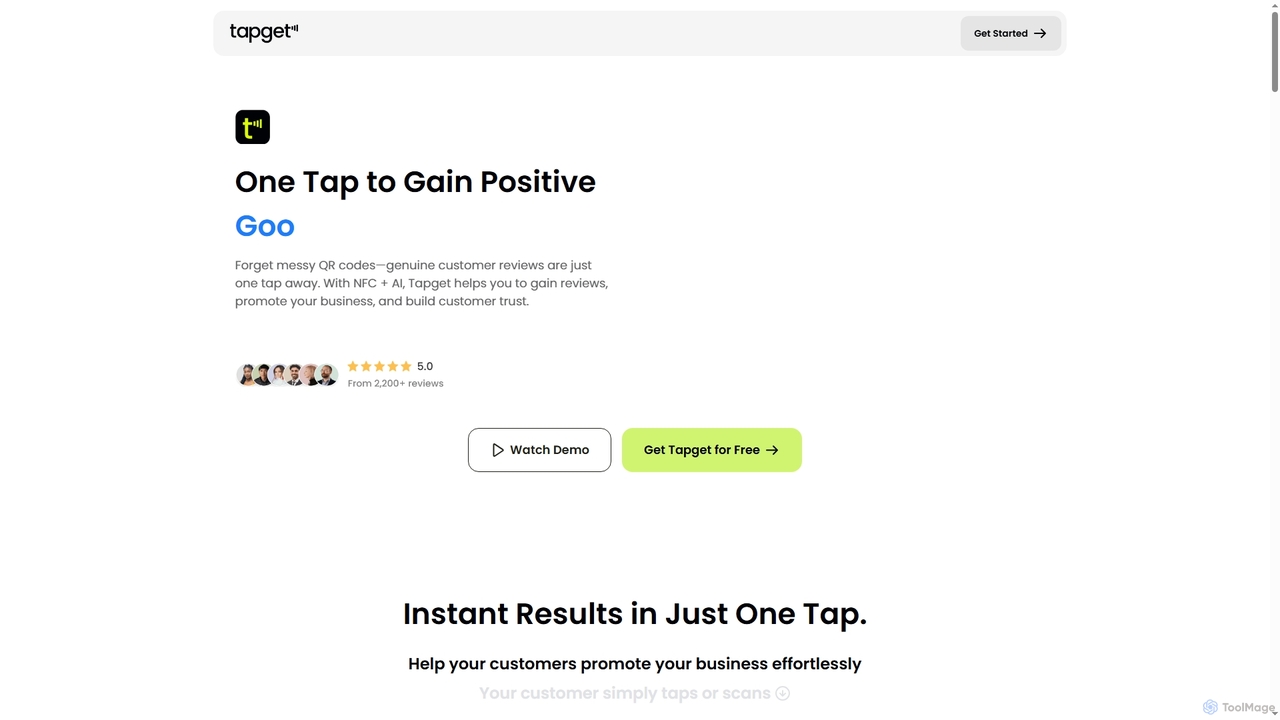
TapGet
TapGet is an innovative smart marketing tool leveraging NFC and AI to help local businesses effortlessly gather positive …
TapGet is an innovative smart marketing tool leveraging NFC and AI to help local businesses effortlessly gather positive customer reviews, boost social media engagement, and drive sales. It offers a single-tap solution for customers to leave feedback, access deals, connect to Wi-Fi, and more, streamlining customer interaction and enhancing loyalty programs.
About Small Business
AI tools for Small Business are specialized applications designed to automate tasks, enhance decision-making, and drive growth for companies with limited resources. They leverage artificial intelligence for functions like marketing, customer service, and financial management, often through user-friendly interfaces. These tools empower small businesses to operate more efficiently, compete with larger enterprises, and deliver superior customer experiences without requiring a large team or technical expertise. They are typically characterized by their affordability, scalability, and focus on solving specific operational bottlenecks.
Core Features
- Automated Marketing: Generate social media content, write email campaigns, and manage ads with minimal manual effort.
- AI-Powered CRM: Automatically track customer interactions, score leads, and suggest follow-up actions to boost sales.
- Intelligent Financial Management: Automate invoicing, track expenses, and generate financial forecasts to improve cash flow visibility.
- 24/7 Customer Support Chatbots: Provide instant answers to common customer questions, freeing up human agents for complex issues.
- Simplified Operations: Automate scheduling, manage simple HR tasks, and streamline internal workflows.
Use Cases
These tools are ideal for entrepreneurs, startups, local retailers, and service-based businesses. For instance, a local restaurant can use an AI tool to automate its social media presence and manage online reservations. A small e-commerce store can deploy an AI chatbot to handle customer inquiries about order status, while a freelance consultant can use AI for automated invoicing and expense tracking.
How to Choose
When selecting an AI tool, consider its specific function and how it addresses your primary business pain point. Evaluate the pricing model for scalability as your business grows. Prioritize tools with intuitive, no-code interfaces if you lack a technical team. Also, check for integrations with your existing software, such as your e-commerce platform or accounting software, to ensure a seamless workflow.

Small BusinessUse Cases
Automate Social Media Marketing for a Local Cafe
A cafe owner, with limited time for marketing, uses an AI platform to manage their social media. By providing simple prompts like "daily coffee special" or "weekend brunch menu," the tool generates engaging posts, images, and schedules them across Instagram and Facebook. This automates a key marketing function, saving over 5 hours per week and increasing customer engagement. The AI can also analyze post performance to suggest better times to post, helping the cafe reach more local customers without hiring a marketing manager.
Provide 24/7 Support for an Online Store
A small e-commerce business selling handmade goods integrates an AI chatbot into its website. The chatbot is trained on product information, shipping policies, and return procedures. It instantly answers common customer questions like "Where is my order?" or "What are your shipping rates?" around the clock. This reduces response times, improves customer satisfaction, and frees the owner to focus on order fulfillment and product creation. During peak seasons, it handles over 70% of incoming inquiries automatically.
Streamline Invoicing and Expenses for a Freelancer
A freelance graphic designer uses an AI-powered accounting tool to manage their finances. The tool automatically creates and sends professional invoices to clients after a project is marked complete. It also uses OCR technology to scan receipts from photos, categorizing expenses for tax purposes automatically. This eliminates manual data entry, reduces errors, and provides a clear, real-time overview of cash flow. The AI can even send automated payment reminders for overdue invoices, improving collection times.
Manage Leads Efficiently for a Small Sales Team
A startup with a two-person sales team employs an AI-powered CRM to manage its sales pipeline. The system automatically captures leads from web forms and emails, enriching them with public data. It then scores leads based on their engagement and demographic fit, allowing the team to prioritize the most promising prospects. The AI also suggests optimal times for follow-up calls and can even draft personalized outreach emails, helping the small team manage a larger volume of leads effectively and close deals faster.
Generate SEO-Optimized Blog Content for a Service Business
A small consulting firm needs to improve its online visibility to attract new clients. They use an AI writing assistant to generate ideas and drafts for blog posts related to their industry. The tool helps them research relevant keywords, structure articles for SEO, and ensure a consistent tone of voice. This allows them to publish high-quality, relevant content regularly without dedicating extensive hours to writing. As a result, their website's search engine ranking improves, driving more organic traffic and inbound leads.
Simplify Employee Onboarding and HR Queries
A growing tech startup with 15 employees uses an AI tool to streamline basic HR processes. The platform provides a centralized knowledge base where new hires can ask questions about company policies, benefits, and procedures. An AI assistant answers these common queries instantly, reducing the burden on the office manager. The tool also automates the distribution of onboarding documents and sends reminders for important deadlines, ensuring a smooth and consistent experience for every new team member.