slumbr
Slumbr is an AI-powered story generator that creates personalized bedtime stories to help children and adults relax and …
Slumbr is an AI-powered story generator that creates personalized bedtime stories to help children and adults relax and fall asleep. Input your own characters, settings, and plot ideas to generate unique, soothing tales complete with AI narration and ambient sounds. Say goodbye to repetitive stories and hello to a world of endless imagination.
Tinkertell
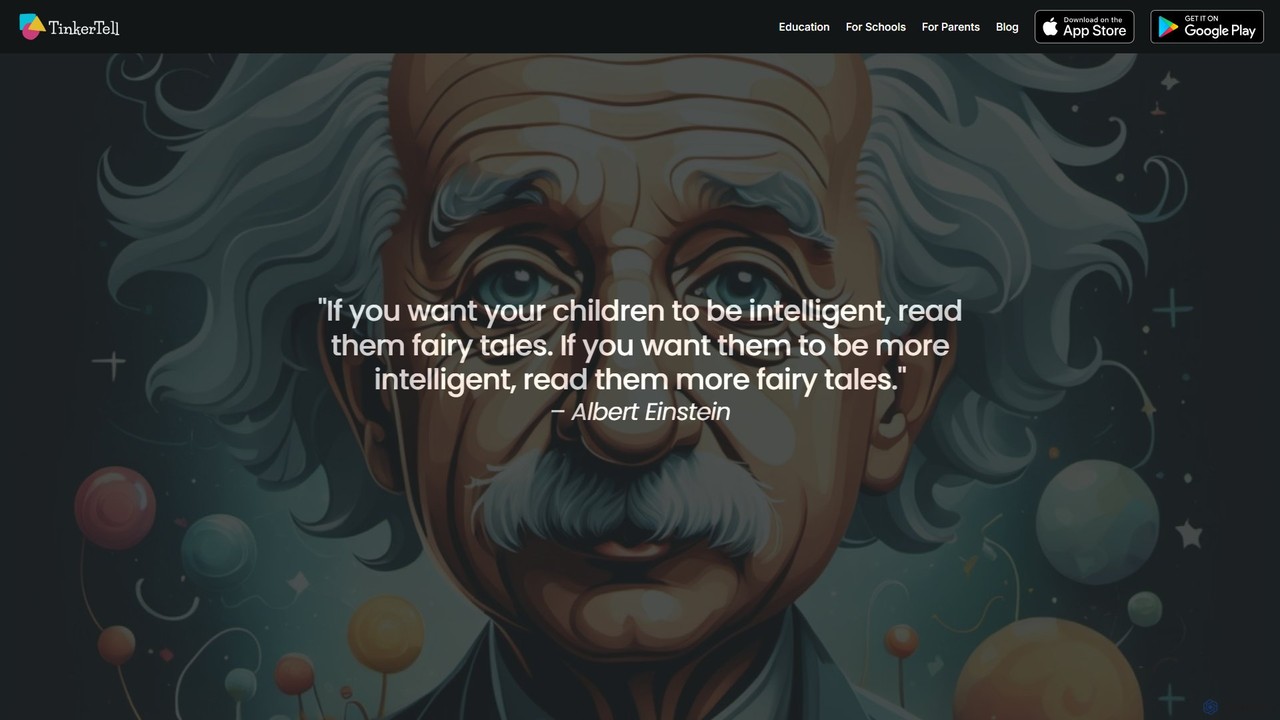
Tinkertell is an AI-powered educational platform that generates personalized and inclusive stories for children. It aims to improve …
Tinkertell is an AI-powered educational platform that generates personalized and inclusive stories for children. It aims to improve literacy, reading comprehension, and self-esteem by creating tales where children see themselves as the main characters, reflecting diverse backgrounds and experiences.
About Story Generator
Story Generators are AI-powered tools that automatically create narratives, plots, and character arcs from user prompts. They leverage large language models (LLMs) trained on vast literary datasets to produce coherent and creative fictional content. These tools are valuable for writers, game developers, and marketers seeking inspiration, overcoming writer's block, or rapidly prototyping story ideas. Their ability to generate diverse genres and styles makes them a powerful asset for boosting creative productivity.
Core Features
- Prompt-based Plot Generation: Creates story outlines, key events, and plot twists based on simple inputs like genre, characters, and setting.
- Character Development: Generates detailed character backstories, motivations, personality traits, and physical descriptions.
- Genre and Style Control: Allows users to specify the story's genre (e.g., sci-fi, fantasy, mystery) and emulate the writing style of famous authors.
- Dialogue Creation: Produces natural-sounding conversations between characters that reflect their personalities and advance the plot.
- Story Continuation: Extends existing text, helping users continue a story they have already started while maintaining tone and context.
Use Cases
Story Generators are primarily used by fiction writers, screenwriters, and hobbyists for brainstorming and drafting. Game developers utilize them to create quest lines, item descriptions, and NPC backstories. Marketers and content creators also leverage these tools to craft engaging brand narratives and social media stories that resonate with audiences.
How to Choose
When selecting a Story Generator, consider the level of control it offers over plot points and character attributes. Evaluate the quality, coherence, and creativity of the generated text. Also, check for features like genre specialization, export options (e.g., DOCX, PDF), and the pricing model, whether it's a subscription or a credit-based system.

Story GeneratorUse Cases
Brainstorming Novel Plots for Authors
An author facing writer's block needs a new idea for a fantasy novel. They use a Story Generator, inputting keywords like 'cursed artifact,' 'fallen kingdom,' and 'reluctant hero.' The tool generates five distinct plot summaries, complete with inciting incidents, rising action, and potential climaxes. This process saves days of brainstorming and provides a solid foundation to start writing the first draft, reigniting the creative spark.
Creating Dynamic Quests for Game Developers
A small indie game studio needs to populate their open-world RPG with compelling side quests. Instead of manually writing dozens of stories, the narrative designer uses a Story Generator to create quest templates. By providing parameters like 'fetch quest,' 'betrayal,' and 'ancient ruins,' the AI generates unique backstories, NPC motivations, and dialogue snippets, significantly accelerating the content creation phase of development.
Developing Screenplay Concepts for Filmmakers
A screenwriter needs to pitch several concepts for a new TV series quickly. They use a Story Generator to flesh out three different loglines. For each, the tool generates a one-page treatment, including main character profiles, a three-act structure summary, and key scene ideas. This allows the writer to present professional, well-structured concepts to producers with minimal initial writing time, increasing their chances of getting a project greenlit.
Crafting Engaging Brand Stories for Marketers
A marketing team wants to create a narrative for their new product launch. They use a Story Generator to explore different storytelling angles. By inputting their brand values and target audience persona, the AI produces short stories that frame the product as a solution to a character's problem. This helps them create more emotionally resonant ad copy and social media content that connects with customers on a deeper level than traditional advertising.
Generating Bedtime Stories for Parents
A parent wants to create personalized bedtime stories for their child. They use a simple Story Generator app, inputting their child's name as the main character, along with their favorite animal and a magical location. The AI instantly weaves a unique, age-appropriate short story, providing a new adventure every night. This fosters a love for reading and creativity without requiring constant creative effort from a tired parent.
Producing Content for Interactive Fiction
A developer of choose-your-own-adventure games needs to create numerous branching narrative paths. A Story Generator is used to quickly draft consequences for different player choices. By inputting a scenario like 'The player decides to betray their ally,' the tool generates several possible outcomes and corresponding story snippets. This makes the complex task of building a non-linear narrative more manageable and allows for greater story depth and replayability.