ToolMage
Sign in

Best 2 Study AI tools for Productivity

Popular Study AI tools in Productivity include TutorOcean and educato, helping you work more efficiently.

Freemium

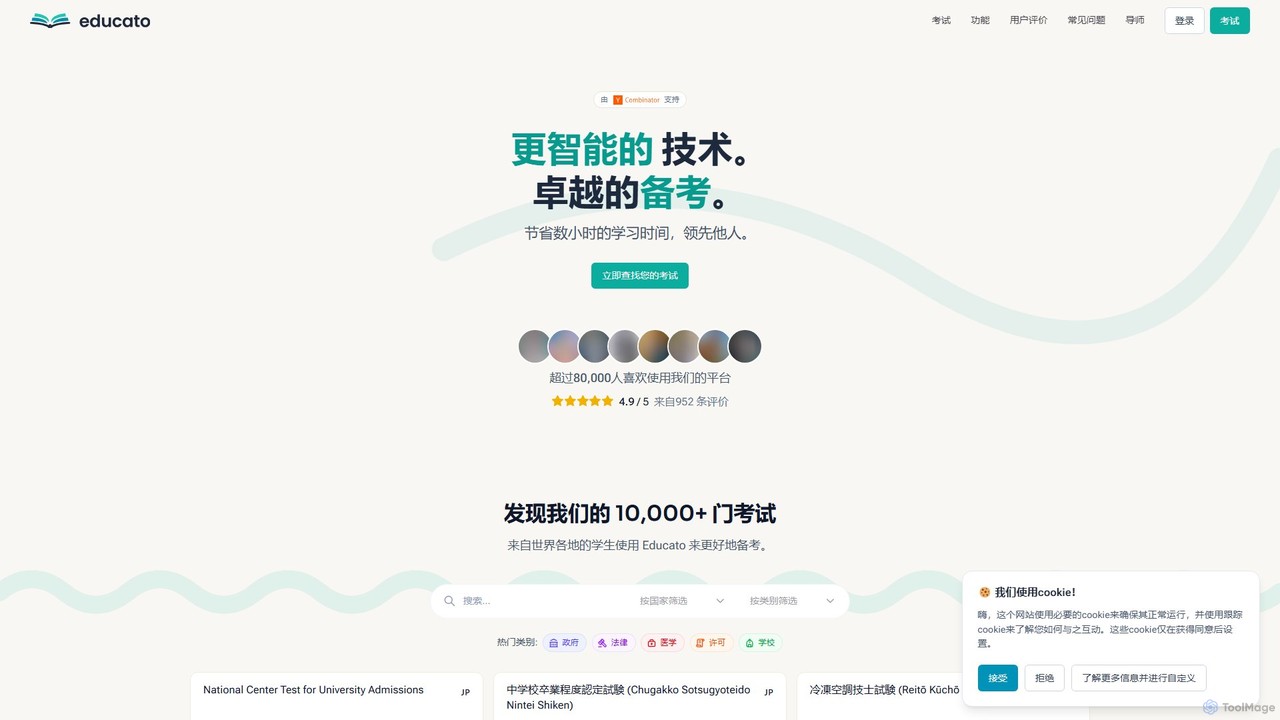
educato

Educato is an AI-powered learning platform designed for superior exam preparation. It offers personalized study plans, realistic practice tests, and intelligent flashcards for over 10,000 exams worldwide. By leveraging learning science and AI, Educato helps students study more efficiently, master key concepts, and achieve their academic and professional goals with confidence.

Personalized Learning
Visits 5.4KFavorites 100Likes 93
Freemium

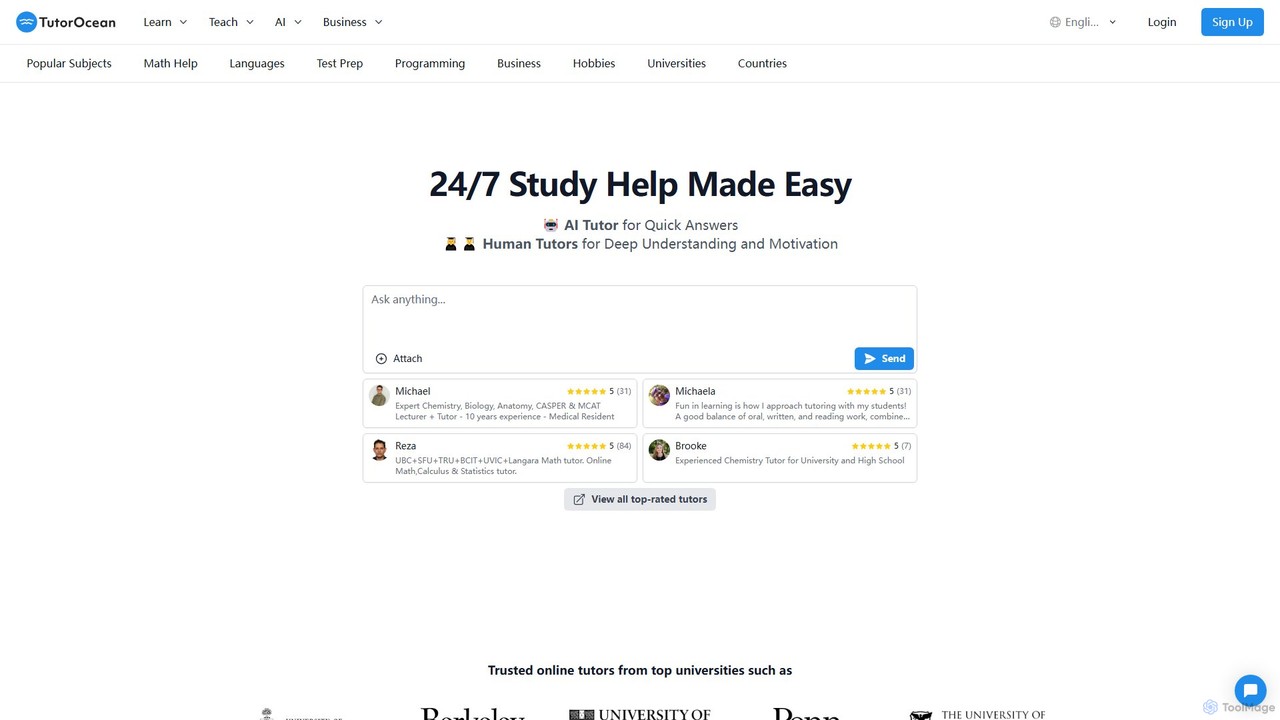
TutorOcean

TutorOcean is a hybrid online learning platform offering 24/7 AI-powered instant answers and personalized one-on-one sessions with expert human tutors. Covering a vast range of subjects from math and science to test prep, it provides a flexible, pay-as-you-go solution for students of all levels to improve grades, build confidence, and achieve academic goals through its interactive virtual classroom.

Question Answering
Visits 151.5KFavorites 129Likes 129

About Study

Study AI tools are intelligent applications designed to enhance learning, knowledge retention, and academic performance. Leveraging advanced artificial intelligence, these tools offer personalized learning paths, automated content summarization, and interactive practice exercises. They empower students, educators, and lifelong learners to optimize their study habits, master complex subjects more efficiently, and achieve their educational goals with greater ease.

Core Features

  • Personalized Learning Paths: Adapts content and pace to individual learning styles and progress, identifying strengths and weaknesses.
  • Intelligent Summarization: Automatically condenses long texts, articles, or lectures into key points, saving valuable reading time.
  • Flashcard & Quiz Generation: Creates custom flashcards and practice quizzes from notes or uploaded materials for effective memorization and self-assessment.
  • Language Learning Assistants: Provides interactive exercises, pronunciation feedback, and conversational practice for acquiring new languages.
  • Concept Mapping & Visualization: Generates visual representations of complex topics, helping users understand relationships and organize information.

Applicable Scenarios

AI study tools are invaluable for university students preparing for exams, researchers needing to quickly grasp the essence of numerous academic papers, and professionals acquiring new skills. They also assist language learners in practicing conversational skills and educators in creating adaptive learning materials tailored to diverse student needs.

How to Choose

When selecting an AI study tool, consider its compatibility with your learning style, the breadth and depth of its content coverage, and its personalization capabilities. Evaluate features like adaptive learning algorithms, integration with existing educational platforms, and the accuracy of its summarization or language feedback. Also, assess the user interface for ease of use and the pricing model to ensure it aligns with your budget and long-term learning objectives.

Featured tool rankings

Study use cases

1

Personalized Exam Preparation

A university student preparing for a challenging final exam can utilize AI study tools to create a personalized study plan. The tool analyzes their past performance, identifies weak areas, and generates targeted practice questions and explanations. This adaptive approach ensures the student focuses on topics where they need the most improvement, optimizing their study time and boosting confidence for test day.

2

Efficient Research Paper Summarization

A researcher or graduate student overwhelmed by a large volume of academic papers can employ AI summarization tools. By uploading multiple research articles, the AI quickly extracts key findings, methodologies, and conclusions, providing concise summaries. This allows the researcher to rapidly assess the relevance of papers, identify critical information, and synthesize knowledge across various sources much faster than manual reading.

3

Interactive Language Skill Development

An individual learning a new language can use AI language assistants for immersive practice. These tools offer interactive dialogues, provide instant pronunciation feedback, and correct grammatical errors in real-time. They simulate natural conversations, helping learners overcome speaking anxiety and rapidly improve their fluency and comprehension beyond traditional textbook methods.

4

Automated Flashcard & Quiz Creation

A high school student studying for history or biology can leverage AI to automatically generate flashcards and quizzes from their lecture notes or textbook chapters. Instead of manually creating study aids, the AI identifies key terms and concepts, transforming them into effective memorization tools. This saves significant time and ensures comprehensive coverage of the material, making revision more efficient.

5

Concept Mapping for Complex Topics

A professional trying to understand a new, complex industry concept can use AI tools to generate visual concept maps. By inputting relevant articles or documents, the AI identifies relationships between ideas, terms, and theories, presenting them in an organized, graphical format. This visual representation aids in deeper comprehension and helps to structure new knowledge effectively.

6

Adaptive Skill Development for Professionals

A professional seeking to upskill in a specific technical area, like data science, can use AI-powered adaptive learning platforms. These tools assess their current knowledge, recommend relevant courses or modules, and provide interactive coding challenges or simulations. The AI continuously adjusts the difficulty and content based on performance, ensuring a tailored and highly effective learning journey for career advancement.

Study FAQ

What are AI study tools?

AI study tools are software applications that use artificial intelligence to support and enhance the learning process. They are designed to personalize educational content, automate study tasks, and provide intelligent feedback. These tools typically feature adaptive learning algorithms, content summarization, and interactive practice modules to help users learn more effectively and efficiently.

How do AI study tools personalize learning?

AI study tools personalize learning by analyzing a user's performance, learning style, and progress. They identify areas of strength and weakness, then adapt the content, pace, and difficulty of lessons or exercises accordingly. This ensures that learners receive targeted support and resources, focusing on what they need most to master a subject, rather than a one-size-fits-all approach.

What are the key benefits of using AI for studying?

The key benefits of using AI for studying include increased efficiency through automated tasks like summarization and flashcard creation, and improved retention via personalized learning paths. AI tools also offer instant feedback, making learning more interactive, and can help overcome language barriers. Ultimately, they empower learners to achieve better academic outcomes and develop skills more rapidly.

How do AI study tools differ from general productivity apps?

While both aim to boost efficiency, AI study tools are specifically designed with educational objectives in mind, focusing on knowledge acquisition, retention, and skill development. General productivity apps, which fall under the parent category, streamline tasks across various domains (e.g., project management, note-taking). AI study tools integrate learning-specific features like adaptive quizzes, intelligent summarization of academic texts, and personalized learning paths, which are absent in generic productivity solutions.

Who can benefit most from using AI study tools?

Students of all levels, from K-12 to university, can significantly benefit from AI study tools for exam preparation, homework assistance, and deeper subject understanding. Educators can use them to create adaptive materials and assess student progress. Lifelong learners and professionals seeking to acquire new skills or certifications also find these tools invaluable for efficient, self-paced learning and continuous professional development.