
Productivity Best in category 1 results Talent Acquisition AI Tool

Popular AI tools in the Talent Acquisition field of Productivity include VectorHire, etc., helping you quickly improve efficiency.

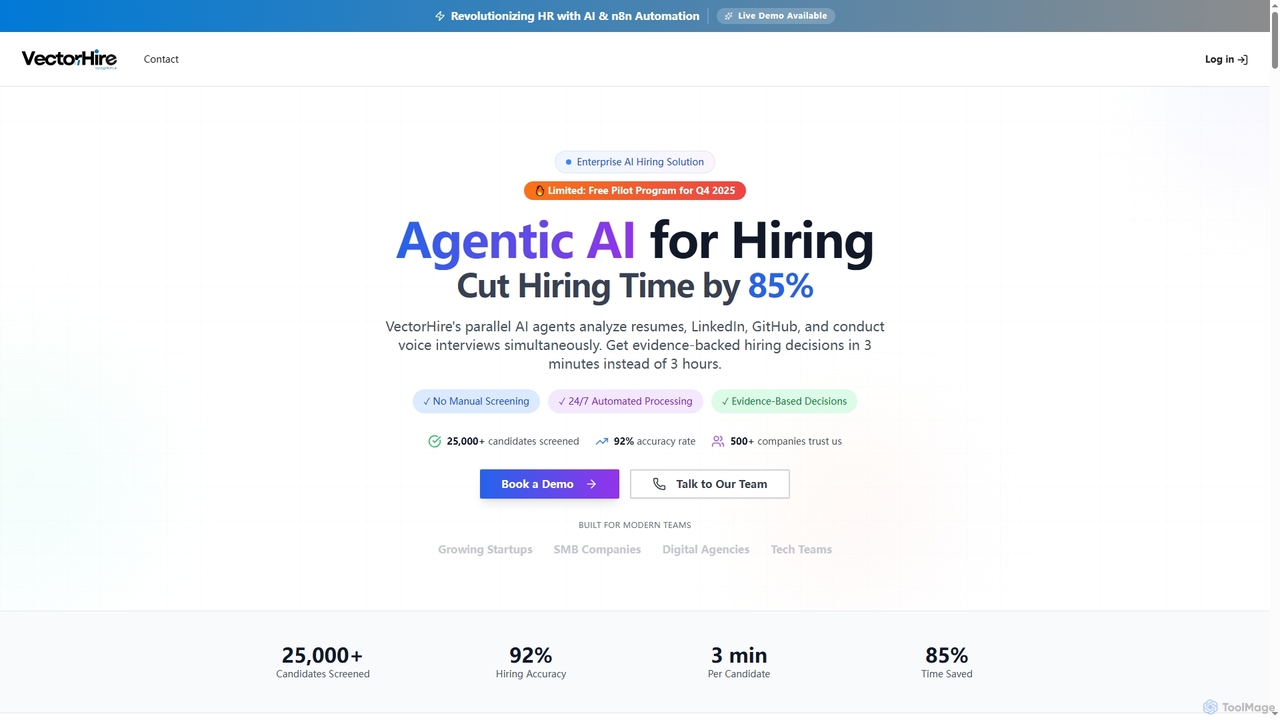
VectorHire

VectorHire

VectorHire is an agentic AI hiring solution that revolutionizes HR by cutting hiring time by 85%. It uses …

3.1K

About Talent Acquisition

AI Talent Acquisition tools are a specialized category of software designed to automate and enhance the recruitment process. These platforms leverage artificial intelligence, particularly machine learning and natural language processing, to source, screen, and engage with potential candidates more effectively. By analyzing vast amounts of data from resumes, job descriptions, and online profiles, they help recruiters identify the best-fit talent while significantly reducing manual effort. This targeted approach not only accelerates the hiring timeline but also improves the overall quality of hires within an organization's productivity framework.

Core Features

  • Automated Candidate Sourcing: Proactively scans job boards, professional networks, and internal databases to find and rank qualified passive and active candidates.
  • Intelligent Resume Screening: Uses Natural Language Processing (NLP) to parse resumes, extract key skills and experience, and match them against job requirements.
  • AI-Powered Candidate Matching: Employs machine learning algorithms to score and rank candidates based on their potential for success in a specific role.
  • Recruitment Chatbots & Automation: Engages candidates with automated chatbots for initial screening, answers common questions, and schedules interviews.

Use Cases

These tools are widely used by corporate HR departments to manage high-volume hiring, recruitment agencies to find niche talent for clients, and fast-growing startups needing to scale their teams quickly. They are particularly effective for roles where the talent pool is large or the required skills are highly specific.

How to Choose

When selecting an AI Talent Acquisition tool, consider its integration capabilities with your existing Applicant Tracking System (ATS). Evaluate the customization options for screening criteria and matching algorithms. Assess the quality of the candidate experience it provides and ensure it complies with data privacy regulations like GDPR and CCPA.

Talent AcquisitionUse Cases

1

Automating High-Volume Resume Screening

A corporate recruiter for a large retail company is tasked with hiring 100 customer service representatives. They receive over 5,000 applications. Instead of manually reviewing each one, the recruiter uses an AI talent acquisition tool. The AI automatically parses every resume, scores candidates based on experience, communication skills, and language proficiency, and presents a ranked shortlist of the top 200 applicants. This reduces screening time from weeks to a few hours, allowing the recruiter to focus on interviewing qualified candidates.

2

Sourcing Passive Candidates for Tech Roles

A technical recruiter at a software company needs to find a Senior Machine Learning Engineer with specific experience in PyTorch and cloud platforms. Active applicants are scarce. The AI sourcing tool scans platforms like GitHub, LinkedIn, and academic publications to identify individuals with the right project experience and skills, even if they aren't looking for a job. The tool provides a ranked list of passive candidates along with contact information and engagement suggestions, dramatically expanding the talent pool.

3

Enhancing Candidate Engagement with AI Chatbots

A fast-growing startup wants to ensure a positive experience for all applicants to maintain its employer brand. They implement an AI recruitment chatbot on their careers page. The chatbot operates 24/7, answering candidates' questions about company culture, benefits, and application status in real-time. It also conducts initial screening conversations and helps qualified candidates self-schedule their first interview, ensuring no applicant is left without a timely response.

4

Reducing Unconscious Bias in the Hiring Process

A company's Diversity and Inclusion (D&I) team aims to create a more equitable hiring process. They adopt an AI tool that anonymizes resumes by removing names, photos, universities, and other potential identifiers of gender, race, or age. The platform then evaluates candidates solely on skills, experience, and qualifications relevant to the job. This data-driven approach helps hiring managers make more objective decisions and increases the diversity of the candidate pipeline.

5

Streamlining Interview Scheduling and Coordination

A hiring coordinator for a multinational corporation manages scheduling for dozens of hiring managers across different time zones. The AI tool integrates with everyone's calendars (e.g., Google Calendar, Outlook). After a candidate is shortlisted, the AI automatically emails them a link to select their preferred time slots from a list of mutually available times. The system then sends calendar invites, reminders, and follow-ups to both the candidate and interviewers, eliminating manual back-and-forth communication.

6

Predicting Hiring Success with Data Analytics

A sales director wants to improve the quality of new hires and reduce turnover. They use an AI talent acquisition platform that analyzes the performance data and profiles of their current top-performing sales representatives. The AI builds a "success profile" based on key traits, skills, and experiences. When screening new applicants, the tool prioritizes those who most closely match this predictive model, increasing the likelihood of hiring candidates who will excel in the role and stay with the company long-term.

Talent AcquisitionFrequently Asked Questions