ToolMage
Sign in

Best 4 Trading AI tools for Productivity

Popular Trading AI tools in Productivity include KuCoin, ArbitrageScanner, Sharpe AI, and Pump Fun Coin, helping you work more efficiently.

KuCoin
Freemium

KuCoin

KuCoin is a leading global cryptocurrency exchange, offering a secure and user-friendly platform for trading over 900 digital assets. Known as the "People's Exchange," it provides a comprehensive suite of services, including spot trading, futures, margin trading, staking, and automated trading bots. With a strong focus on security and a vast selection of altcoins, KuCoin empowers both novice and professional traders to explore the crypto market and grow their portfolios.

Cryptocurrency Exchange
Visits 14.9MFavorites 106Likes 108
Pump Fun Coin
Freemium

Pump Fun Coin

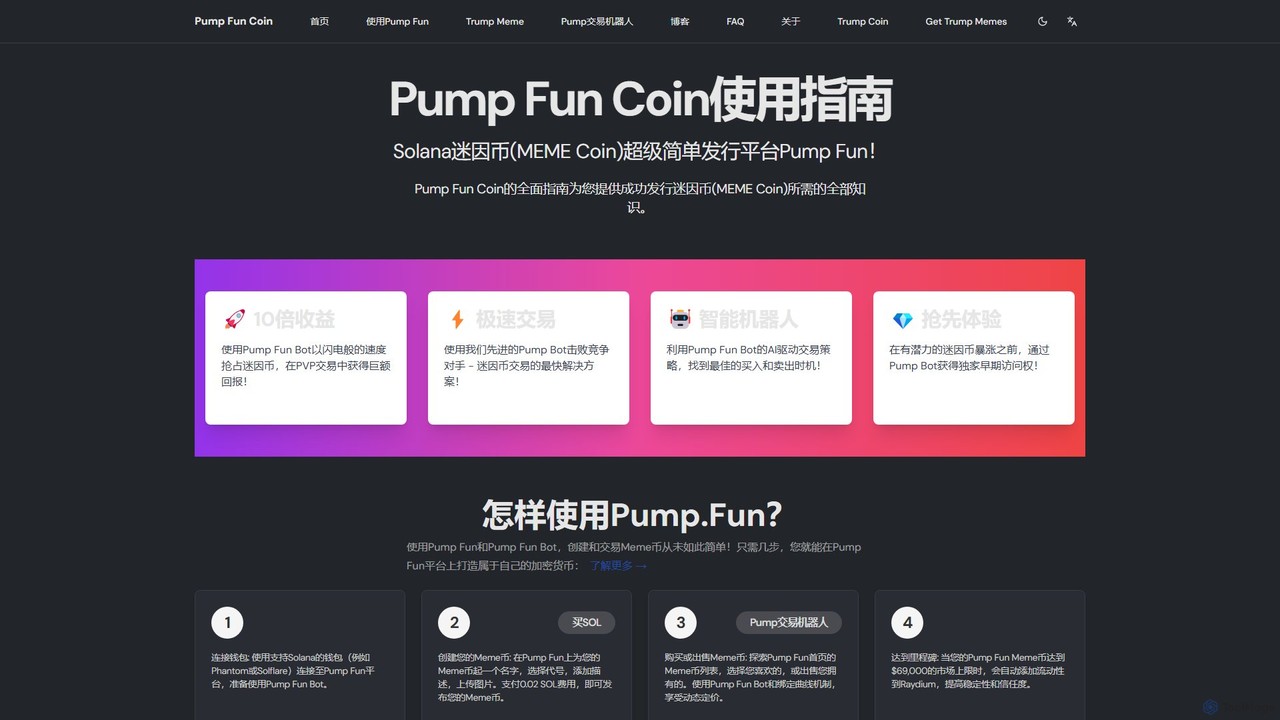
Pump Fun Coin is a comprehensive guide and AI-powered trading bot for the pump.fun platform. It enables users to easily create Solana meme coins and utilize an advanced bot for high-speed sniping, AI-driven trading strategies, and early access to promising tokens, aiming to maximize returns in the fast-paced meme coin market.

Crypto
Visits 5KFavorites 144Likes 127
Sharpe AI
Freemium

Sharpe AI

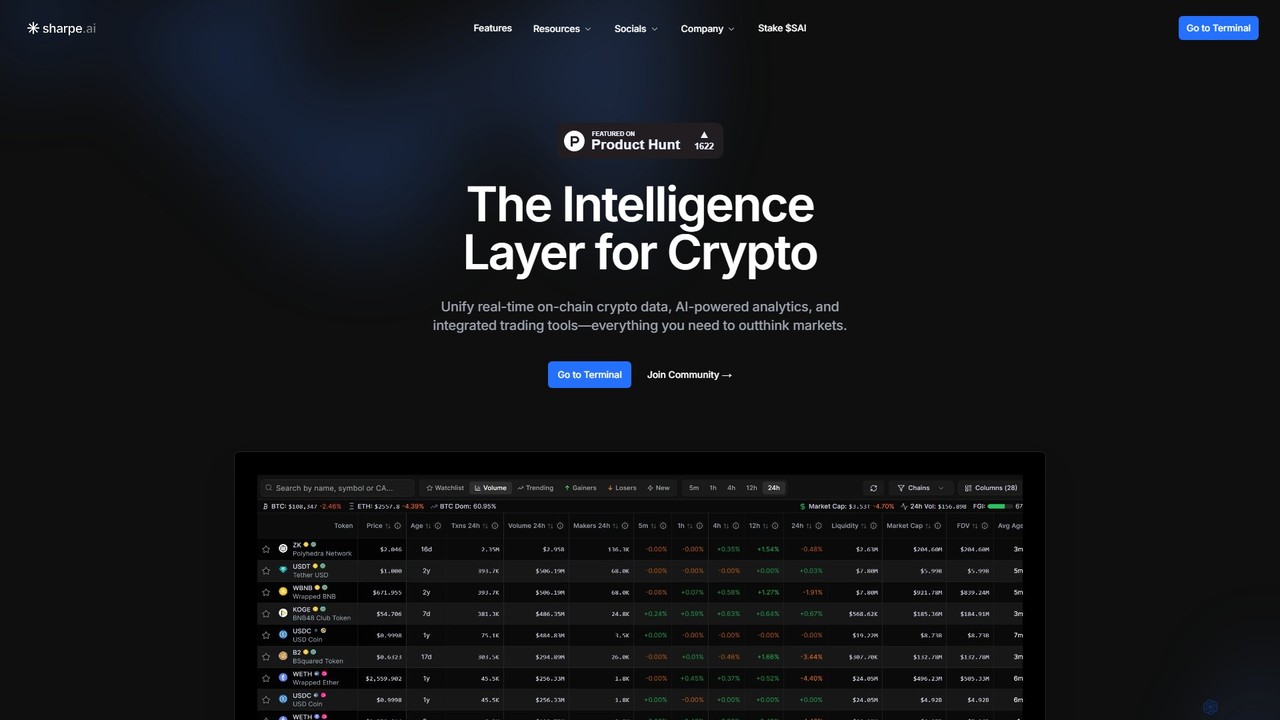
Sharpe AI is an all-in-one crypto intelligence and trading platform. It integrates real-time on-chain and off-chain data, AI-powered analytics, and seamless trade execution into a single terminal. Designed for both retail traders and institutional desks, it provides the tools to analyze market trends, discover opportunities, and execute trades with speed and precision.

Market Intelligence
Visits 47.9KFavorites 126Likes 121
ArbitrageScanner
Paid

ArbitrageScanner

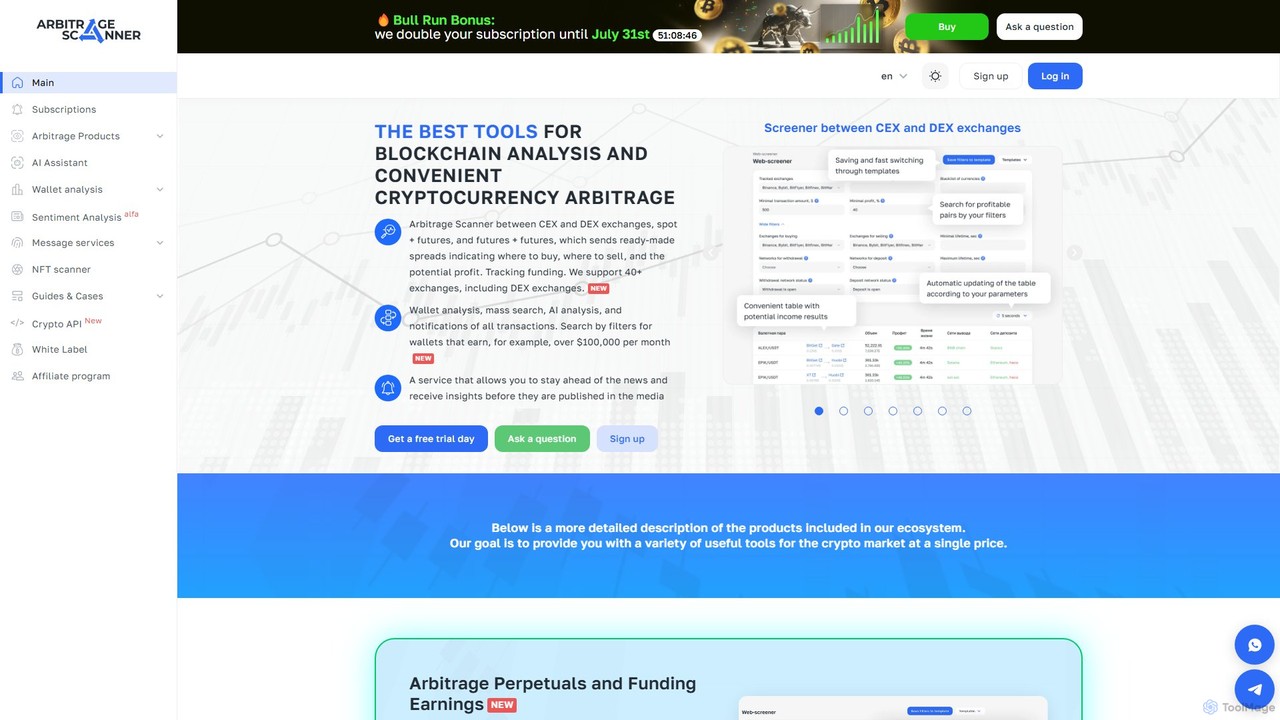
A comprehensive, manual crypto trading tool for identifying arbitrage opportunities across CEX and DEX. It offers advanced blockchain analysis, AI-powered wallet tracking, and real-time alerts for spot, futures, and NFT markets, ensuring user funds remain secure without API trading access.

Analytics
Visits 99.9KFavorites 111Likes 113

About Trading

AI Trading tools are specialized AI-powered applications designed to automate, analyze, and optimize financial market operations. These tools leverage machine learning, deep learning, and natural language processing to process vast amounts of market data, identify patterns, and execute trades with speed and precision. They enhance financial productivity by providing data-driven insights, reducing human error, and enabling sophisticated strategies across various asset classes.

Core Features

  • Algorithmic Trading: Automates trade execution based on predefined rules and AI-driven signals.
  • Market Analysis & Prediction: Analyzes real-time and historical data to forecast price movements and market trends.
  • Risk Management: Monitors portfolio risk, identifies potential threats, and suggests mitigation strategies.
  • Portfolio Optimization: Adjusts asset allocation to maximize returns while adhering to risk tolerance.
  • Sentiment Analysis: Gauges market sentiment from news, social media, and reports to inform trading decisions.

Applicable Scenarios

AI Trading tools are invaluable for individual investors seeking to automate their strategies, professional traders requiring real-time analytical edge, and institutional funds deploying complex quantitative models. They are used in high-frequency trading, long-term investment planning, and cross-market arbitrage, significantly boosting financial decision-making and operational efficiency.

How to Choose

When selecting AI Trading tools, consider the accuracy and transparency of their predictive models, the level of customization for trading strategies, and integration capabilities with your existing brokerage accounts. Evaluate their risk management features, the range of supported asset classes, and the clarity of their backtesting and simulation environments to ensure alignment with your investment goals and technical proficiency.


Trading use cases

1

Automating Stock Trading Strategies

An individual investor uses an AI trading tool to automatically execute buy and sell orders for stocks based on pre-set technical indicators and AI-generated market signals. This allows for emotion-free trading, consistent strategy application, and the ability to capitalize on opportunities even when not actively monitoring the market, significantly enhancing their investment productivity.

2

Real-time Market Sentiment Analysis

A day trader employs an AI tool to continuously scan financial news, social media, and analyst reports, extracting real-time sentiment scores for specific stocks or sectors. This enables them to quickly identify shifts in market mood, anticipate potential price movements, and make informed, rapid trading decisions ahead of broader market reactions.

3

Optimizing Cryptocurrency Arbitrage

A crypto trader utilizes an AI platform to detect and exploit price discrepancies for the same cryptocurrency across multiple exchanges. The AI automatically executes rapid buy and sell orders to profit from these fleeting opportunities, which are often too fast for human traders to identify and act upon manually, maximizing returns in volatile markets.

4

Forex Trend Prediction and Execution

A currency trader leverages an AI model to analyze vast historical Forex data, economic indicators, and geopolitical events to predict future currency pair movements. The tool then suggests or automatically executes trades based on these high-probability forecasts, providing a systematic approach to navigating the complex foreign exchange market.

5

Dynamic Portfolio Rebalancing

An asset manager uses an AI-driven system to continuously monitor a client's investment portfolio against their defined risk tolerance and financial goals. The AI automatically identifies when the portfolio deviates from its target allocation and suggests or executes rebalancing trades, ensuring optimal risk-adjusted returns without constant manual oversight.

6

Backtesting and Refining Options Strategies

An options trader employs an AI tool to backtest various complex options strategies against decades of historical market data. The AI simulates how each strategy would have performed under different market conditions, providing detailed performance metrics and helping the trader refine their approach before deploying capital in live markets, reducing speculative risk.

Trading FAQ

What are AI Trading Tools?

AI Trading tools are software applications that use artificial intelligence, primarily machine learning algorithms, to analyze financial markets, generate trading signals, and automate trade execution. They are designed to enhance decision-making, identify complex patterns in data, and execute strategies with speed and precision, often surpassing human capabilities in data processing and emotional neutrality.

How do AI Trading Tools work?

AI Trading tools work by ingesting massive datasets, including historical price data, trading volumes, economic indicators, and news sentiment. Machine learning algorithms then process this data to identify recurring patterns, predict future price movements, and develop optimal trading strategies. These tools can then either provide insights and signals to human traders or directly execute trades based on their learned models.

What are the benefits of using AI in Trading?

The primary benefits of using AI in trading include enhanced speed and efficiency in trade execution, the ability to process and analyze vast amounts of data beyond human capacity, and the elimination of emotional biases from trading decisions. AI tools can identify subtle market opportunities, manage risk more effectively, and continuously adapt strategies based on new data, leading to potentially improved returns and reduced manual effort.

What are the risks of AI Trading?

While beneficial, AI trading carries risks such as over-reliance on models that may fail in unprecedented market conditions ("black swan events"), the potential for algorithmic errors leading to significant losses, and the challenge of interpreting complex AI decisions. Data quality issues, model overfitting, and the lack of human intuition in unforeseen circumstances are also critical considerations that require careful management and oversight.

How to choose an effective AI Trading platform?

To choose an effective AI trading platform, evaluate its predictive accuracy and the transparency of its algorithms. Consider its compatibility with your preferred brokerage, the range of asset classes it supports, and the flexibility for customizing trading strategies. Assess its risk management features, backtesting capabilities, and the quality of customer support and educational resources. A clear understanding of its pricing model and your own technical comfort level are also crucial.