SkyNeu
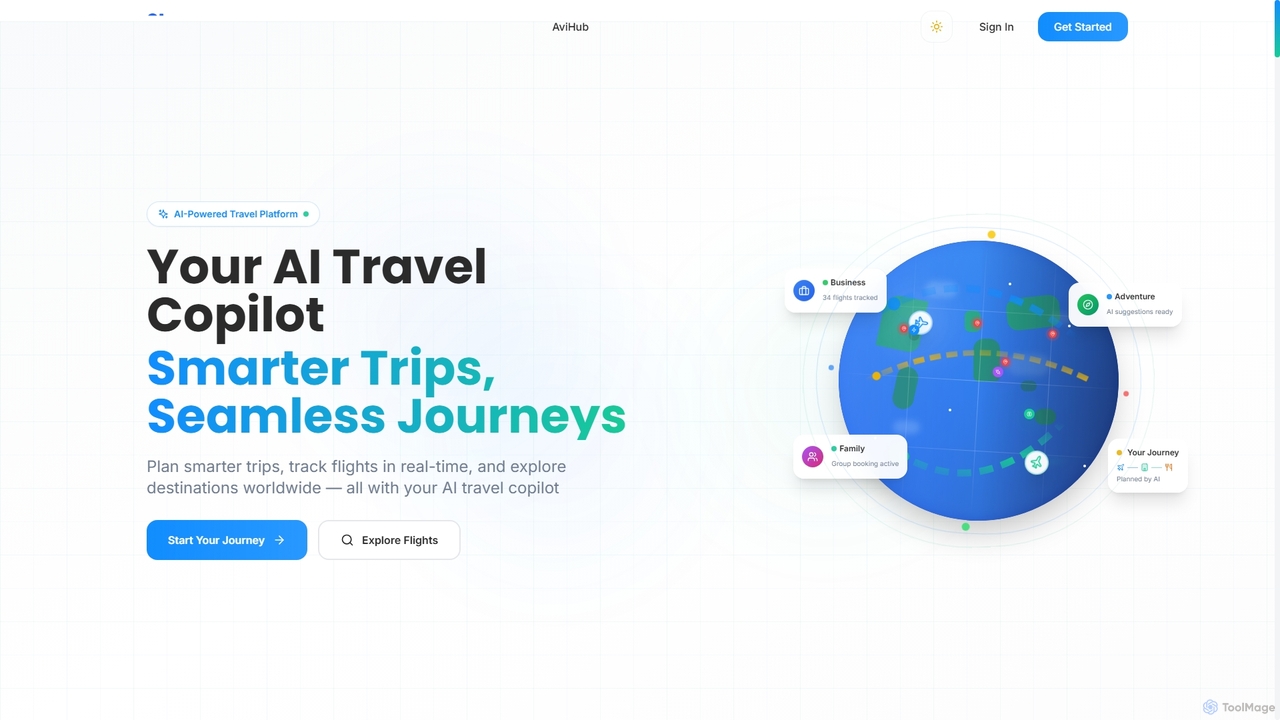
SkyNeu is an AI-powered travel platform designed to be your personal travel copilot, offering smart flight search, real-time …
SkyNeu is an AI-powered travel platform designed to be your personal travel copilot, offering smart flight search, real-time tracking, personalized trip planning, and comprehensive aviation insights for seamless journeys worldwide.
About Travel Management
Travel Management tools are AI-powered platforms designed to streamline and automate various aspects of business and personal travel planning. As a specialized segment within the Productivity category, these tools leverage artificial intelligence to optimize itineraries, manage expenses, and ensure compliance, significantly reducing the time and effort traditionally associated with travel logistics. They provide comprehensive solutions for booking, tracking, and reporting travel-related activities.
Core Features
- Automated Booking & Itinerary Generation: AI algorithms suggest and book flights, hotels, and ground transport based on preferences, policies, and real-time data.
- Expense Management & Reporting: Tools automate receipt scanning, categorization, and report generation, simplifying reimbursement processes.
- Policy Compliance & Approval Workflows: AI monitors bookings against company travel policies and facilitates automated approval chains.
- Real-time Alerts & Support: Provides instant notifications for delays, cancellations, and offers rebooking options or support during disruptions.
- Personalized Recommendations: Learns user preferences to offer tailored suggestions for destinations, accommodations, and activities.
Applicable Scenarios
These tools are invaluable for corporate travel departments managing large teams, individual business travelers seeking efficiency, and event planners coordinating complex logistics. They are also increasingly used by frequent leisure travelers to optimize personal trips, ensuring cost-effectiveness and convenience across all travel stages.
How to Choose
When selecting a Travel Management tool, consider its integration capabilities with existing HR/ERP systems, the breadth of its booking options, the robustness of its expense management features, and its ability to enforce specific travel policies. Evaluate user-friendliness, mobile accessibility, and the quality of real-time support for a seamless experience.
Travel ManagementUse Cases
Automated Business Trip Booking & Itinerary Generation
A corporate employee needs to book a multi-city business trip. Instead of manually searching for flights and hotels, the AI travel management tool allows them to input their destination, dates, and preferences. The AI then instantly generates a policy-compliant itinerary with optimized routes and cost-effective options, including flights, accommodations, and ground transportation, saving hours of planning time and ensuring adherence to company policies.
Automating Corporate Travel Bookings
HR administrators or executive assistants can leverage AI travel management tools to automatically book flights, hotels, and rental cars for employees, ensuring all selections adhere to company travel policies and budget constraints. This significantly reduces manual booking time, minimizes errors, and streamlines the entire corporate travel planning process, allowing staff to focus on core tasks rather than tedious logistics.
Real-time Expense Reporting & Approval
After a business trip, a sales manager uses the mobile app of their AI travel management system to snap photos of receipts. The AI automatically extracts data, categorizes expenses, and matches them against bookings. The system then routes the expense report for approval based on pre-defined workflows, significantly accelerating reimbursement cycles and reducing errors for the finance department.
Optimizing Business Trip Itineraries
A sales professional frequently traveling between multiple cities can use an AI travel management tool to generate the most efficient itinerary. The AI considers meeting schedules, travel times, preferred airlines/hotels, and real-time traffic/flight data to suggest optimal routes and timings. This ensures maximum productivity during the trip, minimizing wasted time in transit and allowing for more client engagements.
Ensuring Policy Compliance & Cost Optimization
A travel manager for a large corporation utilizes the AI platform to set and enforce global travel policies. When an employee attempts to book a flight or hotel outside the approved budget or vendor list, the AI immediately flags the booking, provides alternative compliant options, or requires specific approval. This proactive approach ensures budget adherence and prevents unnecessary spending across the organization.
Streamlining Expense Reporting for Employees
Employees can use AI-powered mobile apps to capture receipts instantly, categorize expenses, and automatically generate expense reports. The AI can read receipt details, match them to company expense categories, and even flag potential policy violations. This drastically reduces the time spent on manual data entry and reconciliation, accelerating the reimbursement process and improving employee satisfaction.
Proactive Risk Management & Traveler Safety
During a global conference, a sudden flight cancellation impacts several traveling employees. The AI travel management system automatically detects the disruption, identifies affected travelers, and sends real-time alerts with alternative travel options. It also provides emergency contact information and tracks traveler locations (with consent), enabling the company to fulfill its duty of care and ensure employee safety efficiently.
Ensuring Travel Policy Compliance
Corporate travel managers can configure AI tools to automatically enforce company travel policies, such as preferred vendors, spending limits, and class of travel. The AI system flags any bookings that deviate from these rules, prompting review or requiring specific approvals before confirmation. This proactive approach helps maintain budget control, reduces unauthorized spending, and ensures consistent policy adherence across the organization.
Personalized Travel Recommendations for Employees
An executive frequently travels to specific cities for client meetings. The AI travel management tool learns their preferred airlines, hotel chains, and even seat preferences. When booking future trips, the system proactively suggests personalized options that align with their past choices and company policy, enhancing their travel experience while still maintaining cost efficiency and compliance.
Personalized Leisure Travel Planning
An individual planning a vacation can use an AI travel management tool to receive personalized recommendations for destinations, accommodations, and activities. By analyzing past travel history, preferences, and budget, the AI can suggest unique experiences, optimize flight and hotel combinations for cost and convenience, and even build a day-by-day itinerary. This saves hours of research and ensures a highly tailored and enjoyable trip.
Streamlined Vendor Management & Negotiation
A procurement team uses the AI travel management platform's analytics to gain insights into travel spending patterns across different vendors. The AI identifies opportunities for bulk discounts or preferred rates based on historical data and projected travel volumes. This data-driven approach empowers the team to negotiate better deals with airlines, hotels, and car rental companies, leading to significant cost savings for the company.
Real-time Travel Disruption Management
A business traveler facing a sudden flight cancellation can rely on an AI travel management tool for immediate assistance. The AI automatically detects the disruption, notifies the traveler, and proactively suggests alternative flights, rebooking options, or even nearby hotel accommodations if an overnight stay is required. This minimizes stress and lost productivity, ensuring the traveler can quickly adapt to unforeseen changes.