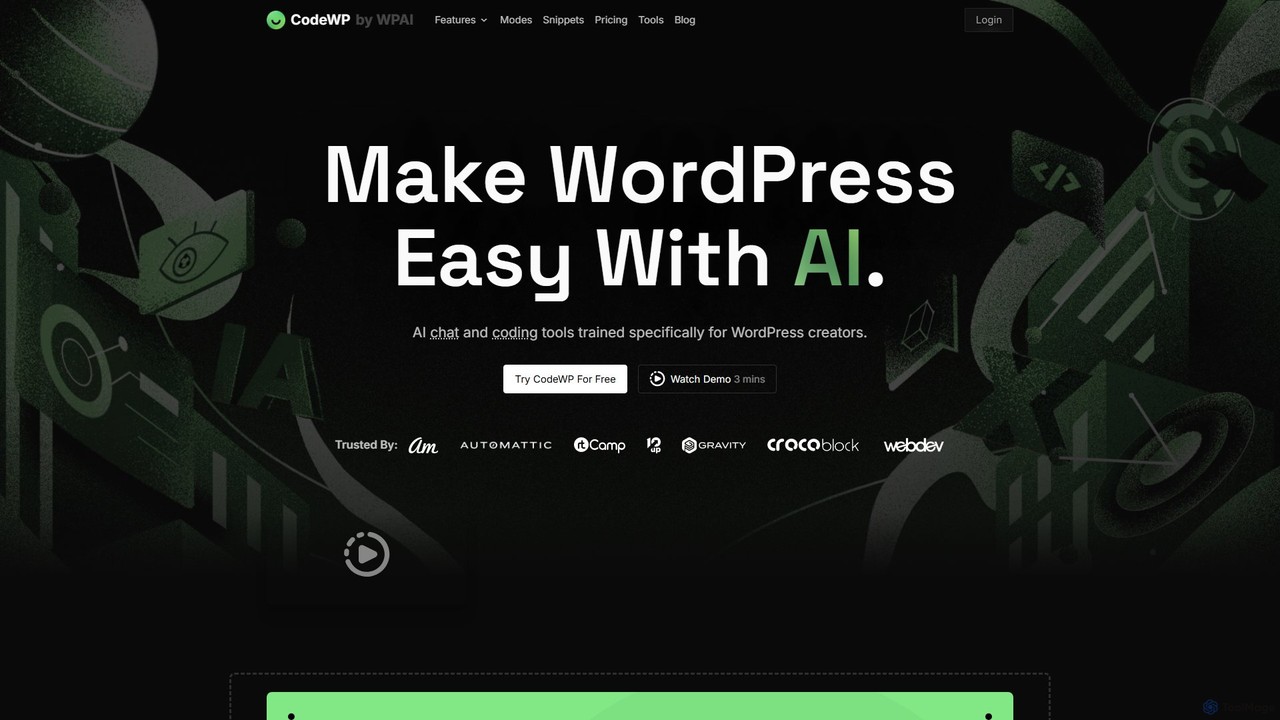
AI Wordpress tools are plugins and services designed to integrate artificial intelligence capabilities directly into the Wordpress ecosystem. These tools leverage technologies like natural language processing and machine learning to automate and enhance tasks such as content creation, SEO optimization, and website management. Their primary value lies in streamlining workflows, allowing creators and administrators to produce high-quality content and manage their sites more efficiently without leaving the Wordpress dashboard. This direct integration distinguishes them from standalone AI applications, offering a more seamless and productive experience.
Core Features
- Integrated Content Generation: Create drafts for blog posts, pages, or product descriptions directly within the Wordpress editor using AI prompts.
- AI-Powered SEO Optimization: Analyze content, generate meta titles and descriptions, suggest relevant keywords, and build internal links automatically.
- Image Generation & Optimization: Produce unique images from text descriptions and automatically compress or add alt text to existing media.
- Automated Site Management: Handle tasks like comment moderation, spam filtering, content translation, and creating redirects with AI assistance.
- AI-Assisted Design & Layout: Utilize AI assistants in page builders to suggest layouts, color schemes, or even generate entire sections of a page.
Use Cases
These tools are ideal for content creators, bloggers, digital marketers, and SEO specialists who manage Wordpress websites. They are also highly valuable for small business owners and agencies looking to scale content production and optimize multiple client sites efficiently. Any user aiming to reduce manual effort in content strategy, creation, and technical SEO will find these plugins beneficial.
How to Choose
When selecting an AI Wordpress tool, consider its core functionality—whether you need a focus on content writing, SEO, or image creation. Evaluate its compatibility with your existing theme and plugins to avoid conflicts. Assess the user interface for ease of use and how well it integrates into your workflow. Finally, compare pricing models, such as one-time fees versus subscriptions, and check for usage limits to ensure it aligns with your budget and content volume.