Productivity Best in category 1 results Work Tracking AI Tool

Popular AI tools in the Work Tracking field of Productivity include Marchen, etc., helping you quickly improve efficiency.

Marchen

Marchen

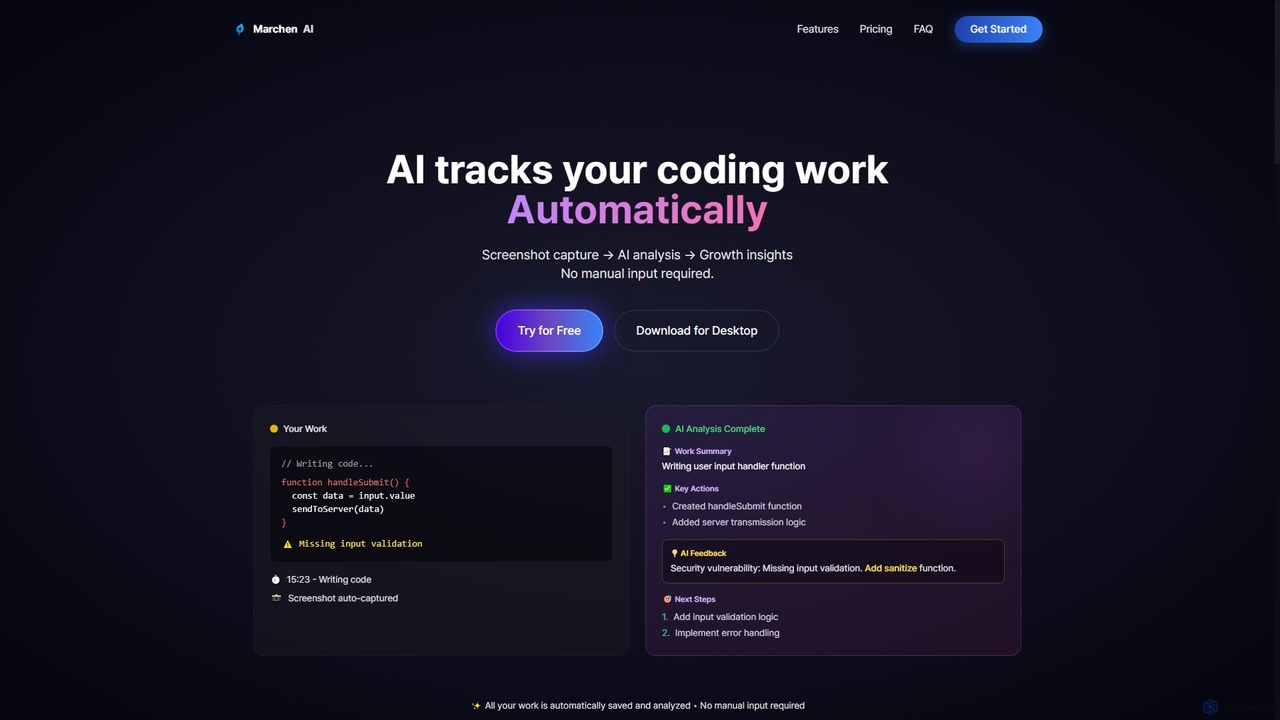
Marchen is an AI-powered desktop application that automatically tracks your coding work, captures screenshots, and analyzes your activity …

2.4K

About Work Tracking

Work Tracking tools are AI-powered solutions designed to monitor, analyze, and optimize project progress, task completion, and team performance. These tools leverage machine learning to process vast amounts of data, providing real-time insights into workflows and resource utilization. They help organizations enhance transparency, identify bottlenecks, and make data-driven decisions to improve overall productivity and project outcomes. By automating routine tracking tasks, they free up valuable time for strategic planning and execution.

Core Features

  • AI-powered Progress Monitoring: Automatically tracks task status, project milestones, and team activities, providing real-time updates.
  • Predictive Analytics: Forecasts potential project delays, resource overloads, and budget deviations based on historical data and current trends.
  • Automated Reporting & Insights: Generates comprehensive performance reports, identifying efficiency gaps and areas for improvement without manual compilation.
  • Intelligent Task Prioritization: Suggests optimal task sequencing and prioritization based on dependencies, deadlines, and resource availability.
  • Resource Allocation Optimization: Recommends efficient distribution of team members and assets to maximize output and prevent burnout.

Use Cases

Work Tracking tools are invaluable for project managers overseeing complex initiatives, team leads needing granular visibility into individual contributions, and operations managers striving for workflow efficiency. They are particularly useful in agile development environments for tracking sprint progress and identifying impediments, as well as for remote teams requiring transparent accountability across distributed members.

How to Choose

When selecting a Work Tracking tool, consider its integration capabilities with your existing project management and communication platforms to ensure seamless data flow. Evaluate the depth of its AI analytics, looking for features like predictive insights and automated anomaly detection. Assess its customization options for dashboards and reports, and ensure it offers robust security and compliance features suitable for your industry. Finally, consider the user interface's intuitiveness and scalability to accommodate your team's growth.

Work TrackingUse Cases

1

Real-time Project Progress Monitoring

A project manager overseeing a large software development project uses an AI Work Tracking tool to monitor the progress of multiple teams simultaneously. The tool automatically collects data from various development platforms, identifies tasks nearing deadlines, and flags potential bottlenecks, allowing the manager to intervene proactively and keep the project on schedule without constant manual check-ins.

2

Optimizing Team Workload and Resource Allocation

A team lead uses an AI Work Tracking tool to analyze individual team member workloads and skill sets. The tool identifies team members who are over-allocated or under-utilized, and suggests optimal task reassignments to balance the workload, prevent burnout, and ensure that critical tasks are handled by the most suitable individuals, leading to improved team efficiency and morale.

3

Predictive Risk Identification for Project Delays

A program manager uses an AI Work Tracking tool to proactively identify potential risks that could lead to project delays. By analyzing historical project data, current task dependencies, and team performance metrics, the AI predicts which tasks are most likely to fall behind schedule, allowing the manager to allocate additional resources or adjust timelines before issues escalate, minimizing costly disruptions.

4

Automated Performance Reporting for Stakeholders

An operations manager needs to provide weekly performance reports to various stakeholders. An AI Work Tracking tool automates this process by aggregating data from all ongoing projects, generating customized reports with key metrics, and highlighting trends or anomalies. This saves significant time compared to manual reporting and ensures stakeholders receive consistent, data-driven insights without delay.

5

Enhancing Accountability in Remote and Hybrid Teams

A company with a distributed workforce struggles with maintaining visibility and accountability across remote and hybrid teams. An AI Work Tracking tool provides a centralized platform where all tasks, deadlines, and individual contributions are transparently logged and monitored. The AI can identify disparities in workload or engagement, helping team leads ensure fair distribution and maintain high levels of productivity and collaboration regardless of location.

6

Streamlining Agile Sprint Management

An agile development team uses an AI Work Tracking tool to streamline their sprint management. The AI helps in breaking down epics into manageable user stories, estimates task complexities, and suggests optimal sprint backlogs based on team capacity and project goals. During the sprint, it monitors progress, identifies impediments, and provides real-time burndown charts, ensuring the team stays focused and delivers value efficiently.

Work TrackingFrequently Asked Questions