Forking Path
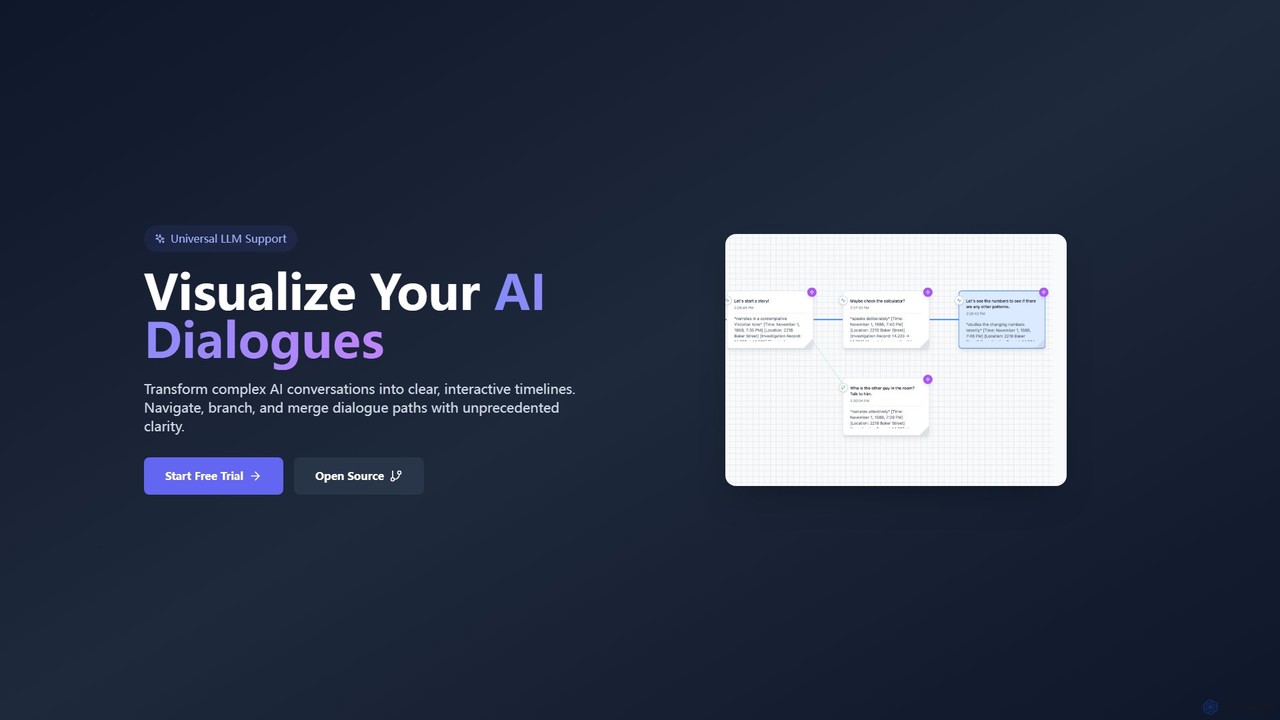
A developer-centric platform for visualizing, managing, and debugging complex AI conversations. Transform text logs into interactive, branching timelines …
A developer-centric platform for visualizing, managing, and debugging complex AI conversations. Transform text logs into interactive, branching timelines to streamline development and enhance clarity for any Large Language Model (LLM).
About Workflow
AI Workflow tools are designed to automate, optimize, and manage sequences of tasks and processes, enhancing overall operational efficiency within the broader Productivity category. These tools leverage artificial intelligence to understand, predict, and execute complex workflows, from simple task routing to multi-stage business process automation. They streamline operations, reduce manual effort, and ensure consistency across various organizational functions. By integrating AI, they adapt to changing conditions and learn from past executions, providing dynamic and intelligent process management.
Core Features
- Intelligent Task Automation: Automatically triggers and executes repetitive tasks based on predefined rules or AI-driven insights.
- Process Orchestration: Coordinates multiple systems, applications, and human actions into a cohesive, end-to-end workflow.
- Adaptive Workflow Management: Uses machine learning to analyze process data, identify bottlenecks, and suggest optimizations or re-route tasks dynamically.
- Integration Capabilities: Connects with a wide range of third-party applications and data sources to ensure seamless data flow and action execution.
- Real-time Monitoring & Analytics: Provides dashboards and reports to track workflow performance, identify inefficiencies, and measure impact.
Applicable Scenarios
These tools are invaluable for businesses seeking to standardize and accelerate their operations. Marketing teams can automate content approval flows, IT departments can streamline incident response, and HR can automate onboarding processes. They are particularly useful in environments with high volumes of repetitive tasks or complex, multi-departmental processes.
How to Choose
When selecting an AI Workflow tool, consider its integration ecosystem with your existing software, the complexity of workflows it can handle, and its scalability. Evaluate the level of AI intelligence for adaptive learning and decision-making, as well as the ease of use for non-technical users in designing and managing workflows. Pricing models and customer support are also crucial factors.
WorkflowUse Cases
Automating Customer Support Ticket Routing
Customer service departments use AI workflow tools to automatically categorize incoming support tickets, extract key information, and route them to the most appropriate agent or department based on urgency, topic, and customer history. This reduces response times and ensures specialized handling, improving customer satisfaction and agent efficiency by eliminating manual triage.
Streamlining Employee Onboarding Processes
HR teams leverage AI workflows to automate the multi-step onboarding journey for new hires. This includes automatically sending welcome emails, provisioning access to necessary systems, scheduling initial training sessions, and tracking completion of compliance documents. It ensures a consistent, efficient, and personalized onboarding experience, freeing HR staff from repetitive administrative tasks.
Accelerating Content Approval Workflows
Marketing and content teams utilize AI workflow tools to manage the creation, review, and approval of marketing assets. The system automatically routes content drafts to relevant stakeholders (editors, legal, brand managers) for feedback, tracks revisions, and ensures all necessary approvals are obtained before publication. This significantly reduces bottlenecks and accelerates time-to-market for campaigns.
Automating Invoice Processing and Approval
Finance departments deploy AI workflows to automate the entire invoice lifecycle, from receipt to payment. The AI extracts data from invoices, matches them against purchase orders, flags discrepancies, and routes them for approval based on predefined rules and spending limits. This minimizes manual data entry errors, speeds up payment cycles, and enhances financial compliance.
Optimizing Software Development & Deployment (CI/CD)
Development teams integrate AI workflow tools into their CI/CD pipelines to automate code testing, build processes, and deployment stages. The AI can identify potential issues in code, trigger automated tests, and even suggest optimal deployment schedules based on system load and performance metrics. This leads to faster, more reliable software releases and reduces human error.
Managing Supply Chain Order Fulfillment
Logistics and operations teams use AI workflows to automate the complex process of order fulfillment. This involves automatically checking inventory levels, generating pick lists, scheduling shipments with carriers, and updating customers with tracking information. The AI can dynamically adjust routes or suppliers in case of disruptions, ensuring timely delivery and optimizing operational costs.