ToolMage
Sign in

Best 6 Academic AI tools for Research

Popular Academic AI tools in Research include Papers with Code, SciSpace, gptsci, Mind-Video, PaperClip, and Profundo, helping you work more efficiently.

Mind-Video
Free

Mind-Video

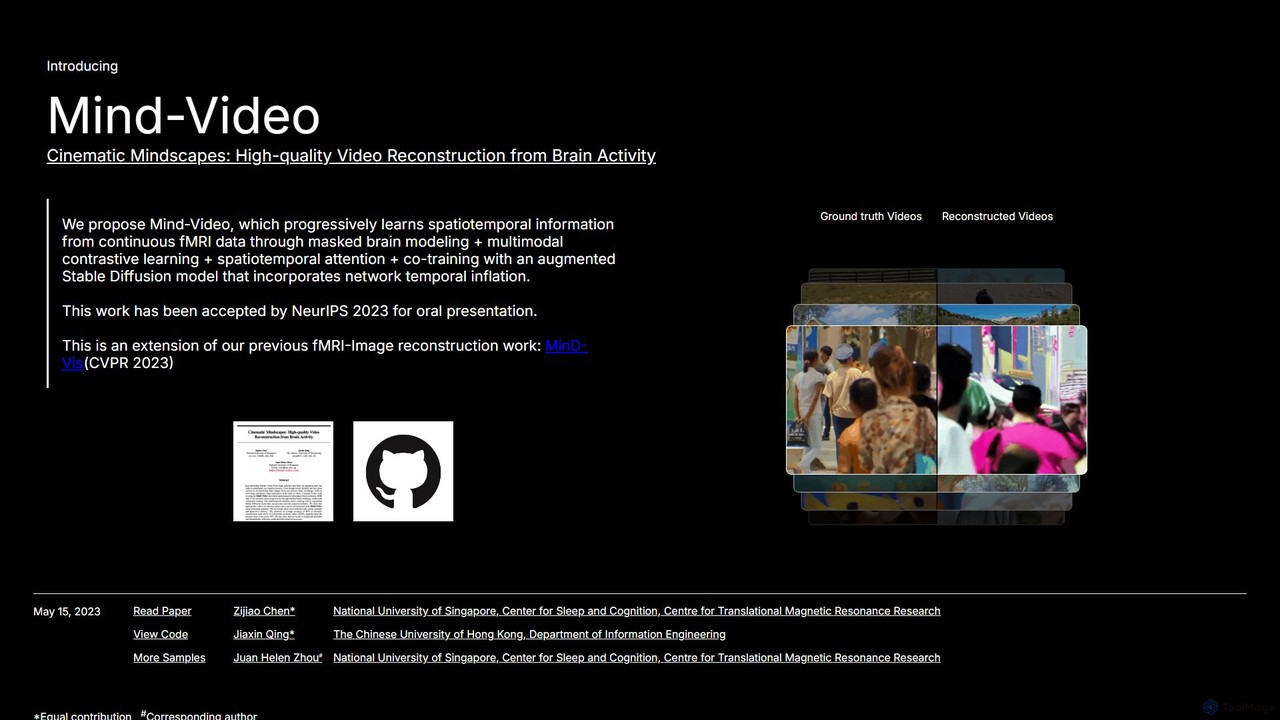
Mind-Video is a pioneering AI research project that reconstructs high-quality, dynamic videos directly from human brain activity recorded via fMRI. By leveraging a sophisticated two-module pipeline including an augmented Stable Diffusion model, it decodes visual experiences with remarkable semantic accuracy. This open-source tool represents a major leap in neuroscience and brain-computer interface technology.

Academic
Visits 9KFavorites 138Likes 134
SciSpace
Freemium

SciSpace

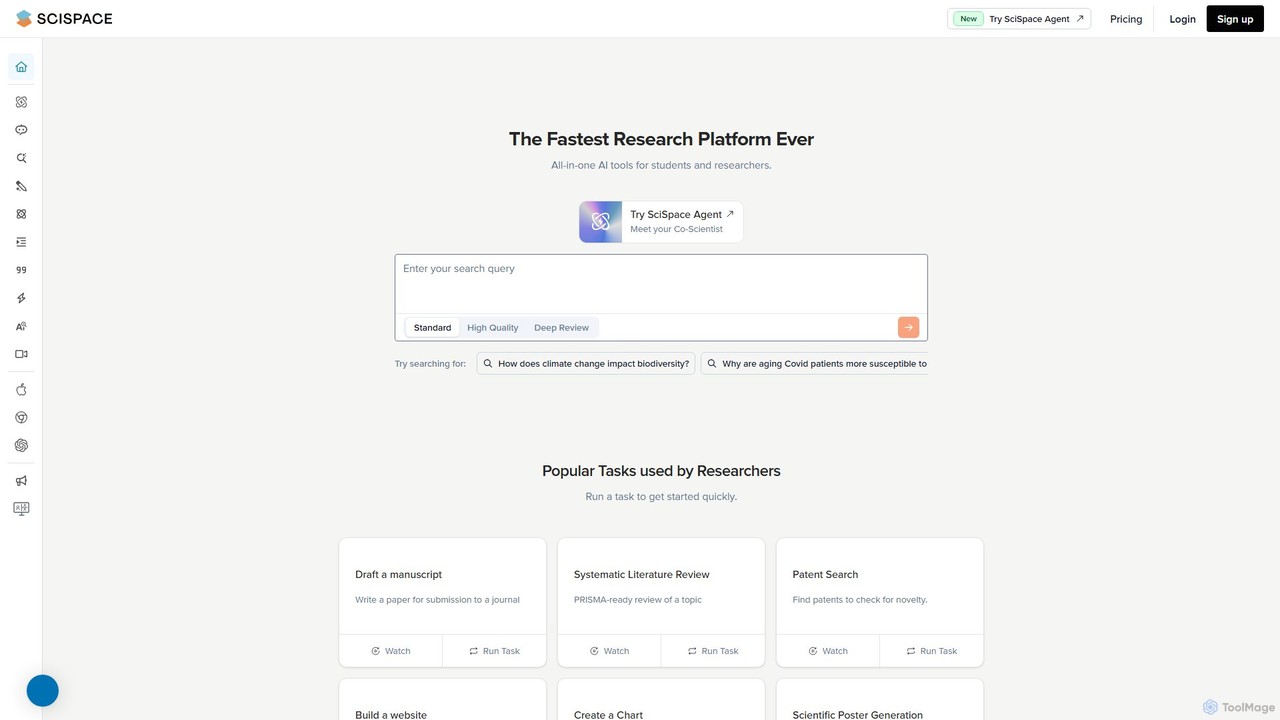
SciSpace is an all-in-one AI-powered platform designed for students and researchers. It simplifies the process of finding, understanding, and writing academic papers with tools like an AI Copilot for explaining complex texts, a literature review generator, a paraphraser, and a vast repository of over 200 million articles.

Student Tools
Visits 5MFavorites 110Likes 109
Papers with Code
Free

Papers with Code

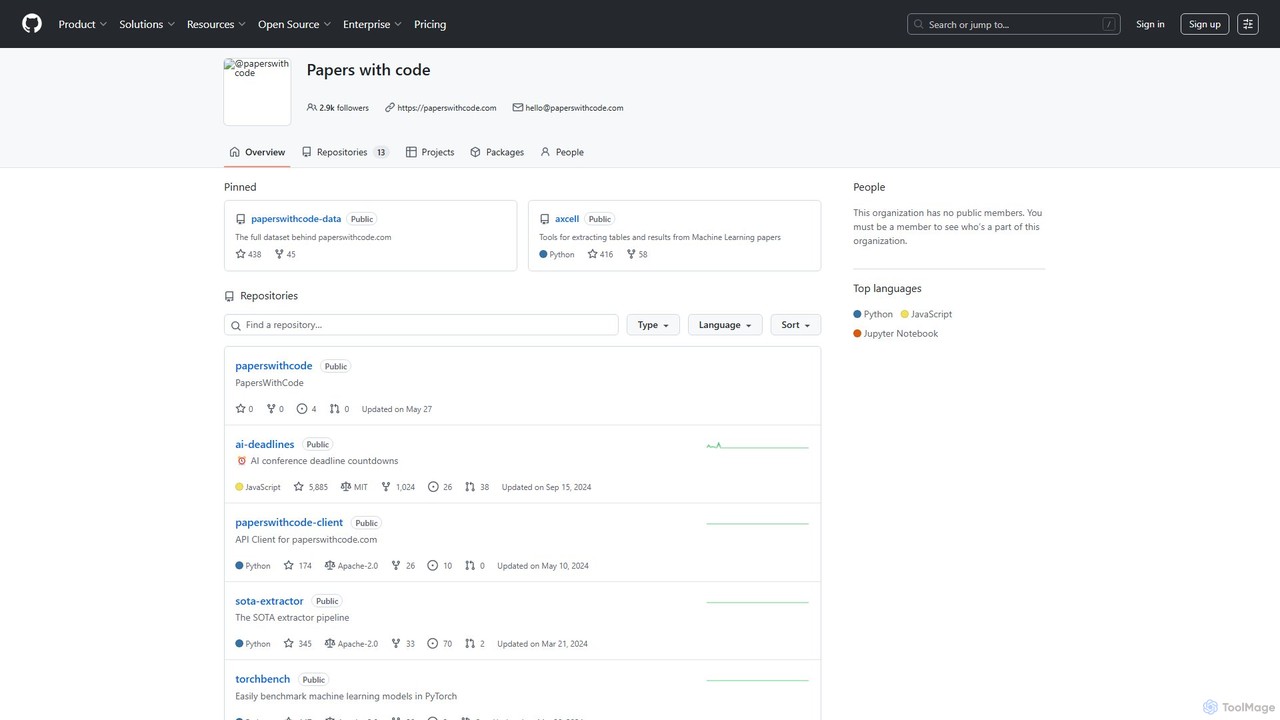
Papers with Code is a free, open resource for machine learning researchers and developers. It connects scientific papers to their corresponding open-source code, making research more accessible and reproducible. The platform features state-of-the-art leaderboards, browsable datasets, and a comprehensive collection of AI research, helping users track progress, find implementations, and accelerate their work. It is an essential tool for anyone in the AI/ML community.

Machine Learning
Visits 636.1MFavorites 120Likes 123
gptsci

gptsci

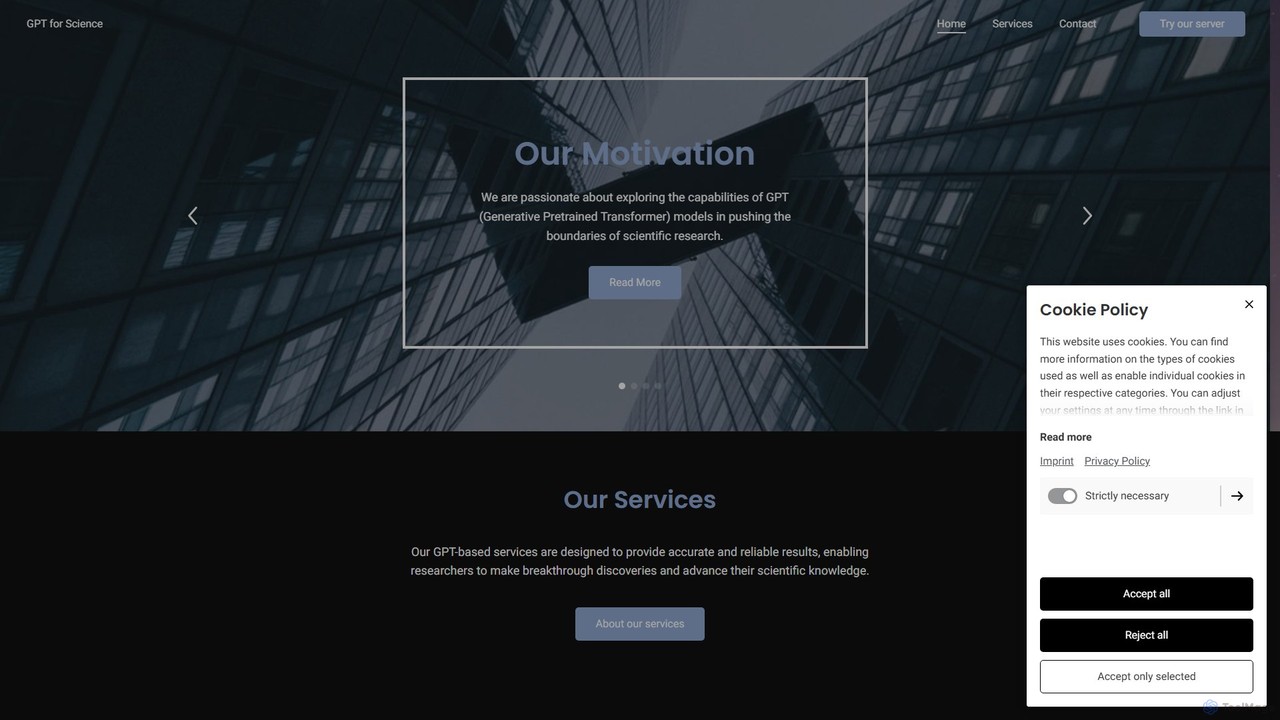
gptsci is a pioneering suite of AI tools designed to accelerate scientific research. It leverages fine-tuned GPT models to assist researchers with literature reviews, data analysis, hypothesis generation, and creating presentations, aiming to make scientific discovery more efficient and accessible.

Learning
Visits 26.9KFavorites 127Likes 129
Profundo
Freemium

Profundo

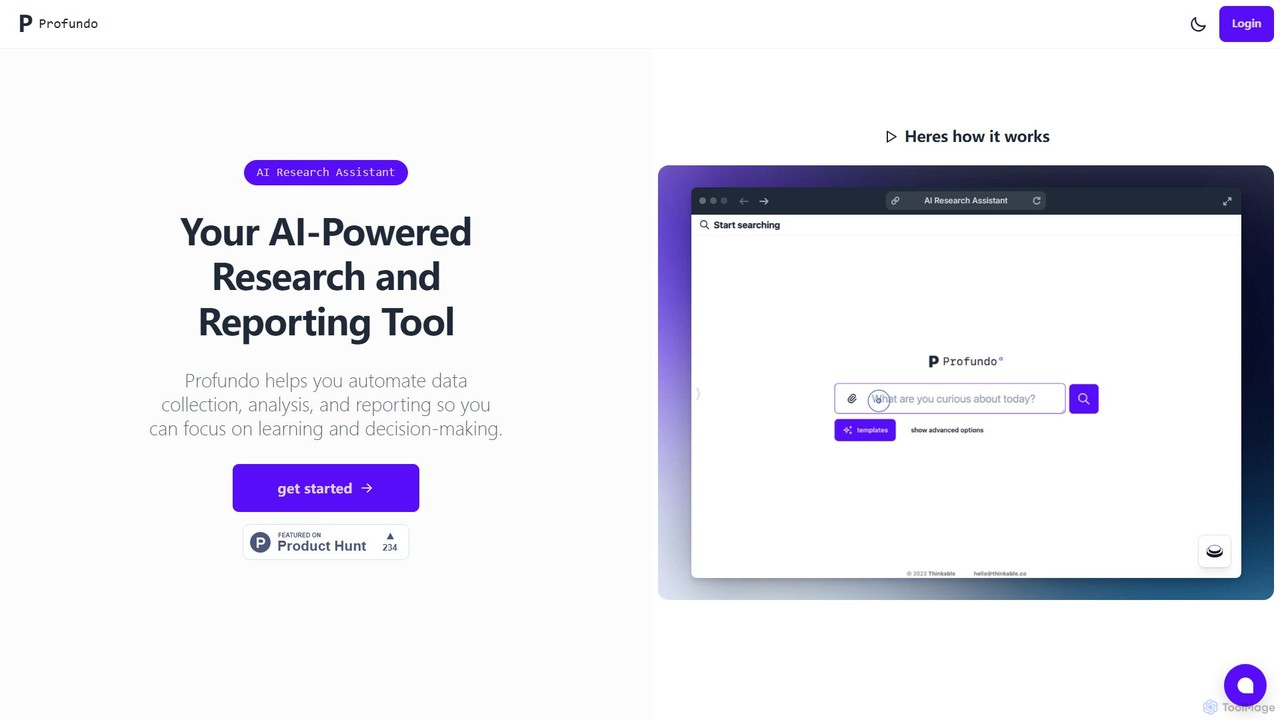
Profundo is an AI-powered research and reporting assistant designed to automate data collection, analysis, and report generation. It streamlines the research process for academics, professionals, and individuals, enabling them to conduct deep research efficiently, save time, and make informed decisions with highly accurate, AI-driven insights.

Market Intelligence
Visits 5.7KFavorites 99Likes 116

About Academic

Academic AI tools are specialized platforms designed to support researchers, students, and educators throughout their scholarly endeavors. Leveraging advanced natural language processing and machine learning, these tools streamline tasks from literature review and data analysis to academic writing and publication. They aim to enhance research efficiency, improve the quality of scholarly output, and accelerate knowledge discovery within various disciplines, serving as a focused subset of broader research tools.

Core Features

  • Literature Review & Summarization: Automatically identify, extract, and summarize key information from research papers and scholarly articles.
  • Academic Writing Assistance: Provide grammar, style, plagiarism checks, and paraphrasing suggestions tailored for academic contexts.
  • Data Analysis & Visualization: Assist in processing complex datasets, identifying patterns, and generating visual representations for research findings.
  • Citation & Reference Management: Automate the organization and formatting of citations according to various academic styles like APA, MLA, and Chicago.
  • Grant Proposal Generation: Aid in structuring and drafting compelling grant applications by suggesting relevant content and optimizing language.

Applicable Scenarios

Academic AI tools are invaluable for PhD students conducting extensive literature reviews for dissertations, professors preparing research papers for journal submission, and researchers analyzing large qualitative datasets from interviews or surveys. They also support educators in developing course materials and assessing student work more efficiently.

How to Choose

When selecting an Academic AI tool, consider its specific research needs alignment (e.g., writing, data, literature), discipline compatibility, and integration with existing academic workflows like reference managers. Prioritize tools with proven accuracy, reliability, and transparent methodologies to ensure research integrity and ethical use.

Academic use cases

1

Streamlining Literature Review for Dissertations

A PhD candidate uses an Academic AI tool to quickly scan hundreds of research papers, identify key themes, and summarize relevant findings for their thesis, saving weeks of manual reading and synthesis. This allows them to focus more on critical analysis and developing their unique research contribution.

2

Enhancing Academic Writing Quality for Publications

A university lecturer employs an AI writing assistant to refine their journal manuscript, checking for grammatical errors, improving sentence structure, and ensuring adherence to specific academic style guides before submission. This significantly boosts the manuscript's clarity and professionalism, increasing its chances of acceptance.

3

Accelerating Qualitative Data Analysis in Social Sciences

A social science researcher utilizes an AI tool to analyze large volumes of qualitative interview transcripts, automatically identifying recurring sentiments, coding themes, and generating initial insights for their study. This dramatically reduces the time spent on manual coding and allows for quicker identification of significant patterns.

4

Automating Citation and Reference Management

A student preparing a research paper inputs their sources into an AI citation manager, which then automatically formats all references according to APA, MLA, or Chicago style, preventing common formatting errors and ensuring consistency. This saves considerable time and reduces the stress associated with meticulous referencing.

5

Generating Initial Drafts for Grant Proposals

A research team leverages an Academic AI tool to generate an initial draft of a grant proposal, incorporating project objectives, methodology, and budget outlines based on provided keywords and previous successful applications. This significantly speeds up the application process, allowing the team to refine content rather than starting from scratch.

6

Assisting with Peer Review Feedback

A journal editor uses an AI tool to quickly identify potential methodological flaws, inconsistencies, or areas requiring clarification in submitted manuscripts, providing more structured, efficient, and objective feedback to authors. This enhances the quality and speed of the peer review process, benefiting both reviewers and authors.

Academic FAQ

What are Academic AI tools?

Academic AI tools are specialized software applications that use artificial intelligence to assist students, researchers, and educators with various scholarly tasks. They leverage technologies like natural language processing and machine learning to automate and enhance processes such as literature review, data analysis, academic writing, and citation management, ultimately aiming to improve research efficiency and output quality.

How do Academic AI tools differ from general research tools?

While general research tools might offer broad functionalities for information gathering or data organization, Academic AI tools are specifically tailored for scholarly contexts. They incorporate features like academic style checking, discipline-specific data analysis models, and robust citation management, focusing on the unique demands and integrity requirements of academic work, unlike more generic research aids.

What are the main benefits of using AI in academic research?

The primary benefits include significant time savings in tasks like literature review and data processing, improved accuracy in writing and citation, enhanced ability to discover patterns in large datasets, and support for generating structured drafts for papers or proposals. These tools help researchers focus more on critical thinking and less on tedious, repetitive tasks, thereby accelerating knowledge creation.

Can Academic AI tools help with plagiarism detection and prevention?

Yes, many Academic AI tools incorporate advanced plagiarism detection features that scan texts against vast databases of published works and online content. Beyond detection, some tools also offer paraphrasing assistance and citation suggestions to help users correctly attribute sources and avoid unintentional plagiarism, promoting academic integrity and ethical scholarship.

What should I consider when choosing an Academic AI tool?

When selecting an Academic AI tool, consider its specific functionalities (e.g., writing, data analysis, literature review) and how they align with your primary needs. Evaluate its accuracy, reliability, and transparency in methodology. Also, check for compatibility with your academic discipline, integration with existing research software, user-friendliness, and the tool's policies on data privacy and ethical AI use.