Merci
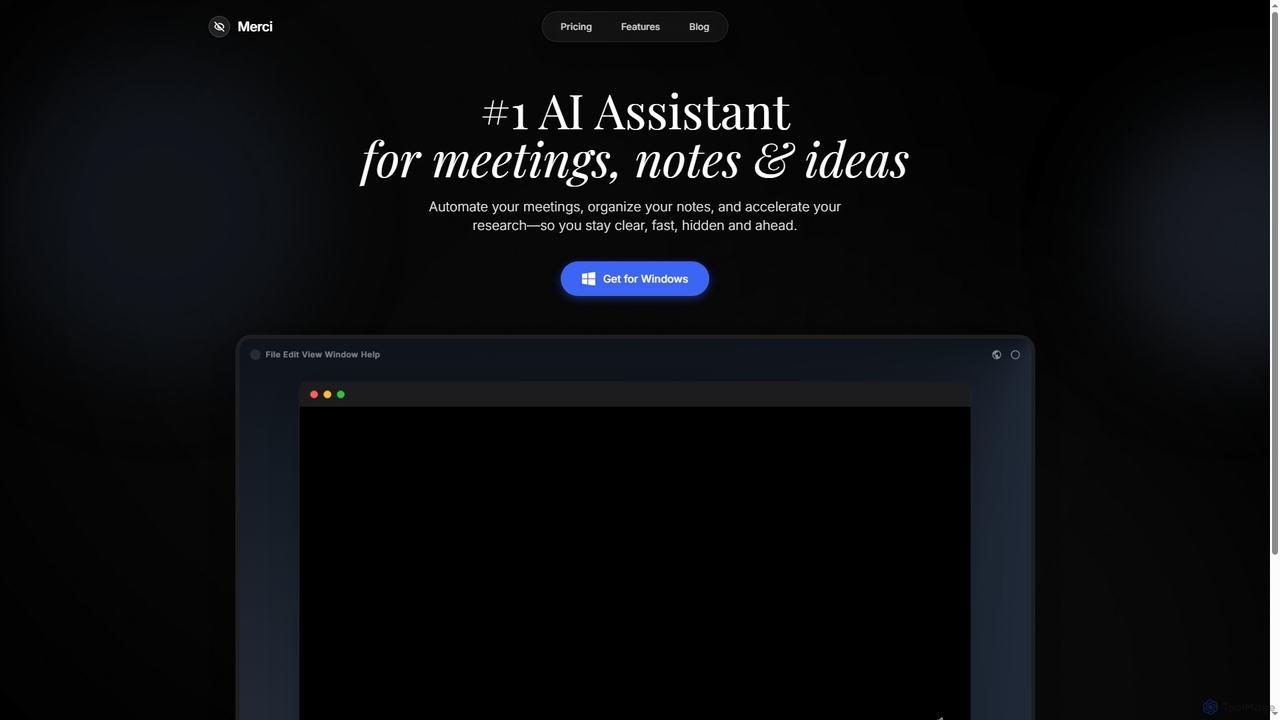
Merci is an advanced AI assistant designed to streamline your professional life by automating meetings, organizing notes, and …
Merci is an advanced AI assistant designed to streamline your professional life by automating meetings, organizing notes, and accelerating research. It helps users stay clear, fast, hidden, and ahead in their respective fields, offering a powerful solution for efficient information management and productivity on Windows.
Caywork
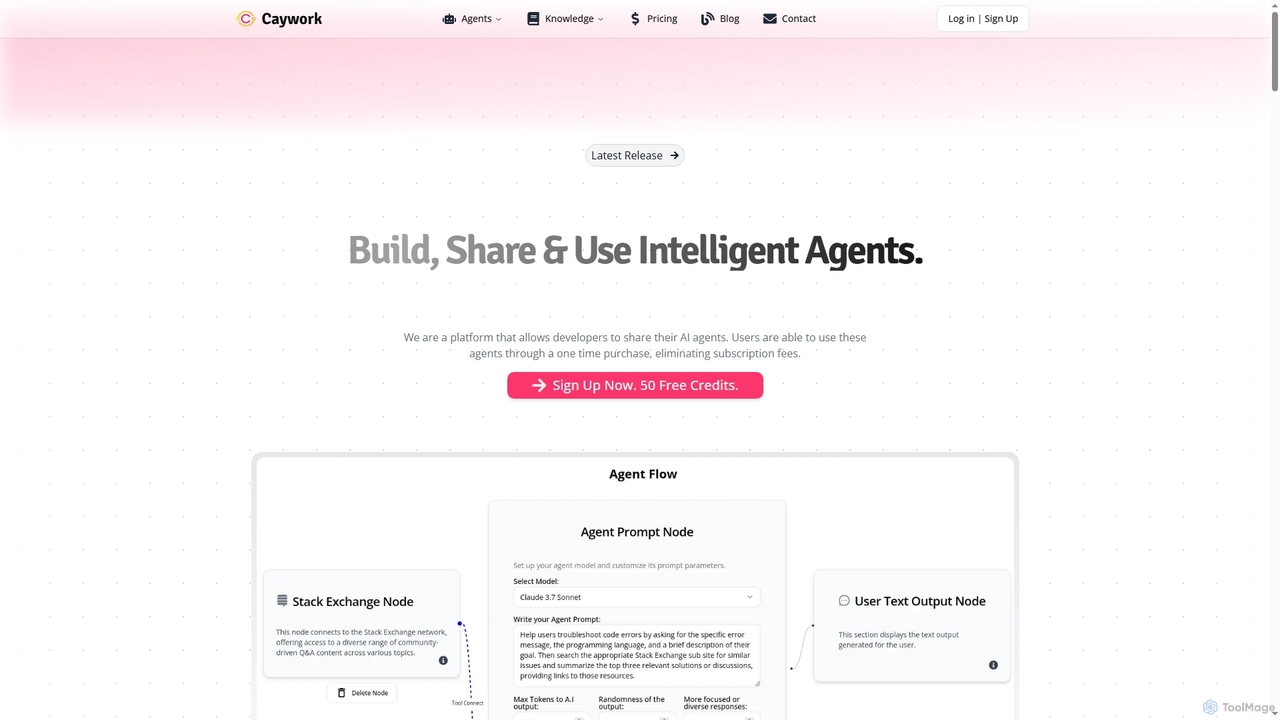
Caywork is a platform for building, sharing, and using intelligent AI agents. It offers developers a streamlined way …
Caywork is a platform for building, sharing, and using intelligent AI agents. It offers developers a streamlined way to publish task-specific agents without upfront costs, handling integrations and hosting. Users benefit from a pay-per-use credit system, eliminating subscriptions and providing quick access to a diverse marketplace of agents.
Sup AI
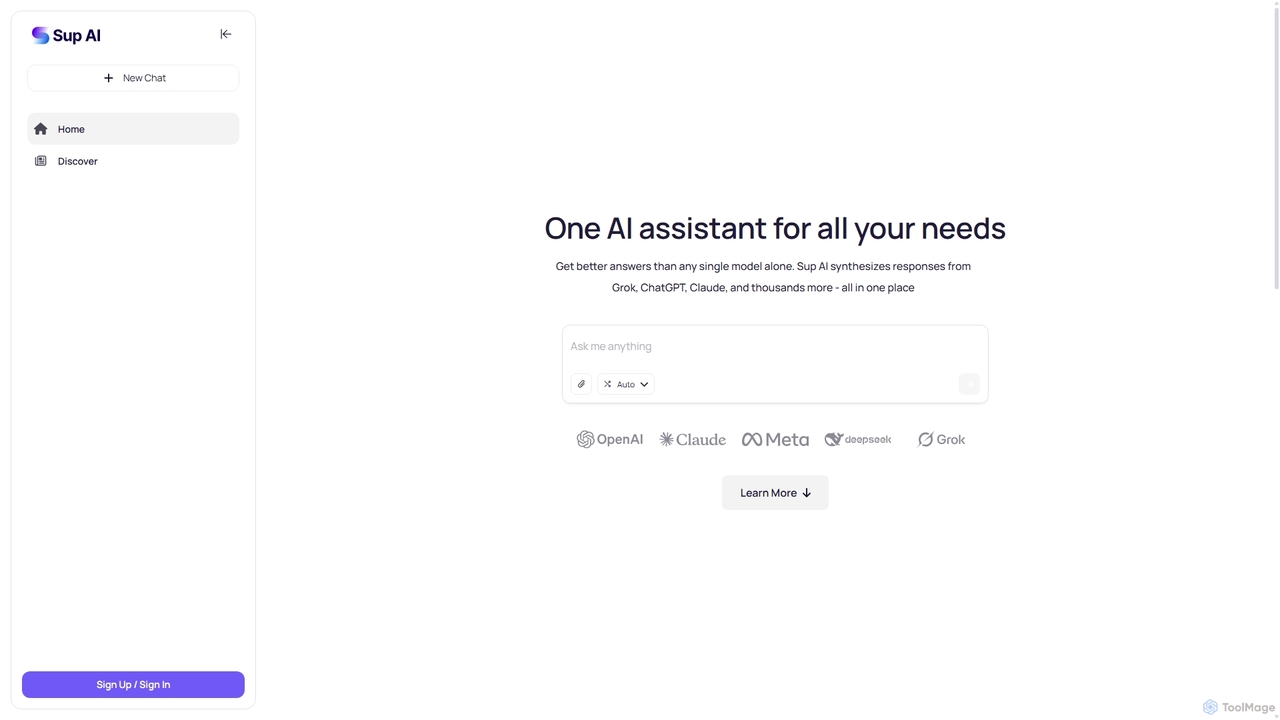
Sup AI is an advanced AI assistant that aggregates and synthesizes responses from multiple leading large language models …
Sup AI is an advanced AI assistant that aggregates and synthesizes responses from multiple leading large language models like Grok, ChatGPT, and Claude. By intelligently routing queries to the best-suited models and combining their outputs, it delivers more accurate, comprehensive, and reliable answers than any single model can. It features a user-friendly interface for direct queries and a powerful API for developers, aiming to eliminate hallucinations and provide well-rounded, fact-checked insights for any need.
About Information Synthesis
Information Synthesis tools are a specialized class of AI research assistants designed to analyze and consolidate knowledge from multiple sources. They go beyond simple summarization by employing advanced algorithms to identify key themes, compare arguments, and construct a coherent overview from a diverse collection of documents. This capability allows users to quickly grasp complex topics, uncover hidden connections, and generate comprehensive reports without manually sifting through vast amounts of information. These tools are particularly valuable in academic, legal, and market research where understanding the complete landscape is critical.
Core Features
- Multi-Document Analysis: Processes and extracts insights from a batch of documents simultaneously, rather than one by one.
- Thematic Extraction: Automatically identifies and groups recurring topics, concepts, and arguments across all sources.
- Source Comparison: Highlights similarities, differences, and potential contradictions between different documents.
- Structured Output Generation: Creates synthesized outputs like annotated summaries, outlines, or knowledge maps.
- Verifiable Citations: Maintains clear links back to the original source for every piece of synthesized information, ensuring academic and professional integrity.
Use Cases
These tools are indispensable for academic researchers conducting literature reviews, business analysts performing competitive intelligence, and legal professionals reviewing case files. They enable users to accelerate the research process, ensure comprehensive analysis, and discover insights that might be missed through manual review across dozens or hundreds of sources.
How to Choose
When selecting an Information Synthesis tool, consider the types of documents it supports (PDF, web pages, DOCX), the depth of its analytical features (e.g., contradiction detection), and the accuracy of its source tracking. Also, evaluate its capacity for handling large volumes of documents, its integration capabilities with reference managers, and the clarity of its synthesized reports.

Information SynthesisUse Cases
Accelerating Academic Literature Reviews
A postgraduate researcher needs to write a literature review for their thesis, requiring them to understand the state of research across 50+ academic papers. Instead of reading each paper sequentially, they upload the entire collection to an Information Synthesis tool. The AI analyzes all documents, identifies core research themes, highlights key debates between authors, and generates a thematic summary with direct citations. This reduces the initial reading time by over 70% and provides a structured foundation for their writing, ensuring no major perspectives are missed.
Market Research and Competitive Analysis
A business analyst is tasked with creating a competitive landscape report. They gather dozens of sources, including competitor press releases, industry reports, financial statements, and customer reviews. Using an Information Synthesis tool, they process all this unstructured data at once. The tool extracts key strategic initiatives, identifies market trends mentioned across reports, and compares product features mentioned in reviews. The output is a consolidated brief that highlights competitor strengths, weaknesses, and market opportunities, enabling the analyst to produce a comprehensive report in days instead of weeks.
Legal Case Preparation and Discovery
A paralegal team is working on a complex litigation case involving thousands of pages of documents, including depositions, contracts, and email correspondence. Manually reviewing this volume of text for key evidence is a monumental task. By using an Information Synthesis tool, they can upload all case files. The AI helps identify recurring entities (people, organizations), creates timelines of events based on document dates, and flags contradictory statements made across different depositions. This drastically speeds up the discovery process and helps the legal team build a stronger, more coherent case strategy.
Synthesizing Financial Due Diligence Data
An investment analyst is evaluating a potential acquisition target. They need to analyze annual reports, SEC filings, analyst ratings, and recent news articles from the past five years. An Information Synthesis tool ingests all these documents. It extracts key financial metrics over time, summarizes management's discussion points from each annual report, and identifies recurring risks mentioned by different analysts. The tool presents a consolidated dashboard, allowing the analyst to quickly spot trends and discrepancies, leading to a more informed and efficient due diligence process.
Policy Analysis and Government Reporting
A policy analyst at a non-profit organization needs to understand the impact of a new piece of legislation. They collect legislative texts, public commentary, expert analyses, and news reports. An Information Synthesis tool helps them process this diverse set of documents to identify the main arguments for and against the policy, map out the key stakeholders involved, and summarize the predicted economic and social impacts. This allows for the rapid creation of a comprehensive briefing document for advocacy efforts, grounded in a wide array of evidence.
Medical Research Synthesis for Clinical Practice
A clinical researcher is investigating the efficacy of a new treatment protocol by reviewing numerous clinical trial results, patient studies, and pharmacological papers. Manually comparing methodologies and outcomes across studies is complex and time-consuming. They use an Information Synthesis tool to collate the data. The AI extracts patient demographics, intervention details, and outcome measures from each paper, highlighting studies with similar cohorts but conflicting results. This synthesis provides a clear, evidence-based overview, helping the researcher to formulate recommendations for clinical practice more quickly and reliably.