Research Best in category 3 results Search AI Tool

Popular AI tools in the Search field of Research include Sider、Albus、ncurator, etc., helping you quickly improve efficiency.

ncurator

ncurator

ncurator is a browser extension that transforms your documents, webpages, and bookmarks into a personal, AI-powered knowledge base. …

12.0K
Sider

Sider

Sider is an all-in-one AI assistant integrated as a browser sidebar and cross-platform app. It combines chat with …

3.9M
Albus

Albus

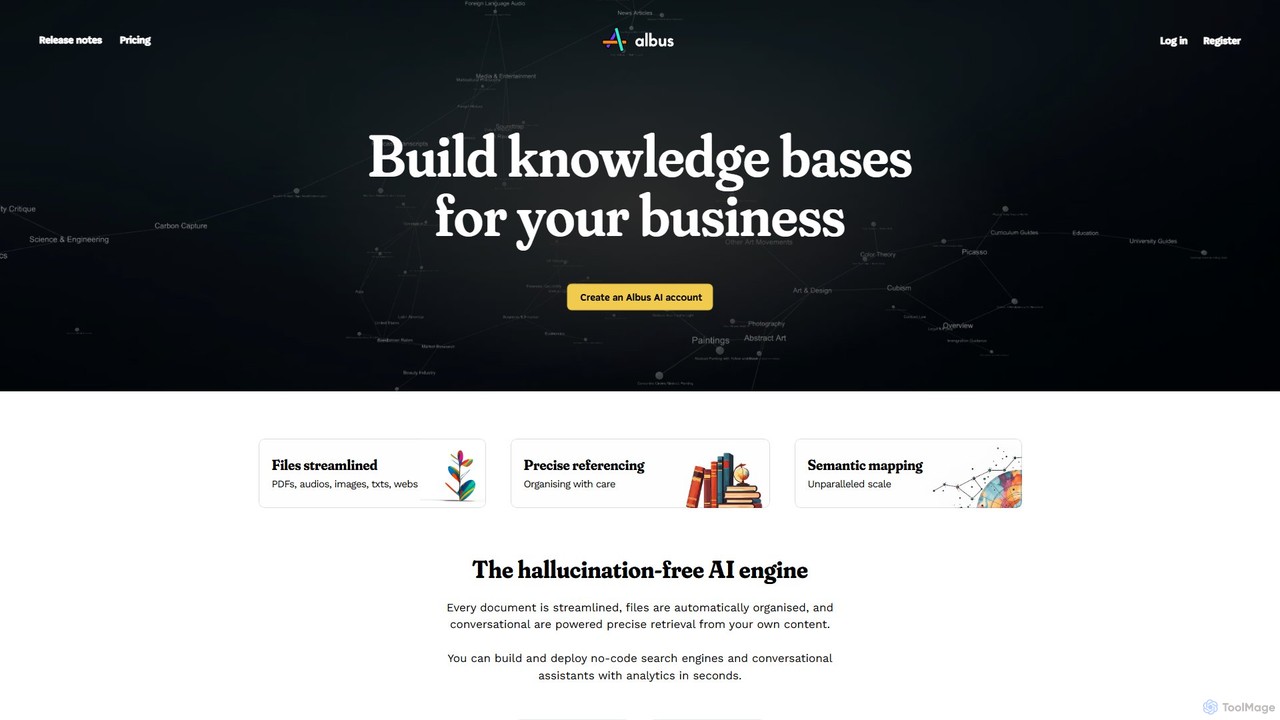
Albus is an AI-powered cloud workspace that transforms your files into an intelligent, conversational knowledge base. It automatically …

12.7K

About Search

AI-powered Search tools are designed to revolutionize information retrieval by leveraging advanced artificial intelligence. These tools utilize natural language processing (NLP), machine learning, and semantic understanding to go beyond traditional keyword matching. They deliver more accurate, contextual, and personalized results across vast internal and external data sources, significantly streamlining the discovery and analysis of information within the broader Research category. By understanding user intent, they can provide synthesized answers and relevant insights, making complex data accessible and actionable.

Core Features

  • Semantic Understanding: Interprets the meaning and context of queries, not just keywords.
  • Intelligent Filtering & Ranking: Prioritizes results based on relevance, user history, and intent.
  • Information Extraction & Summarization: Identifies key entities and generates concise summaries from large documents.
  • Cross-Source Integration: Searches across multiple internal and external databases simultaneously.
  • Natural Language Querying: Allows users to ask questions in conversational language for intuitive interaction.

Use Cases

AI Search tools are indispensable for professionals needing rapid access to precise information. They empower enterprise employees to quickly locate internal documents, assist customer service agents in finding immediate answers, and help academic researchers efficiently discover relevant papers and datasets. These tools transform how organizations manage and access their collective knowledge, enhancing productivity and decision-making.

How to Choose

When selecting an AI Search tool, prioritize its compatibility with your existing data sources and its accuracy in interpreting complex natural language queries. Evaluate the relevance and presentation quality of search results, including summarization capabilities. Additionally, consider the tool's scalability, performance under heavy load, and robust security features to ensure it meets your organizational needs effectively.

SearchUse Cases

1

Rapid Retrieval from Enterprise Knowledge Bases

Enterprise employees, such as R&D engineers or sales personnel, often need to quickly find internal company documents, project reports, customer case studies, or technical specifications. AI search tools understand natural language queries, traverse various formats and storage locations, and precisely locate required information. This significantly reduces manual browsing time, boosting work efficiency and accelerating decision-making processes.

2

Enhancing Customer Service Center Efficiency

Customer service representatives require swift and accurate answers from vast knowledge bases (e.g., FAQs, product manuals, historical tickets) when handling customer inquiries. AI search tools interpret the customer's intent, instantly providing the most relevant solutions or document snippets. This shortens average handling time, increases first-call resolution rates, and ultimately improves customer satisfaction.

3

Assisting Legal and Compliance Research

Legal professionals and compliance teams must analyze massive volumes of legal statutes, precedents, regulatory documents, and industry standards. AI search tools perform semantic searches, identify key clauses, related cases, and potential risk points. This helps researchers quickly filter and comprehend complex information, ensuring compliance and supporting informed legal decisions.

4

Optimizing E-commerce Product Search Experience

E-commerce platform users often employ imprecise, descriptive language when searching for products. AI search tools understand user intent, recommending the most relevant products even when keywords don't exactly match, and can even facilitate image or voice search. This significantly increases the likelihood of users finding desired items, thereby boosting conversion rates.

5

Accelerating Scientific Literature and Patent Retrieval

Researchers and inventors need to efficiently retrieve academic papers, research reports, and patent information globally. AI search tools comprehend complex scientific terminology and concepts, perform cross-language searches, and automatically extract key information and summaries. This helps researchers track the latest advancements, avoid redundant efforts, and accelerate the innovation process.

6

Intelligent Code and Development Documentation Lookup

Software developers frequently need to quickly find code snippets, API documentation, error logs, or solutions in their daily work. AI search tools can understand code structure and programming language context, providing precise code examples or documentation links, and even explaining code functionality. This greatly enhances development efficiency and problem-solving speed.

SearchFrequently Asked Questions