ToolMage
Sign in

Best 24 Data Privacy AI tools for Security

Popular Data Privacy AI tools in Security include BlockSurvey, iDox.ai, Redactable, CompliantChatGPT, hathr.ai, ZeroTrusted.ai, Privatemode AI, Prediction Guard, BuildPrompt, and PhotoLog, helping you work more efficiently.

Guardrail Layer
Freemium

Guardrail Layer

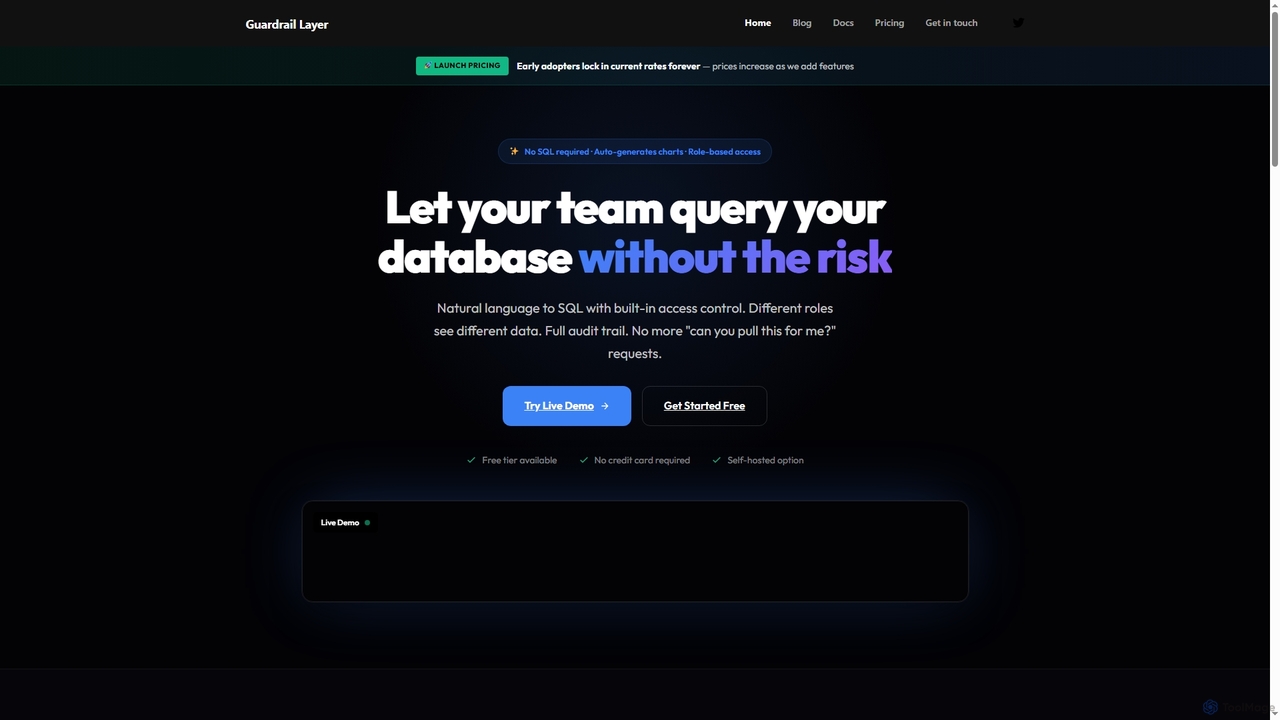
Guardrail Layer enables safe, natural language interaction with your databases, providing robust role-based access control, automatic PII redaction, and comprehensive audit trails. It empowers teams to query data in plain English without SQL, preventing unauthorized access and ensuring data security in production environments while leveraging AI capabilities.

3D
Visits 6.4KFavorites 39Likes 33
ThriftyAI
Freemium

ThriftyAI

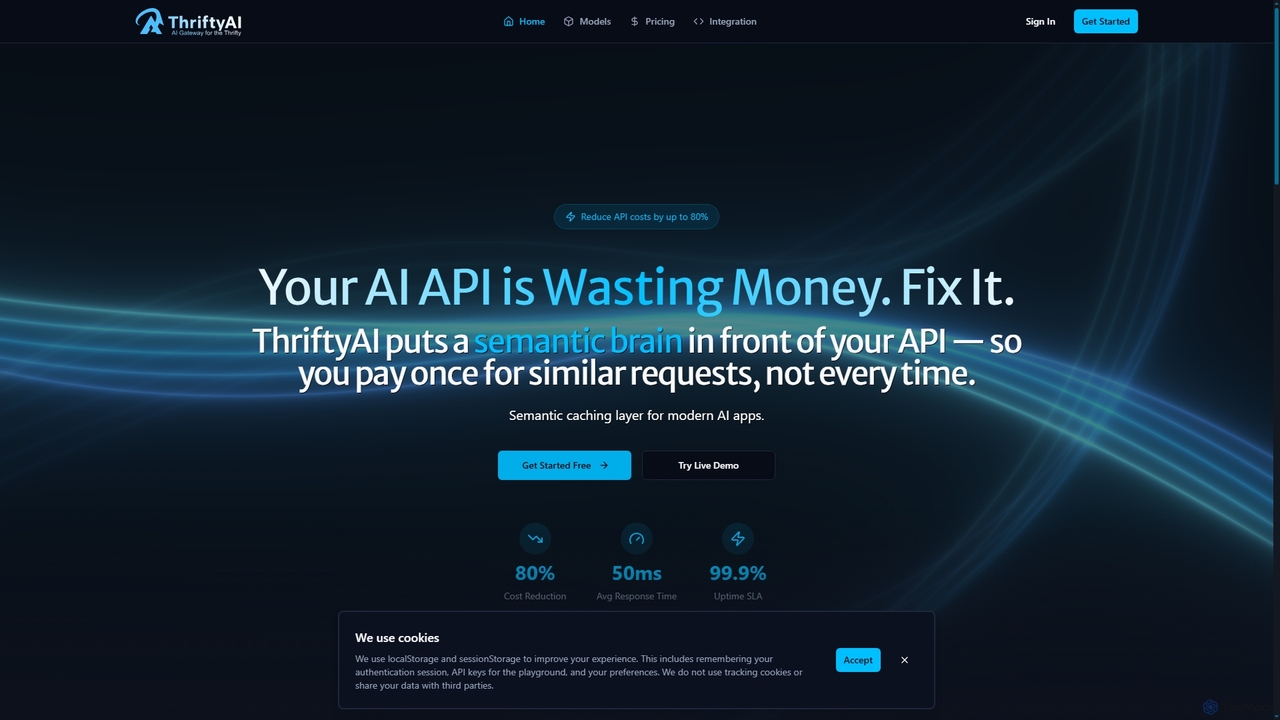
ThriftyAI is an advanced AI gateway and semantic caching layer designed to significantly reduce AI API costs by up to 80% and accelerate response times. It intelligently caches similar requests, masks sensitive data, and provides robust safety features, making it ideal for modern AI applications seeking efficiency and enterprise-grade security.

Gateway
Visits 6.5KFavorites 90Likes 98
Dialektai
Freemium

Dialektai

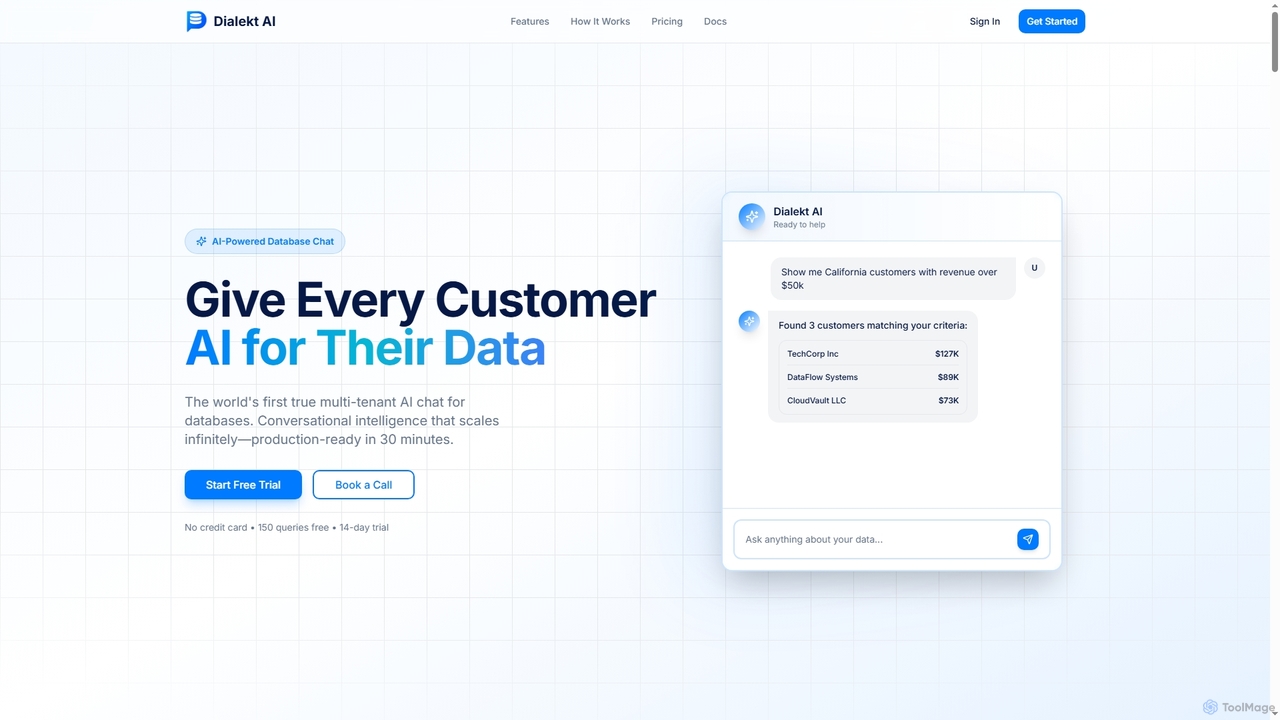
Dialektai is the world's first true multi-tenant AI chat for databases, enabling users to query complex data in plain English. It provides secure, scalable conversational intelligence, making critical business data accessible to everyone without technical expertise, and can be production-ready in under 30 minutes.

Natural Language Processing
Visits 6.4KFavorites 146Likes 144
Doco
Freemium

Doco

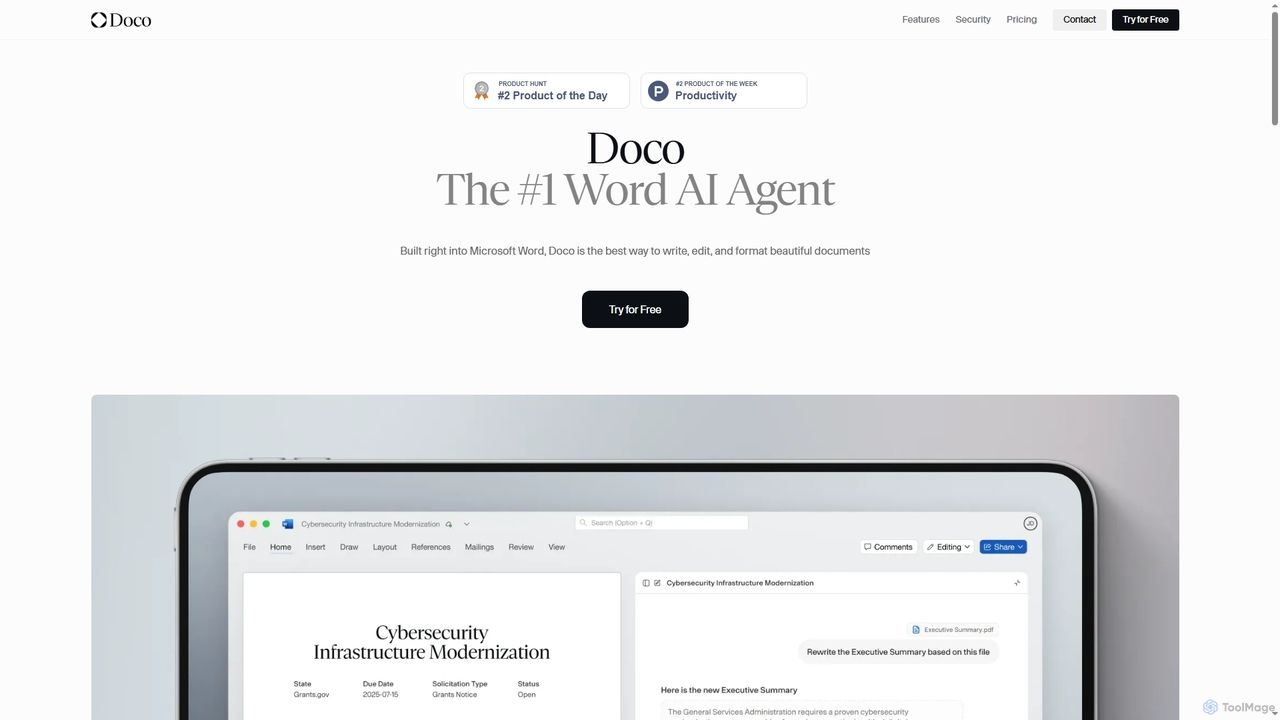
Doco is an AI agent that integrates directly into Microsoft Word, leveraging your existing data and knowledge base to draft, edit, and format documents. It learns your workflow, ensures style consistency, and provides enterprise-grade security, transforming complex tasks into a competitive advantage for businesses of all sizes.

Knowledge Management
Visits 7.5KFavorites 117Likes 128
Redactable
Freemium

Redactable

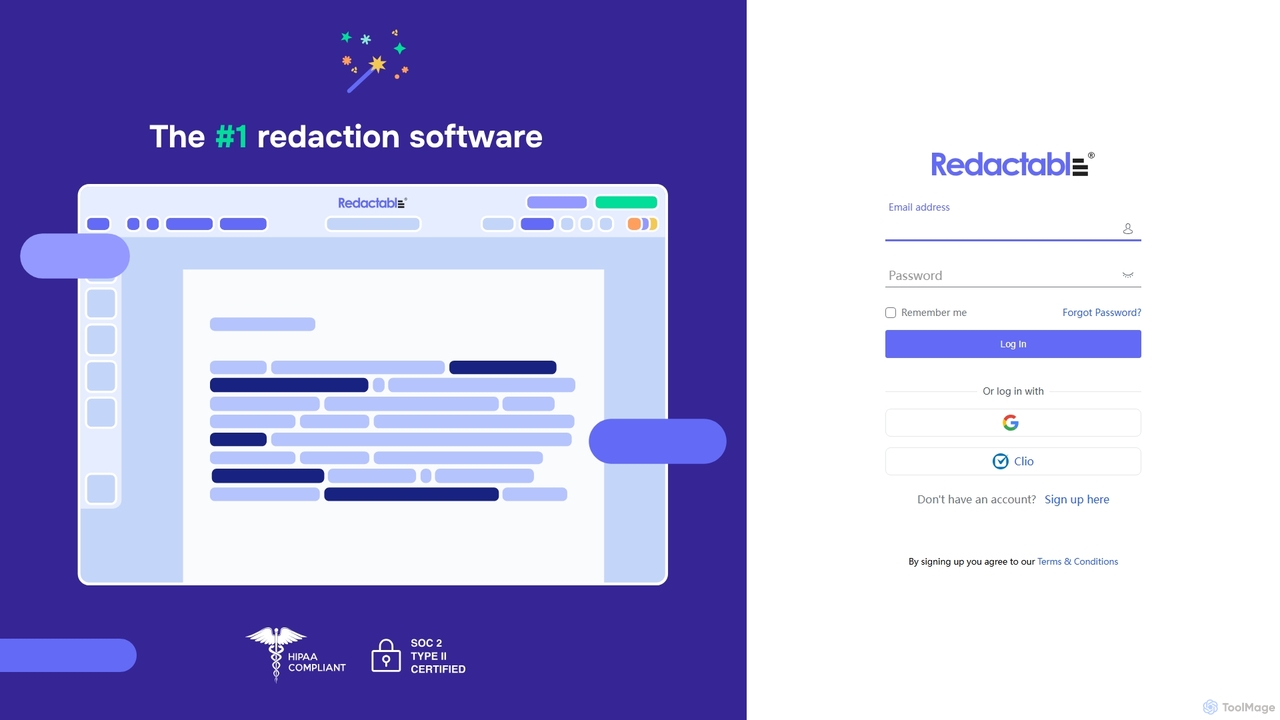
Redactable is an AI-powered platform that automates the process of redacting sensitive information from documents. It intelligently detects and removes PII, PHI, and other confidential data, ensuring compliance with privacy regulations like GDPR and HIPAA. Ideal for legal, healthcare, and financial professionals, it streamlines workflows, reduces human error, and secures documents with permanent, unrecoverable redactions.

Document Management
Visits 14.7KFavorites 112Likes 112
PrivateGPT
Freemium

PrivateGPT

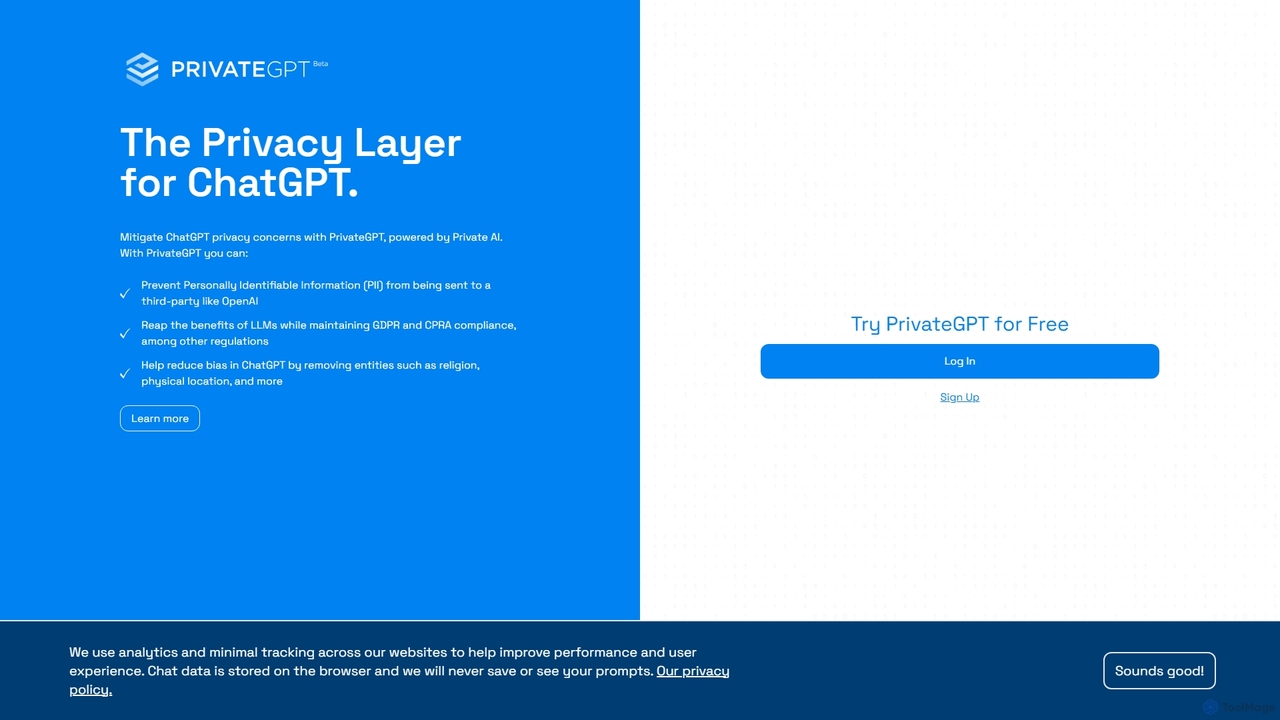
PrivateGPT is a privacy layer for ChatGPT, designed to prevent sensitive data and Personally Identifiable Information (PII) from being sent to third-party LLMs. It automatically redacts PII from your prompts, ensuring you can leverage the power of AI while maintaining strict data privacy and compliance with regulations like GDPR and CPRA. It also helps reduce AI bias by removing sensitive personal attributes.

Api
Visits 6.2KFavorites 122Likes 127
R2 Copilot
Freemium

R2 Copilot

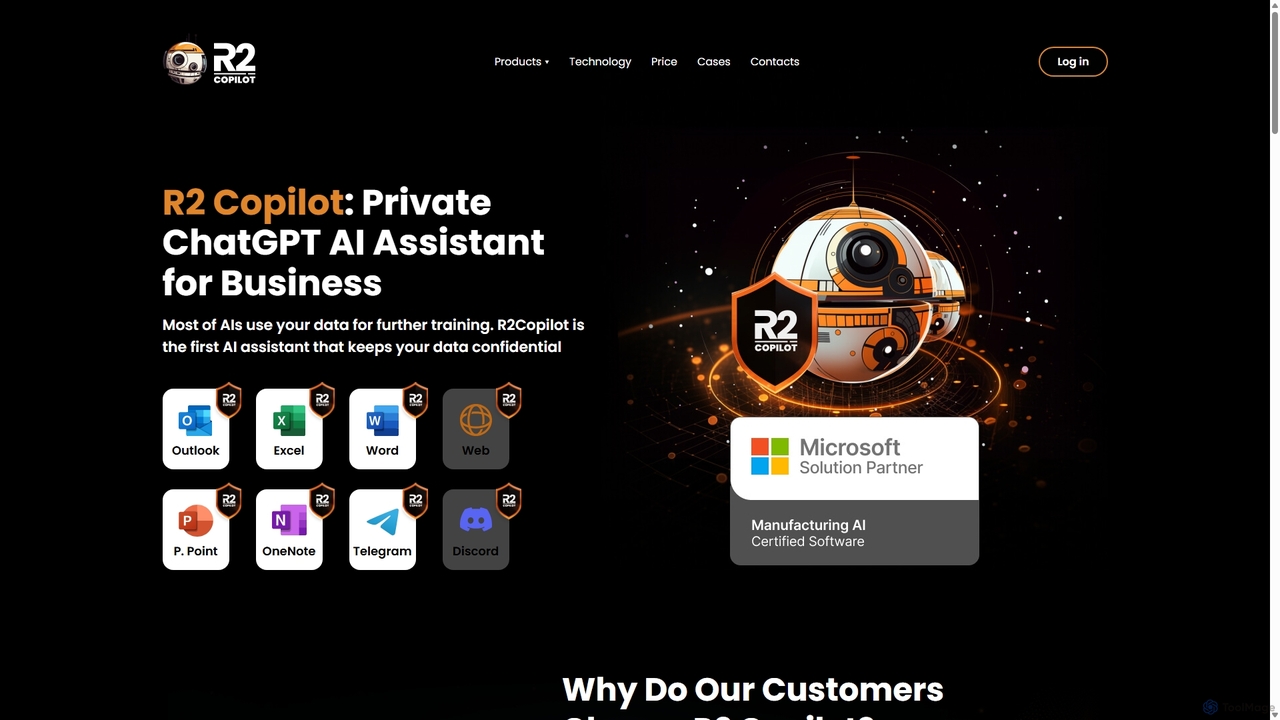
R2 Copilot is a privacy-first, ChatGPT-powered AI assistant designed for businesses and professionals. It ensures complete data confidentiality by using advanced encryption and a secure communication protocol, preventing your data from being used for AI training. It integrates seamlessly into Microsoft Office, Telegram, and web browsers to boost productivity without compromising security.

Enterprise Solutions
Visits 8KFavorites 118Likes 128
Prediction Guard
Paid

Prediction Guard

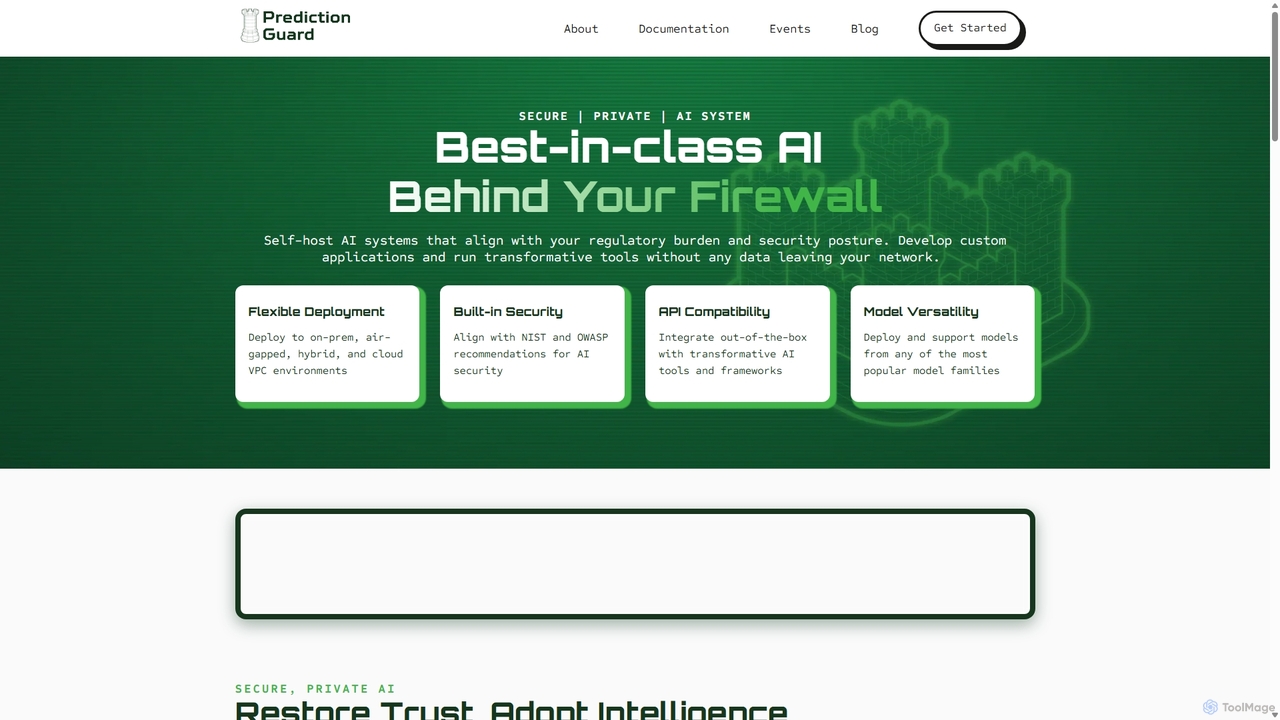
Prediction Guard is an enterprise-grade AI platform that allows organizations to deploy, manage, and scale large language models (LLMs) securely behind their own firewall. It offers flexible deployment options, including on-premise, air-gapped, and private cloud, ensuring complete data privacy and control. With an OpenAI-compatible API, it enables seamless integration with existing tools and frameworks like LangChain and LlamaIndex, making it ideal for regulated industries such as healthcare, defense, and finance.

Platform As A Service (Paas)
Visits 9.4KFavorites 120Likes 131
ZeroTrusted.ai
Freemium

ZeroTrusted.ai

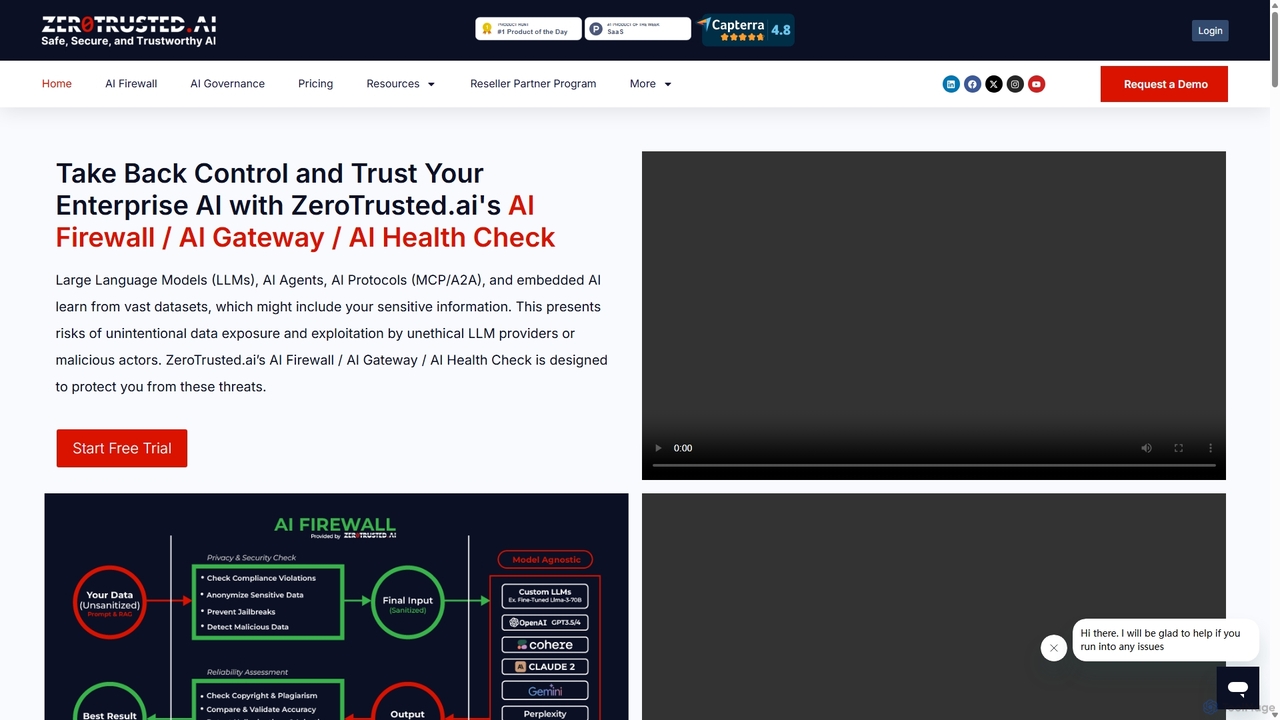
ZeroTrusted.ai is an advanced AI security platform offering an AI Firewall, Gateway, and Health Check to protect enterprise AI ecosystems. It enforces Zero Trust principles to safeguard against data leaks, ensure compliance, and secure Large Language Models (LLMs), AI agents, and RAG systems from threats.

Compliance
Visits 13.1KFavorites 161Likes 165
HiddenGPT
Freemium

HiddenGPT

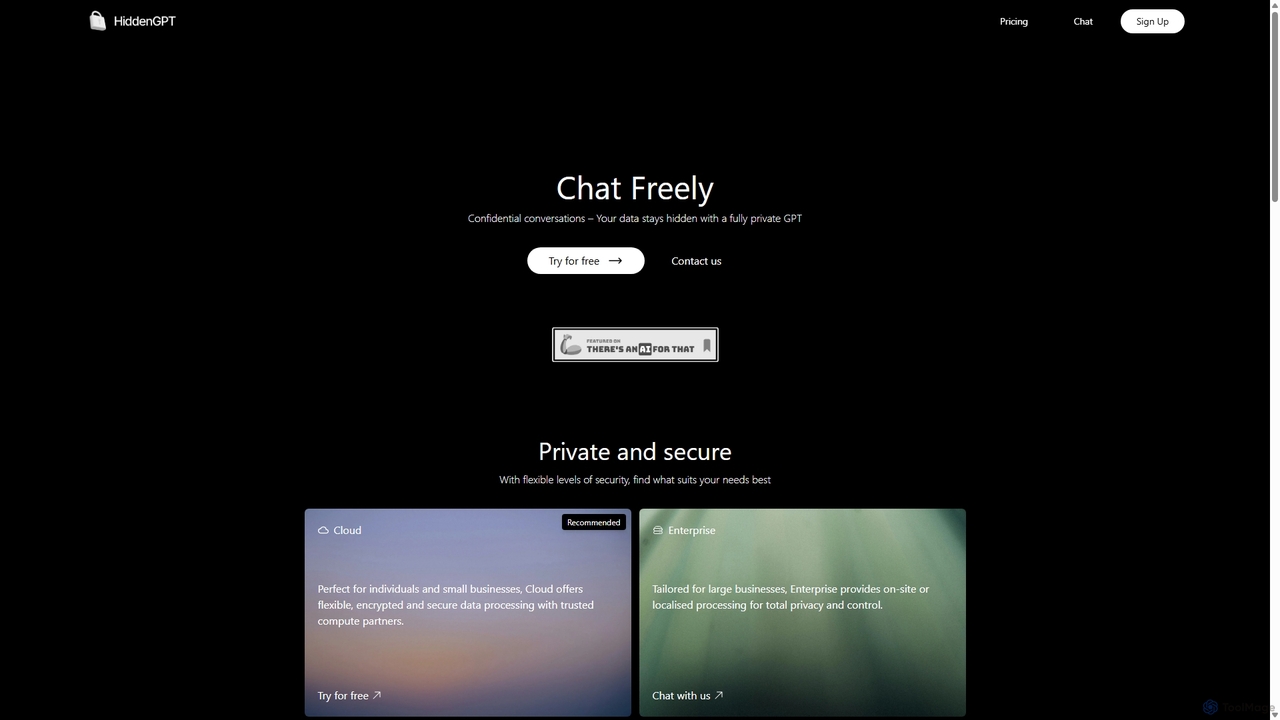
HiddenGPT is a private and secure AI chat platform, designed as an alternative to ChatGPT for businesses and individuals handling sensitive data. It offers enterprise-grade privacy with flexible cloud and on-premise deployment options, ensuring your conversations are confidential and never used for model training.

Enterprise Solutions
Visits 6.4KFavorites 123Likes 134
Protevia
Paid

Protevia

Protevia is an AI-powered platform designed to automate data privacy, security, and compliance. It helps businesses discover, classify, and protect sensitive data across their entire digital ecosystem, ensuring adherence to global regulations like GDPR, CCPA, and HIPAA.

Risk Management
Visits 6.3KFavorites 157Likes 148
hathr.ai
Freemium

hathr.ai

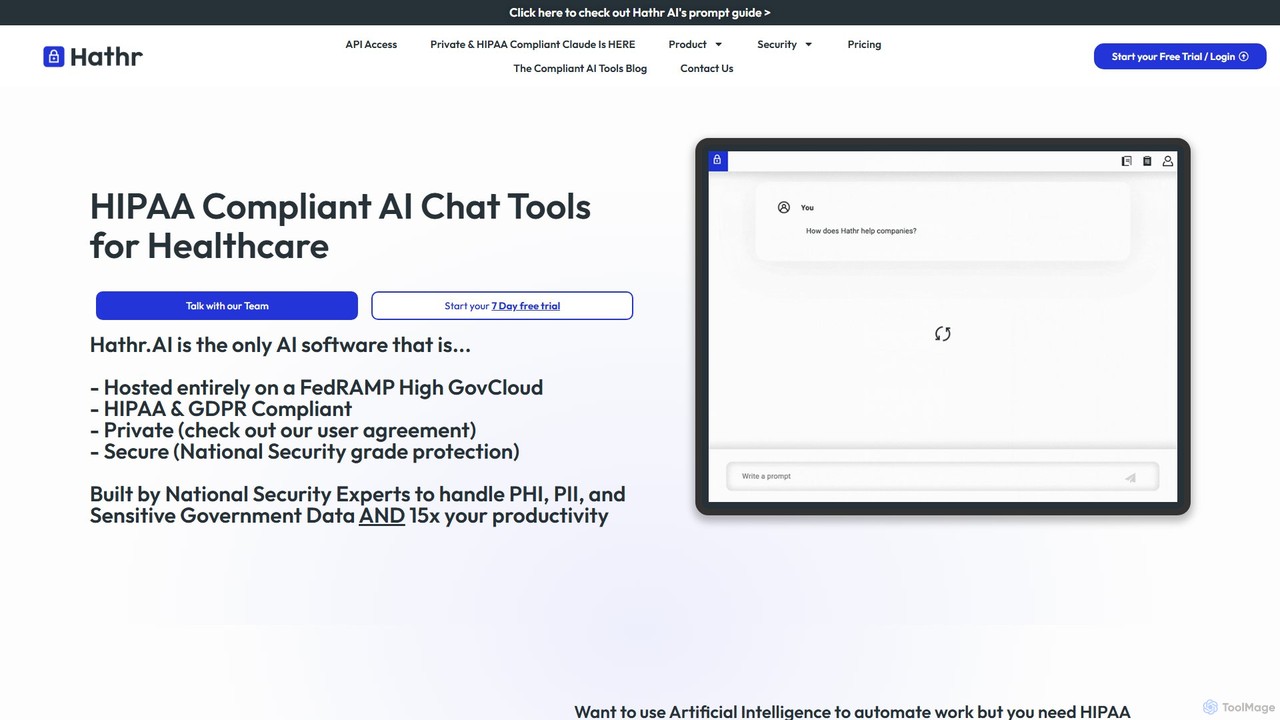
Hathr.AI provides HIPAA-compliant AI tools, powered by Claude, for healthcare and regulated industries. Hosted on AWS GovCloud (FedRAMP High), it ensures top-tier security and privacy for sensitive data like PHI and PII. The platform offers an AI chat, a developer API, and custom solutions to automate workflows such as medical record analysis, billing automation, and secure document review, boosting productivity by up to 35x while maintaining strict compliance.

Api
Visits 18KFavorites 97Likes 104
HiddenGPT
Freemium

HiddenGPT

HiddenGPT is a private and secure AI chat platform designed for confidential conversations. It offers enterprise-grade privacy, ensuring your data is never used for training, shared with third parties, or accessed by anyone but you. Ideal for businesses and individuals in sensitive industries like legal, finance, and healthcare, providing powerful AI capabilities without compromising data security.

Document Analysis
Visits 6.3KFavorites 137Likes 120
BlockSurvey
Freemium

BlockSurvey

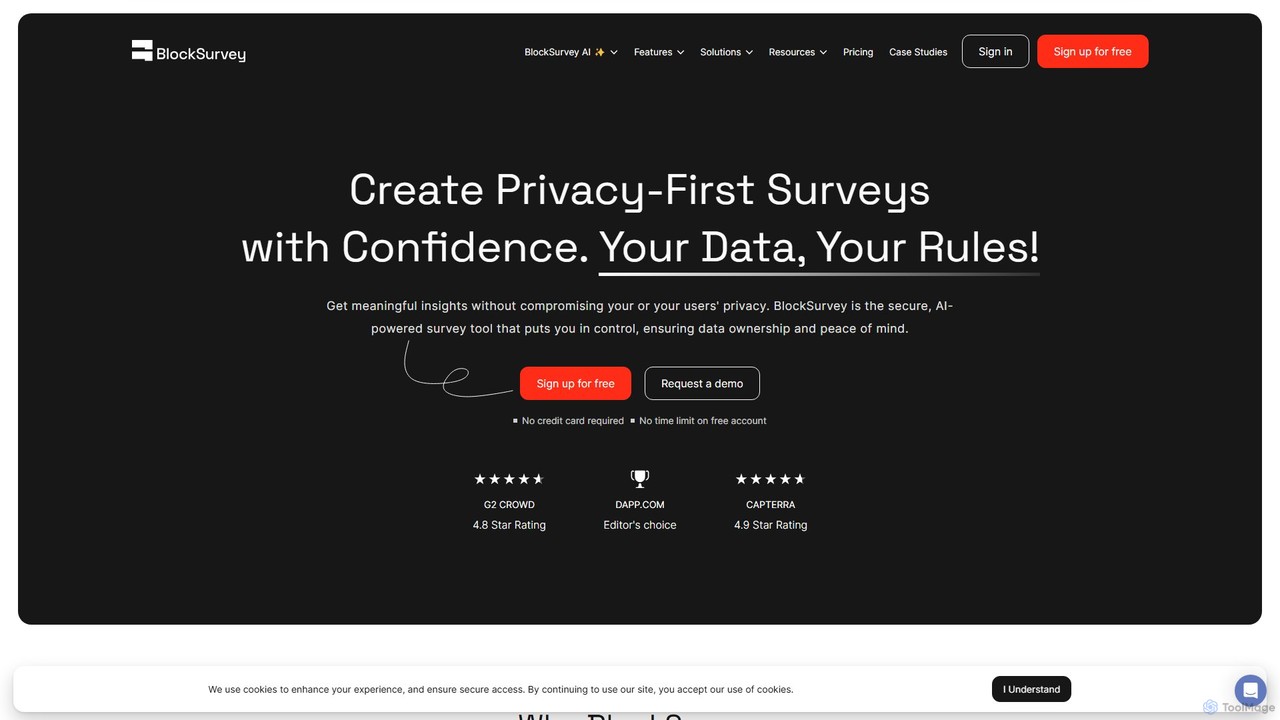
BlockSurvey is an AI-powered, privacy-first survey and form builder. It offers end-to-end encryption, ensuring you own your data. Features include AI survey generation, AI data analysis, anonymous data collection, and Web3 capabilities like token-gated surveys. Ideal for market research, employee feedback, and secure data collection, it helps build trust and save time while providing deep, actionable insights.

Market Research
Visits 289.8KFavorites 158Likes 146
BuildPrompt
Freemium

BuildPrompt

BuildPrompt is a secure AI file explorer and document analysis tool for businesses. It enables users to privately query company data using natural language, extract key information from various document types, and automate workflows. Supporting over 50 languages and multimodal capabilities, it prioritizes security and compliance for industries like construction, law, and finance.

Data Analysis
Visits 8.5KFavorites 143Likes 163
Redactable
Freemium

Redactable

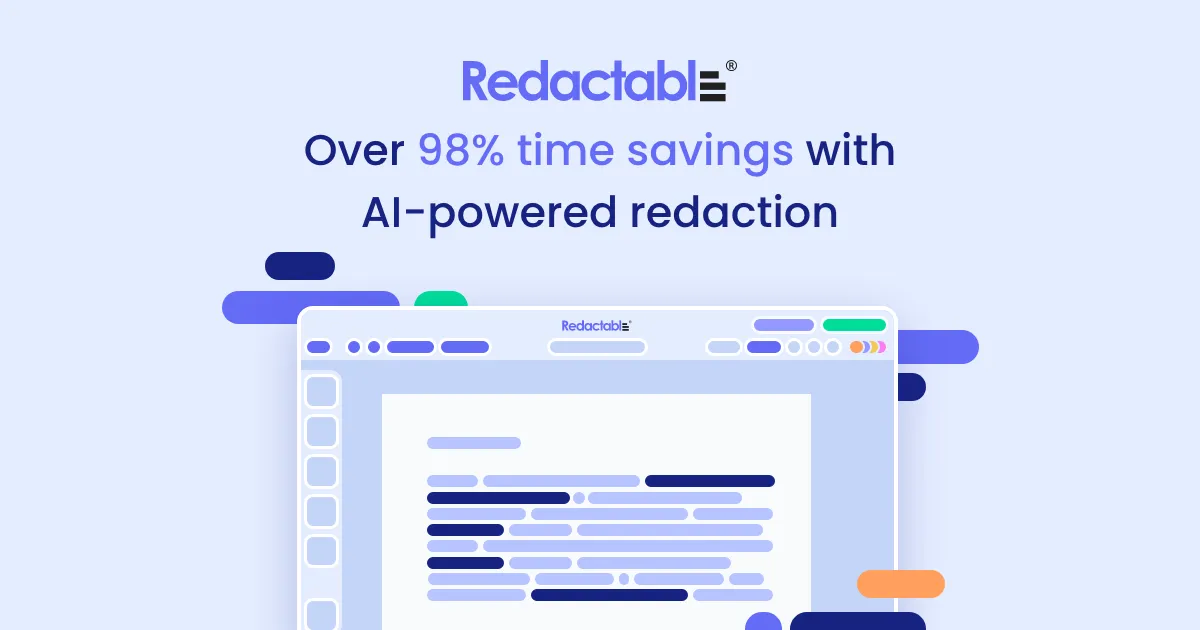
Redactable is an AI-powered, web-based platform for automated document redaction. It helps users securely and permanently remove sensitive information from documents, including scanned files via OCR. Designed for legal, finance, healthcare, and government sectors, it streamlines workflows, ensures compliance (like GDPR & HIPAA), and saves up to 98% of redaction time with features like real-time collaboration and automatic audit trails.

Compliance
Visits 41.6KFavorites 150Likes 156
Bourdain Onsite AI
Paid

Bourdain Onsite AI

Bourdain Onsite AI is a private, on-premise AI chat solution designed for enterprises, especially in regulated industries. It functions like a private ChatGPT, operating 100% within your firewall to ensure complete data residency and security. Chat with any PDF, contract, or knowledge base article securely.

Enterprise Solutions
Visits 6.7KFavorites 112Likes 104
CompliantChatGPT
Freemium

CompliantChatGPT

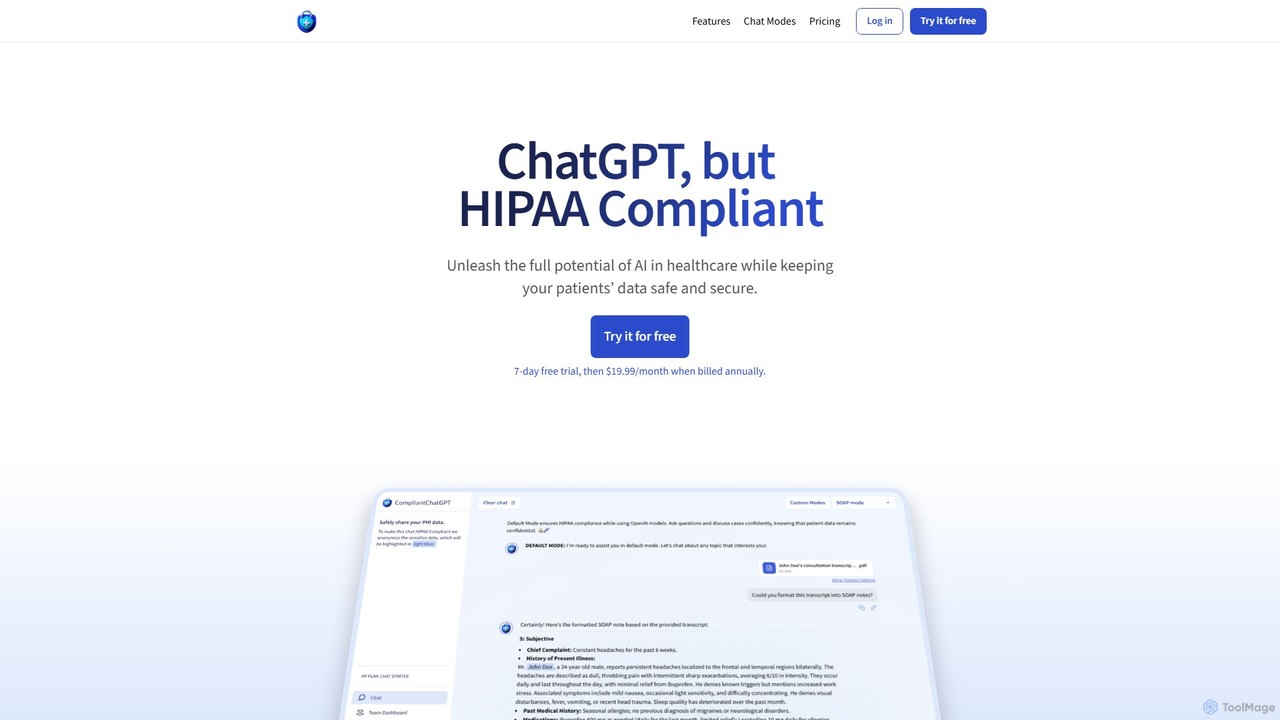
CompliantChatGPT is a HIPAA-compliant AI chat assistant designed for healthcare professionals. It leverages AI to streamline clinical workflows by securely handling tasks like generating SOAP notes, analyzing bloodwork, and creating treatment plans. By anonymizing Protected Health Information (PHI), it ensures patient data privacy and helps organizations avoid costly data breaches, enhancing both productivity and security in a clinical setting.

Medical Assistant
Visits 23.5KFavorites 132Likes 136
Privatemode AI
Freemium

Privatemode AI

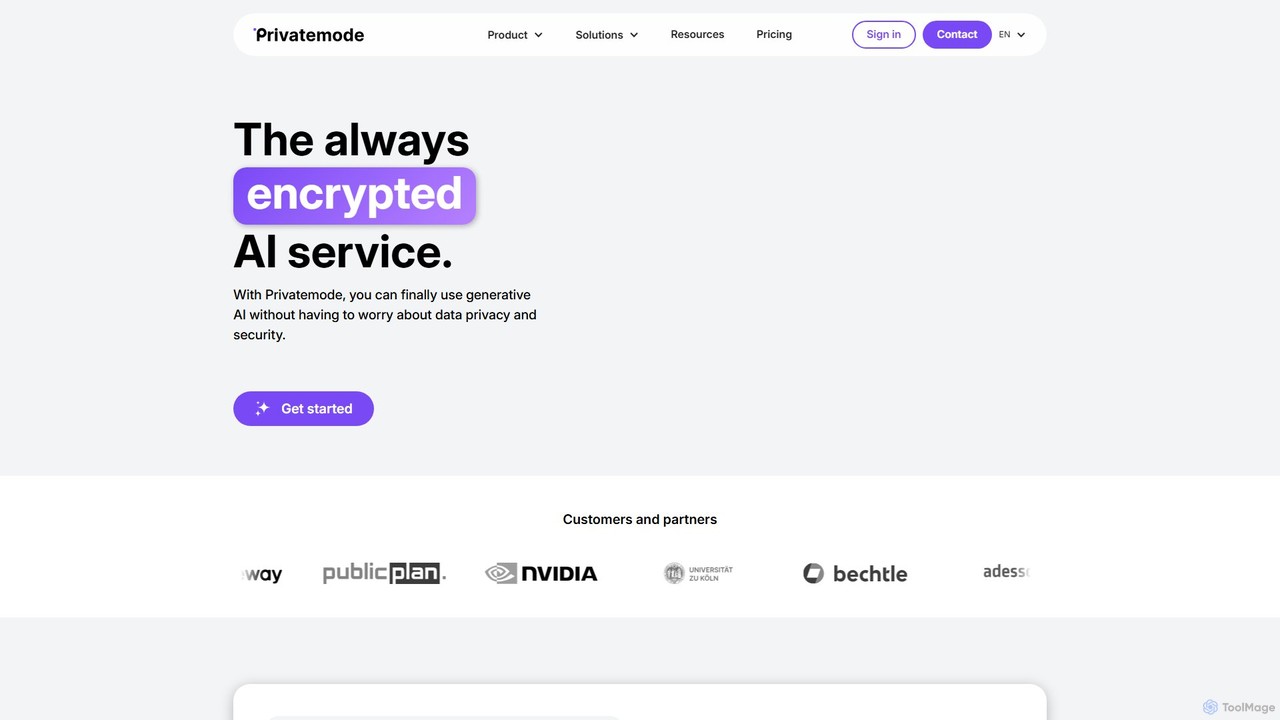
Privatemode AI is an ultra-secure, always-encrypted AI service built on confidential computing technology. It ensures your data remains encrypted even during processing, providing unparalleled privacy. Ideal for developers, enterprises, and industries handling sensitive information, it offers access to powerful LLMs like Llama 3 via a secure desktop app and API, guaranteeing that no one, not even the service provider, can access your conversations.

Api
Visits 12.8KFavorites 129Likes 147
PhotoLog
Freemium

PhotoLog

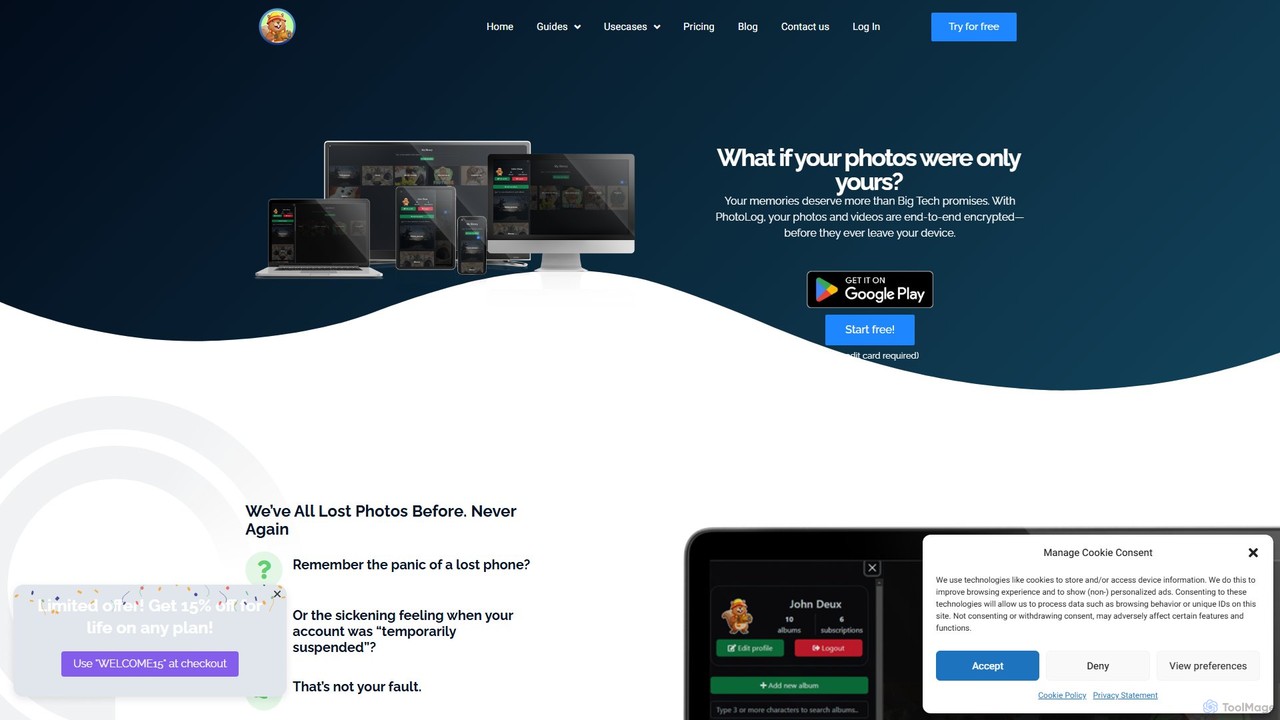
PhotoLog is a secure, private cloud storage solution for your photos and videos, designed for users who value privacy. Unlike mainstream services, PhotoLog guarantees your media is never scanned or used for AI training. It features client-side end-to-end encryption, flexible sharing options, and the ability to bring your own storage, giving you complete control over your digital memories.

Photo Management
Visits 8.4KFavorites 135Likes 136
Ghostie
Paid

Ghostie

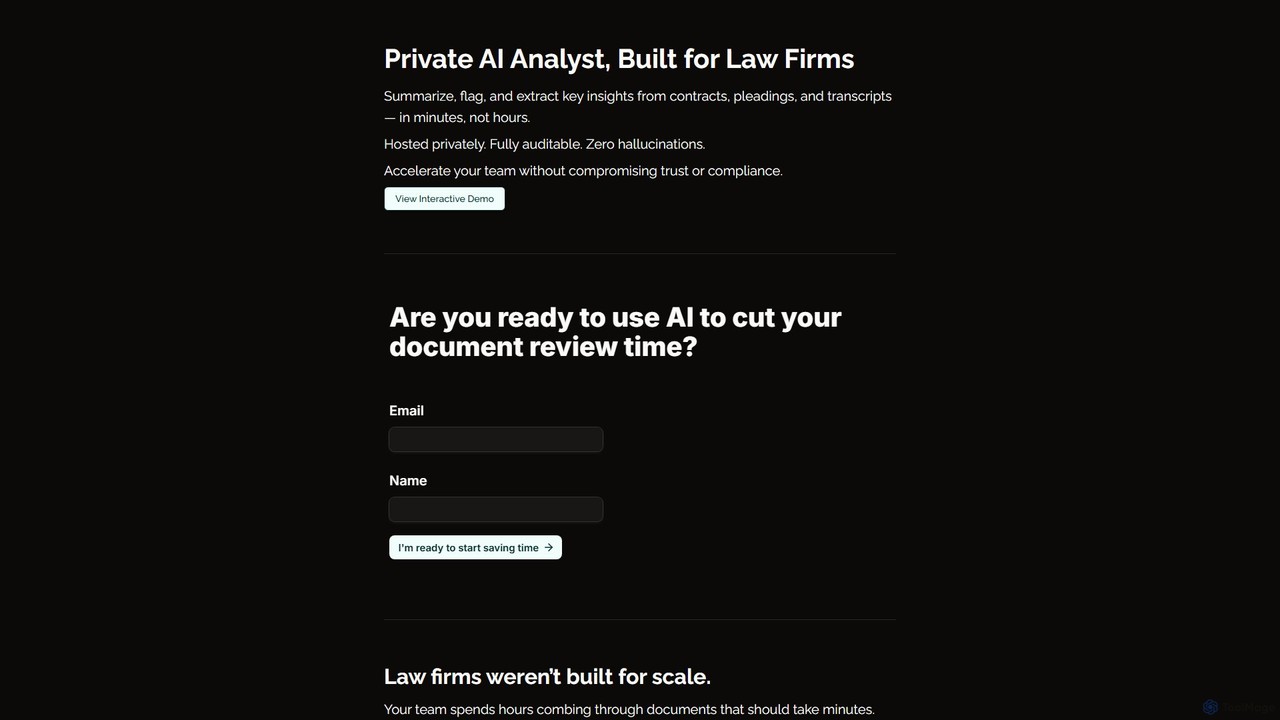
Ghostie is a private, on-premise AI analyst designed for law firms. It securely summarizes legal documents, flags risks in contracts, and extracts key insights from pleadings and transcripts in minutes, ensuring zero data exposure, full auditability, and no hallucinations.

Document Analysis
Visits 6.4KFavorites 136Likes 132
1Node AI
Paid

1Node AI

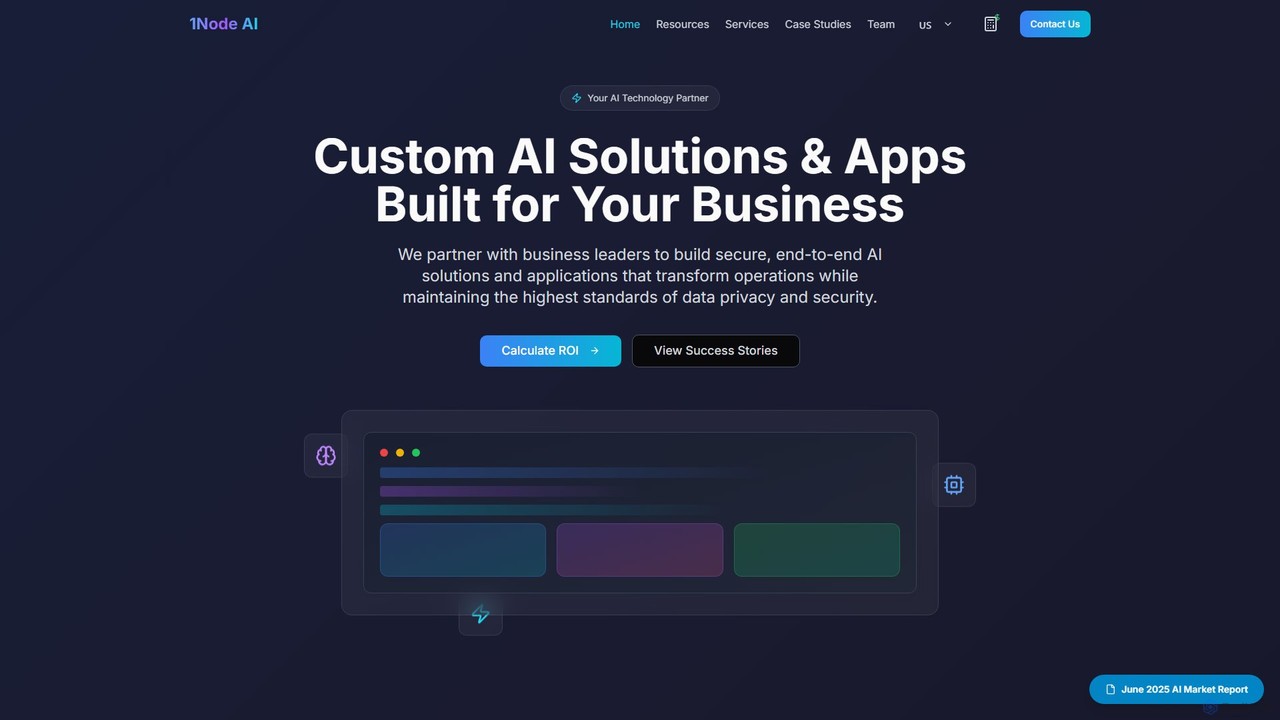
1Node AI is an advanced AI technology partner for businesses, specializing in creating secure, end-to-end custom AI solutions and applications. It focuses on enterprise-grade performance, bank-level security (SOC2, GDPR compliant), and seamless integration with existing systems. With flexible deployment options (cloud, on-premise, hybrid), 1Node AI helps companies transform their operations through bespoke AI development, business intelligence, and advanced analytics, ensuring data privacy and control.

Ai Solutions Provider
Visits 6.3KFavorites 172Likes 152
iDox.ai
Paid

iDox.ai

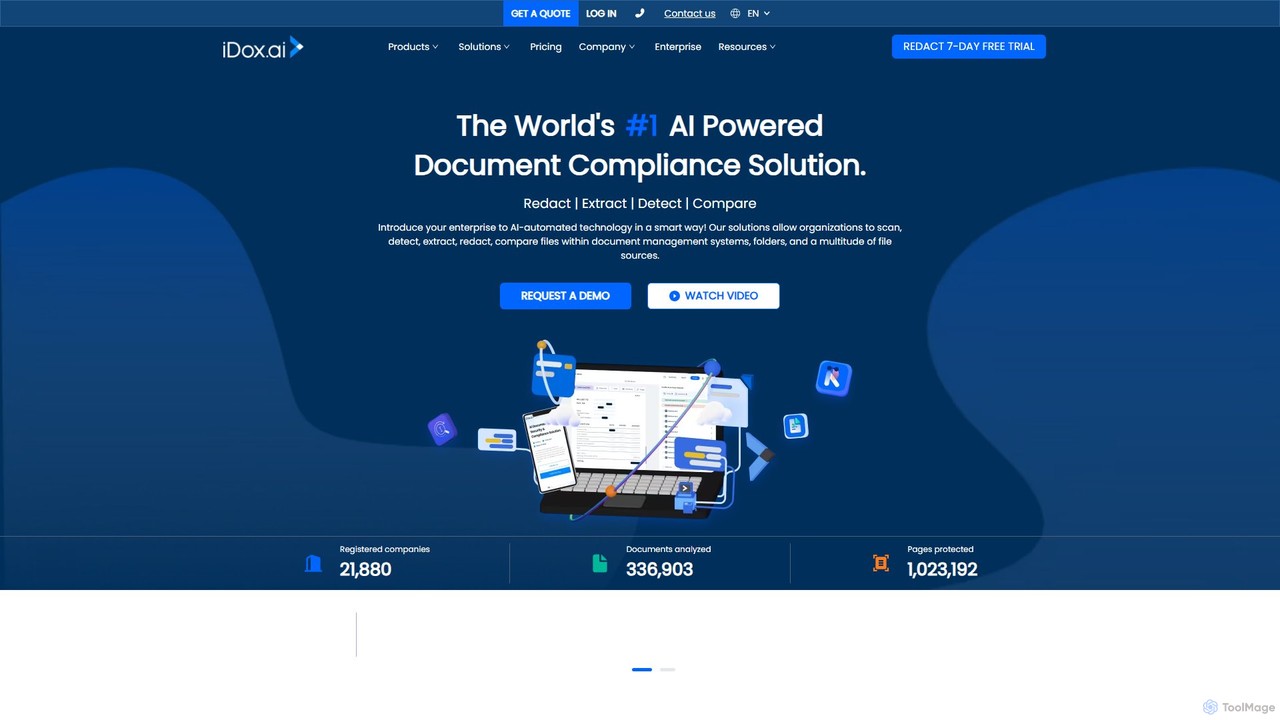
iDox.ai is an enterprise-grade, AI-powered document compliance solution designed to automate the detection, redaction, extraction, and comparison of sensitive data. It helps organizations streamline compliance with regulations like GDPR, HIPAA, and CCPA, mitigate data breach risks, and significantly improve operational efficiency by protecting personally identifiable information (PII) and protected health information (PHI) across numerous file types.

Compliance
Visits 74KFavorites 161Likes 157
RAGNA Nano
Freemium

RAGNA Nano

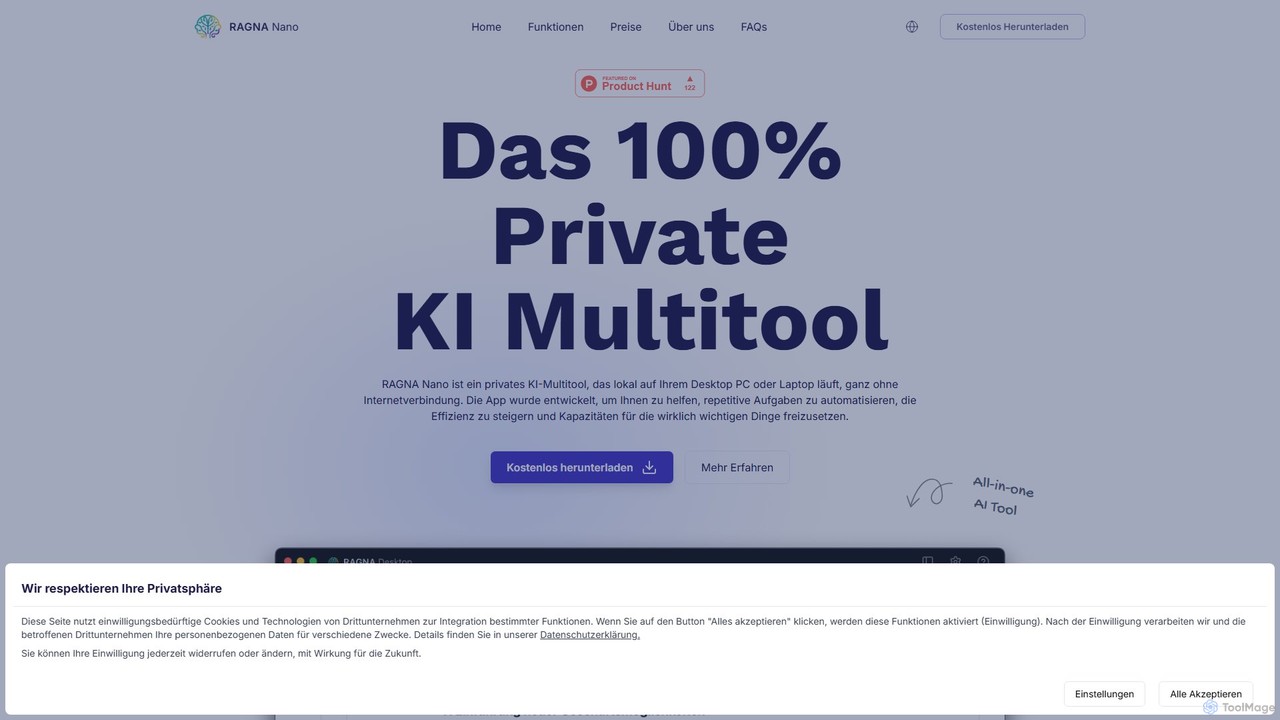
RAGNA Nano is a 100% private, all-in-one AI multitool that runs locally on your desktop, completely offline. It's designed for maximum data security and privacy, allowing you to chat with an AI assistant, analyze sensitive documents, and use an intelligent text editor without your data ever leaving your computer. It offers a free plan for individuals and a customizable enterprise solution, making powerful AI accessible without compromising on security.

Api
Visits 6.3KFavorites 124Likes 132

About Data Privacy

Data Privacy tools are a specialized category of AI-powered software designed to identify, manage, and protect personally identifiable information (PII) and other sensitive data. These tools leverage machine learning for tasks like automated data discovery, classification, and anonymization, helping organizations comply with regulations like GDPR and CCPA. By transforming raw data into a privacy-safe format, they enable data utilization for analytics and development without compromising individual privacy. This focus on protecting the data itself distinguishes them within the broader Security landscape.

Core Features

  • PII Detection and Classification: Automatically scans structured and unstructured data sources to find and categorize sensitive information like names, addresses, and credit card numbers.
  • Data Anonymization and Masking: Replaces or obfuscates sensitive data with realistic but fictional information, preserving data utility for testing or analysis.
  • Synthetic Data Generation: Creates statistically representative artificial datasets from real data, eliminating the risk of exposing personal information.
  • Compliance Monitoring and Reporting: Tracks data usage, manages user consent, and generates reports to demonstrate adherence to privacy regulations.

Applicable Scenarios

These tools are crucial for industries handling large volumes of personal data, such as finance, healthcare, and e-commerce. Development teams use them to create safe testing environments with synthetic data. Compliance officers employ them to conduct data audits and ensure regulatory adherence. Data analysts can work with anonymized datasets to extract insights without privacy risks.

Selection Criteria

When choosing a Data Privacy tool, consider the specific regulations you must comply with (e.g., GDPR, HIPAA). Evaluate its ability to handle your data types (databases, documents, images) and integrate with your existing systems. Assess the trade-off between the level of anonymization and the resulting data's utility for your specific needs. Also, consider the tool's accuracy in PII detection and the quality of its synthetic data generation.

Featured tool rankings

Data Privacy use cases

1

Enable Safe Software Development and Testing

A software development team at a fintech company needs to test a new transaction processing feature. Instead of using real, sensitive customer data, which poses a significant security risk, they use a Data Privacy tool to generate a high-fidelity synthetic dataset. This artificial data perfectly mimics the structure, patterns, and statistical properties of the production data without containing any real PII. As a result, developers and QA engineers can conduct thorough, realistic testing in a secure environment, accelerating the development lifecycle while ensuring full compliance with financial data regulations.

2

Conduct Privacy-Preserving Medical Research

A medical research institute wants to analyze a large dataset of patient records to identify trends in a specific disease. To comply with HIPAA regulations, they must not use any personally identifiable information. They employ a Data Privacy tool to automatically scan and anonymize the entire dataset. The tool redacts names and addresses, shifts dates, and generalizes location data while preserving the clinical information crucial for the study. This allows researchers to perform large-scale data analysis and publish their findings without compromising the privacy of any individual patient.

3

Automate GDPR Right-to-be-Forgotten Requests

A compliance officer at a large e-commerce company receives a 'right to be forgotten' request from a customer under GDPR. Manually finding and deleting all of the customer's data across dozens of systems (CRM, billing, marketing, support) is a complex and error-prone task. The company uses a Data Privacy tool that integrates with all these systems. The officer enters the customer's identifier, and the tool automatically locates all associated PII, anonymizes it in systems where records must be kept for legal reasons (e.g., transaction history), and flags it for deletion elsewhere. This automates and documents the process, ensuring timely and verifiable compliance.

4

Securely Share Data with External Partners

A retail company wants to collaborate with a third-party analytics firm to analyze customer purchasing patterns. Sharing the raw customer database would violate privacy policies. Using a Data Privacy tool, the company's data team creates a masked version of the database. The tool replaces real names with pseudonyms, groups exact ages into age brackets, and generalizes zip codes to broader regions. The resulting dataset is shared securely with the partner, who can perform meaningful analysis on purchasing behavior without ever accessing a single piece of real customer PII, ensuring both utility and privacy.

5

Perform Internal Data Audits for Compliance

A Data Protection Officer (DPO) is tasked with ensuring their organization is CCPA compliant. They use a Data Privacy tool to perform a comprehensive audit of all internal data stores, including cloud storage, databases, and shared drives. The tool's AI-powered discovery feature automatically scans terabytes of data to identify and map all instances of California residents' PII. It generates a detailed report showing where sensitive data is located, who has access to it, and whether it is adequately protected. This allows the DPO to identify compliance gaps, remediate risks, and produce documentation for regulatory review.

6

Redact Sensitive Information from Customer Support Logs

A customer support manager wants to analyze chat transcripts and call recordings to improve agent performance. However, these logs often contain sensitive PII like credit card numbers, addresses, and account passwords, which cannot be stored or analyzed freely. The company implements a Data Privacy tool that automatically processes all support logs in real-time. The tool uses natural language processing (NLP) to identify and redact (black out) any PII. The resulting clean logs can be safely fed into analytics platforms or used for agent training, providing valuable insights without creating a data privacy liability.

Data Privacy FAQ

What are AI Data Privacy tools?

AI Data Privacy tools are software solutions that use artificial intelligence, particularly machine learning and natural language processing, to protect sensitive data. Their primary function is to automatically discover, classify, and secure personally identifiable information (PII) across an organization's systems. Unlike traditional security tools that protect networks, these tools focus on the data itself. Key capabilities include data anonymization, creating synthetic data for safe testing, and automating compliance with regulations like GDPR and CCPA.

How do I choose the right Data Privacy tool?

Choosing the right tool depends on your specific needs. Consider the following factors:

  • Compliance Requirements: Does the tool support the specific regulations you must adhere to (e.g., GDPR, HIPAA, CCPA)?
  • Data Environment: Can it connect to and scan all your data sources, including databases, cloud storage, and unstructured text files?
  • Core Features: Do you need PII discovery, data masking, synthetic data generation, or all of the above? Evaluate the accuracy and quality of these features.
  • Scalability: Can the tool handle the volume and velocity of your data without significant performance degradation?
  • Integration: How well does it integrate with your existing data governance and security workflows?
What's the difference between Data Privacy and Cybersecurity tools?

There is an overlap, but they have different focuses. Cybersecurity tools (like firewalls, antivirus, and intrusion detection systems) are primarily concerned with protecting systems, networks, and infrastructure from external threats and unauthorized access. Their goal is to secure the perimeter and the environment. Data Privacy tools, on the other hand, focus specifically on the sensitive data *within* those systems. They identify what data is sensitive, control how it's used, and apply techniques like anonymization to protect the privacy of individuals represented in the data, even if the system itself is secure.

What is synthetic data and why is it important for privacy?

Synthetic data is artificially generated information that is not based on any real-world events or individuals. AI-powered Data Privacy tools can create synthetic data that mimics the statistical patterns, relationships, and characteristics of a real dataset without containing any actual personal information. This is crucial for privacy because it allows data scientists, developers, and researchers to perform their work—like training machine learning models or testing software—with realistic data, completely eliminating the risk of exposing sensitive PII from real people.

Who typically uses Data Privacy tools in an organization?

Data Privacy tools are used by various roles across an organization. Key users include:

  • Data Protection Officers (DPOs) and Compliance Teams: To conduct audits, manage data subject requests (like deletions), and ensure regulatory compliance.
  • Software Developers and QA Engineers: To access safe, realistic synthetic or anonymized data for building and testing applications without using sensitive production data.
  • Data Scientists and Analysts: To analyze trends and build models using privacy-safe datasets that don't expose individual PII.
  • IT and Security Administrators: To implement and manage data discovery and protection policies across the company's infrastructure.