AutoDocs is an AI-powered documentation tool designed for developers, automating the generation, updating, and refinement of technical documents. It leverages Google's Generative AI and LangChain to streamline the documentation process, allowing builders to focus more on development and less on writing.

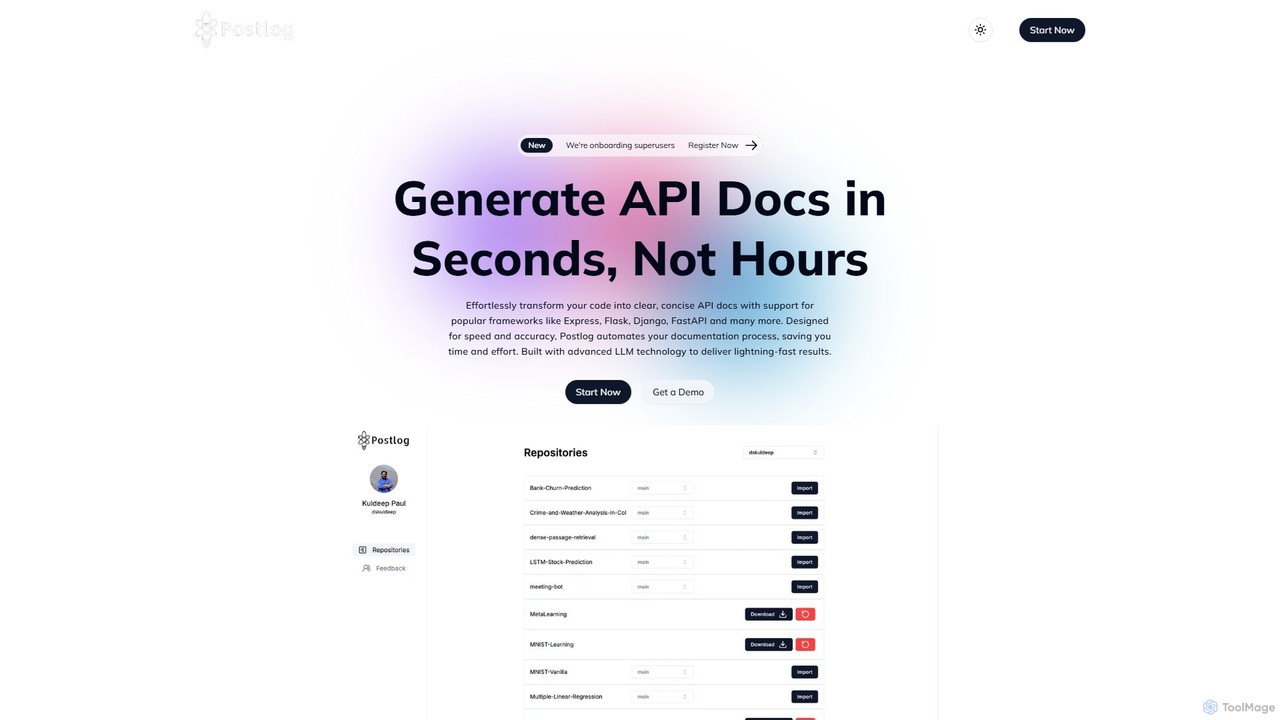
Postlog is an AI-powered tool that automatically generates comprehensive API documentation from your codebase in seconds. It supports multiple frameworks like Express, Flask, and Django, using an LLM to ensure accuracy and clarity, saving developers significant time and effort.
Product overview
AutoDocs Product overview
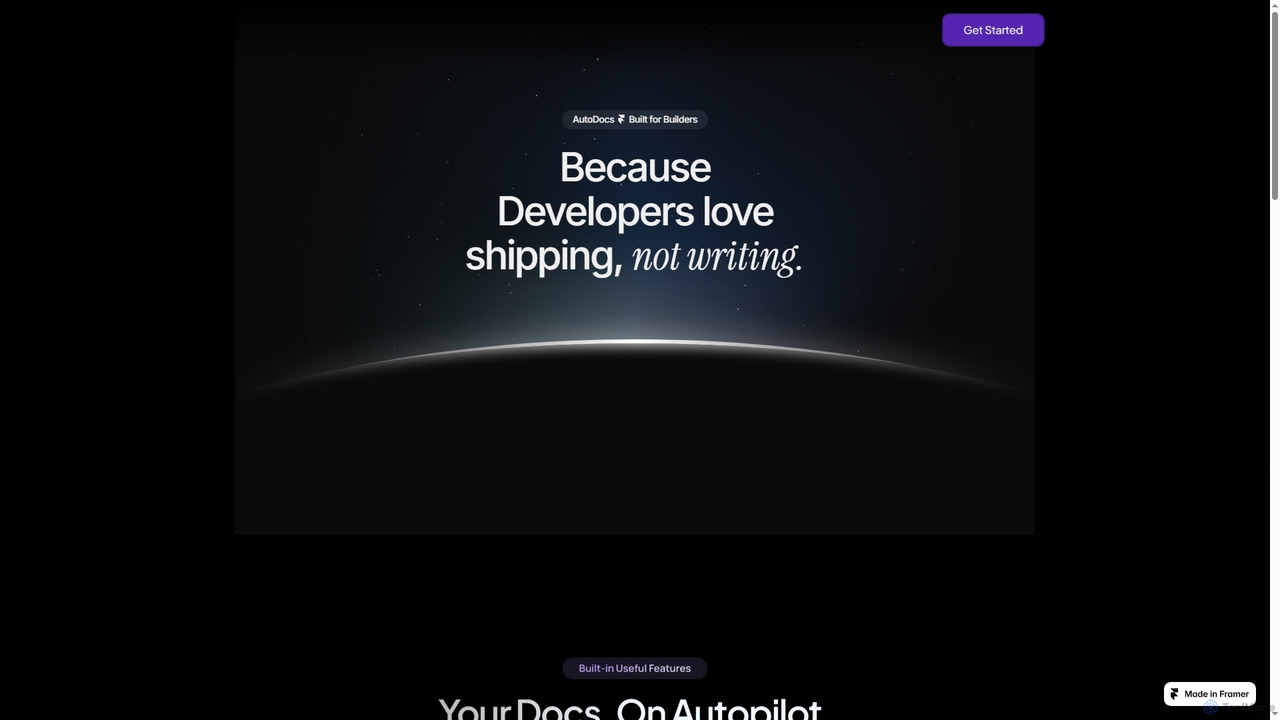
AutoDocs is an AI-powered documentation tool designed for developers, automating the generation, updating, and refinement of technical documents. It leverages Google's Generative AI and LangChain to streamline the documentation process, allowing builders to focus more on development and less on writing.
Postlog Product overview
Postlog is an AI-powered tool that automatically generates comprehensive API documentation from your codebase in seconds. It supports multiple frameworks like Express, Flask, and Django, using an LLM to ensure accuracy and clarity, saving developers significant time and effort.
Detailed feature comparison
| Feature | AutoDocs | Postlog |
|---|---|---|
| Primary category | Content Generation | Api Management |
| Added | 2025-10-26 | 2025-08-14 |
| Pricing | Not verified | Freemium |
| Official website | autodocs-v1.framer.website | trypostlog.com |
| Product type | Website | Website |
| Performance data | ||
| User rating | Not verified | Not verified |
| Comments | 0 | 0 |
| Monthly visits | 4.1K | 4K |
| Monthly growth | Not verified | Not verified |
| Favorites | 116 | 134 |
| Details | View details | View details |
AutoDocs vs Postlog monthly traffic
Compare AutoDocs and Postlog by monthly reach, traffic trend, visit depth, top regions, and acquisition sources.
How to interpret the traffic data
In the AutoDocs vs Postlog monthly traffic comparison, AutoDocs currently shows 4.1K visits and Postlog shows 4K; the two products have similar visible traffic, an absolute difference of about 72 visits. This reflects visible reach, not feature quality or paid users.
Both values come from visits recorded inside ToolMage. They can indicate relative interest on this site, but not total website traffic or global market share.
AutoDocs monthly traffic:
Latest traffic
Postlog monthly traffic:
Latest traffic
Usage comparison
Compare the core capabilities of AutoDocs and Postlog
AutoDocs Core features
Postlog Core features
Use cases
AutoDocs Use cases
Postlog Use cases
Best suited roles
AutoDocs Best suited roles
Postlog Best suited roles
AutoDocs vs Postlog:In-depth comparison and selection guidance
First decide whether the products solve the same kind of need
This in-depth AutoDocs vs Postlog comparison uses only the product records, taxonomy, audience, traffic, and community signals available on this page. AutoDocs is primarily listed under “Content Generation”, while Postlog is primarily listed under “Api Management”, so the first decision is whether your actual task matches their recorded scope.
The structured fields currently show these decision-relevant differences: Primary category (AutoDocs: Content Generation; Postlog: Api Management); Pricing (AutoDocs: Not disclosed; Postlog: Freemium); Monthly visits (AutoDocs: 4.1K; Postlog: 4K); Favorites (AutoDocs: 116; Postlog: 134); Website (AutoDocs: autodocs-v1.framer.website; Postlog: trypostlog.com). These facts are more useful for selection than brand visibility alone.
What market visibility and monthly traffic mean
In the AutoDocs vs Postlog monthly traffic comparison, AutoDocs currently shows 4.1K visits and Postlog shows 4K; the two products have similar visible traffic, an absolute difference of about 72 visits. This reflects visible reach, not feature quality or paid users.
Both values come from visits recorded inside ToolMage. They can indicate relative interest on this site, but not total website traffic or global market share.
The current traffic scope is not sufficient for a reliable product ranking. Treat monthly visits as a market-interest signal, then decide using taxonomy, use cases, pricing, and a like-for-like trial rather than reading exposure as product capability.
Product positioning, use cases, and roles
AutoDocs and Postlog currently overlap in shared categories: Documentation and Automation; shared tags: developer tools. This can place both on the same shortlist, but it does not prove equal implementation, depth, or cost.
AutoDocs's unique categories/tags are Content Generation, AI documentation, automated documentation, Clerk, Google Generative AI, LangChain, markdown, and NextJS; Postlog's are Api Management, API documentation, automation, code generation, django, documentation generator, express, and Flask. These unique fields are the strongest differentiators: validate the product whose recorded scope matches the task instead of following traffic alone.
What ratings, comments, and favorites can tell you
AutoDocs has no verified rating, 0 comments, 116 favorites, and 94 likes;Postlog has no verified rating, 0 comments, 134 favorites, and 128 likes。
Neither product has enough rating or comment samples for a credible reputation ranking.
Selection guidance by actual need
When to evaluate AutoDocs first
Put AutoDocs on the priority trial list when the task aligns with “Content Generation” and especially Content Generation, AI documentation, automated documentation, Clerk, Google Generative AI, and LangChain, or the users include DevOps Engineer, Engineering Manager, Product Manager, and Software Developer. This follows recorded positioning and does not imply unlisted capabilities are absent.
AutoDocs also currently records: pricing is not verified, product type is website, 4.1K on-site monthly views, no verified user rating. Verify any hard requirement around price, platform, or reach before trial, and do not let sparse review data substitute for testing.
When to evaluate Postlog first
Put Postlog on the priority trial list when the task aligns with “Api Management” and especially Api Management, API documentation, automation, code generation, django, and documentation generator. This follows recorded positioning and does not imply unlisted capabilities are absent.
Postlog also currently records: pricing is freemium, product type is website, 4K on-site monthly views, no verified user rating. Verify any hard requirement around price, platform, or reach before trial, and do not let sparse review data substitute for testing.
How to validate the recommendation before deciding
The available data describes positioning, public visibility, and community signals, but it cannot prove output quality, speed, integration effort, privacy, or long-term cost in your workflow. Before deciding, run the same representative tasks in AutoDocs and Postlog, then record completion time, accuracy, manual corrections, and the real paid threshold. A like-for-like trial turns this comparison into a defensible adoption decision.
Comparison FAQ
How should I choose between AutoDocs and Postlog?
Where does this comparison data come from?
What do unknown fields mean?
Related AI tools

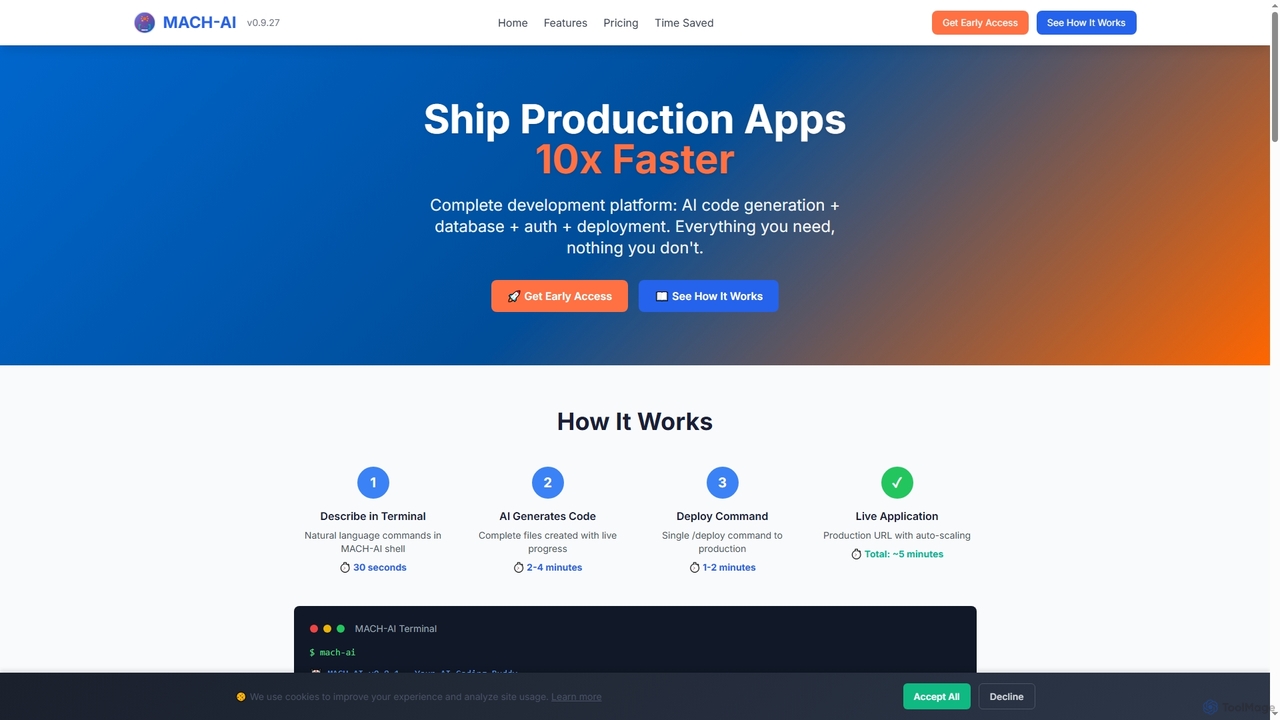
MACH-AI
MACH-AI is an AI coding assistant and complete development platform that transforms concepts into production-ready cloud applications in minutes. It integrates AI code generation, built-in database, authentication, and one-command deployment, enabling developers to build and launch scalable web applications 10x faster across Python, JavaScript, and TypeScript.
Application Deployment
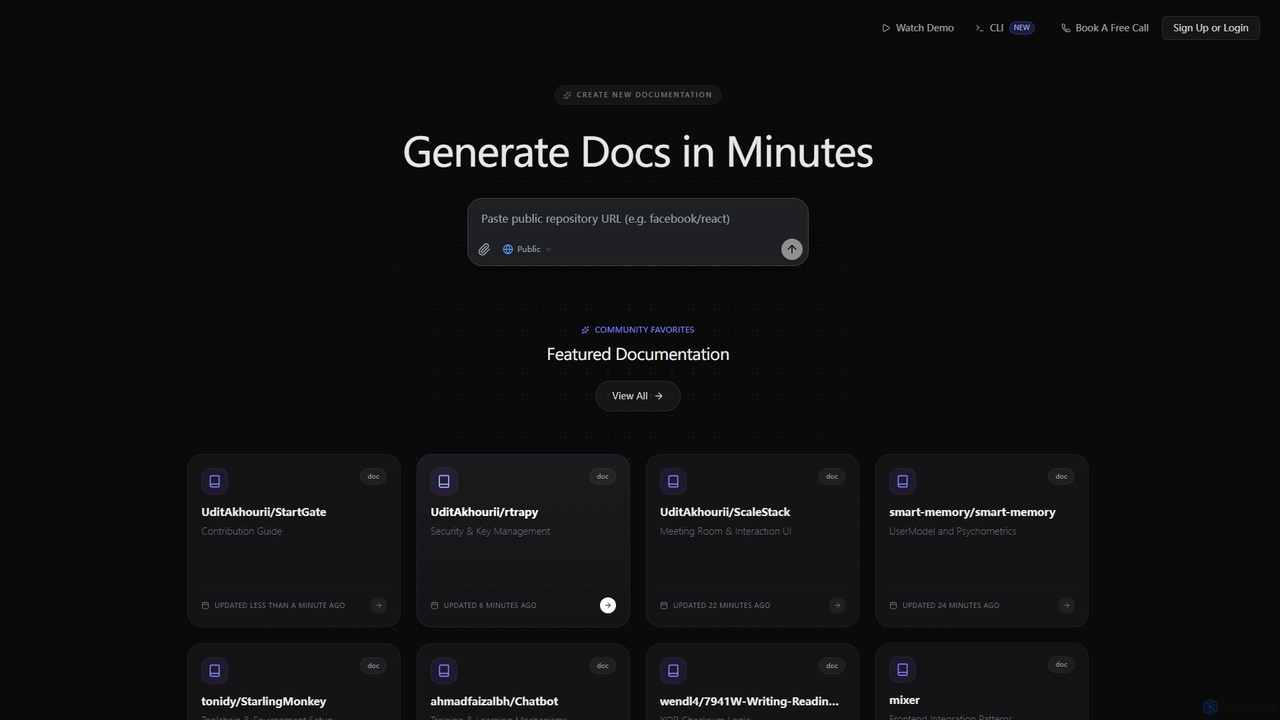
SuperDocs
SuperDocs is an AI-powered platform designed to rapidly generate comprehensive and context-aware documentation. It helps developers, teams, and communities create, manage, and explore technical documentation in minutes, featuring an interactive AI assistant for enhanced user experience.
Api Documentation
Composio
Composio is a developer platform that acts as a "skill layer" for AI agents. It enables developers to seamlessly connect their AI agents to over 10,000 tools and APIs, handling complex tasks like authentication, execution, and scaling. This allows developers to build powerful, action-oriented AI applications much faster by focusing on agent logic rather than integration plumbing.
Agent Tooling
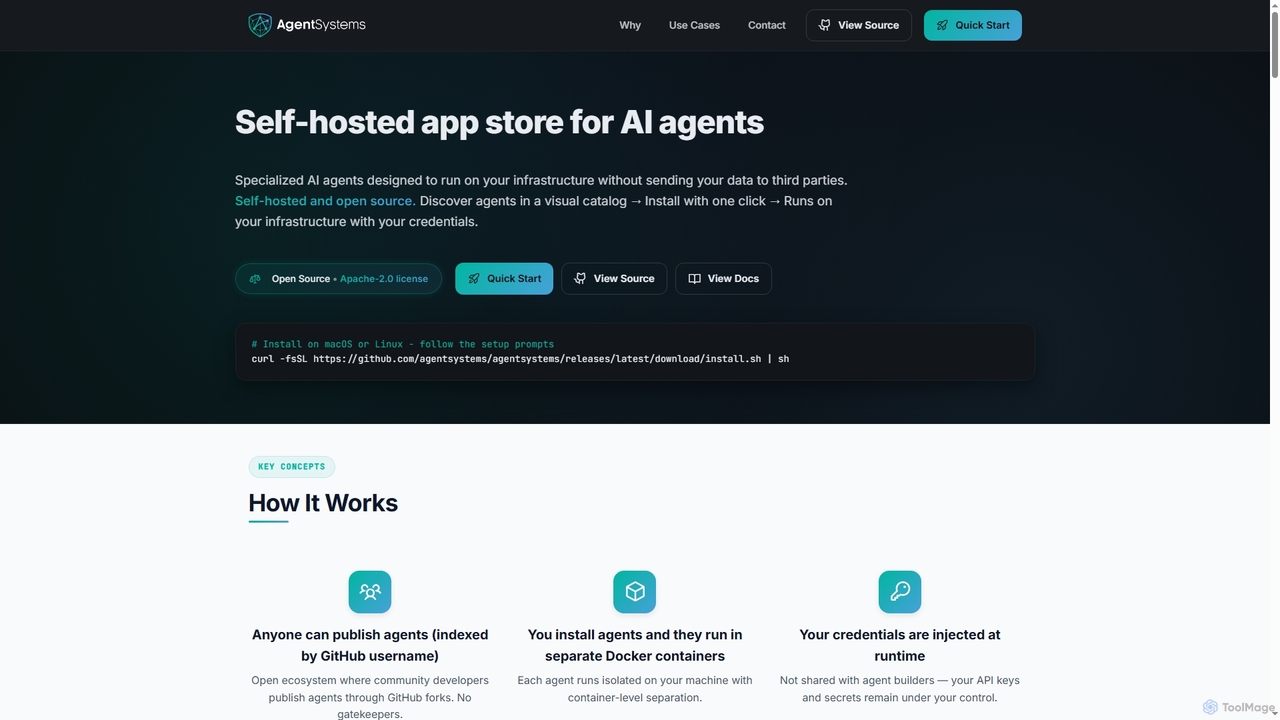
AgentSystems
An open-source, self-hosted platform for discovering, deploying, and managing specialized AI agents on your own infrastructure, ensuring complete data privacy and control.
Self Hosted
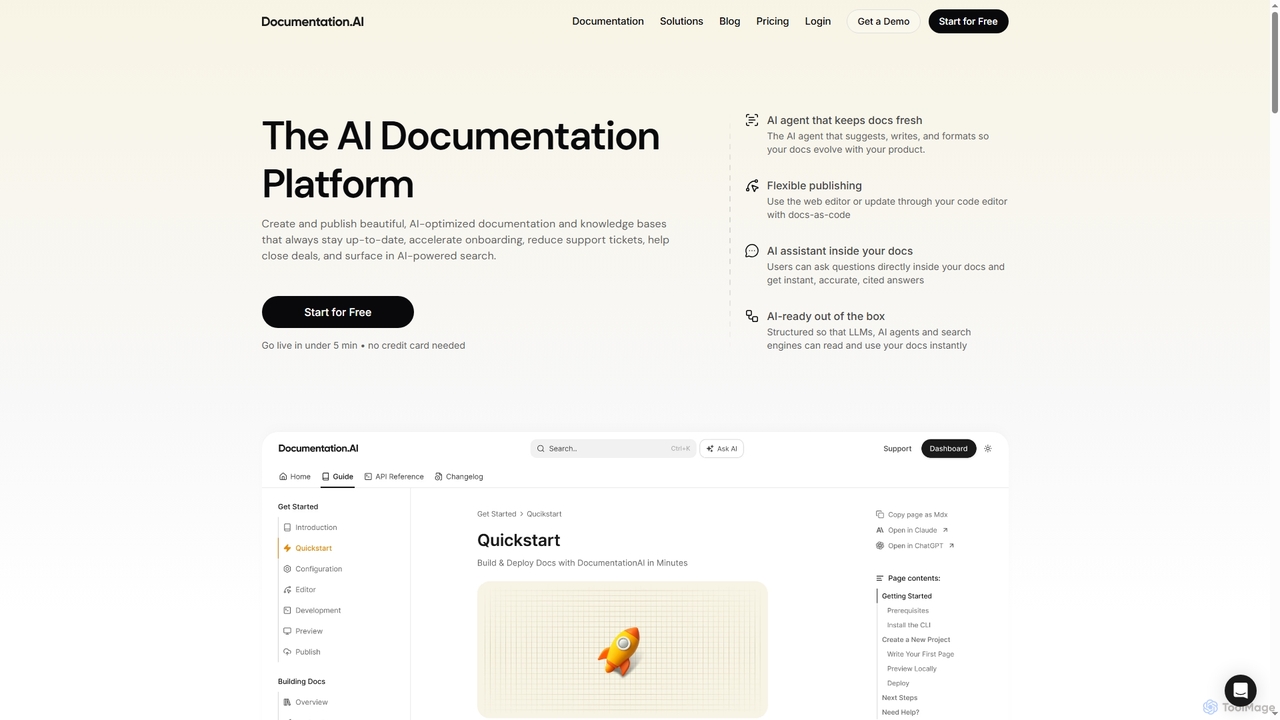
DocumentationAI
DocumentationAI is an AI-powered platform designed to create, publish, and maintain dynamic, up-to-date documentation and knowledge bases. It leverages AI agents to automate content updates, optimize for search engines and large language models, and provide instant, accurate answers to users directly within the documentation, accelerating onboarding and reducing support overhead.
Writing Assistant
Autofix
Autofix is an AI agent purpose-built for deep code review, identifying security vulnerabilities, hardcoded secrets, and code quality issues. It generates verified patches to help development teams ship clean and secure code faster.
Static Analysis
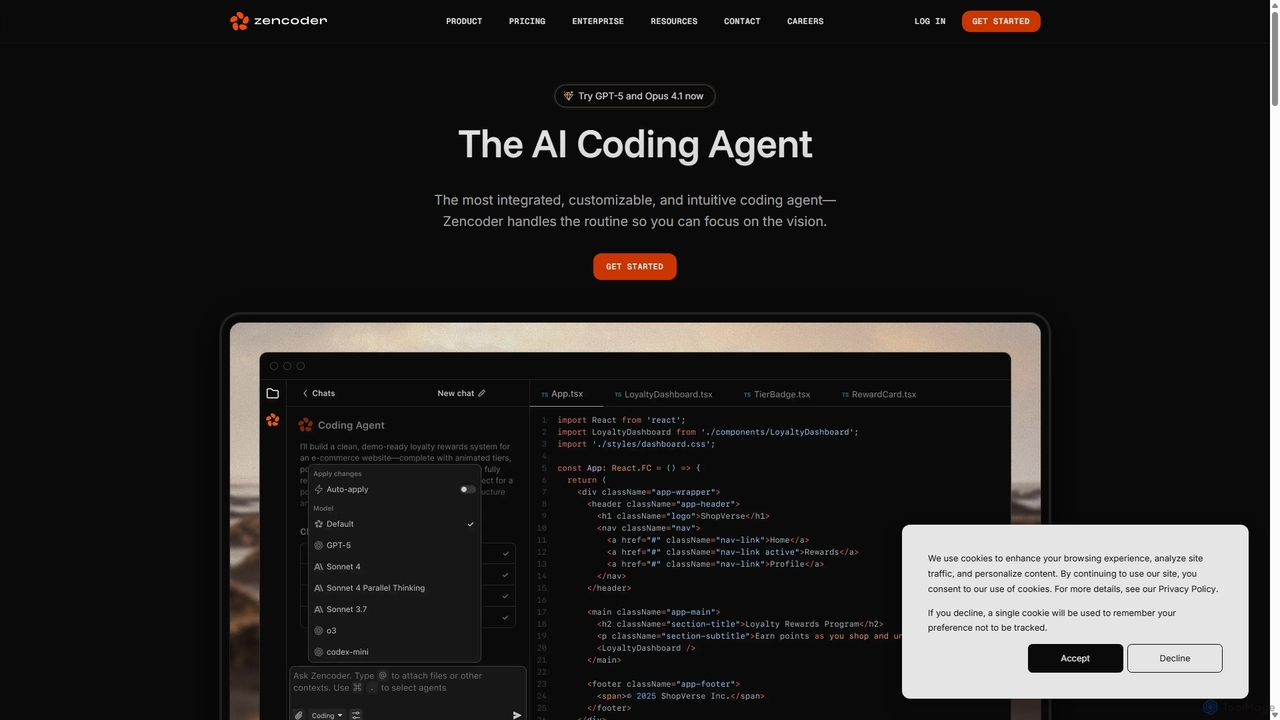
Zencoder
Zencoder is an advanced AI coding agent designed to automate routine development tasks. It deeply integrates into your workflow, understanding your entire codebase to implement features, write tests, fix bugs, and refactor code autonomously. With customizable 'Zen Agents' and seamless integration with VS Code, JetBrains, and over 100 developer tools, Zencoder empowers engineering teams to focus on innovation and ship products faster.
Code Assistant
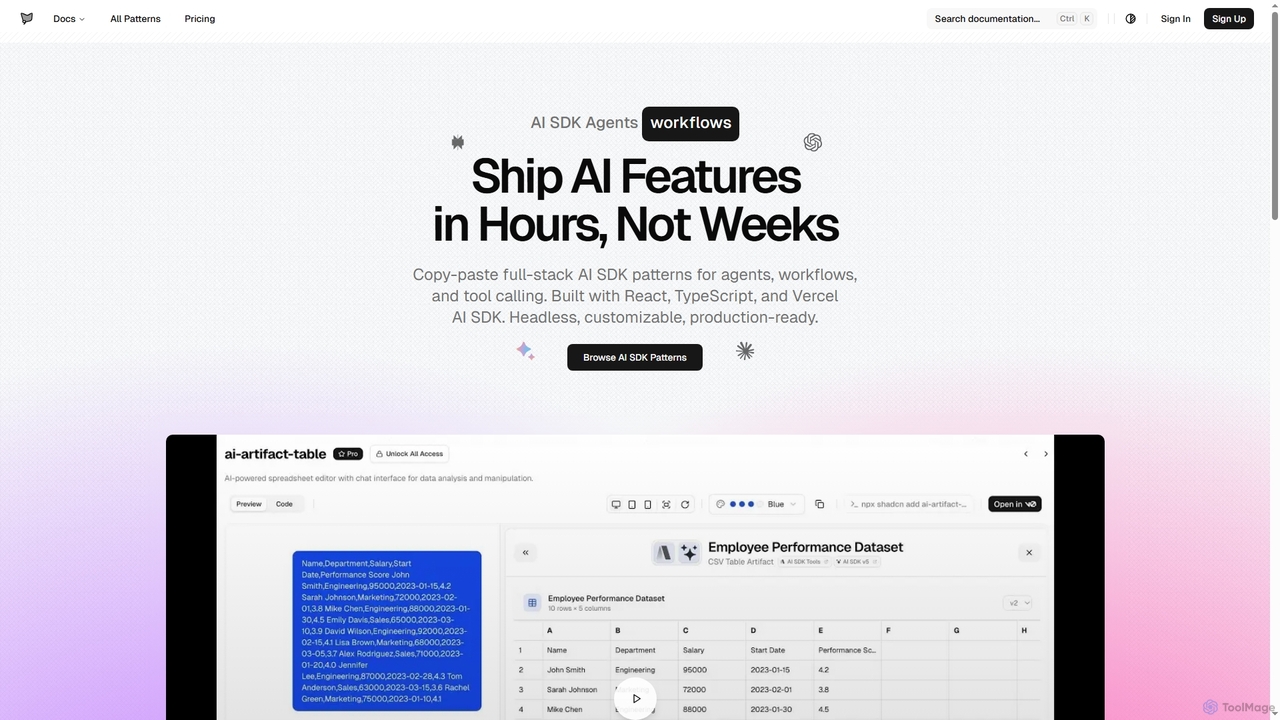
AI SDK Agents
AI SDK Agents provides production-ready React components for rapidly building AI applications. Leverage copy-paste patterns for agents, workflows, tool calling, and streaming responses, built with React, TypeScript, and Vercel AI SDK. Accelerate your AI feature development from weeks to hours, ensuring customizable and headless integration into your projects.
Ui Components
DocuLearn
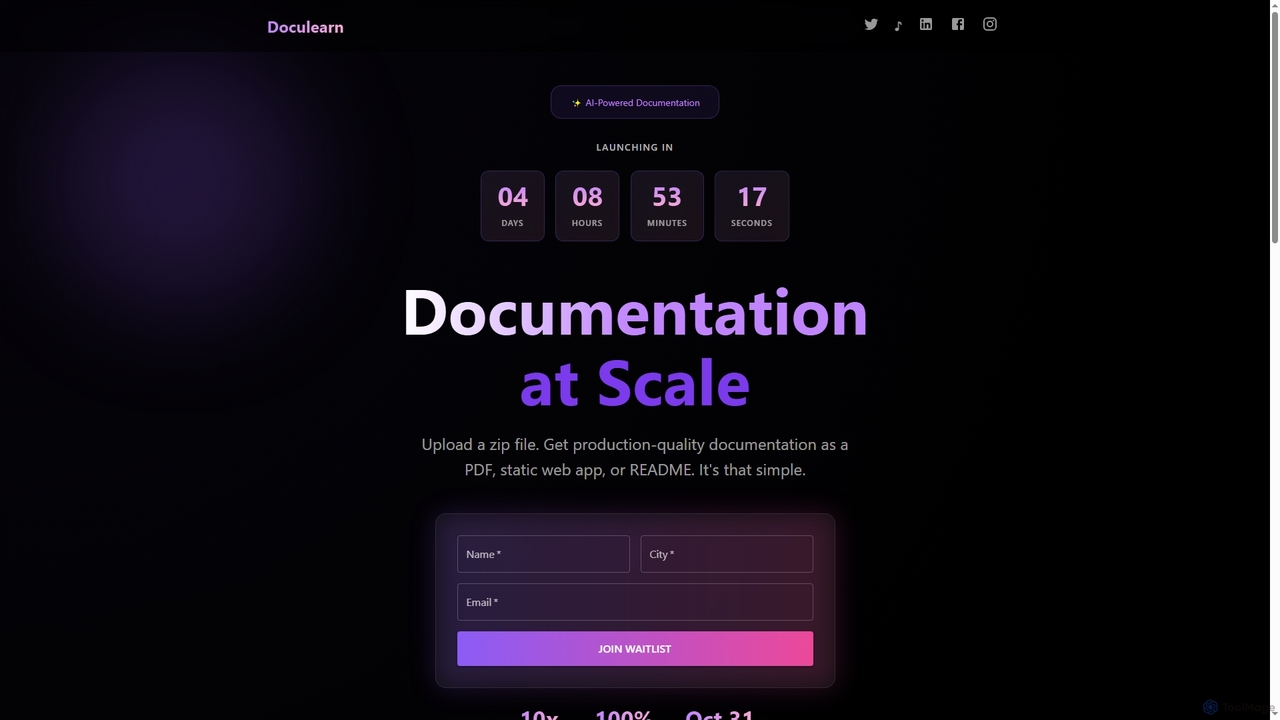
An AI-powered tool that automatically generates production-quality documentation for codebases. Simply upload a zip file and receive documentation in PDF, static web app, or README formats, streamlining the development workflow.
Documentation
Ultracite
Ultracite is a lightning-fast, zero-config code formatter and linter built on Biome. It's designed to ensure consistent code style for both human developers and AI agents, automating formatting, fixing issues on save, and enforcing best practices for modern TypeScript, React, and Next.js projects.
Code Quality
AI SDK
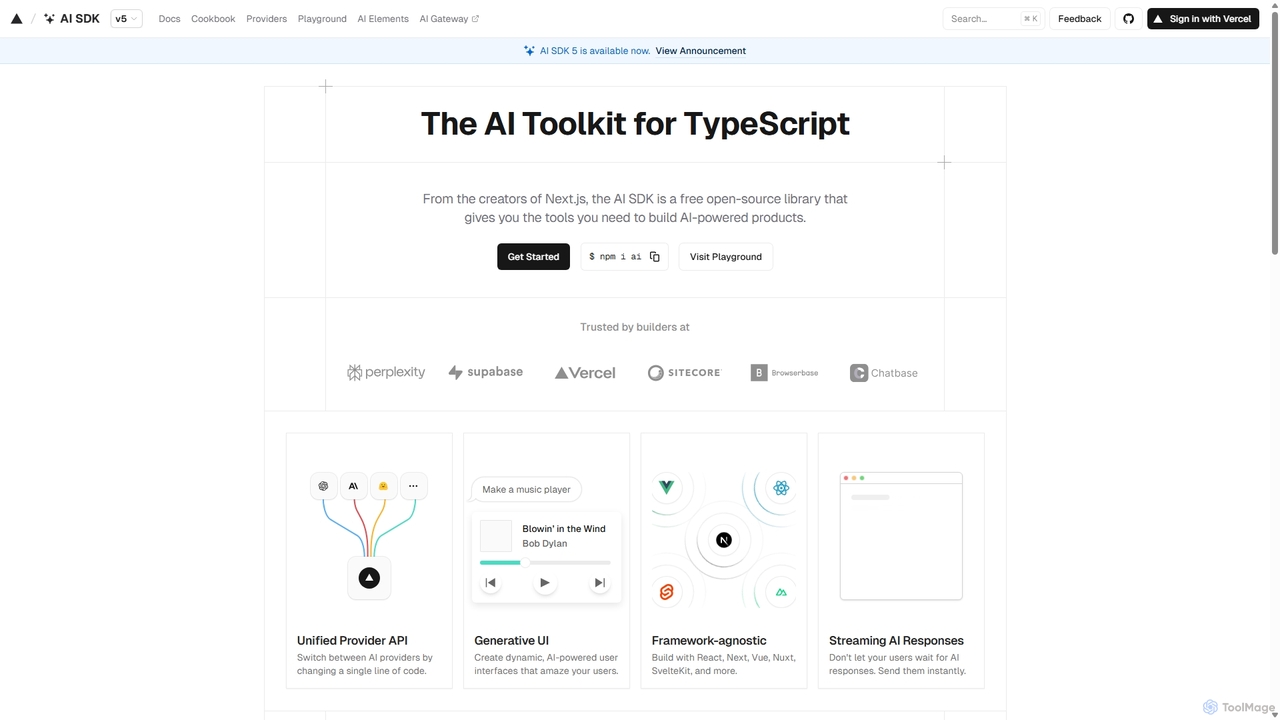
AI SDK by Vercel is a free, open-source TypeScript toolkit designed to help developers build AI-powered applications. It provides a unified API to seamlessly integrate with various large language models like OpenAI, Anthropic, and Google Gemini. The SDK is framework-agnostic, supporting React, Next.js, Vue, Svelte, and more, enabling the creation of features like streaming responses and generative UIs with minimal effort.
Model Integration
CrewAI
CrewAI is an advanced open-source framework for orchestrating role-playing, autonomous AI agents. By fostering collaborative intelligence, it enables agents with distinct roles and tools to work together seamlessly to solve complex tasks. This multi-agent system simplifies the development of sophisticated applications, from automated content creation to complex data analysis, by managing agent interactions, task delegation, and workflow processes.
Agent
Hexabot
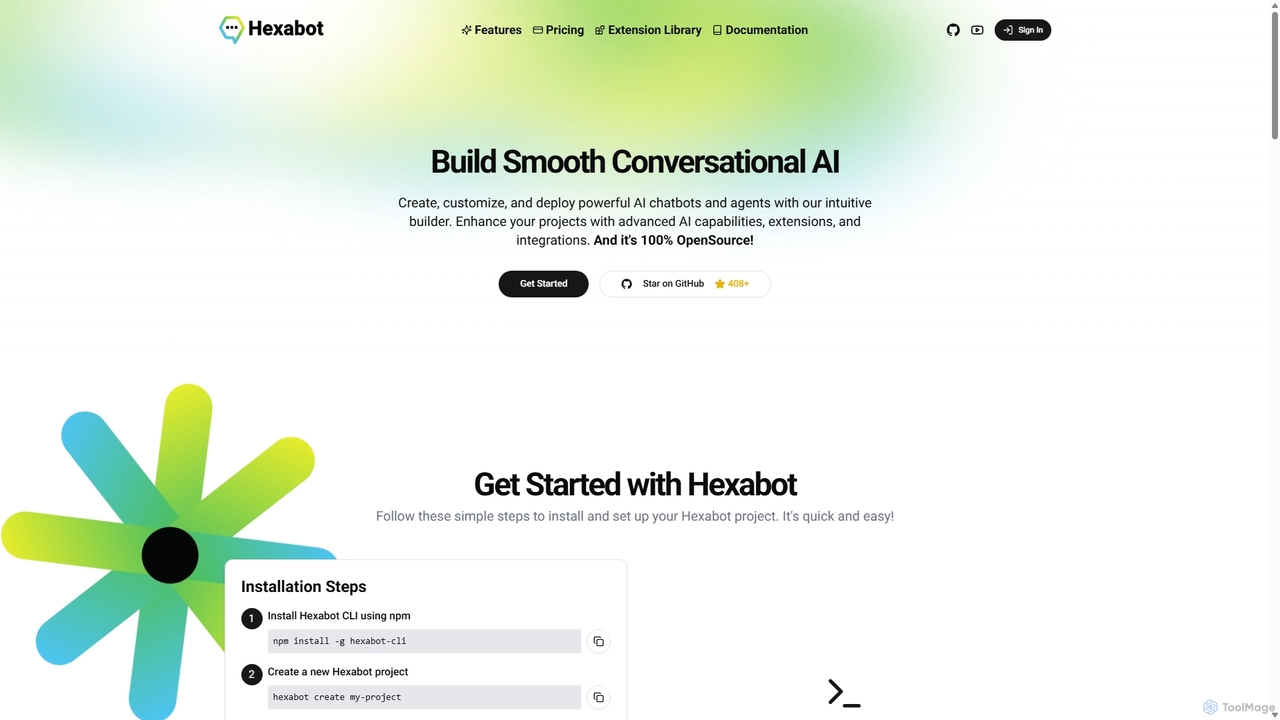
Hexabot is a 100% open-source platform for building, customizing, and deploying powerful AI chatbots and agents. It offers an intuitive low-code builder, on-premise hosting for data privacy, and a vast library of extensions. Ideal for developers and businesses seeking to enhance customer experience and automate workflows across multiple channels and languages.
Chatbot
Morph
Morph is an API-first platform for developers, providing the fastest and most accurate way to apply AI-generated edits to code and files. With speeds of 4,500+ tokens/sec and 98% accuracy, it empowers AI agents to perform reliable, semantic modifications, bridging the gap between AI suggestions and production-ready implementation.
Infrastructure
Codeball
Codeball is an AI-powered code review assistant that integrates with GitHub to automatically analyze pull requests. It helps development teams ship better code faster by identifying bugs, suggesting improvements, and ensuring code quality without manual intervention.
Code Review