Cascade is a creative development environment for modern web development. It allows users to visually explore parallel versions of their projects, manage branches, and rapidly build new iterations with the help of an integrated AI assistant. Experiment freely and commit your best work.

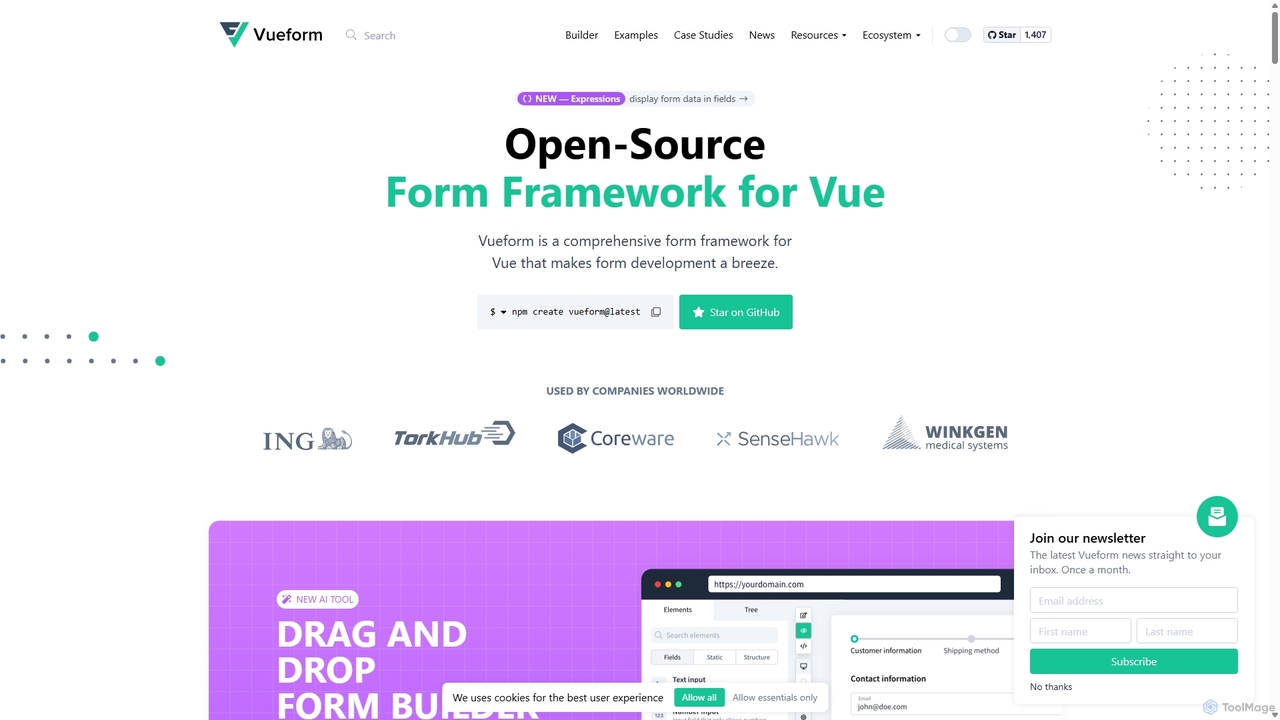
Vueform is an open-source form framework for Vue.js, designed to streamline form development. It features a drag-and-drop builder, an AI Assistant for instant form generation, over 50 validation rules, complex conditional logic, and extensive pre-built elements. It simplifies handling nested data, multi-step wizards, and internationalization, making it a comprehensive solution for any Vue application.
Product overview
Cascade Product overview
Cascade is a creative development environment for modern web development. It allows users to visually explore parallel versions of their projects, manage branches, and rapidly build new iterations with the help of an integrated AI assistant. Experiment freely and commit your best work.

Vueform Product overview
Vueform is an open-source form framework for Vue.js, designed to streamline form development. It features a drag-and-drop builder, an AI Assistant for instant form generation, over 50 validation rules, complex conditional logic, and extensive pre-built elements. It simplifies handling nested data, multi-step wizards, and internationalization, making it a comprehensive solution for any Vue application.
Detailed feature comparison
| Feature | Cascade | Vueform |
|---|---|---|
| Primary category | Prototyping | Libraries & Frameworks |
| Added | 2025-11-18 | 2025-09-25 |
| Pricing | Not verified | Freemium |
| Official website | withcascade.com | vueform.com |
| Product type | App | Website |
| Performance data | ||
| User rating | Not verified | Not verified |
| Comments | 0 | 0 |
| Monthly visits | 4.3K | 11.4K |
| Monthly growth | Not verified | -7.9% |
| Favorites | 110 | 114 |
| Details | View details | View details |
Cascade vs Vueform monthly traffic
Compare Cascade and Vueform by monthly reach, traffic trend, visit depth, top regions, and acquisition sources.
How to interpret the traffic data
In the Cascade vs Vueform monthly traffic comparison, Cascade currently shows 4.3K visits and Vueform shows 11.4K; Vueform has about 2.6 times the visible traffic of Cascade, an absolute difference of about 7.1K visits. This reflects visible reach, not feature quality or paid users.
Only Vueform has complete third-party traffic details; Cascade uses visits recorded inside ToolMage. These scopes cannot estimate market share directly, and on-site views should not be treated as the product’s total website traffic.
Cascade monthly traffic:
Latest traffic
Vueform monthly traffic:
Latest traffic
Monthly traffic trend
- 2025/9: 32.3K Monthly visits
- 2026/1: 51.7K Monthly visits
- 2026/2: 24.7K Monthly visits
- 2026/3: 19.7K Monthly visits
- 2026/4: 12.4K Monthly visits
- 2026/5: 11.4K Monthly visits
Top regions
Top 5 countries/regions
| Country/region | Percentage | Traffic |
|---|---|---|
| 🇧🇷Brazil | 24.68% | 2.8K |
| 🇮🇩Indonesia | 23.95% | 2.7K |
| 🇩🇪Germany | 20.27% | 2.3K |
| 🇺🇸United States | 16.15% | 1.8K |
| 🇮🇳India | 14.95% | 1.7K |
Search keywords
Usage comparison
Compare the core capabilities of Cascade and Vueform
Cascade Core features
Vueform Core features
Use cases
Cascade Use cases
Vueform Use cases
Best suited roles
Cascade Best suited roles
Vueform Best suited roles
Cascade vs Vueform:In-depth comparison and selection guidance
First decide whether the products solve the same kind of need
This in-depth Cascade vs Vueform comparison uses only the product records, taxonomy, audience, traffic, and community signals available on this page. Cascade is primarily listed under “Prototyping”, while Vueform is primarily listed under “Libraries & Frameworks”, so the first decision is whether your actual task matches their recorded scope.
The structured fields currently show these decision-relevant differences: Primary category (Cascade: Prototyping; Vueform: Libraries & Frameworks); Product type (Cascade: App; Vueform: Website); Pricing (Cascade: Not disclosed; Vueform: Freemium); Monthly visits (Cascade: 4.3K; Vueform: 11.4K); Favorites (Cascade: 110; Vueform: 114). These facts are more useful for selection than brand visibility alone.
What market visibility and monthly traffic mean
In the Cascade vs Vueform monthly traffic comparison, Cascade currently shows 4.3K visits and Vueform shows 11.4K; Vueform has about 2.6 times the visible traffic of Cascade, an absolute difference of about 7.1K visits. This reflects visible reach, not feature quality or paid users.
Only Vueform has complete third-party traffic details; Cascade uses visits recorded inside ToolMage. These scopes cannot estimate market share directly, and on-site views should not be treated as the product’s total website traffic.
The current traffic scope is not sufficient for a reliable product ranking. Treat monthly visits as a market-interest signal, then decide using taxonomy, use cases, pricing, and a like-for-like trial rather than reading exposure as product capability.
Product positioning, use cases, and roles
Cascade and Vueform currently overlap in shared categories: Web Development; shared tags: web development; shared roles: Full-Stack Developer, Software Developer, UI/UX Designer, and Web Developer. This can place both on the same shortlist, but it does not prove equal implementation, depth, or cost.
Cascade's unique categories/tags are Prototyping, Branch Management, AI assistant, branching, Claude, code exploration, creative environment, and design iteration; Vueform's are Libraries & Frameworks, No Code & Low Code, AI form generator, conditional logic, developer tool, drag and drop, form builder, and form framework. These unique fields are the strongest differentiators: validate the product whose recorded scope matches the task instead of following traffic alone.
What ratings, comments, and favorites can tell you
Cascade has no verified rating, 0 comments, 110 favorites, and 123 likes;Vueform has no verified rating, 0 comments, 114 favorites, and 118 likes。
Neither product has enough rating or comment samples for a credible reputation ranking.
Selection guidance by actual need
When to evaluate Cascade first
Put Cascade on the priority trial list when the task aligns with “Prototyping” and especially Prototyping, Branch Management, AI assistant, branching, Claude, and code exploration, or the users include Front-end Developer and Product Designer. This follows recorded positioning and does not imply unlisted capabilities are absent.
Cascade also currently records: pricing is not verified, product type is app, 4.3K on-site monthly views, no verified user rating. Verify any hard requirement around price, platform, or reach before trial, and do not let sparse review data substitute for testing.
When to evaluate Vueform first
Put Vueform on the priority trial list when the task aligns with “Libraries & Frameworks” and especially Libraries & Frameworks, No Code & Low Code, AI form generator, conditional logic, developer tool, and drag and drop, or the users include Application Developer, Frontend Developer, and Product Manager. This follows recorded positioning and does not imply unlisted capabilities are absent.
Vueform also currently records: pricing is freemium, product type is website, 11.4K verified monthly visits, no verified user rating. Verify any hard requirement around price, platform, or reach before trial, and do not let sparse review data substitute for testing.
How to validate the recommendation before deciding
The available data describes positioning, public visibility, and community signals, but it cannot prove output quality, speed, integration effort, privacy, or long-term cost in your workflow. Before deciding, run the same representative tasks in Cascade and Vueform, then record completion time, accuracy, manual corrections, and the real paid threshold. A like-for-like trial turns this comparison into a defensible adoption decision.
Comparison FAQ
How should I choose between Cascade and Vueform?
Where does this comparison data come from?
What do unknown fields mean?
Related AI tools

AtomicComponents
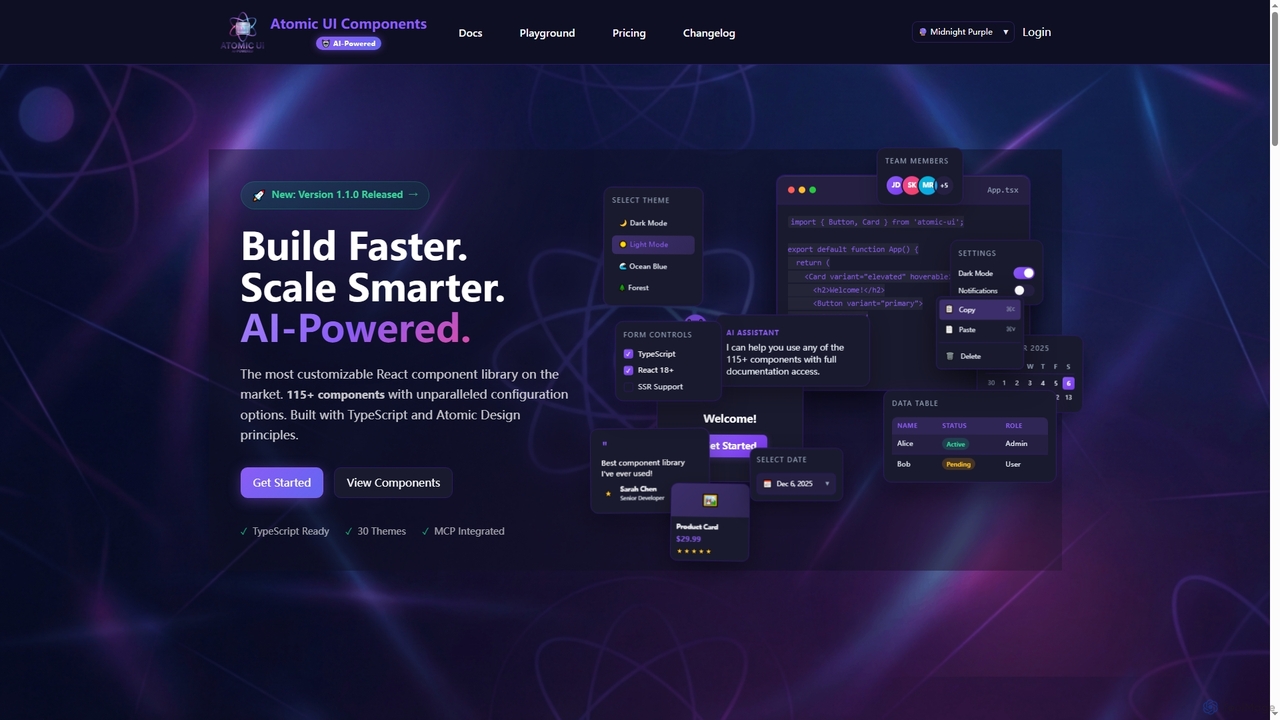
AtomicComponents is an AI-powered React component library designed for building modern, scalable, and accessible user interfaces faster. It offers over 115 highly customizable components, 30 built-in themes, and seamless integration with AI assistants like Claude and GitHub Copilot via its Model Context Protocol (MCP) server.
Design Systems
Layrr
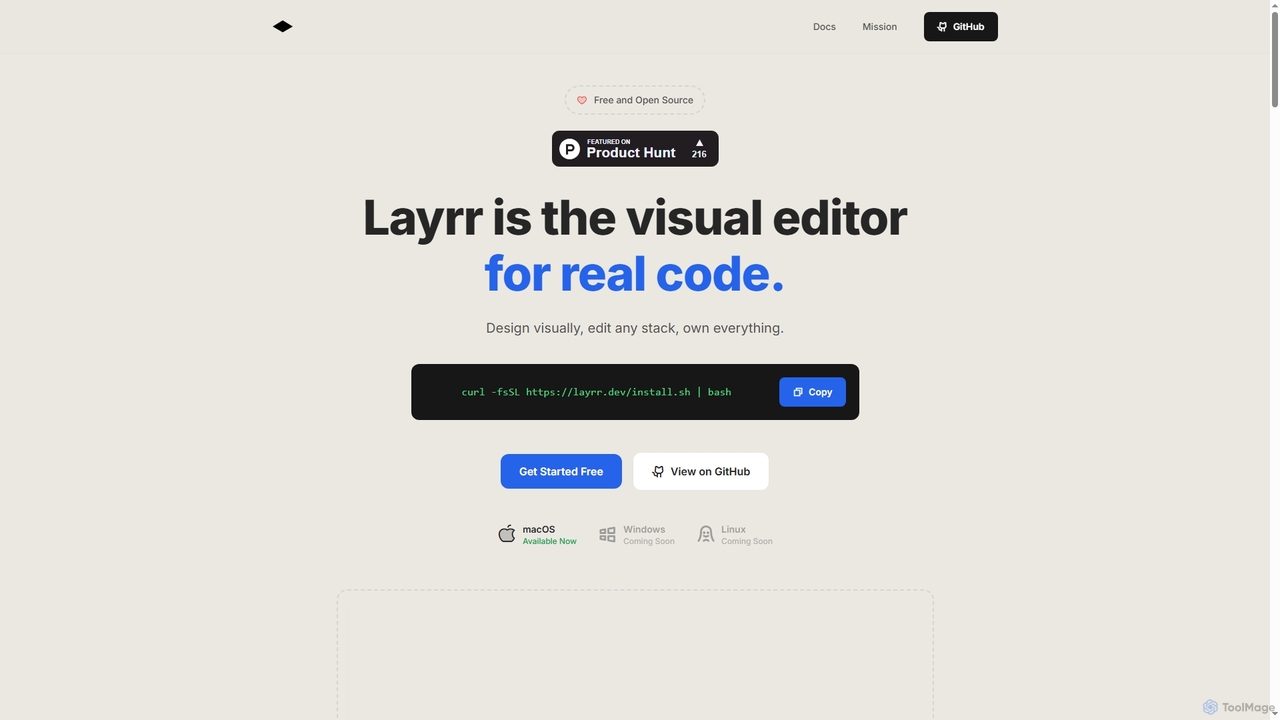
Layrr is a free and open-source visual editor that allows developers and designers to create and edit real code directly. It combines the intuitive drag-and-drop interface of design tools like Figma with the flexibility and ownership of traditional coding, supporting any tech stack and leveraging AI for design-to-code conversion and natural language interface generation.
Code Generation
Vibefyre
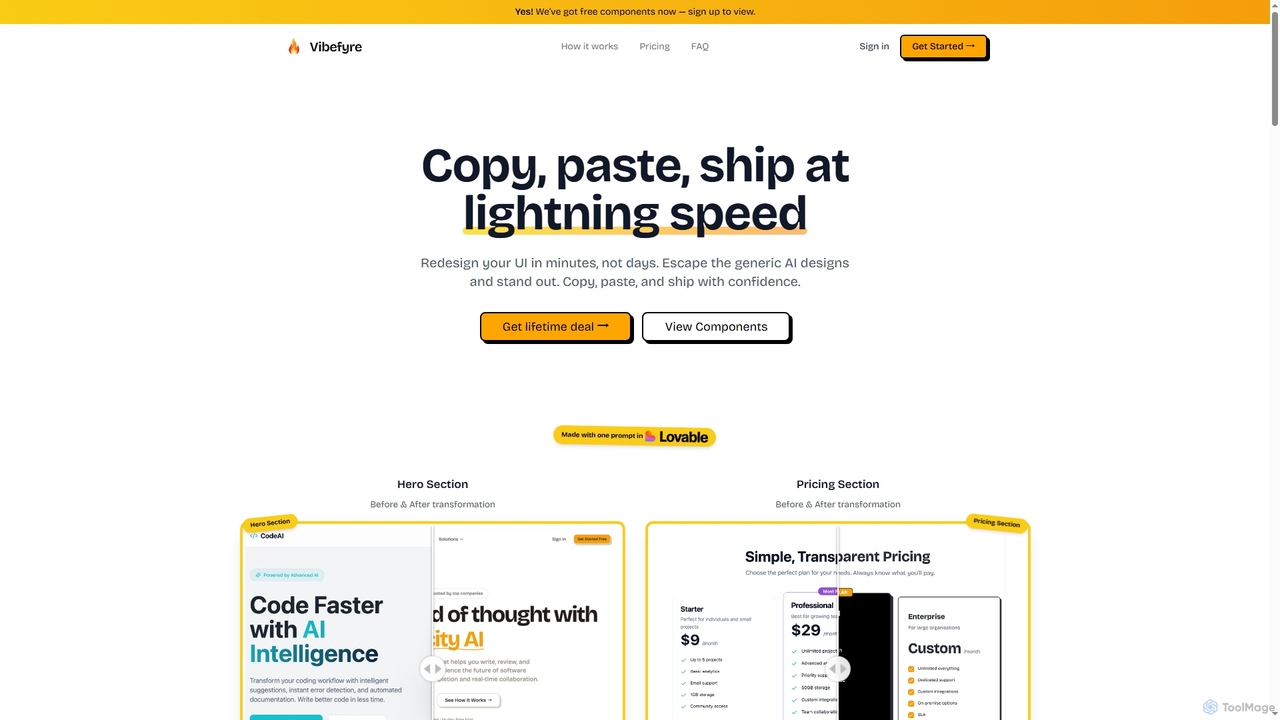
Vibefyre is an AI-powered UI kit designed to accelerate web development by providing high-quality, pre-designed components and prompts. It enables developers to quickly generate unique and consistent user interfaces using their favorite AI coding tools, significantly reducing design and development time for React/TSX applications.
Web Design
Stakly
Stakly is an AI-powered development platform that transforms natural language prompts into production-ready, full-stack web applications in minutes. Describe your idea, and the AI generates clean code, which you can deploy with one click or export to own completely. It supports modern frameworks like React, Next.js, and Python, making it ideal for rapid prototyping and development.
Code Assistant
Copilot for CodeMirror
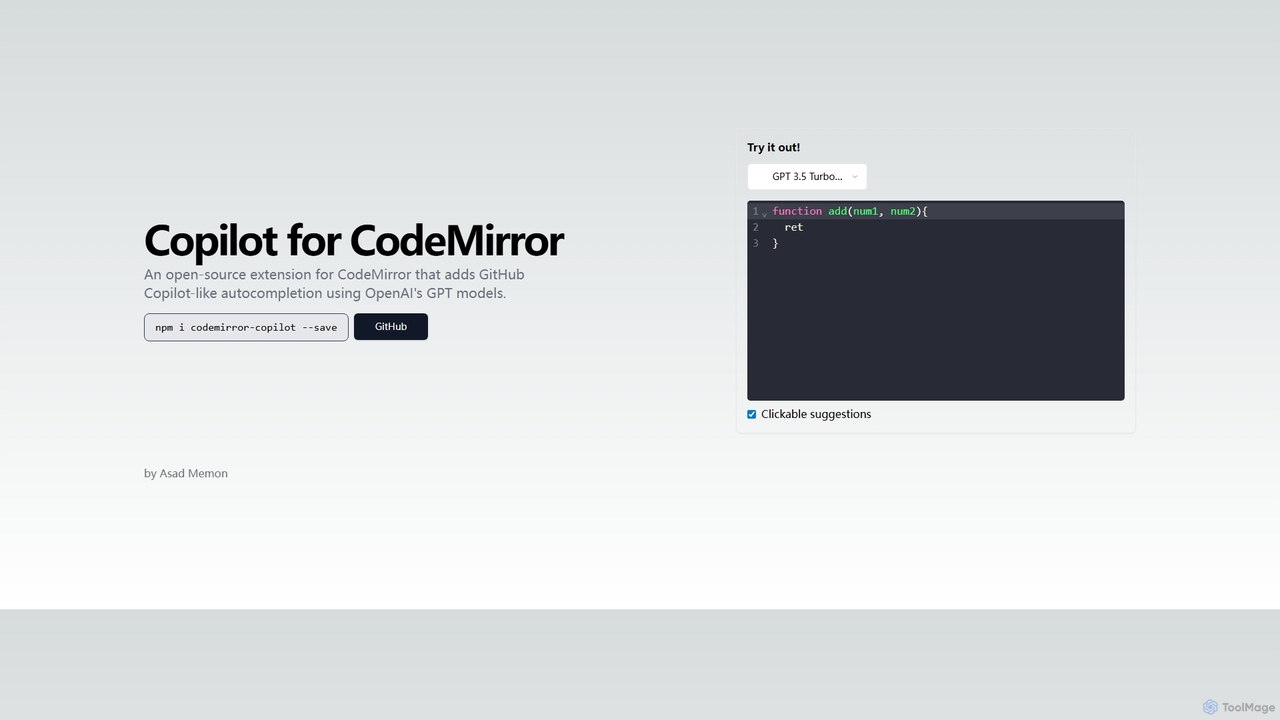
An open-source extension that integrates GitHub Copilot-like AI-powered autocompletion into the CodeMirror editor. Powered by OpenAI's GPT models, it provides intelligent, context-aware code suggestions to accelerate web development and enhance productivity within any application using CodeMirror.
Code Assistant
Stryama
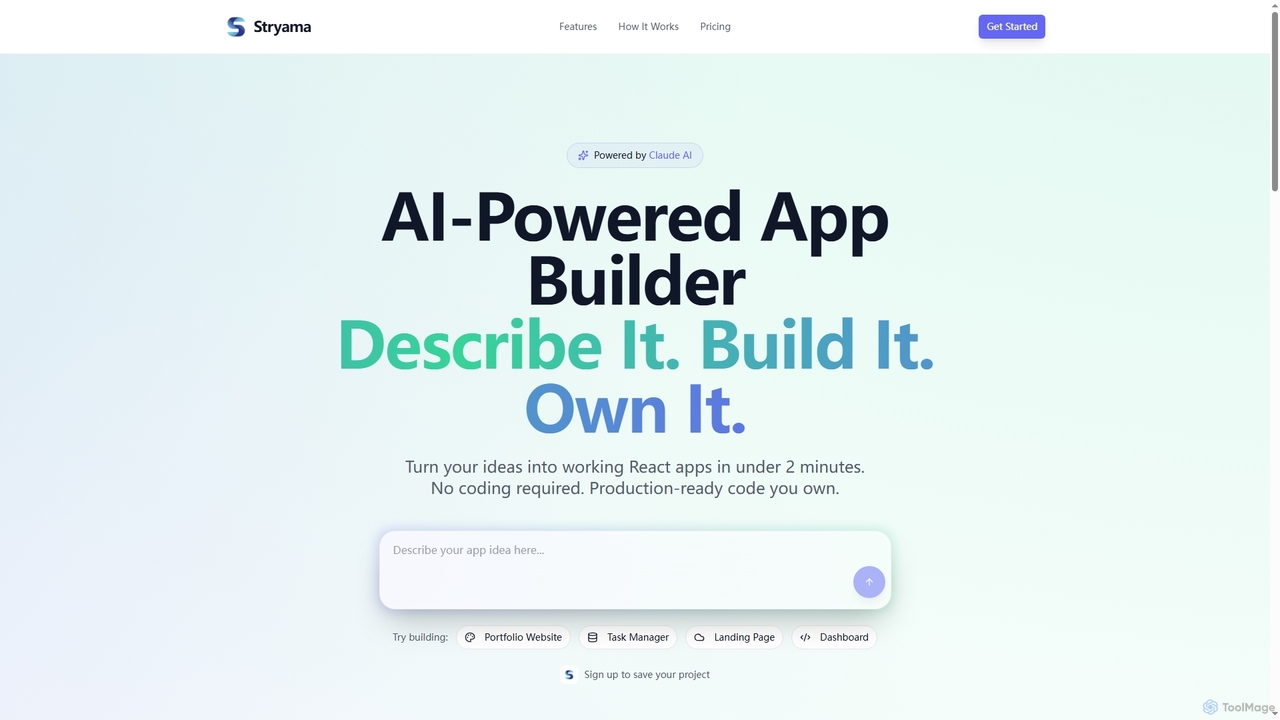
Stryama is an AI-powered app builder that transforms your ideas into functional React applications in minutes, requiring no coding. It generates production-ready code that you fully own, enabling rapid development and deployment for various web projects.
App Development
Kombai
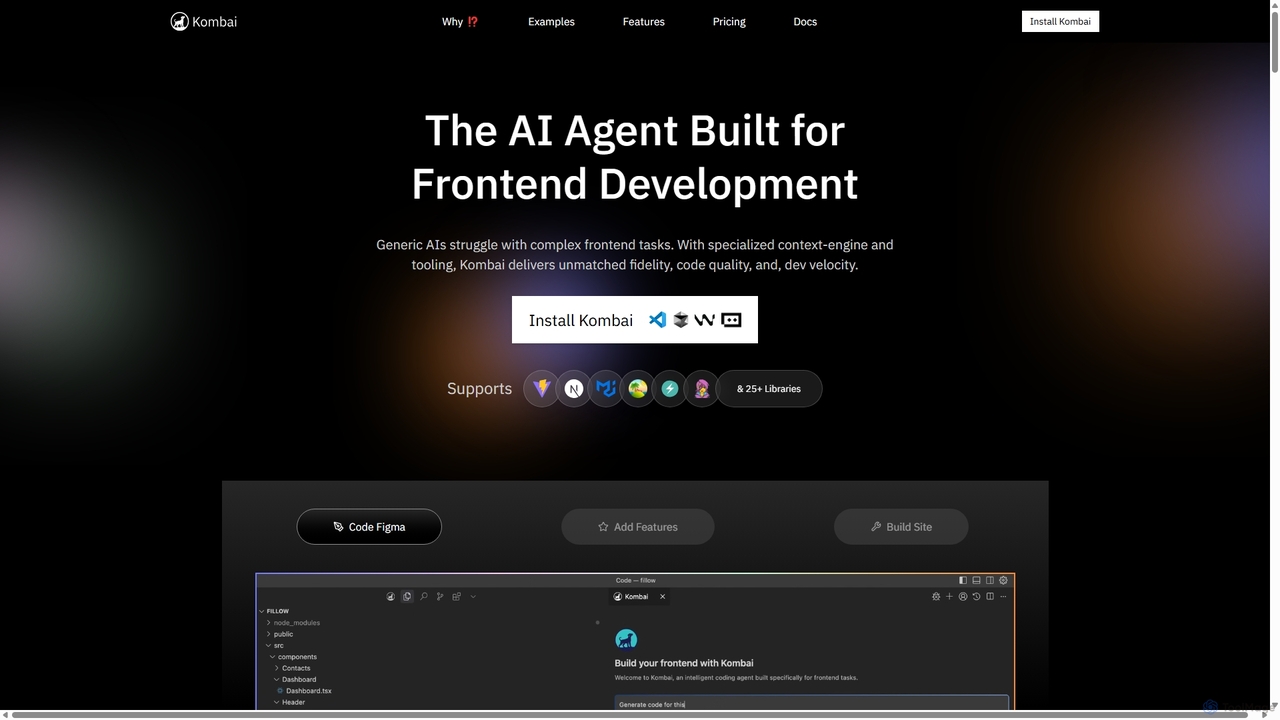
Kombai is a specialized AI agent for frontend development that transforms Figma designs, images, and text prompts into high-fidelity, production-ready code. It understands your existing codebase, supports 25+ libraries, and integrates directly into your IDE to accelerate development velocity.
Code Generation
Syntux
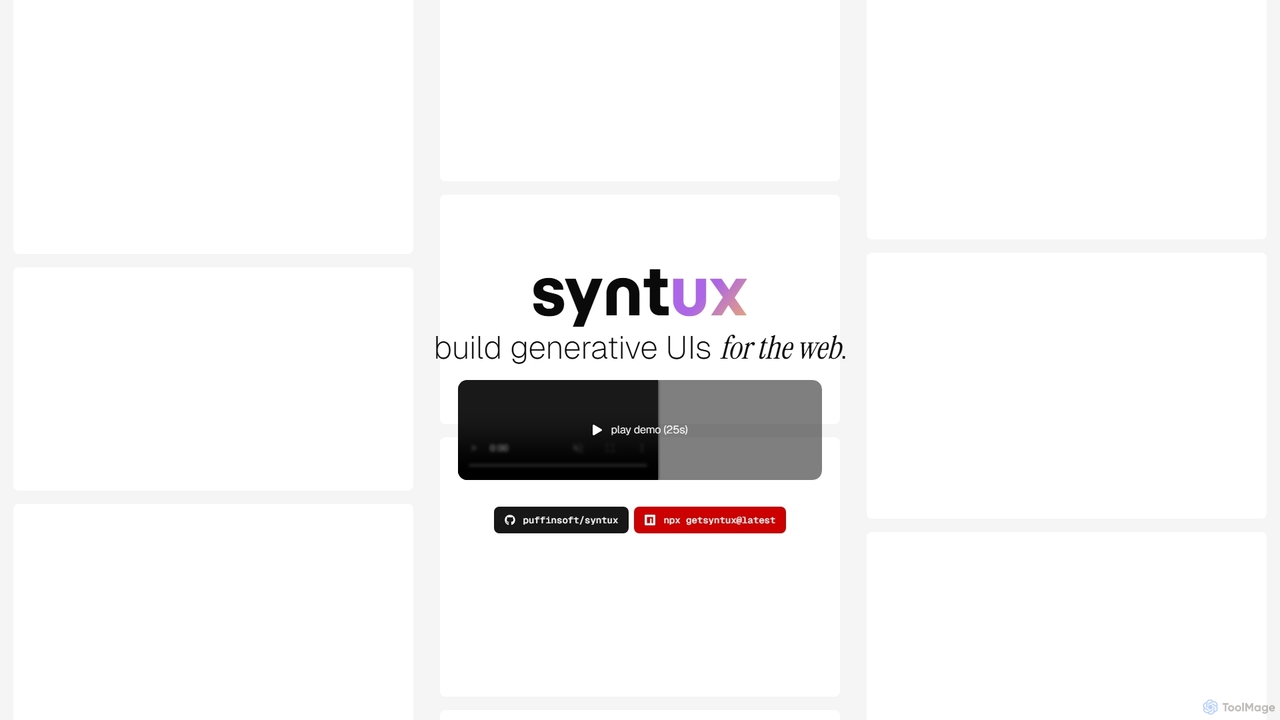
Syntux is an innovative AI-powered developer tool designed to build generative user interfaces for the web. It empowers developers to rapidly create dynamic and customizable UI components and layouts through programmatic commands, streamlining the front-end development workflow and accelerating prototyping.
Generative Ui
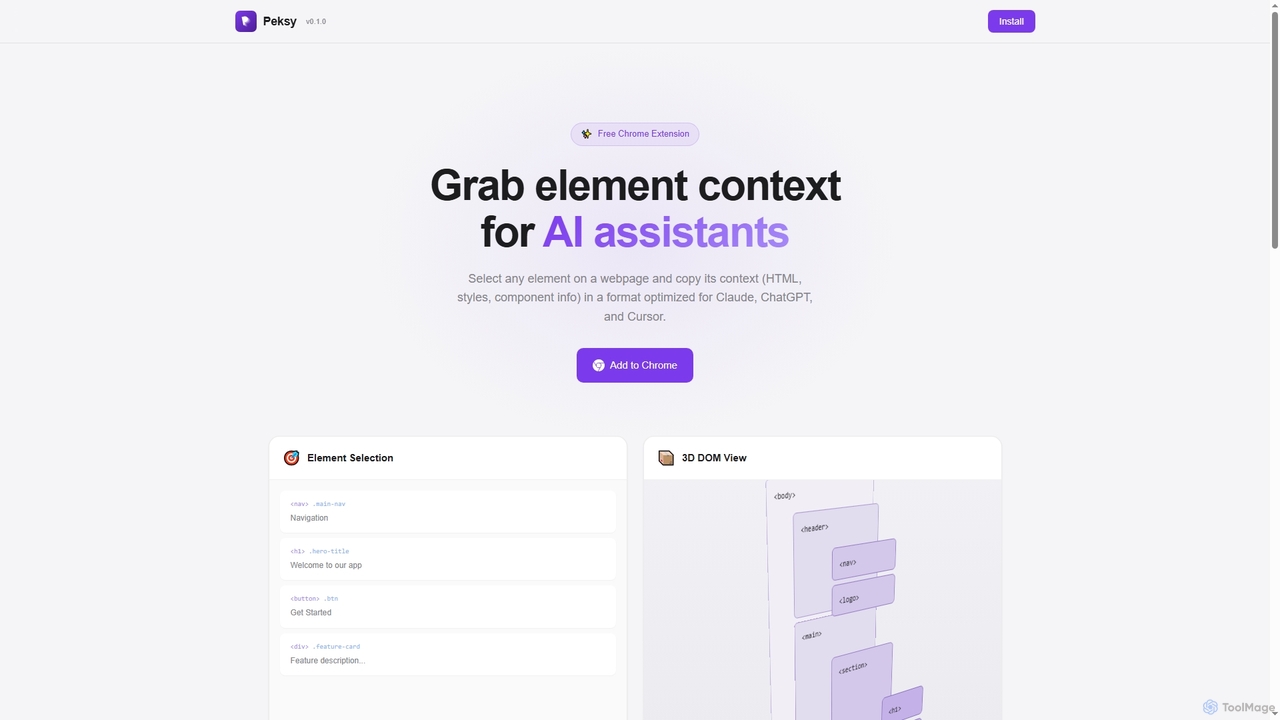
Peksy
Peksy is a free Chrome extension for developers. It lets you select any web element and instantly copy its context—including HTML, CSS, and component info—in a Markdown format optimized for AI coding assistants like ChatGPT, Claude, and Cursor.
Chrome Extensions
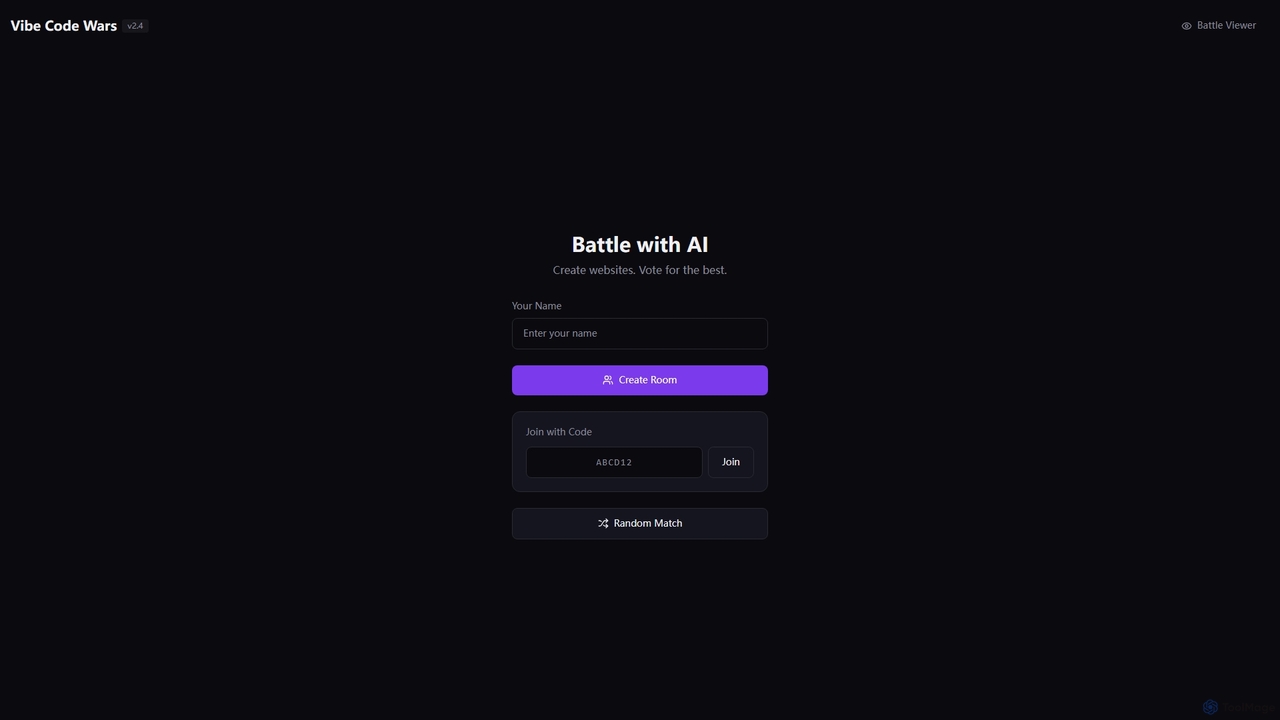
Vibe Code Wars
Vibe Code Wars is an innovative online platform where developers engage in real-time coding battles, specifically focused on website creation. Users can challenge an AI opponent, participate in competitive rooms, or join random matches to showcase their web development skills and vote on the best creations. It's designed for competitive learning and skill demonstration in a fun, interactive environment.
Web Development
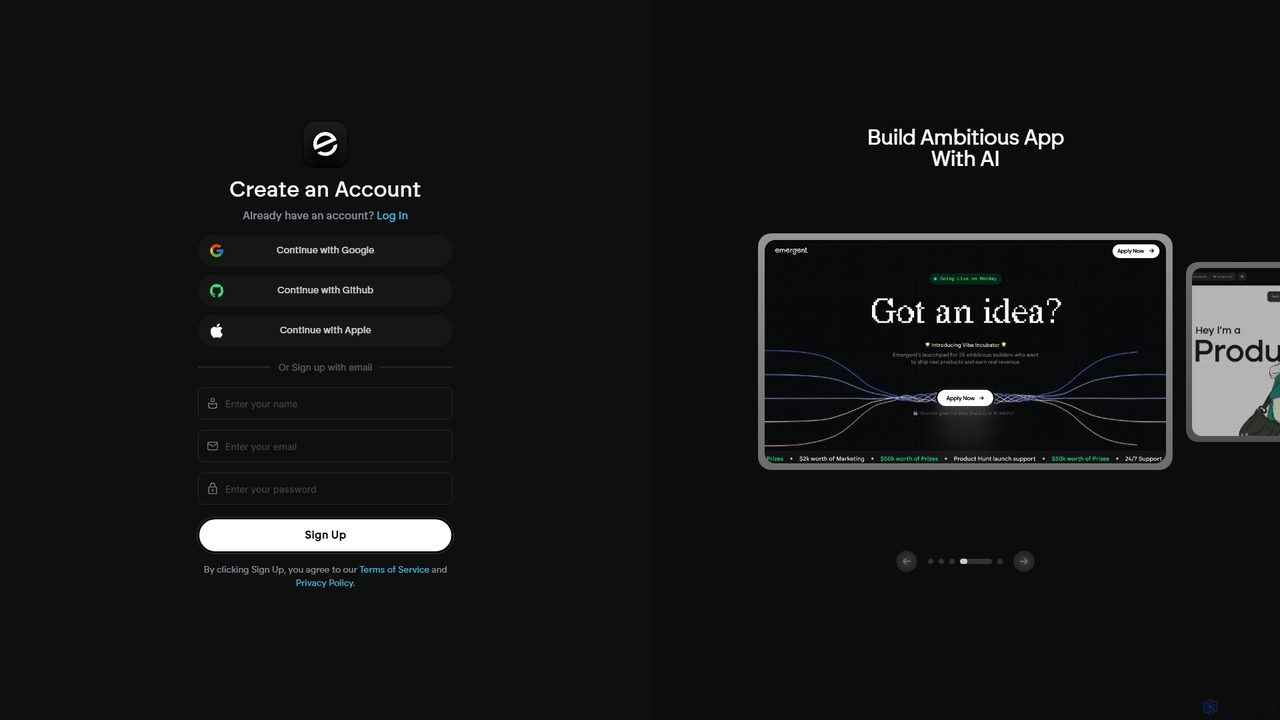
Emergent
Emergent is the world's first agentic vibe-coding platform, designed to build ambitious full-stack applications using AI. It translates natural language descriptions and intent into functional code, empowering developers and teams to prototype, build, and iterate on software faster than ever before.
Development
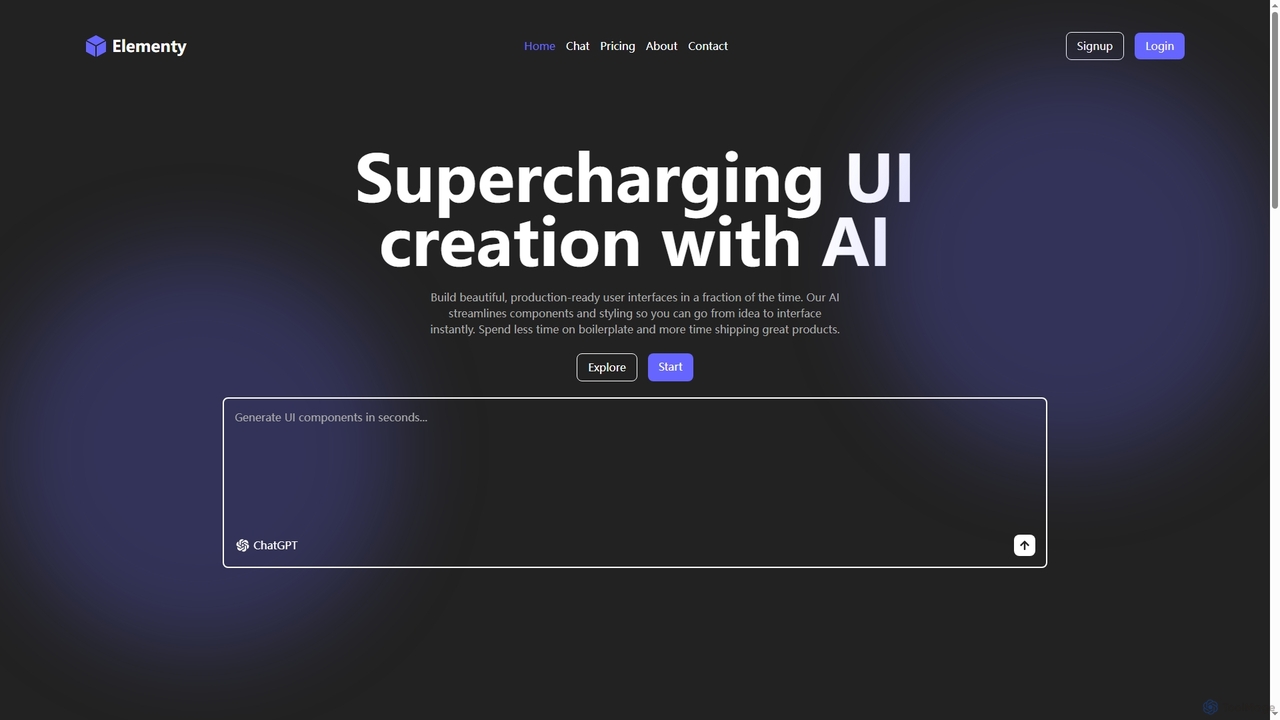
Elementy
Elementy is an AI-powered tool that accelerates UI development by instantly generating production-ready, customizable, and modern user interface components from plain language descriptions. It helps developers ship faster by eliminating boilerplate and repetitive styling work, allowing them to focus on core product logic.
Front End Development
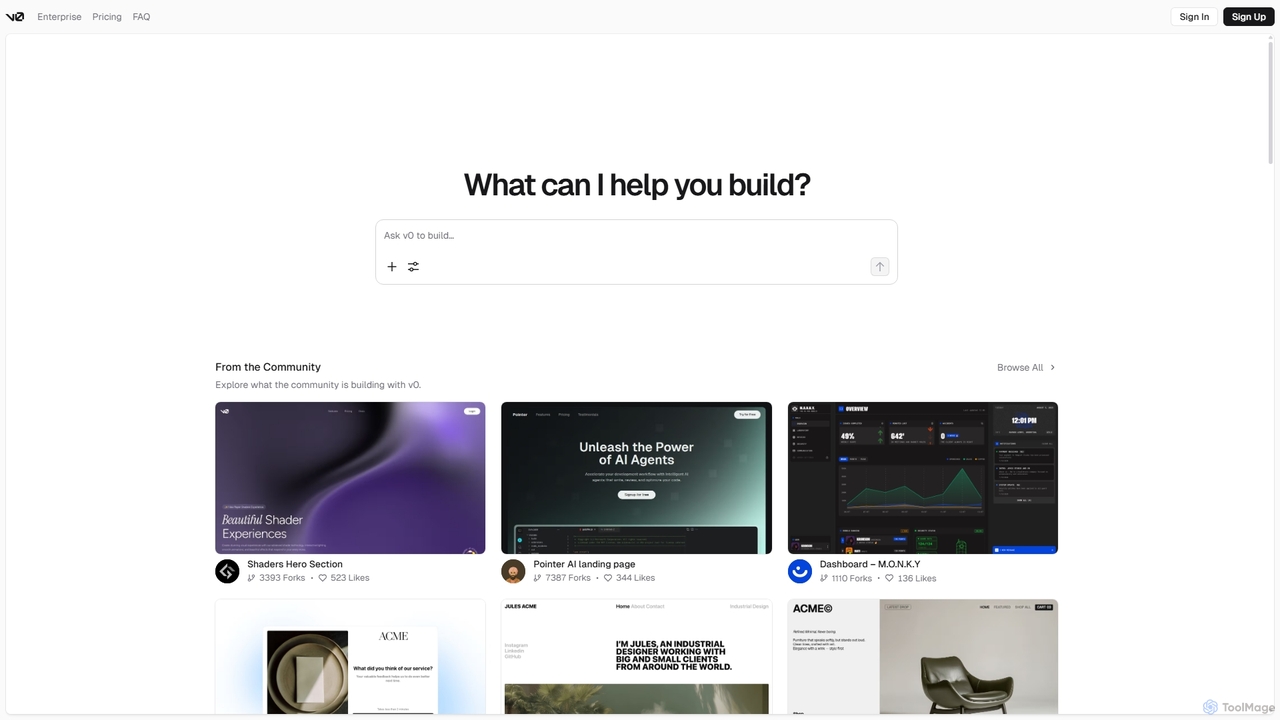
V0
V0 by Vercel is a generative AI platform that transforms text prompts, screenshots, and Figma designs into production-ready frontend code. It acts as an AI pair-programmer, enabling users to rapidly build and iterate on UI components and full-stack applications using React, Svelte, and Vue. With its chat-based interface, it accelerates the development workflow for engineers, designers, and product managers, allowing for seamless deployment to the Vercel platform.
Ui Ux
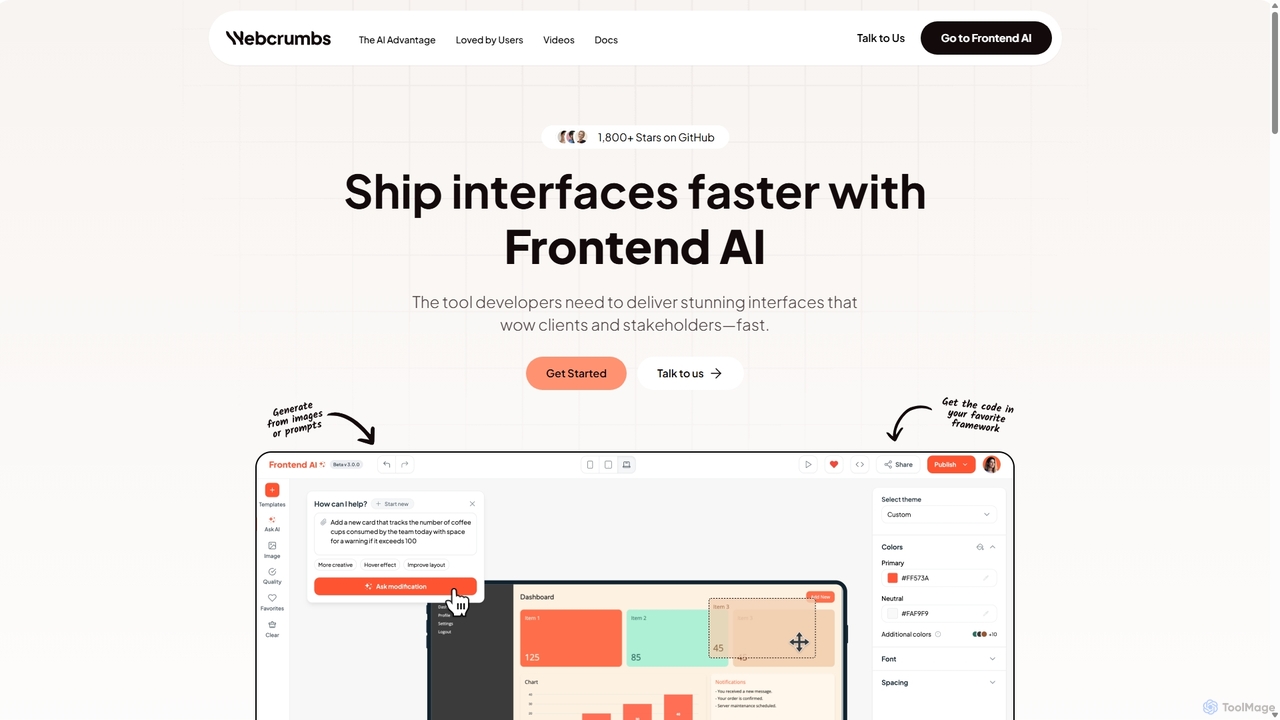
Webcrumbs
Webcrumbs is an AI-powered frontend development platform designed to accelerate UI creation. It combines a powerful prompt-to-code engine with a visual editor, enabling developers and designers to rapidly build, refine, and ship high-quality interface components. By translating natural language or images into clean, production-ready code, Webcrumbs streamlines the workflow, enhances collaboration, and ensures design consistency across projects.
Ui Ux
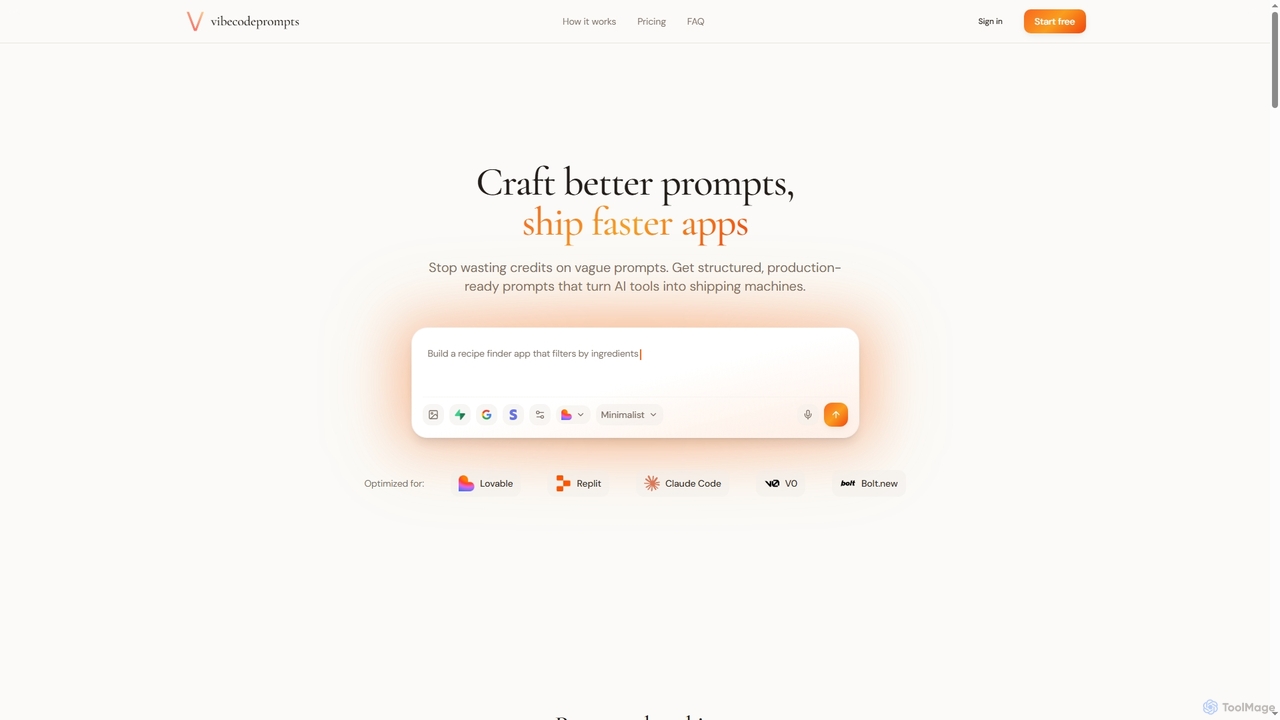
Vibecodeprompts
Vibecodeprompts is an AI-powered tool designed to transform your ideas into structured, production-ready prompts for various AI coding assistants. It helps developers and builders ship applications faster by generating optimized prompts tailored for specific tools like Lovable, Replit, Claude Code, V0, and Bolt.new, saving time and resources.
Code Generation