deploysaas is an all-in-one platform that simplifies and accelerates the deployment of SaaS applications. It provides developers with pre-built boilerplate, automated CI/CD pipelines, and scalable cloud infrastructure, enabling them to launch their products in minutes instead of weeks.

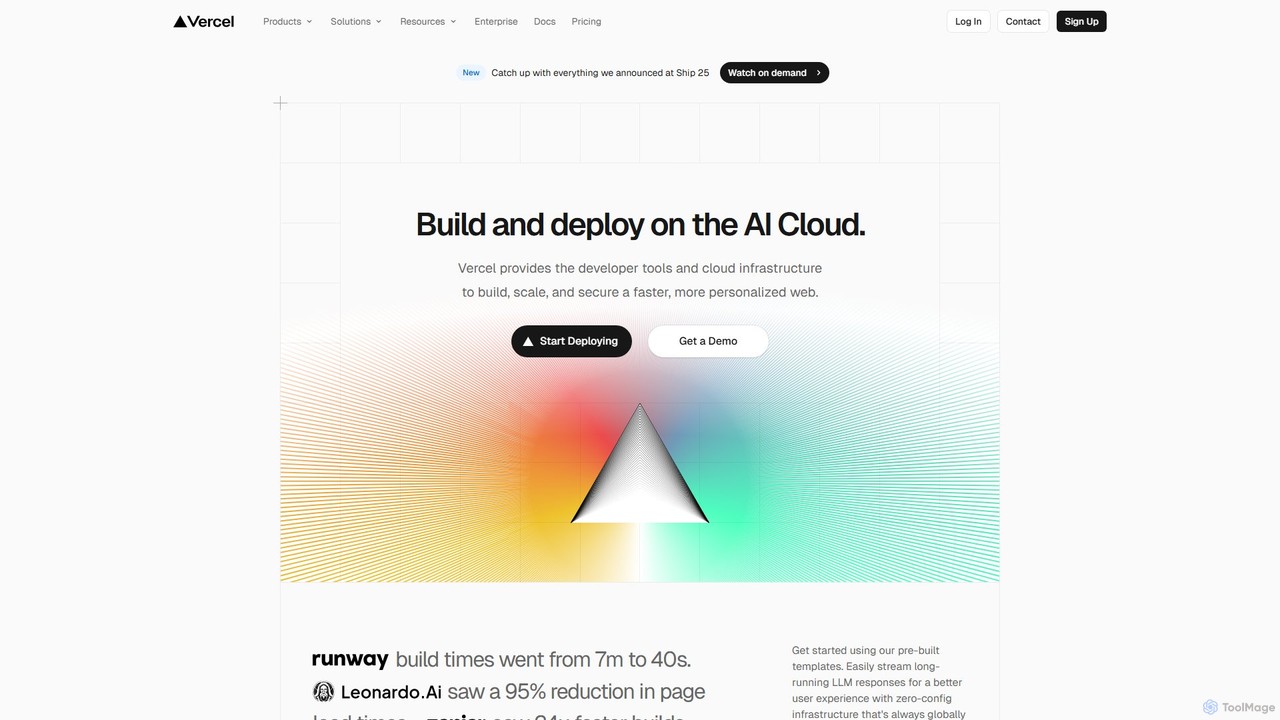
Vercel is a frontend cloud platform providing developers with the tools and infrastructure to build, scale, and secure faster, more personalized web experiences. It offers zero-config deployments, a global edge network, and serverless functions. With its new AI Cloud, Vercel simplifies the development and deployment of high-performance AI-powered applications, enabling features like streaming LLM responses with ease.
Product overview
deploysaas Product overview
deploysaas is an all-in-one platform that simplifies and accelerates the deployment of SaaS applications. It provides developers with pre-built boilerplate, automated CI/CD pipelines, and scalable cloud infrastructure, enabling them to launch their products in minutes instead of weeks.
Vercel Product overview
Vercel is a frontend cloud platform providing developers with the tools and infrastructure to build, scale, and secure faster, more personalized web experiences. It offers zero-config deployments, a global edge network, and serverless functions. With its new AI Cloud, Vercel simplifies the development and deployment of high-performance AI-powered applications, enabling features like streaming LLM responses with ease.
Detailed feature comparison
| Feature | deploysaas | Vercel |
|---|---|---|
| Primary category | Deployment | Cloud Platform |
| Added | 2025-08-14 | 2025-08-09 |
| Pricing | Freemium | Freemium |
| Official website | deploysaas.com | vercel.com |
| Product type | Website | Website |
| Performance data | ||
| User rating | Not verified | Not verified |
| Comments | 0 | 0 |
| Monthly visits | 3.4K | 29.6M |
| Monthly growth | Not verified | 9.6% |
| Favorites | 88 | 112 |
| Details | View details | View details |
deploysaas vs Vercel monthly traffic
Compare deploysaas and Vercel by monthly reach, traffic trend, visit depth, top regions, and acquisition sources.
How to interpret the traffic data
In the deploysaas vs Vercel monthly traffic comparison, deploysaas currently shows 3.4K visits and Vercel shows 29.6M; Vercel has about 8,789.3 times the visible traffic of deploysaas, an absolute difference of about 29.6M visits. This reflects visible reach, not feature quality or paid users.
Only Vercel has complete third-party traffic details; deploysaas uses visits recorded inside ToolMage. These scopes cannot estimate market share directly, and on-site views should not be treated as the product’s total website traffic.
deploysaas monthly traffic:
Latest traffic
Vercel monthly traffic:
Latest traffic
Monthly traffic trend
- 2025/9: 11.5M Monthly visits
- 2026/1: 16.9M Monthly visits
- 2026/2: 18.8M Monthly visits
- 2026/3: 24.8M Monthly visits
- 2026/4: 27M Monthly visits
- 2026/5: 29.6M Monthly visits
Top regions
Top 5 countries/regions
| Country/region | Percentage | Traffic |
|---|---|---|
| 🇺🇸United States | 46.39% | 13.7M |
| 🇮🇳India | 27.84% | 8.2M |
| 🇬🇧United Kingdom | 10.1% | 3M |
| 🇵🇰Pakistan | 9.45% | 2.8M |
| 🇩🇪Germany | 6.22% | 1.8M |
Traffic sources
| Source type | Percentage | Traffic |
|---|---|---|
| Direct | 90.36% | 26.7M |
| Referral | 7.82% | 2.3M |
| 1.82% | 538.6K |
Search keywords
Usage comparison
Compare the core capabilities of deploysaas and Vercel
deploysaas Core features
Vercel Core features
Use cases
deploysaas Use cases
Vercel Use cases
deploysaas vs Vercel:In-depth comparison and selection guidance
First decide whether the products solve the same kind of need
This in-depth deploysaas vs Vercel comparison uses only the product records, taxonomy, audience, traffic, and community signals available on this page. deploysaas is primarily listed under “Deployment”, while Vercel is primarily listed under “Cloud Platform”, so the first decision is whether your actual task matches their recorded scope.
The structured fields currently show these decision-relevant differences: Primary category (deploysaas: Deployment; Vercel: Cloud Platform); Monthly visits (deploysaas: 3.4K; Vercel: 29.6M); Favorites (deploysaas: 88; Vercel: 112); Website (deploysaas: deploysaas.com; Vercel: vercel.com); Added (deploysaas: 2025-08-14; Vercel: 2025-08-09). These facts are more useful for selection than brand visibility alone.
What market visibility and monthly traffic mean
In the deploysaas vs Vercel monthly traffic comparison, deploysaas currently shows 3.4K visits and Vercel shows 29.6M; Vercel has about 8,789.3 times the visible traffic of deploysaas, an absolute difference of about 29.6M visits. This reflects visible reach, not feature quality or paid users.
Only Vercel has complete third-party traffic details; deploysaas uses visits recorded inside ToolMage. These scopes cannot estimate market share directly, and on-site views should not be treated as the product’s total website traffic.
The current traffic scope is not sufficient for a reliable product ranking. Treat monthly visits as a market-interest signal, then decide using taxonomy, use cases, pricing, and a like-for-like trial rather than reading exposure as product capability.
Product positioning, use cases, and roles
deploysaas and Vercel currently overlap in shared categories: Deployment and Developer Tools; shared tags: CI/CD, developer tools, and NextJS. This can place both on the same shortlist, but it does not prove equal implementation, depth, or cost.
deploysaas's unique categories/tags are Low Code No Code, application deployment, boilerplate, cloud hosting, devops, infrastructure as code, SaaS deployment, and startup tools; Vercel's are Cloud Platform, Web Hosting, AI cloud, cloud infrastructure, deployment, frontend, hosting, and serverless. These unique fields are the strongest differentiators: validate the product whose recorded scope matches the task instead of following traffic alone.
What ratings, comments, and favorites can tell you
deploysaas has no verified rating, 0 comments, 88 favorites, and 85 likes;Vercel has no verified rating, 0 comments, 112 favorites, and 125 likes。
Neither product has enough rating or comment samples for a credible reputation ranking.
Selection guidance by actual need
When to evaluate deploysaas first
Put deploysaas on the priority trial list when the task aligns with “Deployment” and especially Low Code No Code, application deployment, boilerplate, cloud hosting, devops, and infrastructure as code. This follows recorded positioning and does not imply unlisted capabilities are absent.
deploysaas also currently records: pricing is freemium, product type is website, 3.4K on-site monthly views, no verified user rating. Verify any hard requirement around price, platform, or reach before trial, and do not let sparse review data substitute for testing.
When to evaluate Vercel first
Put Vercel on the priority trial list when the task aligns with “Cloud Platform” and especially Cloud Platform, Web Hosting, AI cloud, cloud infrastructure, deployment, and frontend. This follows recorded positioning and does not imply unlisted capabilities are absent.
Vercel also currently records: pricing is freemium, product type is website, 29.6M verified monthly visits, no verified user rating. Verify any hard requirement around price, platform, or reach before trial, and do not let sparse review data substitute for testing.
How to validate the recommendation before deciding
The available data describes positioning, public visibility, and community signals, but it cannot prove output quality, speed, integration effort, privacy, or long-term cost in your workflow. Before deciding, run the same representative tasks in deploysaas and Vercel, then record completion time, accuracy, manual corrections, and the real paid threshold. A like-for-like trial turns this comparison into a defensible adoption decision.
Comparison FAQ
How should I choose between deploysaas and Vercel?
Where does this comparison data come from?
What do unknown fields mean?
Related AI tools

Zeabur
Zeabur is an AI-powered deployment platform (PaaS) designed for developers. It enables one-click deployment for any project, including front-end, back-end, databases, and AI agents, directly from code or through conversational AI. Featuring a pay-as-you-go model, automatic configuration, and auto-scaling, Zeabur simplifies cloud infrastructure, allowing developers to focus solely on coding.
Deployment

ClawCloud Run
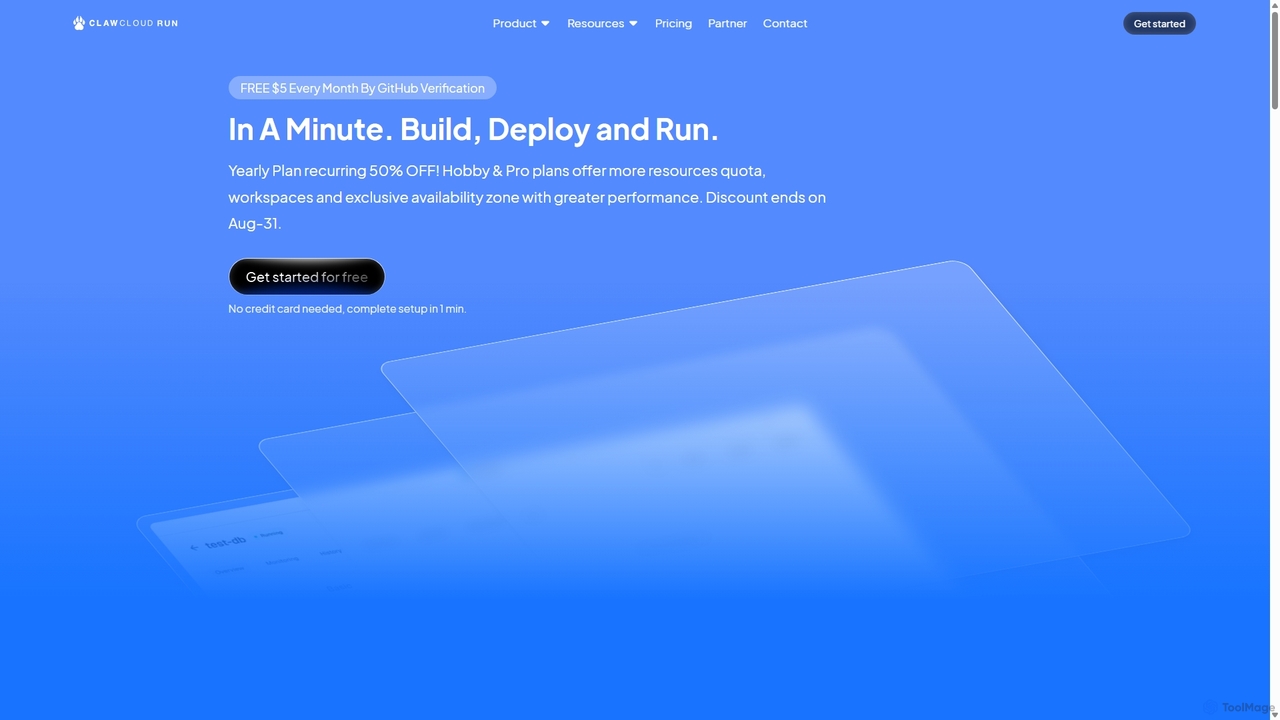
ClawCloud Run is a cloud-native development platform designed to simplify the application lifecycle. It enables developers to build, deploy, manage, and run applications in a unified cloud environment without writing complex YAML files. Featuring a visual canvas, one-click templates, and integrated database management, it accelerates the go-to-market process.
Platform As A Service
Bugster
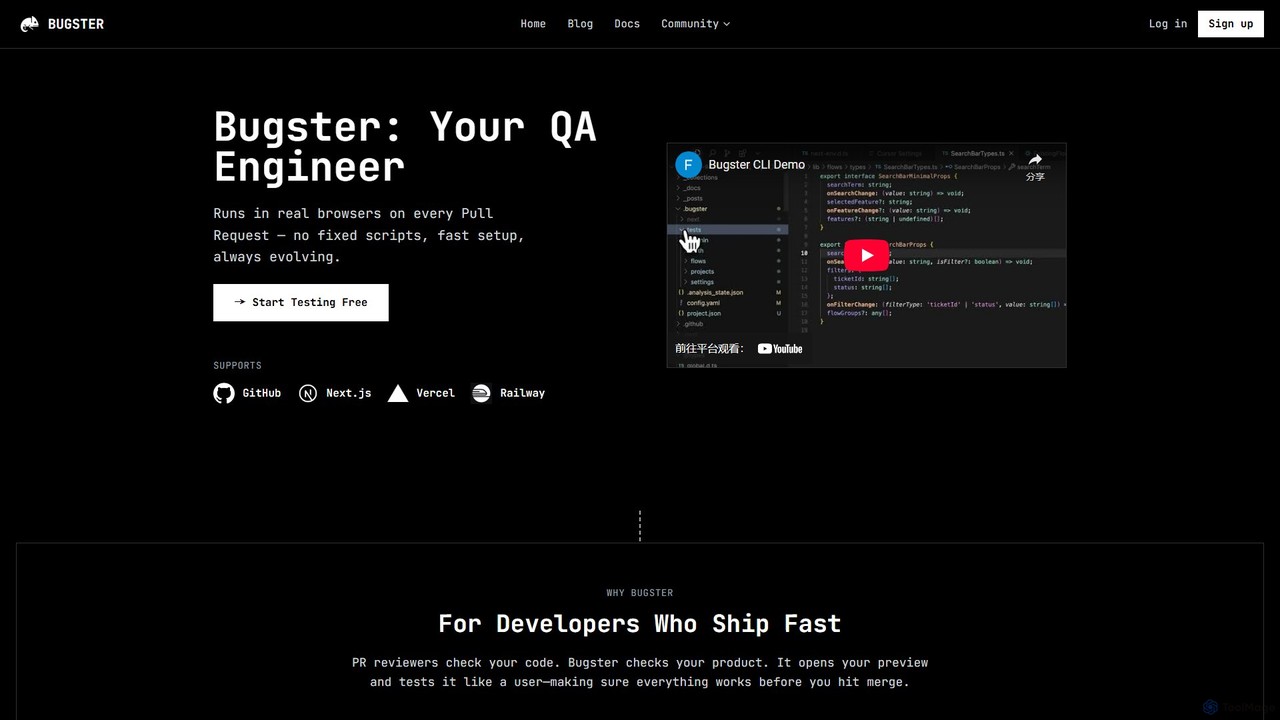
Bugster is an AI-powered QA engineer for developers that automates end-to-end testing. It runs on every pull request, simulating user interactions in real browsers to find bugs before they hit production. It offers automatic test generation, zero-effort maintenance, and seamless integration with GitHub and Vercel.
Code Quality
BuilderKit
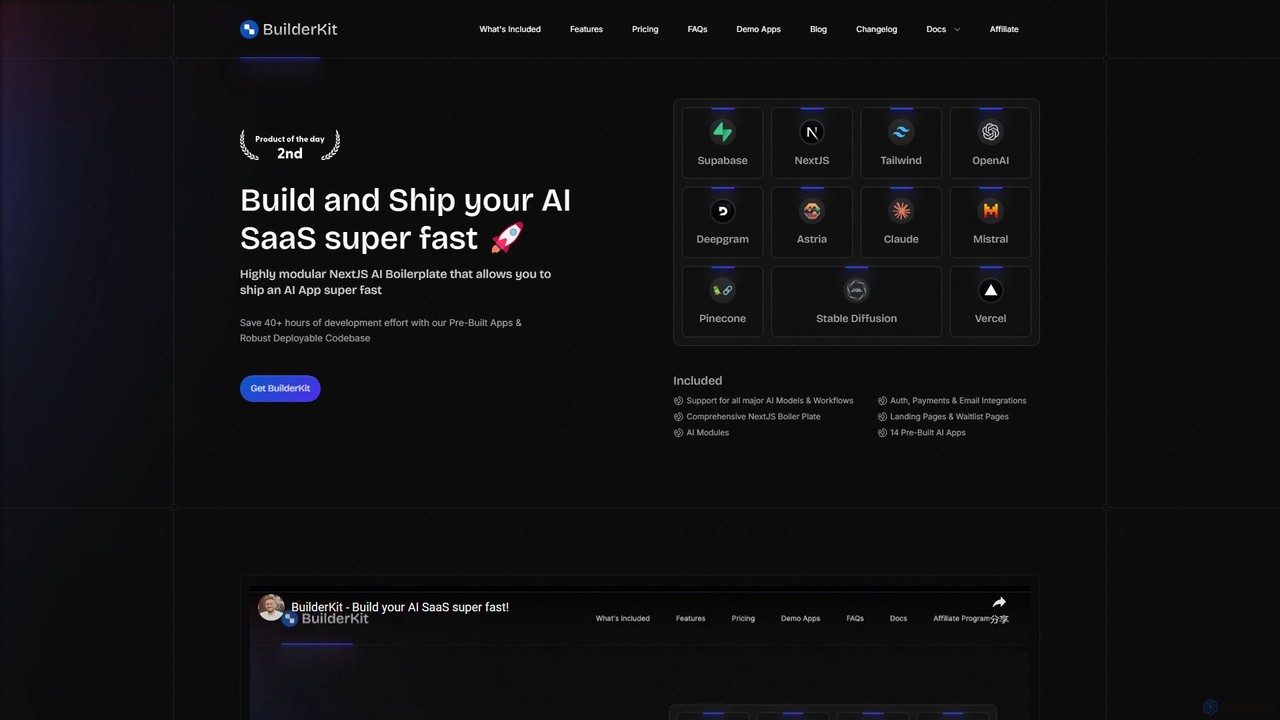
BuilderKit is a modular NextJS AI boilerplate designed for developers and entrepreneurs to build and ship AI-powered SaaS applications at high speed. It includes pre-built components, AI module integrations, authentication, payment systems, and over 17 demo apps, saving 40+ hours of development time.
Startup Tools
Webdone
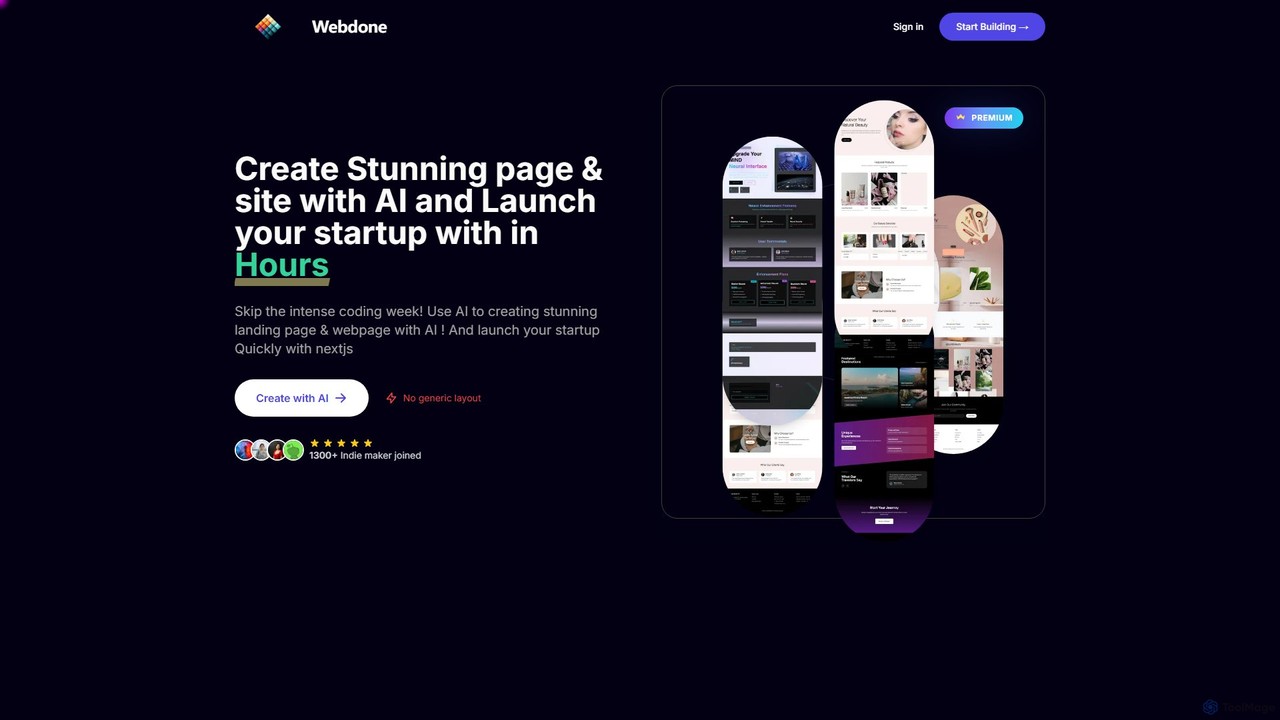
Webdone is an AI-powered platform for rapidly creating unique, high-performance landing pages and websites. It generates custom designs from text prompts, avoiding generic templates. It also offers a Next.js boilerplate with pre-configured authentication, payments, and database, enabling startups and developers to launch full-stack applications in hours.
Boilerplate
Milk Infrastructure
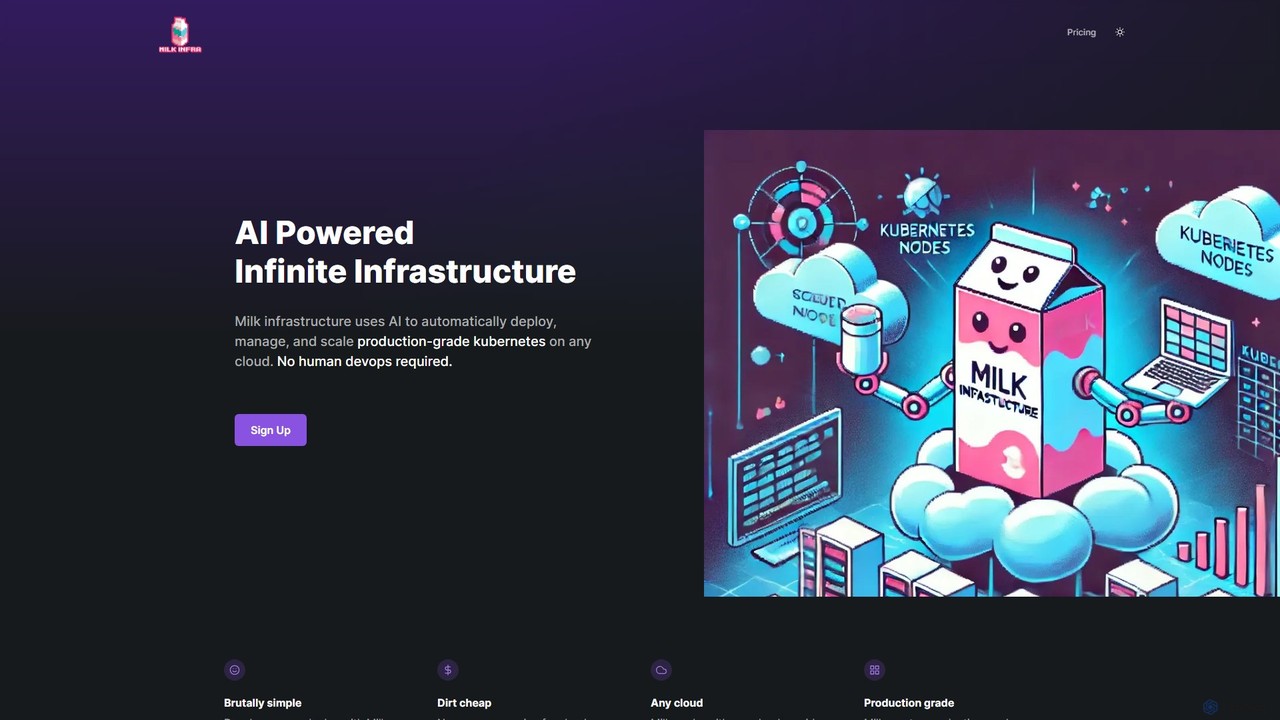
Milk Infrastructure is an AI-powered platform that automates the deployment, management, and scaling of production-grade Kubernetes clusters on any cloud. It eliminates the need for human DevOps, allowing developers to deploy applications effortlessly via GitHub. With features like dynamic scaling, built-in CI/CD, and an Infrastructure as Code approach, it offers a cost-effective and simple solution for modern application hosting.
Infrastructure Management
Vairflow
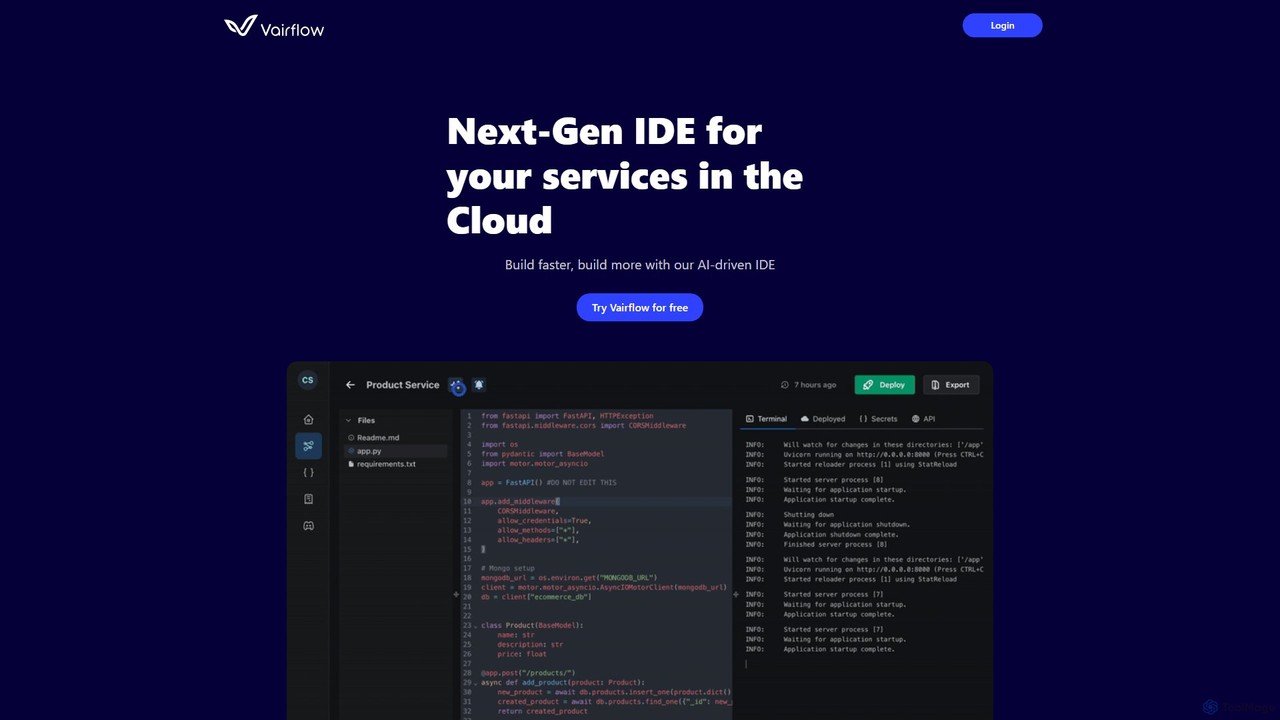
Vairflow is a next-generation, AI-driven Integrated Development Environment (IDE) designed for cloud services. It streamlines development by breaking down complex ideas into reusable components, such as backend microservices and front-end UIs. With one-click deployment and upcoming AI-powered coding assistance, Vairflow helps developers build and deploy full-stack applications faster and more efficiently, eliminating local setup hassles.
Cloud Ide
Qovery
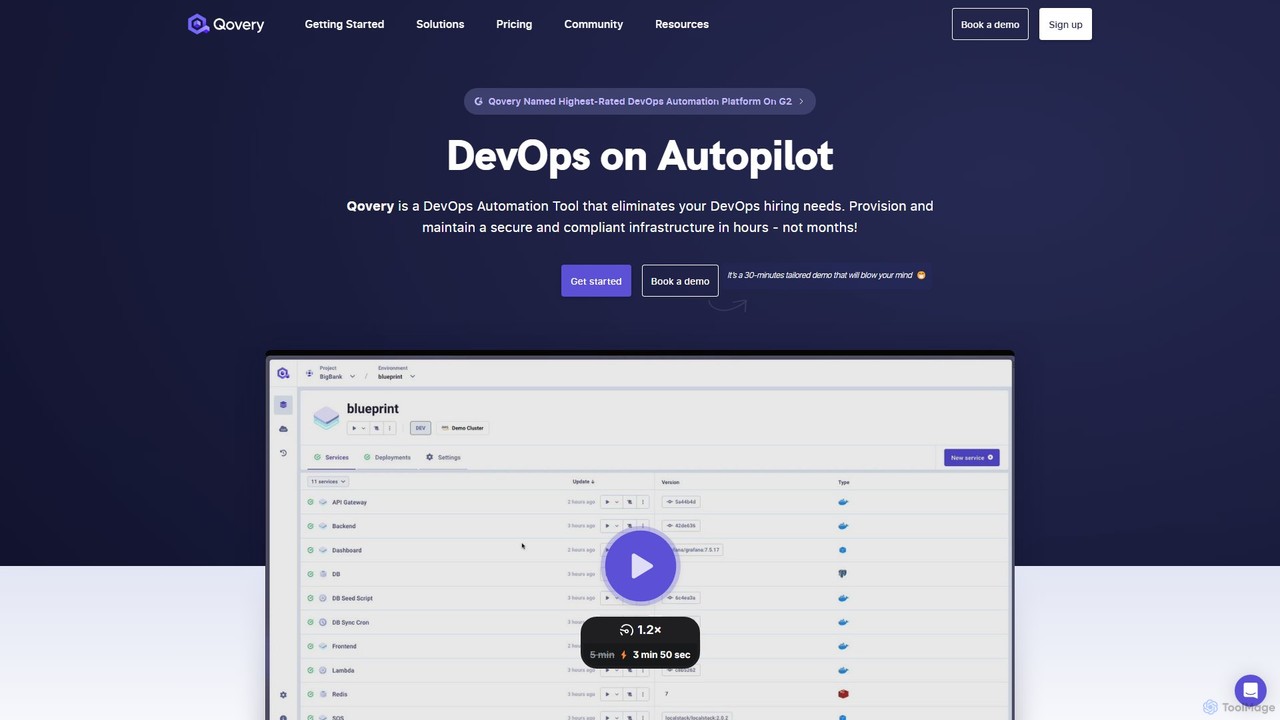
Qovery is a DevOps Automation Platform that provides self-service infrastructure for developers. It automates environment provisioning, accelerates deployment cycles, and optimizes cloud costs on AWS, Azure, and GCP, eliminating the need for extensive DevOps hiring.
Infrastructure As Code
SaaS Boilerplates
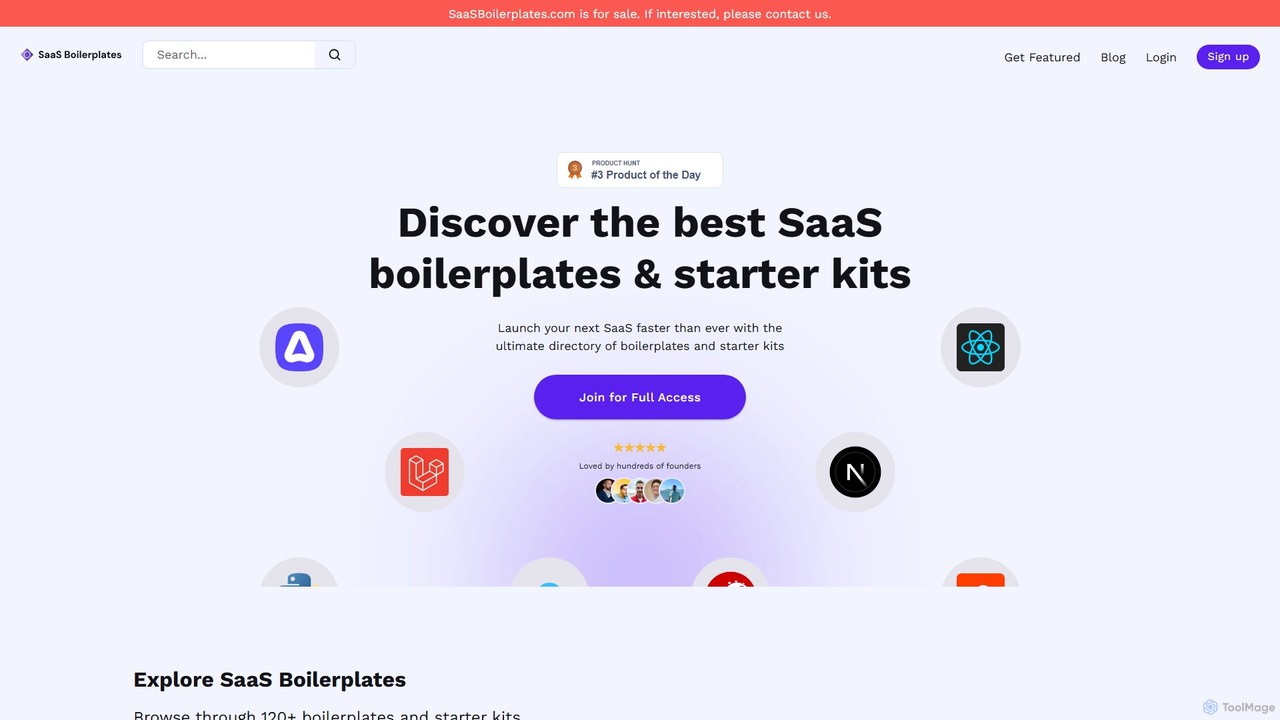
An extensive directory of SaaS boilerplates and starter kits designed to help developers and founders launch their applications faster. Browse, filter, and compare over 120 options across various tech stacks like Next.js, Svelte, Django, and Ruby on Rails to find the perfect foundation for your next project.
Startup Tools
saasconstruct
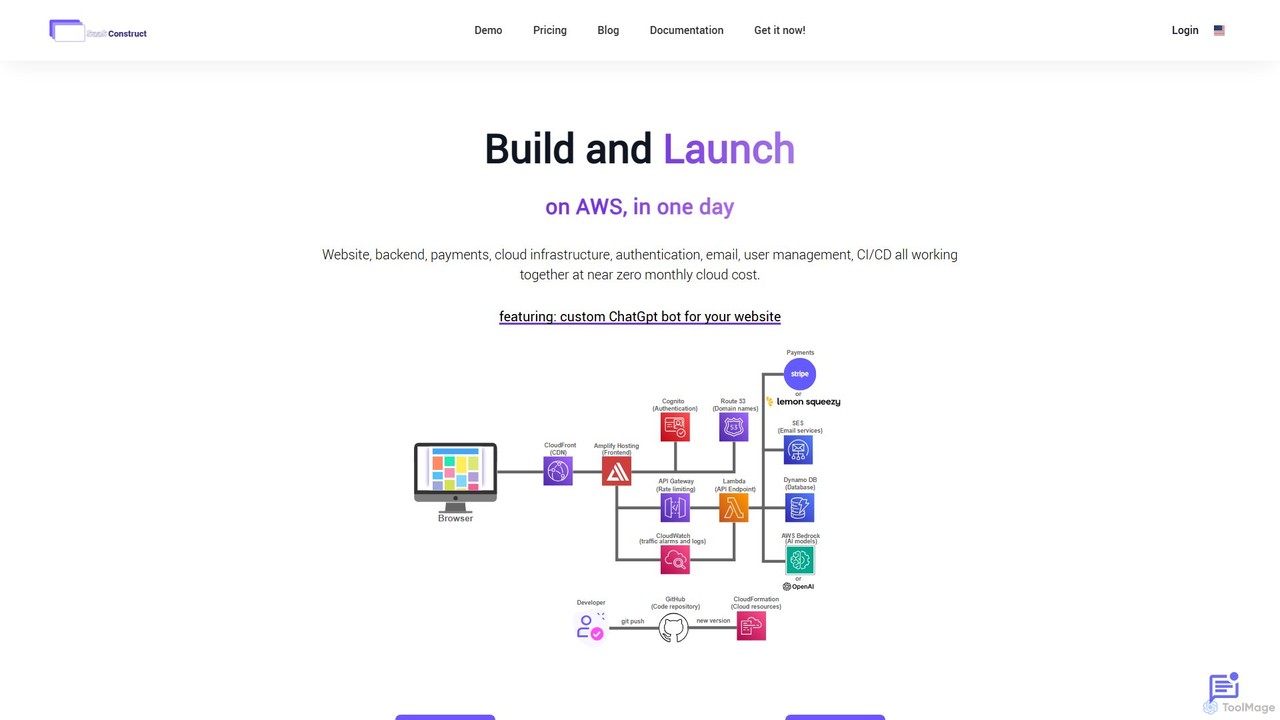
saasconstruct is a comprehensive SaaS boilerplate for AWS, designed to help developers build and launch full-featured, AI-ready applications in a single day. It provides a complete serverless infrastructure, frontend (Vue.js), backend (Python), payment integrations (Stripe/LemonSqueezy), authentication, and a CI/CD pipeline, drastically reducing development time and initial costs.
Saas
AutoRail
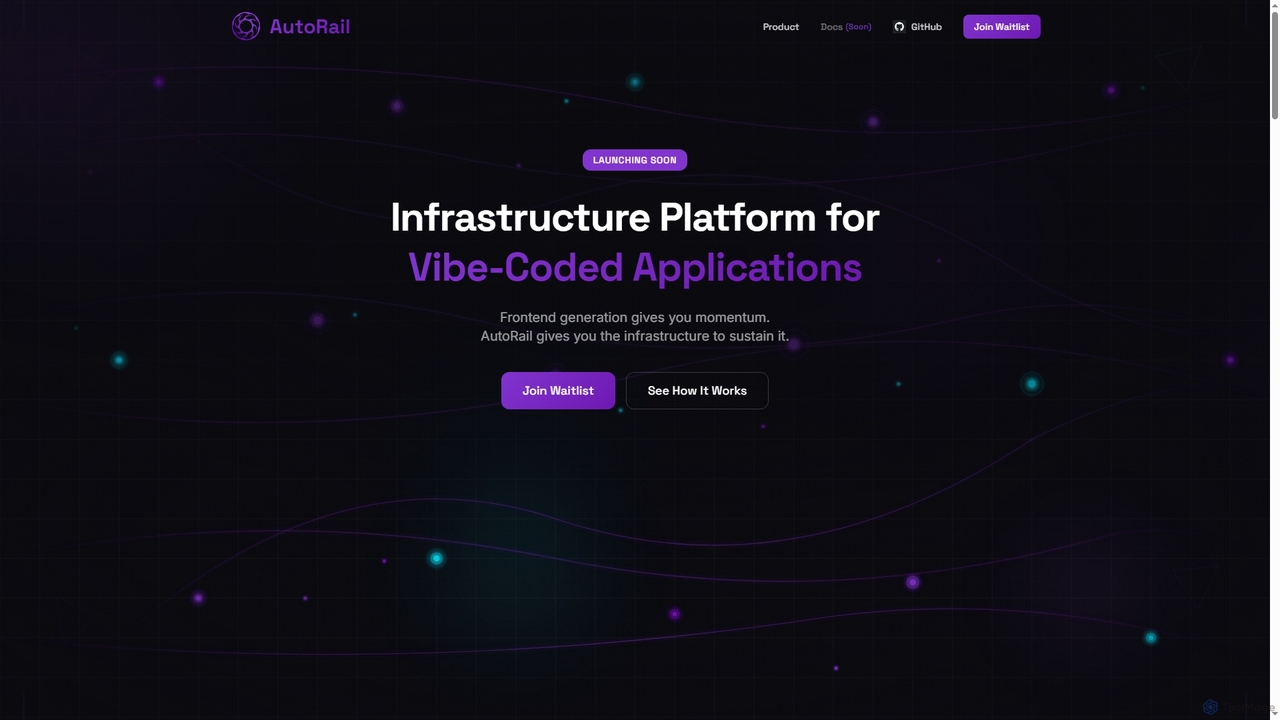
AutoRail is an infrastructure platform designed to transform "vibe-coded" prototypes into production-ready applications. It automatically provisions essential backend primitives like stateful memory, workflow orchestration, and auto-scaling, bridging the critical gap between rapid frontend development and robust, scalable production systems without manual configuration.
Ai Infrastructure
Dashwave
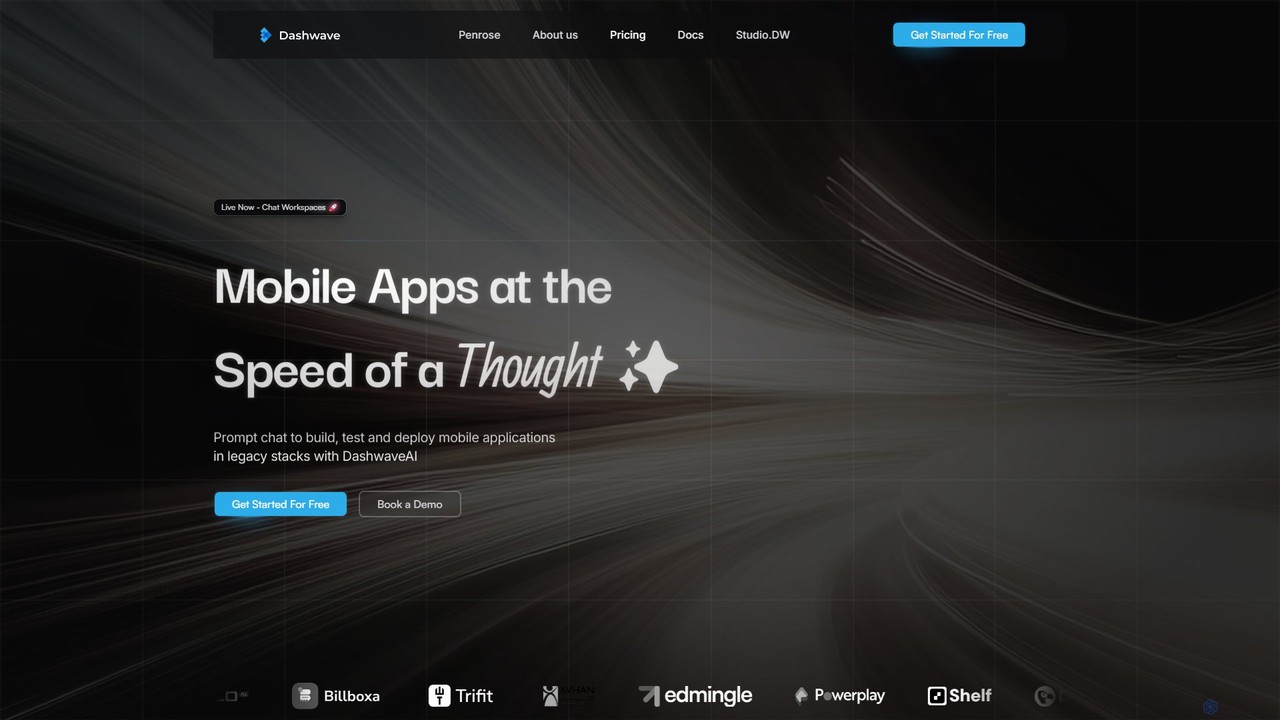
Dashwave is an AI-powered platform that accelerates mobile app development. It enables users to build, test, and deploy applications for iOS and Android using natural language prompts. Supporting frameworks like Kotlin, React Native, and Flutter, it transforms ideas and Figma designs into production-ready code, streamlining the entire development lifecycle for developers, designers, and founders.
Design To Code
ShipFast
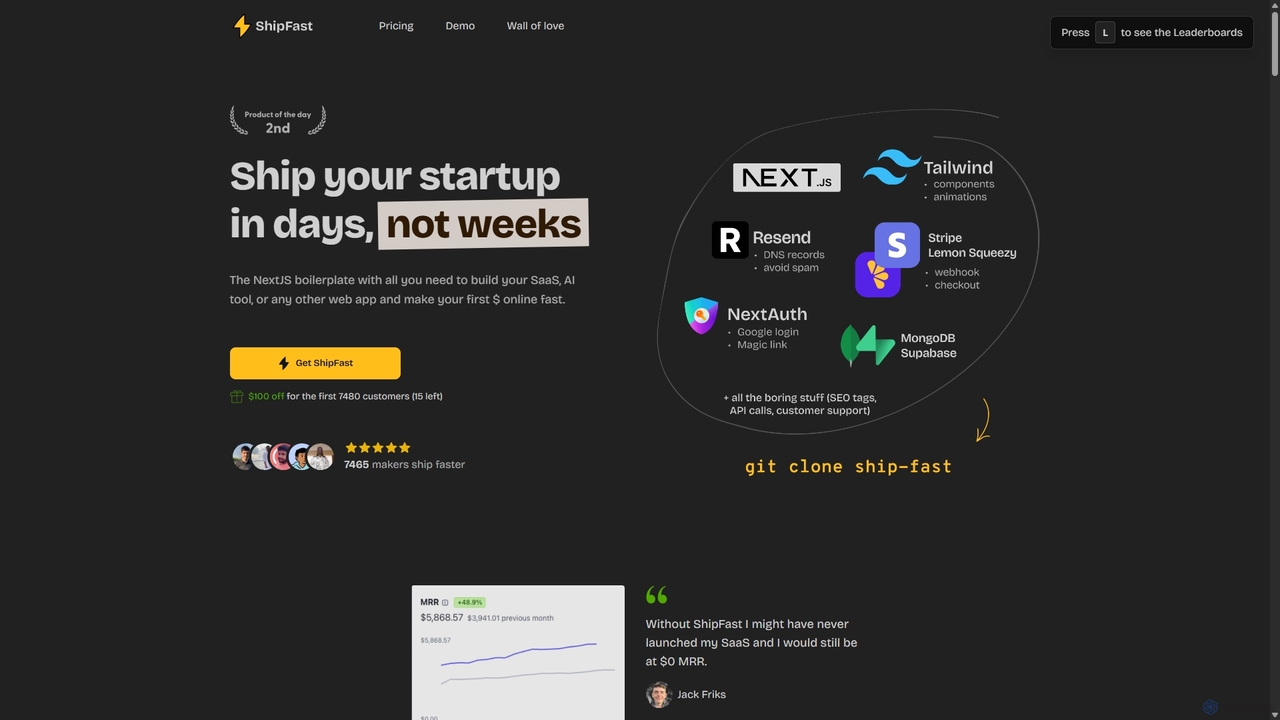
ShipFast is a Next.js boilerplate designed for developers and entrepreneurs to launch SaaS, AI tools, and web applications in days instead of weeks. It includes pre-built features for payments, user authentication, database integration, and email, allowing you to focus on your core product and monetize faster.
Boilerplate
Aviator
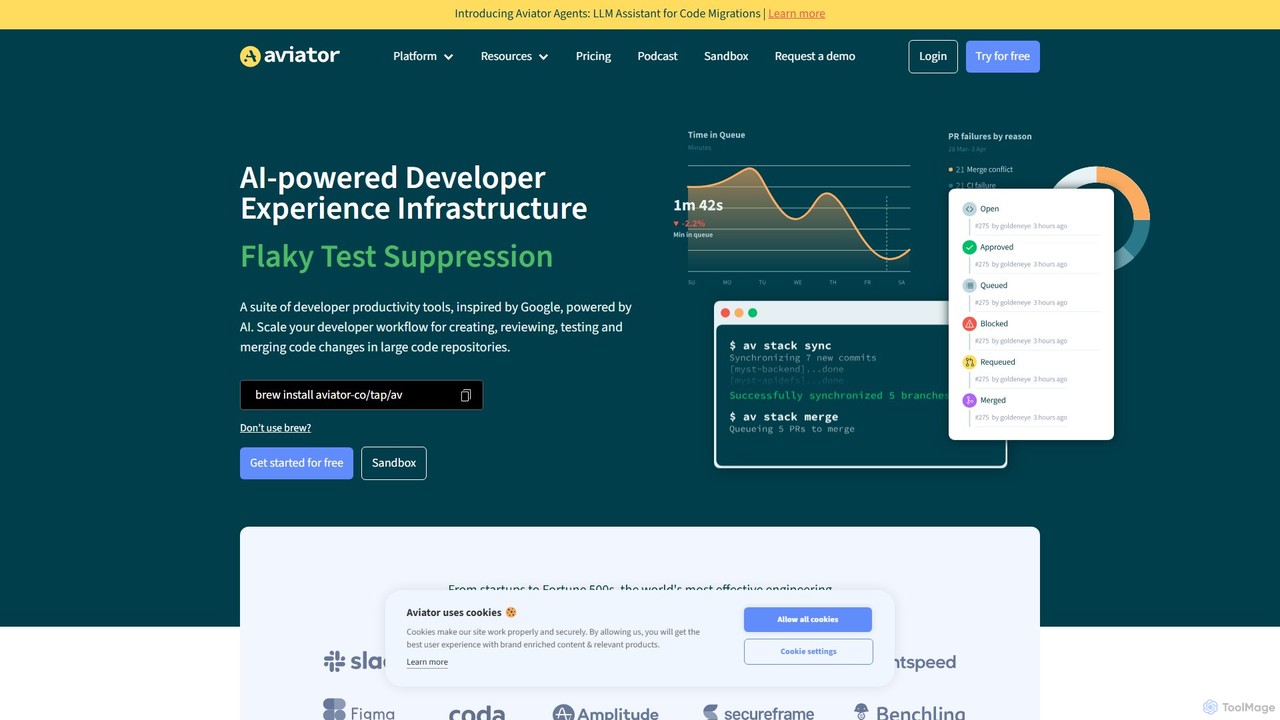
Aviator is a developer collaboration suite that automates the CI/CD pipeline, focusing on pull request management. It uses an automated merge queue to test, rebase, and merge code, ensuring the main branch remains stable and deployable, thereby boosting developer productivity and code quality.
Code Collaboration