ToolMage
Sign in
Dynaboard
Dashboard Builder · 604 monthly visits

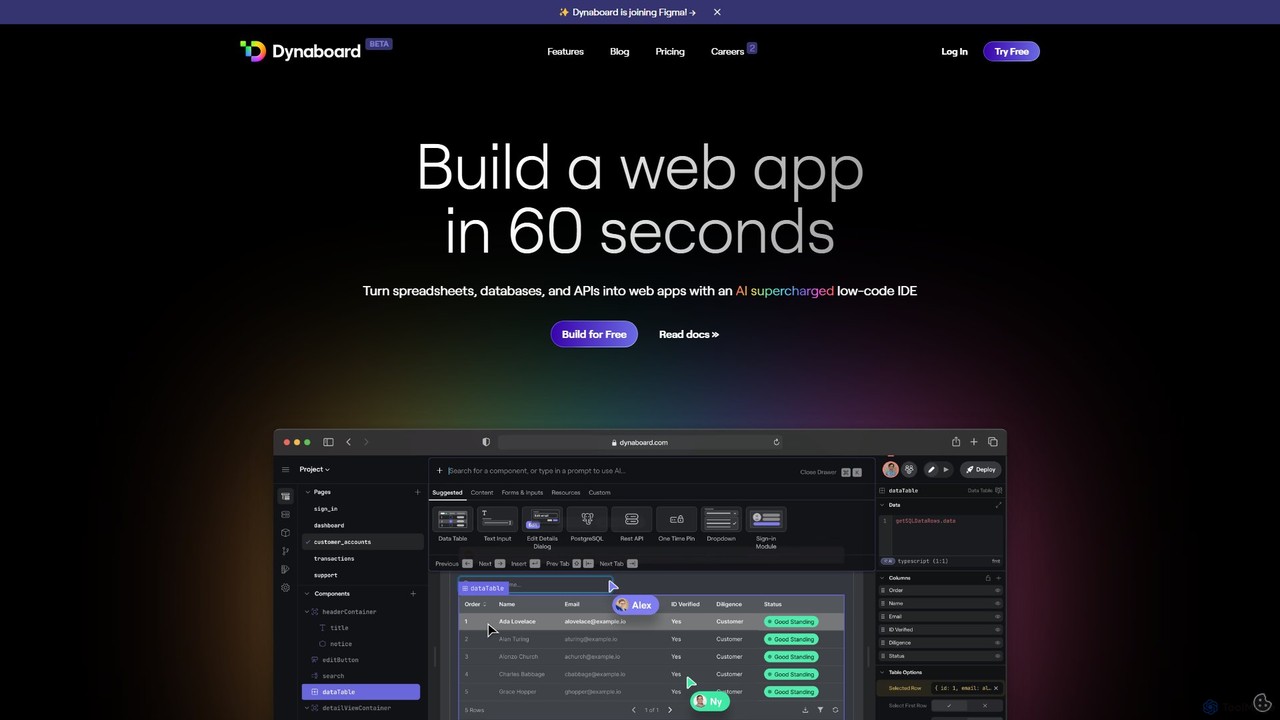
Dynaboard is an AI-supercharged, collaborative low-code IDE for developers. It enables the rapid creation of web applications by connecting to databases, APIs, and spreadsheets. It combines a drag-and-drop interface with the power of TypeScript and React, facilitating real-time team collaboration and instant deployment.

VS
Tempo
Low Code No Code · 68.3K monthly visits

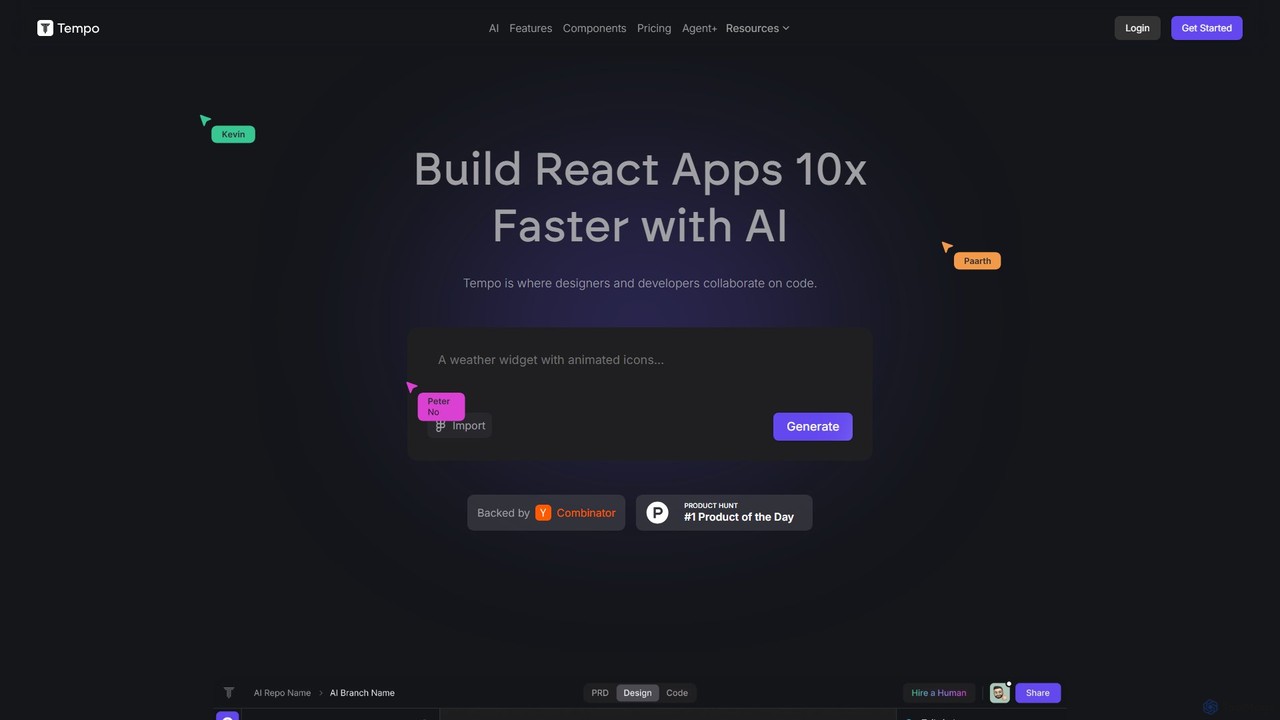
Tempo is an AI-powered platform that accelerates React application development by up to 10x. It enables seamless collaboration between designers and developers, allowing them to generate and edit React code through an intuitive, visual drag-and-drop interface. Import existing codebases, generate components from prompts, and maintain full control with VSCode and GitHub integration.

Dynaboard vs Tempo: pricing, features, traffic, and use cases

Compare Dynaboard and Tempo across positioning, pricing, traffic, and user feedback using structured factual data.

Updated Aug 19, 2026

Product overview

Dynaboard Product overview

Dynaboard is an AI-supercharged, collaborative low-code IDE for developers. It enables the rapid creation of web applications by connecting to databases, APIs, and spreadsheets. It combines a drag-and-drop interface with the power of TypeScript and React, facilitating real-time team collaboration and instant deployment.
Preview

Tempo Product overview

Tempo is an AI-powered platform that accelerates React application development by up to 10x. It enables seamless collaboration between designers and developers, allowing them to generate and edit React code through an intuitive, visual drag-and-drop interface. Import existing codebases, generate components from prompts, and maintain full control with VSCode and GitHub integration.

Preview

Detailed feature comparison

FeatureDynaboardTempo
Primary categoryDashboard BuilderLow Code No Code
Added2025-08-052025-08-07
PricingFreemiumFreemium
Official websitedynaboard.comwww.tempo.new
Product typeWebsiteWebsite
Performance data
User ratingNot verifiedNot verified
Comments00
Monthly visits60468.3K
Monthly growth96.1%4.3%
Favorites129133
DetailsView detailsView details

Dynaboard vs Tempo monthly traffic

Compare Dynaboard and Tempo by monthly reach, traffic trend, visit depth, top regions, and acquisition sources.

How to interpret the traffic data

In the Dynaboard vs Tempo monthly traffic comparison, Dynaboard currently shows 604 visits and Tempo shows 68.3K; Tempo has about 113 times the visible traffic of Dynaboard, an absolute difference of about 67.7K visits. This reflects visible reach, not feature quality or paid users.

Both tools provide verified traffic details, so monthly trends, visit depth, regions, and acquisition sources can be compared on the same basis.

Dynaboard monthly traffic:

Latest traffic

Monthly visits
604
Avg. visit duration
0:00
Pages per visit
1.33
Bounce rate
32.91%
Data updated 2026-06-11

Monthly traffic trend

  • 2025/9: 402 Monthly visits
  • 2026/1: 383 Monthly visits
  • 2026/2: 406 Monthly visits
  • 2026/3: 1.8K Monthly visits
  • 2026/4: 308 Monthly visits
  • 2026/5: 604 Monthly visits

Top regions

Top 5 countries/regions
Country/regionPercentageTraffic
🇮🇳India100%604

Search keywords

dynaboard convextherme node

Tempo monthly traffic:

Latest traffic

Monthly visits
68.3K
Avg. visit duration
0:22
Pages per visit
1.54
Bounce rate
44.66%
Data updated 2026-06-15

Monthly traffic trend

  • 2025/9: 166.2K Monthly visits
  • 2026/1: 131.4K Monthly visits
  • 2026/2: 93.8K Monthly visits
  • 2026/3: 72.8K Monthly visits
  • 2026/4: 65.4K Monthly visits
  • 2026/5: 68.3K Monthly visits

Top regions

Top 5 countries/regions
Country/regionPercentageTraffic
🇮🇳India31.22%21.3K
🇺🇸United States26.61%18.2K
🇵🇰Pakistan17.35%11.8K
🇧🇷Brazil14.3%9.8K
🇻🇳Vietnam10.52%7.2K

Traffic sources

Source typePercentageTraffic
Direct78.47%53.6K
Referral21.53%14.7K

Search keywords

tempotempo aitempo ai head of growthtempo apptempo labs
Traffic-based selection guidance: If public market visibility is an important first-pass criterion, investigate Tempo first. The final choice should still follow taxonomy, use case, and a real trial because higher traffic does not prove broader capabilities or better workflow fit.

Usage comparison

Compare the core capabilities of Dynaboard and Tempo

Dynaboard Core features

Low Code No Code
Collaboration
Dashboard Builder

Tempo Core features

Low Code No Code
Collaboration
Web Development

Use cases

Dynaboard Use cases

low-code
react
web app builder
AI developer tool
collaborative IDE
dashboard
database integration
figma
internal tools
no-code
typescript

Tempo Use cases

low-code
react
web app builder
AI code generation
developer tools
front-end development
ui/ux design
visual editor
Y Combinator

Dynaboard vs Tempo:In-depth comparison and selection guidance

First decide whether the products solve the same kind of need

This in-depth Dynaboard vs Tempo comparison uses only the product records, taxonomy, audience, traffic, and community signals available on this page. Dynaboard is primarily listed under “Dashboard Builder”, while Tempo is primarily listed under “Low Code No Code”, so the first decision is whether your actual task matches their recorded scope.

The structured fields currently show these decision-relevant differences: Primary category (Dynaboard: Dashboard Builder; Tempo: Low Code No Code); Monthly visits (Dynaboard: 604; Tempo: 68.3K); Monthly growth (Dynaboard: 96.1%; Tempo: 4.3%); Favorites (Dynaboard: 129; Tempo: 133); Website (Dynaboard: dynaboard.com; Tempo: www.tempo.new). These facts are more useful for selection than brand visibility alone.

What market visibility and monthly traffic mean

In the Dynaboard vs Tempo monthly traffic comparison, Dynaboard currently shows 604 visits and Tempo shows 68.3K; Tempo has about 113 times the visible traffic of Dynaboard, an absolute difference of about 67.7K visits. This reflects visible reach, not feature quality or paid users.

Both tools provide verified traffic details, so monthly trends, visit depth, regions, and acquisition sources can be compared on the same basis.

If public market visibility is an important first-pass criterion, investigate Tempo first. The final choice should still follow taxonomy, use case, and a real trial because higher traffic does not prove broader capabilities or better workflow fit.

Product positioning, use cases, and roles

Dynaboard and Tempo currently overlap in shared categories: Low Code No Code and Collaboration; shared tags: low-code, react, and web app builder. This can place both on the same shortlist, but it does not prove equal implementation, depth, or cost.

Dynaboard's unique categories/tags are Dashboard Builder, AI developer tool, collaborative IDE, dashboard, database integration, figma, internal tools, and no-code; Tempo's are Web Development, AI code generation, developer tools, front-end development, ui/ux design, visual editor, and Y Combinator. These unique fields are the strongest differentiators: validate the product whose recorded scope matches the task instead of following traffic alone.

What ratings, comments, and favorites can tell you

Dynaboard has no verified rating, 0 comments, 129 favorites, and 132 likes;Tempo has no verified rating, 0 comments, 133 favorites, and 115 likes。

Neither product has enough rating or comment samples for a credible reputation ranking.

Selection guidance by actual need

When to evaluate Dynaboard first

Put Dynaboard on the priority trial list when the task aligns with “Dashboard Builder” and especially Dashboard Builder, AI developer tool, collaborative IDE, dashboard, database integration, and figma. This follows recorded positioning and does not imply unlisted capabilities are absent.

Dynaboard also currently records: pricing is freemium, product type is website, 604 verified monthly visits, no verified user rating. Verify any hard requirement around price, platform, or reach before trial, and do not let sparse review data substitute for testing.

When to evaluate Tempo first

Put Tempo on the priority trial list when the task aligns with “Low Code No Code” and especially Web Development, AI code generation, developer tools, front-end development, ui/ux design, and visual editor. This follows recorded positioning and does not imply unlisted capabilities are absent.

Tempo also currently records: pricing is freemium, product type is website, 68.3K verified monthly visits, no verified user rating. Verify any hard requirement around price, platform, or reach before trial, and do not let sparse review data substitute for testing.

How to validate the recommendation before deciding

The available data describes positioning, public visibility, and community signals, but it cannot prove output quality, speed, integration effort, privacy, or long-term cost in your workflow. Before deciding, run the same representative tasks in Dynaboard and Tempo, then record completion time, accuracy, manual corrections, and the real paid threshold. A like-for-like trial turns this comparison into a defensible adoption decision.

Comparison FAQ

How should I choose between Dynaboard and Tempo?
Compare positioning, pricing, taxonomy, and traffic maturity, then verify the latest details on each official website.
Where does this comparison data come from?
The factual baseline is derived from product, taxonomy, traffic, and community data. Reviewed editorial conclusions show their source and verification date.
What do unknown fields mean?
Unknown means there is not enough reliable evidence; the page does not fill gaps with assumptions.

Related AI tools

Stakly
Freemium

Stakly

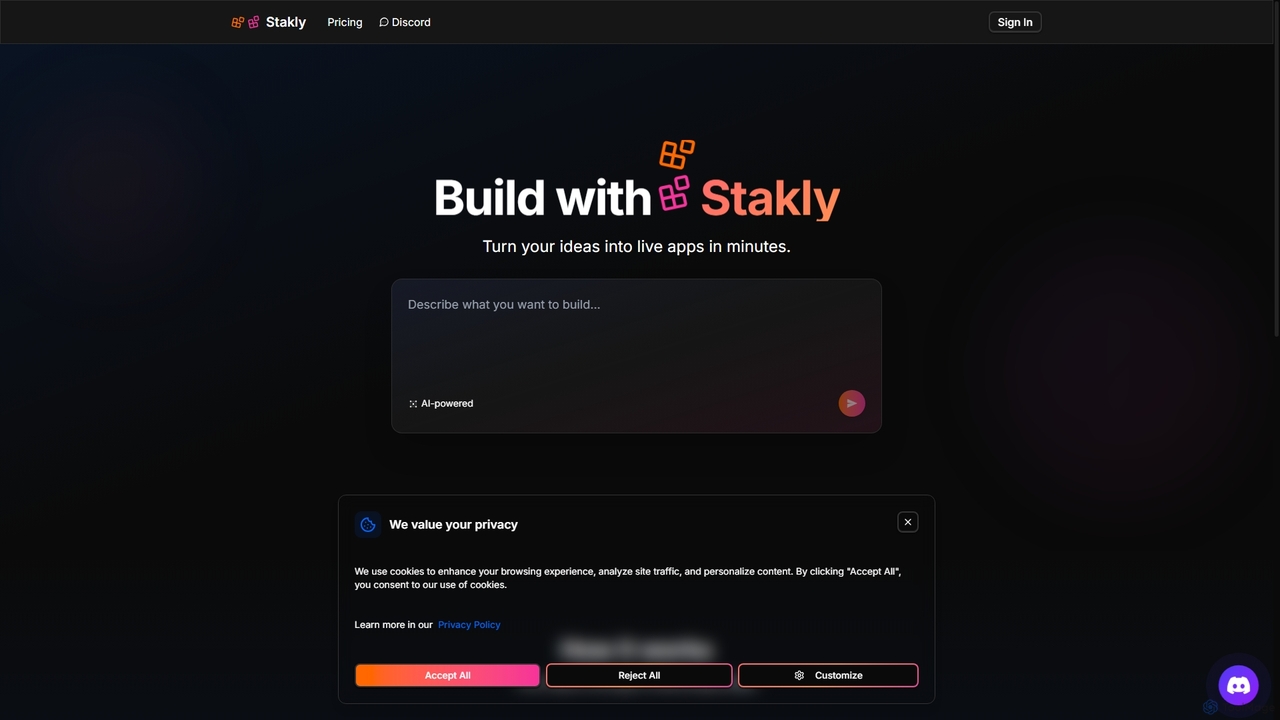
Stakly is an AI-powered development platform that transforms natural language prompts into production-ready, full-stack web applications in minutes. Describe your idea, and the AI generates clean code, which you can deploy with one click or export to own completely. It supports modern frameworks like React, Next.js, and Python, making it ideal for rapid prototyping and development.

Code Assistant
Visits 4.1KFavorites 132Likes 152
Refine
Freemium

Refine

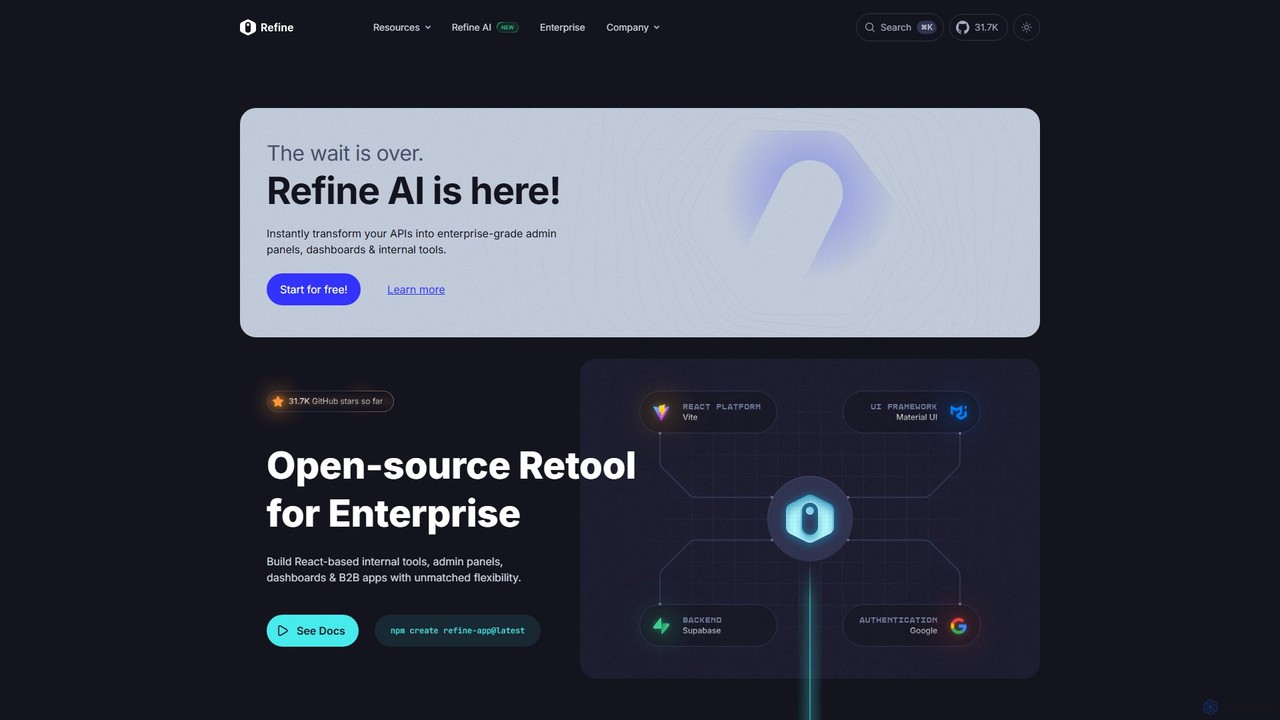
Refine is an open-source, React-based framework for rapidly building enterprise-grade internal tools, admin panels, dashboards, and B2B applications. It combines the speed of low-code solutions with the flexibility of full-code development, featuring an AI-powered generator to instantly create applications from APIs.

Internal Tools
Visits 273.6KFavorites 125Likes 130
Niral.ai
Freemium

Niral.ai

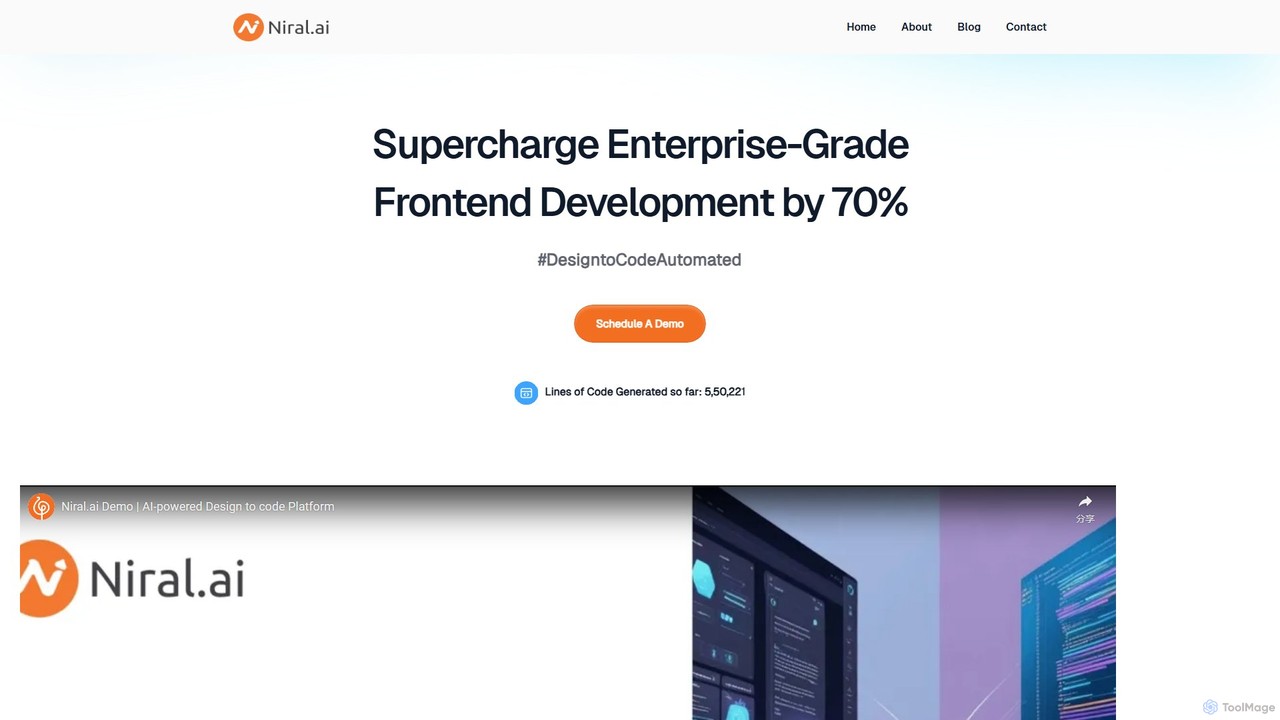
Niral.ai is an AI-powered platform that converts Figma designs into high-quality, production-ready front-end code. It streamlines the design-to-development workflow, enabling teams to build user interfaces faster with full code ownership and Git integration.

Design To Code
Visits 4.2KFavorites 116Likes 114
FireCMS
Freemium

FireCMS

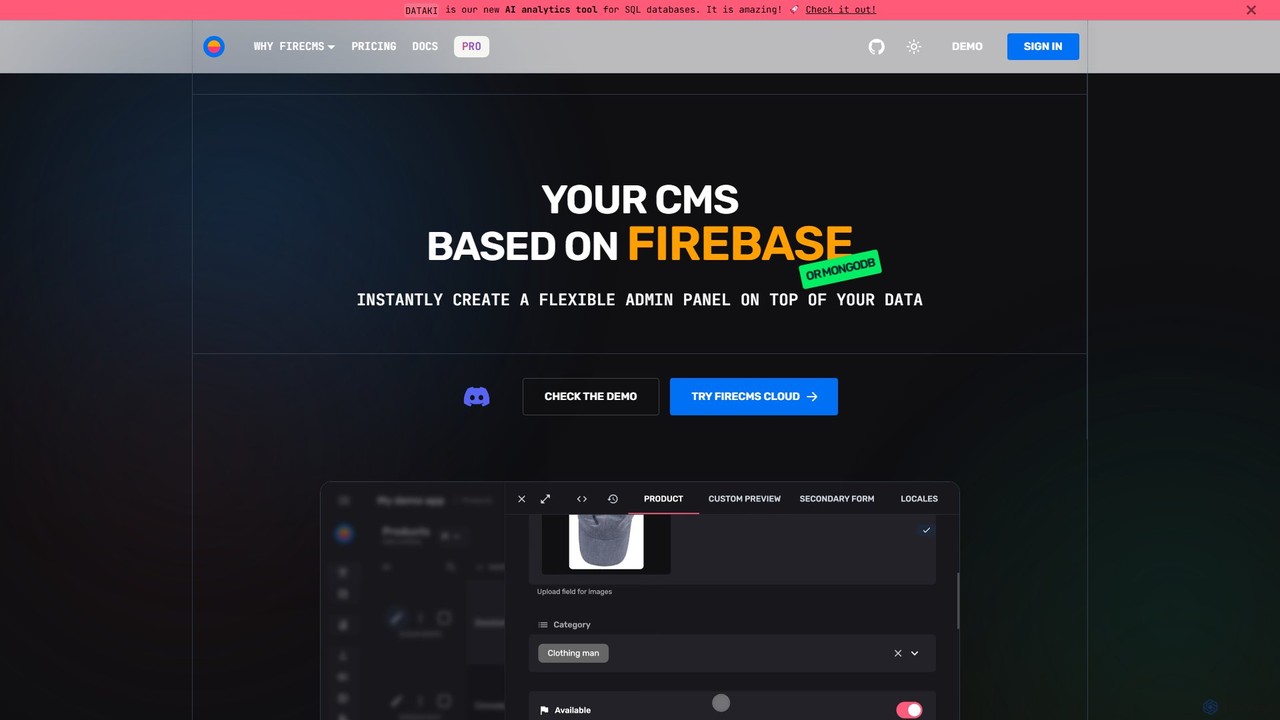
FireCMS is an open-source, headless CMS and admin panel builder for Firebase and MongoDB. It enables developers and startups to instantly create flexible, powerful back-office applications with an intuitive, Airtable-like interface. Featuring AI-powered data queries, automatic schema detection, extensive customization with React, and a rich content editor, FireCMS streamlines development and content management, offering both cloud and self-hosted solutions.

Content Management System
Visits 32.5KFavorites 108Likes 105
Unshift
Freemium

Unshift

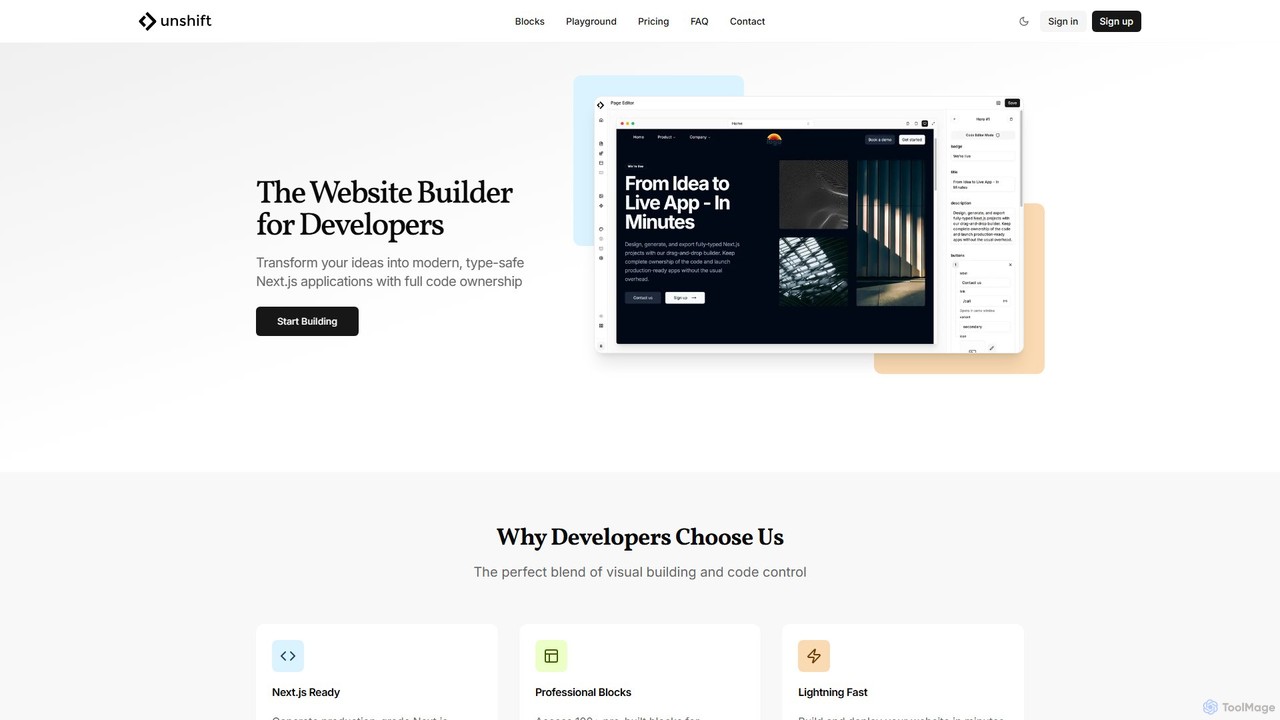
Unshift is a website builder designed for developers, blending visual editing with full code control. It generates production-grade Next.js applications with TypeScript and TailwindCSS, offering complete code ownership via a clean Git repository. With over 100 pre-built blocks and a developer-first approach, it accelerates the process of turning ideas into modern, type-safe web applications without vendor lock-in.

Ui Ux
Visits 4.5KFavorites 118Likes 119
Frozyn
Freemium

Frozyn

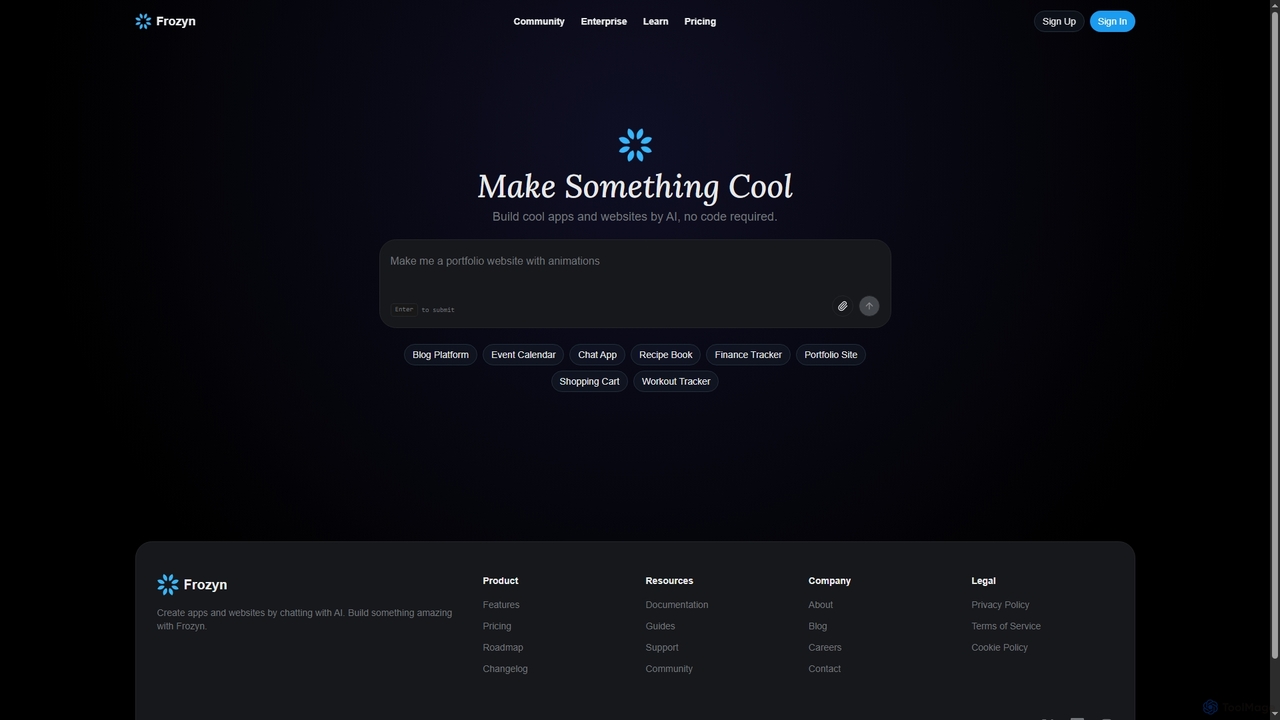
Frozyn is an AI-powered no-code platform that enables users to build cool apps and websites by simply chatting with AI. It offers real-time code suggestions, collaborative project management, and robust security features, making web development accessible to everyone.

Team Project Management
Visits 4.2KFavorites 141Likes 135
GeniusUI
Freemium

GeniusUI

GeniusUI is an AI-powered design tool that transforms text prompts into stunning, high-fidelity UI/UX designs and components. It automates the design and front-end coding process, allowing creators to build beautiful interfaces in minutes, not days, without writing a single line of code.

Ui Ux Design
Visits 4.1KFavorites 111Likes 104
Retool
Freemium

Retool

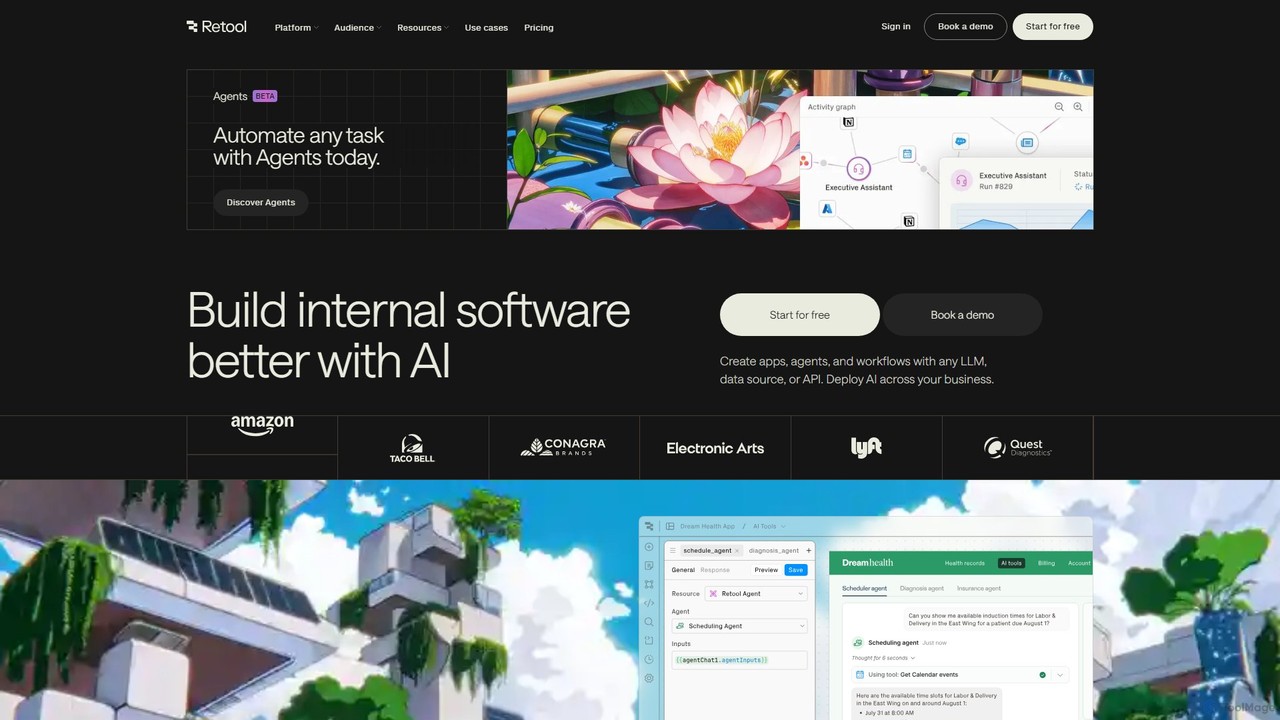
Retool is an AI-powered development platform for building internal software, applications, and automated workflows with exceptional speed. It enables developers and teams to create custom tools like admin panels, dashboards, and CRMs by connecting to any database or API, using a combination of visual building, code, and AI agents.

Internal Tools
Visits 1.6MFavorites 134Likes 131
UI Bakery
Freemium

UI Bakery

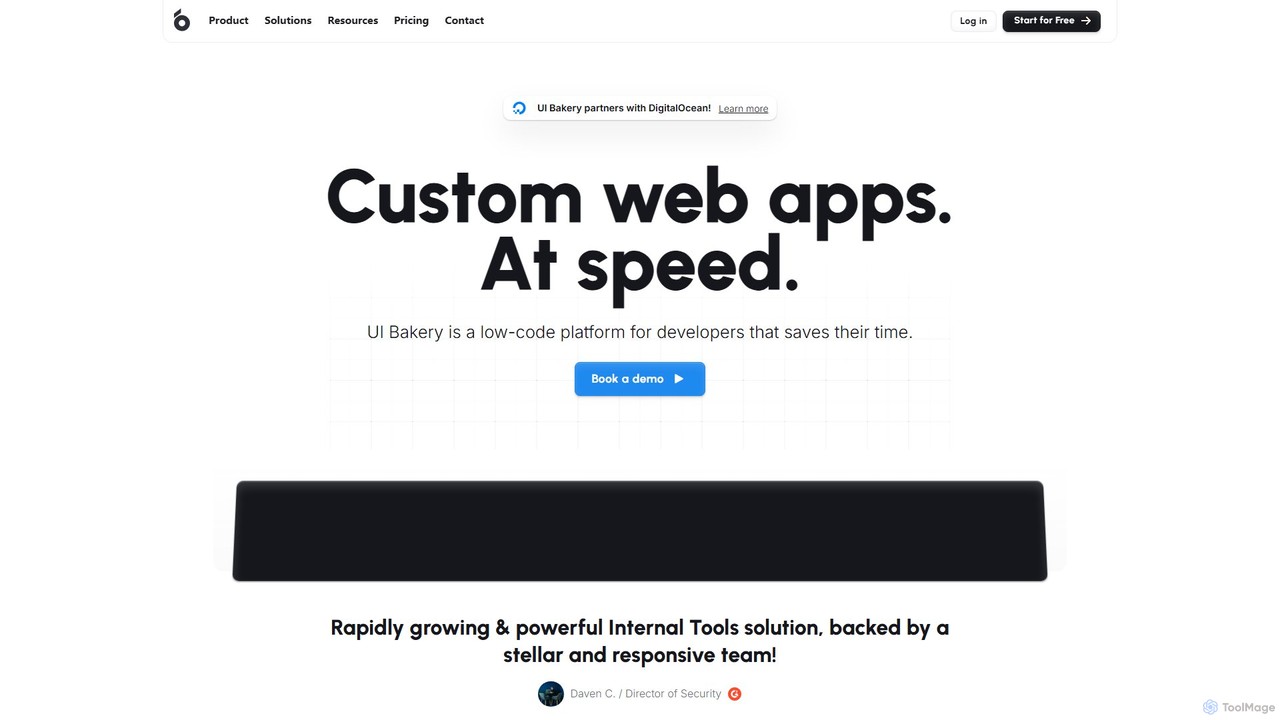
UI Bakery is a developer-focused low-code platform for rapidly building internal tools, admin panels, and customer portals. It features a drag-and-drop UI builder, extensive data integrations, AI-powered app generation, and robust Git version control to accelerate the entire development lifecycle.

Crm
Visits 325.6KFavorites 146Likes 132
Magic Patterns
Freemium

Magic Patterns

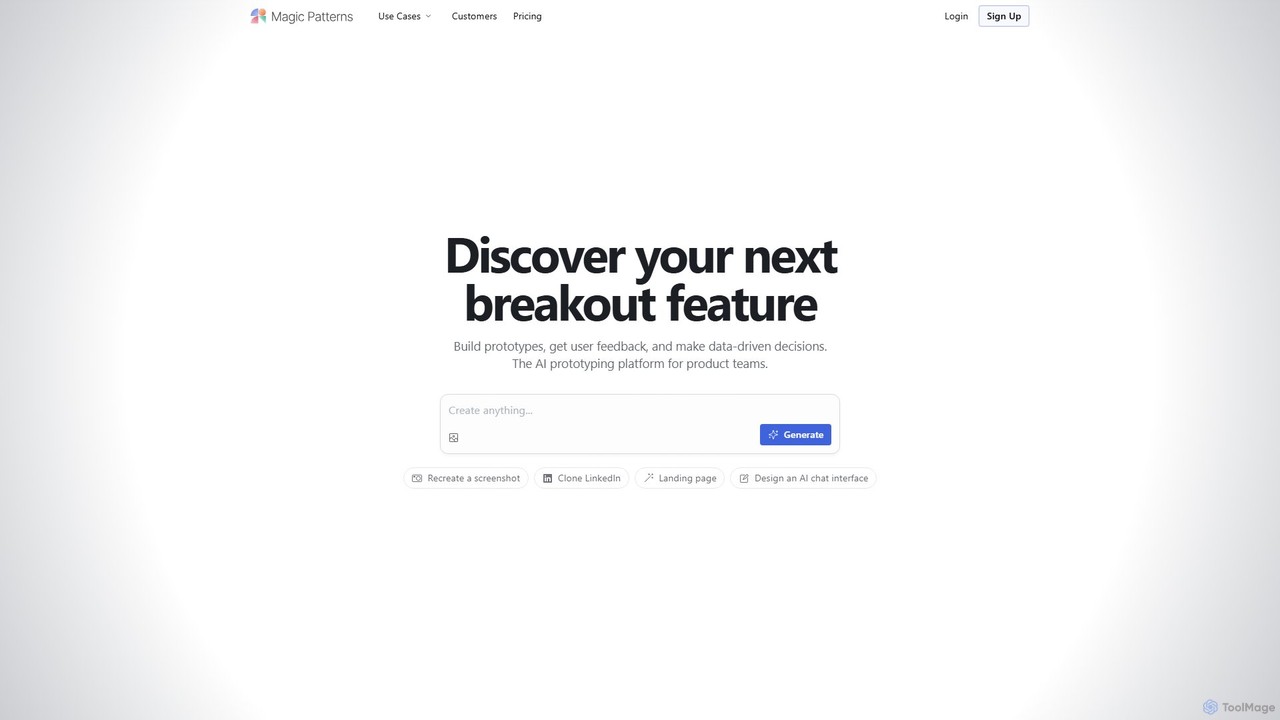
Magic Patterns is an AI-powered prototyping platform for product teams, designers, and developers. It accelerates UI creation by generating interactive prototypes and production-ready code (React, Tailwind CSS) from text prompts, screenshots, or existing websites. It helps teams iterate faster, gather user feedback, and make data-driven decisions.

Prototyping
Visits 246.1KFavorites 89Likes 94
Loopple
Freemium

Loopple

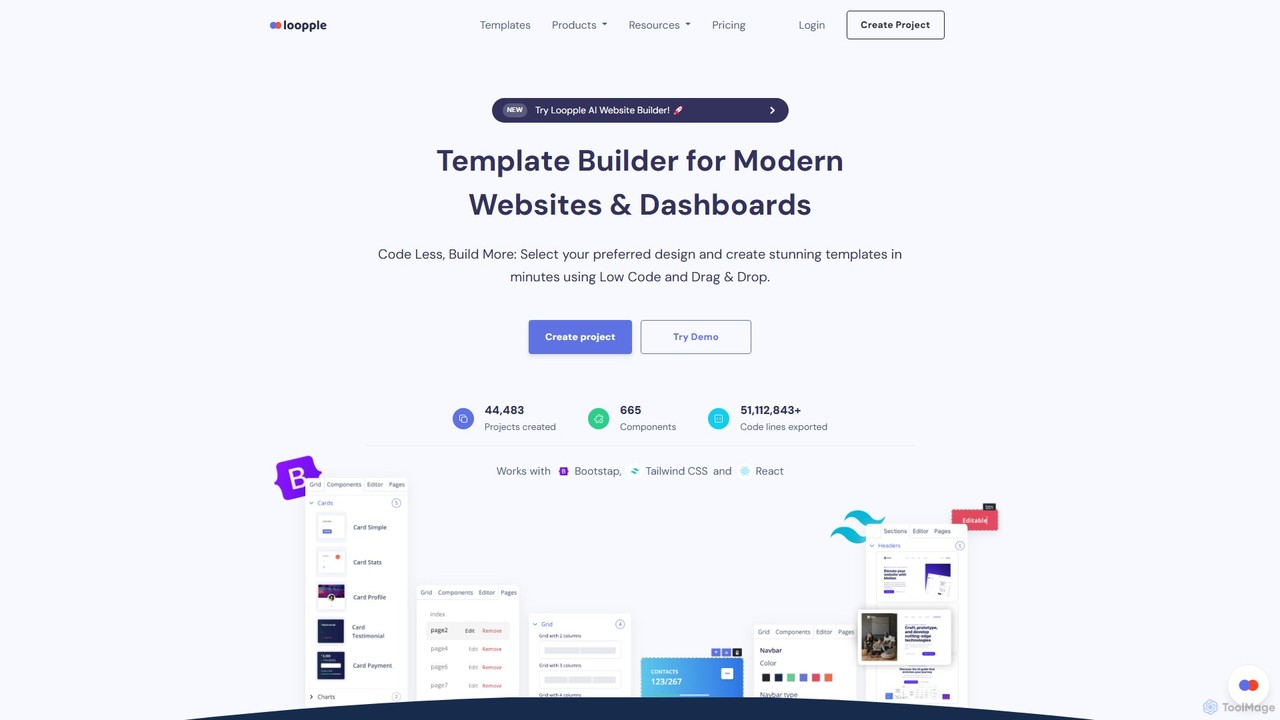
Loopple is an AI-powered, low-code platform for building modern websites and dashboards. It features a drag-and-drop editor, a vast library of pre-built components and templates for Bootstrap, Tailwind CSS, and React. With its AI text help and direct code export, Loopple accelerates the front-end development process for developers and teams, enabling rapid creation of responsive, professional-grade user interfaces.

Low Code No Code
Visits 32KFavorites 107Likes 94
deco.cx
Paid

deco.cx

deco.cx is an AI-powered development platform for creating high-performance, enterprise-grade e-commerce storefronts. It combines a visual CMS, a no-code/low-code interface, and an in-browser IDE to streamline development. With features like AI-driven optimization, A/B testing, and a modern tech stack, it enables teams to build, personalize, and scale online stores efficiently.

Low Code No Code
Visits 12.6KFavorites 101Likes 116
Webcrumbs
Freemium

Webcrumbs

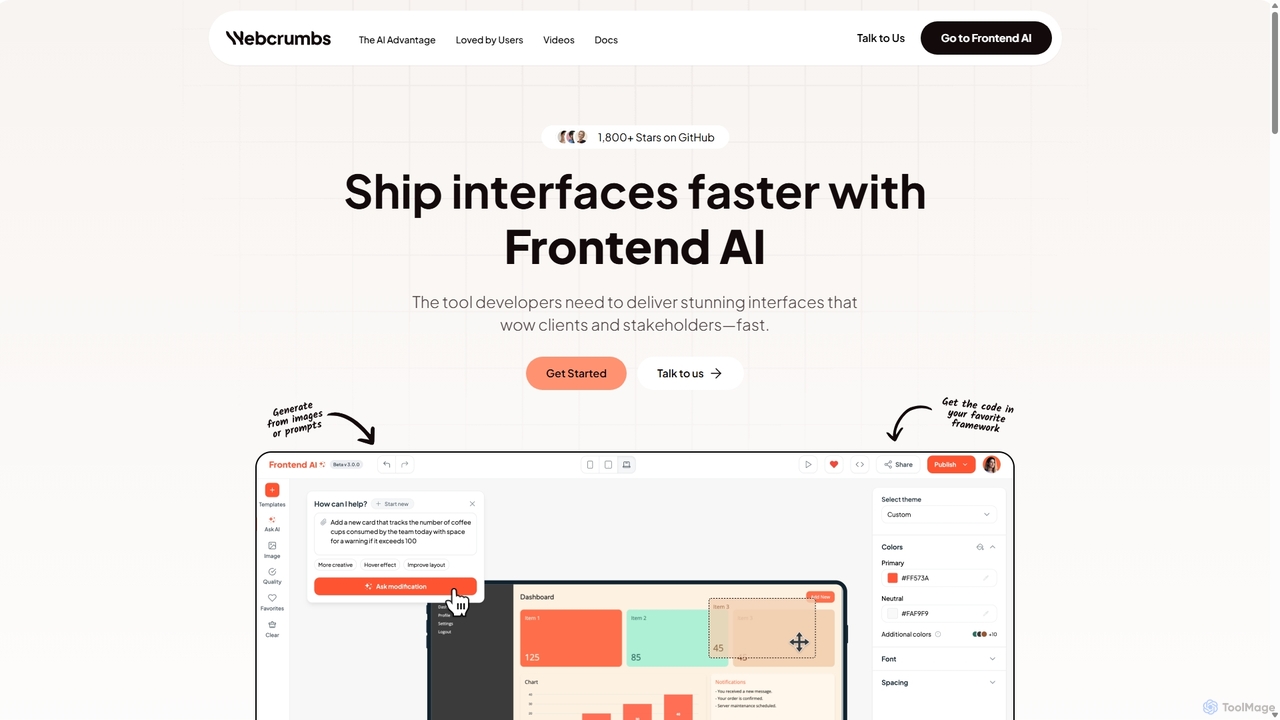
Webcrumbs is an AI-powered frontend development platform designed to accelerate UI creation. It combines a powerful prompt-to-code engine with a visual editor, enabling developers and designers to rapidly build, refine, and ship high-quality interface components. By translating natural language or images into clean, production-ready code, Webcrumbs streamlines the workflow, enhances collaboration, and ensures design consistency across projects.

Ui Ux
Visits 11.2KFavorites 154Likes 148
Builder.io
Freemium

Builder.io

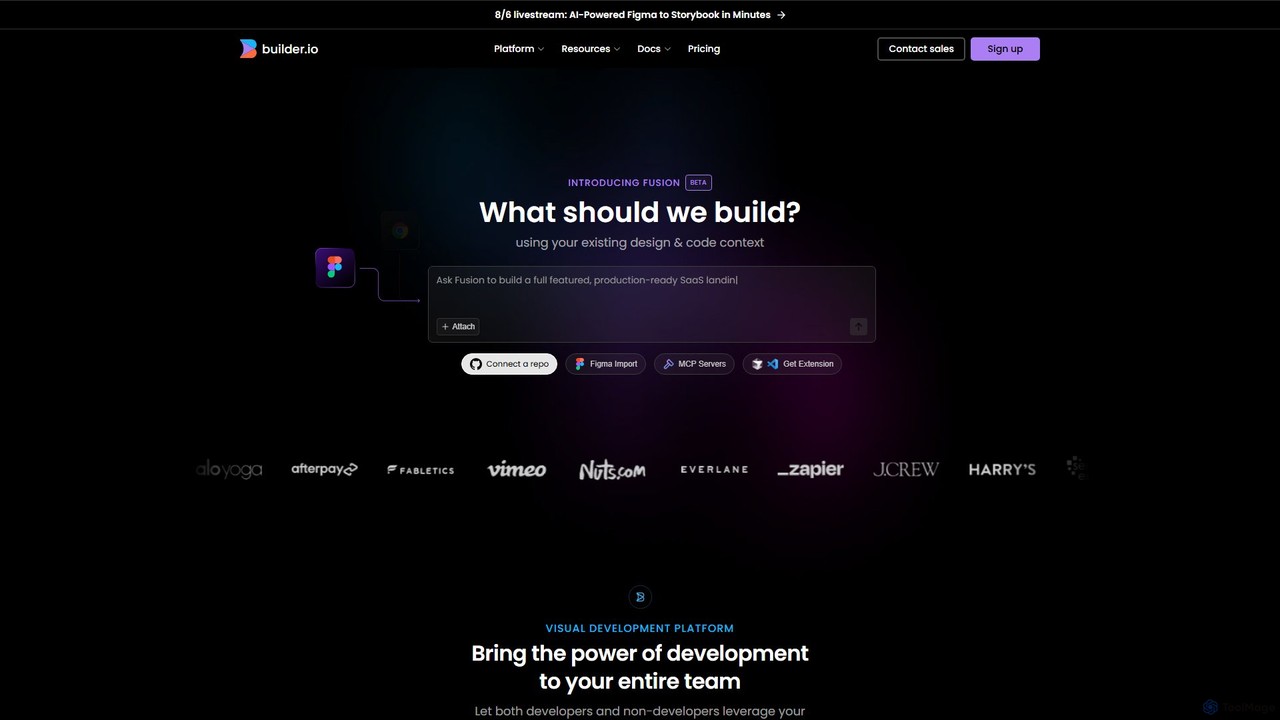
Builder.io is an AI-powered visual development platform that transforms Figma designs into production-ready code. It enables teams to build, edit, and publish web pages and UIs with unprecedented speed, integrating seamlessly with existing codebases, design systems, and headless CMS workflows.

Design To Code
Visits 810.5KFavorites 104Likes 102
Onlook
Freemium

Onlook

Onlook is a next-generation, AI-powered visual code editor that allows designers, product managers, and developers to build and edit web experiences directly on live React/Next.js code. It bridges the gap between design and implementation, offering a Figma-like interface with AI chat, direct manipulation, and seamless integration with existing codebases.

Ui Ux
Visits 22.2KFavorites 89Likes 106