ERBuilder Data Modeler is an AI-powered database design and data modeling tool for data architects and developers. It facilitates the visual creation of Entity-Relationship Diagrams (ERDs), supports forward and reverse engineering for numerous databases, and leverages generative AI to create and update models from natural language. It also offers advanced documentation, version control, and test data generation features.

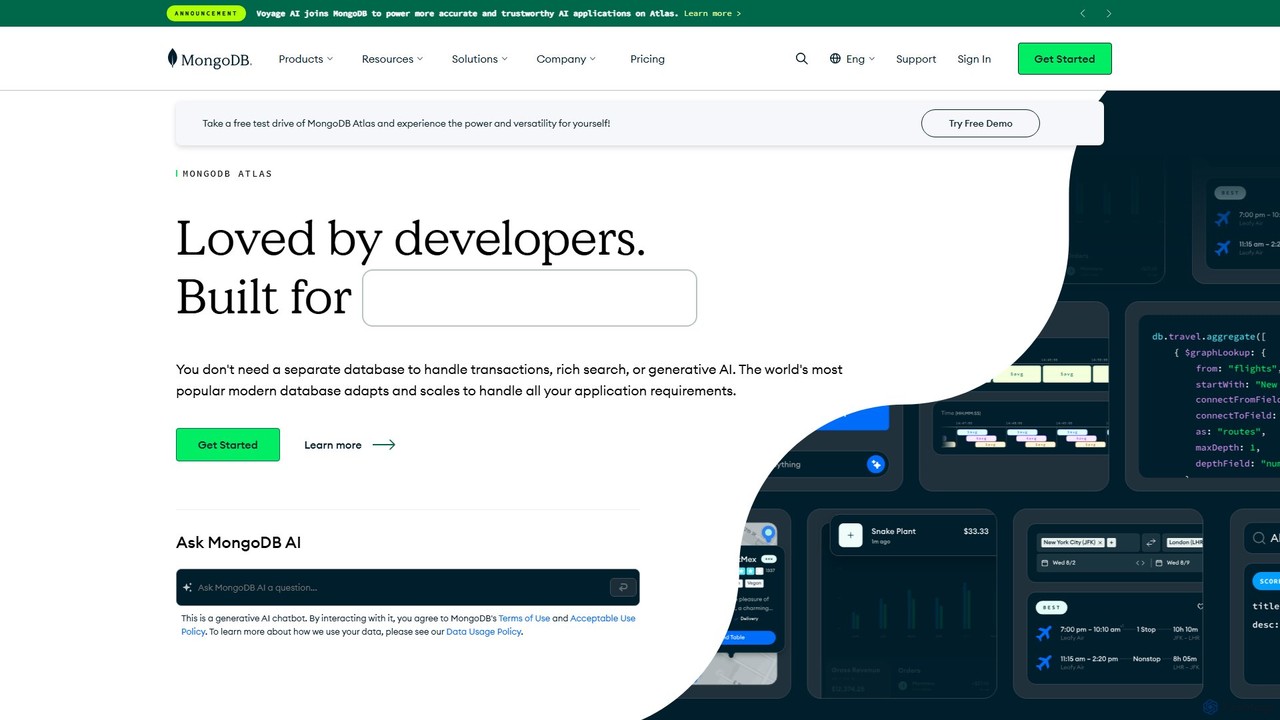
MongoDB is a developer data platform built on a leading NoSQL document database. Its cloud offering, MongoDB Atlas, provides an integrated suite of services, including powerful Vector Search for generative AI, full-text search, and real-time analytics. It's designed for modern applications, offering flexibility, scalability, and a unified experience for developers to build faster and more efficiently across multiple clouds.
Product overview
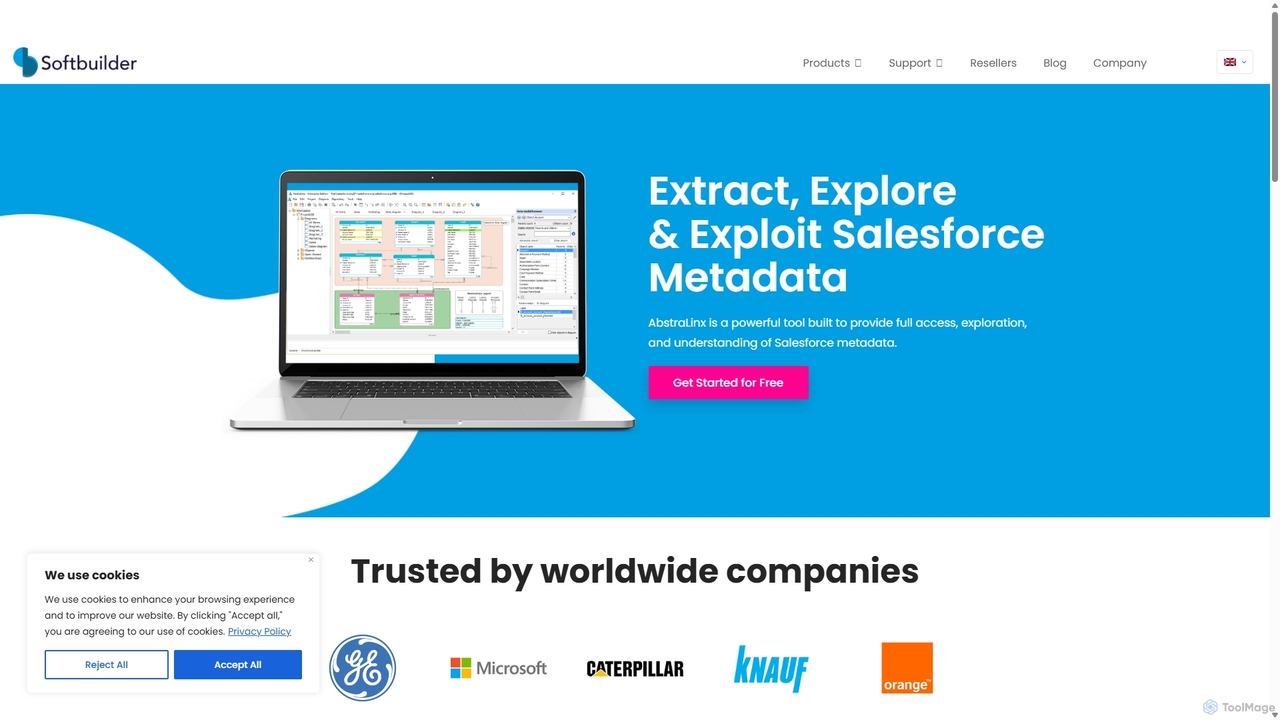
ERBuilder Data Modeler Product overview
ERBuilder Data Modeler is an AI-powered database design and data modeling tool for data architects and developers. It facilitates the visual creation of Entity-Relationship Diagrams (ERDs), supports forward and reverse engineering for numerous databases, and leverages generative AI to create and update models from natural language. It also offers advanced documentation, version control, and test data generation features.
MongoDB Product overview
MongoDB is a developer data platform built on a leading NoSQL document database. Its cloud offering, MongoDB Atlas, provides an integrated suite of services, including powerful Vector Search for generative AI, full-text search, and real-time analytics. It's designed for modern applications, offering flexibility, scalability, and a unified experience for developers to build faster and more efficiently across multiple clouds.
Detailed feature comparison
| Feature | ERBuilder Data Modeler | MongoDB |
|---|---|---|
| Primary category | Code Generation | Vector Database |
| Added | 2025-09-08 | 2025-08-06 |
| Pricing | Paid | Freemium |
| Official website | soft-builder.com | www.mongodb.com |
| Product type | App | Website |
| Performance data | ||
| User rating | Not verified | Not verified |
| Comments | 0 | 0 |
| Monthly visits | 6.4K | 5.8M |
| Monthly growth | -27.3% | -6.2% |
| Favorites | 89 | 133 |
| Details | View details | View details |
ERBuilder Data Modeler vs MongoDB monthly traffic
Compare ERBuilder Data Modeler and MongoDB by monthly reach, traffic trend, visit depth, top regions, and acquisition sources.
How to interpret the traffic data
In the ERBuilder Data Modeler vs MongoDB monthly traffic comparison, ERBuilder Data Modeler currently shows 6.4K visits and MongoDB shows 5.8M; MongoDB has about 916.2 times the visible traffic of ERBuilder Data Modeler, an absolute difference of about 5.8M visits. This reflects visible reach, not feature quality or paid users.
Both tools provide verified traffic details, so monthly trends, visit depth, regions, and acquisition sources can be compared on the same basis.
ERBuilder Data Modeler monthly traffic:
Latest traffic
Monthly traffic trend
- 2025/9: 17.1K Monthly visits
- 2026/1: 16K Monthly visits
- 2026/2: 7K Monthly visits
- 2026/3: 8.8K Monthly visits
- 2026/4: 8.8K Monthly visits
- 2026/5: 6.4K Monthly visits
Top regions
Top 5 countries/regions
| Country/region | Percentage | Traffic |
|---|---|---|
| ๐บ๐ธUnited States | 46.91% | 3K |
| ๐ท๐บRussia | 22.59% | 1.4K |
| ๐ฎ๐ณIndia | 16.64% | 1.1K |
| ๐ต๐ญPhilippines | 7.06% | 450 |
| ๐ง๐ทBrazil | 6.8% | 434 |
Search keywords
MongoDB monthly traffic:
Latest traffic
Monthly traffic trend
- 2025/9: 5.6M Monthly visits
- 2026/1: 5.8M Monthly visits
- 2026/2: 5.5M Monthly visits
- 2026/3: 6.1M Monthly visits
- 2026/4: 6.2M Monthly visits
- 2026/5: 5.8M Monthly visits
Top regions
Top 5 countries/regions
| Country/region | Percentage | Traffic |
|---|---|---|
| ๐ฎ๐ณIndia | 58.41% | 3.4M |
| ๐บ๐ธUnited States | 26.77% | 1.6M |
| ๐ฌ๐งUnited Kingdom | 5.84% | 341.3K |
| ๐ต๐ฐPakistan | 4.71% | 275.2K |
| ๐จ๐ดColombia | 4.27% | 249.5K |
Traffic sources
| Source type | Percentage | Traffic |
|---|---|---|
| Direct | 86.31% | 5M |
| Referral | 10.12% | 591.4K |
| 3.57% | 208.6K |
Search keywords
Usage comparison
Compare the core capabilities of ERBuilder Data Modeler and MongoDB
ERBuilder Data Modeler Core features
MongoDB Core features
Use cases
ERBuilder Data Modeler Use cases
MongoDB Use cases
Best suited roles
ERBuilder Data Modeler Best suited roles
MongoDB Best suited roles
ERBuilder Data Modeler vs MongoDB๏ผIn-depth comparison and selection guidance
First decide whether the products solve the same kind of need
This in-depth ERBuilder Data Modeler vs MongoDB comparison uses only the product records, taxonomy, audience, traffic, and community signals available on this page. ERBuilder Data Modeler is primarily listed under โCode Generationโ, while MongoDB is primarily listed under โVector Databaseโ, so the first decision is whether your actual task matches their recorded scope.
The structured fields currently show these decision-relevant differences: Primary category (ERBuilder Data Modeler: Code Generation; MongoDB: Vector Database); Product type (ERBuilder Data Modeler: App; MongoDB: Website); Pricing (ERBuilder Data Modeler: Paid; MongoDB: Freemium); Monthly visits (ERBuilder Data Modeler: 6.4K; MongoDB: 5.8M); Monthly growth (ERBuilder Data Modeler: -27.3%; MongoDB: -6.2%). These facts are more useful for selection than brand visibility alone.
What market visibility and monthly traffic mean
In the ERBuilder Data Modeler vs MongoDB monthly traffic comparison, ERBuilder Data Modeler currently shows 6.4K visits and MongoDB shows 5.8M; MongoDB has about 916.2 times the visible traffic of ERBuilder Data Modeler, an absolute difference of about 5.8M visits. This reflects visible reach, not feature quality or paid users.
Both tools provide verified traffic details, so monthly trends, visit depth, regions, and acquisition sources can be compared on the same basis.
If public market visibility is an important first-pass criterion, investigate MongoDB first. The final choice should still follow taxonomy, use case, and a real trial because higher traffic does not prove broader capabilities or better workflow fit.
Product positioning, use cases, and roles
ERBuilder Data Modeler and MongoDB currently overlap in shared categories: Database and Data Management; shared tags: generative AI. This can place both on the same shortlist, but it does not prove equal implementation, depth, or cost.
ERBuilder Data Modeler's unique categories/tags are Code Generation, database design, database documentation, database management, data modeling, ER diagram, ERD tool, and reverse engineering; MongoDB's are Vector Database, Backend, Atlas, backend, cloud database, database, data management, and developer platform. These unique fields are the strongest differentiators: validate the product whose recorded scope matches the task instead of following traffic alone.
What ratings, comments, and favorites can tell you
ERBuilder Data Modeler has no verified rating, 0 comments, 89 favorites, and 93 likes๏ผMongoDB has no verified rating, 0 comments, 133 favorites, and 126 likesใ
Neither product has enough rating or comment samples for a credible reputation ranking.
Selection guidance by actual need
When to evaluate ERBuilder Data Modeler first
Put ERBuilder Data Modeler on the priority trial list when the task aligns with โCode Generationโ and especially Code Generation, database design, database documentation, database management, data modeling, and ER diagram, or the users include Data Analyst, Data Architect, Database Administrator, and IT Consultant. This follows recorded positioning and does not imply unlisted capabilities are absent.
ERBuilder Data Modeler also currently records: pricing is paid, product type is app, 6.4K verified monthly visits, no verified user rating. Verify any hard requirement around price, platform, or reach before trial, and do not let sparse review data substitute for testing.
When to evaluate MongoDB first
Put MongoDB on the priority trial list when the task aligns with โVector Databaseโ and especially Vector Database, Backend, Atlas, backend, cloud database, and database. This follows recorded positioning and does not imply unlisted capabilities are absent.
MongoDB also currently records: pricing is freemium, product type is website, 5.8M verified monthly visits, no verified user rating. Verify any hard requirement around price, platform, or reach before trial, and do not let sparse review data substitute for testing.
How to validate the recommendation before deciding
The available data describes positioning, public visibility, and community signals, but it cannot prove output quality, speed, integration effort, privacy, or long-term cost in your workflow. Before deciding, run the same representative tasks in ERBuilder Data Modeler and MongoDB, then record completion time, accuracy, manual corrections, and the real paid threshold. A like-for-like trial turns this comparison into a defensible adoption decision.
Comparison FAQ
How should I choose between ERBuilder Data Modeler and MongoDB?
Where does this comparison data come from?
What do unknown fields mean?
Related AI tools

TiDB Cloud
TiDB Cloud is a fully managed, distributed SQL database-as-a-service (DBaaS). It offers horizontal scalability, MySQL compatibility, and Hybrid Transactional/Analytical Processing (HTAP) capabilities. Ideal for building modern, data-intensive applications and AI-powered services, it simplifies database operations and provides a powerful backend for applications that require both real-time transactions and complex analytics, including vector search for AI.
Vector Database
MindsDB
MindsDB is an open-source AI layer for databases, enabling developers to build, train, and deploy AI models and agents using standard SQL. It connects to hundreds of data sources, unifies structured and unstructured data into knowledge bases, and allows you to get AI-powered answers directly from your data without complex ETL pipelines.
Machine Learning
Datascale
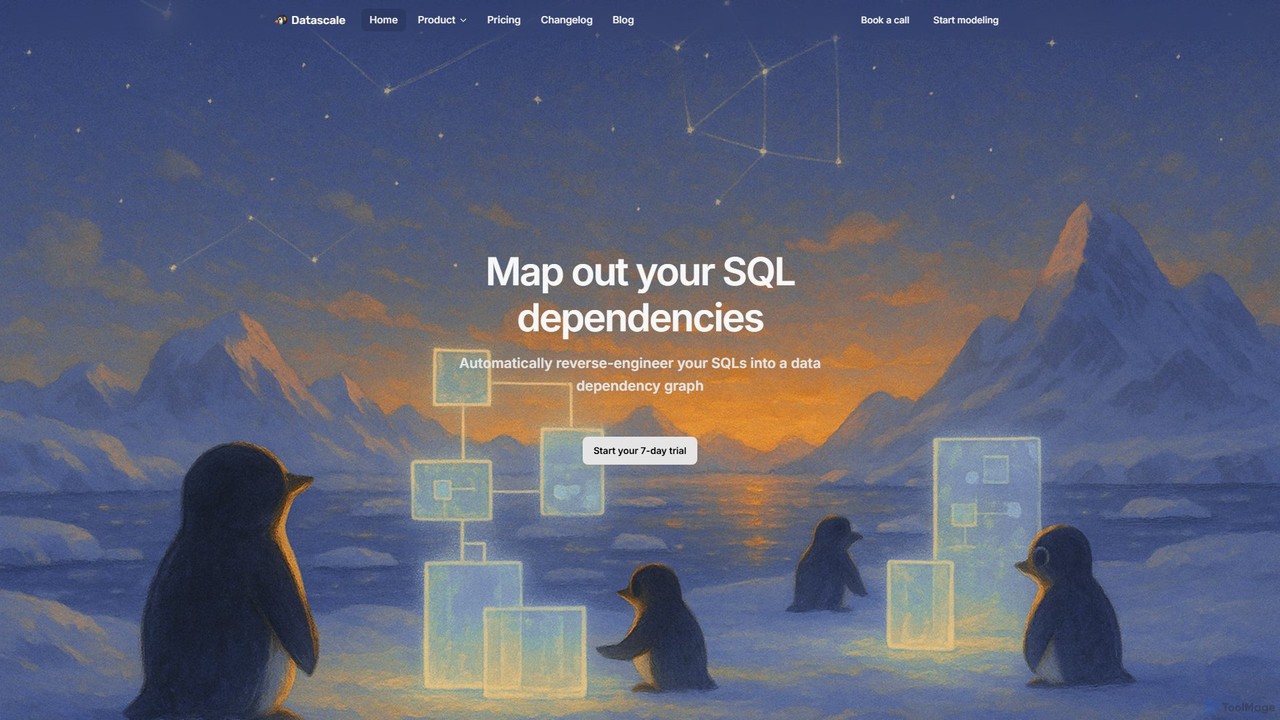
Datascale is a cloud-based data modeling and lineage platform designed for modern data teams. It uses AI to automatically visualize SQL dependencies, creating interactive data lineage graphs and ER diagrams. The platform helps users understand data flow, document models visually, and manage a centralized data catalog. With GenAI-powered search and seamless API integration, Datascale simplifies data discovery, impact analysis, and collaboration, ensuring your data knowledge is always clear, connected, and up-to-date.
Analytics
Jyek
Jyek is an AI agent platform that understands objectives, creates execution plans, uses tools, and delivers verifiable results for complex, multi-step tasks.
Automation
SurrealDB
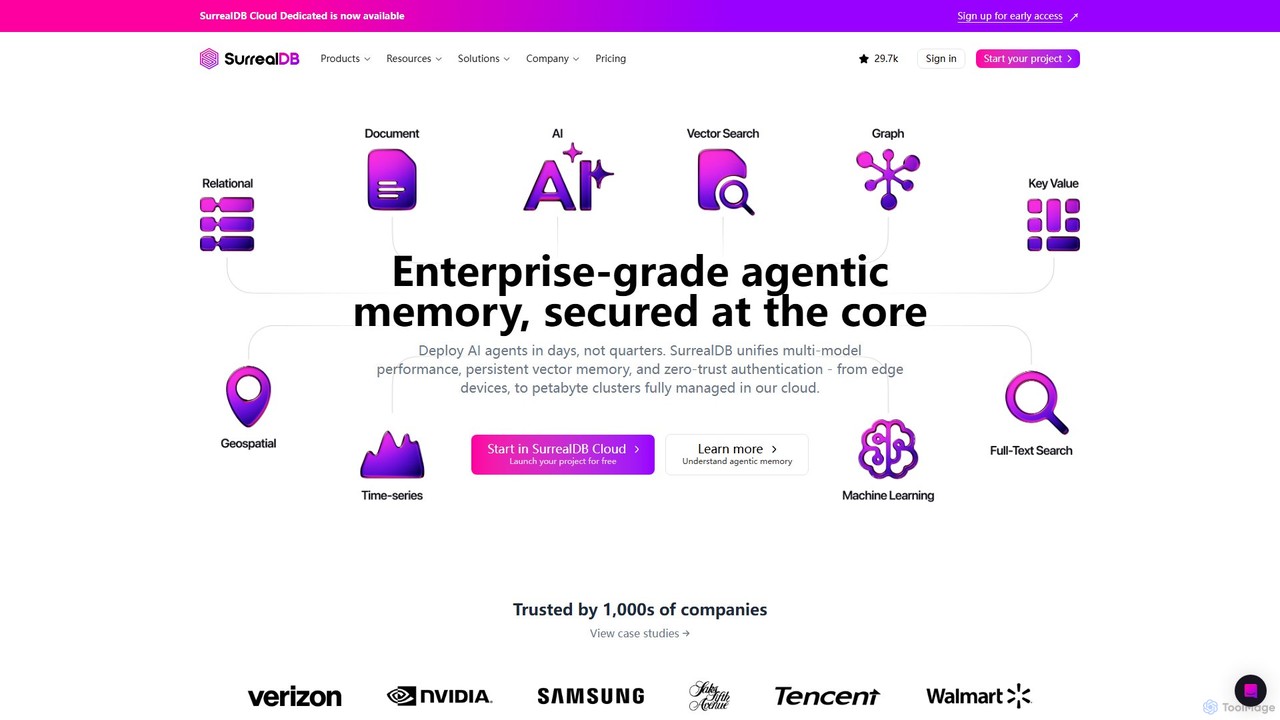
SurrealDB is a next-generation, multi-model cloud database designed for modern applications. It simplifies backend development by unifying document, relational, graph, and time-series models with built-in full-text search, vector search, and in-database machine learning. Built for scalability and real-time data, it empowers developers to build complex, AI-powered applications with unprecedented ease and speed.
Vector Database
Seek AI
Seek AI is a generative AI platform for data analytics that empowers users to query databases, generate reports, and create visualizations using natural language. It automates the text-to-SQL process, making data accessible to non-technical users and accelerating insights for data teams.
Business Intelligence
ChartDB
ChartDB is an AI-powered database schema visualizer that instantly generates interactive ER diagrams from a single query. It's designed for developers and teams to design, document, and collaborate on database structures. It features real-time collaboration, database synchronization, and an AI assistant to optimize schema design. Both cloud and self-hosted open-source versions are available.
Visualization
Azimutt
Azimutt is an advanced database explorer and analyzer designed for large, complex databases. It helps developers, DBAs, and data analysts visualize, document, and optimize their database schemas. With features like incremental layout building, AI-powered SQL generation, and collaborative documentation, Azimutt simplifies database exploration, improves team efficiency, and ensures database health.
Visualization
SingleStore
SingleStore is a high-performance, real-time data platform designed for enterprise AI and data-intensive applications. It unifies transactional (OLTP) and analytical (OLAP) workloads, including vector search, in a single, distributed SQL database, delivering millisecond latency at scale.
Vector Database
Empathy.co
Empathy.co is an enterprise-grade AI search and discovery platform for e-commerce, built on the principles of ethical AI. It provides privacy-first, human-centered search solutions that enhance the shopping experience without tracking or profiling users. Leveraging generative AI, vector search, and open standards, it helps brands build trust, increase conversions, and deliver joyful, relevant product discovery.
Apis
Google Skills
Google Skills is an online learning platform designed to help individuals and teams build and validate in-demand technical skills, particularly in AI and cloud technologies. It offers a range of learning paths, including hands-on labs, courses, skill badges, and industry-recognized certifications from Google experts, enabling users to future-proof their careers and enhance workforce capabilities.
Machine Learning Training
Vanna.AI
Vanna.AI is an open-source, personalized AI SQL agent that transforms natural language questions into accurate SQL queries. It uses a Retrieval-Augmented Generation (RAG) model trained on your specific database schema, documentation, and past queries to achieve high accuracy on complex datasets. It's designed for security, flexibility, and easy integration into any application, empowering both technical and non-technical users to gain insights from their data effortlessly.
Business Intelligence
PostgresML
PostgresML is a powerful open-source extension that integrates machine learning and AI directly into your PostgreSQL database. It enables GPU-accelerated inference, vector search, and complete RAG pipelines using simple SQL commands, eliminating data movement and simplifying the MLOps stack for high-performance, scalable AI applications.
Mlops
Neosync
Neosync is an open-source platform for data anonymization and synthetic data generation. It helps developers and data scientists create safe, privacy-compliant, and realistic datasets for testing, development, and AI model training, ensuring referential integrity across databases.
Data Generation
Chat With Your Database
An open-source AI tool that allows you to interact with your PostgreSQL database using natural language. Ask questions, get insights, and perform operations through a simple chat interface, eliminating the need for complex SQL queries.
Business Intelligence