ToolMage
Sign in
Lunit
Predictive Analytics · 38.4K monthly visits

Lunit is a medical AI company dedicated to conquering cancer. It provides AI-powered solutions for cancer diagnostics and therapeutics, helping clinicians detect early-stage cancer with greater accuracy and predict patient response to treatment. Its products analyze medical images and tissue data to improve clinical outcomes.

VS
RapidAI
Medical Data · 26.3K monthly visits

RapidAI is a leading clinical AI platform that enhances medical imaging analysis for life-threatening conditions like stroke and aneurysm. It provides healthcare professionals with real-time, actionable insights to accelerate diagnosis, inform treatment decisions, and improve patient outcomes. The platform is backed by extensive clinical validation and multiple FDA clearances.

Lunit vs RapidAI: pricing, features, traffic, and use cases

Compare Lunit and RapidAI across positioning, pricing, traffic, and user feedback using structured factual data.

Updated Aug 20, 2026

Product overview

Lunit Product overview

Lunit is a medical AI company dedicated to conquering cancer. It provides AI-powered solutions for cancer diagnostics and therapeutics, helping clinicians detect early-stage cancer with greater accuracy and predict patient response to treatment. Its products analyze medical images and tissue data to improve clinical outcomes.
Preview

RapidAI Product overview

RapidAI is a leading clinical AI platform that enhances medical imaging analysis for life-threatening conditions like stroke and aneurysm. It provides healthcare professionals with real-time, actionable insights to accelerate diagnosis, inform treatment decisions, and improve patient outcomes. The platform is backed by extensive clinical validation and multiple FDA clearances.

Preview

Detailed feature comparison

FeatureLunitRapidAI
Primary categoryPredictive AnalyticsMedical Data
Added2025-08-022025-08-12
PricingNot verifiedPaid
Official websitewww.lunit.iowww.rapidai.com
Product typeWebsiteWebsite
Performance data
User ratingNot verifiedNot verified
Comments00
Monthly visits38.4K26.3K
Monthly growth-7.6%44.7%
Favorites89111
DetailsView detailsView details

Lunit vs RapidAI monthly traffic

Compare Lunit and RapidAI by monthly reach, traffic trend, visit depth, top regions, and acquisition sources.

How to interpret the traffic data

In the Lunit vs RapidAI monthly traffic comparison, Lunit currently shows 38.4K visits and RapidAI shows 26.3K; Lunit has about 1.5 times the visible traffic of RapidAI, an absolute difference of about 12K visits. This reflects visible reach, not feature quality or paid users.

Both tools provide verified traffic details, so monthly trends, visit depth, regions, and acquisition sources can be compared on the same basis.

Lunit is registered at the www.lunit.io/en subpage. Because the current data does not state whether other host pages are excluded, treat this as domain-level context rather than independent traffic for one product or project.

Lunit monthly traffic:

Latest traffic

Monthly visits
38.4K
Avg. visit duration
0:28
Pages per visit
1.8
Bounce rate
37.86%
Data updated 2026-06-15

Monthly traffic trend

  • 2026/1: 35.8K Monthly visits
  • 2026/2: 35.2K Monthly visits
  • 2026/3: 41.4K Monthly visits
  • 2026/4: 41.5K Monthly visits
  • 2026/5: 38.4K Monthly visits

Top regions

Top 5 countries/regions
Country/regionPercentageTraffic
🇺🇸United States36.04%13.8K
🇰🇷Korea, Republic of25.34%9.7K
🇮🇳India16.94%6.5K
🇻🇳Vietnam14.38%5.5K
🇹🇷Turkey7.3%2.8K

Traffic sources

Source typePercentageTraffic
Direct92.51%35.5K
Referral5.74%2.2K
Email1.75%671

Search keywords

루닛automated breast uslunitlunit ailunit insight cxr

RapidAI monthly traffic:

Latest traffic

Monthly visits
26.3K
Avg. visit duration
0:41
Pages per visit
2.01
Bounce rate
37.54%
Data updated 2026-06-15

Monthly traffic trend

  • 2025/9: 21.1K Monthly visits
  • 2026/1: 23.1K Monthly visits
  • 2026/2: 23.9K Monthly visits
  • 2026/3: 24.7K Monthly visits
  • 2026/4: 18.2K Monthly visits
  • 2026/5: 26.3K Monthly visits

Top regions

Top 5 countries/regions
Country/regionPercentageTraffic
🇺🇸United States54.58%14.4K
🇧🇷Brazil14.61%3.8K
🇮🇳India11.97%3.1K
🇮🇩Indonesia10.46%2.8K
🇬🇧United Kingdom8.38%2.2K

Traffic sources

Source typePercentageTraffic
Direct89.03%23.4K
Referral10.97%2.9K

Search keywords

lvo ncct ai detection"rapidai"rapid airapidairapid ia
Traffic-based selection guidance: Lunit is registered under a www.lunit.io subpath, so its large visible total may include the host platform. The current data does not justify choosing Lunit for traffic alone; shortlist by unique taxonomy and use case, then validate with the same tasks.

Usage comparison

Compare the core capabilities of Lunit and RapidAI

Lunit Core features

Medical Imaging
Predictive Analytics
Oncology

RapidAI Core features

Medical Imaging
Medical Data
Diagnostics

Use cases

Lunit Use cases

healthcare AI
medical imaging
radiology
AI diagnostics
biomarker
cancer detection
deep learning
immunotherapy
oncology

RapidAI Use cases

healthcare AI
medical imaging
radiology
aneurysm
clinical AI
diagnostics
FDA cleared
medical diagnostics
neurovascular
stroke detection

Lunit vs RapidAI:In-depth comparison and selection guidance

First decide whether the products solve the same kind of need

This in-depth Lunit vs RapidAI comparison uses only the product records, taxonomy, audience, traffic, and community signals available on this page. Lunit is primarily listed under “Predictive Analytics”, while RapidAI is primarily listed under “Medical Data”, so the first decision is whether your actual task matches their recorded scope.

The structured fields currently show these decision-relevant differences: Primary category (Lunit: Predictive Analytics; RapidAI: Medical Data); Pricing (Lunit: Not disclosed; RapidAI: Paid); Monthly visits (Lunit: 38.4K; RapidAI: 26.3K); Monthly growth (Lunit: -7.6%; RapidAI: 44.7%); Favorites (Lunit: 89; RapidAI: 111). These facts are more useful for selection than brand visibility alone.

What market visibility and monthly traffic mean

In the Lunit vs RapidAI monthly traffic comparison, Lunit currently shows 38.4K visits and RapidAI shows 26.3K; Lunit has about 1.5 times the visible traffic of RapidAI, an absolute difference of about 12K visits. This reflects visible reach, not feature quality or paid users.

Both tools provide verified traffic details, so monthly trends, visit depth, regions, and acquisition sources can be compared on the same basis.

Lunit is registered at the www.lunit.io/en subpage. Because the current data does not state whether other host pages are excluded, treat this as domain-level context rather than independent traffic for one product or project.

Lunit is registered under a www.lunit.io subpath, so its large visible total may include the host platform. The current data does not justify choosing Lunit for traffic alone; shortlist by unique taxonomy and use case, then validate with the same tasks.

Product positioning, use cases, and roles

Lunit and RapidAI currently overlap in shared categories: Medical Imaging; shared tags: healthcare AI, medical imaging, and radiology. This can place both on the same shortlist, but it does not prove equal implementation, depth, or cost.

Lunit's unique categories/tags are Predictive Analytics, Oncology, AI diagnostics, biomarker, cancer detection, deep learning, immunotherapy, and oncology; RapidAI's are Medical Data, Diagnostics, aneurysm, clinical AI, diagnostics, FDA cleared, medical diagnostics, and neurovascular. These unique fields are the strongest differentiators: validate the product whose recorded scope matches the task instead of following traffic alone.

What ratings, comments, and favorites can tell you

Lunit has no verified rating, 0 comments, 89 favorites, and 97 likes;RapidAI has no verified rating, 0 comments, 111 favorites, and 114 likes。

Neither product has enough rating or comment samples for a credible reputation ranking.

Selection guidance by actual need

When to evaluate Lunit first

Put Lunit on the priority trial list when the task aligns with “Predictive Analytics” and especially Predictive Analytics, Oncology, AI diagnostics, biomarker, cancer detection, and deep learning. This follows recorded positioning and does not imply unlisted capabilities are absent.

Lunit also currently records: pricing is not verified, product type is website, 38.4K monthly visits shown for the registered host (subpage scope unknown), no verified user rating. Verify any hard requirement around price, platform, or reach before trial, and do not let sparse review data substitute for testing.

When to evaluate RapidAI first

Put RapidAI on the priority trial list when the task aligns with “Medical Data” and especially Medical Data, Diagnostics, aneurysm, clinical AI, diagnostics, and FDA cleared. This follows recorded positioning and does not imply unlisted capabilities are absent.

RapidAI also currently records: pricing is paid, product type is website, 26.3K verified monthly visits, no verified user rating. Verify any hard requirement around price, platform, or reach before trial, and do not let sparse review data substitute for testing.

How to validate the recommendation before deciding

The available data describes positioning, public visibility, and community signals, but it cannot prove output quality, speed, integration effort, privacy, or long-term cost in your workflow. Before deciding, run the same representative tasks in Lunit and RapidAI, then record completion time, accuracy, manual corrections, and the real paid threshold. A like-for-like trial turns this comparison into a defensible adoption decision.

Comparison FAQ

How should I choose between Lunit and RapidAI?
Compare positioning, pricing, taxonomy, and traffic maturity, then verify the latest details on each official website.
Where does this comparison data come from?
The factual baseline is derived from product, taxonomy, traffic, and community data. Reviewed editorial conclusions show their source and verification date.
What do unknown fields mean?
Unknown means there is not enough reliable evidence; the page does not fill gaps with assumptions.

Related AI tools

Rayscape

Rayscape

An AI-powered radiology platform designed to assist medical professionals in analyzing chest X-rays (CXR) and lung CT scans. It enhances diagnostic accuracy and efficiency by automatically detecting up to 148 pathologies, including lung nodules and tuberculosis, and seamlessly integrating into existing clinical workflows.

Diagnostics
Visits 10.9KFavorites 107Likes 98
Segmed
Paid

Segmed

Segmed provides large-scale access to de-identified, diagnostic-grade medical imaging data for AI development and clinical research. Its platform, Openda, offers millions of tokenized studies from a diverse global network of healthcare providers. Segmed accelerates innovation for life sciences, medical device, and technology companies by providing regulatory-grade, multimodal datasets crucial for training AI models, validation, and securing FDA/CE clearance.

Datasets
Visits 8KFavorites 118Likes 141
MD.ai

MD.ai

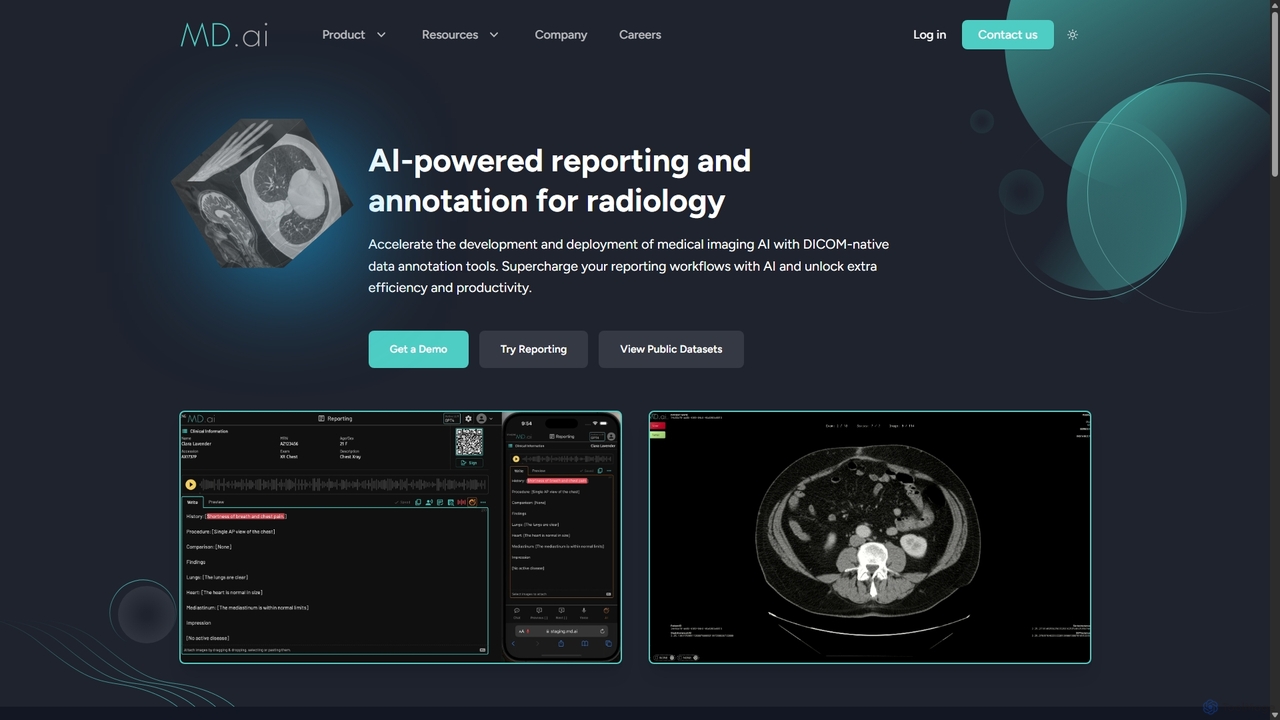
MD.ai is a comprehensive AI platform for radiology, offering DICOM-native data annotation tools to build and validate medical imaging AI models, and an LLM-powered reporting system to supercharge clinical workflows for radiologists, ensuring efficiency, accuracy, and compliance.

Data Annotation
Visits 9.8KFavorites 135Likes 121
Sinkove
Freemium

Sinkove

Sinkove is an AI platform that generates high-quality, synthetic radiology data. It helps medical researchers and clinicians accelerate research, eliminate data bias, and reduce costs by creating customized, diverse, and regulatory-grade imaging datasets in seconds.

Synthetic Data Generation
Visits 4.6KFavorites 114Likes 103
X-ray Interpreter
Freemium

X-ray Interpreter

X-ray Interpreter is an AI-powered platform that provides instant, detailed analysis of radiological images like X-rays, CT scans, MRIs, and ultrasounds. It offers a reliable second opinion for patients, families, and medical professionals, delivering easy-to-understand reports to empower informed healthcare decisions. The service is fast, secure, and cost-effective, with a free preview option.

Medical Imaging
Visits 80.6KFavorites 143Likes 150
Neural4D
Paid

Neural4D

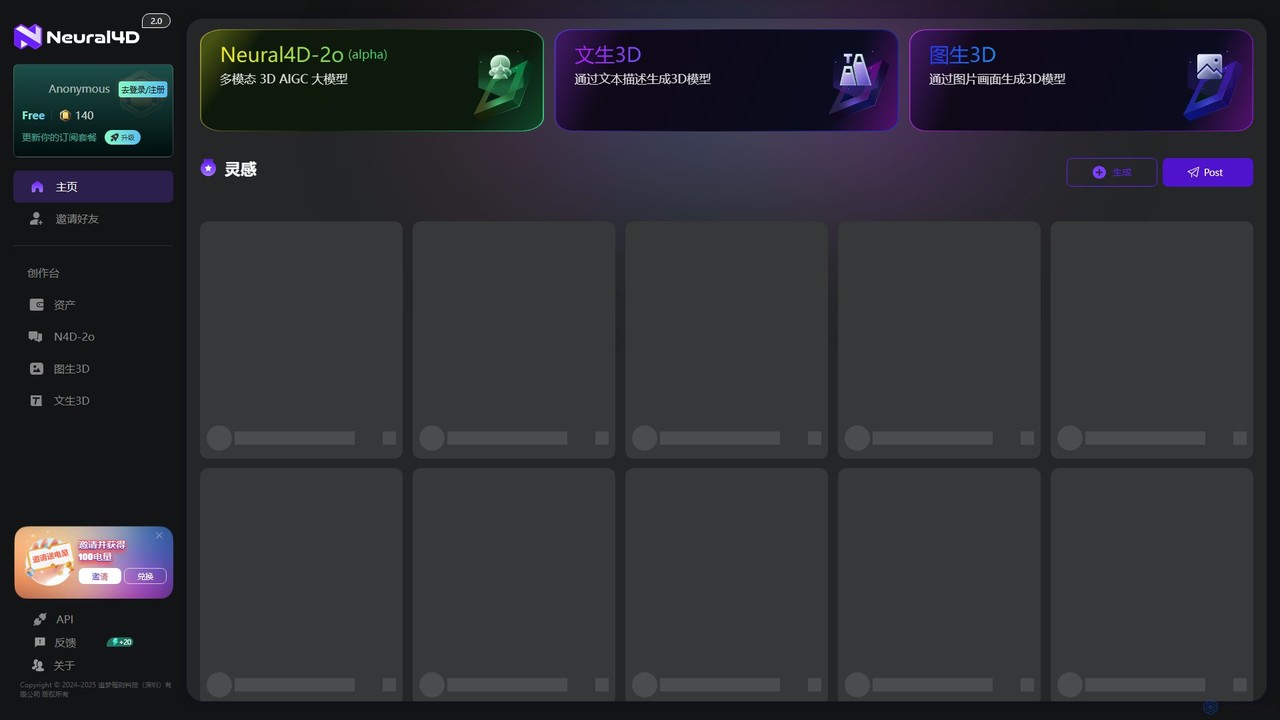
Neural4D is an advanced AI platform for 4D medical imaging analysis. It leverages deep learning to process spatio-temporal data from dynamic CT, MRI, and PET scans, enabling faster diagnostics, precise tumor tracking, and quantitative analysis of physiological functions for healthcare professionals and researchers.

Data Visualization
Visits 431.7KFavorites 99Likes 130
edenmed
Paid

edenmed

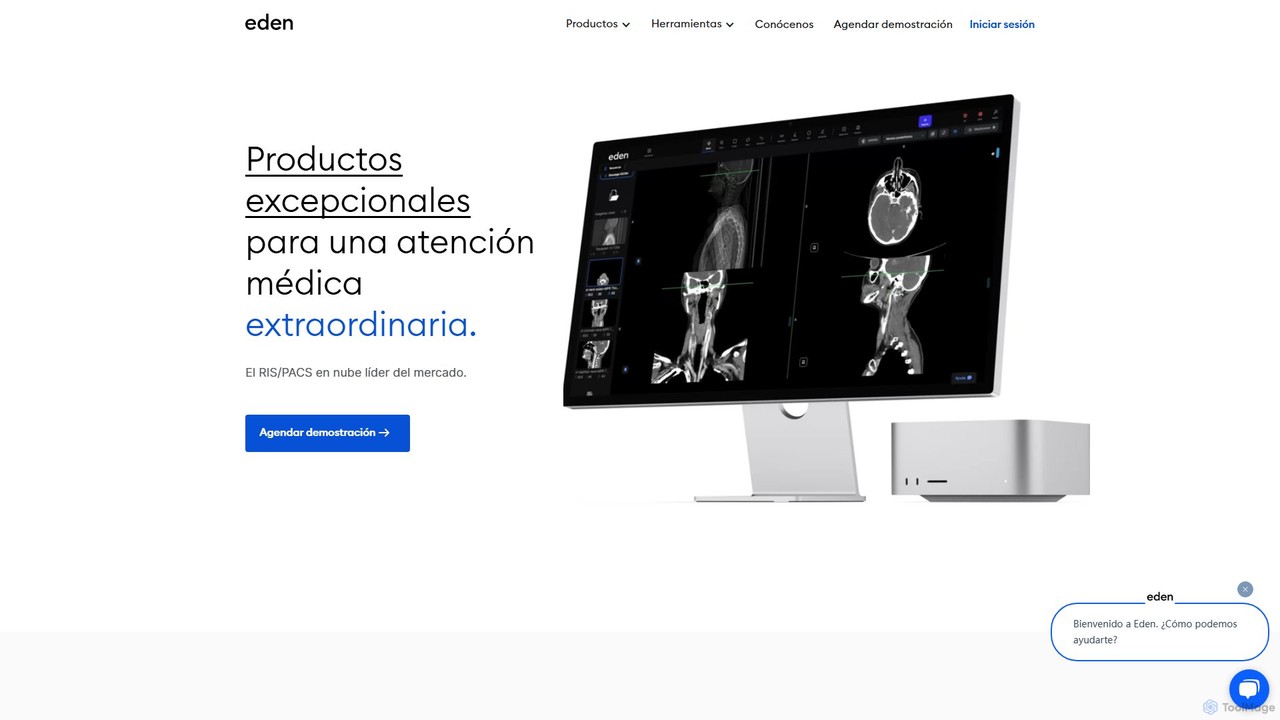
edenmed is an AI-powered, cloud-native healthcare platform designed for medical institutions. It offers an integrated suite of tools including an ultra-fast PACS for medical imaging, an AI diagnostic assistant, a comprehensive management system (RIS), and business intelligence analytics to streamline operations, enhance diagnostic accuracy, and improve the patient experience.

Medical Imaging
Visits 68KFavorites 124Likes 113
MONAI
Free

MONAI

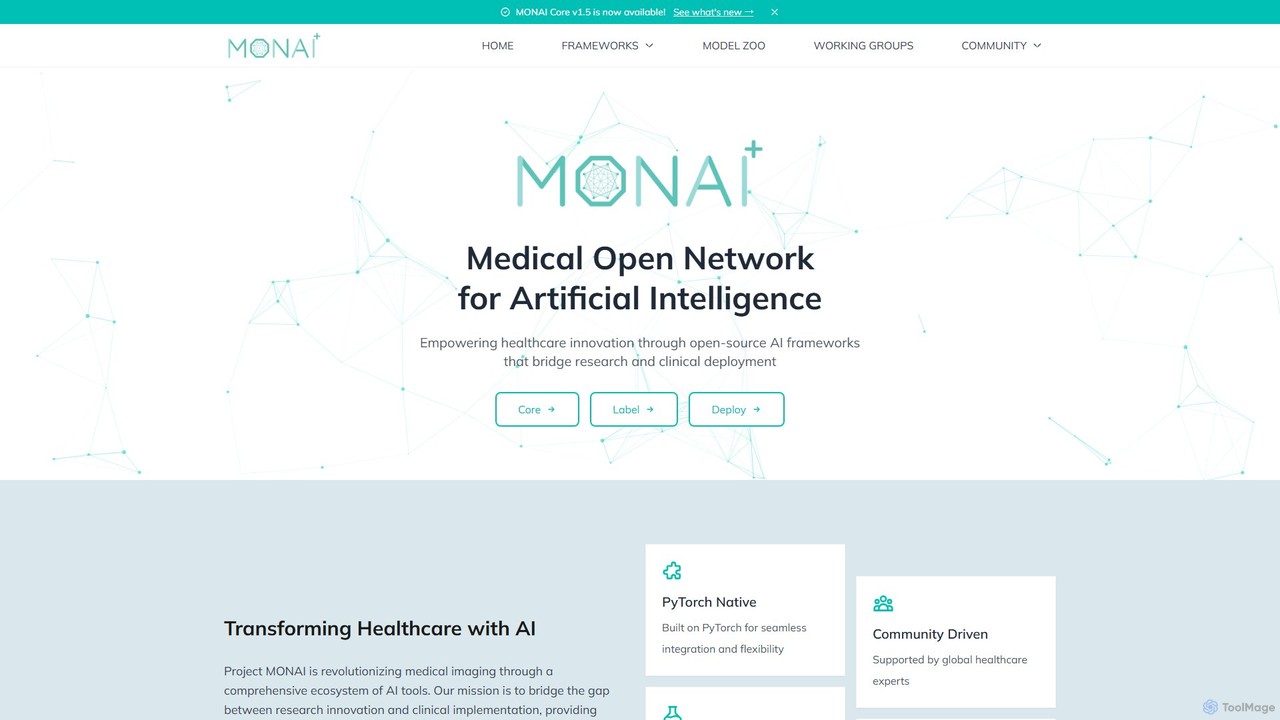
MONAI (Medical Open Network for AI) is a free, open-source, PyTorch-based framework designed to accelerate AI in healthcare. It provides a comprehensive ecosystem of tools for researchers and clinicians, covering the entire AI lifecycle from data annotation and model training (MONAI Core, MONAI Label) to clinical deployment (MONAI Deploy), bridging the gap between research and real-world application.

Data Annotation
Visits 22.3KFavorites 123Likes 123
ibex_ai

ibex_ai

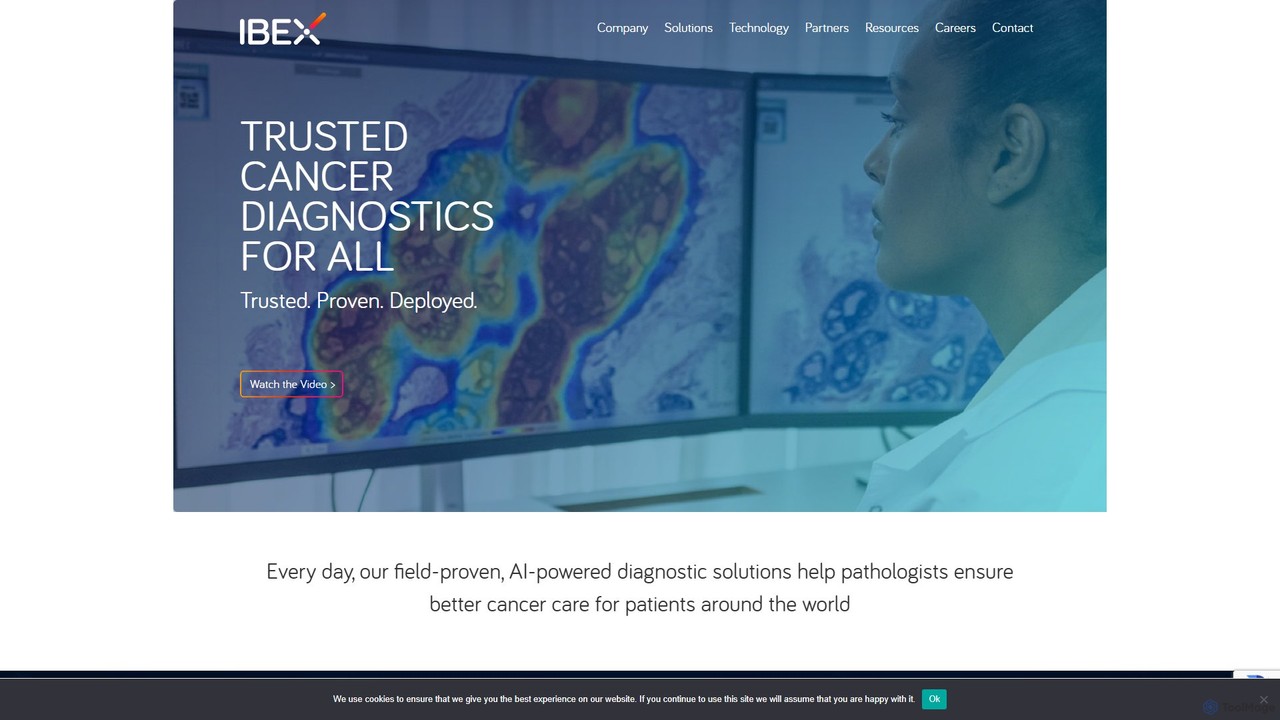
Ibex is a leading AI-powered cancer diagnostics platform for pathology. It assists pathologists by improving the accuracy and efficiency of breast, prostate, and gastric cancer detection. The platform uses advanced deep learning algorithms to analyze tissue slides, identify cancerous cells, and provide critical diagnostic insights, acting as a trusted digital assistant in the lab.

Computer Vision
Visits 18KFavorites 137Likes 132
RSIP Vision

RSIP Vision

RSIP Vision is a world-class leader in providing custom AI and computer vision R&D solutions for medical imaging. With over 25 years of experience, they partner with medical device companies to develop innovative, clinically-proven software for diagnostics, surgical guidance, and image analysis across various medical fields.

Image Analysis
Visits 14.1KFavorites 124Likes 106
Jiva.ai
Paid

Jiva.ai

Jiva.ai is a zero-code, end-to-end platform for rapid multimodal AI development. It empowers organizations to build, train, and deploy complex AI models using imaging, video, text, audio, and structured data, without needing extensive data science expertise.

Machine Learning
Visits 10.9KFavorites 140Likes 132
Azyri
Freemium

Azyri

Azyri is an AI-powered medical assistant designed for healthcare professionals, students, and researchers. It functions as a copilot, offering advanced analysis of medical images, such as fracture detection and pediatric bone age assessment, to enhance diagnostic accuracy and efficiency. Accessible via a web platform and API, Azyri aims to make high-quality healthcare technology affordable and universally available.

Api
Visits 4.7KFavorites 124Likes 128
Pearl
Paid

Pearl

Pearl is a leading AI platform for dentistry, utilizing advanced computer vision to analyze dental X-rays and 3D imagery. It provides dentists with real-time diagnostic assistance, enhances patient communication, and optimizes practice management, aiming to elevate the standard of dental care globally.

Practice Management
Visits 216.3KFavorites 103Likes 111
0xmd
Freemium

0xmd

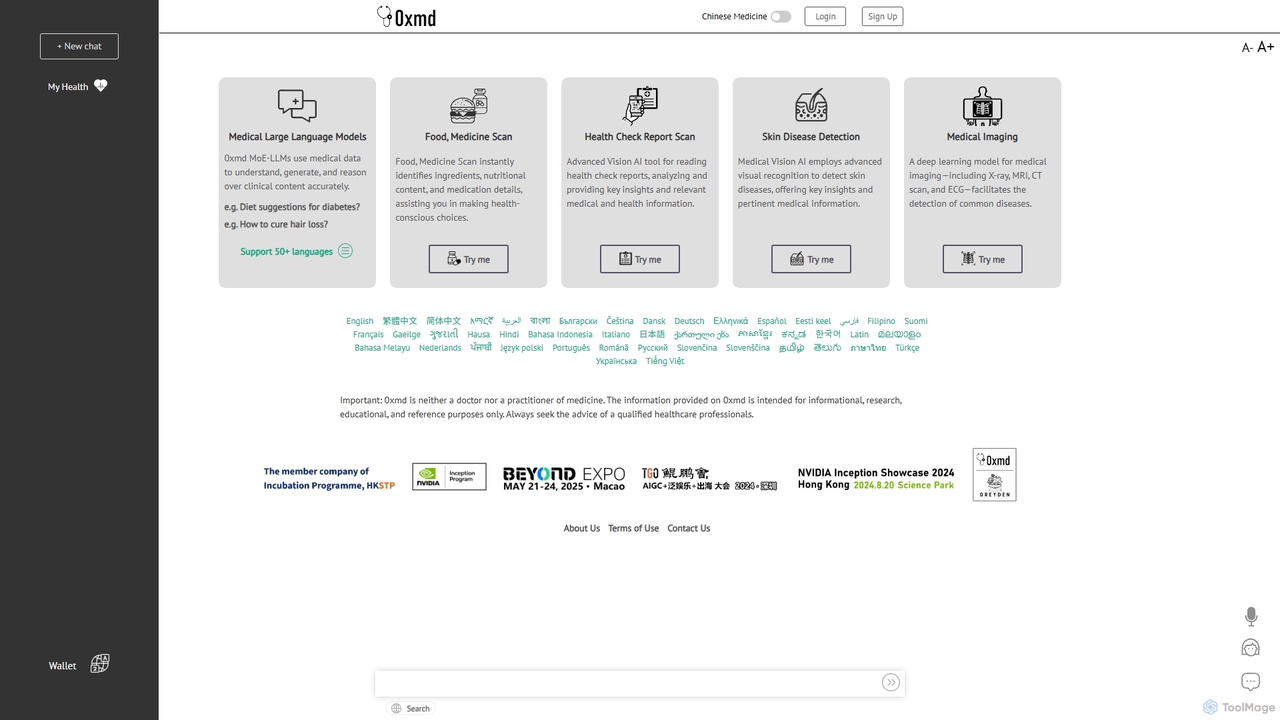
0xmd is an advanced generative AI platform for medicine and healthcare. It utilizes specialized Large Language Models (LLMs) and Vision AI to understand clinical content, analyze health reports, scan medical images like X-rays and MRIs, detect skin diseases, and provide health information in over 50 languages. It serves as an intelligent assistant for both individuals and healthcare professionals.

Generative Ai
Visits 171KFavorites 121Likes 119
PMcardio
Freemium

PMcardio

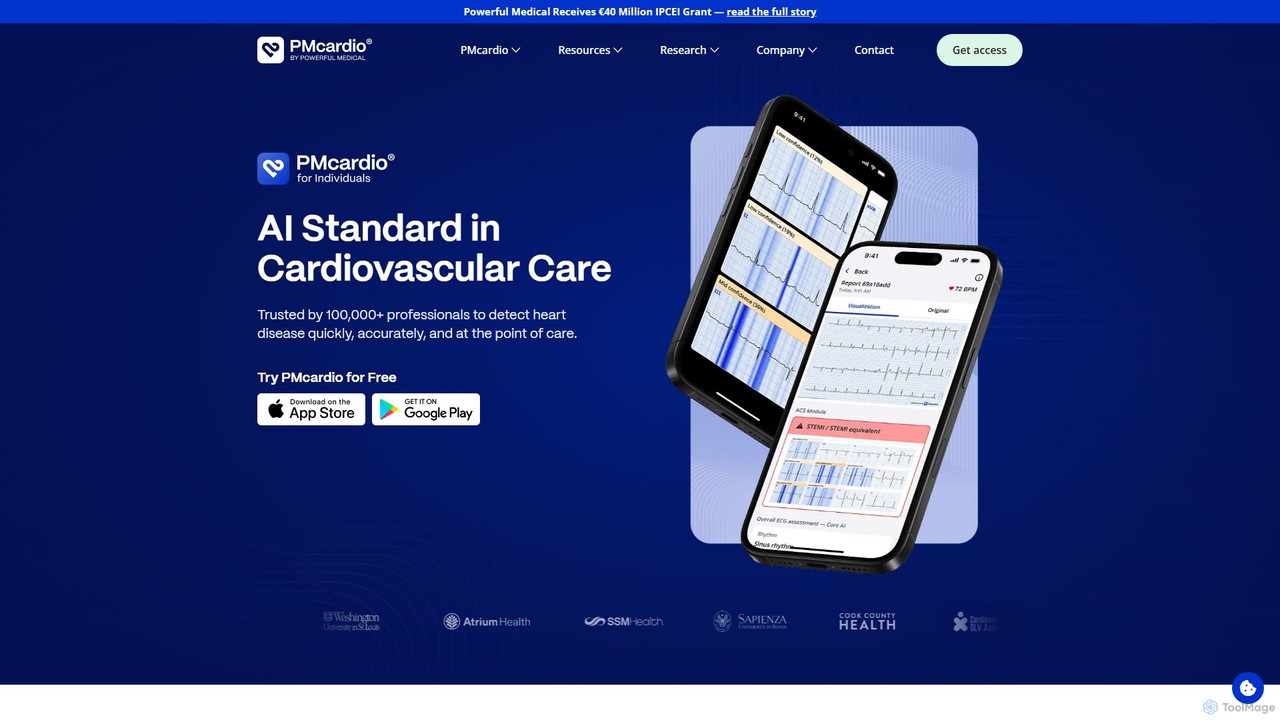
PMcardio is a CE-certified, AI-powered medical device that provides instant, accurate interpretation of any 12-lead ECG. Trusted by over 100,000 clinicians, it helps medical professionals detect over 40 cardiovascular conditions, including life-threatening heart attacks like OMIs, in seconds. By simply taking a photo of an ECG, users get a reliable diagnosis, explainable results, and a powerful second opinion, improving patient outcomes and streamlining clinical workflows.

Medical Diagnostics
Visits 79.7KFavorites 114Likes 101