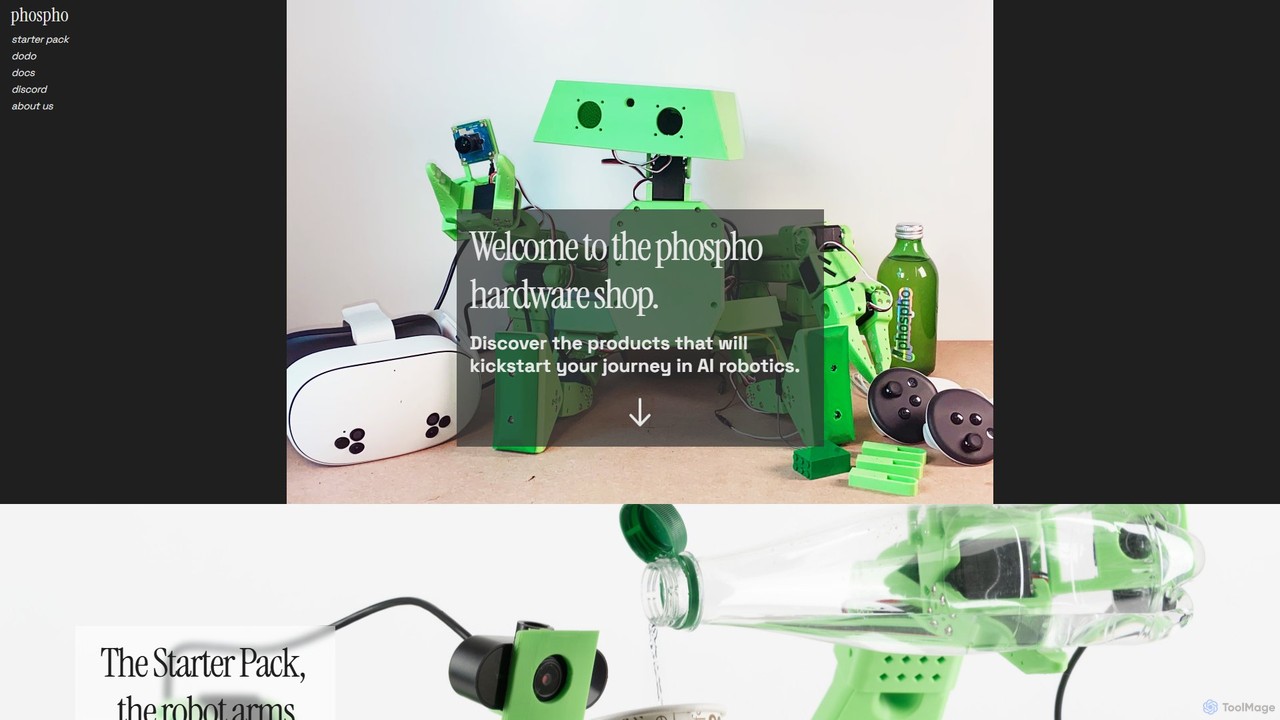
phospho is an AI robotics company providing an integrated ecosystem of open-source hardware and software. It offers starter kits like robotic arms and walking robots, powered by the phosphobot platform, to make advanced physical AI accessible for developers, researchers, and hobbyists.
Polymath Robotics provides a modular software platform to accelerate the development of autonomy for off-highway industrial vehicles. Its software-first, vehicle-agnostic approach simplifies automation for sectors like agriculture, mining, logistics, and defense, making it faster and more cost-effective to deploy autonomous fleets.
Product overview
phospho Product overview
phospho is an AI robotics company providing an integrated ecosystem of open-source hardware and software. It offers starter kits like robotic arms and walking robots, powered by the phosphobot platform, to make advanced physical AI accessible for developers, researchers, and hobbyists.
Polymath Robotics Product overview
Polymath Robotics provides a modular software platform to accelerate the development of autonomy for off-highway industrial vehicles. Its software-first, vehicle-agnostic approach simplifies automation for sectors like agriculture, mining, logistics, and defense, making it faster and more cost-effective to deploy autonomous fleets.
Detailed feature comparison
| Feature | phospho | Polymath Robotics |
|---|---|---|
| Primary category | Machine Learning | Industrial Automation |
| Added | 2025-08-03 | 2025-09-10 |
| Pricing | Paid | Not verified |
| Official website | phospho.ai | polymathrobotics.com |
| Product type | Website | Website |
| Performance data | ||
| User rating | Not verified | Not verified |
| Comments | 0 | 0 |
| Monthly visits | 18.7K | 4.5K |
| Monthly growth | -4.7% | 4.3% |
| Favorites | 105 | 140 |
| Details | View details | View details |
phospho vs Polymath Robotics monthly traffic
Compare phospho and Polymath Robotics by monthly reach, traffic trend, visit depth, top regions, and acquisition sources.
How to interpret the traffic data
In the phospho vs Polymath Robotics monthly traffic comparison, phospho currently shows 18.7K visits and Polymath Robotics shows 4.5K; phospho has about 4.2 times the visible traffic of Polymath Robotics, an absolute difference of about 14.2K visits. This reflects visible reach, not feature quality or paid users.
Both tools provide verified traffic details, so monthly trends, visit depth, regions, and acquisition sources can be compared on the same basis.
phospho monthly traffic:
Latest traffic
Monthly traffic trend
- 2025/9: 37.3K Monthly visits
- 2026/1: 31.7K Monthly visits
- 2026/2: 30.4K Monthly visits
- 2026/3: 25.4K Monthly visits
- 2026/4: 19.6K Monthly visits
- 2026/5: 18.7K Monthly visits
Top regions
Top 5 countries/regions
| Country/region | Percentage | Traffic |
|---|---|---|
| 🇺🇸United States | 37.88% | 7.1K |
| 🇮🇳India | 21.24% | 4K |
| 🇫🇷France | 16.33% | 3K |
| 🇨🇦Canada | 12.97% | 2.4K |
| 🇻🇳Vietnam | 11.58% | 2.2K |
Traffic sources
| Source type | Percentage | Traffic |
|---|---|---|
| Direct | 69.55% | 13K |
| Referral | 30.45% | 5.7K |
Search keywords
Polymath Robotics monthly traffic:
Latest traffic
Monthly traffic trend
- 2025/9: 7.7K Monthly visits
- 2026/1: 5.8K Monthly visits
- 2026/2: 5.3K Monthly visits
- 2026/3: 3.7K Monthly visits
- 2026/4: 4.3K Monthly visits
- 2026/5: 4.5K Monthly visits
Top regions
Top 5 countries/regions
| Country/region | Percentage | Traffic |
|---|---|---|
| 🇺🇸United States | 79.17% | 3.5K |
| 🇨🇦Canada | 12.02% | 535 |
| 🇬🇧United Kingdom | 5.53% | 246 |
| 🇮🇳India | 3.28% | 146 |
Search keywords
Usage comparison
Compare the core capabilities of phospho and Polymath Robotics
phospho Core features
Polymath Robotics Core features
Use cases
phospho Use cases
Polymath Robotics Use cases
Best suited roles
phospho Best suited roles
Polymath Robotics Best suited roles
phospho vs Polymath Robotics:In-depth comparison and selection guidance
First decide whether the products solve the same kind of need
This in-depth phospho vs Polymath Robotics comparison uses only the product records, taxonomy, audience, traffic, and community signals available on this page. phospho is primarily listed under “Machine Learning”, while Polymath Robotics is primarily listed under “Industrial Automation”, so the first decision is whether your actual task matches their recorded scope.
The structured fields currently show these decision-relevant differences: Primary category (phospho: Machine Learning; Polymath Robotics: Industrial Automation); Pricing (phospho: Paid; Polymath Robotics: Not disclosed); Monthly visits (phospho: 18.7K; Polymath Robotics: 4.5K); Monthly growth (phospho: -4.7%; Polymath Robotics: 4.3%); Favorites (phospho: 105; Polymath Robotics: 140). These facts are more useful for selection than brand visibility alone.
What market visibility and monthly traffic mean
In the phospho vs Polymath Robotics monthly traffic comparison, phospho currently shows 18.7K visits and Polymath Robotics shows 4.5K; phospho has about 4.2 times the visible traffic of Polymath Robotics, an absolute difference of about 14.2K visits. This reflects visible reach, not feature quality or paid users.
Both tools provide verified traffic details, so monthly trends, visit depth, regions, and acquisition sources can be compared on the same basis.
If public market visibility is an important first-pass criterion, investigate phospho first. The final choice should still follow taxonomy, use case, and a real trial because higher traffic does not prove broader capabilities or better workflow fit.
Product positioning, use cases, and roles
phospho and Polymath Robotics currently overlap in shared categories: Robotics; shared tags: robotics. This can place both on the same shortlist, but it does not prove equal implementation, depth, or cost.
phospho's unique categories/tags are Machine Learning, Stem, Iot, AI robotics, dataset collection, developer platform, embodied AI, and hardware; Polymath Robotics's are Industrial Automation, Automation, agriculture, autonomous vehicles, autonomy, defense, fleet management, and industrial automation. These unique fields are the strongest differentiators: validate the product whose recorded scope matches the task instead of following traffic alone.
What ratings, comments, and favorites can tell you
phospho has no verified rating, 0 comments, 105 favorites, and 120 likes;Polymath Robotics has no verified rating, 0 comments, 140 favorites, and 135 likes。
Neither product has enough rating or comment samples for a credible reputation ranking.
Selection guidance by actual need
When to evaluate phospho first
Put phospho on the priority trial list when the task aligns with “Machine Learning” and especially Machine Learning, Stem, Iot, AI robotics, dataset collection, and developer platform. This follows recorded positioning and does not imply unlisted capabilities are absent.
phospho also currently records: pricing is paid, product type is website, 18.7K verified monthly visits, no verified user rating. Verify any hard requirement around price, platform, or reach before trial, and do not let sparse review data substitute for testing.
When to evaluate Polymath Robotics first
Put Polymath Robotics on the priority trial list when the task aligns with “Industrial Automation” and especially Industrial Automation, Automation, agriculture, autonomous vehicles, autonomy, and defense, or the users include Agricultural Engineer, Autonomous Systems Engineer, CTO, and Fleet Manager. This follows recorded positioning and does not imply unlisted capabilities are absent.
Polymath Robotics also currently records: pricing is not verified, product type is website, 4.5K verified monthly visits, no verified user rating. Verify any hard requirement around price, platform, or reach before trial, and do not let sparse review data substitute for testing.
How to validate the recommendation before deciding
The available data describes positioning, public visibility, and community signals, but it cannot prove output quality, speed, integration effort, privacy, or long-term cost in your workflow. Before deciding, run the same representative tasks in phospho and Polymath Robotics, then record completion time, accuracy, manual corrections, and the real paid threshold. A like-for-like trial turns this comparison into a defensible adoption decision.
Comparison FAQ
How should I choose between phospho and Polymath Robotics?
Where does this comparison data come from?
What do unknown fields mean?
Related AI tools

Xolver
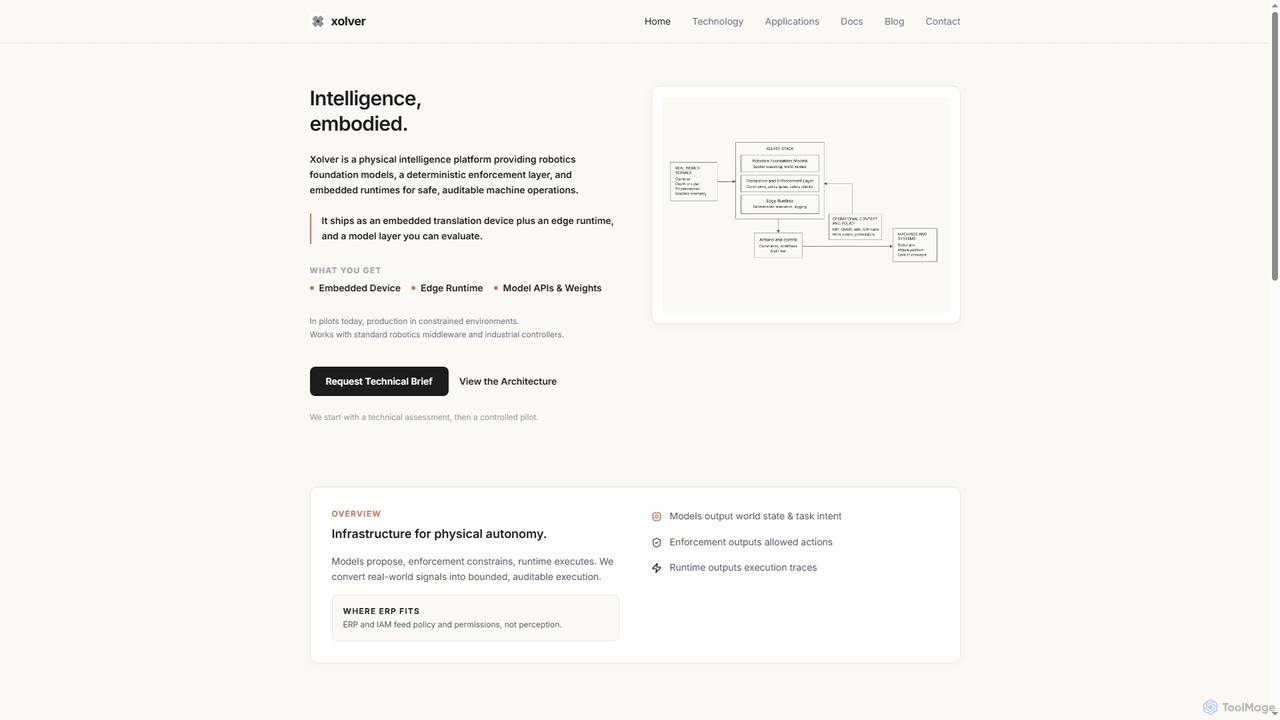
Xolver is a physical intelligence platform designed for robotics, providing foundation models, a deterministic enforcement layer, and embedded runtimes. It enables safe, auditable, and adaptive machine operations by converting real-world signals into bounded execution, ensuring reliability in complex industrial environments.
Machine Learning Models
Augmented Startups
Augmented Startups is an online AI university offering practical, project-based courses for all skill levels. It specializes in advanced topics like Computer Vision, Large Language Models (LLMs), Robotics, and Autonomous Vehicles. The platform provides comprehensive learning paths with code, datasets, and expert support to help students and professionals build real-world AI applications and bridge the gap between theory and practical implementation.
Code Libraries
Unitree
Unitree is a world-renowned robotics company specializing in the R&D, production, and sales of high-performance legged and humanoid robots, robotic arms, and advanced perception systems like 4D LiDAR. They offer innovative solutions for consumer, industrial, and research applications globally.
Personal Robotics
Roboto
Roboto is an advanced analytics engine designed for physical AI and robotics. It empowers robotics teams to organize, search, analyze, and automate workflows on vast amounts of multimodal data, including logs, video, and sensor data. This platform accelerates development, enhances system reliability, and helps uncover critical edge cases before deployment.
Robotics
Maum.ai
Maum.ai is a comprehensive enterprise AI platform specializing in "Physical AI," which integrates conversational AI, vision, robotics, and on-premise LLMs. It offers end-to-end solutions from AI-powered chatbots and virtual humans to autonomous robots for various industries, enhancing productivity and automation.
Enterprise Solutions
Sanctuary AI
Sanctuary AI is a robotics and physical AI company developing Phoenix, an industrial-grade, general-purpose humanoid robot. Powered by an advanced AI control system, Phoenix is designed to address global labor shortages by performing complex, dexterous tasks in manufacturing, logistics, and automotive industries, especially those that are dull, dirty, or dangerous.
Physical Ai
Covariant
Covariant provides an advanced AI robotics platform, the Covariant Brain, designed to automate warehouse operations. Powered by Robotics Foundation Models (RFM-1), it enables robots to perform complex pick-and-place tasks with human-level autonomy. The platform is versatile, handling virtually any item from day one, and continuously improves through fleet learning. It's a solution for e-commerce, logistics, and manufacturing companies looking to address labor shortages, manage fluctuating demand, and scale their automation efforts efficiently.
Logistics Automation
kscale
kscale by K-Scale Labs is an open-source, full-stack humanoid robot platform, K-Bot, designed for developers and researchers. It aims to accelerate the adoption of general-purpose robots by providing an accessible, modular, and community-driven hardware and software ecosystem for building and deploying embodied AI.
Hardware
Seed
Seed is ByteDance's advanced AI research initiative focused on building general artificial intelligence. They develop foundational models across various domains including multimodal, vision, speech, robotics, and LLMs, driving innovation in both academic research and real-world applications.
Foundational Models
UP Board
UP Board is a series of high-performance single-board computers (SBCs) designed for professional developers building edge AI, IoT, and robotics applications. Powered by robust Intel® processors and compatible with the Raspberry Pi ecosystem, it provides an ideal hardware platform for transitioning from prototype to mass production.
Edge Computing
Proception
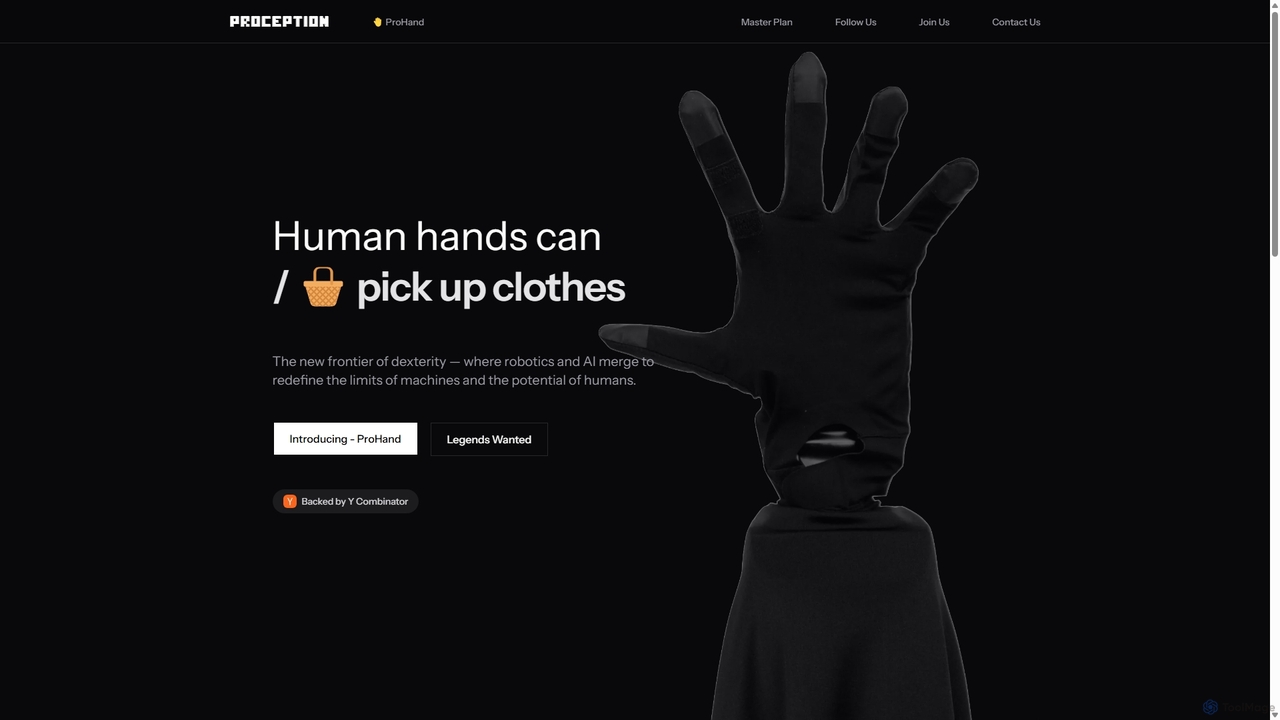
Proception develops advanced humanoid hands, merging robotics and AI to achieve unprecedented dexterity. Their flagship product, ProHand, features human-like precision, adaptive grip, and tactile sensing. Backed by Y Combinator, Proception aims to revolutionize industries like manufacturing, healthcare, and research by enabling robots to perform complex, delicate tasks previously exclusive to humans.
Machine Learning
NVIDIA
NVIDIA is a global leader in artificial intelligence computing, providing a full-stack platform of hardware, software, and services. Its solutions power everything from gaming and professional graphics with GeForce and RTX GPUs to advanced AI, data science, and high-performance computing in data centers and the cloud.
Infrastructure
Figure
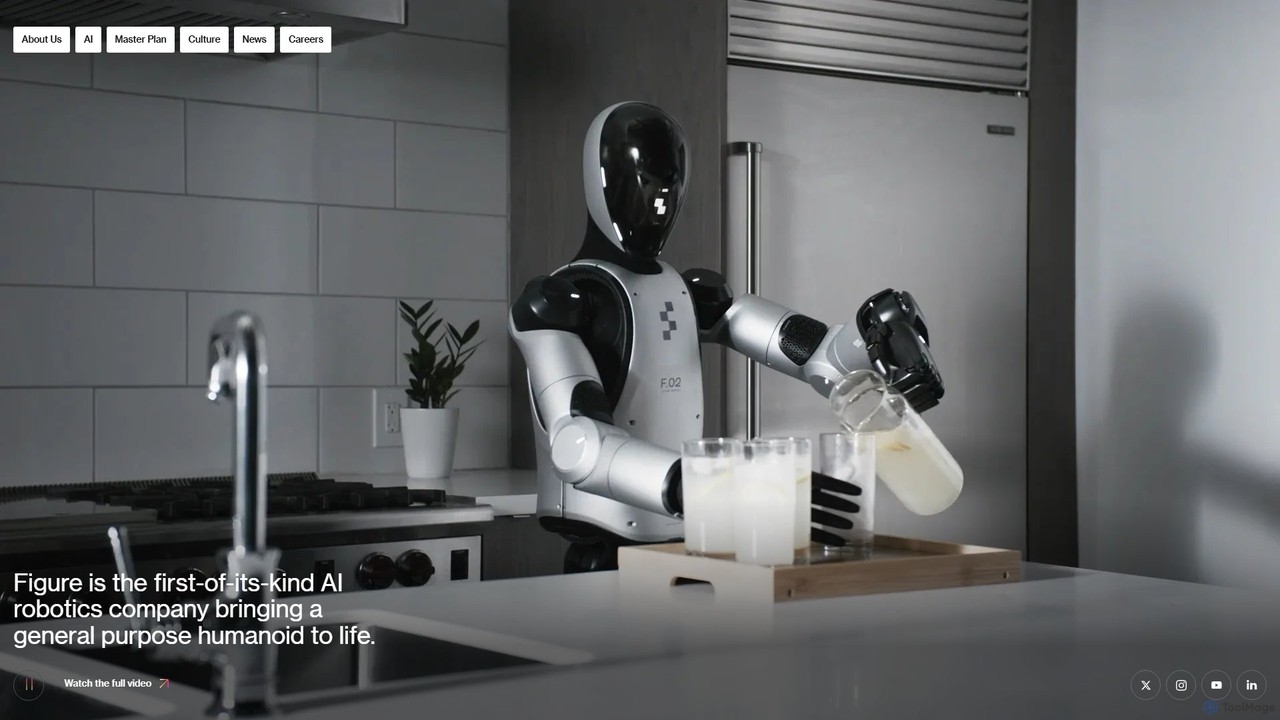
Figure is an AI robotics company developing general-purpose humanoid robots. Its flagship robot, Figure 02, is designed to work alongside humans, addressing labor shortages in manufacturing, logistics, and warehousing. By combining a human-like form with advanced AI, Figure aims to create robots that can perform a wide variety of tasks autonomously in environments built for people.
Embodied Ai
Rerun
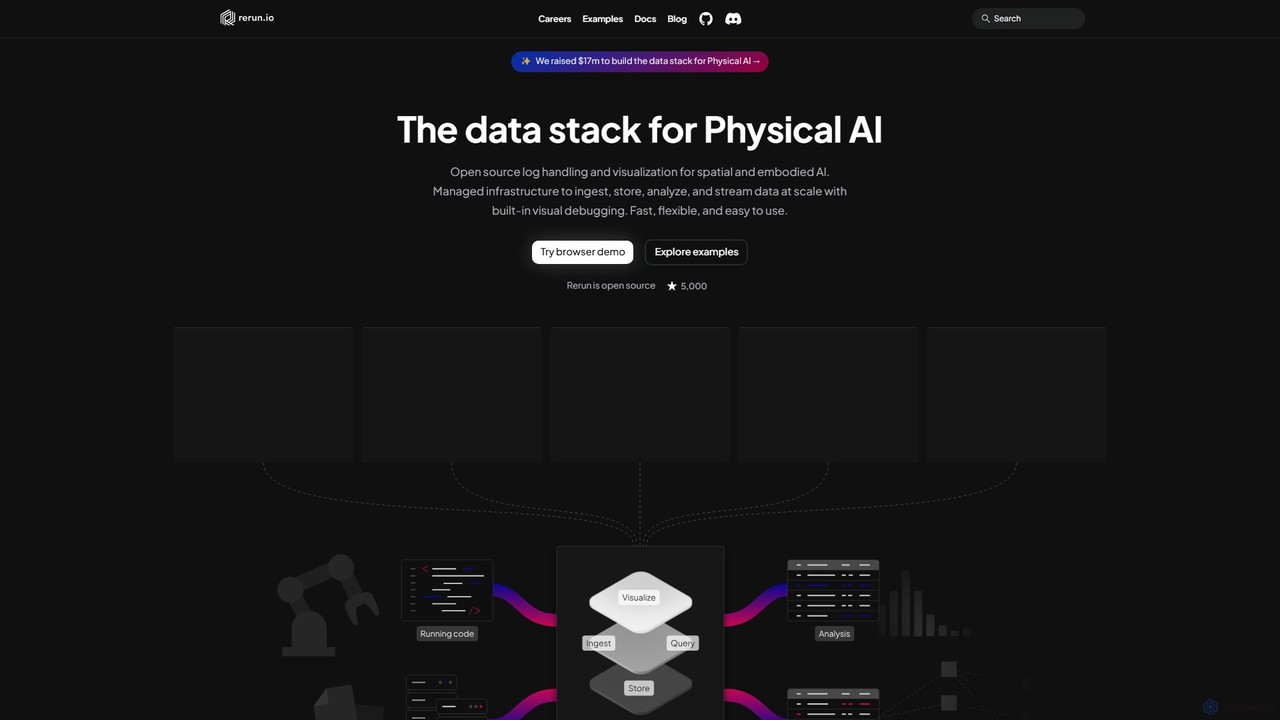
Rerun is an open-source data stack for Physical AI, providing powerful logging and visualization tools for multimodal, time-series data. Designed for robotics, computer vision, and spatial computing, it helps developers understand and debug complex systems with SDKs for Python, Rust, and C++.
Machine Learning
Berkshire Grey
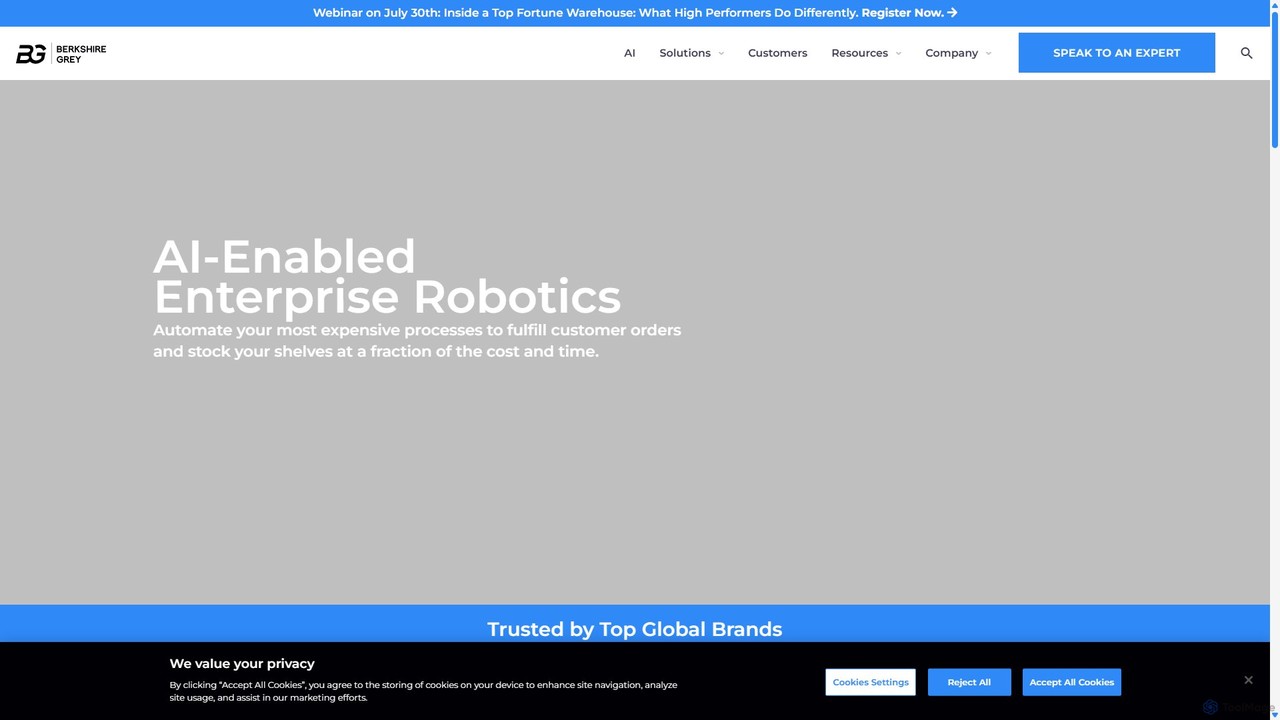
Berkshire Grey delivers AI-powered robotic solutions to automate supply chain operations for retail, e-commerce, and logistics. Their systems handle picking, sorting, and packing to increase productivity, reduce fulfillment costs, and address labor shortages, integrating seamlessly into existing warehouses.
Fulfillment