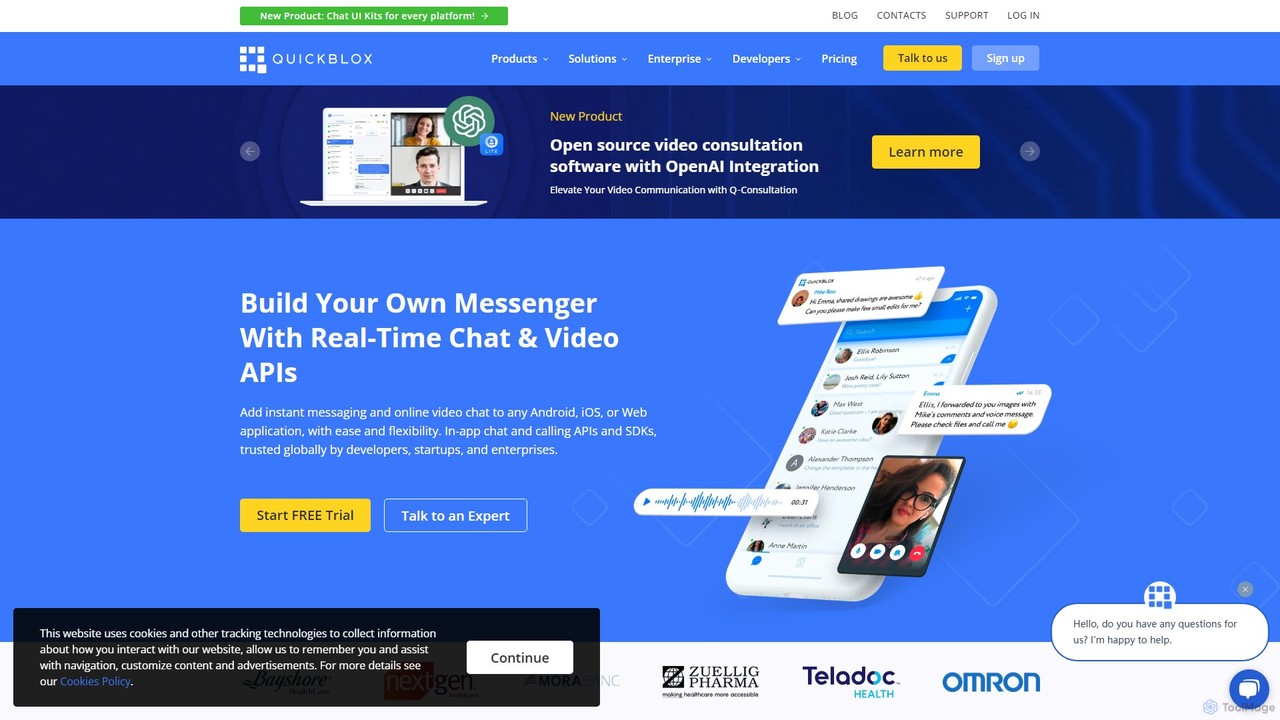
QuickBlox is a Communication Platform as a Service (CPaaS) that provides developers with APIs and SDKs to easily integrate real-time chat, video, and voice calling features into their web, mobile, and desktop applications. It offers a scalable, secure, and feature-rich solution for various industries, including healthcare, education, and retail.

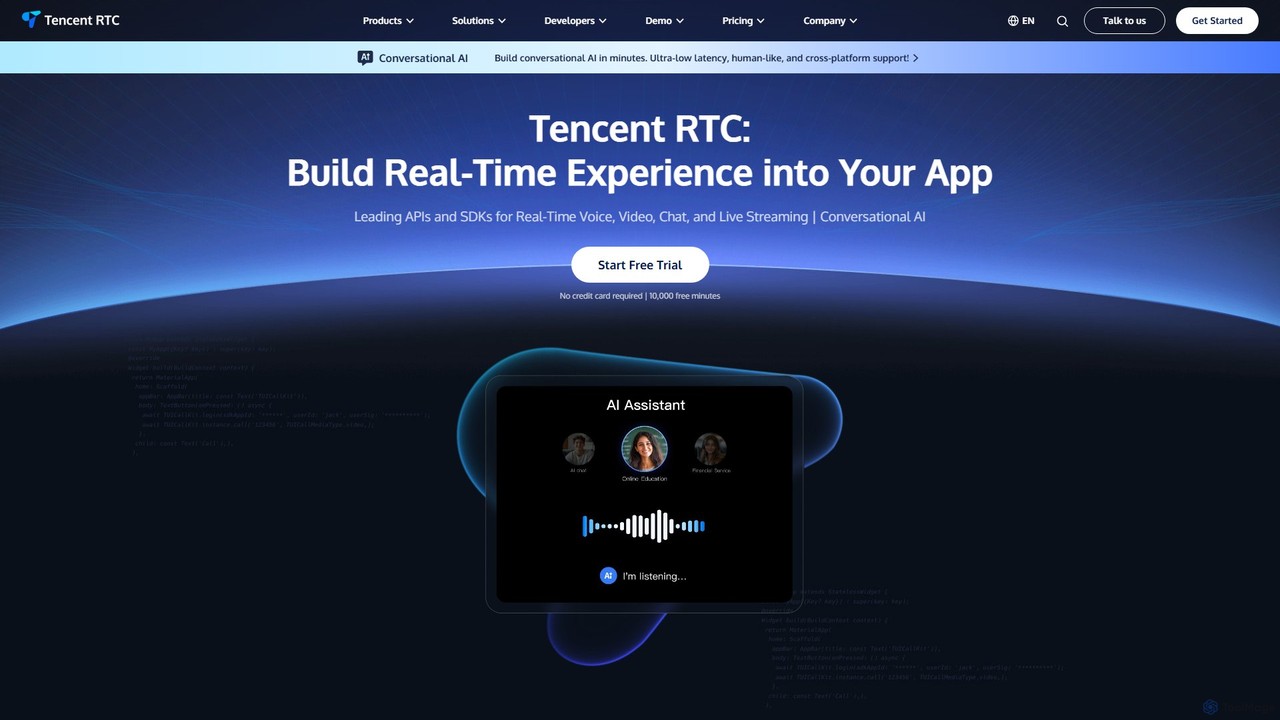
A comprehensive developer platform providing powerful APIs and SDKs for real-time voice, video, chat, and live streaming. Tencent RTC enables businesses to build scalable, low-latency, and interactive communication experiences directly into their applications across various industries.
Product overview
QuickBlox Product overview
QuickBlox is a Communication Platform as a Service (CPaaS) that provides developers with APIs and SDKs to easily integrate real-time chat, video, and voice calling features into their web, mobile, and desktop applications. It offers a scalable, secure, and feature-rich solution for various industries, including healthcare, education, and retail.
Tencent RTC Product overview
A comprehensive developer platform providing powerful APIs and SDKs for real-time voice, video, chat, and live streaming. Tencent RTC enables businesses to build scalable, low-latency, and interactive communication experiences directly into their applications across various industries.
Detailed feature comparison
| Feature | QuickBlox | Tencent RTC |
|---|---|---|
| Primary category | Chat & Messaging | Video Conferencing |
| Added | 2025-08-12 | 2025-08-05 |
| Pricing | Freemium | Freemium |
| Official website | quickblox.com | trtc.io |
| Product type | Website | Website |
| Performance data | ||
| User rating | Not verified | Not verified |
| Comments | 0 | 0 |
| Monthly visits | 13.7K | 123.1K |
| Monthly growth | 18.4% | -3.7% |
| Favorites | 112 | 169 |
| Details | View details | View details |
QuickBlox vs Tencent RTC monthly traffic
Compare QuickBlox and Tencent RTC by monthly reach, traffic trend, visit depth, top regions, and acquisition sources.
How to interpret the traffic data
In the QuickBlox vs Tencent RTC monthly traffic comparison, QuickBlox currently shows 13.7K visits and Tencent RTC shows 123.1K; Tencent RTC has about 9 times the visible traffic of QuickBlox, an absolute difference of about 109.5K visits. This reflects visible reach, not feature quality or paid users.
Both tools provide verified traffic details, so monthly trends, visit depth, regions, and acquisition sources can be compared on the same basis.
QuickBlox monthly traffic:
Latest traffic
Monthly traffic trend
- 2025/9: 16.5K Monthly visits
- 2026/1: 21.7K Monthly visits
- 2026/2: 16.2K Monthly visits
- 2026/3: 14.7K Monthly visits
- 2026/4: 11.6K Monthly visits
- 2026/5: 13.7K Monthly visits
Top regions
Top 5 countries/regions
| Country/region | Percentage | Traffic |
|---|---|---|
| 🇳🇬Nigeria | 35.22% | 4.8K |
| 🇺🇸United States | 30.78% | 4.2K |
| 🇮🇳India | 15.2% | 2.1K |
| 🇿🇦South Africa | 10.12% | 1.4K |
| 🇵🇰Pakistan | 8.68% | 1.2K |
Search keywords
Tencent RTC monthly traffic:
Latest traffic
Monthly traffic trend
- 2025/9: 141K Monthly visits
- 2026/1: 154K Monthly visits
- 2026/2: 105.8K Monthly visits
- 2026/3: 126.1K Monthly visits
- 2026/4: 127.9K Monthly visits
- 2026/5: 123.1K Monthly visits
Top regions
Top 5 countries/regions
| Country/region | Percentage | Traffic |
|---|---|---|
| 🇨🇳China | 39.8% | 49K |
| 🇺🇸United States | 19.1% | 23.5K |
| 🇻🇳Vietnam | 17.45% | 21.5K |
| 🇮🇩Indonesia | 16.09% | 19.8K |
| 🇹🇭Thailand | 7.56% | 9.3K |
Traffic sources
| Source type | Percentage | Traffic |
|---|---|---|
| Direct | 66.65% | 82.1K |
| Referral | 33.35% | 41.1K |
Search keywords
Usage comparison
Compare the core capabilities of QuickBlox and Tencent RTC
QuickBlox Core features
Tencent RTC Core features
Use cases
QuickBlox Use cases
Tencent RTC Use cases
QuickBlox vs Tencent RTC:In-depth comparison and selection guidance
First decide whether the products solve the same kind of need
This in-depth QuickBlox vs Tencent RTC comparison uses only the product records, taxonomy, audience, traffic, and community signals available on this page. QuickBlox is primarily listed under “Chat & Messaging”, while Tencent RTC is primarily listed under “Video Conferencing”, so the first decision is whether your actual task matches their recorded scope.
The structured fields currently show these decision-relevant differences: Primary category (QuickBlox: Chat & Messaging; Tencent RTC: Video Conferencing); Monthly visits (QuickBlox: 13.7K; Tencent RTC: 123.1K); Monthly growth (QuickBlox: 18.4%; Tencent RTC: -3.7%); Favorites (QuickBlox: 112; Tencent RTC: 169); Website (QuickBlox: quickblox.com; Tencent RTC: trtc.io). These facts are more useful for selection than brand visibility alone.
What market visibility and monthly traffic mean
In the QuickBlox vs Tencent RTC monthly traffic comparison, QuickBlox currently shows 13.7K visits and Tencent RTC shows 123.1K; Tencent RTC has about 9 times the visible traffic of QuickBlox, an absolute difference of about 109.5K visits. This reflects visible reach, not feature quality or paid users.
Both tools provide verified traffic details, so monthly trends, visit depth, regions, and acquisition sources can be compared on the same basis.
If public market visibility is an important first-pass criterion, investigate Tencent RTC first. The final choice should still follow taxonomy, use case, and a real trial because higher traffic does not prove broader capabilities or better workflow fit.
Product positioning, use cases, and roles
QuickBlox and Tencent RTC currently overlap in shared categories: Video Conferencing; shared tags: chat SDK, developer tools, real-time communication, and telehealth. This can place both on the same shortlist, but it does not prove equal implementation, depth, or cost.
QuickBlox's unique categories/tags are Chat & Messaging, Api & Sdk, communication API, CPaaS, e-learning, in-app messaging, push notifications, and video calling API; Tencent RTC's are Api & Sdk, Collaboration, in-game chat, live streaming, low latency, online education, PaaS, and RTC. These unique fields are the strongest differentiators: validate the product whose recorded scope matches the task instead of following traffic alone.
What ratings, comments, and favorites can tell you
QuickBlox has no verified rating, 0 comments, 112 favorites, and 93 likes;Tencent RTC has no verified rating, 0 comments, 169 favorites, and 164 likes。
Neither product has enough rating or comment samples for a credible reputation ranking.
Selection guidance by actual need
When to evaluate QuickBlox first
Put QuickBlox on the priority trial list when the task aligns with “Chat & Messaging” and especially Chat & Messaging, Api & Sdk, communication API, CPaaS, e-learning, and in-app messaging. This follows recorded positioning and does not imply unlisted capabilities are absent.
QuickBlox also currently records: pricing is freemium, product type is website, 13.7K verified monthly visits, no verified user rating. Verify any hard requirement around price, platform, or reach before trial, and do not let sparse review data substitute for testing.
When to evaluate Tencent RTC first
Put Tencent RTC on the priority trial list when the task aligns with “Video Conferencing” and especially Api & Sdk, Collaboration, in-game chat, live streaming, low latency, and online education. This follows recorded positioning and does not imply unlisted capabilities are absent.
Tencent RTC also currently records: pricing is freemium, product type is website, 123.1K verified monthly visits, no verified user rating. Verify any hard requirement around price, platform, or reach before trial, and do not let sparse review data substitute for testing.
How to validate the recommendation before deciding
The available data describes positioning, public visibility, and community signals, but it cannot prove output quality, speed, integration effort, privacy, or long-term cost in your workflow. Before deciding, run the same representative tasks in QuickBlox and Tencent RTC, then record completion time, accuracy, manual corrections, and the real paid threshold. A like-for-like trial turns this comparison into a defensible adoption decision.
Comparison FAQ
How should I choose between QuickBlox and Tencent RTC?
Where does this comparison data come from?
What do unknown fields mean?
Related AI tools

Dyte
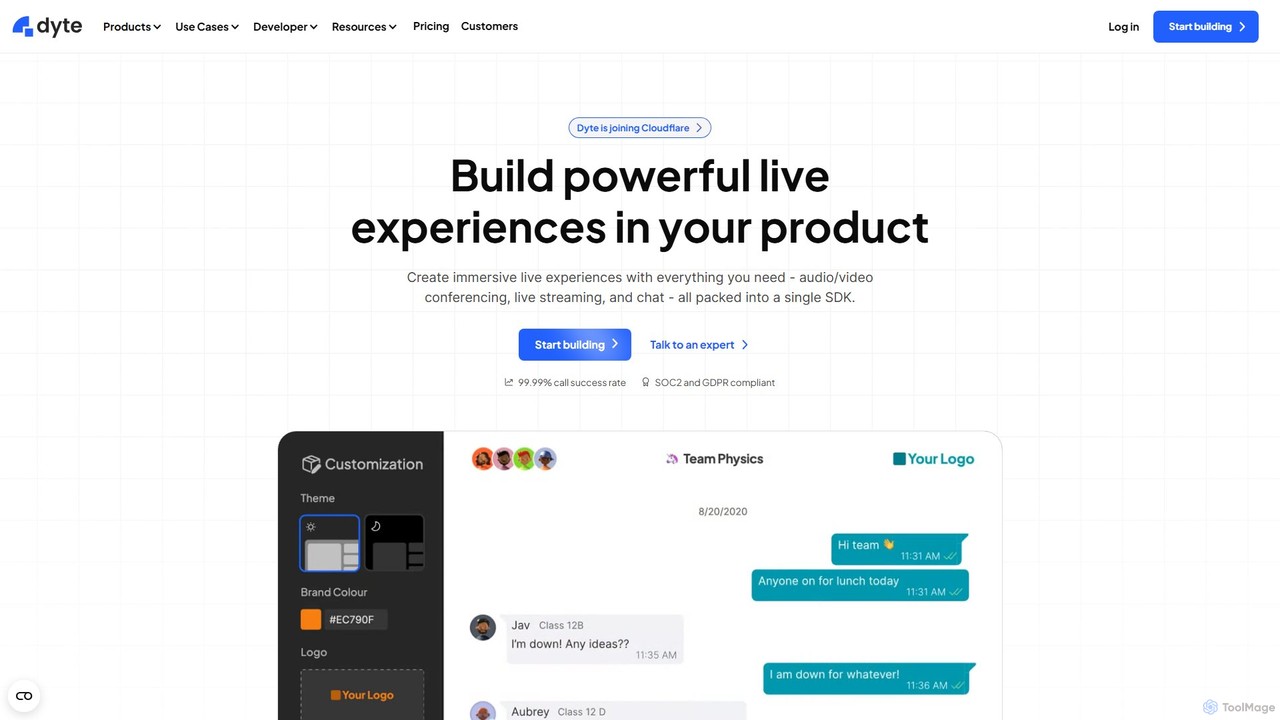
Dyte is a developer-focused SDK platform for easily embedding high-quality, customizable, and secure live video and audio experiences into any application. It provides pre-built UI components, powerful plugins, and a robust backend, enabling developers to build interactive communication features for industries like telehealth, ed-tech, and virtual events with minimal effort, all while prioritizing security with SOC2 and HIPAA compliance.
Api
VideoSDK
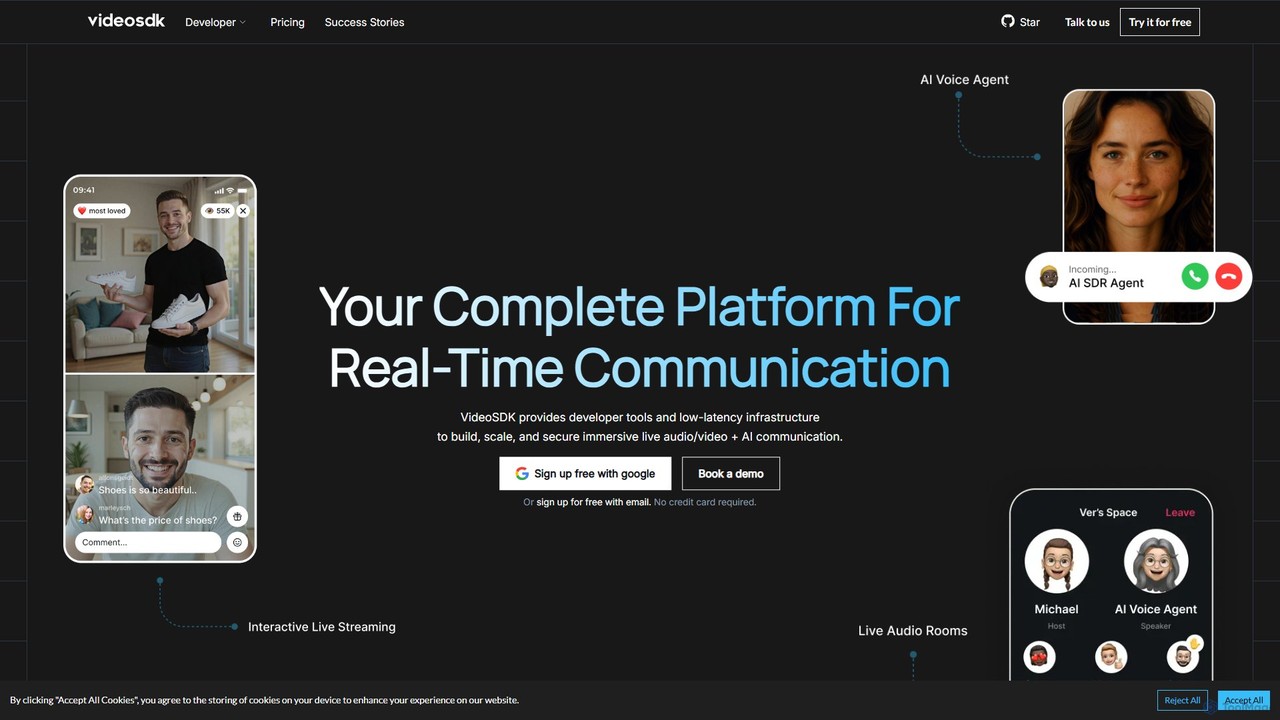
VideoSDK is a comprehensive developer platform providing APIs and SDKs to build, scale, and secure real-time audio/video communication and interactive live streaming. It features low-latency infrastructure, cross-platform support, and integrated AI capabilities like voice agents, transcription, and summarization, enabling developers to embed immersive communication experiences into any application.
Video Conferencing
Daily
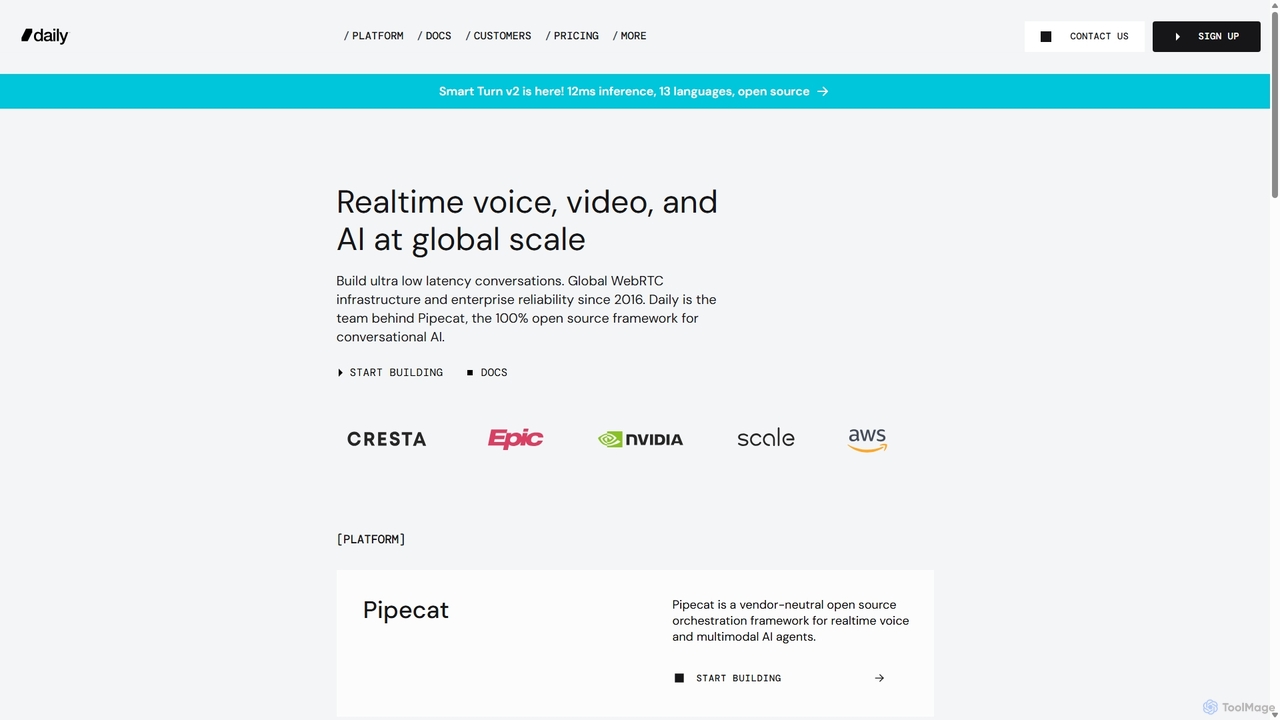
Daily is a developer platform for real-time video, voice, and AI. It provides robust APIs and SDKs for building ultra-low latency, scalable, and high-quality conversational experiences, including human-to-human video calls and advanced voice AI agents through its open-source framework, Pipecat.
Conversational Ai
MirrorFly
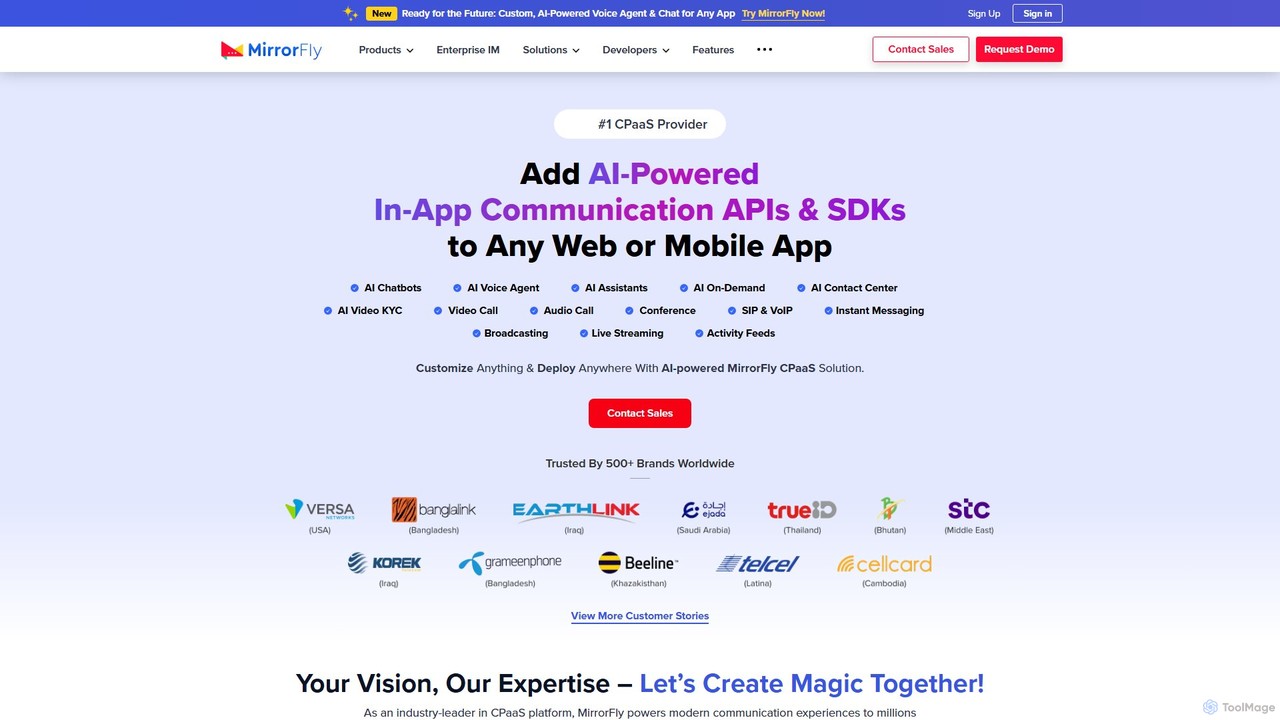
MirrorFly is a leading AI-powered CPaaS (Communication Platform as a Service) provider, offering customizable video, voice, and chat APIs & SDKs. It enables developers to integrate high-quality, real-time communication features into any web or mobile application, supporting millions of concurrent users with a rich set of over 1000 features.
Cpaas
Mux
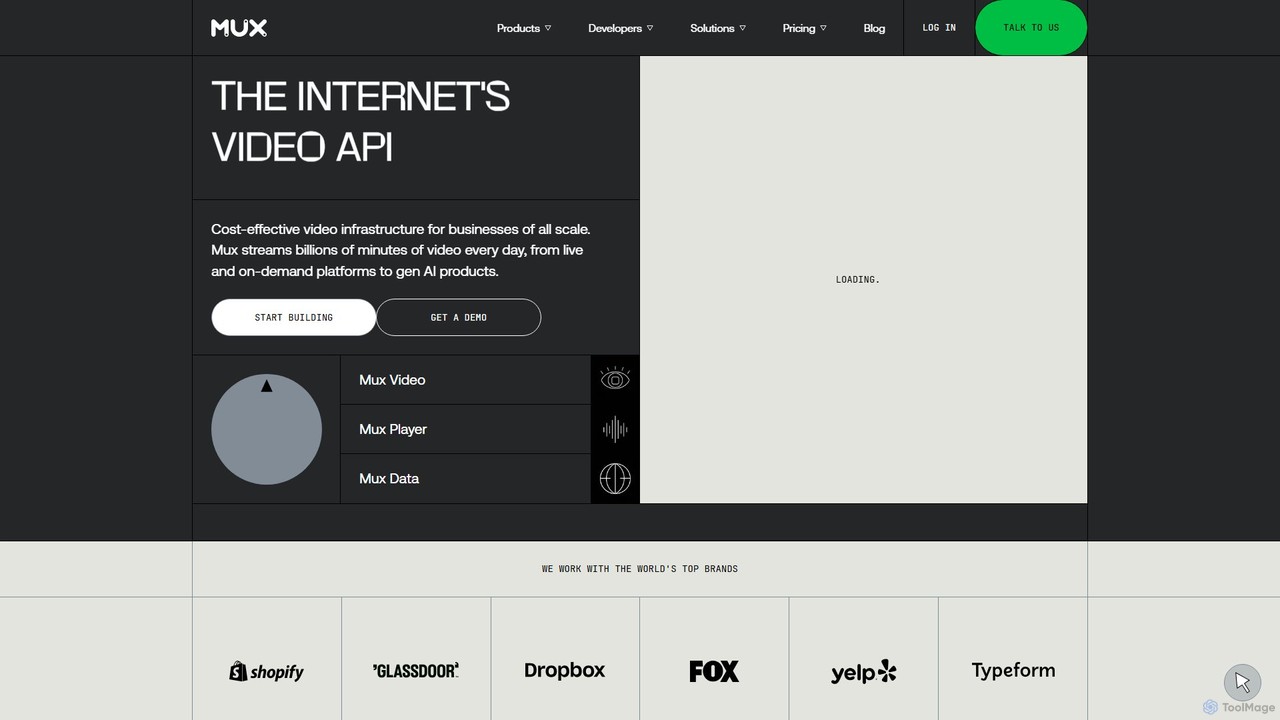
Mux is a developer-first video API platform that simplifies the integration of live and on-demand video. It provides robust infrastructure for encoding, streaming, and real-time analytics, enabling businesses to deliver high-quality video experiences at scale. Mux offers two core products: Mux Video for streaming and Mux Data for Quality of Experience (QoE) monitoring.
Api
Telnyx
Telnyx is a full-stack communications platform that enables developers and enterprises to build and deploy high-performance, real-time conversational AI. It integrates global telephony, dedicated AI infrastructure, and powerful APIs on a single platform, providing ultra-low latency and complete control for creating natural-sounding voice assistants and automating communication workflows.
Voice Assistant
CometChat
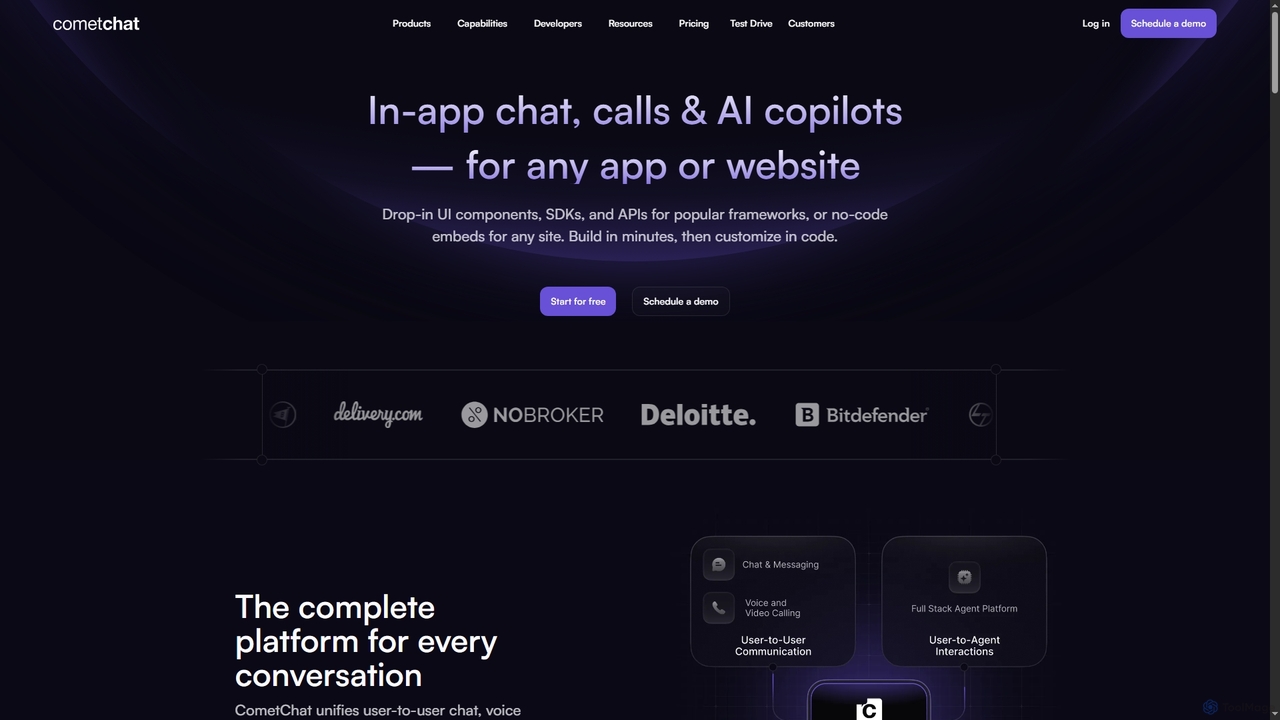
CometChat provides a complete communication platform with in-app chat, voice, and video call SDKs & APIs. It also offers a full-stack solution for deploying, monitoring, and evolving user-facing AI agents and copilots, all built on a secure, scalable, and compliant infrastructure.
Chatbot Development
LiveKit
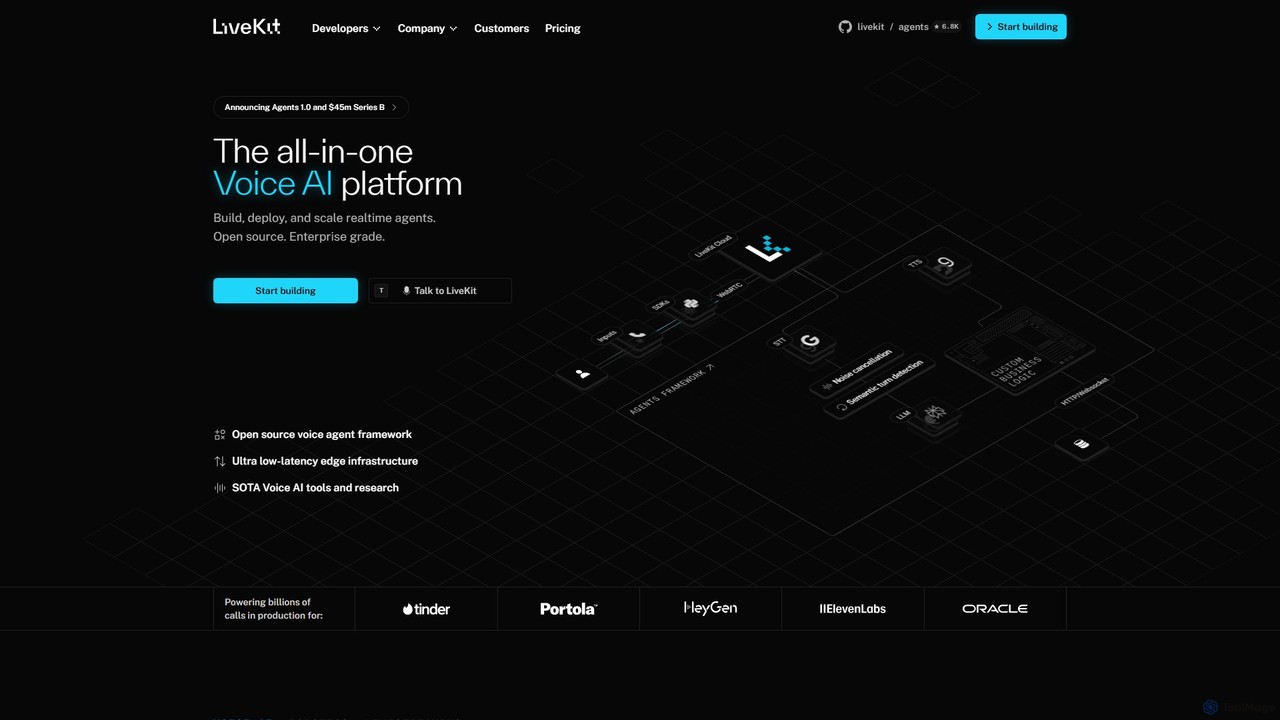
LiveKit is an all-in-one, open-source platform for building, deploying, and scaling real-time voice and video AI agents. It provides ultra-low latency infrastructure, powerful APIs, and state-of-the-art AI tools to enable developers to create conversational AI, robotics, and live streaming applications with enterprise-grade reliability and scalability.
Real Time Communication
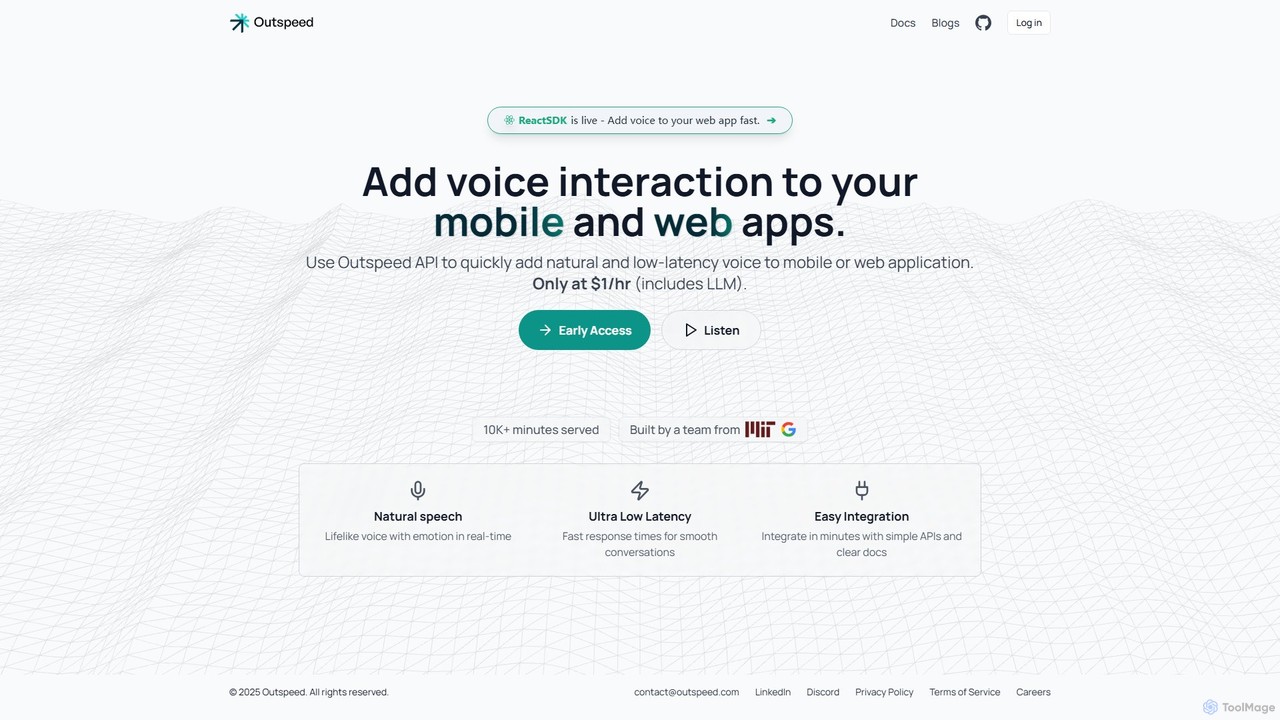
Outspeed
An API and SDK for developers to build and deploy AI voice companions with real-time emotion and memory. Easily integrate natural, low-latency voice interactions into web and mobile applications.
Voice Chatbot
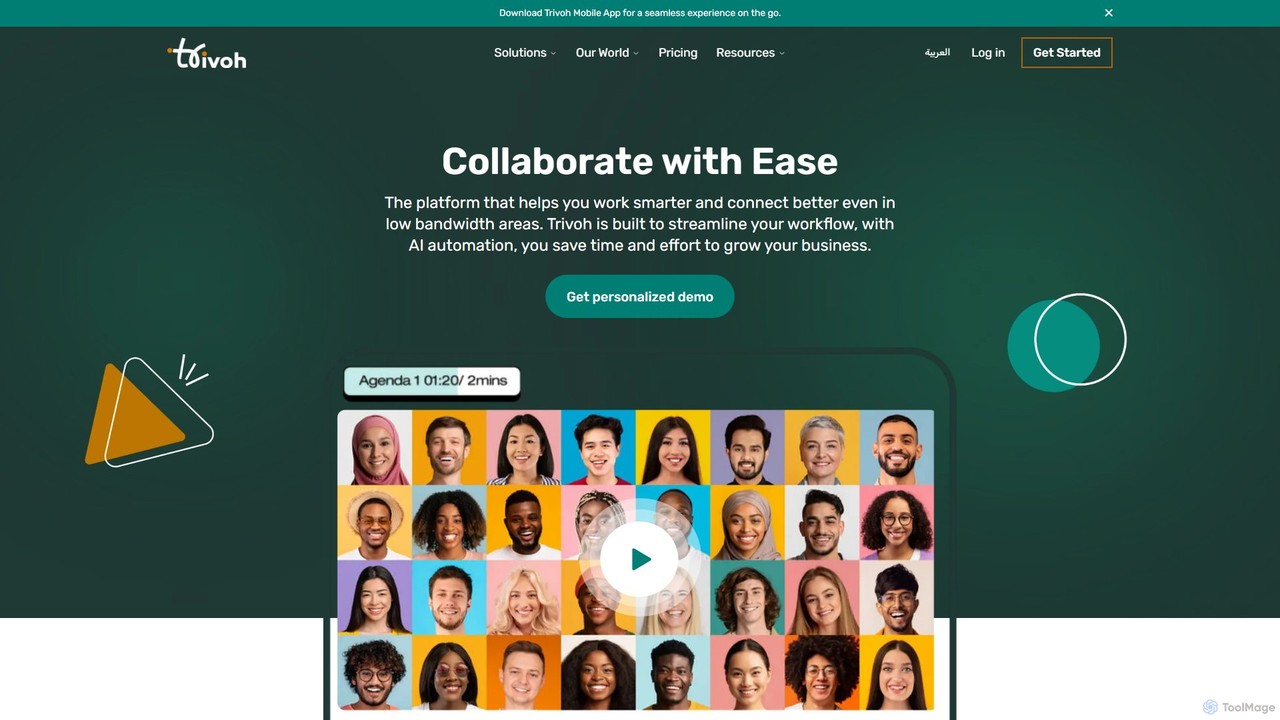
trivoh
trivoh is an AI-powered, all-in-one collaboration and productivity platform designed for seamless communication, even in low-bandwidth areas. It integrates virtual meetings, AI-driven summaries, project management, and real-time chat to streamline workflows. Key features include accessibility tools like real-time transcription and sign language interpretation, robust security, and an intuitive user interface, making it ideal for businesses, telehealth, and e-learning.
Meeting
stackspaces
stackspaces is an AI-powered collaborative platform that provides instant, cloud-based development environments. It streamlines the entire software lifecycle for teams by automating setup, offering an integrated AI code assistant, and simplifying project management, boosting productivity and code quality.
Cloud Environment
Twilio
Twilio is a leading customer engagement platform that provides developers with powerful APIs for SMS, voice, email, and WhatsApp. It integrates AI and a customer data platform to enable businesses to build personalized, scalable, and reliable communication experiences across any channel.
Api
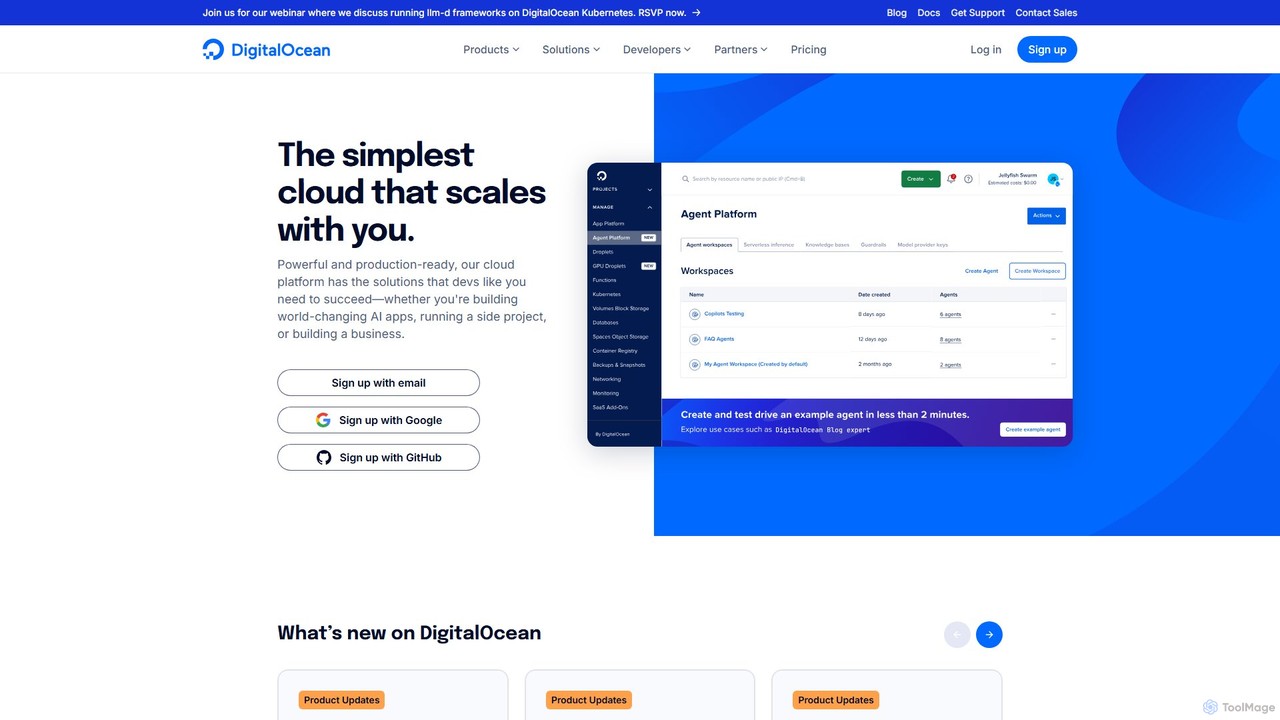
DigitalOcean
DigitalOcean is a developer-focused cloud infrastructure platform that simplifies building, deploying, and scaling applications. It offers a comprehensive suite of products, including virtual machines (Droplets), managed Kubernetes, and the GradientAI platform, providing powerful GPU resources and tools for creating and hosting world-changing AI applications, from side projects to large-scale businesses.
Hosting
Groq
Groq is a revolutionary AI inference platform providing developers with unparalleled speed and cost-efficiency. Powered by its custom-built Language Processing Unit (LPU), Groq delivers real-time performance for large language models (LLMs), speech recognition, and text-to-speech applications. It offers a developer-friendly API, enabling seamless integration for building next-generation, low-latency AI solutions at scale.
Ai Services
Replicate
Replicate is a cloud platform for developers to run, fine-tune, and deploy AI models via a simple API. It eliminates the need for managing complex infrastructure, offering access to thousands of models with pay-per-use pricing and automatic scaling.
Machine Learning