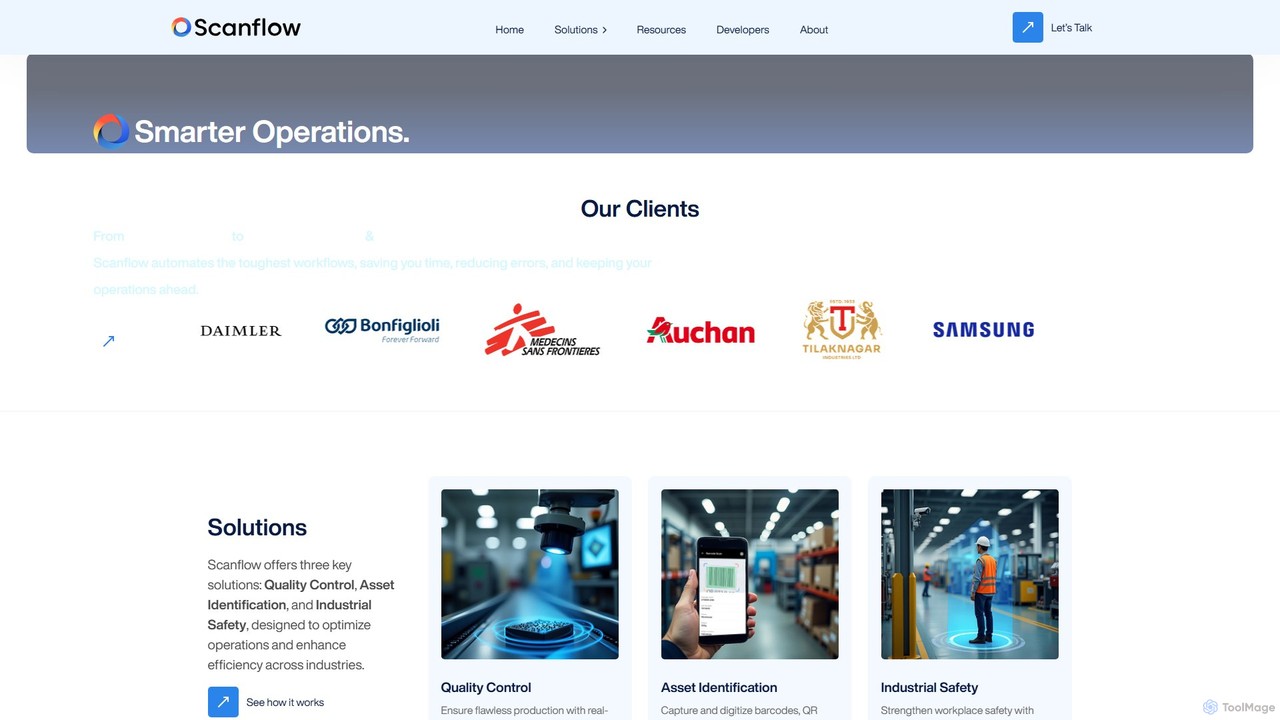
Scanflow is an AI-powered visual inspection platform designed to optimize industrial operations. It offers solutions for automated quality control, asset identification, and industrial safety. By leveraging computer vision, Scanflow helps businesses detect product defects in real-time, digitize barcodes and labels with high precision, and monitor workplace safety compliance, enhancing overall efficiency and accuracy.
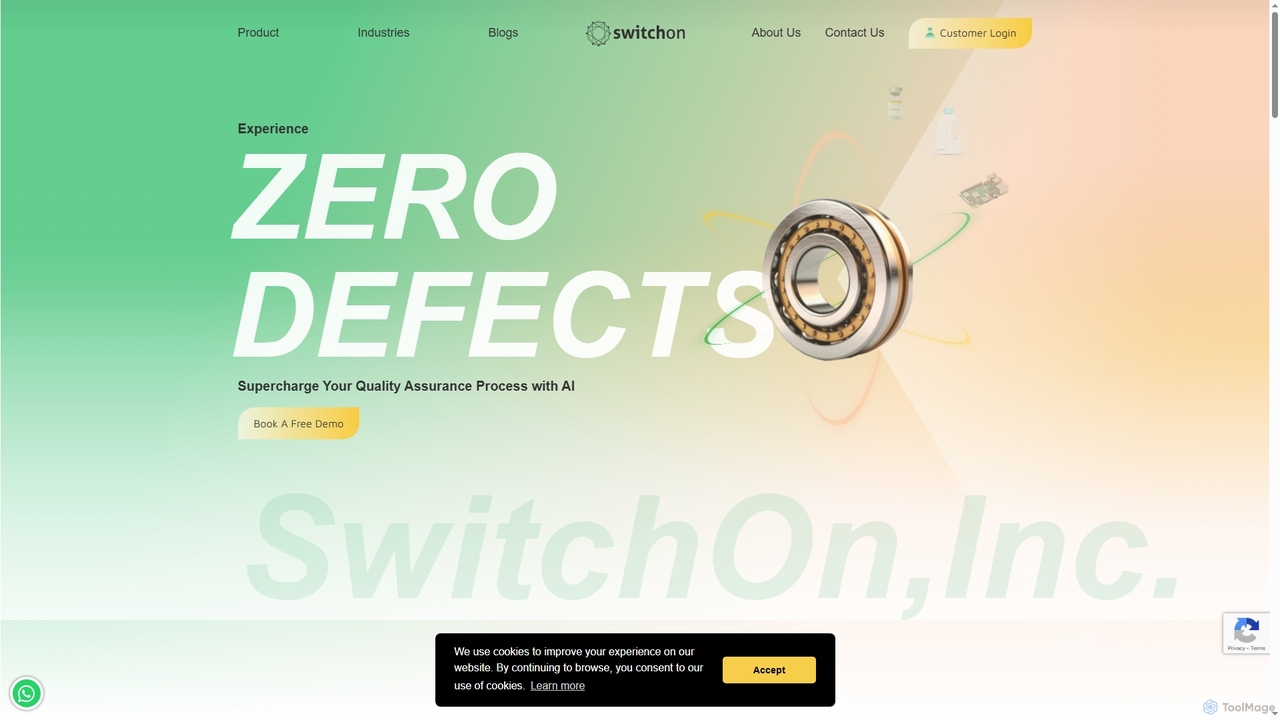
SwitchOn is an AI-powered quality inspection platform for manufacturers, leveraging advanced computer vision to ensure zero-defect production. It rapidly detects visual defects across various industries like automotive, pharma, consumer goods, and electronics, significantly reducing costs and boosting accuracy to over 99.95% at high speeds of 1000+ parts per minute.
Product overview
Scanflow Product overview
Scanflow is an AI-powered visual inspection platform designed to optimize industrial operations. It offers solutions for automated quality control, asset identification, and industrial safety. By leveraging computer vision, Scanflow helps businesses detect product defects in real-time, digitize barcodes and labels with high precision, and monitor workplace safety compliance, enhancing overall efficiency and accuracy.
SwitchOn Product overview
SwitchOn is an AI-powered quality inspection platform for manufacturers, leveraging advanced computer vision to ensure zero-defect production. It rapidly detects visual defects across various industries like automotive, pharma, consumer goods, and electronics, significantly reducing costs and boosting accuracy to over 99.95% at high speeds of 1000+ parts per minute.
Detailed feature comparison
| Feature | Scanflow | SwitchOn |
|---|---|---|
| Primary category | Quality Management | Defect Detection |
| Added | 2025-08-16 | 2026-01-04 |
| Pricing | Paid | Not verified |
| Official website | www.scanflow.ai | switchon.io |
| Product type | Website | Website |
| Performance data | ||
| User rating | Not verified | Not verified |
| Comments | 0 | 0 |
| Monthly visits | 5.2K | 21.5K |
| Monthly growth | -43.4% | 27.9% |
| Favorites | 94 | 27 |
| Details | View details | View details |
Scanflow vs SwitchOn monthly traffic
Compare Scanflow and SwitchOn by monthly reach, traffic trend, visit depth, top regions, and acquisition sources.
How to interpret the traffic data
In the Scanflow vs SwitchOn monthly traffic comparison, Scanflow currently shows 5.2K visits and SwitchOn shows 21.5K; SwitchOn has about 4.2 times the visible traffic of Scanflow, an absolute difference of about 16.3K visits. This reflects visible reach, not feature quality or paid users.
Both tools provide verified traffic details, so monthly trends, visit depth, regions, and acquisition sources can be compared on the same basis.
Scanflow monthly traffic:
Latest traffic
Monthly traffic trend
- 2025/9: 1.9K Monthly visits
- 2026/1: 2.3K Monthly visits
- 2026/2: 2.2K Monthly visits
- 2026/3: 3.4K Monthly visits
- 2026/4: 9.1K Monthly visits
- 2026/5: 5.2K Monthly visits
Top regions
Top 5 countries/regions
| Country/region | Percentage | Traffic |
|---|---|---|
| 🇺🇸United States | 59.35% | 3.1K |
| 🇮🇳India | 40.65% | 2.1K |
Search keywords
SwitchOn monthly traffic:
Latest traffic
Monthly traffic trend
- 2026/1: 6.3K Monthly visits
- 2026/2: 19.3K Monthly visits
- 2026/3: 26.3K Monthly visits
- 2026/4: 16.8K Monthly visits
- 2026/5: 21.5K Monthly visits
Top regions
Top 5 countries/regions
| Country/region | Percentage | Traffic |
|---|---|---|
| 🇮🇳India | 62.46% | 13.4K |
| 🇺🇸United States | 26.38% | 5.7K |
| 🇻🇳Vietnam | 11.16% | 2.4K |
Search keywords
Usage comparison
Compare the core capabilities of Scanflow and SwitchOn
Scanflow Core features
SwitchOn Core features
Use cases
Scanflow Use cases
SwitchOn Use cases
Best suited roles
Scanflow Best suited roles
SwitchOn Best suited roles
Scanflow vs SwitchOn:In-depth comparison and selection guidance
First decide whether the products solve the same kind of need
This in-depth Scanflow vs SwitchOn comparison uses only the product records, taxonomy, audience, traffic, and community signals available on this page. Scanflow is primarily listed under “Quality Management”, while SwitchOn is primarily listed under “Defect Detection”, so the first decision is whether your actual task matches their recorded scope.
The structured fields currently show these decision-relevant differences: Primary category (Scanflow: Quality Management; SwitchOn: Defect Detection); Pricing (Scanflow: Paid; SwitchOn: Not disclosed); Monthly visits (Scanflow: 5.2K; SwitchOn: 21.5K); Monthly growth (Scanflow: -43.4%; SwitchOn: 27.9%); Favorites (Scanflow: 94; SwitchOn: 27). These facts are more useful for selection than brand visibility alone.
What market visibility and monthly traffic mean
In the Scanflow vs SwitchOn monthly traffic comparison, Scanflow currently shows 5.2K visits and SwitchOn shows 21.5K; SwitchOn has about 4.2 times the visible traffic of Scanflow, an absolute difference of about 16.3K visits. This reflects visible reach, not feature quality or paid users.
Both tools provide verified traffic details, so monthly trends, visit depth, regions, and acquisition sources can be compared on the same basis.
If public market visibility is an important first-pass criterion, investigate SwitchOn first. The final choice should still follow taxonomy, use case, and a real trial because higher traffic does not prove broader capabilities or better workflow fit.
Product positioning, use cases, and roles
Scanflow and SwitchOn currently overlap in shared tags: computer vision, defect detection, quality control, and visual inspection. This can place both on the same shortlist, but it does not prove equal implementation, depth, or cost.
Scanflow's unique categories/tags are Quality Management, Supply Chain Management, Manufacturing, asset tracking, barcode scanning, industrial safety, manufacturing AI, and OCR; SwitchOn's are Defect Detection, Quality Control, AI in Manufacturing, automotive manufacturing, Consumer Goods, deep learning, Electronics Manufacturing, and industrial automation. These unique fields are the strongest differentiators: validate the product whose recorded scope matches the task instead of following traffic alone.
What ratings, comments, and favorites can tell you
Scanflow has no verified rating, 0 comments, 94 favorites, and 99 likes;SwitchOn has no verified rating, 0 comments, 27 favorites, and 23 likes。
Neither product has enough rating or comment samples for a credible reputation ranking.
Selection guidance by actual need
When to evaluate Scanflow first
Put Scanflow on the priority trial list when the task aligns with “Quality Management” and especially Quality Management, Supply Chain Management, Manufacturing, asset tracking, barcode scanning, and industrial safety. This follows recorded positioning and does not imply unlisted capabilities are absent.
Scanflow also currently records: pricing is paid, product type is website, 5.2K verified monthly visits, no verified user rating. Verify any hard requirement around price, platform, or reach before trial, and do not let sparse review data substitute for testing.
When to evaluate SwitchOn first
Put SwitchOn on the priority trial list when the task aligns with “Defect Detection” and especially Defect Detection, Quality Control, AI in Manufacturing, automotive manufacturing, Consumer Goods, and deep learning, or the users include Industrial Automation Engineer, Manufacturing Engineer, Operations Manager, and Plant Manager. This follows recorded positioning and does not imply unlisted capabilities are absent.
SwitchOn also currently records: pricing is not verified, product type is website, 21.5K verified monthly visits, no verified user rating. Verify any hard requirement around price, platform, or reach before trial, and do not let sparse review data substitute for testing.
How to validate the recommendation before deciding
The available data describes positioning, public visibility, and community signals, but it cannot prove output quality, speed, integration effort, privacy, or long-term cost in your workflow. Before deciding, run the same representative tasks in Scanflow and SwitchOn, then record completion time, accuracy, manual corrections, and the real paid threshold. A like-for-like trial turns this comparison into a defensible adoption decision.
Comparison FAQ
How should I choose between Scanflow and SwitchOn?
Where does this comparison data come from?
What do unknown fields mean?
Related AI tools

Overview.ai
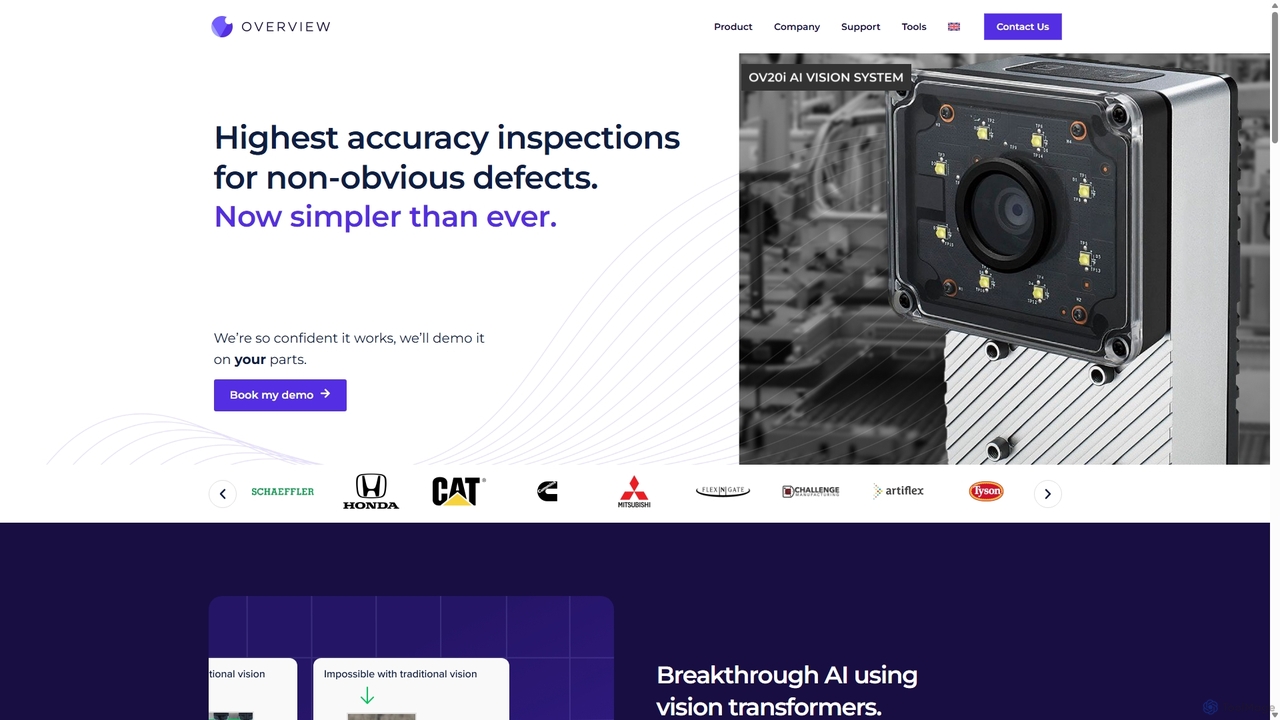
Overview.ai provides a next-generation AI industrial vision system, the OV20i, designed for high-accuracy defect detection in manufacturing. Leveraging vision transformers and deep learning, it identifies non-obvious flaws that traditional systems and human inspectors miss. The system is incredibly easy to use, requires no programming, and deploys in hours, dramatically accelerating time-to-value for manufacturers in automotive, medical, and other industries.
Defect Detection
Intelgic
Intelgic provides comprehensive AI-powered machine vision solutions for industrial automation. Specializing in high-speed, high-precision defect detection, their system integrates custom hardware (cameras, lighting, robotics) with proprietary "Live Vision AI" software to ensure quality control in manufacturing environments like automotive, electronics, and material processing.
Industrial Automation
Averroes
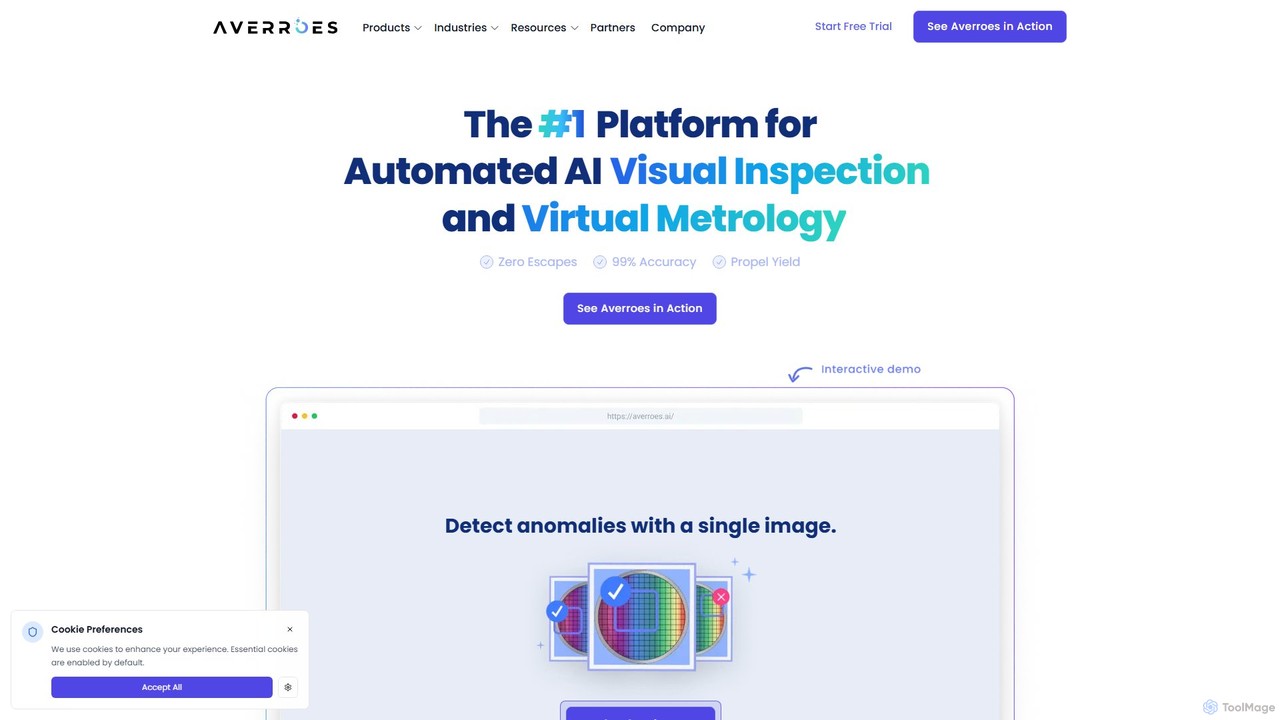
Averroes is a no-code AI platform for automated visual inspection and virtual metrology in manufacturing. It delivers over 99% accuracy in defect detection, integrates seamlessly with existing hardware, and requires minimal data to train. Designed for industries like semiconductors, electronics, and solar, it boosts productivity and yield by automating quality control processes.
No Code
Robovision
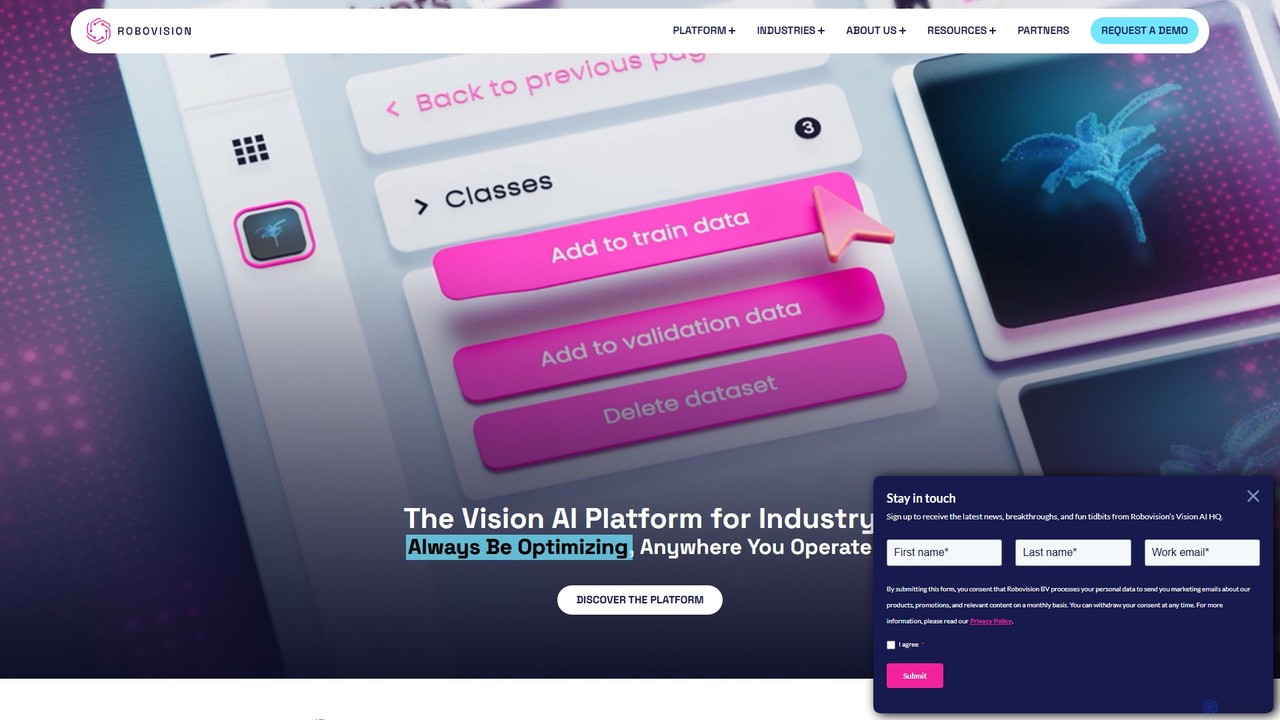
Robovision is an end-to-end, no-code Computer Vision AI platform designed for industrial applications. It empowers businesses in agriculture, manufacturing, and healthcare to build, deploy, and continuously optimize AI models, turning complex automation challenges into operational advantages without requiring deep coding expertise.
No Code Platform
Nanotronics
Nanotronics is an industrial AI company providing an advanced platform for autonomous manufacturing. It combines AI, computer vision, and robotics in its nSpec (Automated Optical Inspection) and nControl (AI Process Control) systems to help manufacturers in sectors like semiconductors and automotive increase yields, reduce waste, and optimize production through real-time data analysis and predictive control.
Quality Control
Superb AI
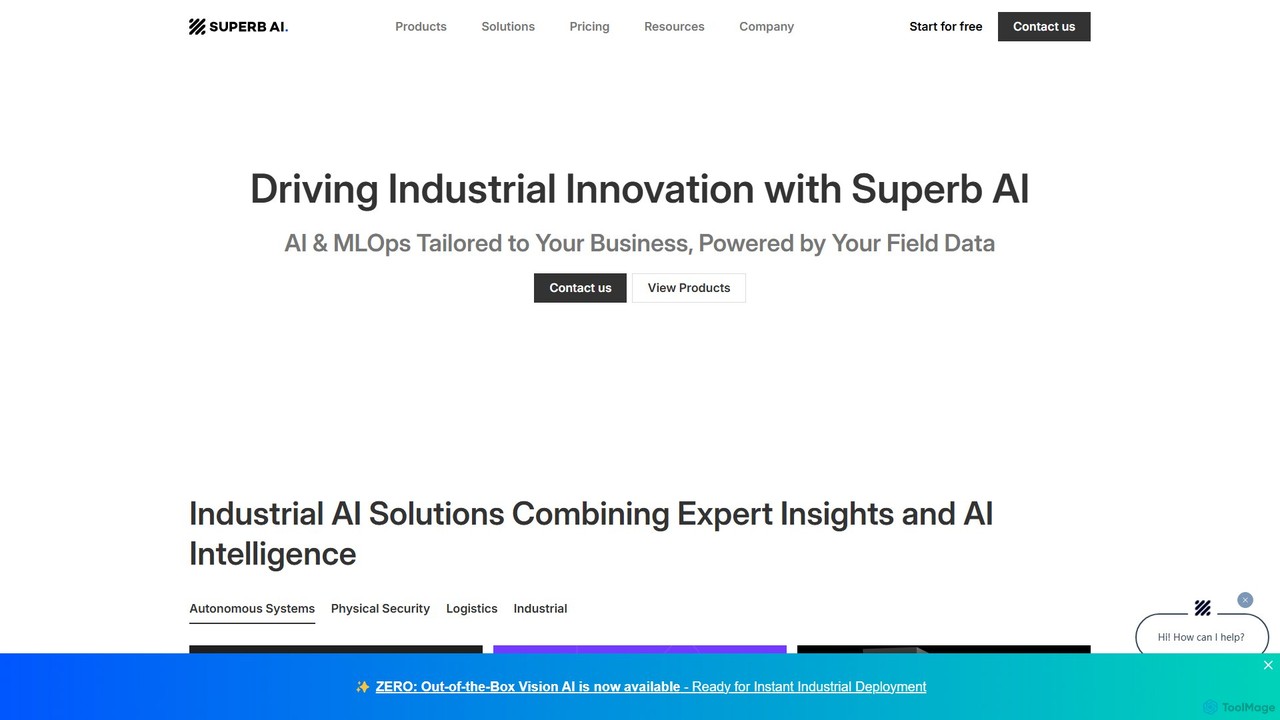
Superb AI is an end-to-end MLOps platform for computer vision, enabling businesses to build, manage, and deploy custom AI models. It specializes in automating the entire data pipeline, from labeling and curation to model training and diagnostics, for industries like autonomous driving, manufacturing, and security.
Data Labeling
Protex AI
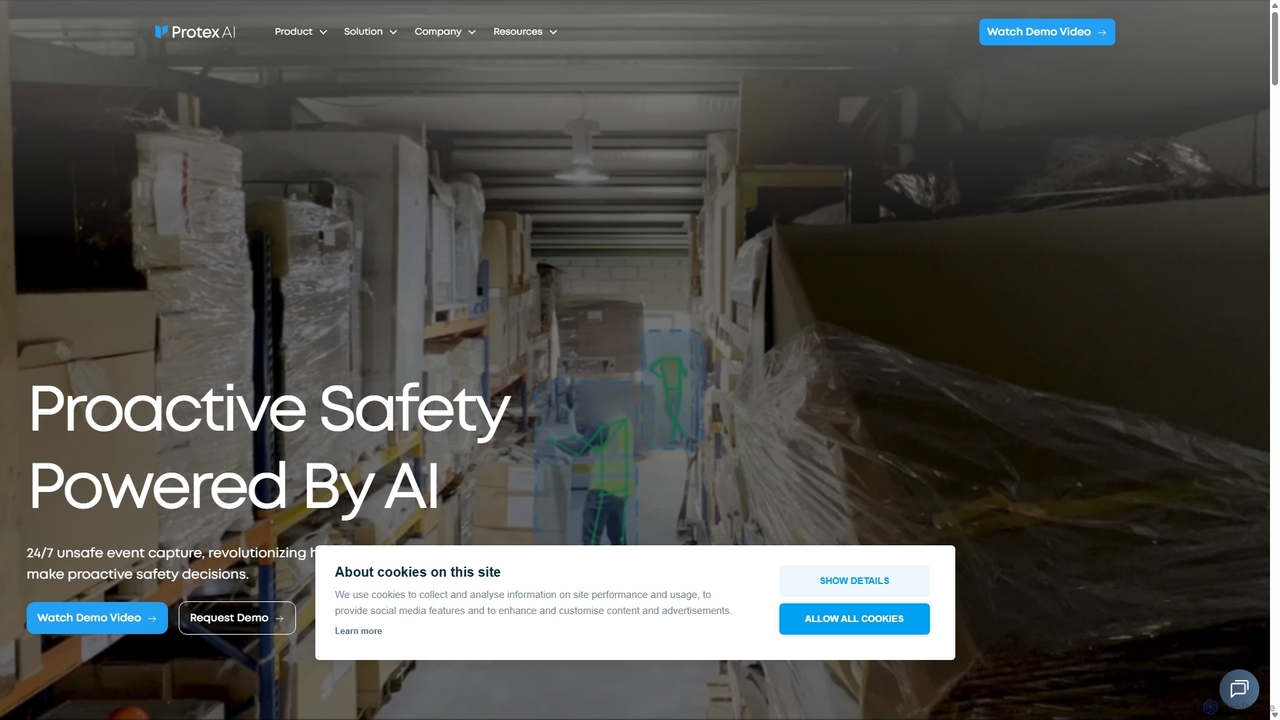
Protex AI is an enterprise-grade platform that leverages computer vision and AI to enhance workplace safety. By connecting to existing CCTV infrastructure, it proactively detects unsafe behaviors and hazards 24/7, enabling EHS teams to make data-driven decisions and prevent incidents before they occur, significantly improving safety culture and operational efficiency.
Safety Management
Locaxion
Locaxion is a vendor-agnostic provider of Real-Time Location Systems (RTLS) and Digital Twin solutions. With over 15 years of experience, they design and deploy customized tracking and intelligence systems for manufacturing, healthcare, and logistics to deliver measurable ROI and optimize operations.
Operations Management
Greyparrot
Greyparrot is an AI-powered waste intelligence platform that uses computer vision to automate waste composition analysis and sorting in recycling facilities. By deploying AI-monitoring units on conveyor belts, it provides real-time data on waste streams, helping facilities increase recycling rates, improve sorting quality, and enhance operational efficiency. This technology empowers the waste management industry to make data-driven decisions and advance the circular economy.
Data Analytics
Nexa SDK
Nexa SDK is a powerful toolkit enabling developers to deploy any AI model, including frontier and state-of-the-art models, to any device (mobile, PC, IoT, automotive) in minutes. It offers production-ready on-device inference with hardware acceleration across NPUs, GPUs, and CPUs, optimized for speed and energy efficiency.
Ai Development Kit
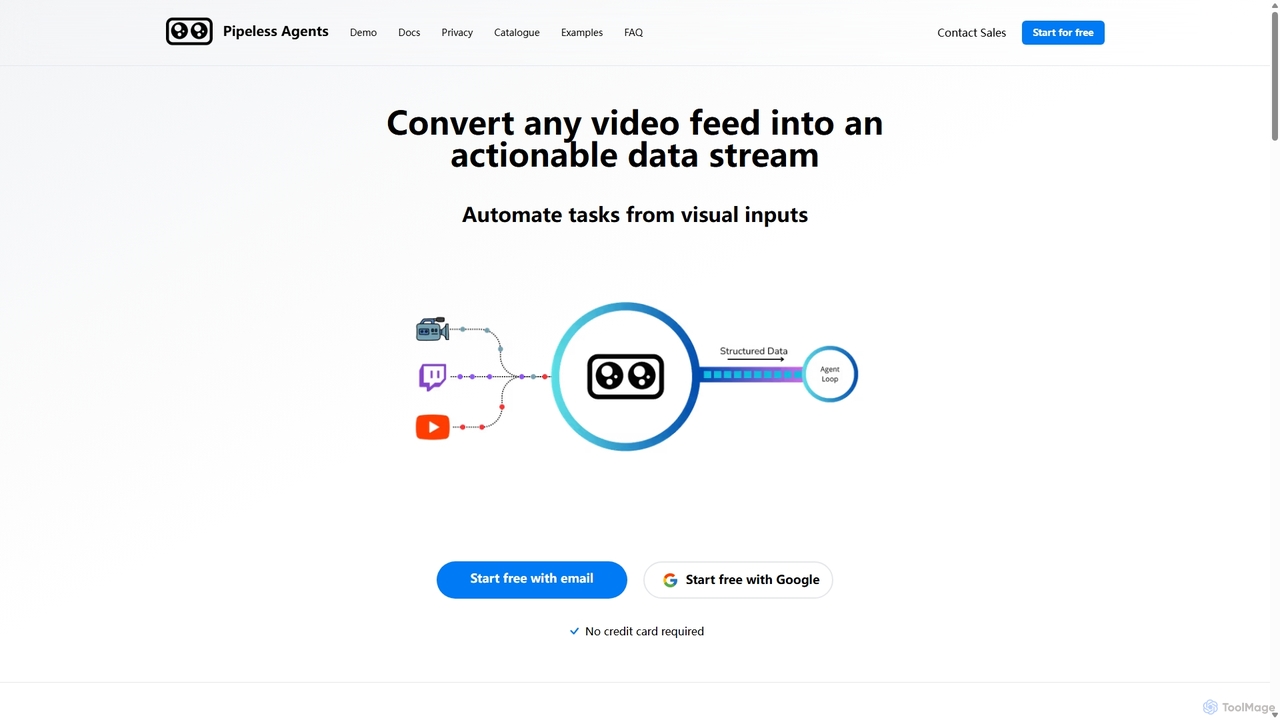
Pipeless Agents
Pipeless Agents is a serverless platform for Vision AI that transforms any video feed into a structured, actionable data stream. It enables developers and businesses to automate tasks based on visual inputs with minimal code. The platform offers pre-built agents for common use cases like security monitoring, retail analytics, and industrial safety, while also providing the flexibility to build custom solutions. It emphasizes privacy with features like real-time processing, end-to-end encryption, and on-premise deployment options.
Computer Vision
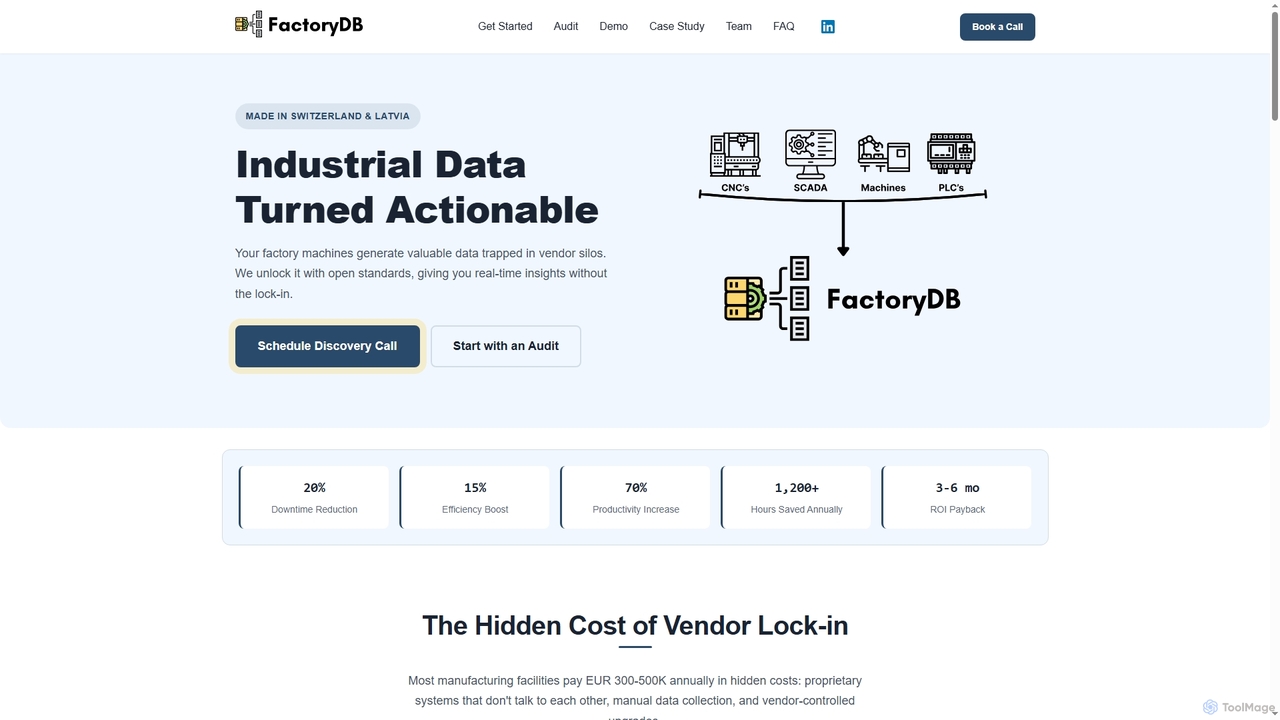
FactoryDB
FactoryDB is an industrial data infrastructure platform designed to eliminate vendor lock-in for manufacturers. Using open standards like MQTT, it unifies data from PLCs, SCADA, and MES systems into a single, vendor-neutral layer. This enables real-time analytics, predictive maintenance, and significant efficiency gains, particularly for regulated industries such as pharmaceuticals, food & beverage, and energy.
3D
Syntaccx
An all-in-one, no-code computer vision platform that generates synthetic training data from CAD/3D models. It enables users to create, train, and deploy robust AI vision models in minutes, significantly reducing costs and development time without requiring deep expertise.
Modeling
Google Research
Google Research is a premier hub for exploring groundbreaking advancements in science and AI. It provides open access to a vast repository of research papers, project showcases, and open-source resources across diverse fields like machine learning, quantum computing, and healthcare. It's an essential platform for researchers, developers, and enthusiasts to stay at the forefront of technological innovation and understand its real-world impact.
Learning Platform
PyTorch
PyTorch is an open-source machine learning framework based on the Torch library, used for applications such as computer vision and natural language processing. It offers a flexible, Python-first environment that accelerates the path from research prototyping to production deployment.
Deep Learning