

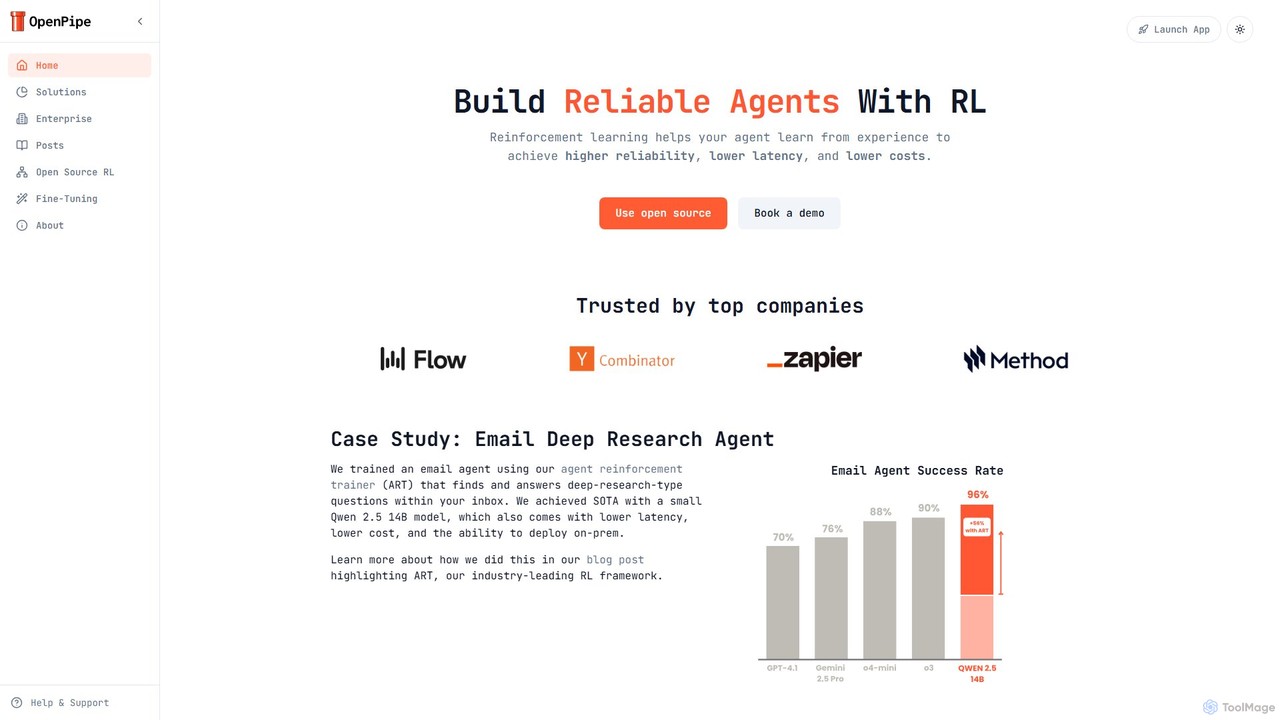
OpenPipe Overview
OpenPipe is a specialized post-training platform designed to help enterprises transform ambitious AI concepts into production-grade realities. It focuses on leveraging Reinforcement Learning (RL) and custom Supervised Fine-Tuning (SFT) to align powerful language models with specific business goals, security requirements, and infrastructure. Backed by Y Combinator and a team of AI veterans from companies like Google, Anthropic, and Palantir, OpenPipe provides the tools and expertise to build reliable, efficient, and compliant AI agents.
The core of OpenPipe's technology is the open-source Agent Reinforcement Trainer (ART), an industry-leading framework for training multi-turn agents. By using advanced techniques like Group Relative Policy Optimization (GRPO), OpenPipe allows models to learn from experience and user feedback, continuously improving their performance in production environments. This approach not only enhances accuracy but also significantly reduces operational costs and latency compared to using large, general-purpose models like GPT-4.
How to use OpenPipe
Using the OpenPipe platform involves a structured process to develop and deploy a high-performance, fine-tuned AI agent:
- Define the Task and Environment: Clearly outline the agent's objective and the tools it can use. For example, an email research agent might have tools to search emails, read specific messages, and return a final answer.
- Prepare or Generate Data: Create a dataset for training and evaluation. This can be real-world data or synthetically generated data, as demonstrated in OpenPipe's case study where they used the Enron email dataset.
- Benchmark Baseline Models: Before training, test off-the-shelf models (like GPT-4 or Claude) to establish a performance baseline. This helps identify issues with the task setup and quantifies the improvements from fine-tuning.
- Design a Reward Function: This is a critical step in RL. Define a function that rewards desired behaviors (e.g., correct answers, efficiency) and penalizes undesirable ones (e.g., hallucinations, incorrect tool usage). The reward can be multi-faceted, optimizing for accuracy, speed, and cost simultaneously.
- Train the Model with ART: Utilize the open-source ART library to train your model. The GRPO training loop runs the agent through tasks, scores its performance using the reward function, and updates the model to favor higher-scoring behaviors.
- Monitor and Evaluate: Throughout the training process, use OpenPipe's observability hub to track key metrics like accuracy, hallucination rates, and turn count. Analyze model outputs to ensure it's learning the intended behavior.
- Deploy and Continuously Optimize: Deploy the trained agent. OpenPipe's platform supports continuous feedback loops, allowing the model to keep learning from new production data, ensuring it improves with every release without full rebuilds.
Core Features of OpenPipe
- Advanced Reinforcement Learning (RL): Utilizes GRPO-powered feedback loops to continuously improve model accuracy and reliability based on production data.
- Open-Source Agent Reinforcement Trainer (ART): Provides a powerful, transparent, and flexible framework for training custom AI agents.
- On-Prem & VPC Deployment: Offers the ability to run the entire OpenPipe stack within a private cloud or data center, ensuring zero customer data or model weights leave your network.
- Enterprise-Grade Security & Compliance: Supports SOC 2 Type II, HIPAA, and GDPR, with features like role-based access controls and immutable audit logs.
- Unified Observability & Evaluation Hub: Live dashboards, automated guardrails, and approval workflows make it easy to monitor performance, prove alignment, and catch regressions.
- Dedicated Enterprise Support: Provides named solution architects, contractual SLAs, and roadmap influence for enterprise clients.
Use Cases for OpenPipe
OpenPipe is ideal for creating specialized agents that require high reliability and efficiency. A prime example is the ART·E Email Research Agent, which was trained to answer natural language questions by searching an email inbox. This agent, built on a smaller 14B parameter model, outperformed GPT-4-class models in accuracy while being 5x faster and 64x cheaper. Other use cases include:
- Automated Customer Support: Training agents to handle complex, domain-specific customer inquiries with high precision.
- Internal Knowledge Base Search: Creating agents that can navigate and synthesize information from internal wikis, documents, and databases to provide accurate answers to employee questions.
- Complex Workflow Automation: Building agents that can execute multi-step processes within enterprise software, such as processing claims or generating reports.
- Data Extraction and Analysis: Fine-tuning models to accurately extract and structure information from unstructured sources like legal documents or financial reports.
Advantages of OpenPipe
The primary advantage of OpenPipe is its ability to produce smaller, specialized models that deliver superior performance at a fraction of the cost. Key benefits include:
- Drastically Lower Costs: Achieve up to 8-10x lower inference costs compared to large, proprietary APIs.
- Superior Performance: RL and fine-tuning lead to higher accuracy and reliability on specific, high-value tasks.
- Reduced Latency: Smaller, optimized models respond significantly faster, improving the user experience.
- Full Data Control and Security: On-premise deployment options give enterprises complete control over their sensitive data and models.
- Expert Guidance: The OpenPipe team pairs RL experts with clients to ensure successful implementation and achieve business goals.
Pricing and Plans
OpenPipe operates on a freemium model. The core Agent Reinforcement Trainer (ART) library is open-source and free for anyone to use. For enterprises requiring advanced features, dedicated support, and managed services, OpenPipe offers custom Enterprise plans. These plans include features like on-premise deployment, dedicated support from solution architects, and contractual SLAs. Pricing for enterprise tiers is available by booking a demo and consulting with their team.
Traffic
Latest traffic
Status
Monthly traffic trend
- 2025-9: 58.5K
- 2026-1: 11.7K
- 2026-2: 16.9K
- 2026-3: 17.4K
- 2026-4: 10.5K
- 2026-5: 11.3K
Geography
Top 5 countries / regions
- 🇺🇸United States67.9%
- 🇮🇳India15.8%
- 🇩🇪Germany6.9%
- 🇹🇷Türkiye5.5%
- 🇧🇷Brazil3.9%
Traffic sources
| Source type | Percentage |
|---|---|
Direct | 84.2% |
Referral | 15.8% |
Top keywords
| Keyword | Cost per click |
|---|---|
| art localbackend | $0.00 |
| art trajectory openpipe | $0.00 |
| openpipe | $5.49 |
| openpipe finetuning | $0.00 |
| openpipe ruler | $0.00 |
OpenPipe Alternatives
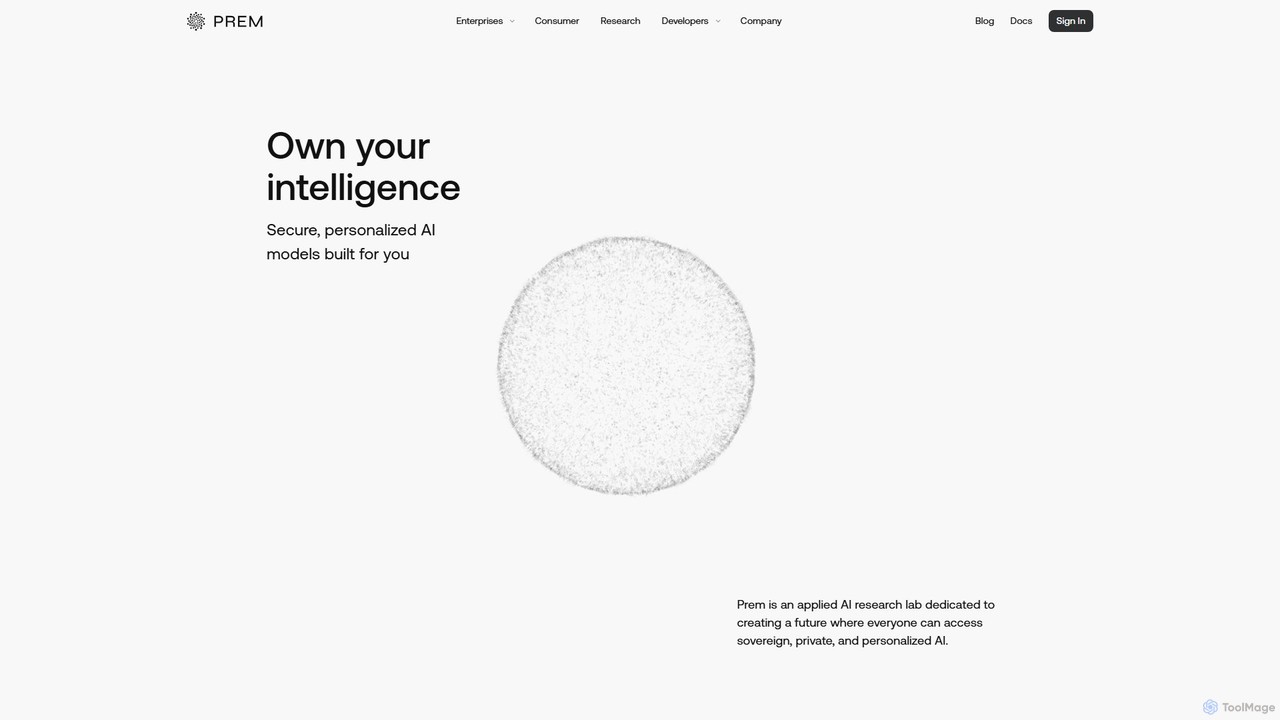
PremAI
PremAI is an enterprise-grade platform for building, fine-tuning, and deploying secure, private AI models. It empowers businesses to transform their raw data into high-performance, specialized models while maintaining absolute data sovereignty and leveraging state-of-the-art encryption for maximum privacy.
Database
hyperficient
hyperficient is an open-source AI tool for developers and ML engineers that automates the search for the most efficient fine-tuning strategies for neural networks. It significantly reduces computational costs, GPU time, and manual effort, enabling optimal model performance on limited resources.
Libraries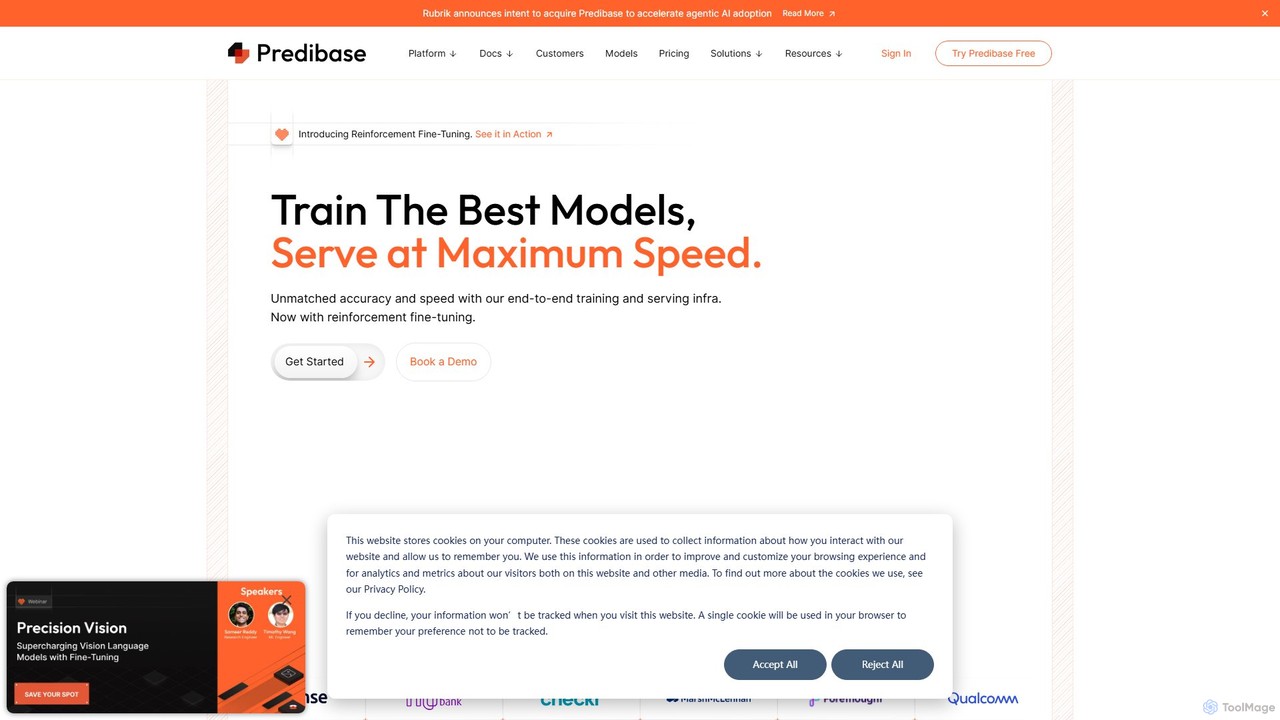
Predibase
Predibase is an end-to-end developer platform for efficiently fine-tuning and serving open-source Large Language Models (LLMs). It enables users to build custom AI models that outperform large proprietary models like GPT-4 on specific tasks, while significantly reducing costs and inference latency. The platform features advanced techniques like Reinforcement Fine-Tuning (RFT) and LoRAX for high-speed, multi-model serving.
Machine Learning
LangDrive
LangDrive is a developer-centric platform offering a unified API to fine-tune, manage, and deploy open-source Large Language Models (LLMs). It simplifies the complex MLOps pipeline, enabling businesses to create powerful, custom AI models for specialized tasks with greater control over data and costs.
Api Management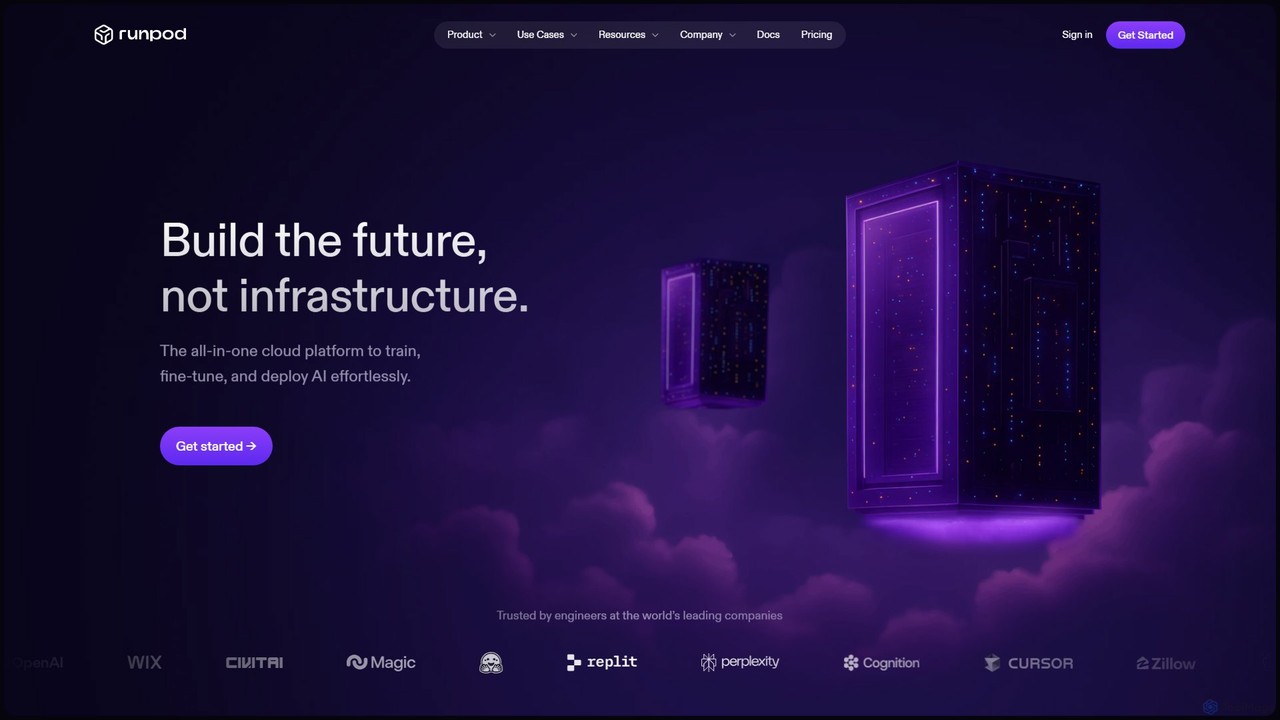
Runpod
Runpod is a cloud platform designed for AI and machine learning, offering scalable GPU compute for deploying, training, and running AI models. It provides serverless GPUs, pre-built templates, and cost-effective pricing to simplify the entire AI development workflow, from idea to production.
Machine LearningOpenPipe Categories
OpenPipe Embed Widget
Copy this embed code to place the badge on your blog, article, or product site and send readers directly to this ToolMage detail page.

Related AI tools
PremAI
PremAI is an enterprise-grade platform for building, fine-tuning, and deploying secure, private AI models. It empowers businesses to transform their raw data into high-performance, specialized models while maintaining absolute data sovereignty and leveraging state-of-the-art encryption for maximum privacy.
Database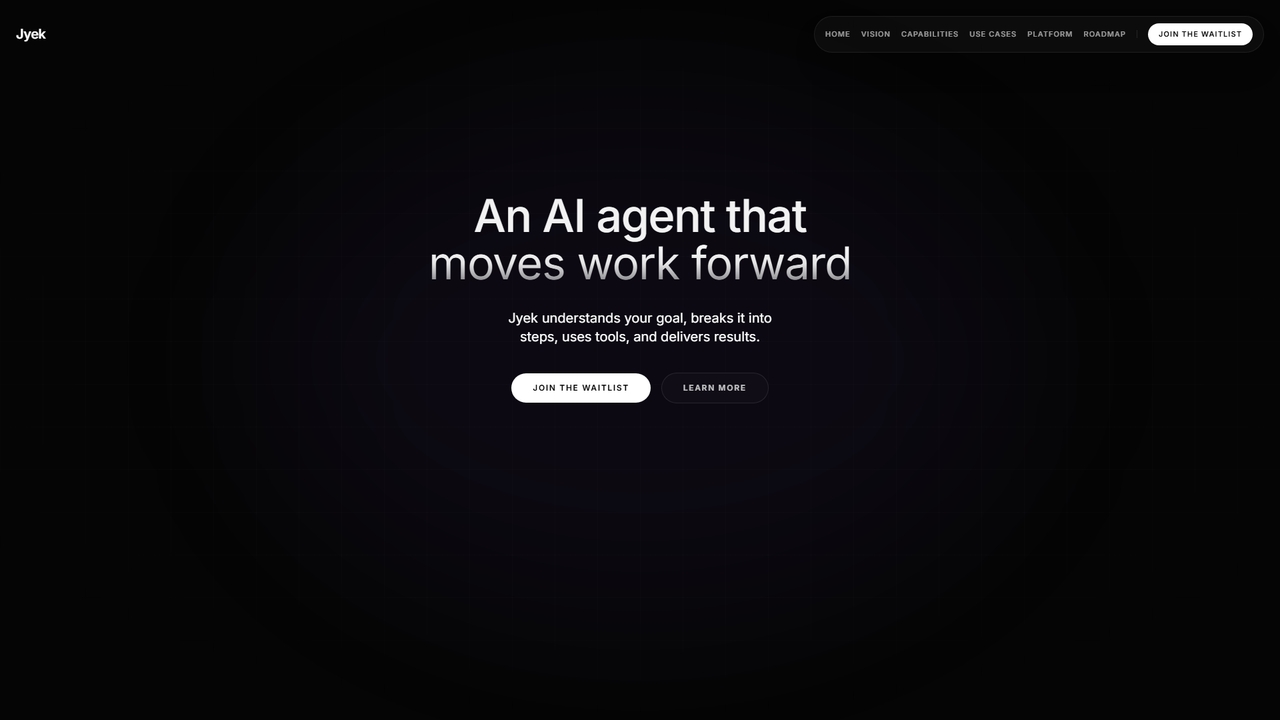
Jyek
Jyek is an AI agent platform that understands objectives, creates execution plans, uses tools, and delivers verifiable results for complex, multi-step tasks.
Automationhyperficient
hyperficient is an open-source AI tool for developers and ML engineers that automates the search for the most efficient fine-tuning strategies for neural networks. It significantly reduces computational costs, GPU time, and manual effort, enabling optimal model performance on limited resources.
Libraries
Latitude
Latitude is an open-source development platform designed for building, evaluating, and deploying applications powered by Large Language Models (LLMs), with a special focus on creating autonomous AI agents. It provides a comprehensive suite of tools for developers to experiment, refine, and scale their AI solutions.
Mlops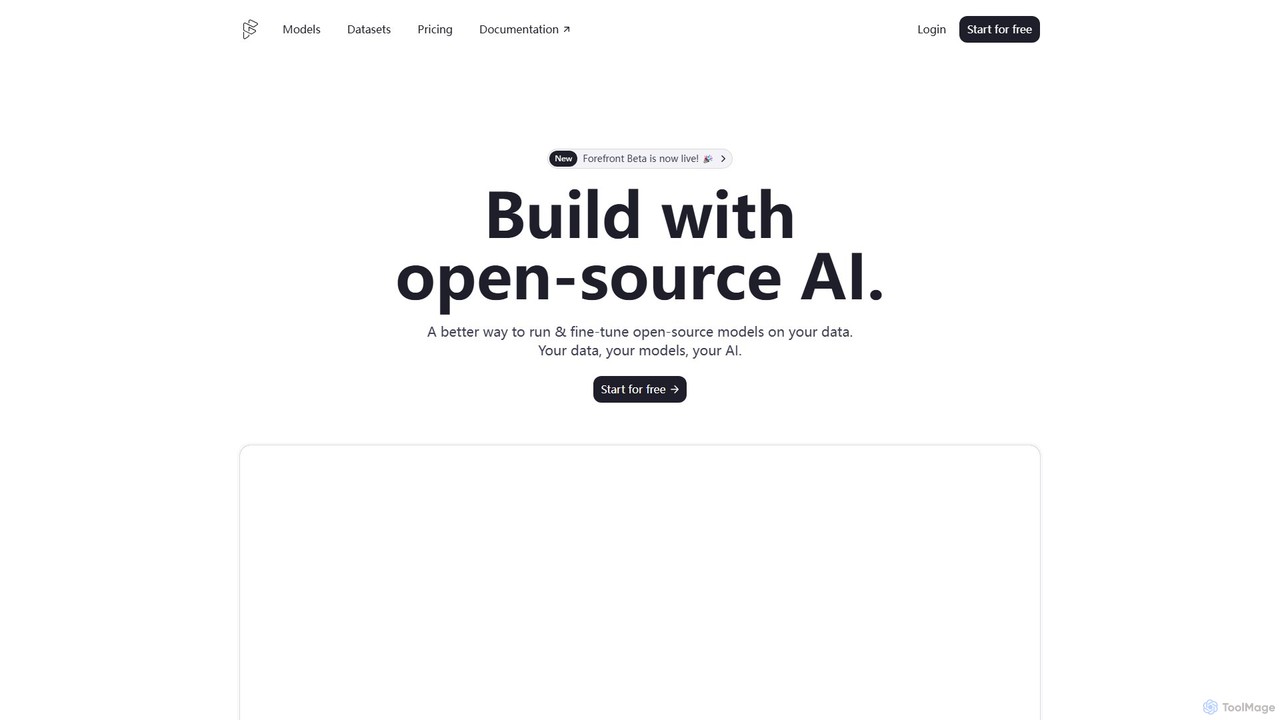
Forefront
Forefront is a developer platform for building with open-source AI. It simplifies running, fine-tuning, and deploying large language models (LLMs) on your private data, providing a scalable, secure, and cost-effective alternative to closed-source platforms. Own your data, your models, and your AI.
Large Language ModelsPredibase
Predibase is an end-to-end developer platform for efficiently fine-tuning and serving open-source Large Language Models (LLMs). It enables users to build custom AI models that outperform large proprietary models like GPT-4 on specific tasks, while significantly reducing costs and inference latency. The platform features advanced techniques like Reinforcement Fine-Tuning (RFT) and LoRAX for high-speed, multi-model serving.
Machine Learning
Mistral AI
Mistral AI is a leading AI company providing open-source and high-performance large language models (LLMs). It offers a versatile AI assistant, Le Chat, and a powerful developer platform, La Plateforme, focusing on configurability, efficiency, and privacy for both individuals and enterprises.
Enterprise Solutions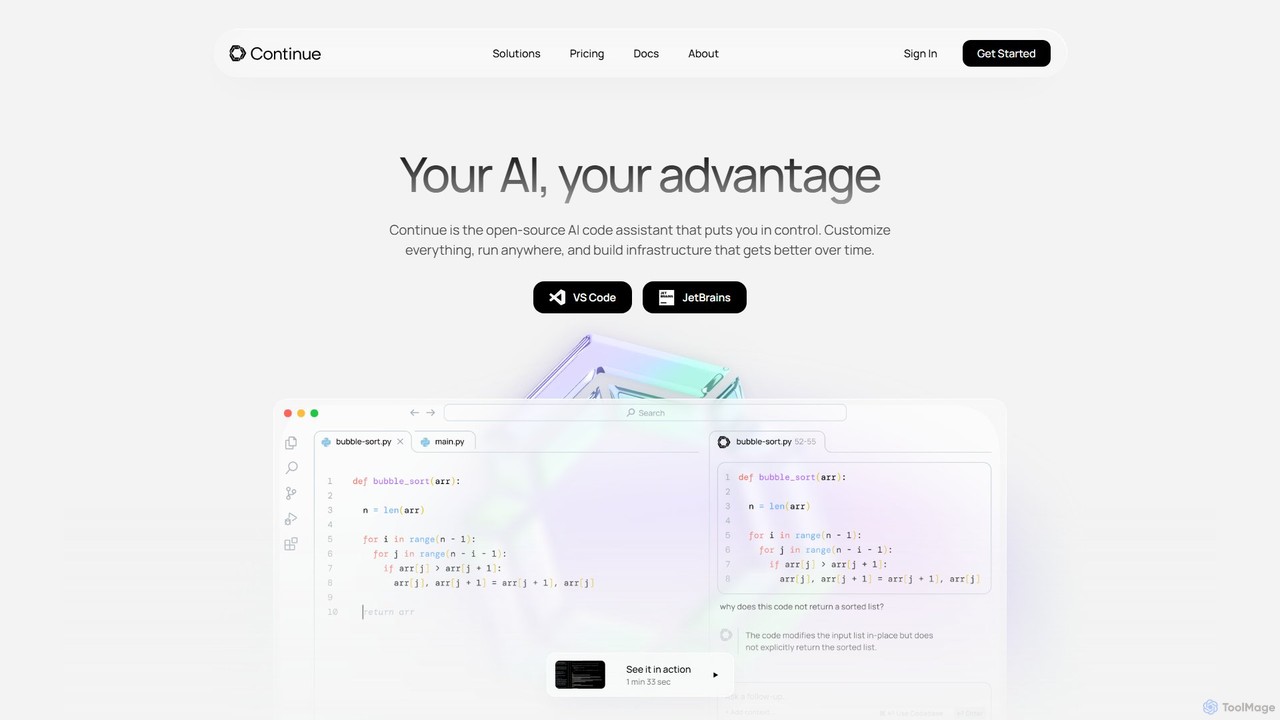
Continue
Continue is an open-source, customizable AI code assistant for VS Code and JetBrains. It enhances developer productivity with intelligent autocompletion, context-aware chat, and in-line refactoring, supporting any LLM, including local and on-premise models for maximum privacy and control.
Code Assistant
Cohere
Cohere is a secure, enterprise-grade AI platform providing developers and businesses with access to advanced large language models. It specializes in text generation, summarization, semantic search, and retrieval-augmented generation (RAG), with a strong focus on data privacy, customizability through fine-tuning, and flexible deployment options including on-premises and private cloud.
Enterprise Solutions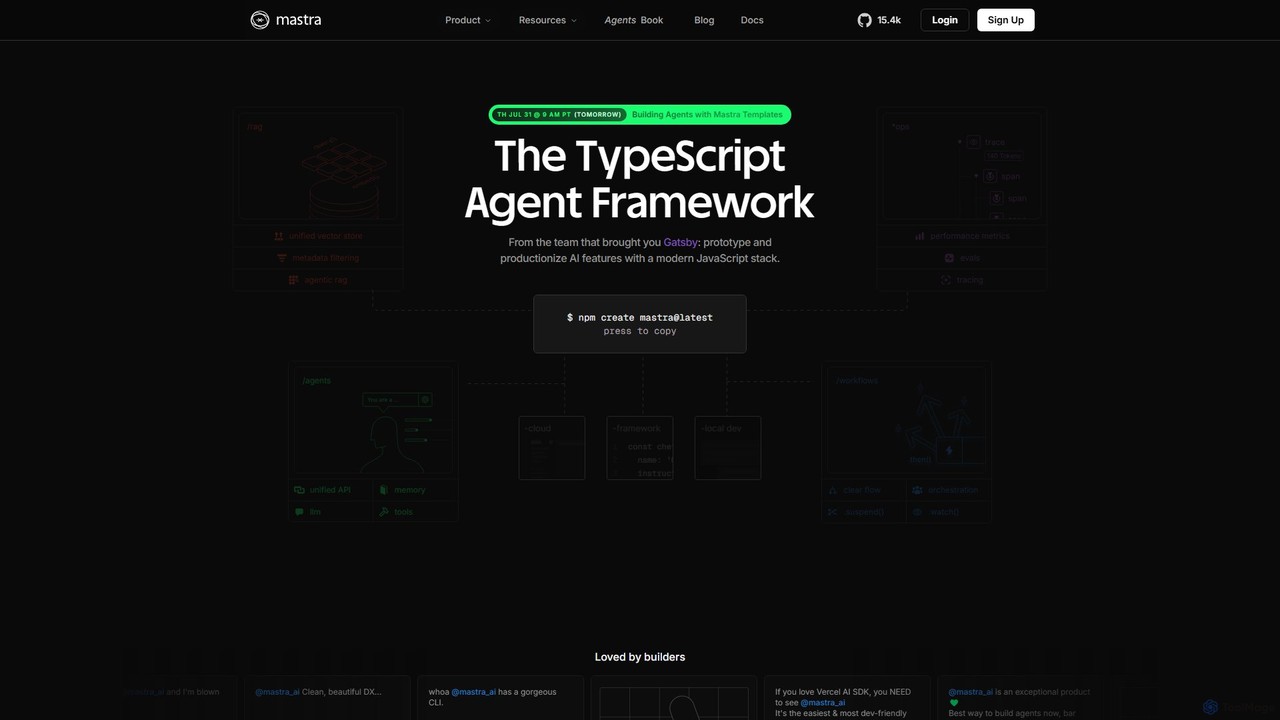
Mastra
Mastra is an open-source TypeScript framework designed for developers to build, deploy, and manage sophisticated AI agents and complex workflows. It provides a developer-friendly SDK with features like persistent memory, tool calling, Retrieval-Augmented Generation (RAG), and deterministic workflow graphs. Built by the team behind Gatsby, Mastra simplifies creating production-ready AI applications within the JavaScript ecosystem.
Agent Builder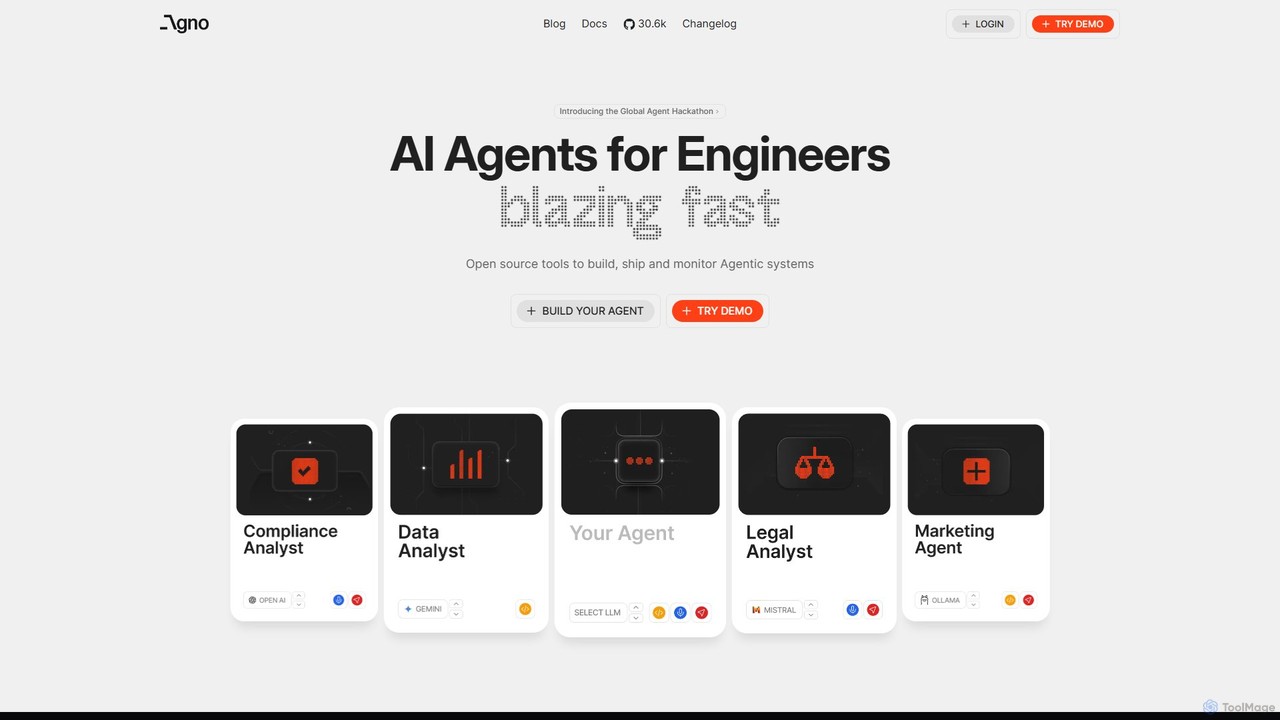
phidata
phidata is an open-source Python framework for building autonomous AI Assistants. It simplifies the integration of LLMs with memory, knowledge bases, and external tools, enabling developers to create powerful, stateful AI applications with ease.
Frameworks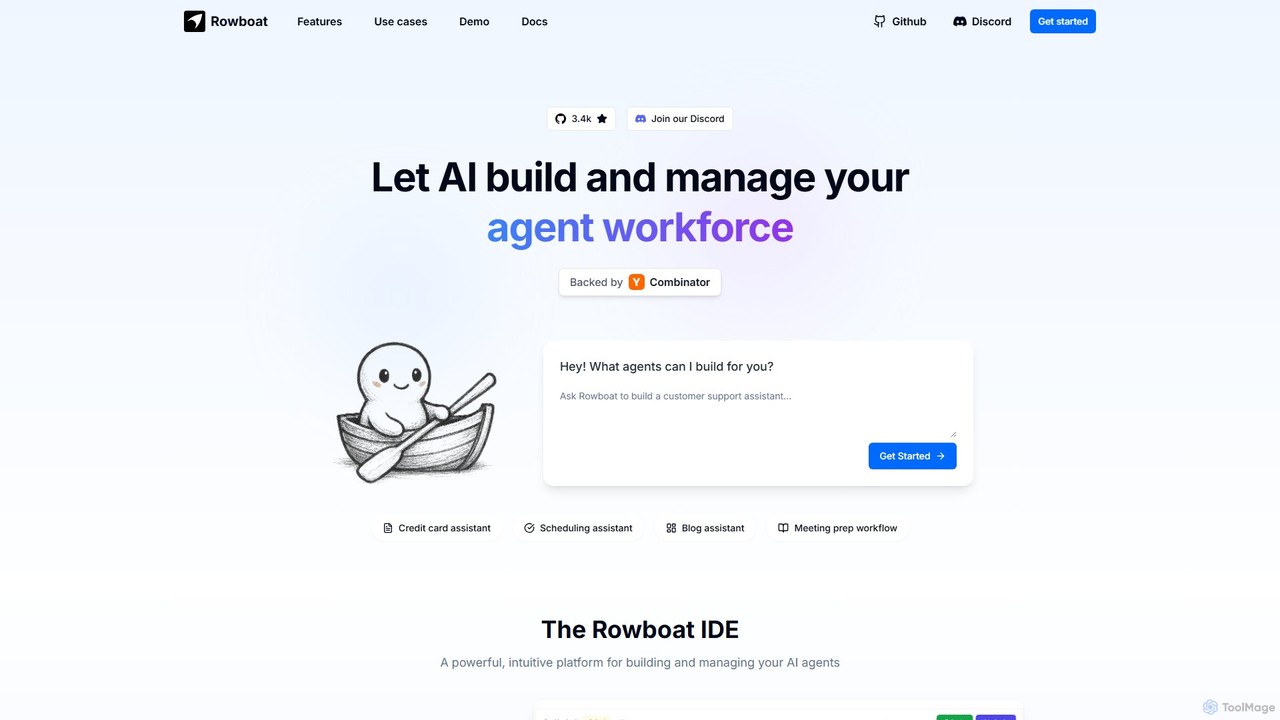
Rowboat
Rowboat is a powerful, AI-powered IDE for building, managing, and deploying complex multi-agent systems. Backed by Y Combinator, it allows users to describe workflows in plain English, and its AI copilot automatically generates the entire agent graph, including roles, prompts, and tool integrations. It's designed to simplify the creation of robust, real-world AI agents for productivity, e-commerce, support, and more, with features like open-source flexibility and support for over 100 LLMs.
Agent Builder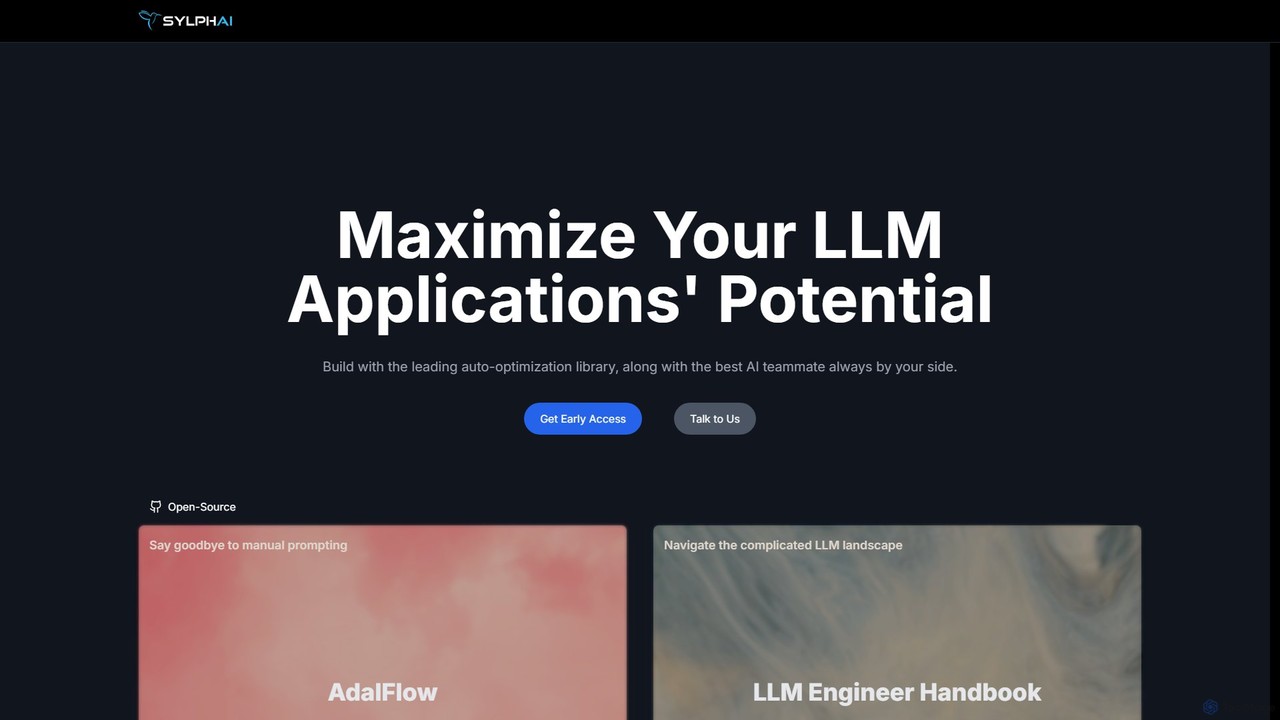
Sylph AI
Sylph AI is a development platform designed to maximize the potential of LLM applications. It features AdalFlow, a leading open-source library for building and auto-optimizing LLM task pipelines, and an AI Teammate that provides expert guidance throughout the entire development workflow, from ideation to production.
Libraries
smolagents
smolagents is a minimalist, open-source AI agent framework developed by Hugging Face. It empowers developers to build and deploy powerful, code-first AI agents with minimal Python code. By focusing on simplicity and efficiency, it enables Large Language Models (LLMs) to interact with tools and the real world seamlessly, supporting a wide range of models and secure execution environments.
Development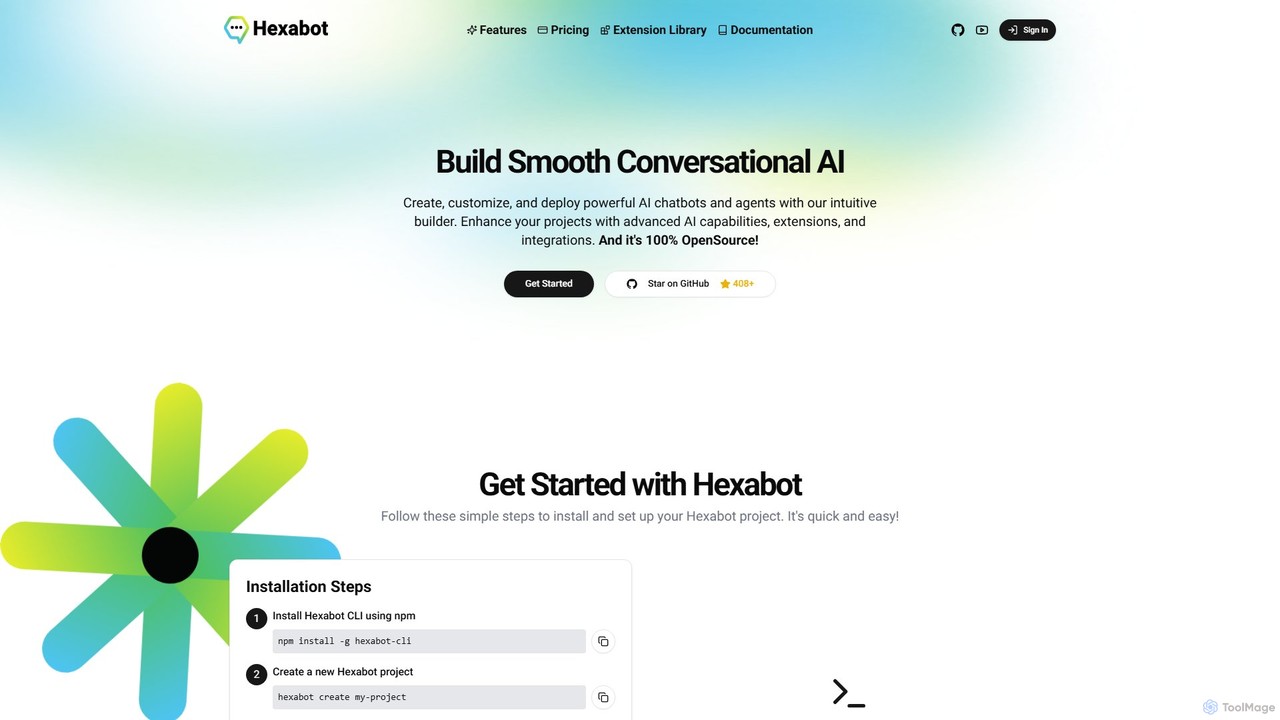
Hexabot
Hexabot is an open-source platform for building, customizing, and deploying powerful AI chatbots and agents. It offers a developer-friendly environment with a low-code visual editor, extensive extension library, and multi-channel integration, allowing for on-premise hosting to ensure full data privacy and control.
Chatbot
OpenPipe Comments (0)
Sign in to comment.
Sign inNo comments yet.