ToolMage
Sign in

Best 7 Datasets AI tools for Data

Popular Datasets AI tools in Data include Kaggle, Defined.ai, LAION, Segmed, Bethge Lab, Grably, and dataset.gold, helping you work more efficiently.

Segmed
Paid

Segmed

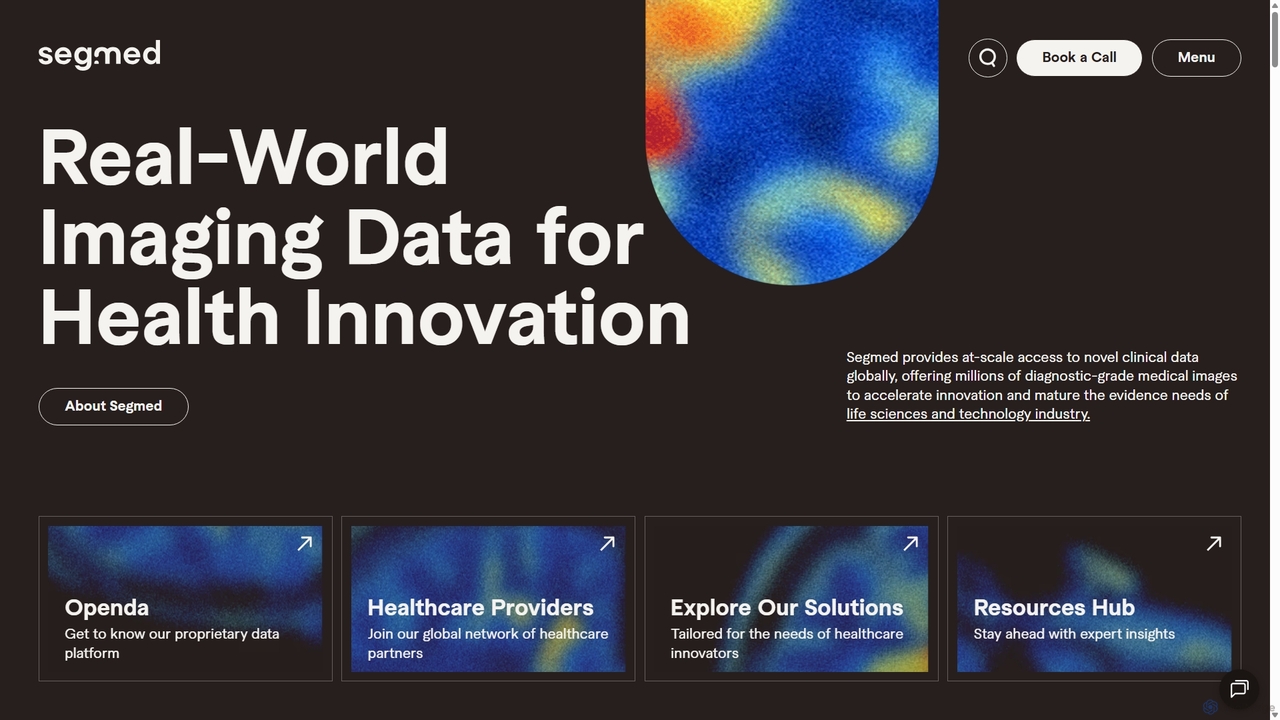
Segmed provides large-scale access to de-identified, diagnostic-grade medical imaging data for AI development and clinical research. Its platform, Openda, offers millions of tokenized studies from a diverse global network of healthcare providers. Segmed accelerates innovation for life sciences, medical device, and technology companies by providing regulatory-grade, multimodal datasets crucial for training AI models, validation, and securing FDA/CE clearance.

Datasets
Visits 7.8KFavorites 117Likes 140
Grably
Paid

Grably

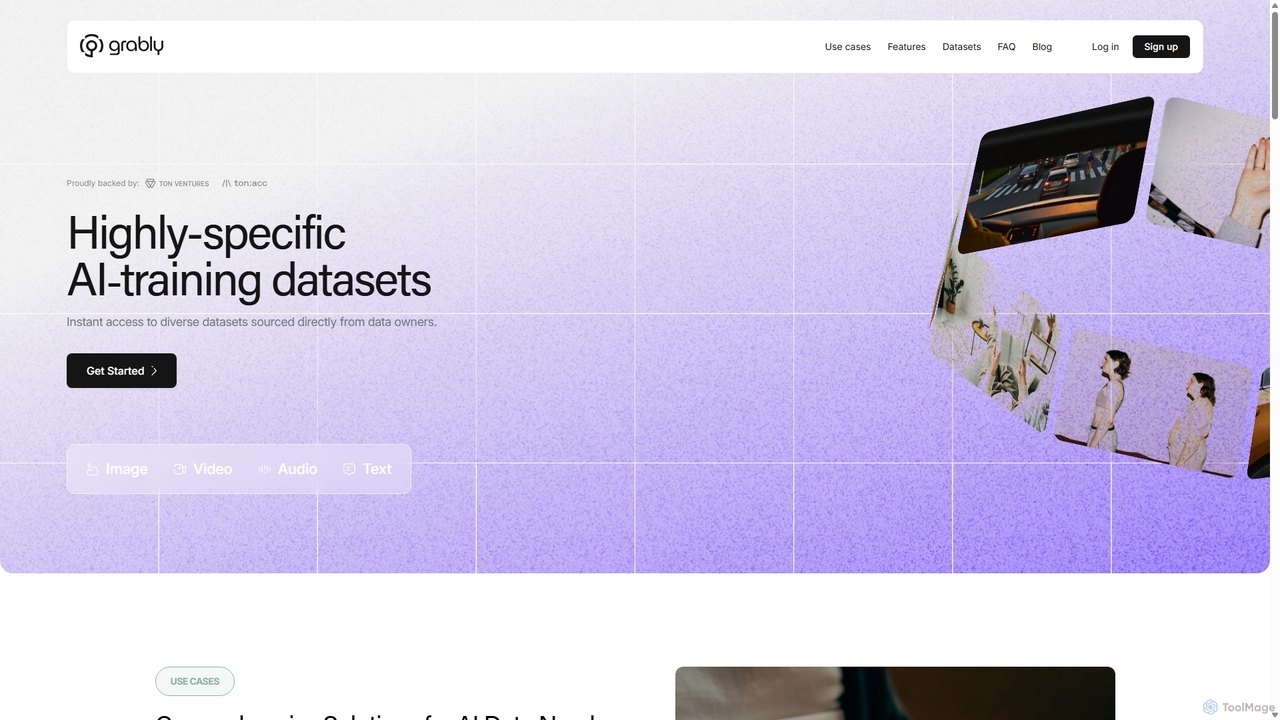
Grably is a decentralized data ownership network (DeDON) providing high-quality, ethically sourced AI training data. It offers a vast collection of off-the-shelf datasets, custom data collection, curation, and annotation services to accelerate AI development while allowing users to monetize their data securely and transparently.

Data Labeling
Visits 4.8KFavorites 110Likes 99
Kaggle
Freemium

Kaggle

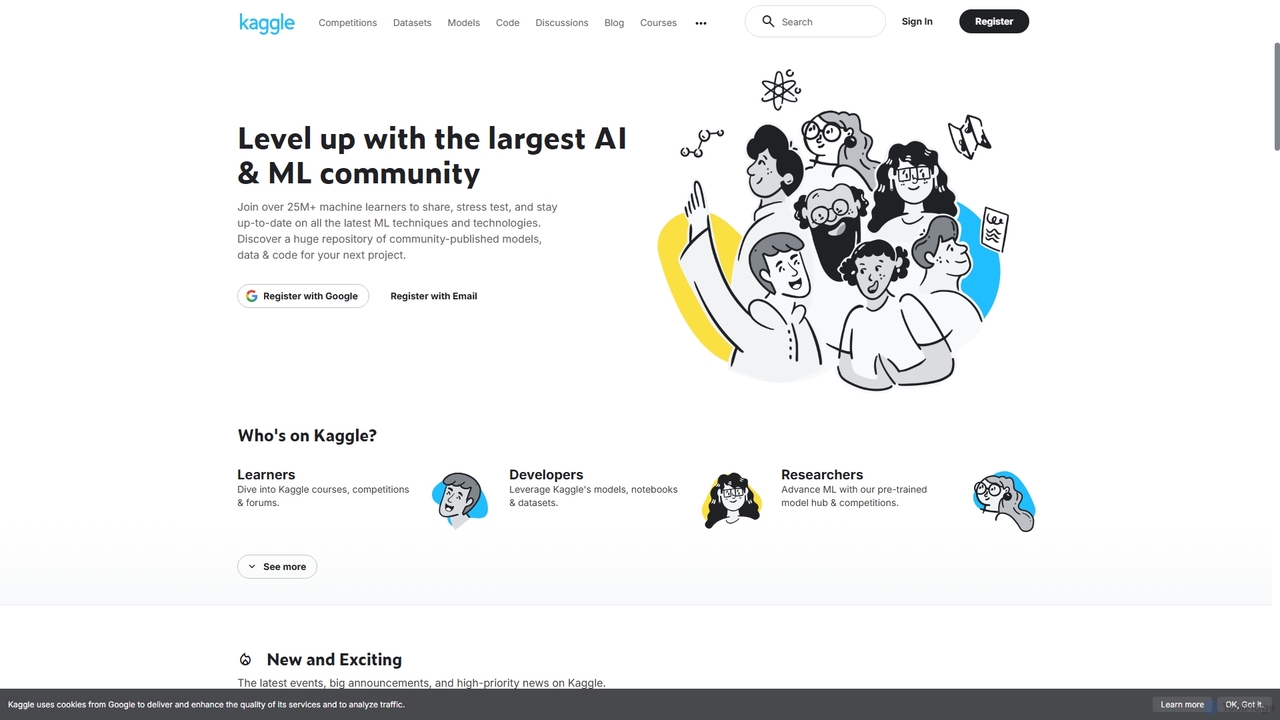
Kaggle is the world's largest online community for data scientists and machine learning practitioners. Owned by Google, it provides a platform to explore datasets, build models in a web-based environment, compete in machine learning challenges, and access educational resources. It offers free access to powerful computational resources, including GPUs and TPUs, making it an essential tool for anyone from beginners to seasoned experts in the AI and data science fields.

Datasets
Visits 12.4MFavorites 114Likes 108
Bethge Lab
Free

Bethge Lab

Bethge Lab is a leading AI research group at the University of Tübingen, focusing on the intersection of computational neuroscience and machine learning. It aims to develop agentic AI systems capable of autonomous, lifelong learning by drawing inspiration from the human brain. The lab produces open-source models, datasets, and pioneering research.

Datasets
Visits 7.6KFavorites 101Likes 104
LAION
Free

LAION

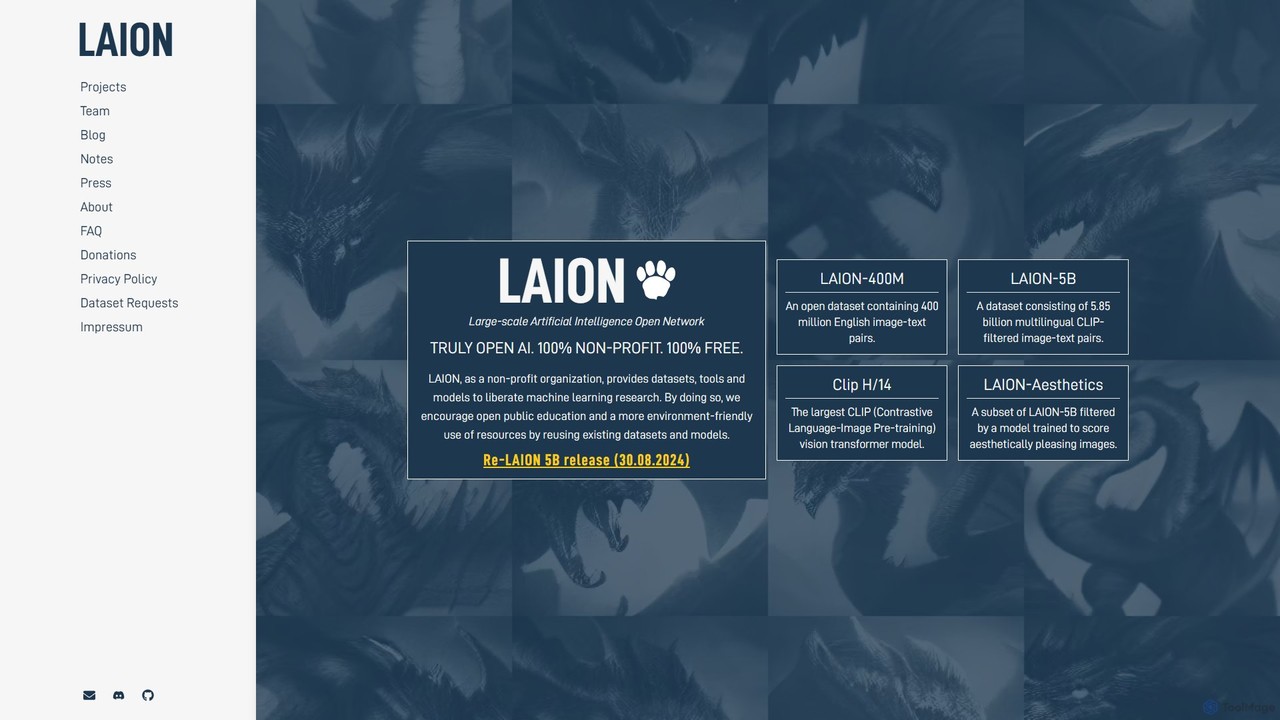
LAION (Large-scale Artificial Intelligence Open Network) is a non-profit organization dedicated to democratizing AI research. It provides massive, open-source datasets, pre-trained models, and tools to the public, fostering open research, education, and resource-efficient development in machine learning.

Datasets
Visits 35.3KFavorites 117Likes 107
Defined.ai
Paid

Defined.ai

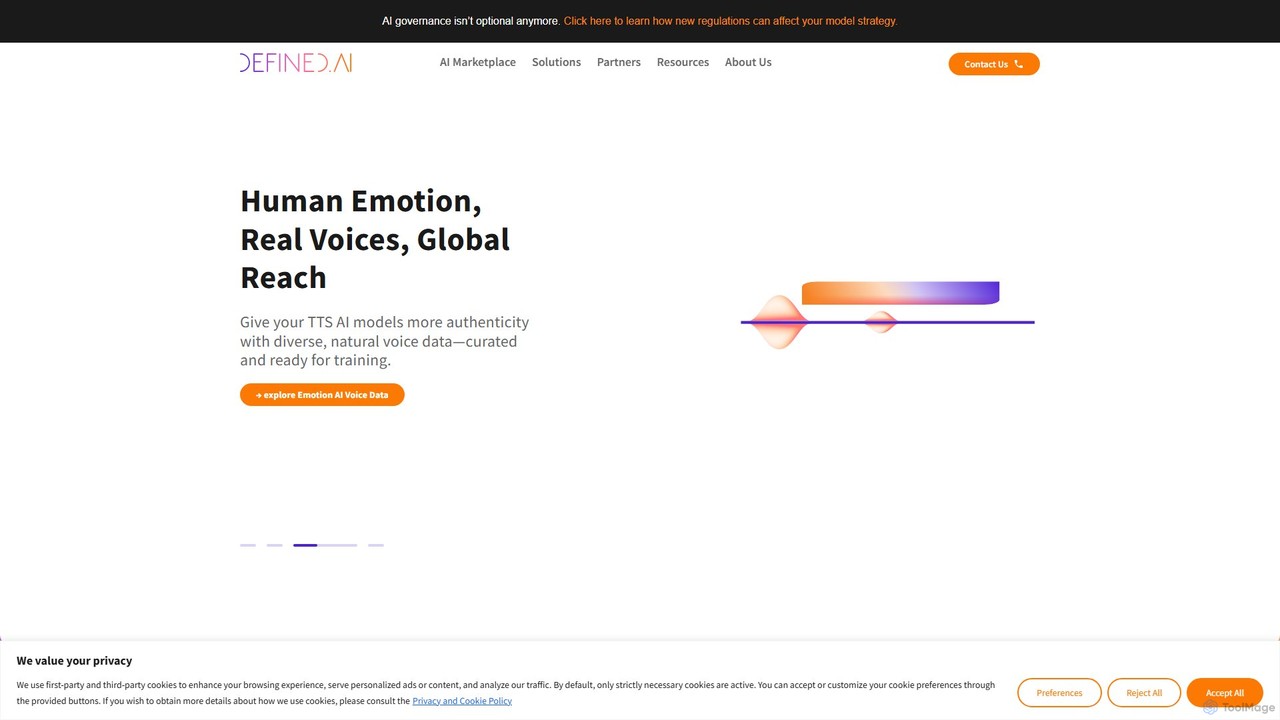
Defined.ai is a leading marketplace and platform for high-quality AI training data. It provides off-the-shelf datasets and custom data collection/annotation services for computer vision, NLP, and speech recognition. By leveraging a global crowd and a robust platform, Defined.ai helps businesses accelerate the development of accurate and ethical AI models.

Data Annotation
Visits 67.5KFavorites 109Likes 121
dataset.gold
Free

dataset.gold

A curated directory of high-quality, open-source datasets for AI and machine learning. Discover the gold standard of data for training your models in computer vision, NLP, and more.

Datasets
Visits 4KFavorites 124Likes 122

About Datasets

Datasets are curated collections of structured information specifically designed to train, test, and validate artificial intelligence and machine learning models. These foundational resources provide the raw material—ranging from images and text to numerical records—that algorithms learn from to identify patterns, make predictions, and perform complex tasks. By supplying diverse and representative data, datasets are indispensable for developing robust, accurate, and unbiased AI systems across various domains.

Core Features

  • Data Collection & Curation: Tools for gathering, cleaning, and organizing raw data from diverse sources into usable formats.
  • Annotation & Labeling: Functionality to add metadata, tags, or labels to data points, crucial for supervised learning tasks.
  • Data Augmentation: Techniques to expand existing datasets by creating modified versions of data, enhancing model robustness.
  • Version Control: Systems to track changes, manage different iterations, and ensure reproducibility of datasets over time.
  • Data Privacy & Security: Features to anonymize, encrypt, and manage access to sensitive data, ensuring compliance and ethical use.

Applicable Scenarios

Datasets are fundamental for AI researchers, machine learning engineers, and data scientists. They are used in academic research for model development, by startups building new AI products, and by large enterprises for improving existing AI systems. For instance, a self-driving car company relies on vast image and sensor datasets to train its perception models, while a financial institution uses transactional datasets to detect fraud.

How to Choose

When selecting or creating datasets, consider the data volume and variety required for your specific AI task, the quality and cleanliness of the data, and the accuracy of any existing annotations. Evaluate the licensing terms, privacy implications, and the ease of integration with your existing machine learning pipelines. Scalability and the availability of tools for ongoing maintenance and updates are also crucial factors.

Featured tool rankings

Datasets use cases

1

Training AI for Image Recognition

Machine learning engineers utilize large, annotated image datasets (e.g., ImageNet, COCO) to train computer vision models. By feeding the model millions of images labeled with objects, scenes, or actions, the AI learns to accurately identify and classify visual elements in new, unseen images, crucial for applications like autonomous vehicles or medical diagnostics.

2

Building AI for Text Understanding

NLP researchers employ extensive text datasets (e.g., Wikipedia dumps, news articles, conversational logs) to train language models. These datasets enable AI to understand human language nuances, perform sentiment analysis, translate languages, or generate coherent text, powering chatbots, virtual assistants, and content generation tools.

3

Improving Financial Fraud Detection

Financial analysts leverage historical transaction datasets, including customer behavior and anomaly records, to train AI models for fraud detection. The AI learns to identify suspicious patterns that deviate from normal activity, flagging potential fraudulent transactions in real-time, thereby minimizing financial losses and enhancing security.

4

Powering Personalized Product Suggestions

E-commerce platforms use customer interaction datasets (purchase history, browsing behavior, ratings) to train recommendation engines. These AI models analyze individual preferences and similar user patterns to suggest relevant products, significantly improving user experience and driving sales by presenting highly targeted offerings.

5

Assisting Medical Image Analysis

Medical researchers and clinicians utilize specialized datasets of anonymized patient records, medical images (X-rays, MRIs), and genomic data to train AI for diagnostic assistance. The AI can detect subtle indicators of diseases, predict patient outcomes, or accelerate drug discovery by analyzing vast amounts of complex biological information.

6

Generating Data for Edge Cases

In scenarios where real-world data is scarce or sensitive (e.g., rare disease outbreaks, specific cybersecurity threats), data scientists use generative AI models to create synthetic datasets. These artificial datasets mimic the statistical properties of real data, allowing models to be trained on critical edge cases without compromising privacy or waiting for sufficient real-world occurrences.

Datasets FAQ

What are Datasets in AI?

Datasets in AI are structured collections of information used to train, test, and validate machine learning models. They serve as the raw input that enables AI algorithms to learn patterns, make predictions, and perform specific tasks. These collections can include various data types such as images, text, audio, video, and numerical records, often meticulously labeled or annotated for supervised learning.

How do AI Datasets differ from raw Data?

Raw data refers to unprocessed, unorganized information collected from various sources. Datasets, on the other hand, are raw data that has been cleaned, structured, formatted, and often annotated or labeled specifically for AI model consumption. This transformation makes raw data usable for training algorithms, ensuring consistency, quality, and relevance for the intended machine learning task.

What makes a good Dataset for AI training?

A good dataset for AI training is characterized by its quality, quantity, and representativeness. It should be clean, free from errors, and sufficiently large to capture diverse patterns. Crucially, it must be representative of the real-world scenarios the AI will encounter, balanced to avoid bias, and accurately labeled. Diversity in data points helps the model generalize well to new, unseen data.

What are the common types of AI Datasets?

Common types of AI datasets include image datasets (e.g., for object detection), text datasets (e.g., for natural language processing), audio datasets (e.g., for speech recognition), video datasets (e.g., for action recognition), and tabular datasets (e.g., for predictive analytics). Each type is tailored to specific AI tasks and often requires specialized annotation methods.

Why is data annotation important for AI Datasets?

Data annotation is crucial for supervised machine learning, where models learn from labeled examples. It involves adding meaningful tags, labels, or metadata to raw data (e.g., drawing bounding boxes around objects in images, transcribing audio, categorizing text). Accurate annotation provides the ground truth for the AI to learn from, directly impacting the model's performance and reliability.