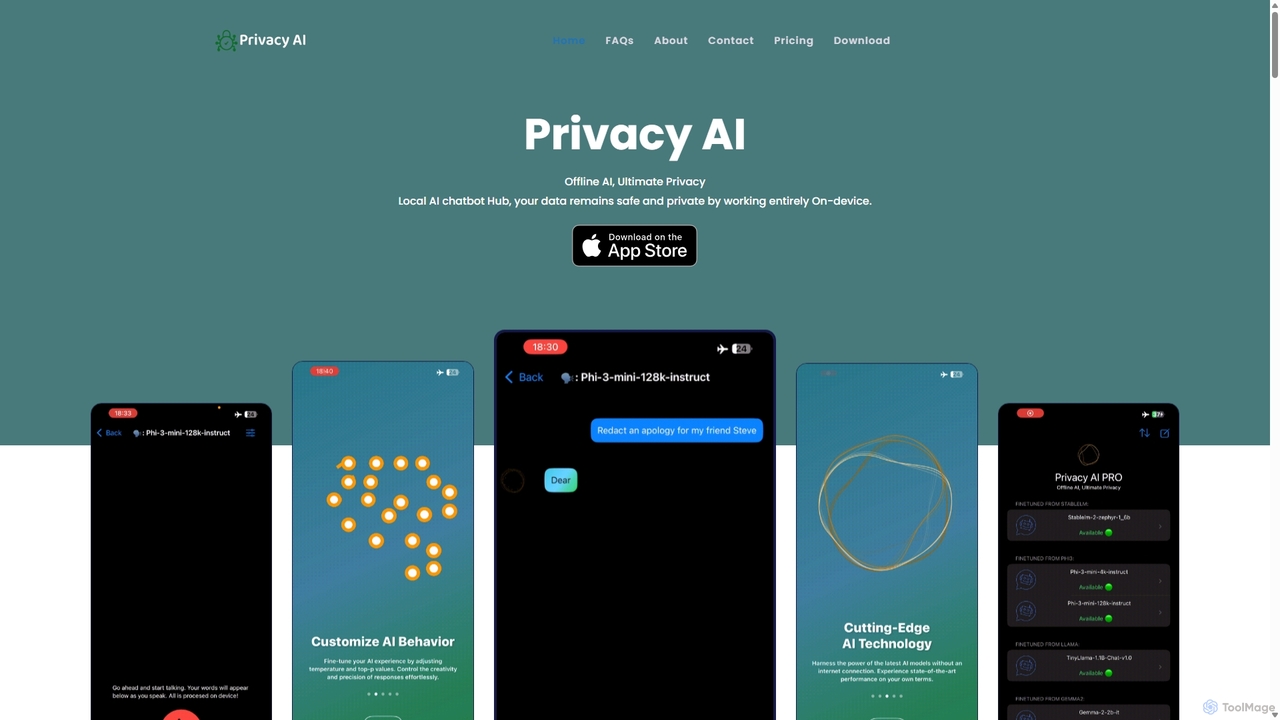
Privacy AI
Privacy AI is a native application for iPhone, iPad, and Mac that allows you to run powerful open-source …
Privacy AI is a native application for iPhone, iPad, and Mac that allows you to run powerful open-source large language models (LLMs) entirely offline. It ensures absolute privacy by processing all data on your device, with no data collection or internet connection required. Access models like LLaMA, Mistral, and Phi3 securely, with advanced customization options for a tailored AI experience.
LM Studio
LM Studio is a desktop application for Windows, macOS, and Linux that allows you to discover, download, and …
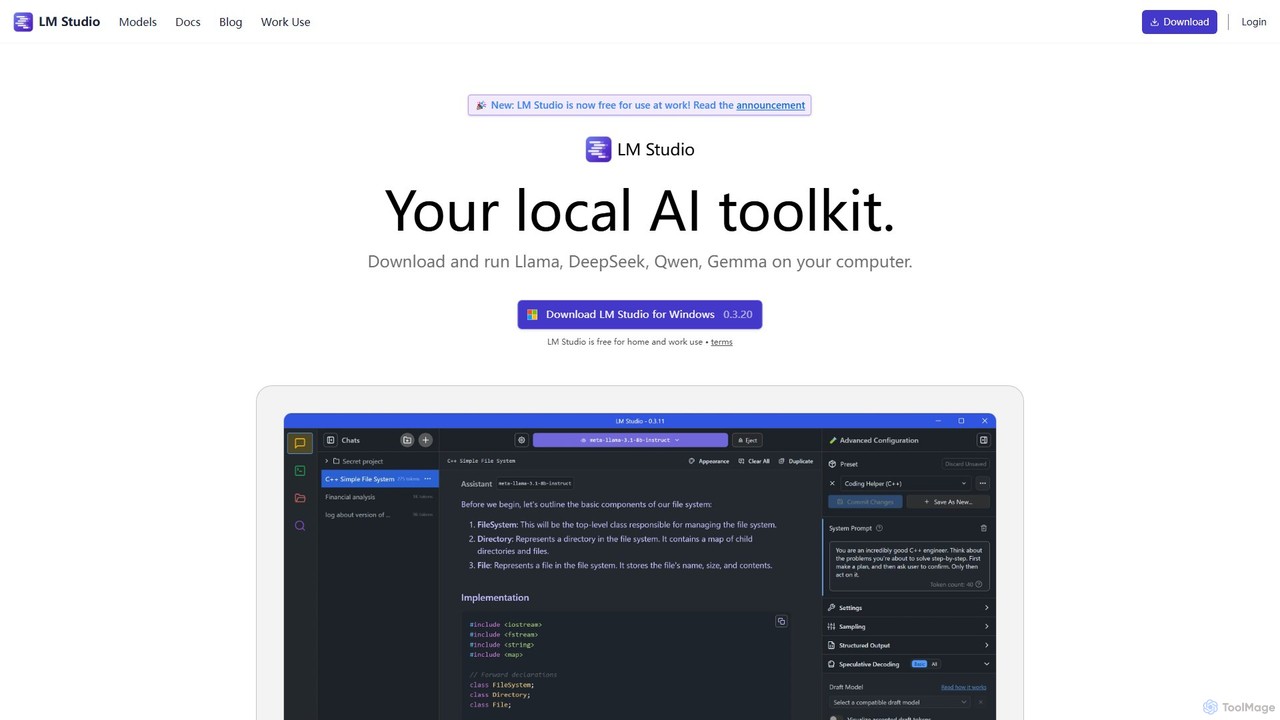
LM Studio is a desktop application for Windows, macOS, and Linux that allows you to discover, download, and run open-source Large Language Models (LLMs) entirely on your local machine. It offers a user-friendly interface, an OpenAI-compatible local server, and robust privacy features, making it ideal for developers, researchers, and anyone seeking a private AI experience.
LM Studio
LM Studio is a user-friendly desktop application for discovering, downloading, and running open-source Large Language Models (LLMs) locally …
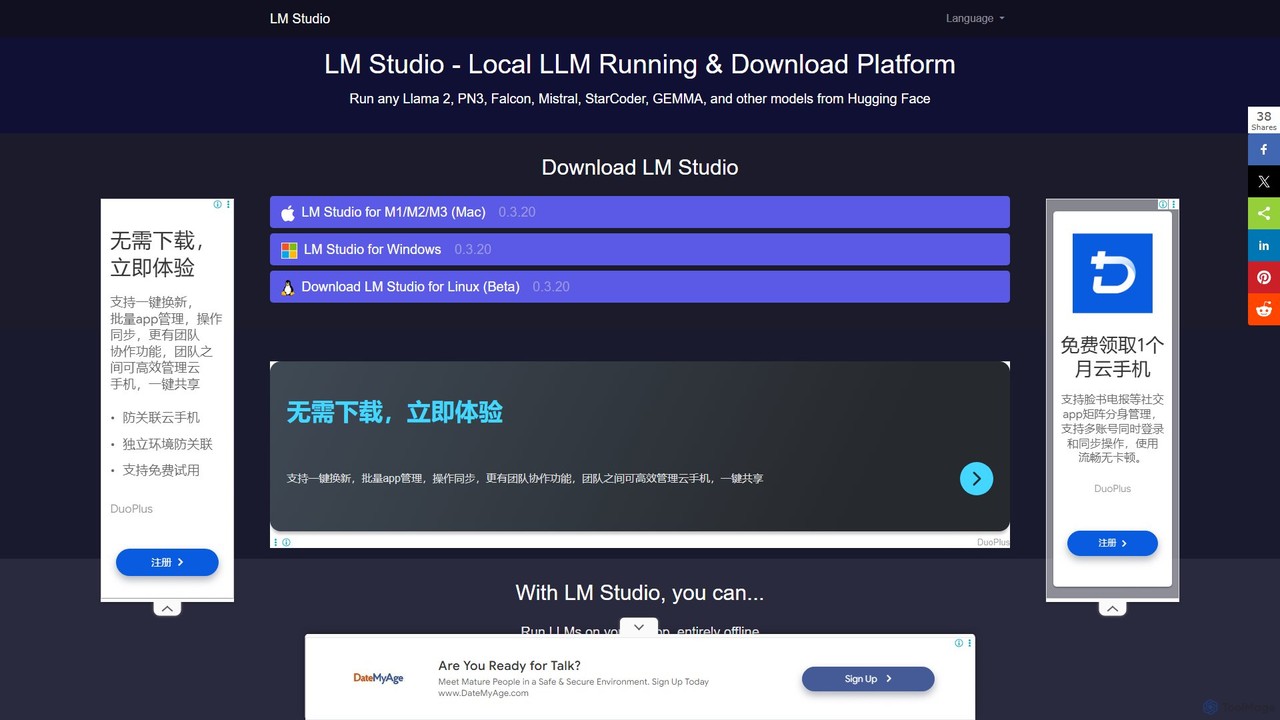
LM Studio is a user-friendly desktop application for discovering, downloading, and running open-source Large Language Models (LLMs) locally on your computer. It offers a simple chat interface and a local inference server, ensuring privacy and offline access.
Sanctum
Sanctum is a privacy-first AI assistant that allows you to run powerful open-source Large Language Models (LLMs) directly …
Sanctum is a privacy-first AI assistant that allows you to run powerful open-source Large Language Models (LLMs) directly on your local machine. It ensures your data is encrypted, secure, and never leaves your device. Interact with models, chat with your documents, and transcribe audio, all offline and with complete privacy.
pinokio
Pinokio is a desktop browser that allows you to install, run, and control AI applications and terminal-based apps …
Pinokio is a desktop browser that allows you to install, run, and control AI applications and terminal-based apps on your computer with a single click. It simplifies the complex setup of open-source AI models by automating environment creation, dependency management, and execution. This empowers users of all skill levels to experiment with powerful AI tools locally, ensuring privacy and full control over their data.
LocalAI
LocalAI is a free, open-source desktop application that allows you to run AI models privately and offline on …
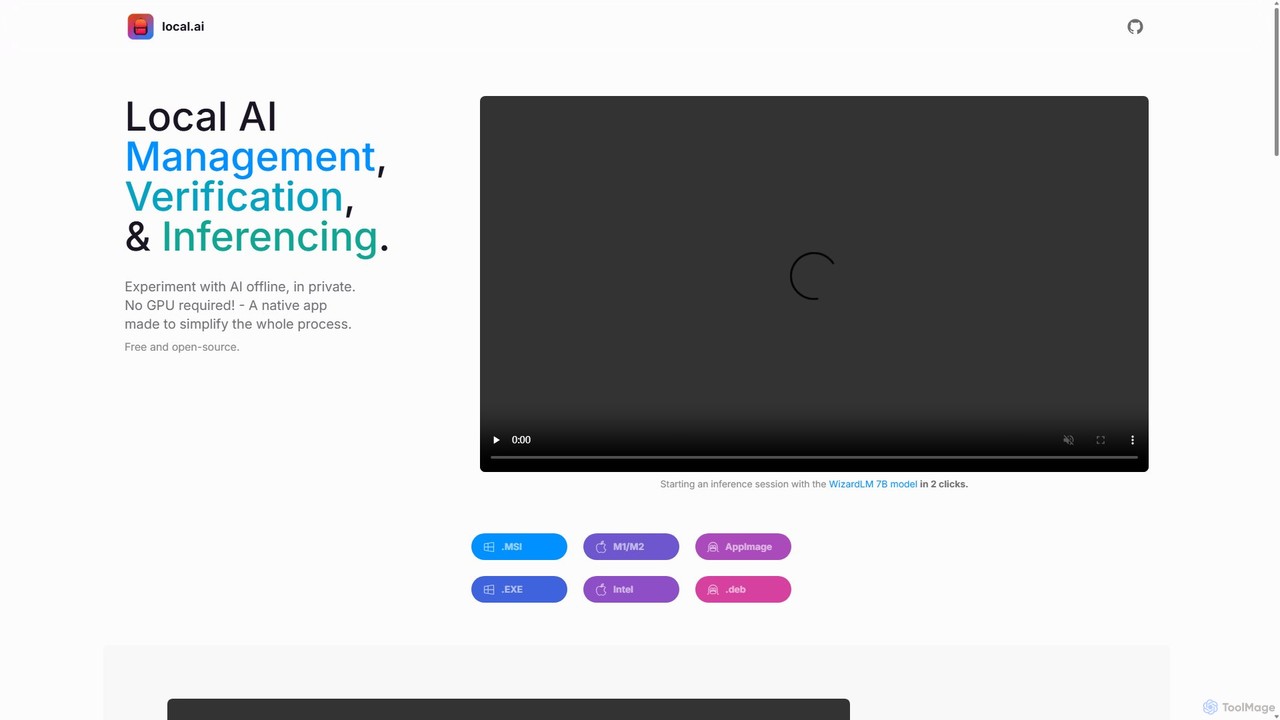
LocalAI is a free, open-source desktop application that allows you to run AI models privately and offline on your computer. It simplifies AI experimentation without needing a GPU, offering features like model management, integrity verification, and a local inference server.
About Local Development
Local Development tools are a category of AI-enhanced solutions designed to help developers build, test, and debug software applications directly on their personal computers. These tools create an isolated environment that closely mirrors production settings, enabling efficient iteration and robust testing without relying on remote servers. They provide a controlled space for coding, experimentation, and problem-solving.
Core Features
- Environment Provisioning: Automates the setup and configuration of local development environments, including operating systems, runtimes, and dependencies.
- Local Server Emulation: Simulates web servers (e.g., Apache, Nginx) and database systems (e.g., MySQL, PostgreSQL) on the local machine for real-time testing.
- Code Debugging & Testing: Offers integrated debugging capabilities and frameworks for running unit, integration, and end-to-end tests locally.
- Containerization Integration: Facilitates the use of Docker or similar technologies to create portable and consistent development environments.
- Version Control Integration: Seamlessly connects with Git and other version control systems for managing code changes locally.
Applicable Scenarios
Local Development tools are essential for web developers building dynamic websites, mobile app developers creating iOS/Android applications, and backend engineers designing robust APIs. They are also crucial for data scientists experimenting with machine learning models and game developers iterating on game mechanics.
How to Choose
When selecting Local Development tools, consider compatibility with your existing tech stack (languages, frameworks), ease of setup and configuration, and the performance overhead on your machine. Look for strong integration with your preferred IDE, comprehensive debugging features, and active community support for troubleshooting.
Local DevelopmentUse Cases
Rapid Web Feature Prototyping
A front-end developer quickly builds and tests new UI components and interactions on a local web server, iterating on design and functionality without affecting live environments.
Offline Mobile App Development
A mobile developer works on an iOS or Android application while traveling, using a local emulator to test features and ensure functionality without an internet connection.
Backend API Development & Debugging
A backend engineer designs and tests new API endpoints locally, connecting to a simulated database to verify data integrity and API responses before deployment.
Containerized Environment Setup
A DevOps engineer configures a Docker Compose file to spin up a consistent local development environment for a team, ensuring all developers work with identical dependencies.
Data Science Model Experimentation
A data scientist trains and evaluates machine learning models on a local GPU, experimenting with different algorithms and datasets without incurring cloud computing costs.
Game Logic Iteration
A game developer rapidly prototypes and tests new game mechanics, character movements, and level designs within their local development environment, receiving immediate feedback.