ToolMage
Sign in

Best 15 Web Scraping AI tools for Developer Tools

Popular Web Scraping AI tools in Developer Tools include Apify, Multilogin, ScrapingBee, Browserless, CapSolver, Scrappey, URLtoText, FetchFox, Crawlbase, and WebScraping.AI, helping you work more efficiently.

Browserless
Freemium

Browserless

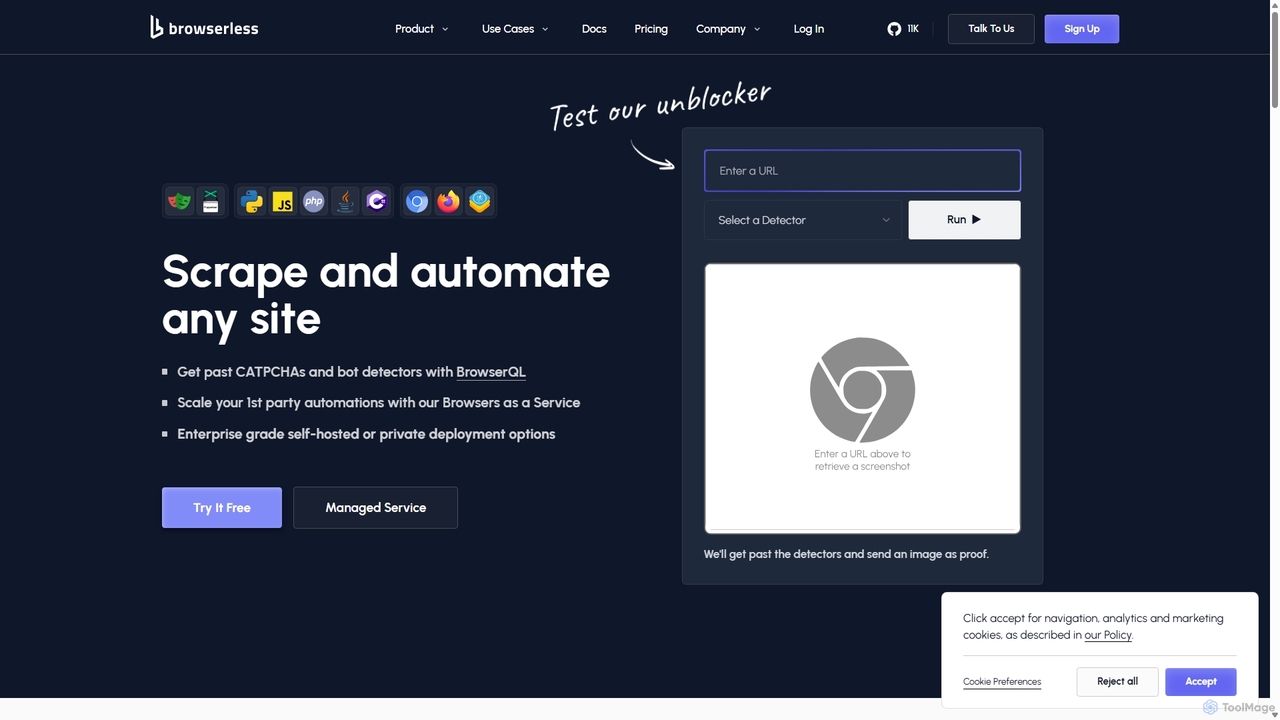
Browserless is a powerful Browser-as-a-Service (BaaS) platform designed for scalable web scraping and browser automation. It helps developers bypass CAPTCHAs and bot detectors effortlessly using Puppeteer, Playwright, or its proprietary BrowserQL language. The service manages browser infrastructure, allowing users to focus on building automation scripts without worrying about updates, memory leaks, or scaling.

Data Extraction
Visits 246.9KFavorites 121Likes 110
Crawlbase
Freemium

Crawlbase

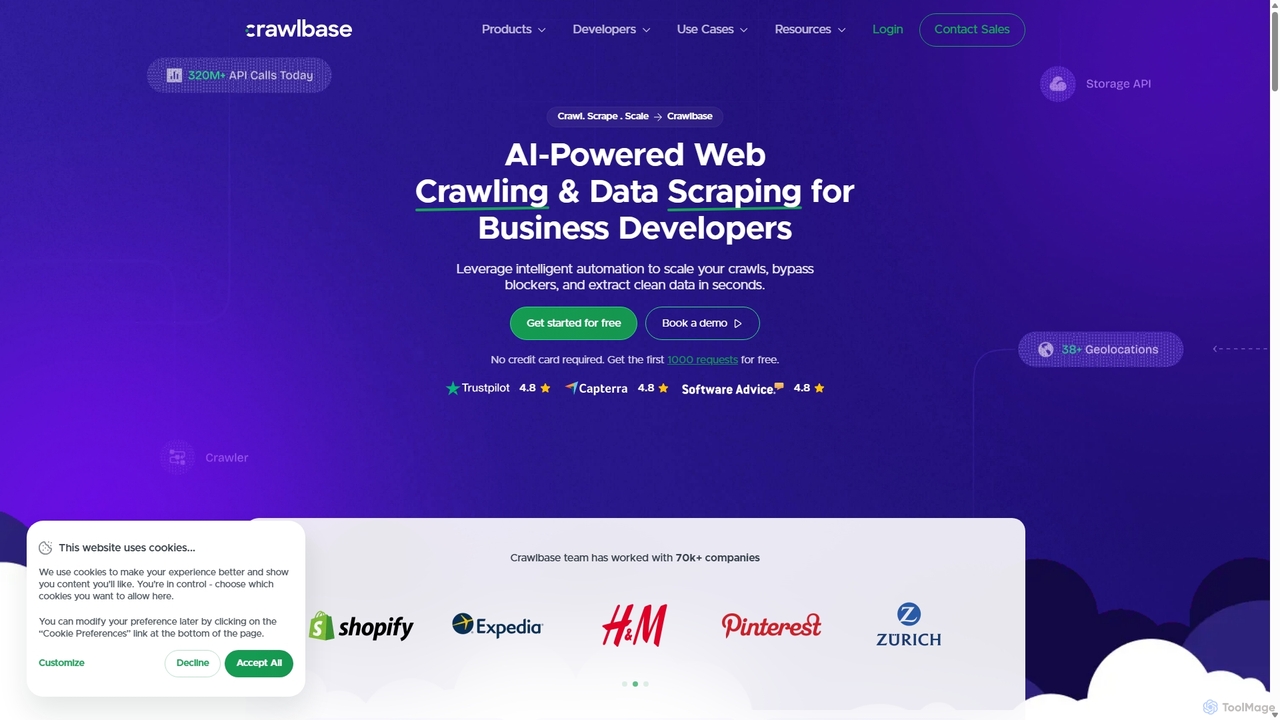
Crawlbase is an AI-powered web crawling and data scraping platform for developers and businesses. It provides a suite of tools, including a Crawling API and Smart Proxy, to anonymously extract data from any website at scale, bypassing blocks and CAPTCHAs with a high success rate. It simplifies data collection for SEO, market research, e-commerce intelligence, and training AI models.

Data Extraction
Visits 37.1KFavorites 137Likes 142
Scrappey
Freemium

Scrappey

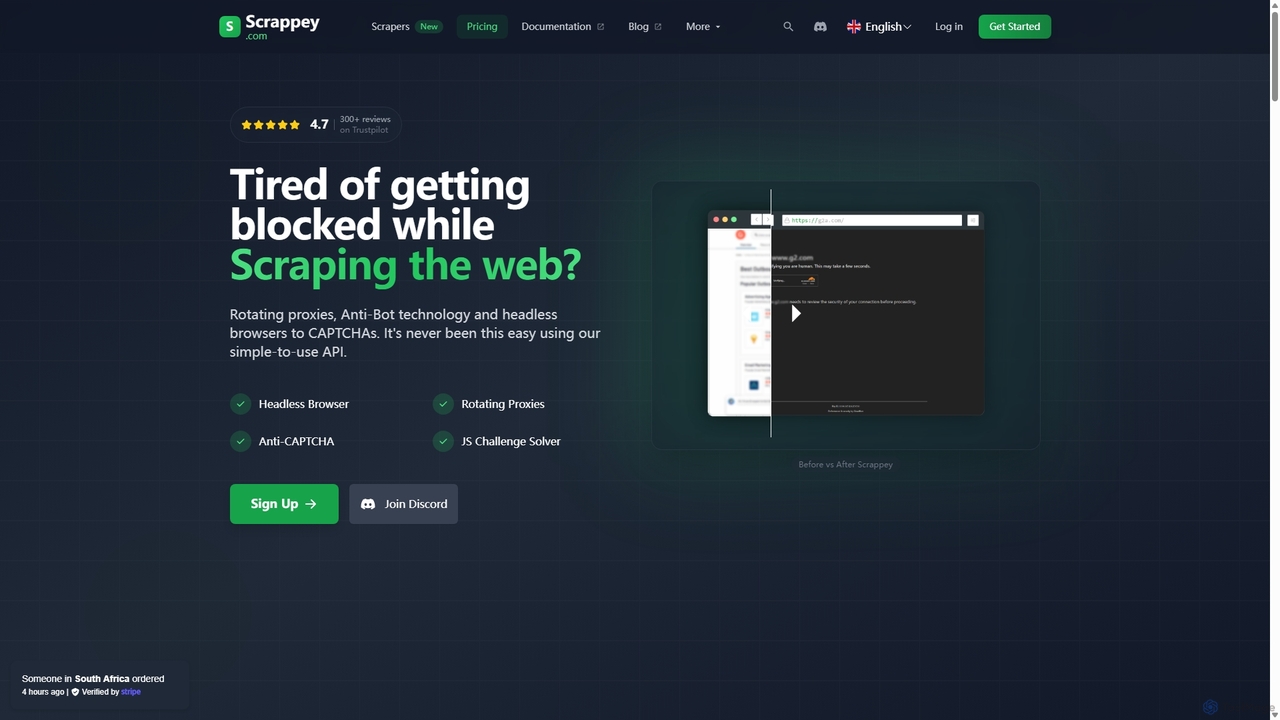
Scrappey is an advanced web scraping API designed for developers to effortlessly extract data from any website. It handles all complexities like rotating proxies, headless browsers, and bypassing anti-bot measures such as Cloudflare and CAPTCHAs. With a high success rate and a simple pay-as-you-go model, Scrappey streamlines data collection for various applications.

Data Extraction
Visits 63.7KFavorites 86Likes 85
Apify
Freemium

Apify

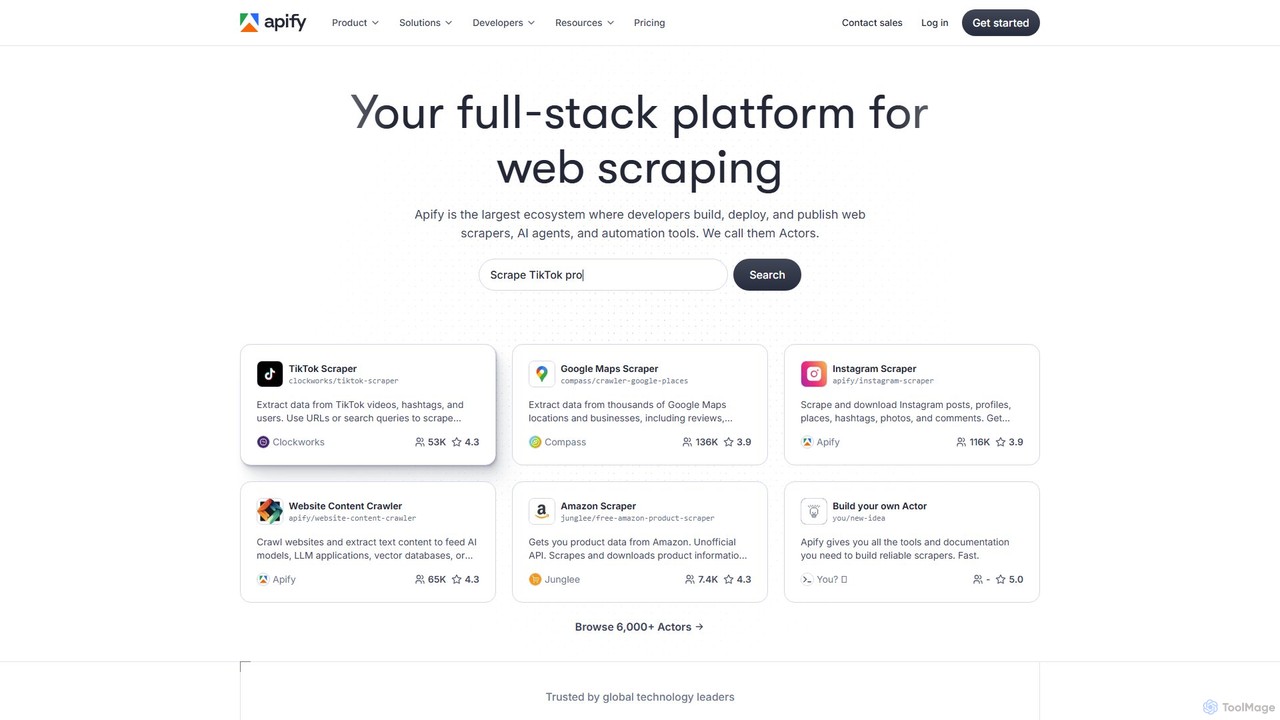
Apify is a full-stack web scraping and automation platform that enables developers to build, deploy, and publish data extraction tools, known as 'Actors'. It offers a vast marketplace of pre-built scrapers for popular websites like Google Maps, Instagram, and TikTok, alongside a robust cloud infrastructure for creating custom solutions. With support for Python and JavaScript, open-source libraries, and seamless integrations, Apify simplifies collecting web data at any scale.

Data Collection
Visits 4.4MFavorites 112Likes 111
Crawlbase
Freemium

Crawlbase

Crawlbase is an AI-powered web scraping and crawling platform designed for developers and businesses. It simplifies data extraction by handling proxies, CAPTCHAs, and anti-bot systems, allowing you to anonymously crawl any website and retrieve clean, structured data at scale. It offers a suite of tools including a Crawling API, Smart Proxy, and Cloud Storage.

Data Collection
Visits 4.8KFavorites 110Likes 107
WebScraping.AI
Freemium

WebScraping.AI

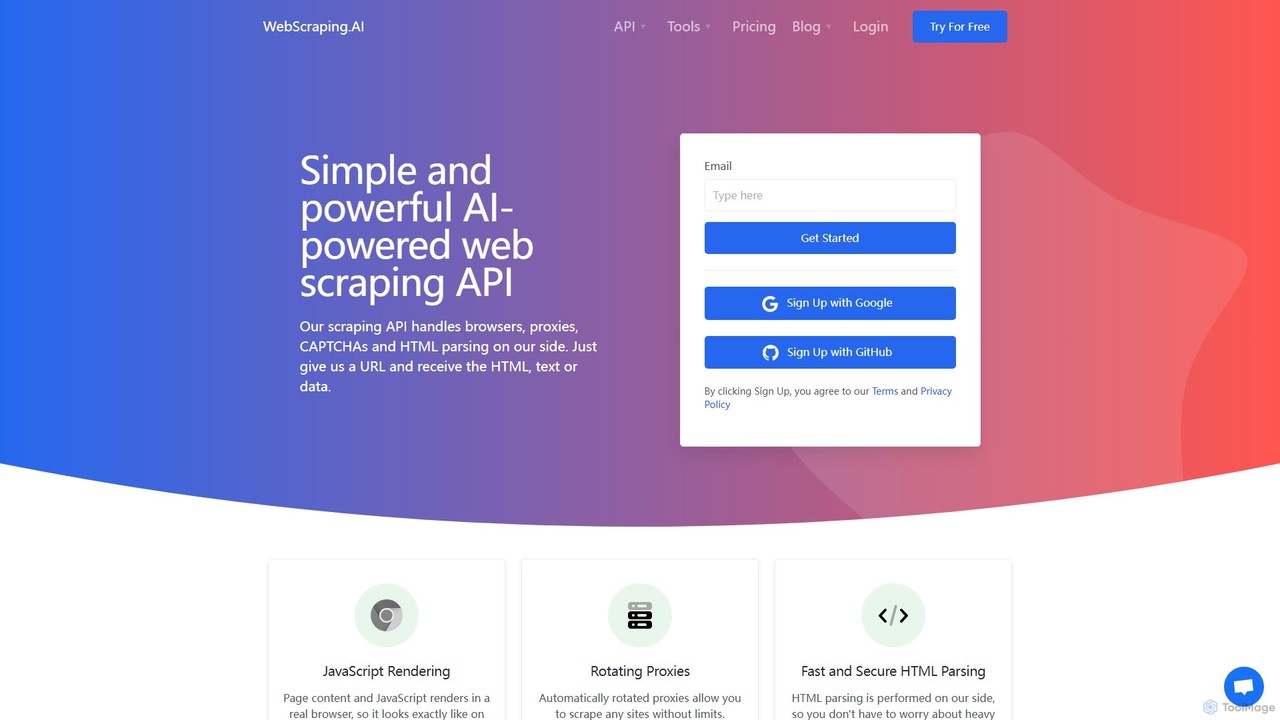
WebScraping.AI is an advanced API for developers that simplifies web scraping using AI. It features rotating proxies, JavaScript rendering, and geotargeting to bypass blocks and access dynamic content. Its core strength lies in its LLM-powered tools, which can extract unstructured data, generate summaries, and answer questions directly from web pages, streamlining data collection for any project.

Data Extraction
Visits 25.3KFavorites 121Likes 114
FetchFox
Freemium

FetchFox

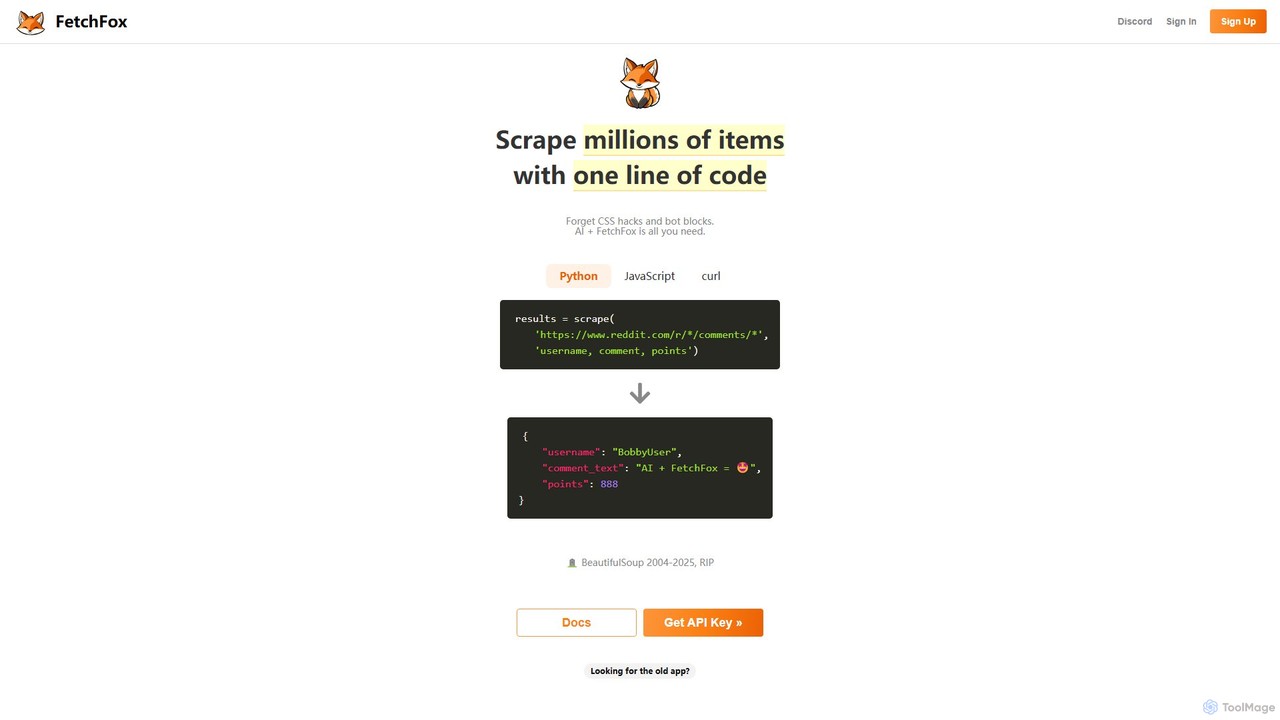
FetchFox is an AI-powered web scraping tool that allows users to extract data from any website using simple text prompts. It eliminates the need for complex coding or CSS selectors, automatically handling anti-bot measures. Available as an API, JavaScript library, and Chrome extension, it's designed for both developers and non-technical users to automate data collection effortlessly.

Data Extraction
Visits 45.1KFavorites 96Likes 100
CapSolver
Paid

CapSolver

CapSolver is an AI-powered, automatic CAPTCHA solving service designed for developers and RPA professionals. It provides a high-accuracy, fast, and scalable solution to bypass various types of CAPTCHAs, including reCAPTCHA, hCaptcha, and FunCaptcha, facilitating seamless web scraping, data extraction, and process automation.

Data Extraction
Visits 124.8KFavorites 109Likes 119
ScrapingBee
Freemium

ScrapingBee

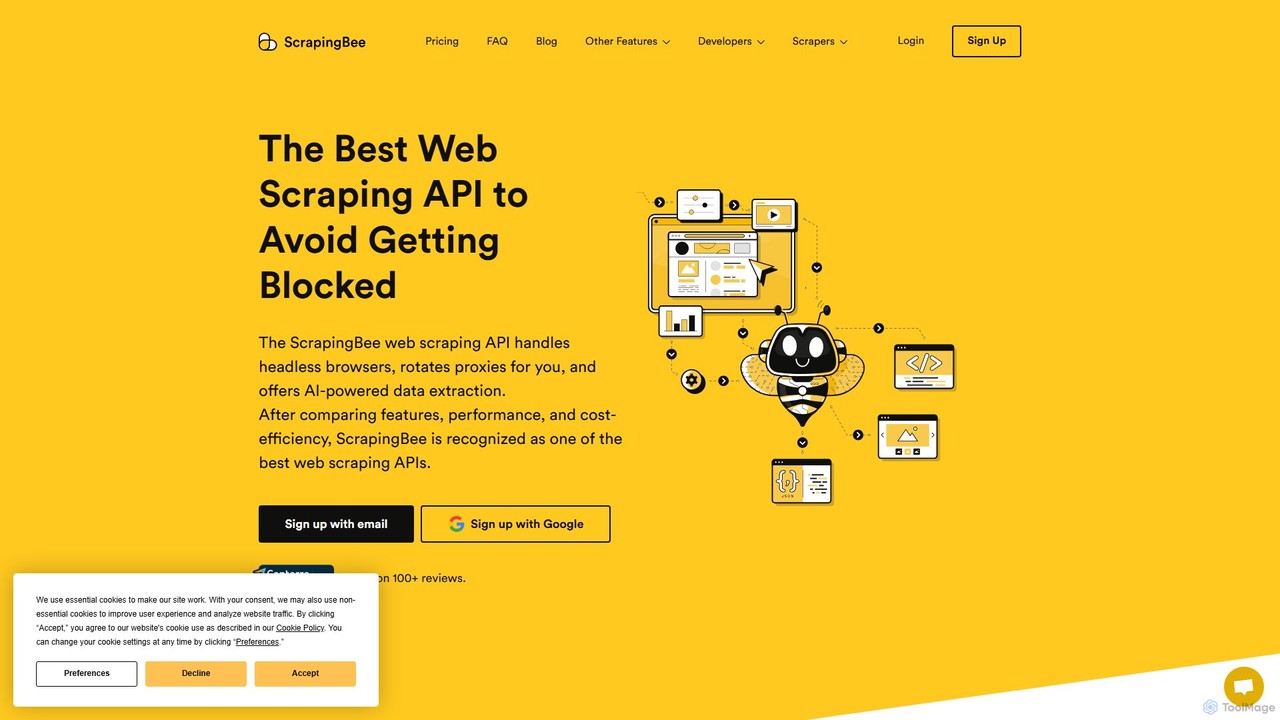
ScrapingBee is a powerful web scraping API that handles headless browsers and proxy rotation to prevent getting blocked. It features an innovative AI-powered extractor that lets you describe the data you need in plain English, eliminating the need for complex CSS selectors. Ideal for developers, marketers, and data analysts for tasks like price monitoring, lead generation, and SERP analysis.

Data Extraction
Visits 263.6KFavorites 122Likes 125
PageLlama
Freemium

PageLlama

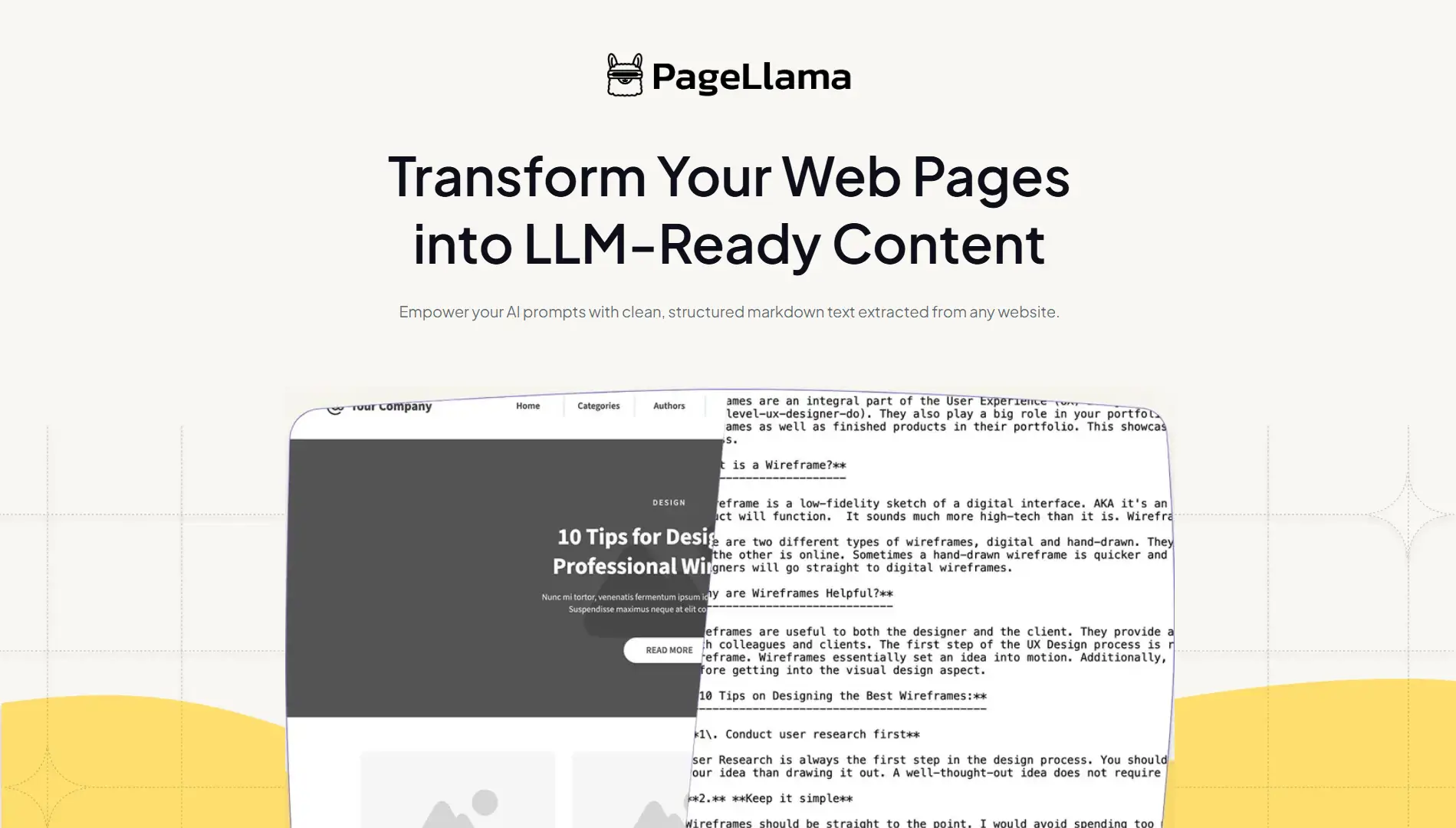
PageLlama is an AI-powered tool designed for developers and researchers. It effortlessly converts any web page content into clean, structured, and LLM-ready Markdown. By removing clutter like ads and navigation, it provides high-fidelity data, optimizing token usage and improving the accuracy of AI applications like RAG systems and data analysis models.

Data Extraction
Visits 4.5KFavorites 142Likes 149
AgentQL
Freemium

AgentQL

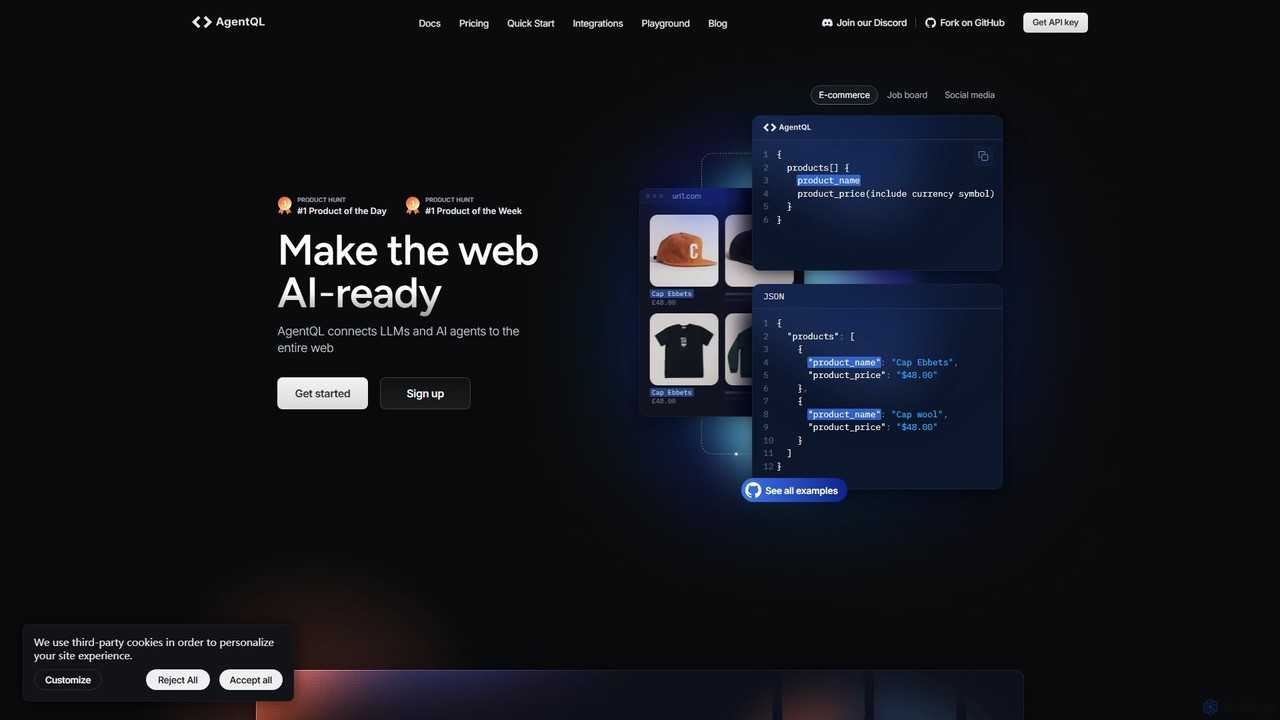
AgentQL is a developer toolset that connects LLMs and AI agents to the web. It uses an AI-powered query language to robustly extract structured data and automate web interactions, serving as a powerful, self-healing alternative to fragile XPath and CSS selectors.

Llm
Visits 24.4KFavorites 120Likes 126
URLtoText
Freemium

URLtoText

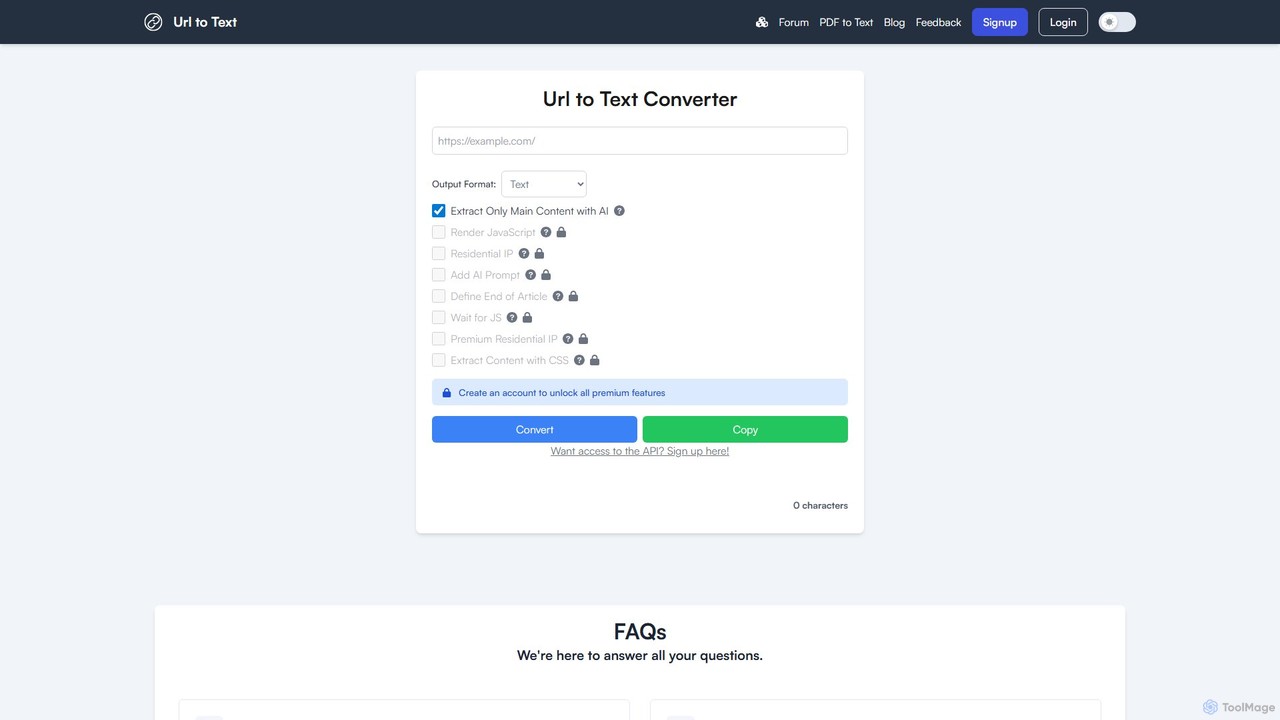
URLtoText is an AI-powered tool that extracts clean, structured text from any website or PDF. It intelligently removes ads, sidebars, and other clutter to provide only the main content. Featuring JavaScript rendering, residential IP proxies, and a developer API, it's designed for researchers, developers, and businesses needing reliable data extraction from both static and dynamic web pages.

Content Curation
Visits 50.9KFavorites 139Likes 138

About Web Scraping

Web Scraping tools are AI-powered solutions designed to automatically extract data from websites. These tools leverage advanced algorithms, often incorporating natural language processing and machine learning, to navigate web pages, identify, and collect structured or unstructured information. They are essential for automating tedious manual data collection, providing scalable and efficient data acquisition for various analytical needs. This capability makes them invaluable for businesses and researchers seeking to gather insights from the vast amount of public web data.

Core Features

  • Automated Data Extraction: Systematically collects specific data points like text, images, and links from web pages.
  • Dynamic Content Handling: Interacts with JavaScript-rendered content, forms, and pagination to access all relevant data.
  • Anti-Scraping Bypass: Employs techniques to circumvent common anti-bot measures such as CAPTCHAs and IP blocking.
  • Data Structuring & Export: Organizes extracted data into usable formats like CSV, JSON, or XML for easy analysis and integration.
  • Scheduling & Monitoring: Allows users to schedule scraping tasks and monitor websites for new or updated information.

Applicable Scenarios

Web scraping tools are widely used in market intelligence gathering for businesses, enabling them to monitor competitor pricing and product information. They are also crucial for academic researchers collecting large datasets from public sources for statistical analysis. E-commerce platforms utilize these tools for real-time price monitoring and inventory tracking across various online retailers.

How to Choose

When selecting a web scraping tool, consider its ability to handle the complexity of target websites, including dynamic content and anti-scraping measures. Evaluate its scalability and scheduling capabilities based on your required data volume and frequency. Assess the ease of use, whether through a no-code interface or a robust API for developers. Finally, ensure the tool supports ethical scraping practices and compliance with data privacy regulations.

Featured tool rankings

Web Scraping use cases

1

Competitive Price Monitoring for E-commerce

E-commerce businesses utilize web scraping tools to continuously monitor competitor pricing across various online platforms. This allows them to track price changes, identify promotional offers, and adjust their own pricing strategies in real-time to remain competitive. By automating this process, businesses can save significant manual effort and ensure their product offerings are always optimally priced, leading to increased sales and market share.

2

Lead Generation and Sales Intelligence

Sales and marketing teams leverage web scraping to extract valuable lead information from public directories, professional networking sites, or industry-specific portals. This includes contact details, company profiles, and job titles, which are then used to build targeted prospect lists. Automating lead generation significantly reduces the time spent on manual data entry, allowing sales professionals to focus on engagement and conversion, thereby improving sales pipeline efficiency.

3

Market Research and Trend Analysis

Researchers and analysts use web scraping to gather vast amounts of public data from news articles, forums, social media, and review sites. This data is then processed for sentiment analysis, trend identification, and competitive intelligence. By automating data collection, they can quickly acquire up-to-date information on consumer opinions, emerging market trends, and public perception of brands or products, enabling more informed strategic decisions.

4

Content Aggregation for News Portals

Media companies and news aggregators employ web scraping tools to automatically collect articles, headlines, images, and videos from various news sources and blogs. This enables them to populate their own news feeds or content platforms with fresh, diverse content without manual curation. The automation ensures a constant flow of information, keeping their audience engaged and informed, while significantly reducing editorial workload.

5

Real Estate Listing Analysis

Real estate professionals and investors use web scraping to collect property listings from multiple online platforms, including real estate portals and classifieds. This aggregated data allows for comprehensive market analysis, identifying trends in property values, rental rates, and availability across different regions. By automating this data collection, they can make faster, more informed decisions on property acquisitions, sales, and investment strategies, gaining a competitive edge.

6

Academic Research Data Collection

Academics and researchers frequently use web scraping to build large datasets for their studies. This involves extracting information from scientific publications, government databases, public archives, and specialized forums. The ability to quickly gather and structure vast amounts of data from diverse online sources is crucial for empirical research, statistical analysis, and validating hypotheses, significantly accelerating the research process and enabling deeper insights.

Web Scraping FAQ

What is Web Scraping?

Web scraping is the automated process of extracting data from websites. It involves using software to simulate human browsing, collecting specific information like text, images, and links, and then structuring it for analysis. AI-powered web scraping tools enhance this by intelligently identifying relevant data, handling dynamic content, and adapting to website changes, making data collection more efficient and robust for various applications like market research and content aggregation.

How do AI-powered Web Scraping tools differ from traditional scrapers?

AI-powered web scraping tools offer significant advantages over traditional, rule-based scrapers. Traditional scrapers rely on predefined rules and selectors, which break easily with website layout changes. AI tools, however, use machine learning and natural language processing to understand page structure, adapt to dynamic content, and intelligently extract unstructured data. This makes them more robust, less prone to errors, and capable of handling complex websites and large-scale data collection with minimal human intervention.

What are the ethical considerations when using Web Scraping tools?

Ethical web scraping involves respecting website policies and legal boundaries. Key considerations include checking a website's `robots.txt` file to understand allowed scraping behavior, avoiding excessive requests that could overload servers, and complying with data privacy regulations like GDPR and CCPA. It's crucial to only scrape publicly available data, avoid collecting personal identifiable information without consent, and use the extracted data responsibly, ensuring transparency and avoiding misuse.

What kind of data can be extracted using Web Scraping?

Web scraping tools can extract virtually any data visible on a public web page. This includes text content (articles, product descriptions, reviews), numerical data (prices, ratings, statistics), images, videos, links, and contact information. More advanced tools can also handle dynamic content loaded via JavaScript, data within forms, and information spread across multiple pages. The extracted data is typically structured into formats like CSV, JSON, or XML for easy analysis and integration into databases or applications.

Who benefits most from using Web Scraping tools?

A wide range of users benefit from web scraping tools. Businesses leverage them for market research, competitive analysis, and lead generation. Data analysts and scientists use them to gather large datasets for their models and insights. E-commerce managers utilize them for price monitoring and product intelligence. Academics and researchers find them invaluable for collecting data for studies. Essentially, anyone needing to systematically collect and analyze public web data on a large scale can gain significant value from these tools.