ToolMage
Sign in

Best 33 Devops AI tools

Popular Devops AI tools include Visual Studio Marketplace, CircleCI, mabl, ClawCloud Run, Aviator, Plural, Observo AI, allquiet, Amplication, and InstaVM, helping you work more efficiently.

allquiet
Freemium

allquiet

allquiet is a modern IT incident management and on-call scheduling platform for tech teams. It streamlines alerting, response, and resolution with over 35 integrations, multi-channel notifications, and developer-friendly tools like Terraform. It focuses on maximizing team productivity and system uptime with transparent, value-driven pricing.

Monitoring
Visits 10.3KFavorites 111Likes 113
mabl
Paid

mabl

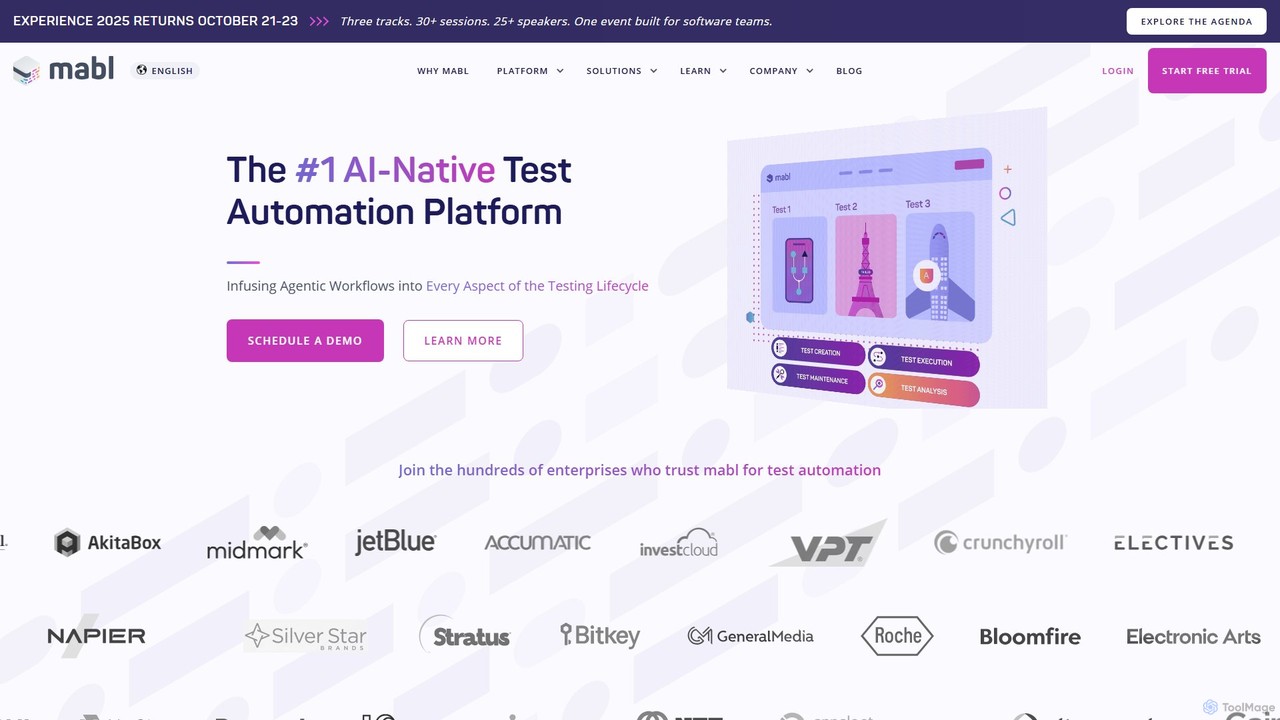
mabl is an AI-powered test automation platform that simplifies end-to-end testing for web applications. It uses AI to accelerate test creation, execution, and maintenance, enabling agile and DevOps teams to deliver high-quality software faster. With features like self-healing tests and AI-driven root cause analysis, mabl reduces the effort of maintaining brittle test suites.

Testing
Visits 112KFavorites 128Likes 114
Aviator
Freemium

Aviator

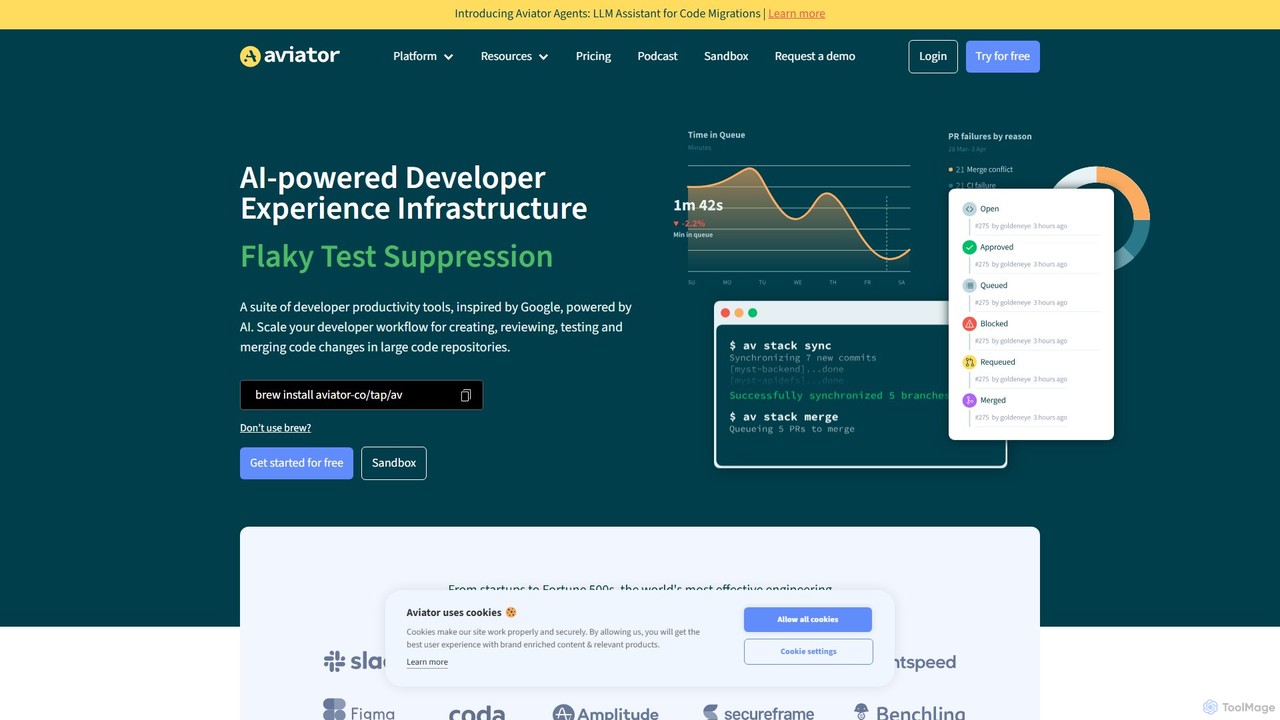
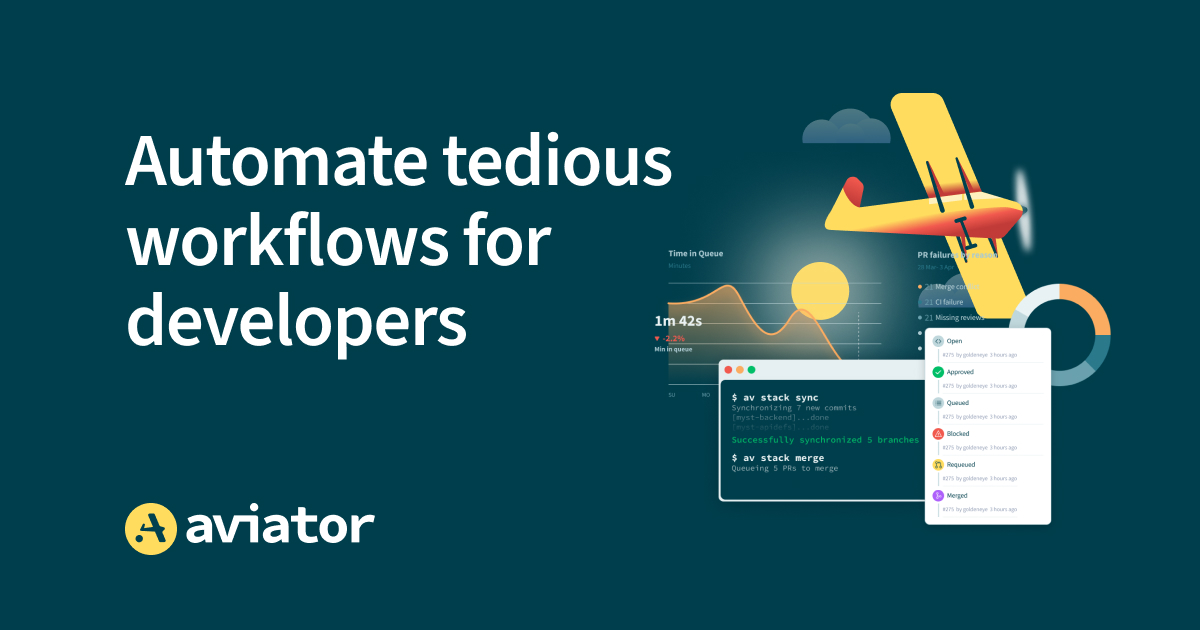
Aviator is a developer collaboration suite that automates the CI/CD pipeline, focusing on pull request management. It uses an automated merge queue to test, rebase, and merge code, ensuring the main branch remains stable and deployable, thereby boosting developer productivity and code quality.

Code Collaboration
Visits 76.1KFavorites 105Likes 105
CircleCI
Freemium

CircleCI

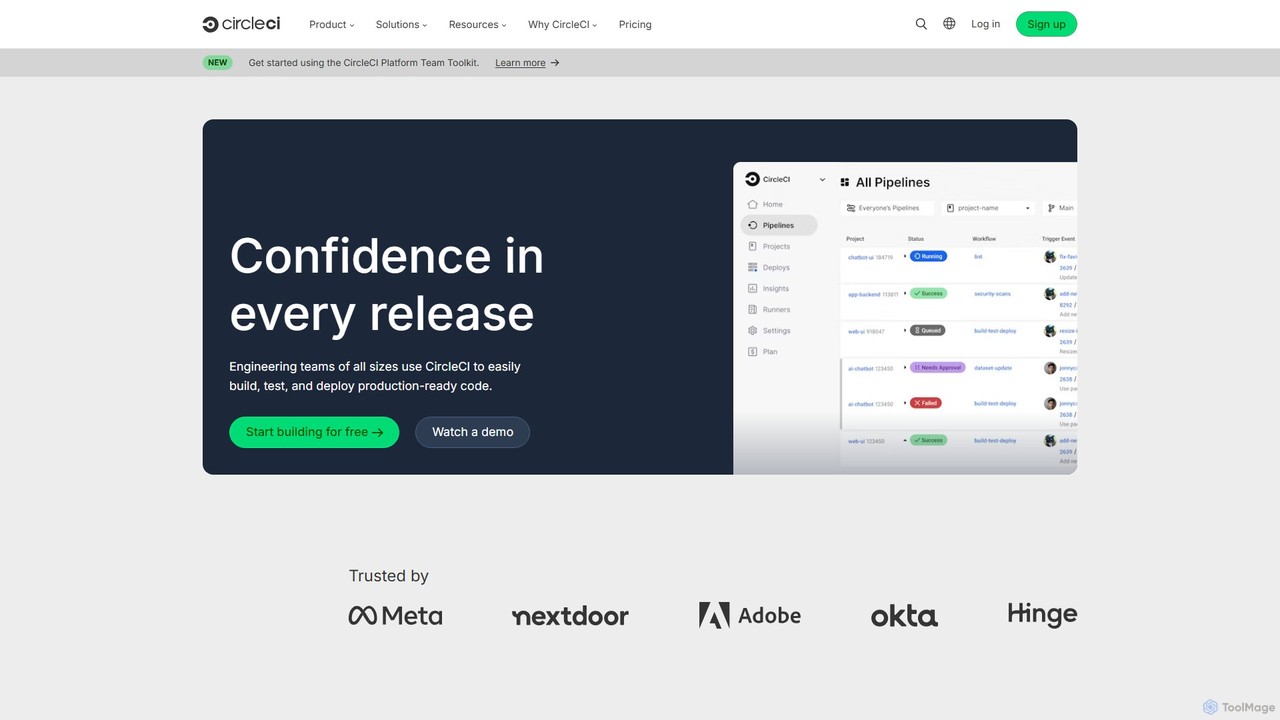
CircleCI is a leading continuous integration and continuous delivery (CI/CD) platform that automates the software development process. It enables engineering teams to build, test, and deploy code quickly, reliably, and at scale, increasing productivity and confidence in every release.

Infrastructure Management
Visits 977.5KFavorites 109Likes 109
Amplication
Freemium

Amplication

Amplication is an AI-powered backend development platform that standardizes and automates the creation of backend services. It empowers platform engineering teams to define 'Golden Paths' with live templates, enabling developers to rapidly build, maintain, and scale secure, compliant, and consistent microservices and applications.

Backend
Visits 8.6KFavorites 123Likes 120
Webo.AI
Freemium

Webo.AI

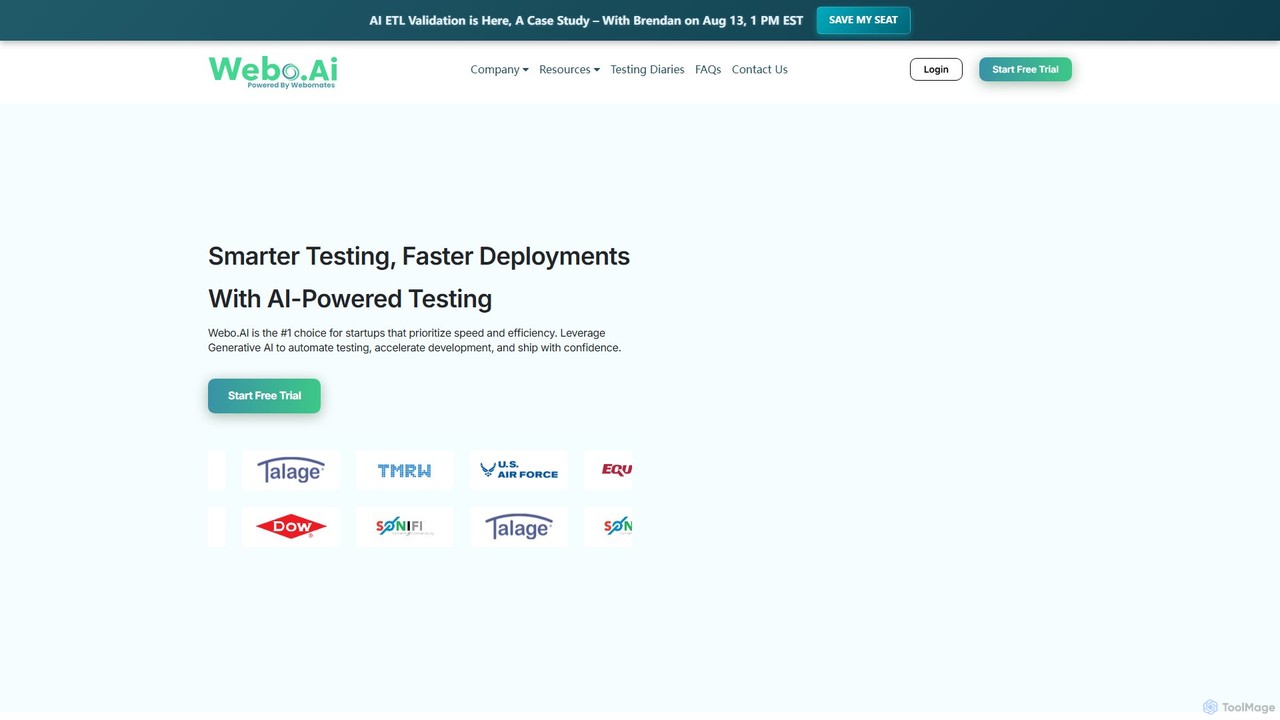
Webo.AI is an AI-powered, no-code test automation platform designed for startups and agile teams. It leverages Generative AI to create test cases instantly and features patented AiHealing® technology to automatically fix broken tests. This accelerates development cycles, reduces QA costs by up to 69%, and helps teams ship high-quality software with confidence and speed.

Testing
Visits 4.9KFavorites 153Likes 119
Devassistant.ai
Freemium

Devassistant.ai

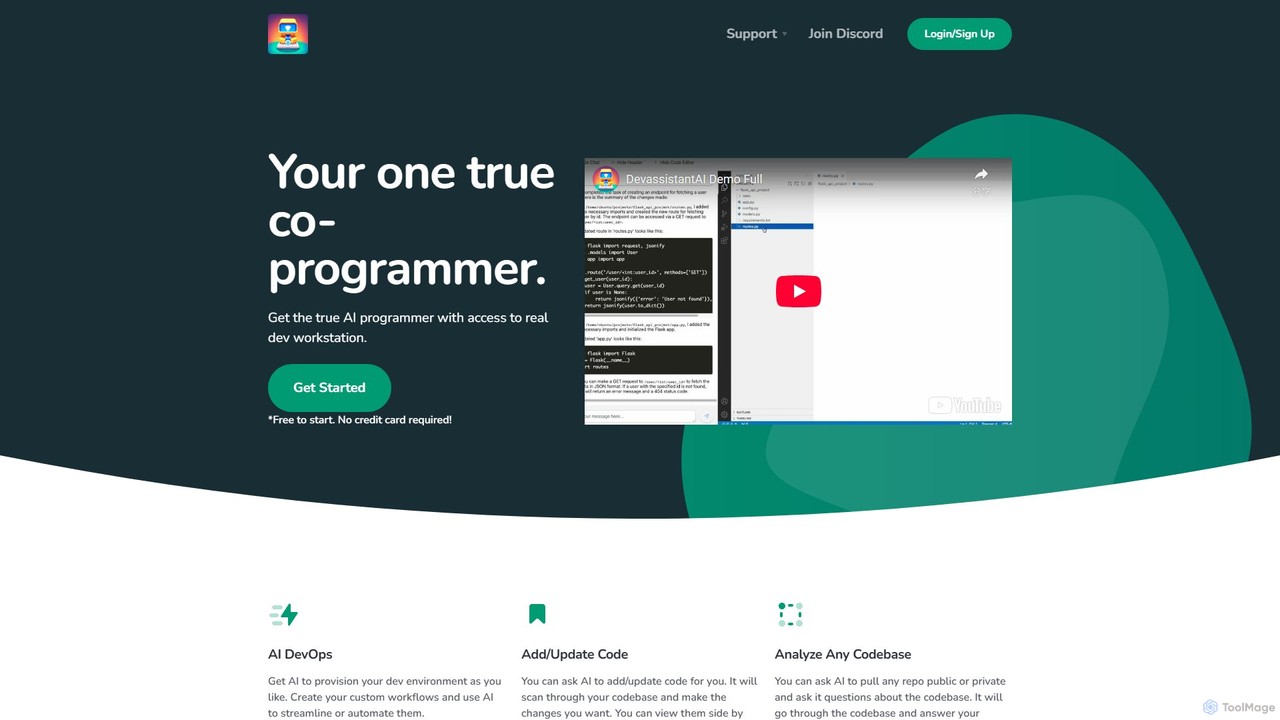
Devassistant.ai is an advanced AI co-programmer that automates DevOps, analyzes entire codebases, and intelligently adds or updates code. It streamlines development workflows by provisioning environments, answering complex questions about your code, and making changes within a cloud-based VS Code interface, boosting productivity and code quality.

Code Assistant
Visits 5.3KFavorites 127Likes 118
Vairflow
Freemium

Vairflow

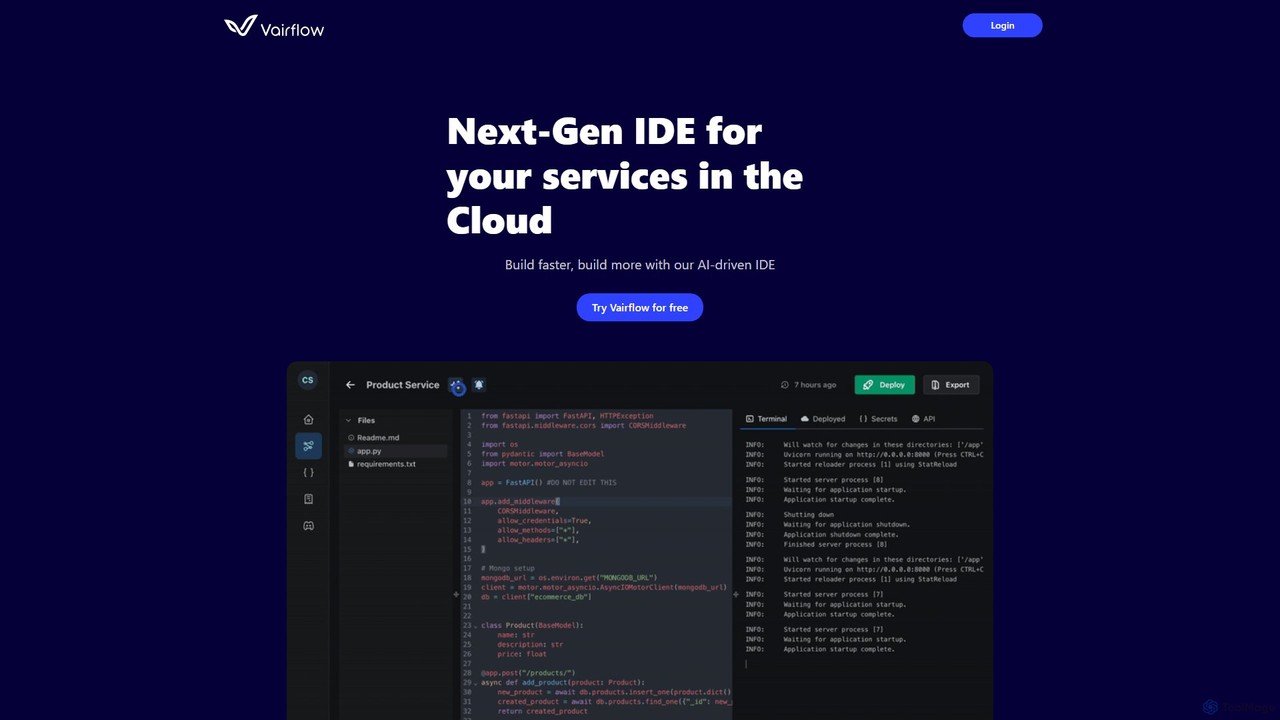
Vairflow is a next-generation, AI-driven Integrated Development Environment (IDE) designed for cloud services. It streamlines development by breaking down complex ideas into reusable components, such as backend microservices and front-end UIs. With one-click deployment and upcoming AI-powered coding assistance, Vairflow helps developers build and deploy full-stack applications faster and more efficiently, eliminating local setup hassles.

Cloud Ide
Visits 3.4KFavorites 96Likes 107
Office Kube
Freemium

Office Kube

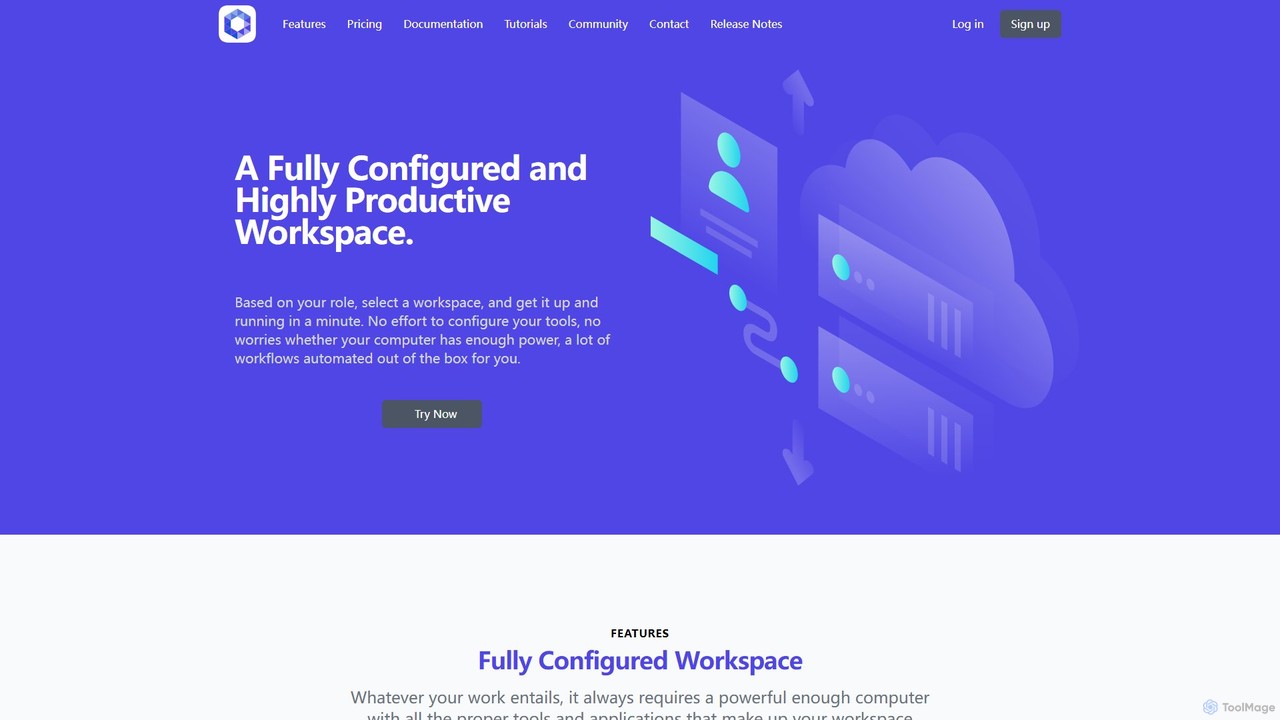
Office Kube is a cloud-native platform that provides fully configured, AI-powered workspaces accessible via a web browser. It eliminates local setup and hardware constraints by offering role-based development environments with automated workflows. Ideal for developers and teams seeking to boost productivity, streamline collaboration, and leverage enterprise-grade tools on demand.

Code Assistant
Visits 3.4KFavorites 117Likes 130

About Devops

AI DevOps tools are a class of intelligent software designed to automate, optimize, and secure the entire software development lifecycle (SDLC). These tools leverage machine learning and data analysis to perform tasks like intelligent code completion, predictive failure analysis, and automated security scanning. Their primary value lies in accelerating release cycles, improving system reliability, and enhancing developer productivity by providing proactive insights and automating complex, repetitive tasks. By analyzing data from code repositories, CI/CD pipelines, and production environments, they uncover patterns and bottlenecks that are difficult for human teams to identify.

Core Features

  • AI-Powered Coding Assistance: Provides intelligent code completion, generates functions from natural language prompts, and suggests code refactoring.
  • Intelligent CI/CD Optimization: Analyzes pipeline data to identify bottlenecks, predict build failures, and prioritize test execution to shorten feedback loops.
  • Anomaly Detection & Root Cause Analysis: Automatically monitors logs and metrics to detect unusual patterns, correlating events to pinpoint the root cause of incidents without manual rule-setting.
  • Automated Security Scanning (DevSecOps): Uses AI to identify vulnerabilities in code and dependencies with higher accuracy and fewer false positives than traditional scanners.
  • Predictive Monitoring: Forecasts potential system failures or performance degradation based on historical trends, enabling proactive maintenance.

Use Cases

AI DevOps tools are primarily used by software developers, DevOps engineers, Site Reliability Engineers (SREs), and security professionals. For instance, a development team might use an AI coding assistant to accelerate feature creation, while an SRE team could deploy an AIOps platform to predict and prevent system outages before they impact users. These tools are applicable across technology companies, financial services, and any organization focused on rapid and reliable software delivery.

How to Choose

When selecting an AI DevOps tool, first consider its integration capabilities with your existing toolchain (e.g., Git, Jenkins, Jira). Evaluate the scope of its features—whether it's a point solution for a specific task or a comprehensive platform. Assess the accuracy and adaptability of its AI models, including whether they can be trained on your specific data. Finally, scrutinize its security and data privacy policies, especially if it will access proprietary source code or production data.

Featured tool rankings

Devops use cases

1

Automate Code Generation and Refactoring

A software developer working on a new feature can use an AI coding assistant to accelerate their workflow. By providing natural language prompts like "create a Python function to parse a JSON file and return a list of user objects," the tool generates the necessary code instantly. For existing complex functions, the developer can highlight the code and ask the AI to refactor it for better readability or performance. This process significantly reduces time spent on boilerplate code and routine tasks, allowing developers to focus on solving complex business logic and improving overall code quality.

2

Intelligent Anomaly Detection in Production

A Site Reliability Engineer (SRE) manages a large-scale application that generates millions of log entries per minute. Instead of manually setting static alert thresholds, which often lead to alert fatigue, they deploy an AIOps platform. The platform learns the application's normal behavior patterns from historical data. When a sudden, unusual spike in error rates occurs that deviates from the learned baseline, the tool automatically flags it as an anomaly and correlates it with a recent deployment, identifying it as the likely root cause. This allows the SRE team to detect and diagnose 'unknown unknowns' in minutes, significantly reducing Mean Time to Detection (MTTD).

3

Optimize CI/CD Pipeline Performance

A DevOps engineer notices that the CI/CD pipeline is becoming a bottleneck, with build and test cycles taking over an hour. They integrate an AI-powered pipeline optimization tool. The tool analyzes historical run data and identifies that a specific suite of integration tests is disproportionately slow. It also uses predictive test selection to run only the tests relevant to a specific code change, rather than the entire test suite. As a result, the average pipeline duration is reduced by 40%, providing faster feedback to developers and increasing the team's overall deployment frequency without compromising quality.

4

Proactive Vulnerability Detection in Code

A DevSecOps engineer aims to 'shift security left' by finding vulnerabilities early. They integrate an AI-powered Static Application Security Testing (SAST) tool into developers' IDEs and the CI pipeline. As a developer writes code, the tool scans it in real-time, identifying complex security flaws like potential SQL injection vectors that traditional rule-based scanners might miss. It provides immediate feedback with low false positives, including code examples for remediation. This catches over 90% of critical vulnerabilities before code is even committed, drastically reducing the cost and effort of fixing security issues later in the lifecycle.

5

Automate Incident Triage and Response

An IT Operations team is overwhelmed by a high volume of alerts from various monitoring systems. They implement an AIOps platform to automate the initial response. When an incident occurs, the platform automatically groups related alerts from different sources into a single, contextualized incident. It then analyzes historical data to suggest a probable root cause and recommends a remediation playbook. For common issues, it can even trigger an automated workflow, such as restarting a service, without human intervention. This reduces Mean Time to Resolution (MTTR) by up to 60% and frees up the operations team to focus on more strategic initiatives.

6

Generate and Maintain Infrastructure as Code (IaC)

A platform engineer needs to provision a new, complex cloud environment on AWS using Terraform. Instead of writing hundreds of lines of HCL configuration manually, they use an AI tool specialized in IaC. The engineer provides a high-level prompt in natural language, such as "Create a VPC with public and private subnets, an internet gateway, and a NAT gateway for a three-tier web application." The AI generates the complete, production-ready Terraform code. This not only accelerates the initial setup but also helps maintain consistency and reduces human error when updating the infrastructure, ensuring best practices are followed automatically.

Devops FAQ

What are AI DevOps tools?

AI DevOps tools are software applications that use artificial intelligence and machine learning to automate and optimize processes within the software development lifecycle (SDLC). They go beyond traditional automation by learning from data to make intelligent decisions. Key functions include generating code, predicting build failures in CI/CD pipelines, detecting security vulnerabilities with higher accuracy, and identifying performance anomalies in production systems before they impact users. The ultimate goal is to increase development velocity, improve software quality, and enhance system reliability.

How do I choose the right AI DevOps tool?

Choosing the right AI DevOps tool depends on your specific needs. Consider these key factors:

  • Integration: Ensure the tool integrates seamlessly with your existing technology stack, such as your version control system (e.g., GitHub), CI/CD server (e.g., Jenkins), and communication platforms (e.g., Slack).
  • Problem Scope: Identify the primary problem you want to solve. Are you looking for a point solution like an AI code assistant, or a comprehensive AIOps platform for monitoring and incident response?
  • Data Privacy and Security: Verify how the tool handles your data. If it processes proprietary source code or sensitive production data, ensure it meets your organization's security and compliance standards.
  • Usability and Learning Curve: Evaluate how easy it is for your team to adopt and use the tool effectively. A tool with a steep learning curve may hinder productivity initially.
What is the difference between AIOps and traditional DevOps monitoring?

The key difference lies in proactivity and intelligence. Traditional DevOps monitoring relies on manually configured, static thresholds (e.g., alert when CPU usage exceeds 90%). It is primarily reactive, notifying teams after a problem has already occurred. In contrast, AIOps (AI for IT Operations) uses machine learning to dynamically learn a system's normal behavior. It can detect subtle anomalies that don't cross static thresholds, correlate alerts from multiple tools to identify the root cause, and even predict future issues based on trends. AIOps is proactive, aiming to prevent incidents before they happen.

What are the main functions of AI in DevOps?

AI performs several key functions across the DevOps lifecycle to enhance efficiency and quality. The main functions include:

  • Code Generation & Completion: AI assistants write boilerplate code, complete functions, and even generate unit tests, freeing up developers' time.
  • Pipeline Optimization: AI analyzes CI/CD pipeline data to predict failures, identify bottlenecks, and prioritize tests, leading to faster feedback loops.
  • Intelligent Monitoring: AIOps platforms detect anomalies in system performance and logs, helping teams find and fix issues faster.
  • Automated Security Testing: AI-powered tools scan code for vulnerabilities with greater accuracy and context than traditional rule-based systems.
  • Incident Management: AI helps correlate alerts, identify root causes, and suggest remediation steps to reduce downtime.
Who should use AI DevOps tools?

AI DevOps tools are beneficial for a wide range of roles involved in software delivery. Key users include:

  • Software Developers: To accelerate coding, improve code quality, and get faster feedback from CI/CD pipelines.
  • DevOps Engineers: To automate pipeline management, optimize infrastructure, and improve deployment frequency and reliability.
  • Site Reliability Engineers (SREs): To proactively monitor systems, predict failures, and reduce the mean time to resolution (MTTR) for incidents.
  • Security Professionals (DevSecOps): To integrate automated, intelligent security scanning early in the development process ('shift left').
  • IT Operations Managers: To gain better visibility into system health, automate incident response, and reduce operational overhead.

Essentially, any team looking to enhance automation, improve reliability, and increase the velocity of their software development lifecycle can benefit from these tools.