KubeHA
KubeHA is a GenAI-powered SaaS platform for Kubernetes, offering an all-in-one solution for Monitoring, Observability, Remediation, and Exploration …
KubeHA is a GenAI-powered SaaS platform for Kubernetes, offering an all-in-one solution for Monitoring, Observability, Remediation, and Exploration (MORE). It unifies logs, metrics, traces, and events to provide AI-driven root cause analysis, smart fix suggestions, and 1-click remediation, eliminating tool sprawl and simplifying complex operations for SRE and DevOps teams.
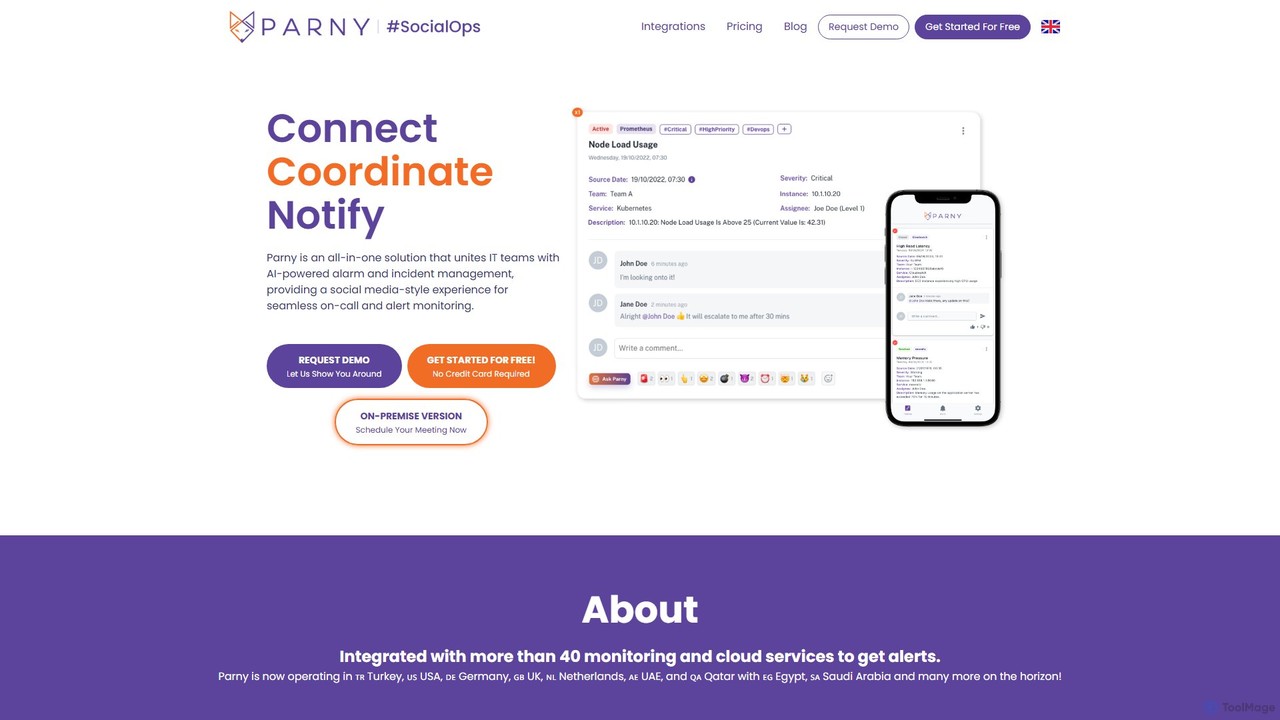
Parny
Parny is an all-in-one, AI-powered incident and on-call management platform. It unifies IT teams with a social media-style …
Parny is an all-in-one, AI-powered incident and on-call management platform. It unifies IT teams with a social media-style experience for seamless alert monitoring, smart scheduling, and insightful analytics, including DORA metrics. Parny serves as a powerful alternative to Opsgenie, offering advanced features like AI-driven recommendations and infrastructure mapping.
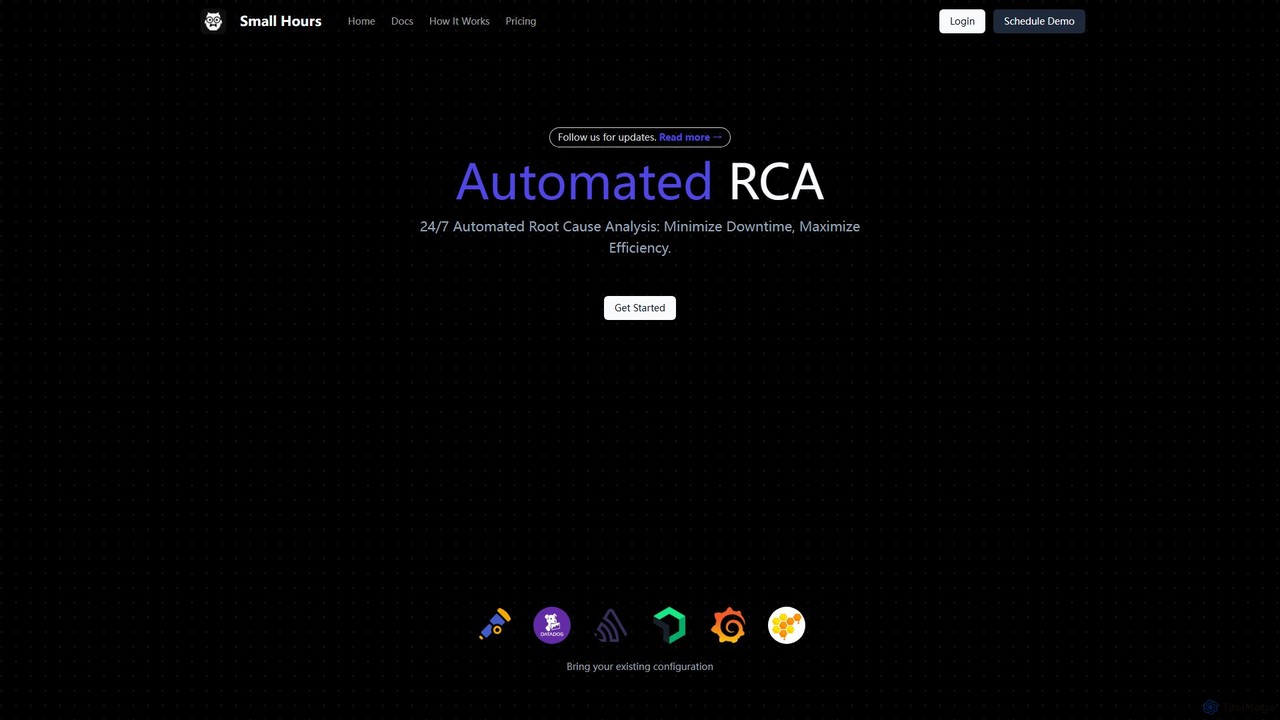
smallhours
smallhours is an AI-powered platform for developers that automates root cause analysis (RCA) 24/7. It integrates with your …
smallhours is an AI-powered platform for developers that automates root cause analysis (RCA) 24/7. It integrates with your stack via OpenTelemetry to monitor systems, diagnose issues using your codebase and runbooks as context, and accelerates resolution time by 10x, minimizing downtime and streamlining on-call duties.
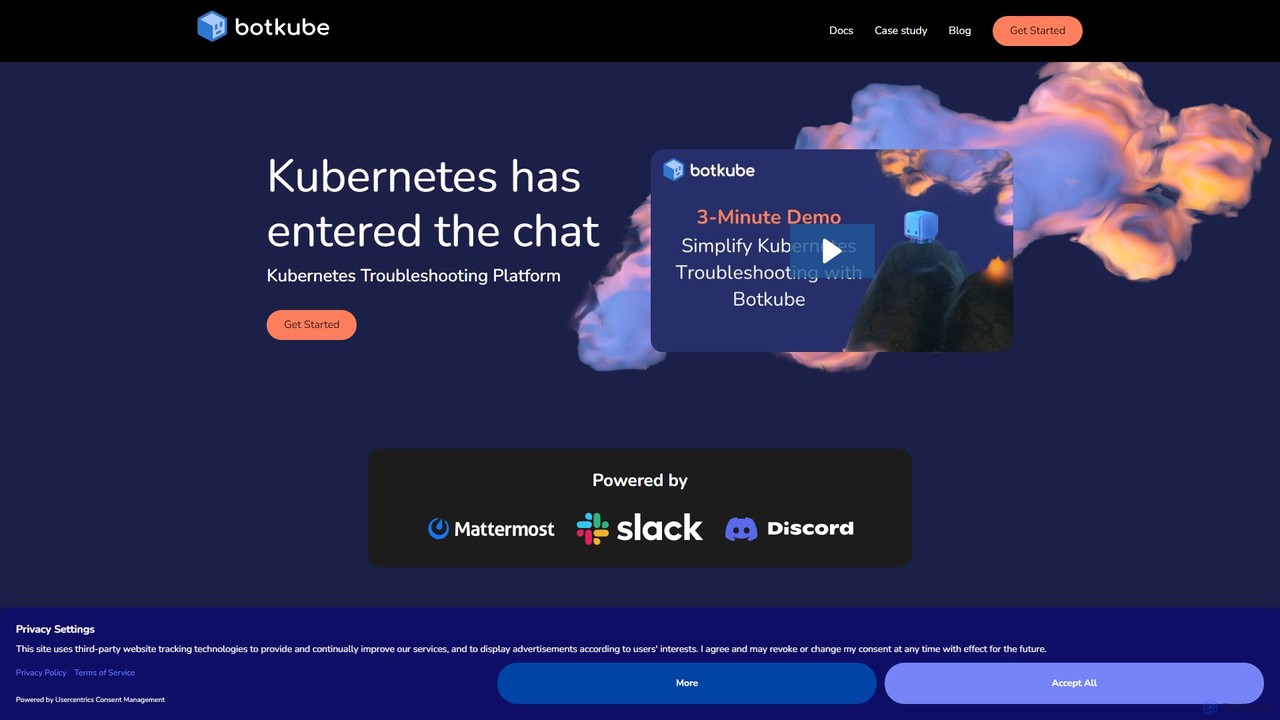
Botkube
Botkube is an open-source, collaborative AI assistant for Kubernetes. It integrates directly into your chat platforms like Slack …
Botkube is an open-source, collaborative AI assistant for Kubernetes. It integrates directly into your chat platforms like Slack and Microsoft Teams, centralizing real-time monitoring, alerting, and troubleshooting. It empowers developers to manage their applications independently and streamlines DevOps workflows by bringing K8s management into your daily communication tools.
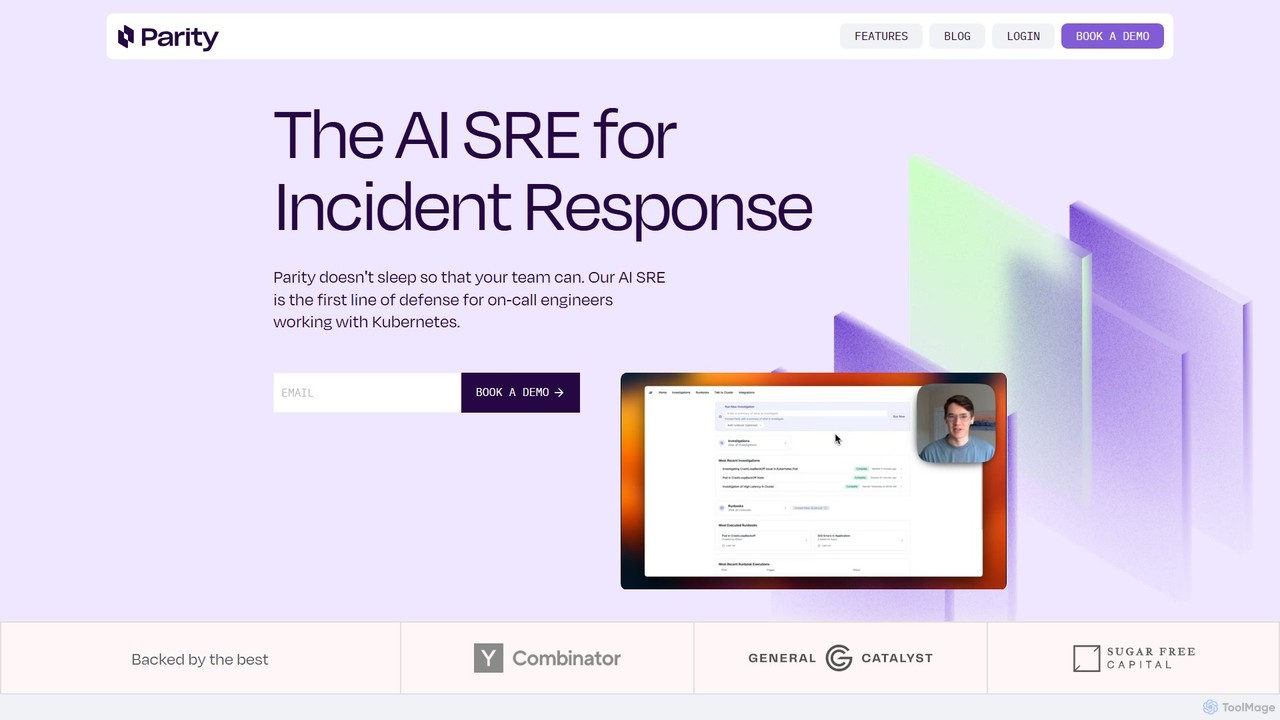
Parity
Parity is an AI-powered Site Reliability Engineer (SRE) designed for incident response in Kubernetes environments. It automates investigations, …
Parity is an AI-powered Site Reliability Engineer (SRE) designed for incident response in Kubernetes environments. It automates investigations, performs rapid root cause analysis, and executes runbooks, allowing on-call teams to resolve issues faster and reduce operational workload.
Releem
Releem is an AI-powered MySQL performance tuning tool designed to automate database management. It automatically detects performance bottlenecks, …
Releem is an AI-powered MySQL performance tuning tool designed to automate database management. It automatically detects performance bottlenecks, provides optimized server configurations, and suggests improvements for SQL queries and indexes. Ideal for developers, DBAs, and hosting providers, Releem simplifies complex database tasks, enhances application speed, and reduces infrastructure costs through a user-friendly dashboard and continuous health monitoring.
About Monitoring
AI Monitoring tools are a class of software that use machine learning to automatically observe and analyze the health and performance of IT systems. They go beyond traditional threshold-based alerts by learning normal operational patterns to intelligently detect anomalies, predict potential failures, and identify root causes. This enables IT operations teams to proactively resolve issues before they impact users, significantly reducing downtime and improving system reliability. These tools are a core component of modern AIOps (AI for IT Operations) strategies.
Core Features
- Intelligent Anomaly Detection: Identifies deviations from normal system behavior without pre-defined rules.
- Predictive Analytics: Forecasts future performance issues or resource shortages based on historical data.
- Automated Root Cause Analysis (RCA): Correlates events across different data sources to pinpoint the origin of a problem.
- Dynamic Thresholding: Automatically adjusts alert thresholds based on changing system loads and patterns.
- Alert Noise Reduction: Groups related alerts and filters out irrelevant notifications to focus on critical incidents.
Use Cases
AI Monitoring tools are primarily used by IT Operations, DevOps, and Site Reliability Engineering (SRE) teams in technology-driven industries. For example, an e-commerce platform uses them to predict traffic spikes and prevent server overloads during a sales event. A software company can leverage these tools to identify performance bottlenecks in their application code before a new release, ensuring a smooth user experience.
How to Choose
When selecting an AI Monitoring tool, consider its integration capabilities with your existing tech stack (e.g., cloud providers, databases, CI/CD pipelines). Evaluate the sophistication of its machine learning models for anomaly detection and RCA. Also, assess the clarity of its dashboards, the flexibility of its alerting system, and its pricing model, which could be based on hosts, data volume, or users.
MonitoringUse Cases
Proactive E-commerce Outage Prevention
An SRE team at an online retail company uses an AI Monitoring tool to ensure high availability during a major sales event. The tool analyzes real-time transaction data, server metrics, and user behavior. It detects a subtle, unusual latency pattern in the payment gateway that traditional monitors would miss. By correlating this with a slight increase in database query times, the AI predicts a potential database overload within the next hour. It automatically alerts the team with the specific root cause, allowing them to scale database resources proactively and prevent a site-wide outage that could have cost millions in lost revenue.
Automated Application Performance Debugging
A DevOps engineer for a SaaS company pushes a new code update to production. Shortly after, the AI Monitoring tool detects a spike in API error rates and a gradual increase in memory consumption on a specific microservice. Instead of generating hundreds of separate alerts, it correlates logs, traces, and metrics to pinpoint the exact function in the new code that is causing a memory leak. The engineer receives a single, context-rich incident report that reduces the mean time to resolution (MTTR) from hours of manual log sifting to just a few minutes of targeted debugging.
Cloud Cost Optimization through Anomaly Detection
A cloud infrastructure team manages a sprawling multi-cloud environment. The AI Monitoring tool continuously analyzes resource utilization patterns. It identifies a cluster of virtual machines that were provisioned for a temporary project but were never de-provisioned, now sitting idle and incurring costs. It also flags an auto-scaling group that consistently over-provisions resources due to misconfigured scaling policies. By flagging these cost anomalies, the tool helps the team save over 20% on their monthly cloud bill without impacting service performance.
Early Detection of Security Threats
A Security Operations (SecOps) team integrates an AI Monitoring tool with their security information and event management (SIEM) system. The tool establishes a baseline of normal network traffic and user activity. It then flags a low-and-slow data exfiltration attempt, where a compromised account is exporting small amounts of data over a long period to avoid detection. The AI identifies this anomalous behavior, which would be invisible to rule-based security alerts, and triggers a high-priority incident, allowing the SecOps team to contain the breach before significant data loss occurs.
Predictive Maintenance for IoT Devices
A manufacturing company deploys thousands of IoT sensors on its factory floor. An AI Monitoring platform ingests telemetry data from these sensors, such as temperature, vibration, and pressure. By analyzing historical data, the AI model learns the failure patterns of specific machine components. It predicts that a critical motor is 85% likely to fail within the next 72 hours due to abnormal vibration signatures. This predictive alert allows the maintenance team to schedule a replacement during non-operational hours, preventing costly unplanned downtime and production loss.
Improving Digital Experience with Business Context
A financial services firm uses an AI Monitoring tool to track the performance of its online banking platform. The tool is configured to understand business KPIs, such as 'successful loan applications' or 'completed fund transfers'. When it detects a drop in the loan application completion rate, it automatically correlates this business metric with underlying IT performance data. It discovers that the drop is linked to a specific slow-running API call in the identity verification service. This allows the IT team to prioritize the fix based on direct business impact, rather than just technical severity.