ToolMage
Sign in

Best 125 Marketing Automation AI tools for Marketing

Popular Marketing Automation AI tools in Marketing include Salesforce, HubSpot, monday.com, Mailchimp, Make, Klaviyo, LeadConnector, GetResponse, SendPulse, and LiveChat, helping you work more efficiently.

AI Listing
Freemium

AI Listing

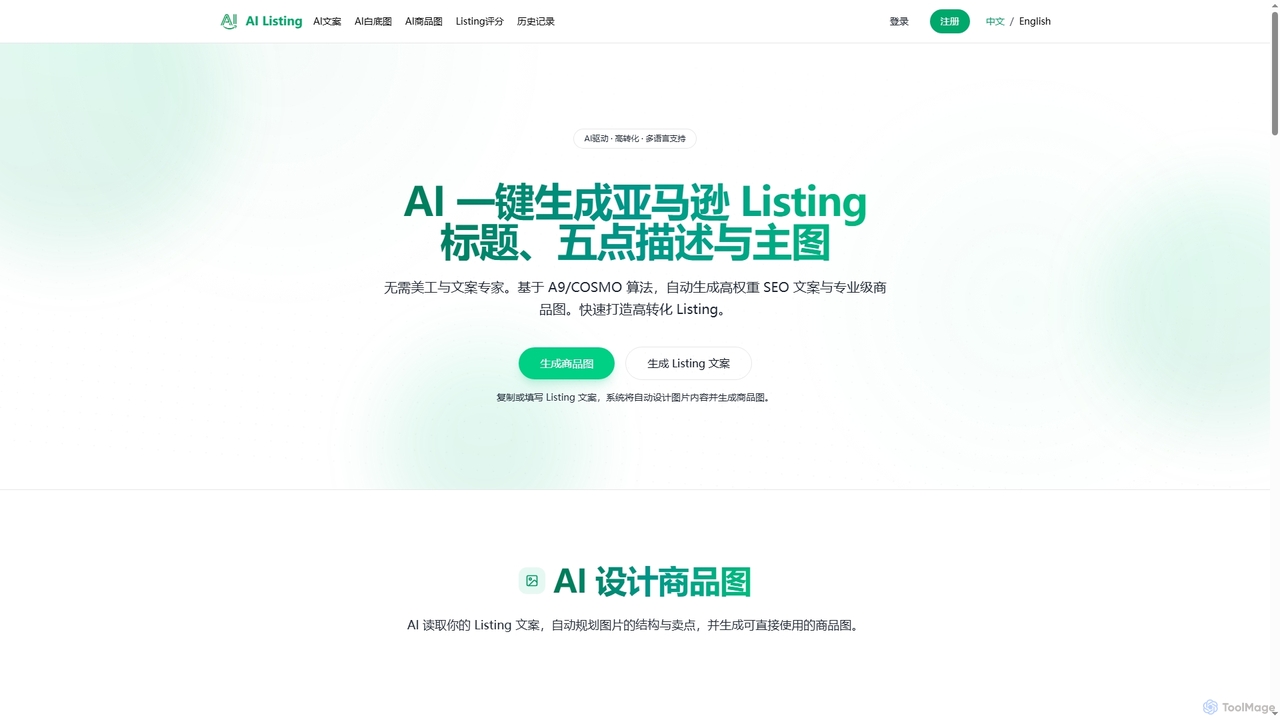
AI Listing is an advanced AI tool designed for Amazon sellers to rapidly generate high-converting product listings and professional-grade images. Leveraging A9 and COSMO algorithms, it optimizes titles, bullet points, and descriptions for SEO, while also creating visually compelling product photos, saving time and boosting sales.

Product Descriptions
Visits 7.5KFavorites 54Likes 59
VertexGrowth
Freemium

VertexGrowth

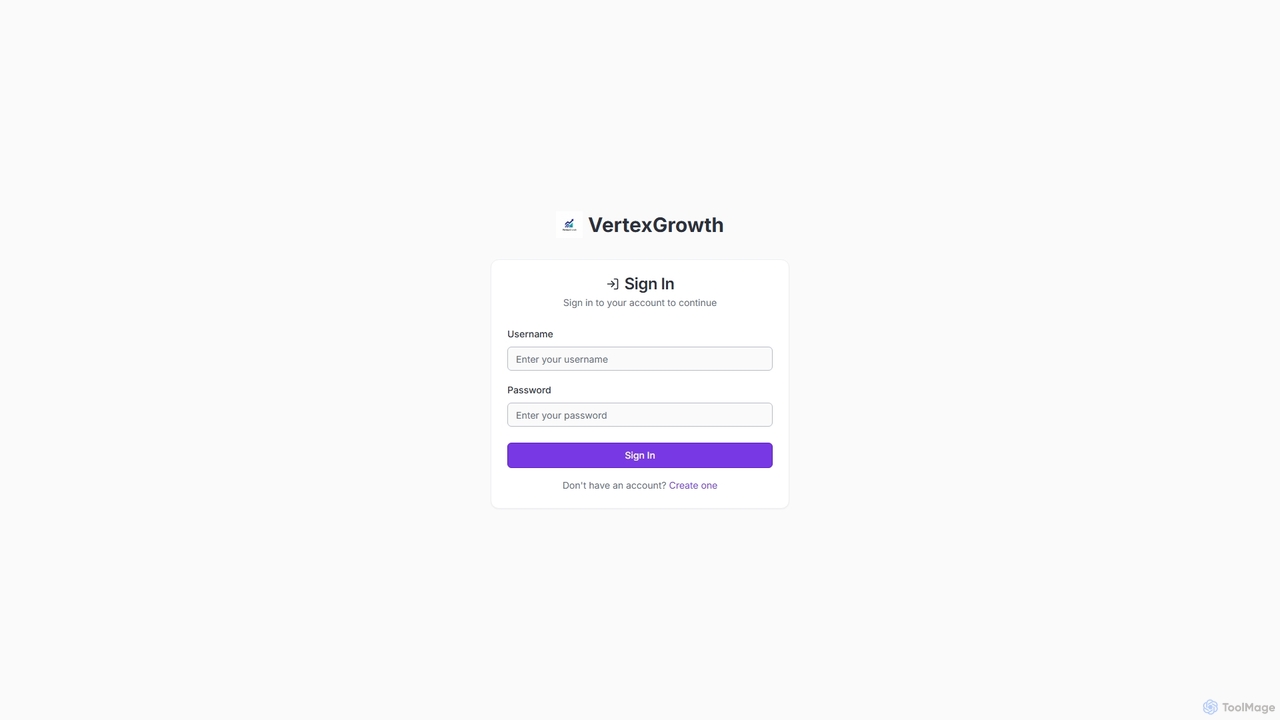
VertexGrowth is an AI-powered marketing automation platform designed for small and mid-sized businesses (SMBs). It simplifies customer acquisition, engagement, and conversion, offering a cost-effective solution that eliminates the need for extensive marketing expertise.

Small Business Tools
Visits 6.4KFavorites 120Likes 129
Pushwoosh
Freemium

Pushwoosh

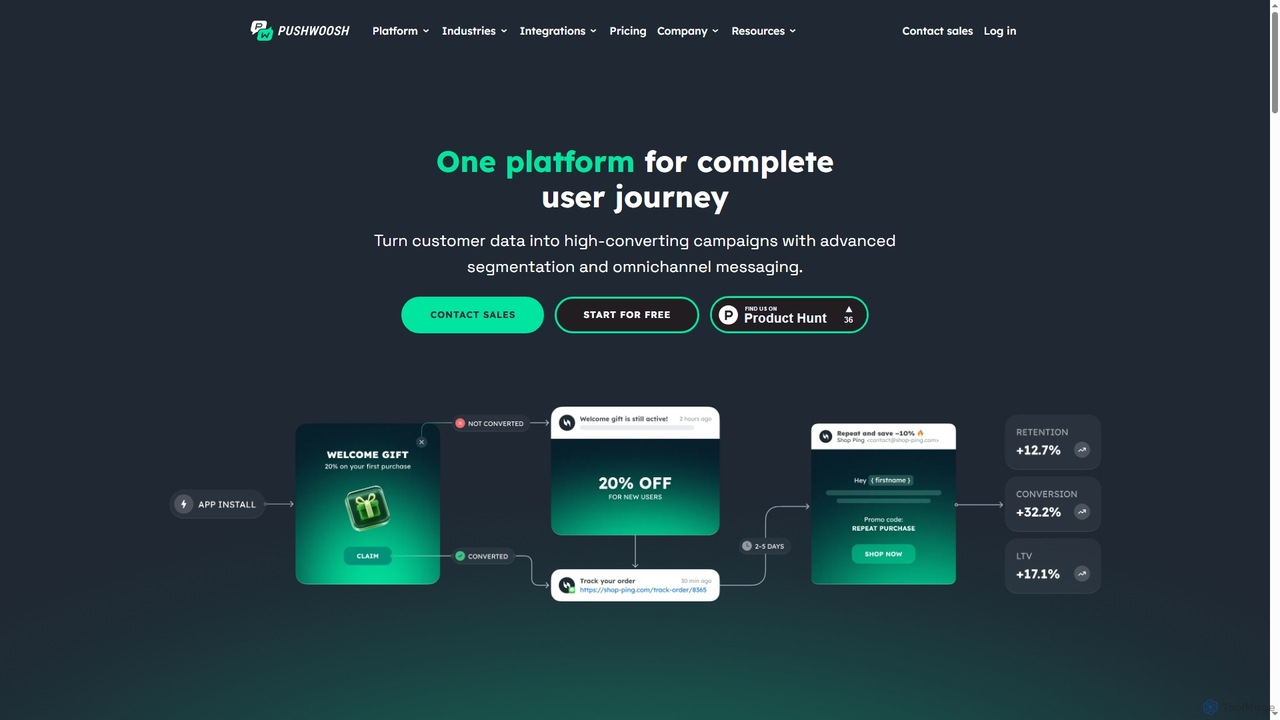
Pushwoosh is an omnichannel customer engagement platform designed to help businesses increase user retention and revenue. It facilitates personalized communication through push notifications, in-app messages, email, SMS, and WhatsApp, powered by advanced segmentation, automation, and analytics.

Customer Engagement
Visits 153.8KFavorites 124Likes 135
Maneja
Paid

Maneja

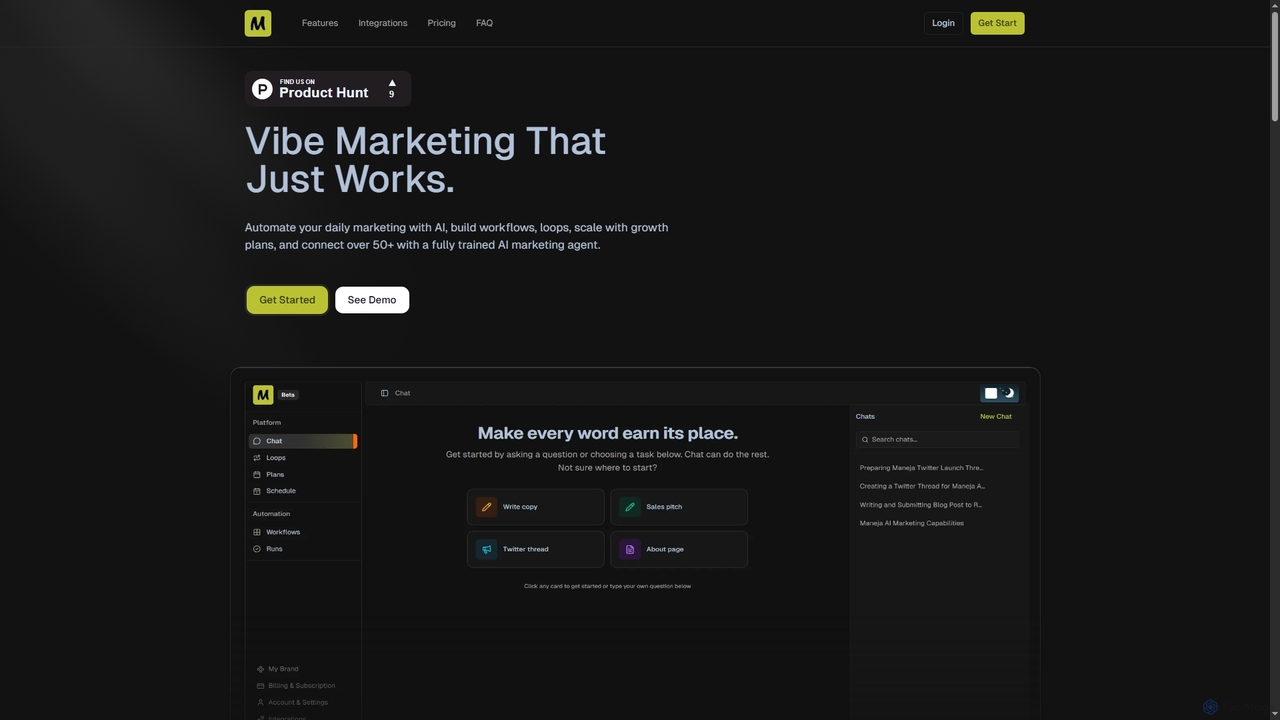
Maneja is an AI marketing assistant designed to automate daily marketing tasks, build powerful workflows, and scale growth across over 100 platforms. It offers AI-powered content creation, smart scheduling, and comprehensive campaign management to help businesses market like professionals without the agency price tag.

Ai Writing
Visits 7.3KFavorites 135Likes 119
Sprites
Freemium

Sprites

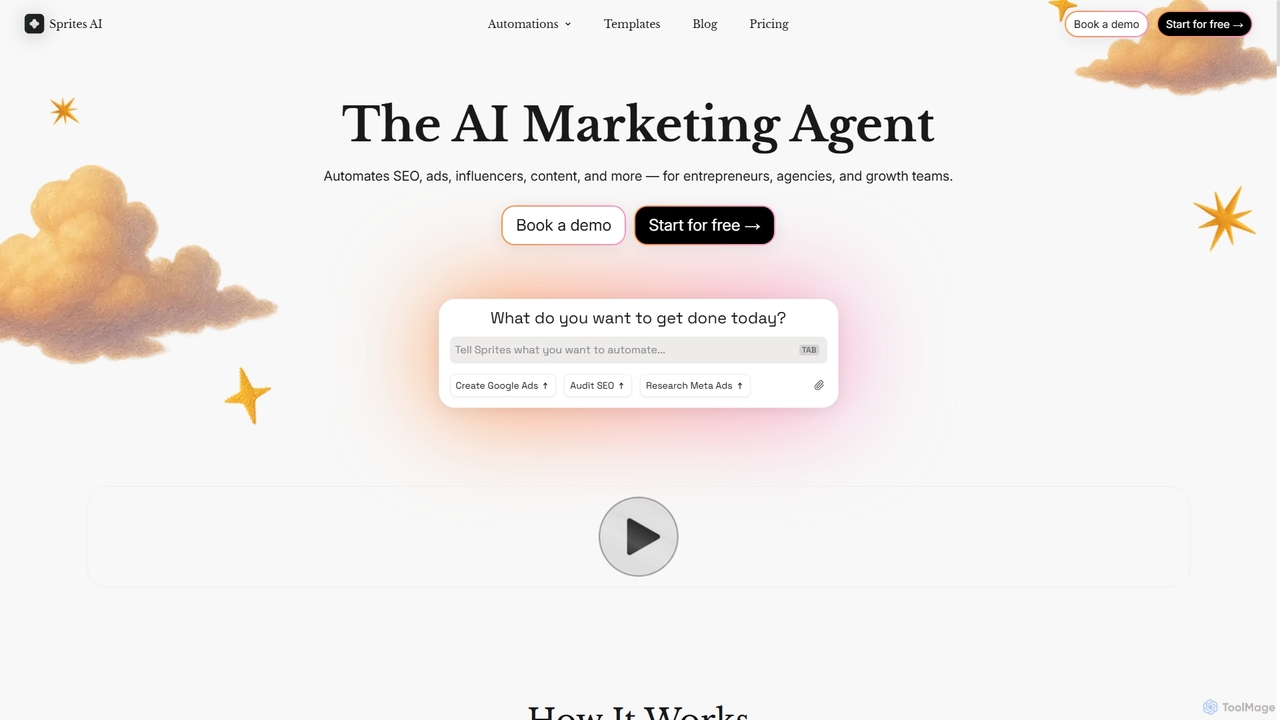
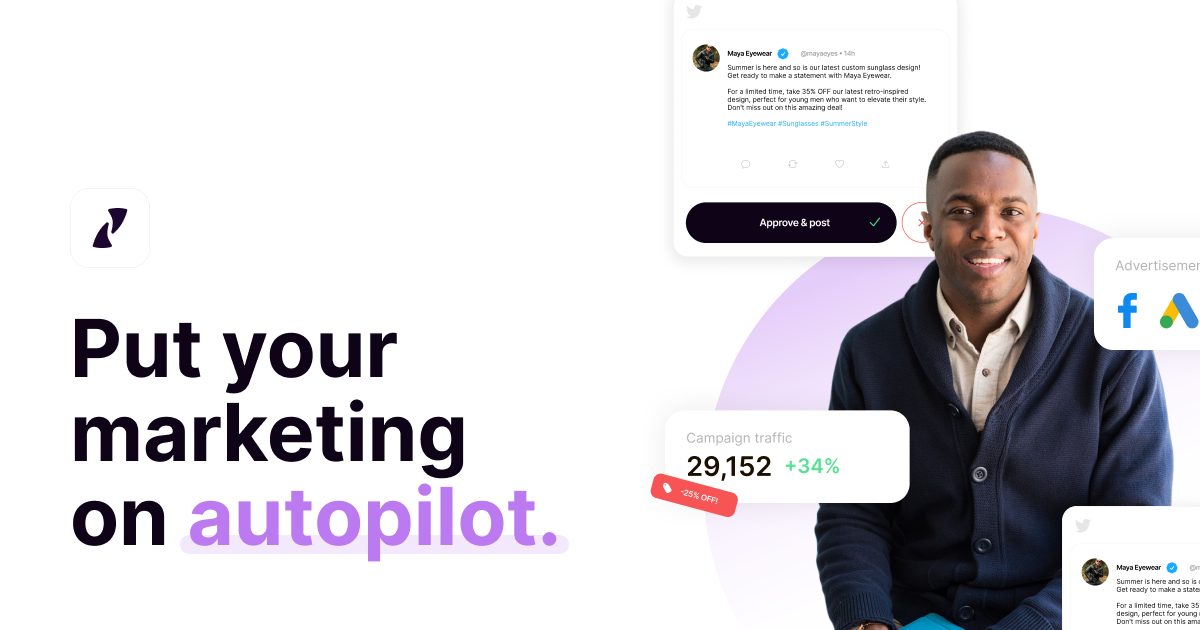
Sprites is an AI marketing agent that automates SEO, advertising, influencer outreach, and content creation for entrepreneurs, SMBs, and growth teams. It streamlines complex marketing tasks into efficient, autopilot workflows, delivering results in seconds.

Content Marketing
Visits 17.2KFavorites 162Likes 146
Flowbot
Freemium

Flowbot

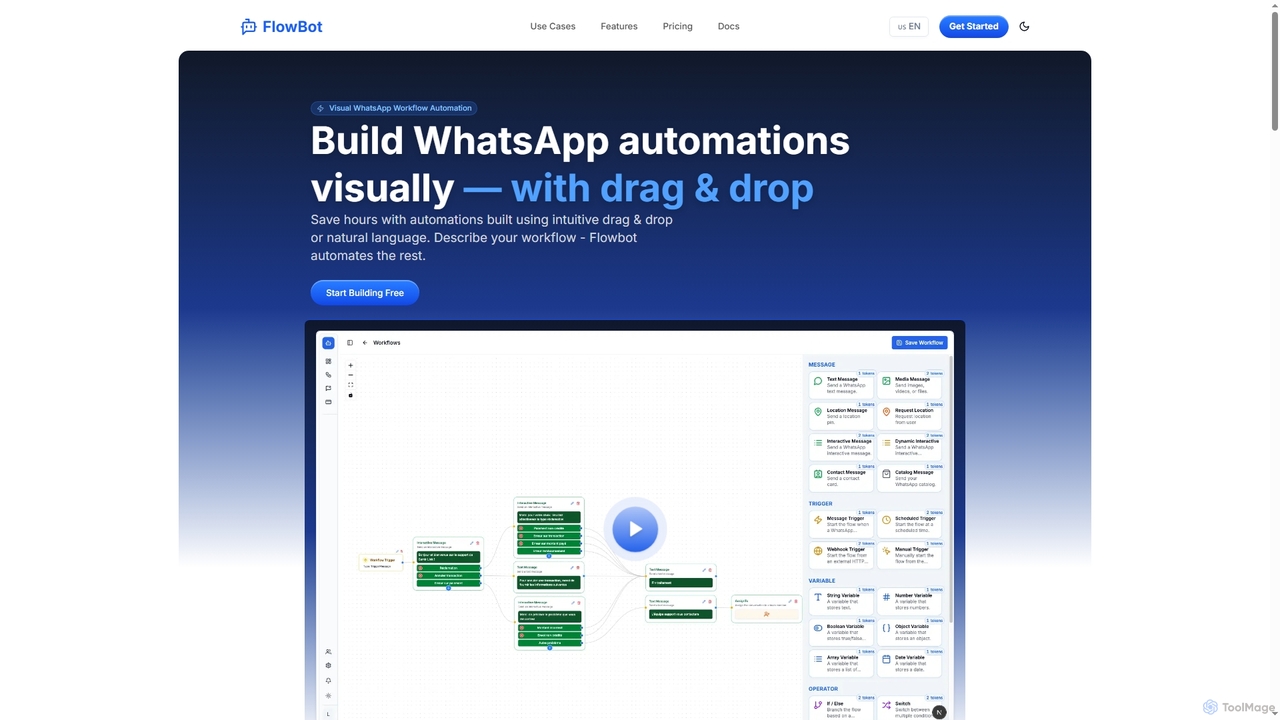
A no-code platform for building WhatsApp automation workflows and chatbots. It features a visual drag-and-drop builder, AI-powered agents, and integrations with tools like Google Sheets and CRMs to streamline customer support, marketing, and communications.

Chatbot
Visits 6.9KFavorites 140Likes 148
Neura
Freemium

Neura

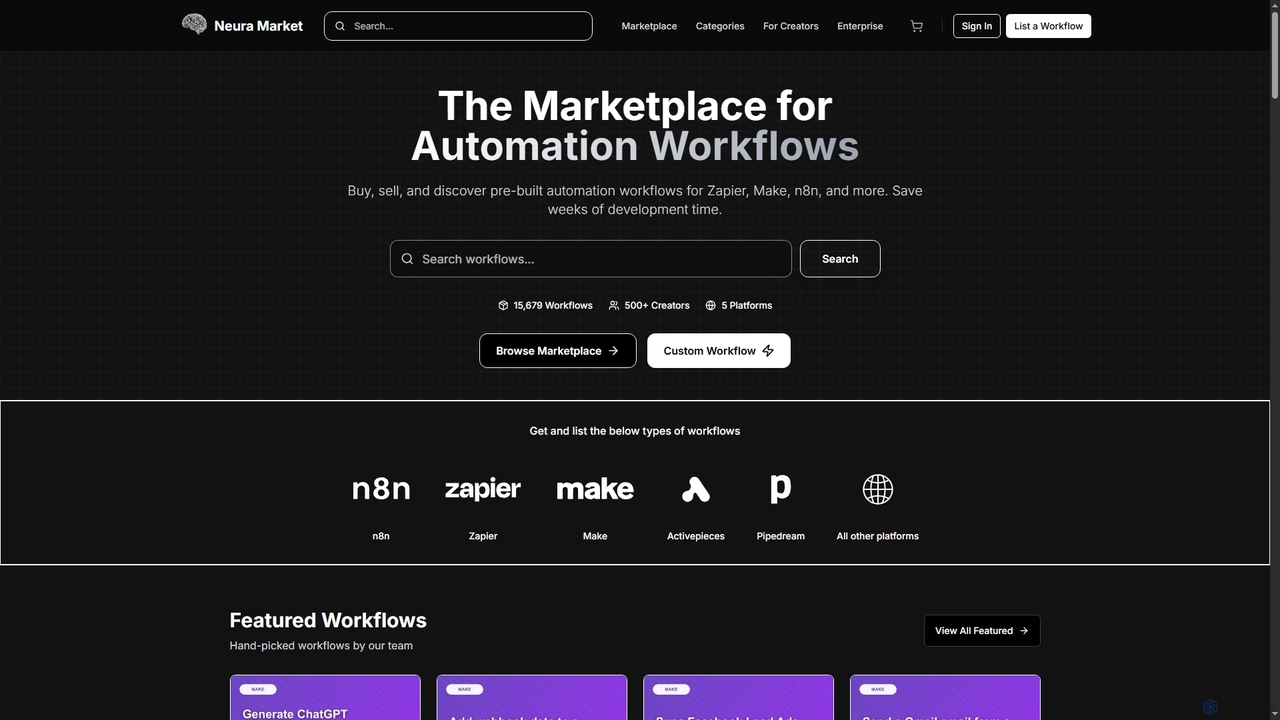
Neura is the leading marketplace for discovering, buying, and selling pre-built automation workflows. It empowers individuals and enterprises to streamline operations, integrate AI tools like ChatGPT, and save significant development time across platforms such as Zapier, Make, and n8n. With a vast library of workflows and a robust creator ecosystem, Neura simplifies complex automation tasks for various business needs.

Workflow Automation
Visits 32KFavorites 140Likes 138
Roadway AI

Roadway AI

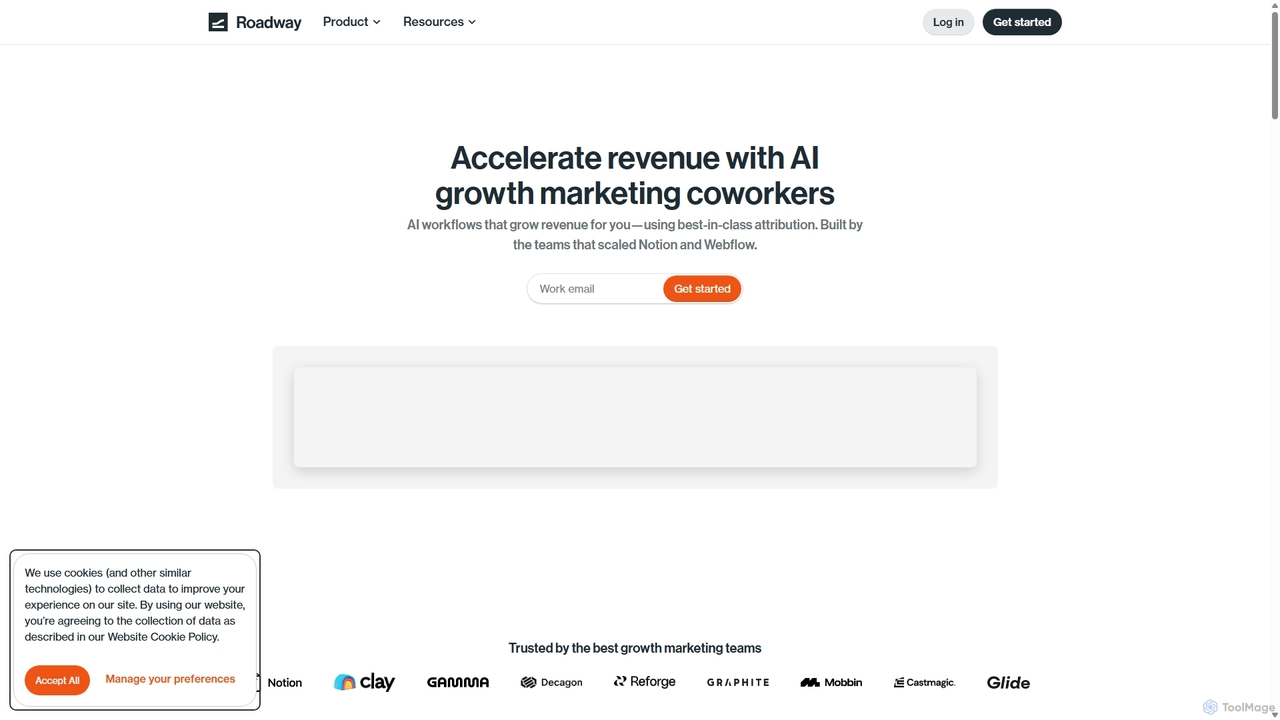
Roadway AI is a growth marketing platform that accelerates revenue with AI coworkers, best-in-class attribution, and a self-serve analytics workspace. Built by the teams that scaled Notion and Webflow, it provides clear insights, automates cross-channel tasks, and offers actionable recommendations to optimize marketing spend and drive predictable growth.

Marketing Automation
Visits 22.1KFavorites 157Likes 170
Capably
Paid

Capably

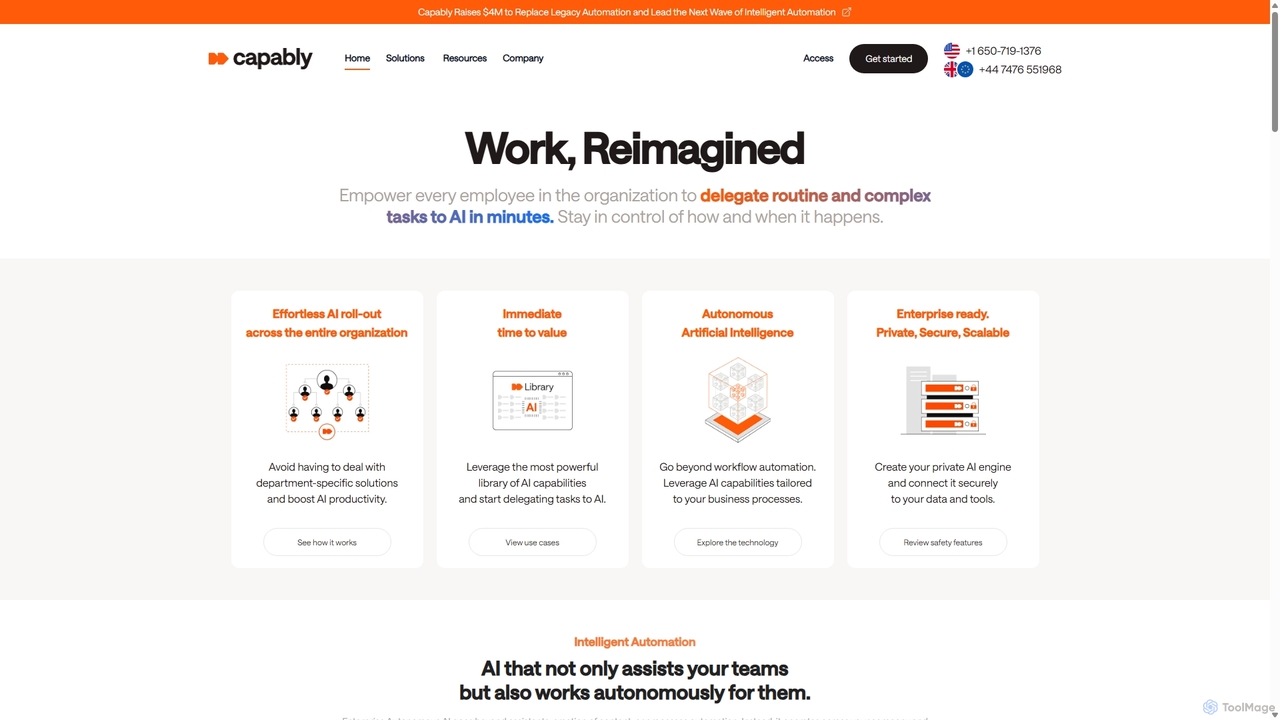
Capably is an intelligent automation platform that empowers businesses to delegate complex and routine tasks to autonomous AI agents. It bridges the gap between rigid legacy automation (RPA) and unreliable AI agents, offering a secure, scalable, and user-friendly solution for enterprise-wide productivity.

Workflow Management
Visits 14.4KFavorites 136Likes 142
Conversion
Paid

Conversion

Conversion is an AI-native B2B marketing automation platform designed for high-growth companies. It enables teams to activate customer data, build dynamic workflows, design personalized emails with a drag-and-drop editor, and track campaign performance in real-time. It seamlessly integrates with CRM and other tools to unify the entire marketing stack.

Email Marketing
Visits 8.9KFavorites 162Likes 173
YCloud
Freemium

YCloud

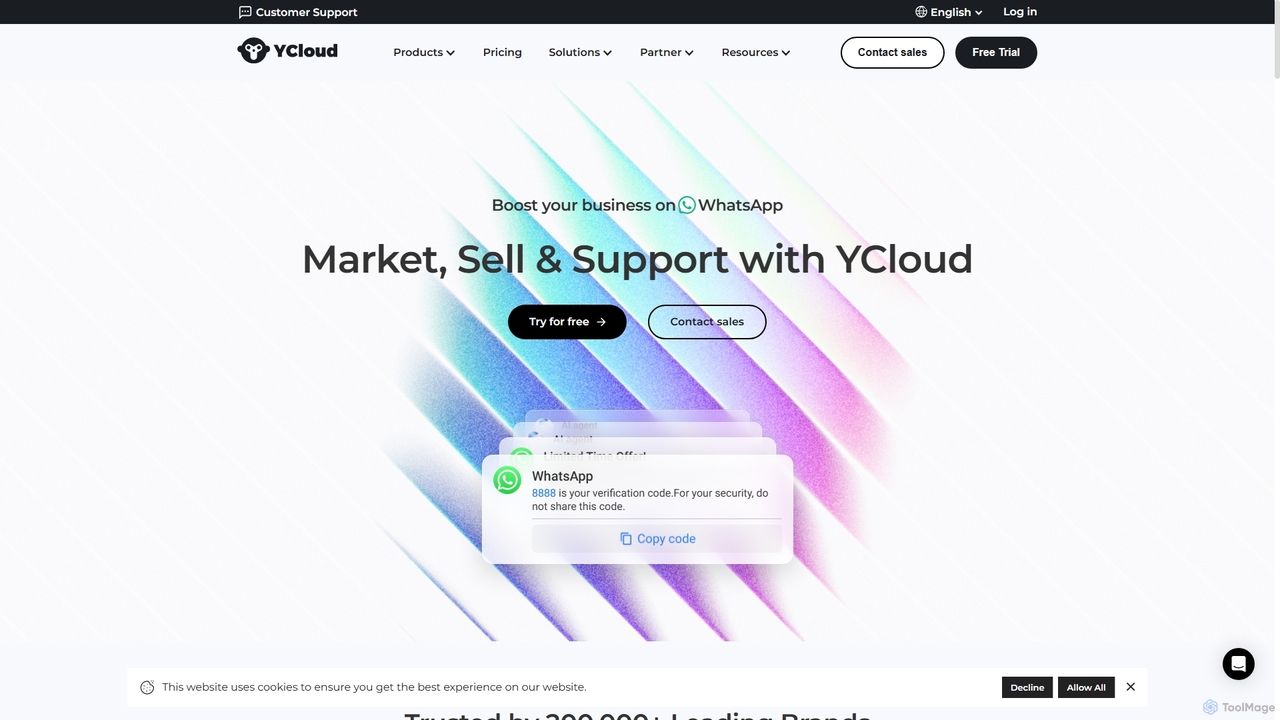
YCloud is an all-in-one WhatsApp engagement platform powered by AI. As a Meta Official Business Solution Provider, it helps businesses market, sell, and support customers at scale. Features include AI chatbots, automated marketing journeys, a shared team inbox, and seamless integrations to boost leads, conversions, and customer satisfaction.

Chatbot
Visits 205.6KFavorites 139Likes 158
Plink

Plink

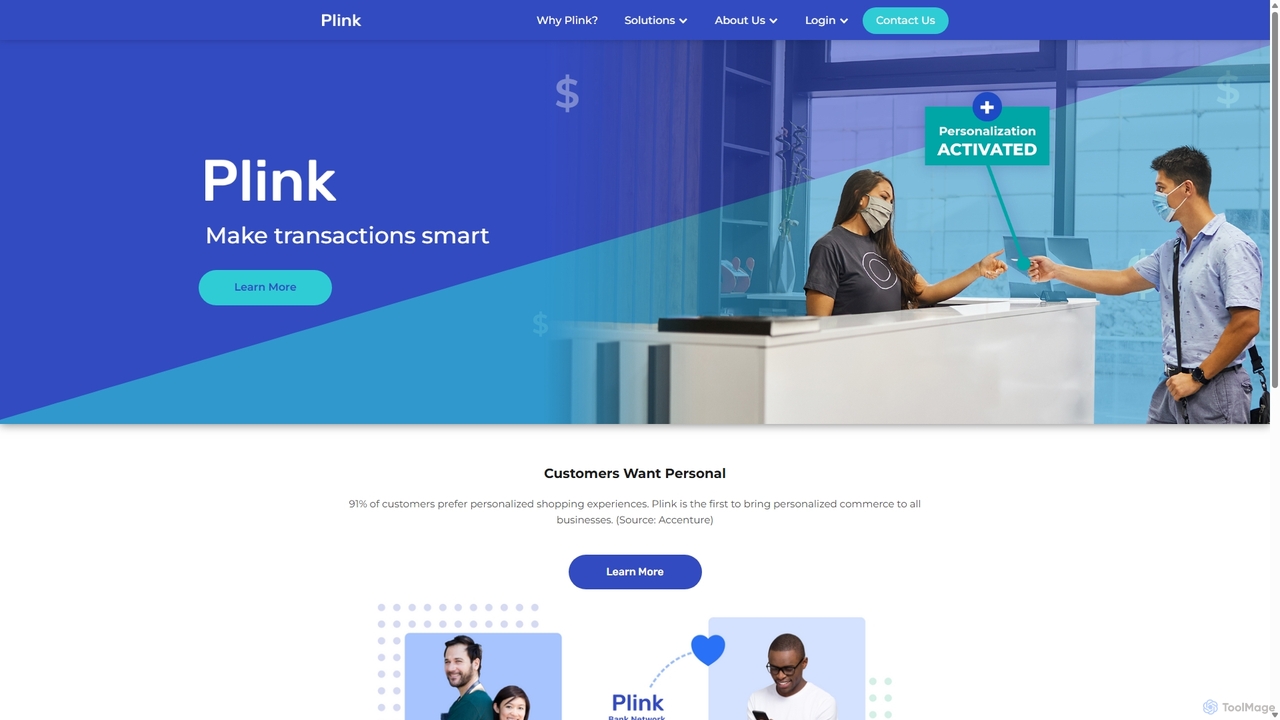
Plink is a commerce automation platform designed for local small businesses. It leverages "smart transaction" technology to create personalized marketing campaigns, automate social media advertising, and capture customer data. By integrating with payment systems, Plink helps businesses run targeted promotions, increase customer engagement, and drive sales without complex technical overhead, bridging the gap between online marketing and in-store purchases.

Social Media Advertising
Visits 10.9KFavorites 131Likes 127
Waakif
Freemium

Waakif

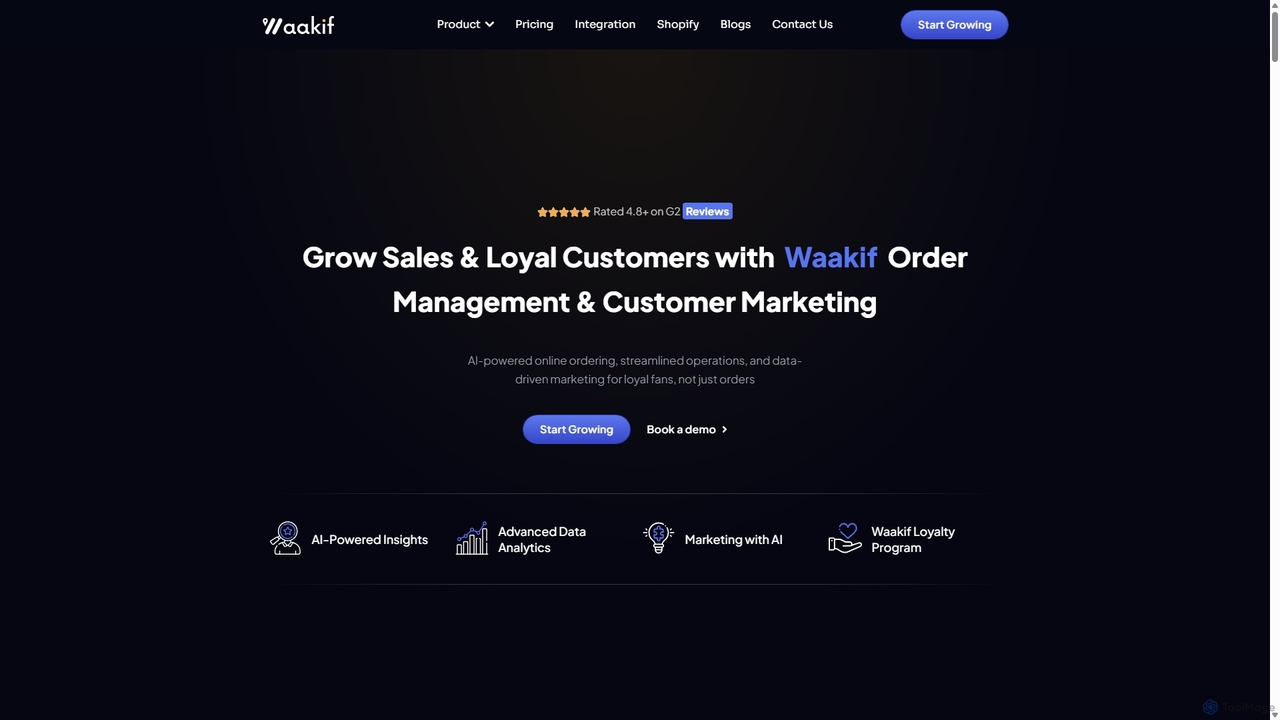
Waakif is an all-in-one, AI-powered business platform for restaurants, retail, and service businesses. It combines POS, online ordering, loyalty programs, and automated marketing via WhatsApp, email, and SMS. The platform helps businesses grow sales, streamline operations, and build lasting customer relationships through data-driven insights, AI-generated product images, and comprehensive customer management tools. It's designed to be user-friendly, allowing businesses to launch an online store and marketing campaigns in minutes.

Customer Relationship Management
Visits 7.7KFavorites 143Likes 126
WiiChat
Paid

WiiChat

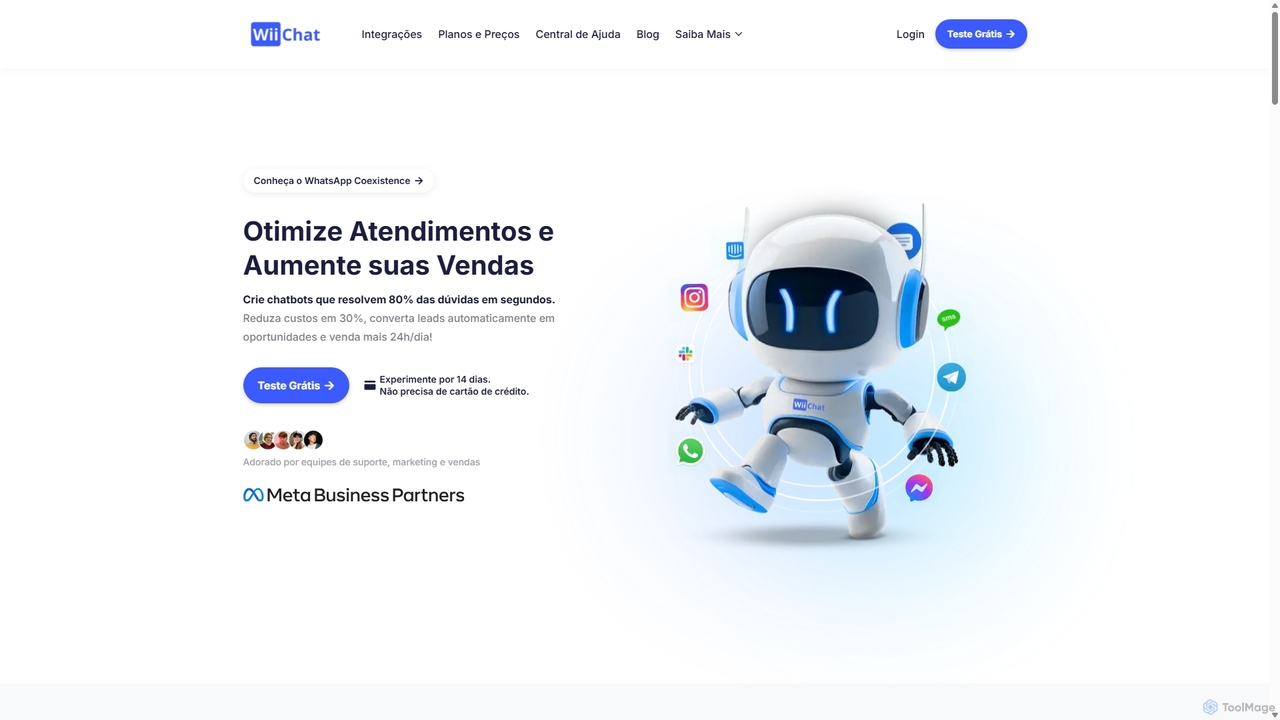
WiiChat is an AI-powered chatbot platform designed for sales, marketing, and support teams. It automates customer interactions across multiple channels like WhatsApp, Instagram, and websites, resolving up to 80% of queries instantly. Features include 24/7 automated service, lead qualification, voice message handling, and seamless integration with popular business tools to boost sales and reduce operational costs.

Chatbot
Visits 11.3KFavorites 119Likes 135
GetResponse
Freemium

GetResponse

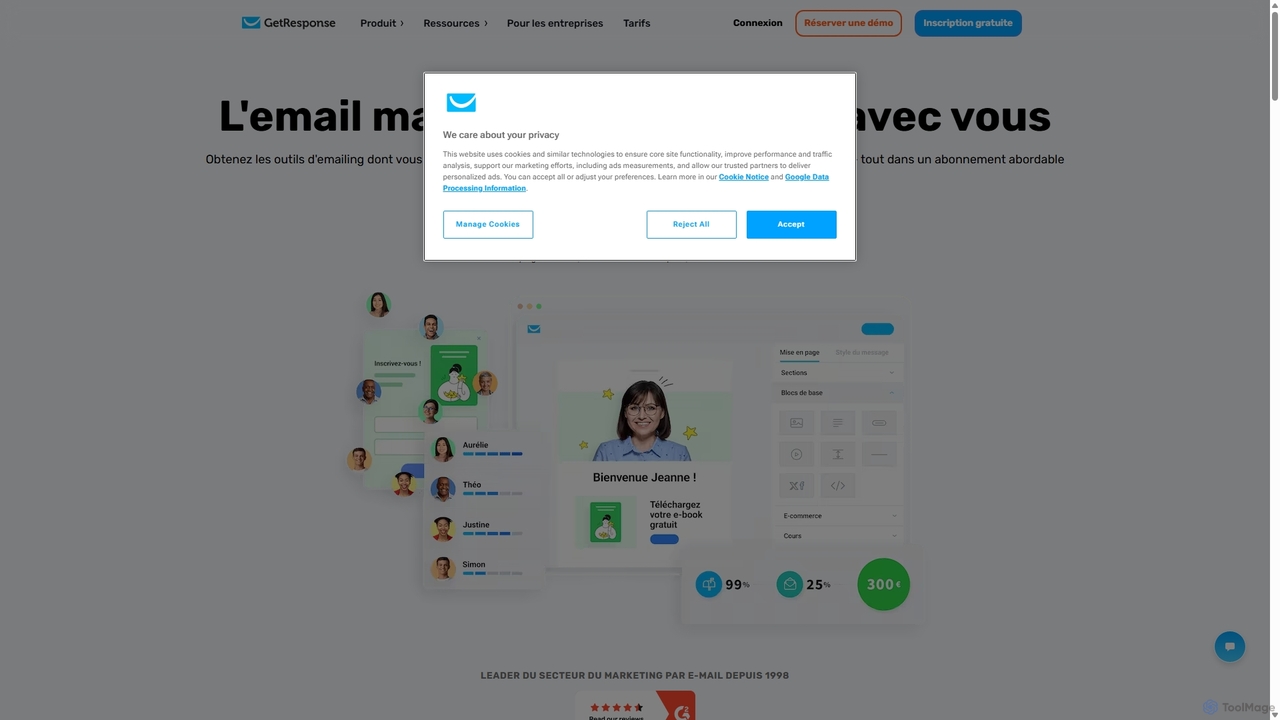
GetResponse is an all-in-one marketing automation platform powered by AI. It provides tools for email marketing, landing pages, conversion funnels, webinars, and e-commerce. It's designed to help businesses of all sizes grow their audience, engage with customers, and boost online sales through intelligent, automated campaigns.

All In One
Visits 7KFavorites 173Likes 150
Scal-e
Paid

Scal-e

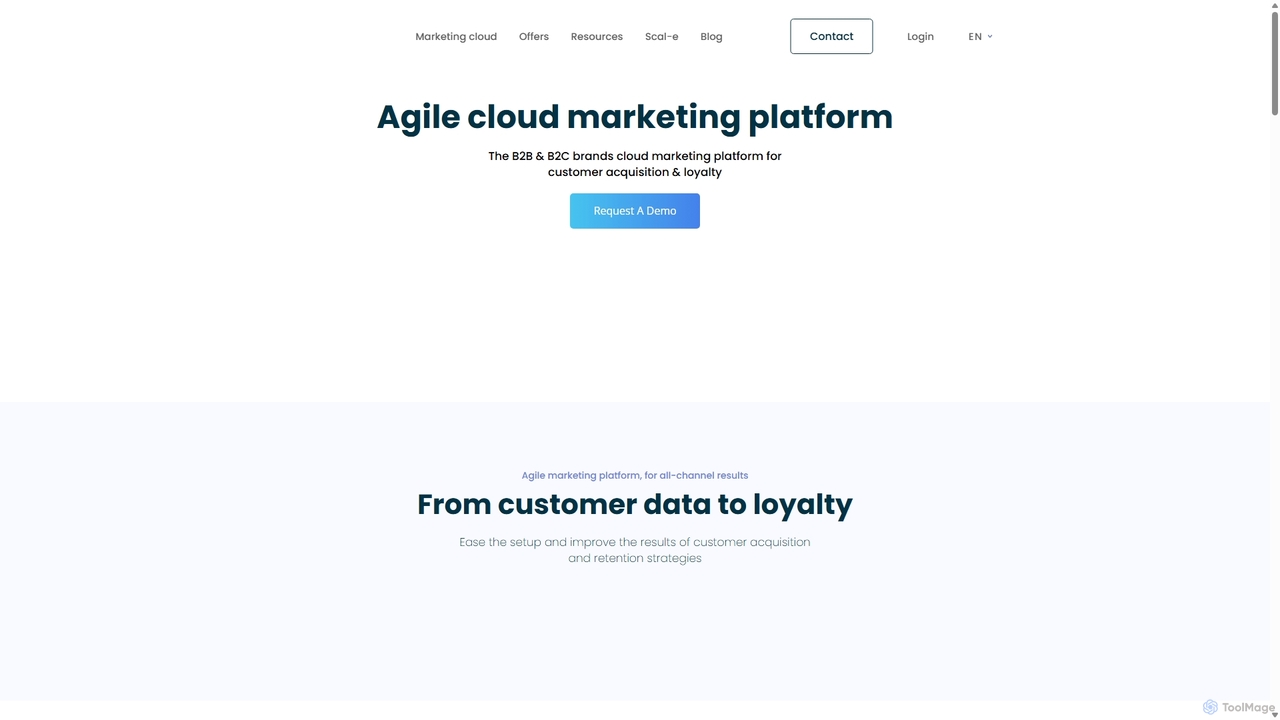
Scal-e is an agile cloud marketing platform built around a powerful Customer Data Platform (CDP). It enables B2B and B2C brands to unify customer data from all touchpoints, creating a 360° view. This allows for hyper-personalized marketing, automated omnichannel campaigns, and effective customer loyalty programs, ultimately driving acquisition and retention.

Customer Relationship Management
Visits 24.6KFavorites 112Likes 113
Salesforce
Freemium

Salesforce

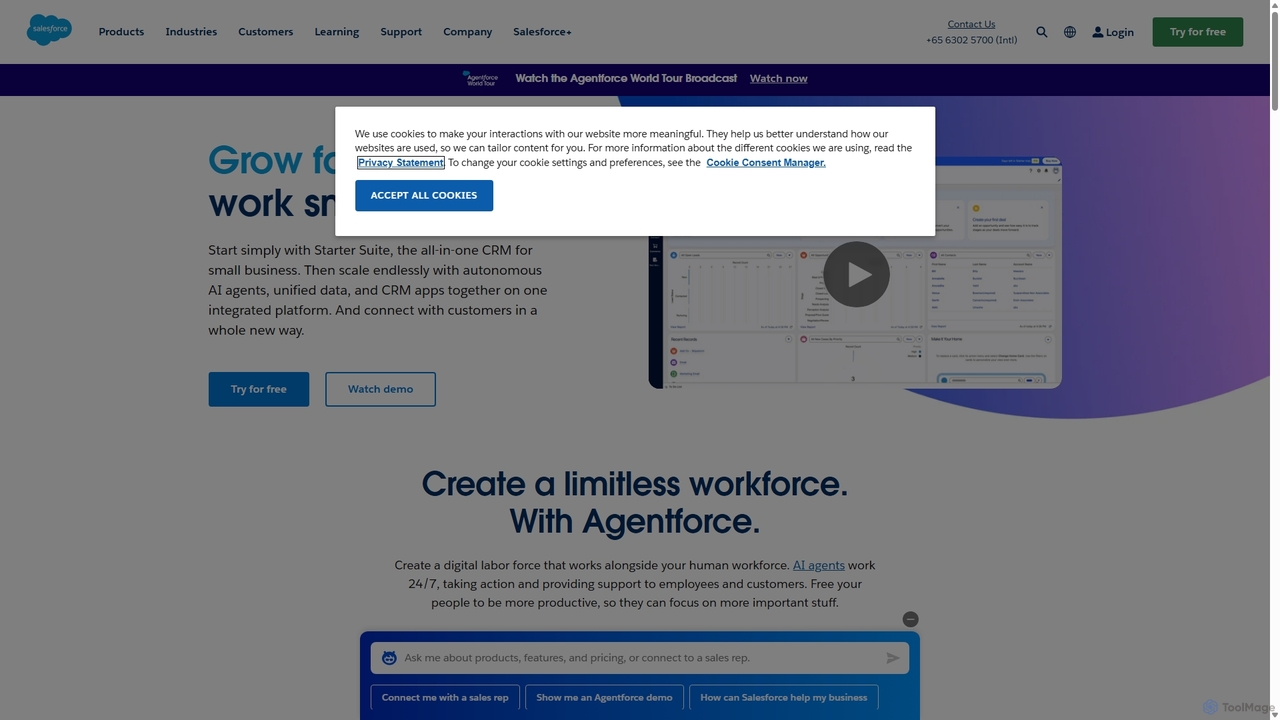
Salesforce is the world's #1 AI-powered Customer Relationship Management (CRM) platform. It helps businesses of all sizes connect with their customers in a whole new way by unifying sales, service, marketing, commerce, and IT on a single, shared platform called Customer 360. With integrated AI like Einstein and Agentforce, it provides intelligent insights and automation to drive efficiency and growth.

Sales Automation
Visits 76.7MFavorites 128Likes 123
SAAS First
Freemium

SAAS First

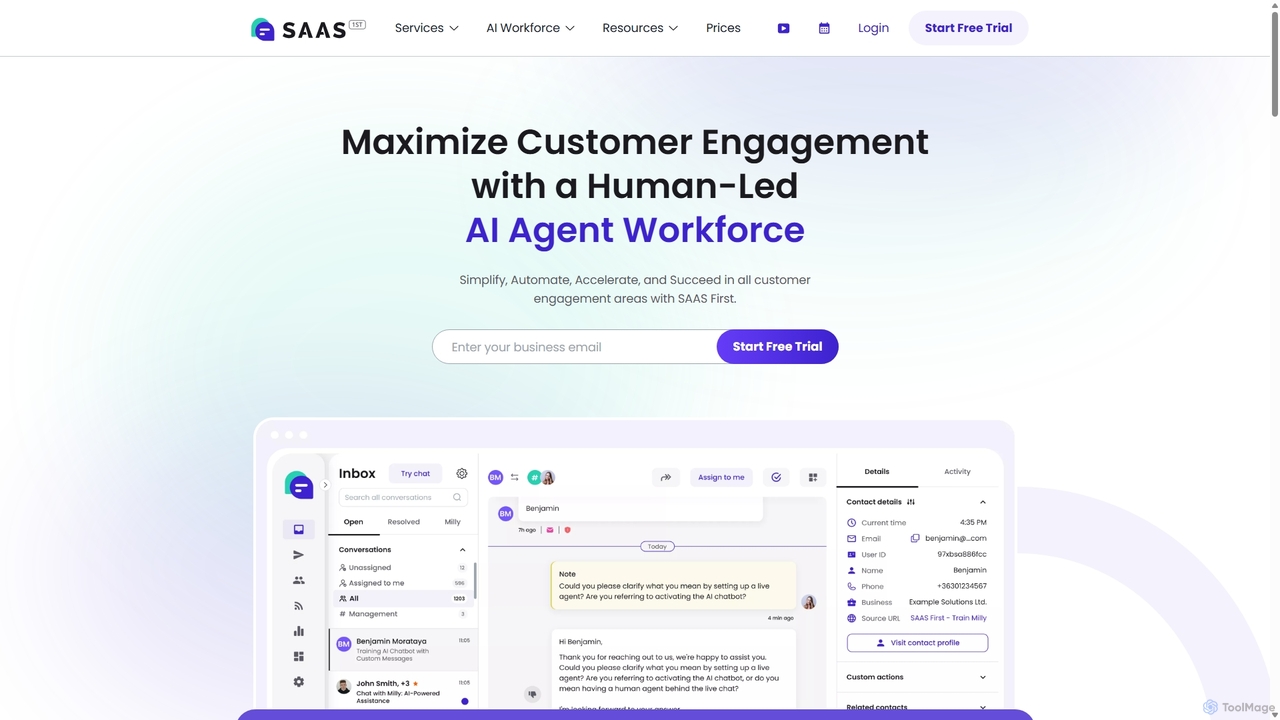
SAAS First is an all-in-one, AI-powered platform designed to enhance customer engagement and business efficiency. It features an advanced AI chatbot, Milly, for 24/7 multilingual support, an omnichannel inbox, AI-driven email replies, and intelligent data analysis. The suite helps businesses automate support, streamline workflows, and turn raw data into actionable insights without coding, boosting productivity and customer satisfaction.

Data Analysis
Visits 13.3KFavorites 135Likes 152
Mailchimp
Freemium

Mailchimp

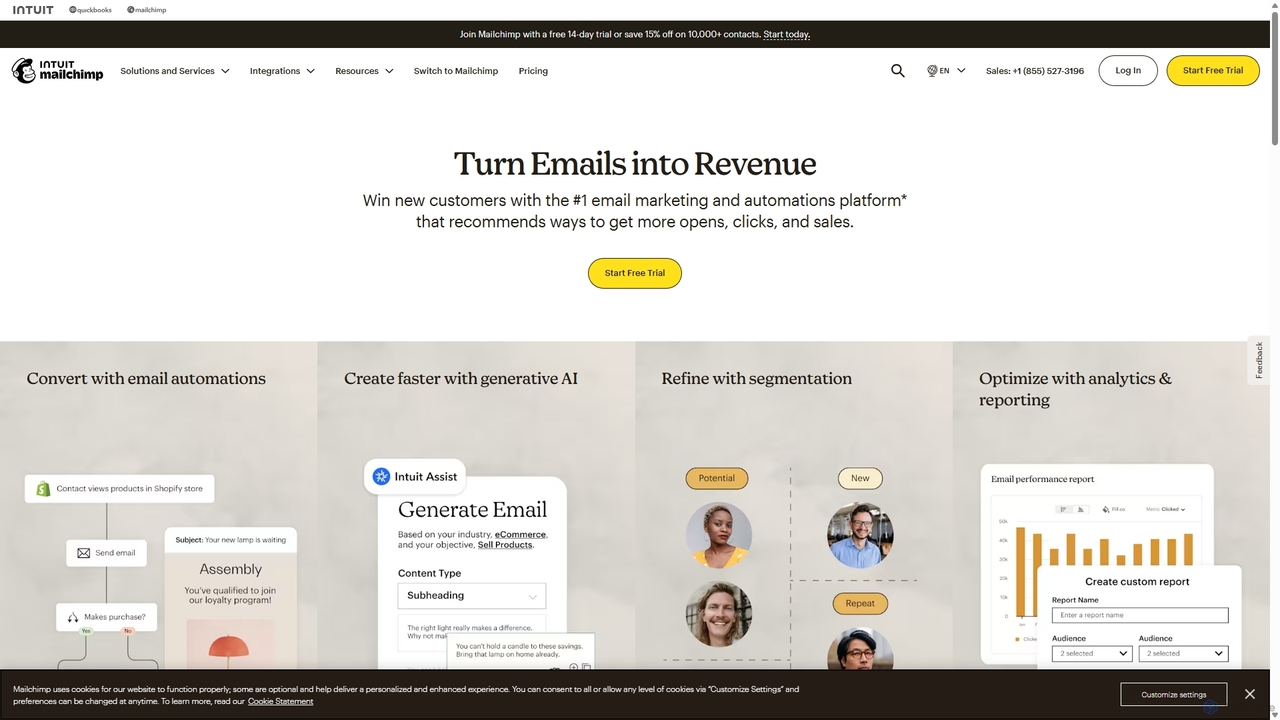
Mailchimp is an all-in-one marketing, automation, and email platform for growing businesses. It leverages generative AI to help users create on-brand content, personalize customer journeys with advanced automation, and optimize campaigns through detailed analytics, ultimately turning emails into revenue.

Crm
Visits 10.3MFavorites 163Likes 138
Vretail
Freemium

Vretail

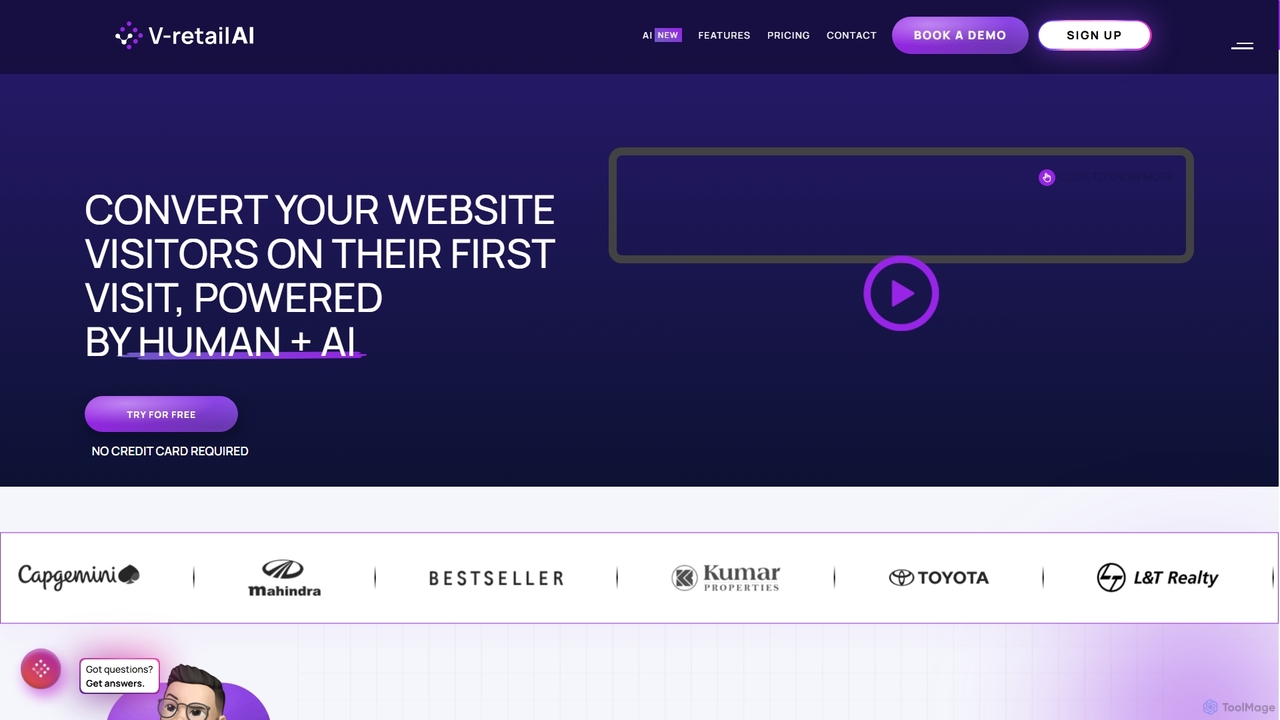
Vretail is an AI-powered sales tool that enhances website conversions by combining human interaction with AI guidance. It enables businesses to monitor website visitors in real-time, engage them instantly via chat, video calls, or remote assistance, and provide personalized shopping experiences. The platform also features automated retargeting and in-depth analytics to turn more visitors into customers.

Live Chat
Visits 8.2KFavorites 139Likes 130
Tictuk

Tictuk

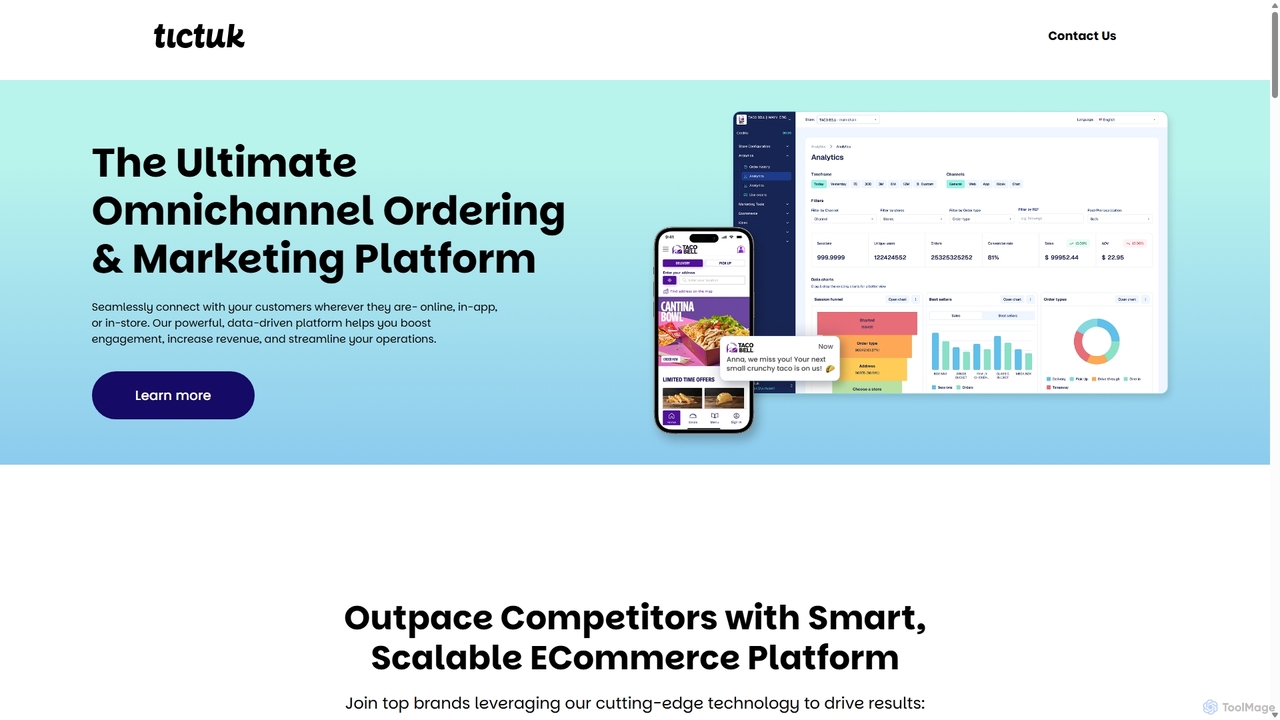
Tictuk is an AI-powered omnichannel ordering and marketing platform designed for businesses to seamlessly connect with customers across all touchpoints. It unifies online, in-app, and in-store experiences, leveraging data-driven automation to boost engagement, increase revenue, and streamline operations. Ideal for retail and restaurant industries, Tictuk transforms every interaction into a high-converting opportunity.

Crm
Visits 48.5KFavorites 140Likes 145
EBanqo
Freemium

EBanqo

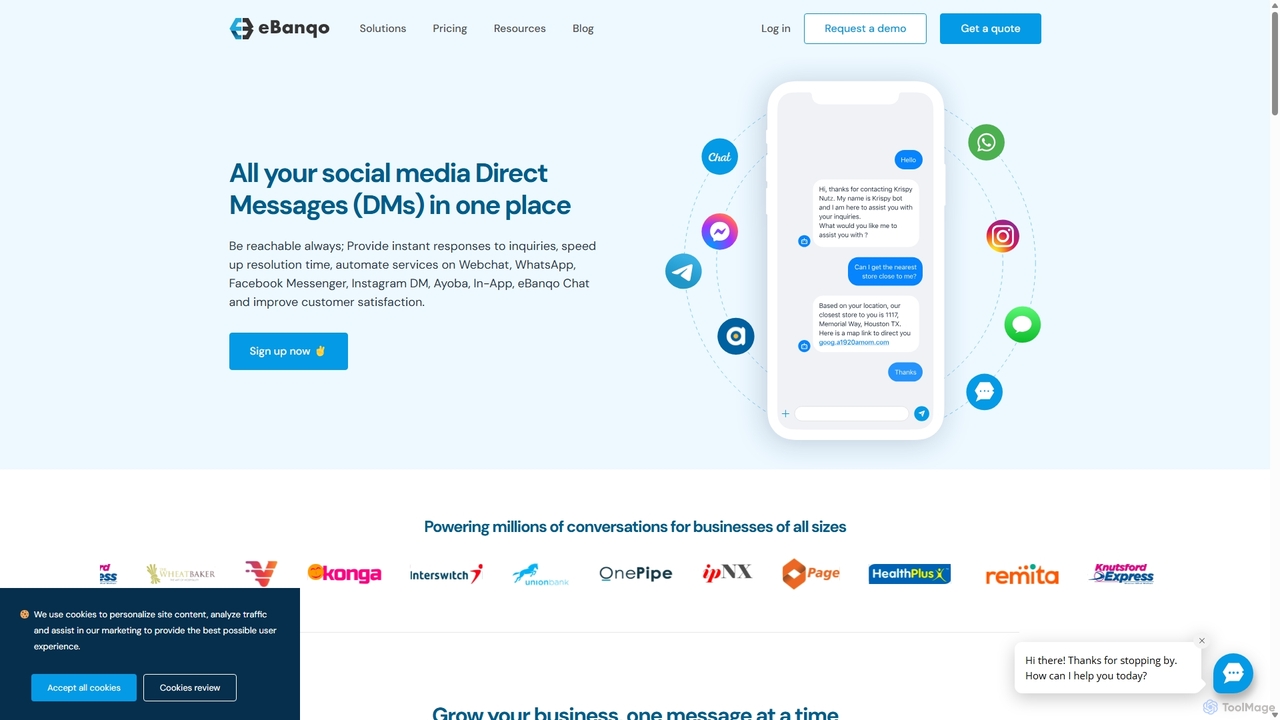
eBanqo is a conversational AI platform that unifies customer communications from channels like WhatsApp, Facebook, and webchat into a single dashboard. It leverages AI chatbots for automated support, offers live chat for complex queries, and enables self-service options to enhance customer engagement, boost sales, and reduce operational costs.

Chatbots
Visits 6.1KFavorites 128Likes 142
Vorsto
Freemium

Vorsto

Vorsto is an all-in-one, AI-powered platform designed for local businesses to unify and automate their entire operations. It integrates multichannel ordering, payments, marketing, customer loyalty, and delivery logistics into a single, intelligent system, enabling businesses to focus on growth instead of managing multiple tools.

All In One
Visits 6.4KFavorites 143Likes 129
Clay
Freemium

Clay

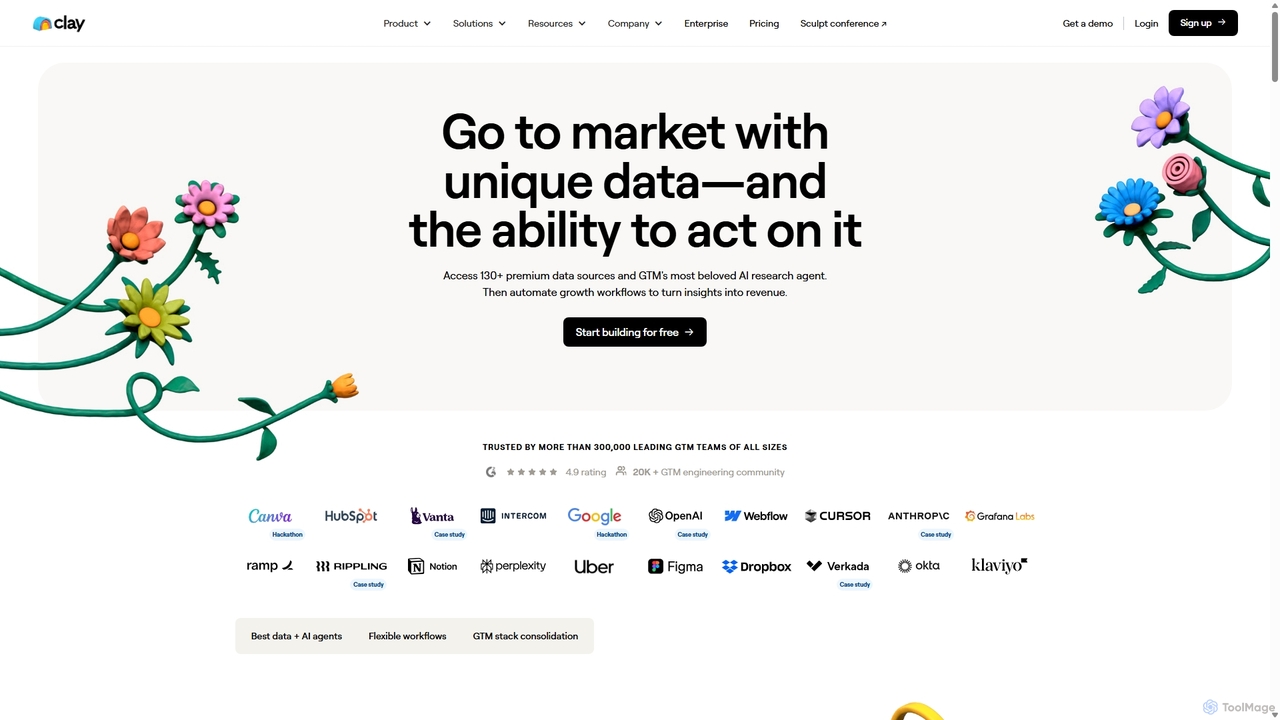
Clay is a powerful Go-To-Market (GTM) automation platform that combines over 130 data sources with an advanced AI research agent. It empowers sales, marketing, and operations teams to discover unique data, automate manual research, and build sophisticated workflows to transform insights into revenue, streamlining the entire outbound and data enrichment process.

Data Enrichment
Visits 1.6MFavorites 136Likes 139

About Marketing Automation

Marketing Automation tools are software platforms designed to automate repetitive marketing tasks and manage multi-channel campaigns. These tools utilize user behavior data and predefined workflows to send personalized messages at the right time, nurturing leads from initial contact to conversion. They are essential for scaling marketing efforts, improving efficiency, and delivering more relevant customer experiences. By connecting various marketing channels like email, social media, and websites, they provide a unified view of the customer journey.

Core Features

  • Workflow Automation: Build visual customer journeys with triggers, actions, and conditions to automate communication sequences.
  • Lead Nurturing & Scoring: Automatically track and score lead engagement based on actions like email opens, clicks, and page visits.
  • Multi-channel Campaigns: Manage and execute coordinated campaigns across email, social media, SMS, and landing pages from one platform.
  • Personalization & Dynamic Content: Tailor message content based on user data, behavior, or segmentation for higher relevance.
  • Analytics & Reporting: Measure campaign performance, track ROI, and gain insights into customer behavior and conversion funnels.

Use Cases

Marketing Automation is widely used by B2B and B2C companies, particularly in sectors like SaaS, e-commerce, real estate, and education. Marketing teams use it to automate lead generation funnels, onboard new customers, recover abandoned carts, and maintain long-term customer engagement. It is suitable for businesses of all sizes aiming to scale their marketing operations without a proportional increase in manual effort.

How to Choose

When selecting a Marketing Automation tool, consider its integration capabilities, especially with your existing CRM system. Evaluate the sophistication of its workflow builder—is it intuitive and flexible enough for your needs? Assess the range of supported channels and the depth of its analytics. Finally, consider scalability and pricing models to ensure the tool can grow with your business and fits within your budget.

Featured tool rankings

Marketing Automation use cases

1

Automated Lead Nurturing for B2B Sales

A B2B software company captures leads through a downloadable whitepaper. Using a marketing automation tool, they create a workflow that automatically sends a series of five educational emails over three weeks. The system tracks which links each lead clicks and assigns scores. Once a lead's score surpasses a threshold, indicating high interest, the tool automatically creates a task in the CRM for a sales representative to follow up, providing them with the lead's full engagement history. This process ensures that the sales team only engages with well-qualified, educated leads, increasing conversion rates.

2

E-commerce Abandoned Cart Recovery

An online fashion retailer notices a high cart abandonment rate. They implement a marketing automation workflow that triggers 30 minutes after a user leaves the site with items in their cart. The first email is a simple reminder. If there's no purchase after 24 hours, a second email is sent offering a 10% discount. If the cart is still abandoned after three days, a final email highlights product scarcity or offers free shipping. This automated sequence helps recover a significant portion of potentially lost revenue by re-engaging customers at critical moments without manual intervention.

3

Personalized Customer Onboarding for SaaS

A SaaS company wants to improve user activation and retention. They set up an onboarding workflow in their marketing automation platform that is triggered when a user signs up for a free trial. The workflow sends a welcome email immediately, followed by a series of emails over 14 days. Each email highlights a key feature, includes a short video tutorial, and links to a relevant help article. The system tracks which features the user has adopted and can send targeted reminders or alternative feature suggestions to inactive users, personalizing the onboarding experience and guiding them towards the 'aha' moment.

4

Managing Multi-Channel Marketing Campaigns

A marketing agency is launching a new product for a client. Using a marketing automation platform, they schedule a series of coordinated actions. On launch day, an email announcement is sent to the entire subscriber list. Simultaneously, promotional posts are scheduled across Facebook, LinkedIn, and Twitter. The platform's landing page builder is used to create a dedicated page with a lead capture form. All interactions—email opens, social media clicks, and form submissions—are tracked in a single dashboard, allowing the agency to monitor campaign performance in real-time and provide the client with a comprehensive ROI report.

5

Automating Event Promotion and Follow-Up

A university is hosting a series of online webinars for prospective students. They use a marketing automation tool to manage the entire process. A workflow is created to send out initial invitations via email. As users register on a landing page, they are automatically added to a 'registered' segment and receive a confirmation email with the webinar link. The system sends automated reminders one day and one hour before the event. After the webinar, it automatically sends a thank-you email with a link to the recording to all attendees, and a separate 'sorry we missed you' email with the recording to those who registered but did not attend.

6

Dynamic Content Personalization in Email

A large online retailer uses marketing automation to personalize its weekly newsletter. Instead of sending one generic email to all subscribers, they use dynamic content blocks. The system analyzes each subscriber's past purchase history and browsing behavior. Based on this data, the newsletter is automatically populated with relevant product recommendations. For example, a customer who recently bought running shoes will see new athletic apparel, while someone who browsed for kitchen appliances will see deals on blenders and coffee makers. This level of personalization significantly increases click-through rates and sales from email campaigns.

Marketing Automation FAQ

What is Marketing Automation?

Marketing Automation refers to software platforms designed to automate marketing actions. These tools allow companies to streamline, automate, and measure marketing tasks and workflows. More than just an email scheduler, true marketing automation connects multiple channels (email, social, web), tracks user behavior across them, and uses that data to trigger personalized communication sequences. The primary goal is to nurture leads through the sales funnel more efficiently and at scale.

How to choose the right Marketing Automation tool?

Choosing the right tool depends on your specific needs. Consider these factors:

  • Integrations: Does it connect seamlessly with your CRM, e-commerce platform, and other essential tools?
  • Features: Evaluate the core features you need, such as the email builder, workflow automation logic, lead scoring capabilities, and reporting depth.
  • Ease of Use: Is the interface intuitive for your team? A complex tool with a steep learning curve can hinder adoption.
  • Scalability & Pricing: Can the tool grow with your contact list and business needs? Understand the pricing model (e.g., based on contacts, email sends) to avoid unexpected costs.
What's the difference between Marketing Automation and a CRM?

While they are related and often integrated, they serve different primary functions. A CRM (Customer Relationship Management) is a system for managing your company's relationships and interactions with customers and potential customers, primarily focused on the sales process. Marketing Automation, on the other hand, is focused on the top of the funnel—automating marketing communications to generate and nurture leads *before* they are ready to talk to sales. In short, marketing automation nurtures many anonymous or new leads, while a CRM manages fewer, more qualified contacts and deals.

What are the key benefits of using Marketing Automation?

The main benefits include increased efficiency by automating repetitive tasks, improved lead quality through nurturing and scoring, and enhanced personalization at scale. It allows for better alignment between marketing and sales teams by providing clear data on lead engagement. Furthermore, robust analytics help marketers prove the ROI of their campaigns and make data-driven decisions to optimize future strategies. Ultimately, it helps generate more revenue from marketing efforts.

Who should use Marketing Automation tools?

Marketing Automation tools are valuable for a wide range of businesses. They are particularly effective for B2B companies with longer sales cycles, SaaS businesses focusing on user onboarding and retention, and e-commerce stores aiming to personalize communication and recover abandoned carts. Any marketing team that wants to scale its efforts, manage leads more effectively, and prove its impact on revenue can benefit from implementing a marketing automation platform.