Soon
Soon is an AI-first workforce management platform designed to automate and optimize team operations. It simplifies shift scheduling, …
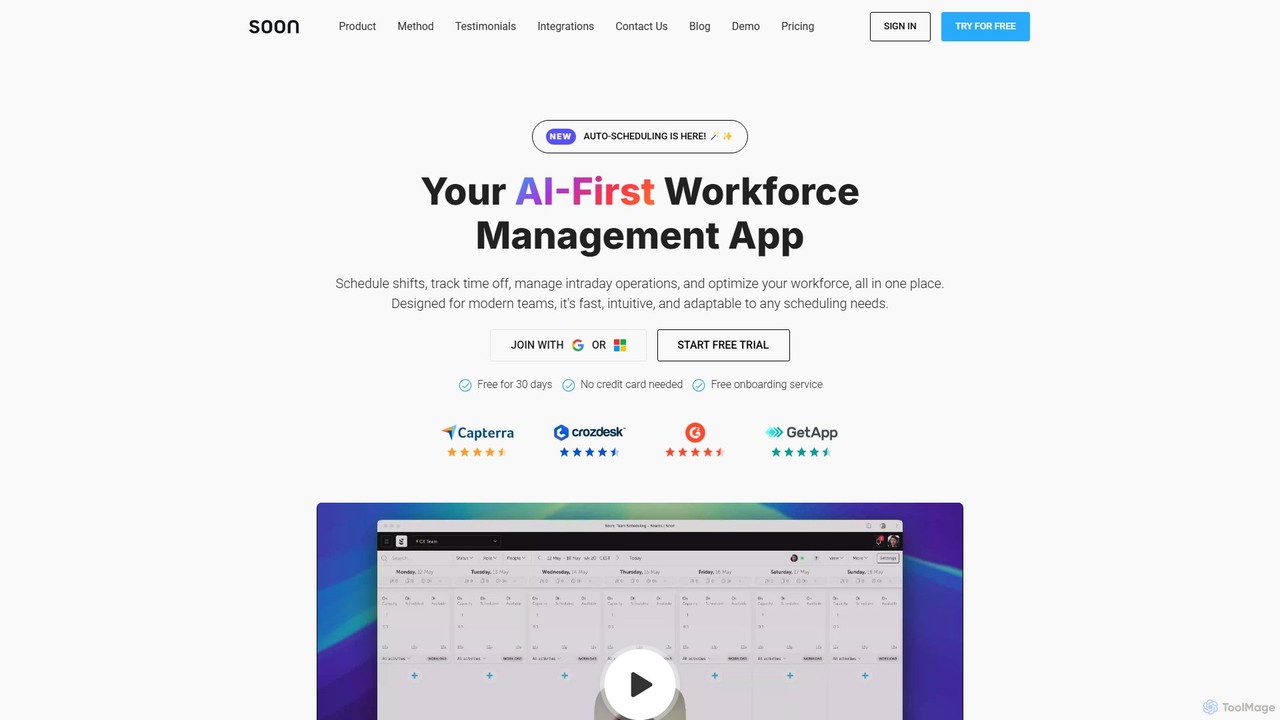
Soon is an AI-first workforce management platform designed to automate and optimize team operations. It simplifies shift scheduling, time-off tracking, and intraday task management through intelligent automation. Built for modern teams, Soon uses AI to generate optimal schedules from simple text prompts, forecast staffing needs, and provide actionable insights, all within an intuitive, user-friendly interface.
About Automated Scheduling
Automated Scheduling tools are AI-powered solutions designed to intelligently manage and optimize appointments, tasks, and resource allocation without manual intervention. They leverage advanced algorithms to analyze availability, preferences, and constraints, streamlining complex coordination processes. This technology significantly reduces administrative overhead, minimizes scheduling conflicts, and enhances overall operational efficiency within the broader Productivity category.
Core Features
- Smart Calendar Sync: Automatically integrates with multiple calendars to identify real-time availability.
- Conflict Resolution: Proactively detects and suggests solutions for overlapping appointments or resource clashes.
- Automated Reminders & Follow-ups: Sends personalized notifications to participants, reducing no-shows and ensuring timely communication.
- Resource Optimization: Intelligently allocates rooms, equipment, or personnel based on specific requirements and availability.
- Predictive Scheduling: Uses historical data and AI to anticipate optimal times for future events or tasks.
Applicable Scenarios
Automated Scheduling tools are invaluable for service-based businesses, large organizations with distributed teams, and project managers. They excel in environments requiring frequent coordination, such as client consultations, internal team meetings across time zones, and complex project timelines where resources need precise allocation.
How to Choose
When selecting an Automated Scheduling tool, consider its integration capabilities with your existing CRM, calendar, and communication platforms. Evaluate the level of customization for scheduling rules, user permissions, and branding. Assess its scalability to accommodate your team's growth and the complexity of your scheduling needs, alongside user-friendliness and support for various device types.

Automated SchedulingUse Cases
Automate Client Appointment Booking
Service providers, such as consultants, therapists, or salon owners, can use automated scheduling tools to allow clients to book appointments directly online. The AI system checks staff availability, room capacity, and service duration, then confirms the booking and sends automated reminders to both parties, significantly reducing manual coordination and no-shows.
Optimize Internal Team Meeting Coordination
For distributed teams working across multiple time zones, finding a suitable meeting time can be a significant challenge. Automated scheduling tools analyze team members' calendars, consider their preferred working hours, and suggest optimal slots that minimize disruption for everyone. This ensures higher attendance and more productive meetings without endless email chains.
Streamline Project Task Scheduling and Resource Allocation
Project managers can leverage automated scheduling to assign tasks and allocate resources more efficiently. The AI considers task dependencies, team member skills, availability, and project deadlines to create an optimized schedule. If a team member's availability changes, the system can automatically adjust the schedule, ensuring projects stay on track and resources are utilized effectively.
Automate Event and Webinar Registration
Event organizers can use automated scheduling tools to manage registrations for webinars, workshops, or conferences. The system handles attendee sign-ups, sends confirmation emails with calendar invites, and distributes pre-event information. It can also manage capacity limits and waitlists, ensuring a smooth registration process and maximizing attendance without manual oversight.
Efficiently Schedule Academic Advising Sessions
Universities and colleges can implement automated scheduling for student advising sessions. Students can view advisor availability, book slots that fit their academic timetable, and receive automated reminders. This reduces the administrative burden on academic staff, ensures equitable access to advising, and minimizes scheduling conflicts during peak periods like course registration.
Manage Field Service Dispatch and Route Optimization
Companies with field service technicians can use automated scheduling to dispatch personnel and optimize routes. The AI considers technician skills, location, urgency of service requests, and traffic conditions to create the most efficient schedule and route. This minimizes travel time, improves response rates, and ensures technicians are assigned to jobs where their expertise is best utilized.