Productivity Best in category 3 results Conversation Intelligence AI Tool

Popular AI tools in the Conversation Intelligence field of Productivity include Cresta、Observe.AI、mpathic, etc., helping you quickly improve efficiency.

Cresta

Cresta

Cresta is a unified generative AI platform for contact centers, designed to enhance both human and AI agent …

108.0K
Observe.AI

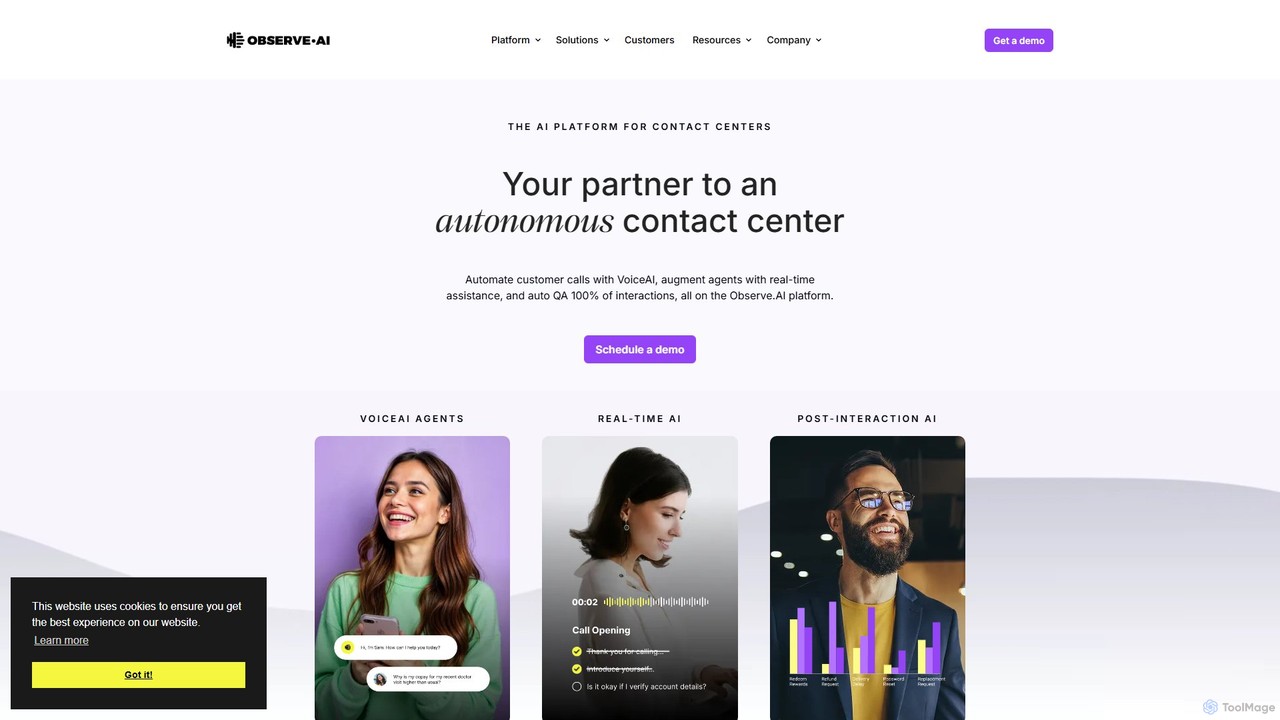
Observe.AI

Observe.AI is a GenAI-powered conversation intelligence platform for contact centers. It automates customer interactions with VoiceAI, assists agents …

76.7K
mpathic

mpathic

mpathic is an AI-powered conversation intelligence platform designed for healthcare and life sciences. It analyzes interactions to enhance …

10.1K

About Conversation Intelligence

Conversation Intelligence platforms are AI-powered tools that automatically record, transcribe, and analyze customer conversations. Using Natural Language Processing (NLP), these systems extract key topics, sentiment, speaker metrics, and actionable insights from sales calls, support interactions, and video meetings. This transforms unstructured dialogue into structured data, enabling teams to understand customer needs, improve performance, and make data-driven decisions. Unlike simple call recording, Conversation Intelligence provides deep analytics for coaching, forecasting, and strategic planning.

Core Features

  • Automated Transcription & Analysis: Accurately converts audio from calls and meetings into searchable text with speaker identification.
  • Topic & Keyword Tracking: Automatically identifies predefined keywords, competitor mentions, pricing discussions, and emerging trends across all conversations.
  • Performance Analytics & Coaching: Provides metrics on talk-to-listen ratio, filler word usage, and allows managers to leave time-stamped feedback on call recordings.
  • CRM Integration: Seamlessly syncs call summaries, notes, and key moments with CRM platforms like Salesforce or HubSpot to enrich customer data.

Use Cases

Conversation Intelligence is primarily used by sales teams for coaching representatives and refining sales methodologies. Customer support and success teams leverage it for quality assurance and to identify common customer pain points. Product and marketing teams also use these tools to gather direct, unfiltered voice-of-the-customer (VoC) feedback to inform strategy.

How to Choose

When selecting a Conversation Intelligence tool, first consider its integration capabilities with your existing CRM, dialer, and video conferencing software. Evaluate the depth of its analytical features—whether you need basic transcription or advanced sentiment analysis and predictive insights. Assess the accuracy of its transcription for your specific industry jargon and languages. Finally, ensure the platform complies with relevant data security and privacy regulations like GDPR or CCPA.

Conversation IntelligenceUse Cases

1

Accelerate Sales Team Onboarding and Coaching

A sales manager uses a Conversation Intelligence platform to support a new account executive. Instead of shadowing live calls, the manager reviews recordings of the new hire's discovery calls at their convenience. They use time-stamped comments to provide specific feedback on questioning techniques, objection handling, and product explanations. The platform's analytics also highlight areas for improvement, such as a low talk-to-listen ratio or excessive use of filler words. This data-driven approach reduces ramp-up time by 40% and ensures consistent coaching across the team.

2

Identify Voice of the Customer (VoC) Insights

A product manager wants to understand customer sentiment about a new feature. Instead of relying on surveys, they use the Conversation Intelligence tool to search for keywords related to the feature across all sales and support calls from the past month. The platform aggregates these mentions, revealing common pain points, unexpected use cases, and direct quotes. This provides the product team with unfiltered, contextual feedback, helping them prioritize bug fixes and plan future enhancements more effectively than traditional feedback methods.

3

Automate Meeting Notes and CRM Data Entry

An account executive conducts 5-7 client meetings per day, leaving little time for administrative tasks. Their Conversation Intelligence tool integrates with their calendar and video conferencing software, automatically joining, recording, and transcribing each meeting. After the call, it generates a concise AI summary, identifies action items, and pushes all relevant information to the corresponding opportunity in their CRM. This automation saves them over 30 minutes per day on manual data entry, allowing them to focus on selling and relationship building.

4

Improve Customer Support Quality Assurance

A customer support manager needs to ensure consistent service quality across a remote team. They use a Conversation Intelligence tool to create a scorecard for evaluating agent interactions based on criteria like empathy, problem resolution, and adherence to protocols. Instead of manually listening to a few random calls, the system can automatically flag interactions with low customer sentiment or long silences. This allows the manager to focus their review efforts on the most critical calls, provide targeted feedback, and identify team-wide training needs more efficiently.

5

Enhance Competitive Intelligence Gathering

A marketing team wants to track how competitors are perceived in the market. They set up trackers in their Conversation Intelligence tool for the names of their top three competitors. The system automatically surfaces every sales and support call where a competitor is mentioned. By analyzing these conversations, the team can identify the competitor's perceived strengths and weaknesses, understand their pricing strategies from the customer's perspective, and refine their own messaging to better position their product in the market.

6

Ensure Compliance and Adherence to Scripts

In a regulated industry like finance or healthcare, a compliance officer needs to verify that all agents use specific legal disclaimers in their calls. They use the Conversation Intelligence platform to create a tracker for these required phrases. The system scans 100% of calls and flags any interaction where the disclaimer was missed. This automates a previously manual and error-prone audit process, providing a comprehensive compliance record and reducing organizational risk significantly.

Conversation IntelligenceFrequently Asked Questions