Vectorizer.AI
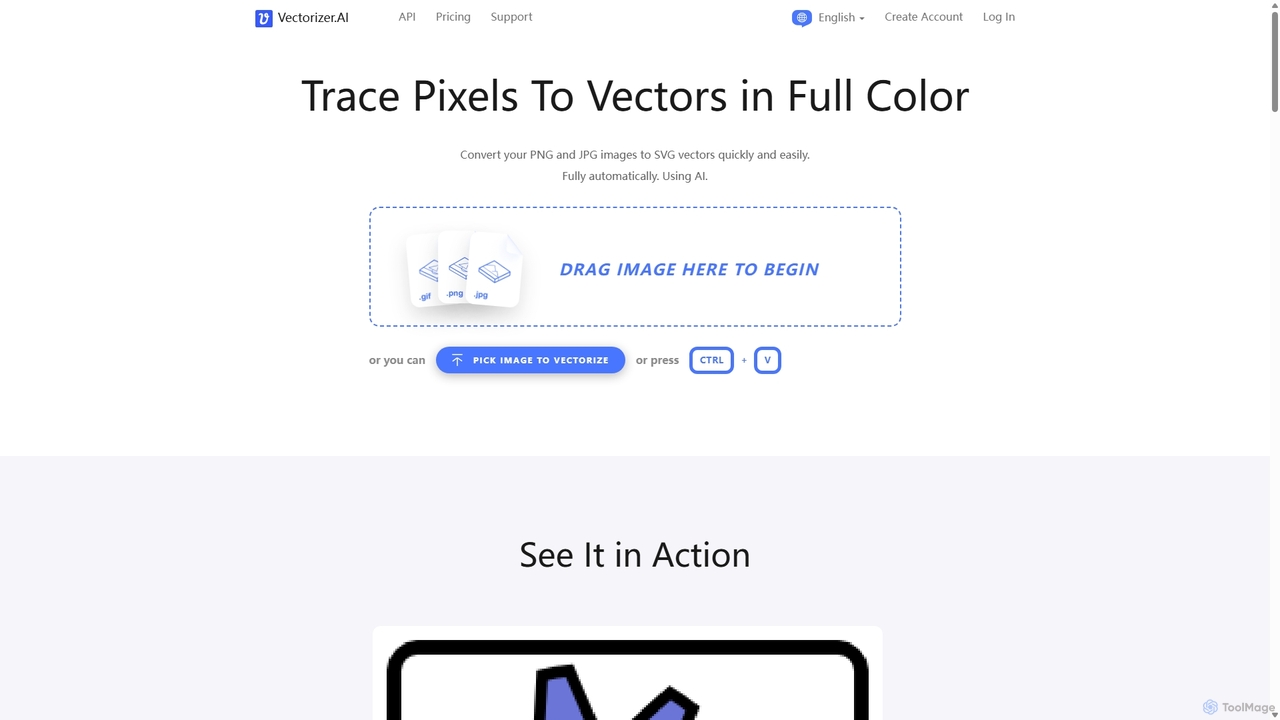
Vectorizer.AI is an advanced online tool that uses deep learning AI to convert raster images (PNG, JPG, GIF) …
Vectorizer.AI is an advanced online tool that uses deep learning AI to convert raster images (PNG, JPG, GIF) into high-quality, scalable vector graphics (SVG, PDF, EPS, DXF). It excels at capturing fine details missed by traditional methods, making it ideal for designers, printers, and creators who need clean, editable vector files for logos, illustrations, and various printing processes.
rasterscan
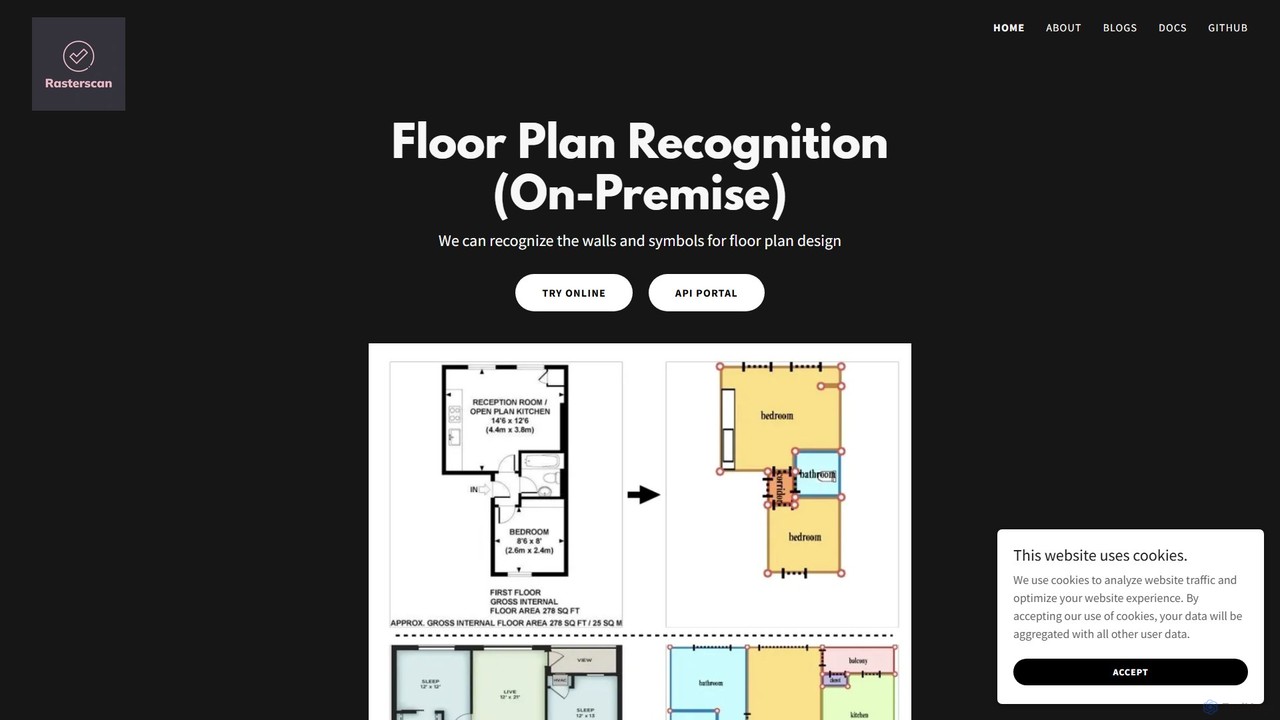
Rasterscan is an AI-powered service that specializes in floor plan recognition. It transforms raster images, such as blueprints …
Rasterscan is an AI-powered service that specializes in floor plan recognition. It transforms raster images, such as blueprints and hand-sketches, into precise, editable vector formats and immersive 3D models. Designed for architects, designers, and real estate professionals, it streamlines the digitization and visualization process, saving time and enhancing creative possibilities.
About Converter
AI Converters are tools that use artificial intelligence to transform data from one format, structure, or language to another with contextual understanding. Unlike traditional converters that follow rigid rules, these tools leverage models like LLMs to interpret the content's meaning, logic, and structure during conversion. This enables complex transformations such as translating programming languages, extracting structured data from unstructured documents, or repurposing content for different platforms. The primary value of AI Converters lies in their ability to handle nuanced and complex tasks that require human-like comprehension, significantly improving productivity.
Core Features
- Context-Aware Transformation: Intelligently converts data by understanding its semantic meaning, not just its syntax.
- Multi-Format Support: Handles a wide range of inputs and outputs, including code, documents, audio, and structured data.
- Logic Preservation: Maintains the underlying logic and functionality when converting complex formats like source code or formulas.
- Batch Processing: Automates the conversion of large volumes of files or data entries simultaneously.
- Content Repurposing: Adapts a single piece of content into various formats suitable for different channels (e.g., blog post to social media thread).
Use Cases
AI Converters are widely used by developers for modernizing legacy systems by translating code between languages like Python and Java. Data analysts use them to extract and structure information from PDFs, images, and emails into formats like CSV or JSON for analysis. Content marketers also leverage these tools to efficiently repurpose articles into summaries, social media posts, or video scripts.
How to Choose
When selecting an AI Converter, consider the specific conversion types you need (e.g., code, document, media). Evaluate the accuracy and error rate for your specific use case. Check for API access and integration capabilities if you need to automate workflows. Finally, assess the tool's security protocols for handling sensitive data and its pricing model based on your expected volume.

ConverterUse Cases
Translate Legacy Codebases for System Modernization
A software development team is tasked with updating a critical legacy application written in COBOL to a modern language like Java. Manually rewriting the code is time-consuming and prone to errors. By using an AI Code Converter, developers can automatically translate large portions of the codebase. The AI analyzes the COBOL code's logic, variables, and control flow, then generates equivalent, readable Java code. This process reduces manual effort by over 70%, allowing developers to focus on optimization and testing rather than tedious translation.
Extract Structured Data from Invoices and Receipts
An accounting department processes hundreds of PDF invoices from various suppliers each week. Each invoice has a different layout, making automated data entry difficult. Using an AI Document Converter, an accountant can upload all invoices in a batch. The AI uses optical character recognition (OCR) and natural language understanding to identify and extract key fields like 'Invoice Number', 'Vendor Name', 'Total Amount', and 'Due Date', regardless of their position on the page. It then exports this data into a structured CSV file, ready for import into accounting software, eliminating hours of manual data entry and reducing errors.
Repurpose Long-Form Content for Social Media
A content marketer has written a detailed 2,000-word blog post. To maximize its reach, they need to adapt it for different social media platforms. Using an AI Content Converter, they input the blog post's URL. The tool analyzes the content and generates multiple outputs: a 10-tweet thread highlighting key statistics and quotes, a concise and professional LinkedIn post summarizing the main arguments, and a list of five engaging questions for an Instagram story. This allows the marketer to create a week's worth of platform-specific content from a single source in minutes, saving significant time and creative energy.
Convert Audio Interviews to Actionable Summaries
A project manager records a one-hour client meeting to capture all requirements. Instead of re-listening to the entire recording, they upload the audio file to an AI Converter. The tool first transcribes the entire conversation into text, automatically identifying different speakers. Then, it analyzes the transcript to generate a concise summary, a list of key decisions made, and a checklist of action items with assigned owners. This converts an hour of unstructured audio into a structured, actionable document in under ten minutes, ensuring no critical tasks are missed and saving valuable review time.
Convert UI Mockups into Starter Code
A UI/UX designer finalizes a high-fidelity mockup for a new web page in a design tool like Figma. To accelerate the handoff to development, the designer uses an AI Converter that specializes in design-to-code transformations. They upload an image of the mockup. The AI analyzes the visual elements, layout, colors, and fonts, then generates corresponding HTML and CSS code. While the code may require some refinement, it provides a solid structural foundation, saving front-end developers hours of work in translating a static design into a functional web layout.
Migrate Data Between Different Database Schemas
A company acquires another business and needs to merge two customer databases with different structures (schemas). A data engineer uses an AI Converter to map fields from the source database to the target database. The AI can intelligently handle discrepancies, such as converting a single 'FullName' field into separate 'FirstName' and 'LastName' fields, or transforming date formats. It generates the necessary SQL scripts or ETL (Extract, Transform, Load) jobs to perform the migration, automating a complex and error-prone task that would otherwise require extensive manual scripting and data validation.