ToolMage
Sign in

Best 1 Enhancement AI tools for Productivity

Popular Enhancement AI tools in Productivity include AVCLabs, helping you work more efficiently.

AVCLabs
Paid

AVCLabs

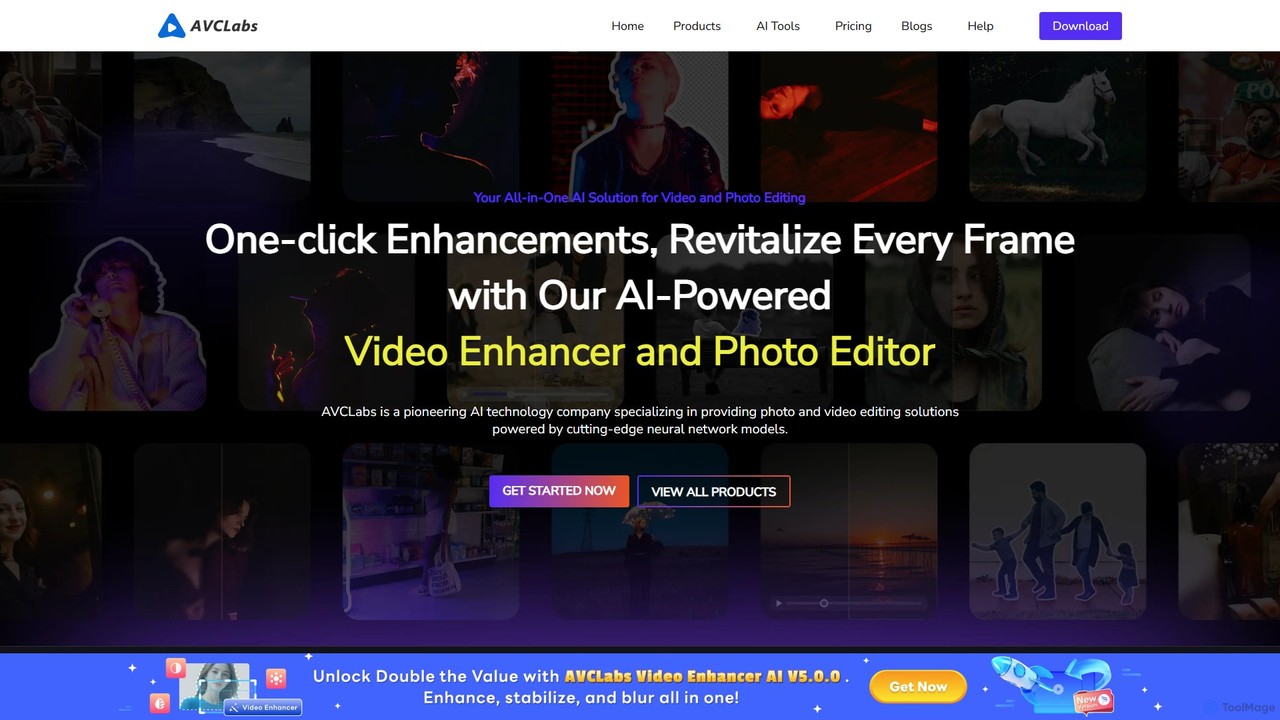
AVCLabs offers a suite of AI-powered desktop applications designed to enhance, restore, upscale, and edit videos and photos. It leverages artificial intelligence to automate complex tasks like quality improvement to 4K/8K, colorization, noise reduction, and privacy blurring, making professional-grade results accessible to everyone.

Enhancement
Visits 188.8KFavorites 156Likes 167

About Enhancement

Enhancement tools are AI-powered solutions designed to significantly improve the quality, efficiency, and effectiveness of various digital assets and workflows. These tools leverage advanced artificial intelligence algorithms, including machine learning and deep learning, to refine, optimize, or augment existing content, data, or processes. By focusing on elevating output rather than generating from scratch, they play a crucial role within the broader AI Productivity category, making existing work better, faster, and more impactful for professionals across industries. From perfecting visual media to streamlining complex data operations, AI enhancement tools are indispensable for achieving higher standards of output with reduced manual effort.

Core Features

  • Content Quality Improvement: Automatically upscales low-resolution images, removes noise from audio recordings, corrects color imbalances in videos, or refines text for grammatical precision, stylistic consistency, and improved readability across various formats.
  • Workflow Optimization: Provides intelligent suggestions for task management, automates repetitive data entry or content formatting, and streamlines operational processes by identifying inefficiencies and recommending data-driven improvements.
  • Data Refinement and Enrichment: Cleans raw datasets by identifying and correcting errors, removing duplicates, standardizing formats, and enriching information with relevant external data sources, ensuring accuracy and usability for advanced analytics and reporting.
  • Performance Boosting and Optimization: Analyzes system or process data to identify bottlenecks, suggests optimal resource allocation, and provides actionable insights for improving overall operational efficiency, resource utilization, and output quality.
  • Accessibility and Localization Enhancement: Automatically generates accurate captions and subtitles for videos, translates content with contextual accuracy, or adapts user interfaces to improve accessibility for diverse audiences.

Applicable Scenarios

Professionals across marketing, content creation, data analysis, project management, and even software development extensively utilize these tools. For instance, a marketing specialist might enhance product photos for high-impact advertising campaigns or upscale video footage for social media, ensuring visual excellence and brand consistency. A content writer could refine a draft for grammatical precision, stylistic consistency, and SEO optimization, saving significant editing time and improving content reach. Data teams frequently employ these tools to prepare large, complex datasets for machine learning models, ensuring high data quality and reliable model performance. Furthermore, project managers use them to optimize project schedules and resource allocation based on predictive analytics.

How to Choose

When selecting an AI Enhancement tool, it's crucial to consider the specific type of asset or workflow you aim to improve, whether it's visual content, audio recordings, written text, complex data structures, or operational processes. Evaluate its integration capabilities with your existing software ecosystem, ensuring seamless data flow and minimal disruption. Assess the scalability of its processing power to handle large volumes of work efficiently, and the level of customization it offers to meet unique project requirements and brand guidelines. Furthermore, prioritize tools with high accuracy and reliability in their underlying AI models, along with robust data security measures and an intuitive user interface, to ensure effective, trustworthy, and user-friendly implementation.

Enhancement use cases

1

Enhancing Marketing Visuals for Campaigns

Marketing teams utilize AI enhancement tools to automatically upscale low-resolution product images, remove imperfections, and adjust lighting or color balance. This ensures high-quality, consistent visuals across all advertising platforms, social media, and websites, significantly reducing the time and cost associated with professional photo editing and improving brand perception.

2

Refining Professional Documents and Reports

Writers, business analysts, and academics leverage AI for text enhancement to improve grammar, correct spelling, refine sentence structure, and ensure a consistent tone and style in reports, proposals, and articles. This process streamlines the editing phase, enhances readability, and ensures professional communication standards, allowing creators to focus more on content generation.

3

Improving Audio Quality for Virtual Meetings and Podcasts

Remote workers, podcasters, and online educators use AI tools to suppress background noise, clarify speech, and balance audio levels in recorded virtual meetings, interviews, or voiceovers. This enhancement ensures clearer communication, improves listener engagement, and produces professional-grade audio content without requiring specialized sound engineering skills or equipment.

4

Optimizing Data Entry and Cleaning for Analysis

Data analysts and administrative staff employ AI enhancement tools to automatically identify and correct errors, remove duplicates, and standardize formats in large datasets. This significantly reduces the manual effort and time spent on data preparation, ensuring higher data quality for accurate reporting, business intelligence, and machine learning model training.

5

Accelerating Content Summarization and Expansion

Content creators, researchers, and students use AI to quickly summarize lengthy articles, research papers, or meeting transcripts, extracting key information efficiently. Conversely, these tools can expand brief notes or bullet points into detailed drafts, boosting content generation speed and helping users overcome writer's block while maintaining contextual relevance.

6

Streamlining Workflow Automation with Intelligent Suggestions

Project managers and team leads integrate AI enhancement tools that analyze project data, team performance, and historical trends to suggest optimal task assignments, identify potential bottlenecks, or recommend resource allocation. This proactive approach enhances operational efficiency, improves decision-making, and ensures projects stay on track, leading to better overall productivity.

Enhancement FAQ

What are AI Enhancement tools?

AI Enhancement tools are specialized artificial intelligence applications designed to improve the existing quality, efficiency, or effectiveness of various digital assets and processes. Unlike generative AI that creates new content, enhancement tools focus on refining and optimizing what's already there, such as upscaling images, denoising audio, correcting text grammar, or streamlining workflows. They leverage machine learning to analyze and apply improvements, boosting overall productivity.

How do I choose the right AI Enhancement tool?

To choose the right AI Enhancement tool, consider several factors. First, identify the specific type of enhancement you need (e.g., visual, audio, text, data, workflow). Second, evaluate its compatibility and integration capabilities with your existing software ecosystem. Third, assess its scalability, processing speed, and the accuracy of its AI models. Finally, consider the user interface, pricing model, and data security features to ensure it meets your specific operational and budgetary requirements.

What are the main benefits of using AI Enhancement tools for productivity?

The main benefits of using AI Enhancement tools for productivity include significant time savings by automating tedious refinement tasks, improved output quality and consistency across all digital assets, and reduced manual effort. They help achieve professional standards without specialized skills, minimize errors in data and content, and provide intelligent insights for workflow optimization, ultimately leading to higher efficiency and better resource utilization for individuals and teams.

How do AI Enhancement tools differ from general AI Productivity tools?

AI Enhancement tools are a specific subset of general AI Productivity tools. While general AI productivity tools encompass a broad range of applications that automate tasks or generate content from scratch (e.g., AI writers, project management AI), enhancement tools specifically focus on improving or refining existing assets or processes. For example, an AI writer generates text, while an AI enhancement tool refines that generated text for grammar and style. They make existing work better, rather than creating new work.

What are some common applications of AI Enhancement tools?

AI Enhancement tools have diverse applications. Common uses include enhancing visual content like photos and videos for marketing or e-commerce, improving audio quality for podcasts and virtual meetings, refining written content for professional documents and academic papers, and optimizing data by cleaning and enriching datasets for analytics. They are also used for workflow automation, providing intelligent suggestions to streamline project management and operational processes across various industries.