dstack
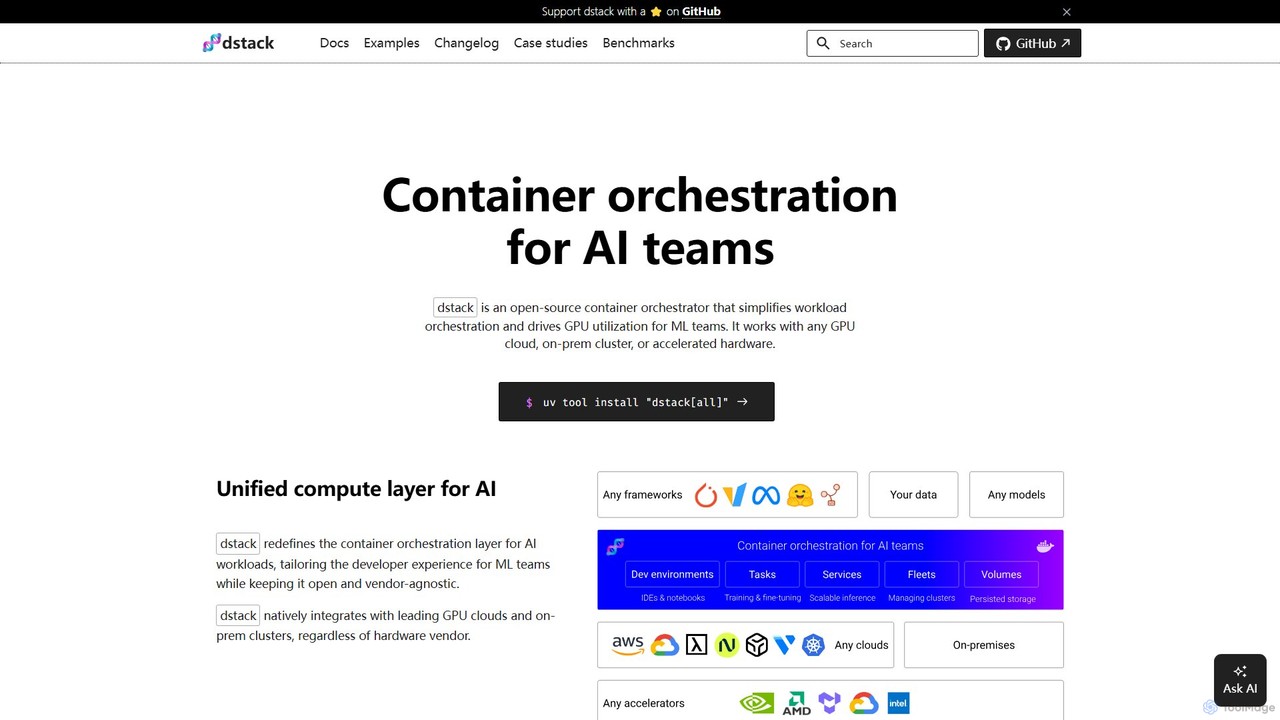
dstack is an open-source container orchestrator designed for AI and ML teams. It simplifies workload orchestration and maximizes …
dstack is an open-source container orchestrator designed for AI and ML teams. It simplifies workload orchestration and maximizes GPU utilization across any cloud provider, on-premise cluster, or accelerated hardware. It provides a unified compute layer, streamlining development, training, and model deployment.
Infraforge
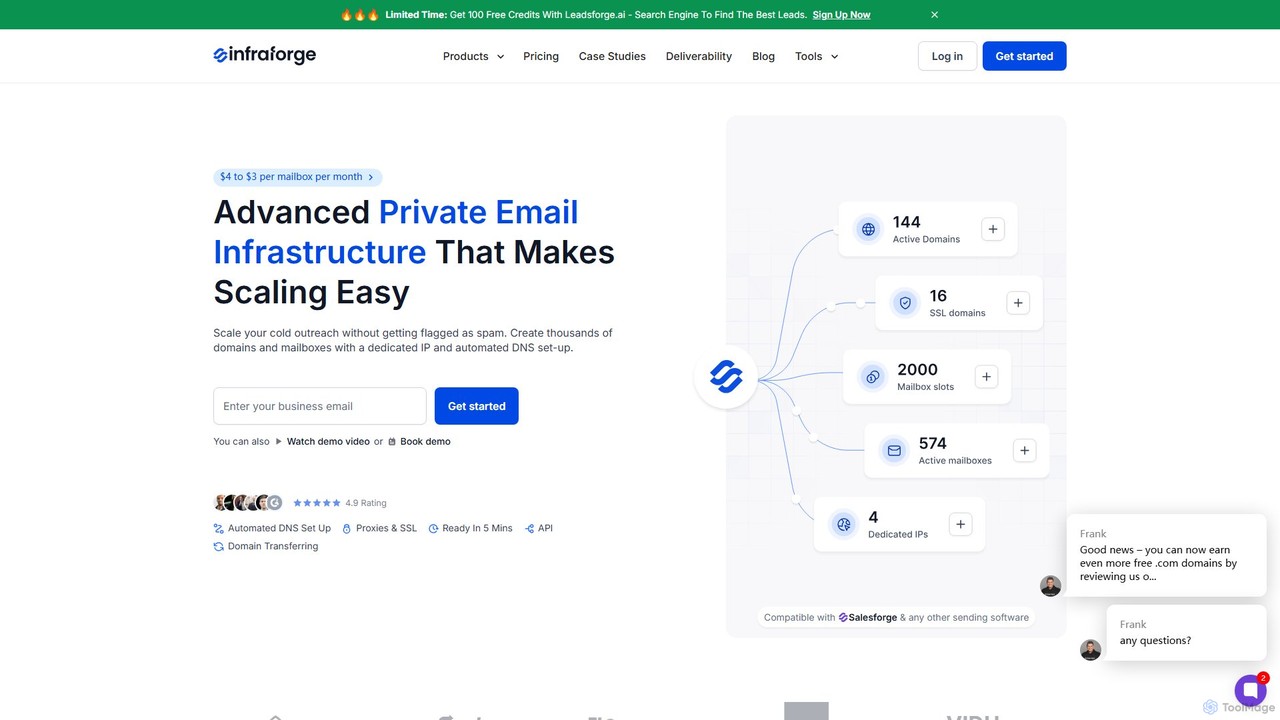
Infraforge provides a private, scalable cold email infrastructure with dedicated IPs. It automates DNS setup (DMARC, SPF, DKIM) …
Infraforge provides a private, scalable cold email infrastructure with dedicated IPs. It automates DNS setup (DMARC, SPF, DKIM) and offers unlimited mailboxes to help businesses scale their outreach without being flagged as spam. Designed for high deliverability, it's a cost-effective alternative to Google Workspace or MS365 for sales and marketing teams.
About Infrastructure Management
Infrastructure Management tools are AI-powered solutions designed to automate, monitor, and optimize an organization's IT infrastructure. These tools leverage machine learning and predictive analytics to enhance the reliability, performance, and security of servers, networks, and cloud environments. By proactively identifying and resolving issues, they ensure seamless operations and significantly reduce manual intervention.
Core Features
- Automated Provisioning: Automatically deploys and configures infrastructure resources based on demand.
- Performance Monitoring: Continuously tracks system metrics, identifies bottlenecks, and predicts potential failures.
- Cost Optimization: Analyzes resource usage to recommend cost-saving adjustments in cloud environments.
- Security Automation: Detects and responds to security threats in real-time, enforcing compliance policies.
- Predictive Maintenance: Uses AI to forecast hardware or software issues before they impact services.
Applicable Scenarios
Organizations with complex IT landscapes, such as large enterprises, cloud service providers, and data centers, heavily rely on AI infrastructure management. DevOps teams use these tools to streamline continuous integration/continuous deployment (CI/CD) pipelines, while IT operations teams leverage them for proactive incident management and resource scaling. This ensures high availability and efficient resource utilization across diverse environments.
How to Choose
When selecting an AI infrastructure management tool, consider its integration capabilities with existing systems and cloud platforms. Evaluate the breadth of its monitoring and automation features, ensuring it covers your specific infrastructure components. Assess its scalability to grow with your needs and review its security features for compliance and threat detection. Finally, compare pricing models and vendor support to align with your budget and operational requirements.

Infrastructure ManagementUse Cases
Automate Cloud Resource Optimization and Cost Savings
Cloud architects and finance teams utilize AI infrastructure management tools to continuously analyze cloud resource consumption patterns. The AI automatically identifies underutilized instances, recommends rightsizing adjustments, and schedules non-production environments to shut down during off-hours. This proactive optimization significantly reduces cloud spending while maintaining performance levels, ensuring efficient resource allocation without manual oversight.
Proactively Monitor Network Performance and Prevent Outages
Network administrators deploy AI-powered tools to monitor network traffic, device health, and connectivity in real-time. The AI learns normal operational baselines and instantly flags anomalies, predicting potential bottlenecks or failures before they impact users. This enables IT teams to address issues like overloaded links or faulty hardware proactively, minimizing downtime and ensuring a stable, high-performing network infrastructure.
Automate Security Threat Detection and Incident Response
Security operations centers (SOCs) leverage AI infrastructure management for continuous monitoring of system logs, network activity, and user behavior. The AI identifies suspicious patterns indicative of cyber threats, such as unauthorized access attempts or malware propagation, with high accuracy. It can then trigger automated responses, like isolating compromised systems or blocking malicious IPs, significantly reducing response times and mitigating potential damage.
Implement Predictive Maintenance for Server Hardware
Data center managers use AI tools to analyze sensor data from server hardware, including temperature, fan speed, and disk I/O. The AI identifies subtle deviations from normal operating parameters, predicting component failures days or weeks in advance. This allows maintenance teams to schedule replacements during planned downtime, preventing unexpected hardware failures that could lead to costly service interruptions and data loss.
Intelligent Resource Scaling for Dynamic Application Workloads
DevOps engineers and application owners utilize AI infrastructure management to dynamically scale application resources based on real-time demand. The AI learns application usage patterns and automatically provisions or de-provisions compute, memory, and storage resources. This ensures applications maintain optimal performance during peak loads while avoiding over-provisioning during low-demand periods, leading to efficient resource utilization and cost control.
Automate Compliance and Configuration Management
Compliance officers and IT auditors employ AI tools to continuously monitor infrastructure configurations against predefined regulatory standards and internal policies. The AI automatically detects configuration drifts or non-compliant settings and can initiate automated remediation actions. This ensures that all systems consistently adhere to security benchmarks and regulatory requirements, simplifying audits and reducing the risk of compliance violations.