ToolMage
Sign in

Best 7 Interviewing AI tools for Productivity

Popular Interviewing AI tools in Productivity include Panna, HireHunch, TalentSprout, PolygrAI, JobHive, SmartHireFlow, and Golden Record, helping you work more efficiently.

JobHive

JobHive

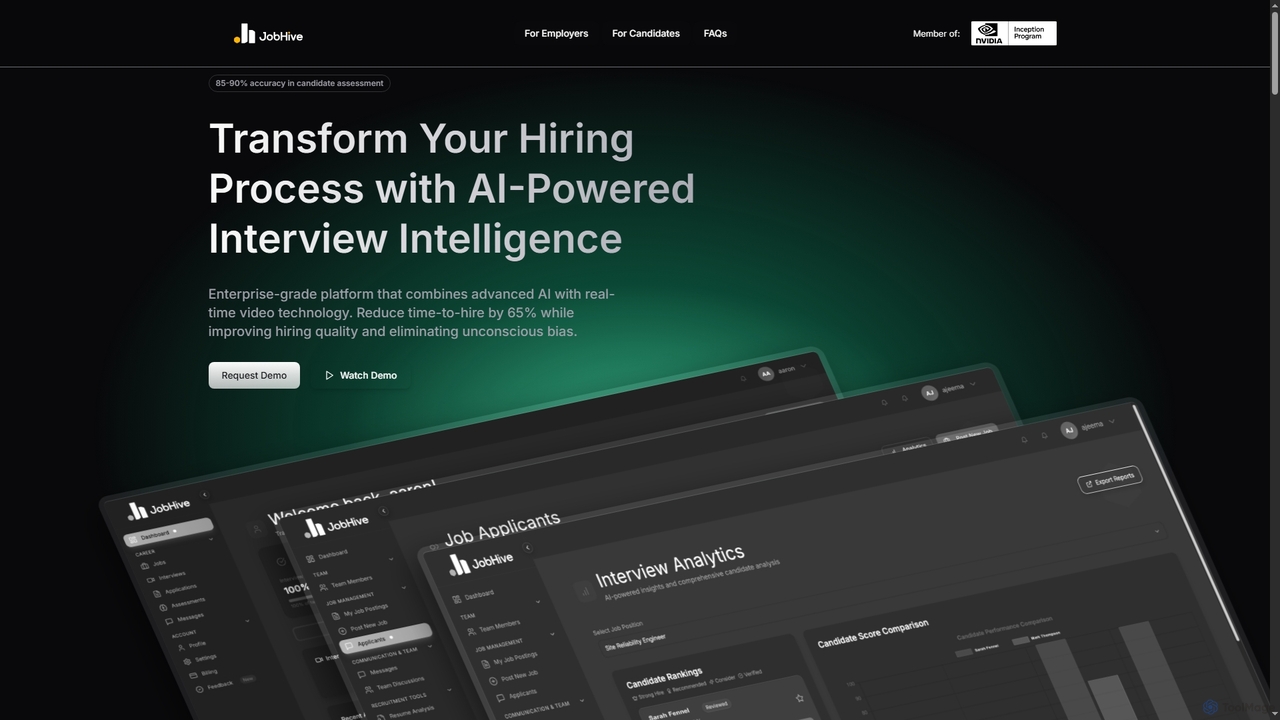
JobHive is an enterprise-grade AI-powered interview intelligence platform designed to transform the hiring process. It leverages advanced AI and real-time video technology to provide highly accurate candidate assessments, reduce time-to-hire by up to 65%, and eliminate unconscious bias, ultimately improving hiring quality and retention rates.

Recruitment Software
Visits 7.6KFavorites 44Likes 51
SmartHireFlow
Freemium

SmartHireFlow

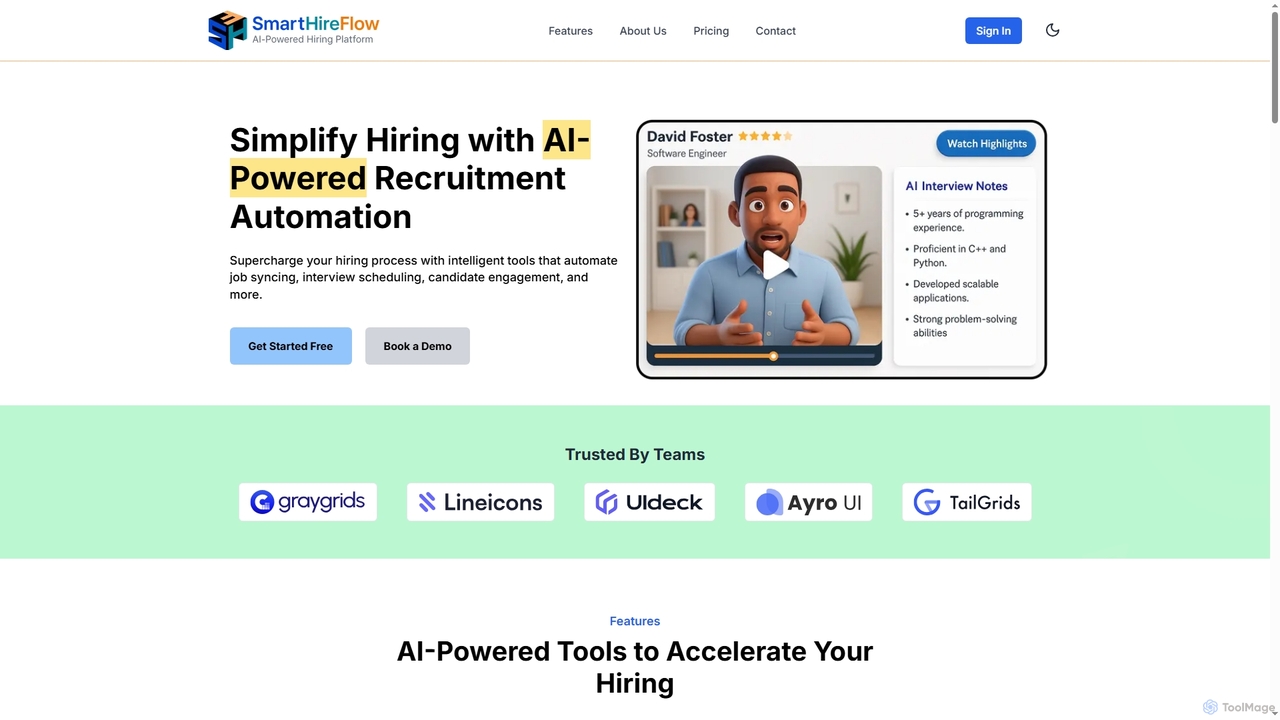
SmartHireFlow is an AI-powered recruitment automation platform designed to streamline and accelerate the hiring process. It offers intelligent tools for candidate screening, interview scheduling, and talent matching, helping teams make faster, smarter hiring decisions.

Talent Management
Visits 7.4KFavorites 119Likes 119
TalentSprout
Freemium

TalentSprout

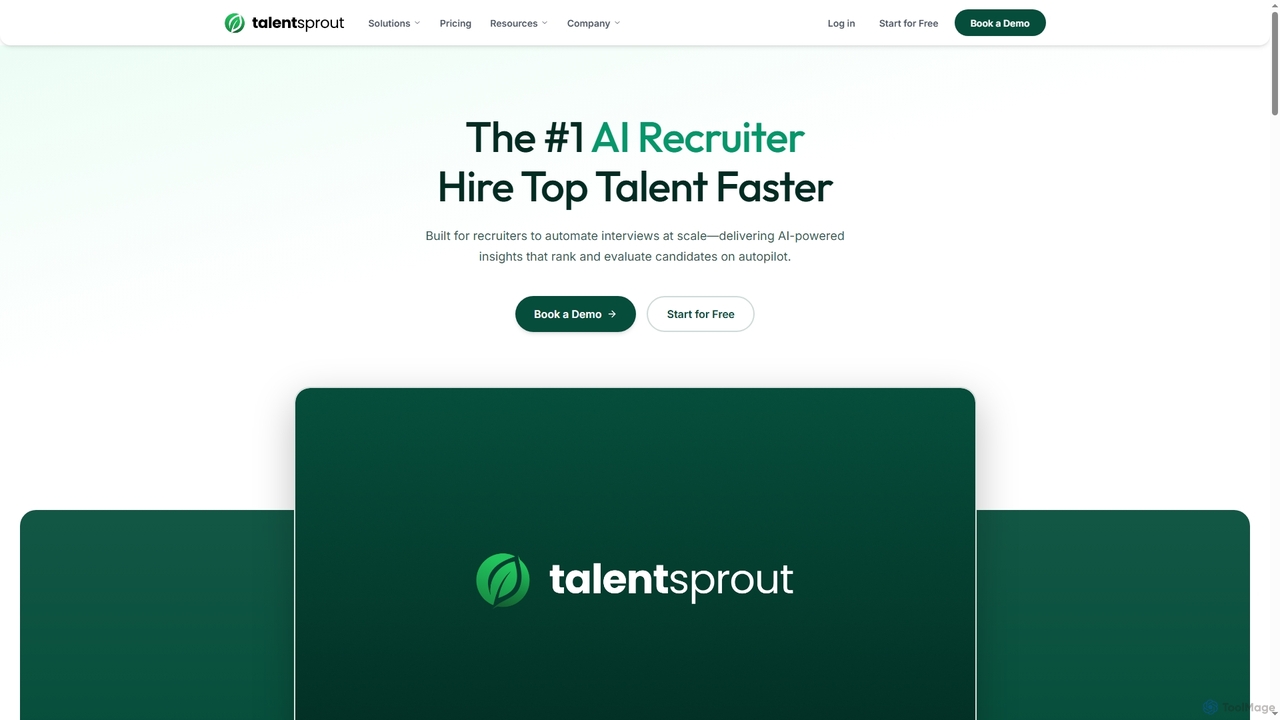
TalentSprout is an AI-powered recruitment platform that automates candidate screening and evaluation. It enables recruiters to conduct human-quality, adaptive interviews at scale, delivering deep insights in minutes, not days. This tool helps organizations hire top talent faster, save significant recruiter time, and ensure a consistent, professional candidate experience.

Recruitment Automation
Visits 10.1KFavorites 142Likes 137
PolygrAI
Freemium

PolygrAI

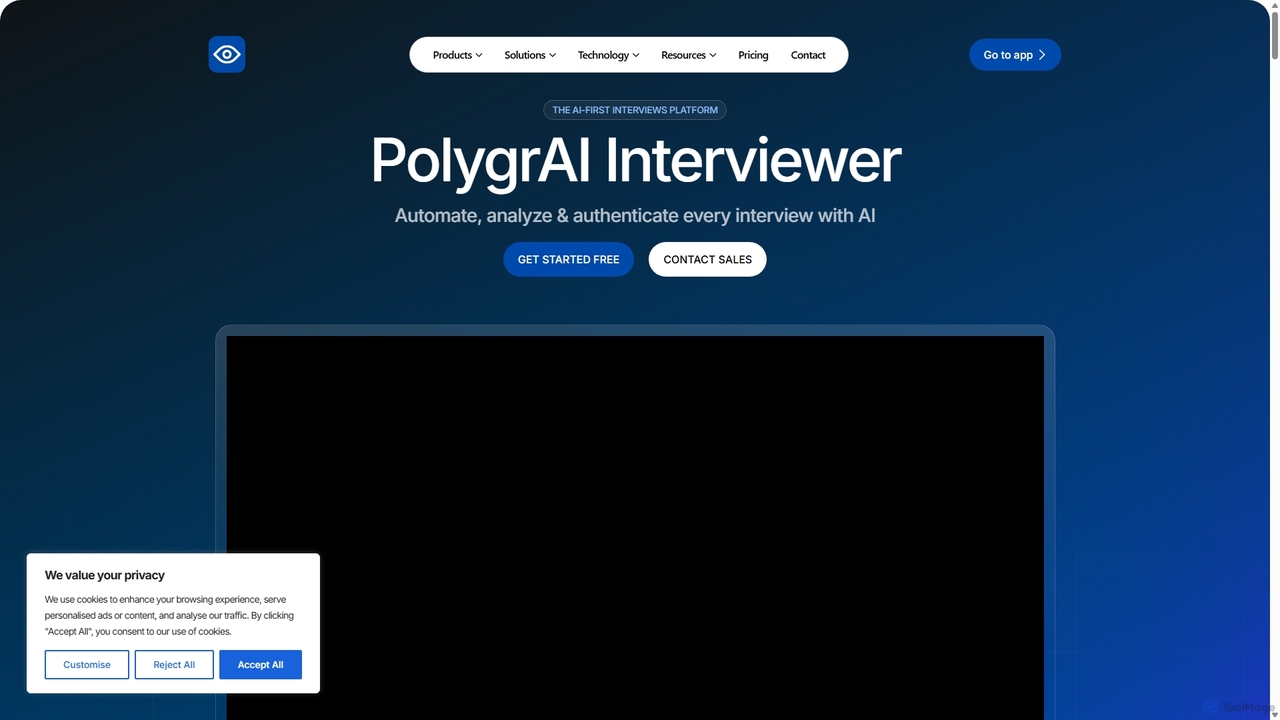
PolygrAI is an AI-first interview platform that automates, analyzes, and authenticates video and audio interactions. It employs a multi-modal analysis engine to assess visual, vocal, linguistic, and psychological cues, providing deep insights into authenticity, deception, and personality traits. Ideal for recruitment, fraud prevention, security, and investigations, it helps organizations make data-driven decisions with greater confidence and efficiency.

Recruiting
Visits 9.4KFavorites 133Likes 116
Panna
Paid

Panna

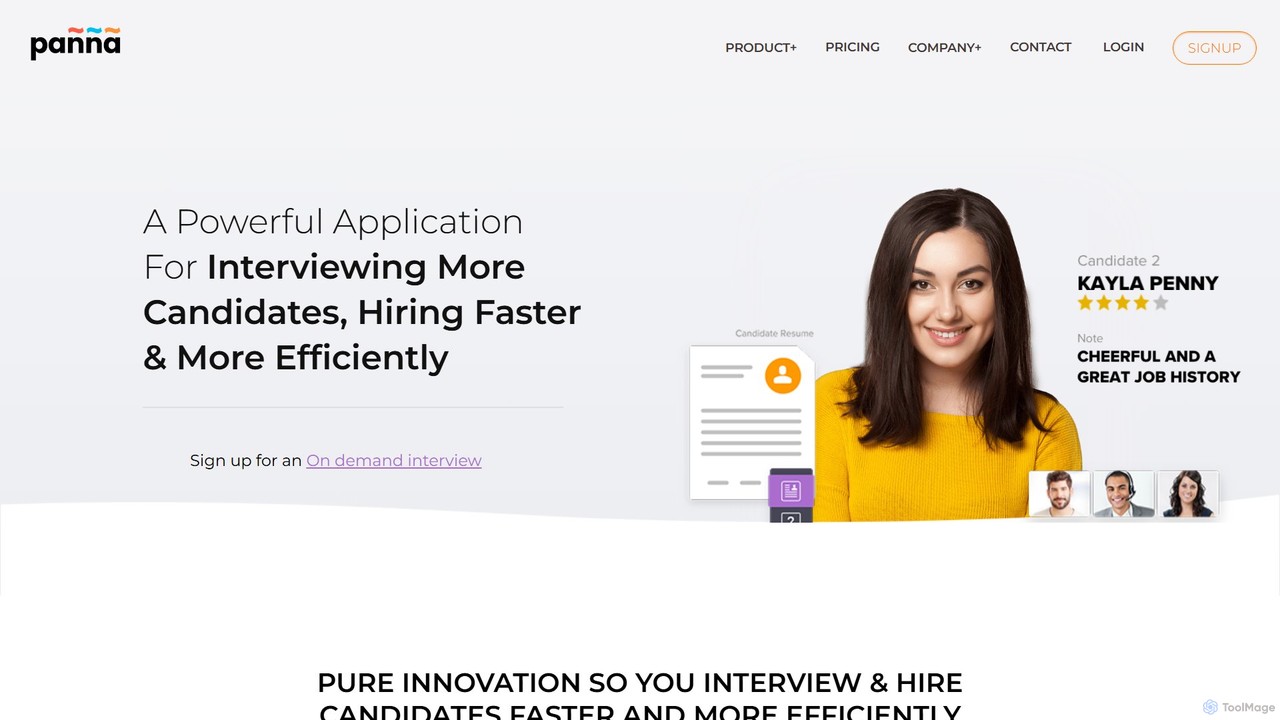
Panna is an AI-powered video interviewing platform designed to streamline the recruitment process. It helps recruiters screen more candidates, identify top talent, and reduce time-to-hire through live and on-demand interviews, AI-driven scoring, and authenticity checks.

Talent Management
Visits 16.6KFavorites 133Likes 129
HireHunch
Freemium

HireHunch

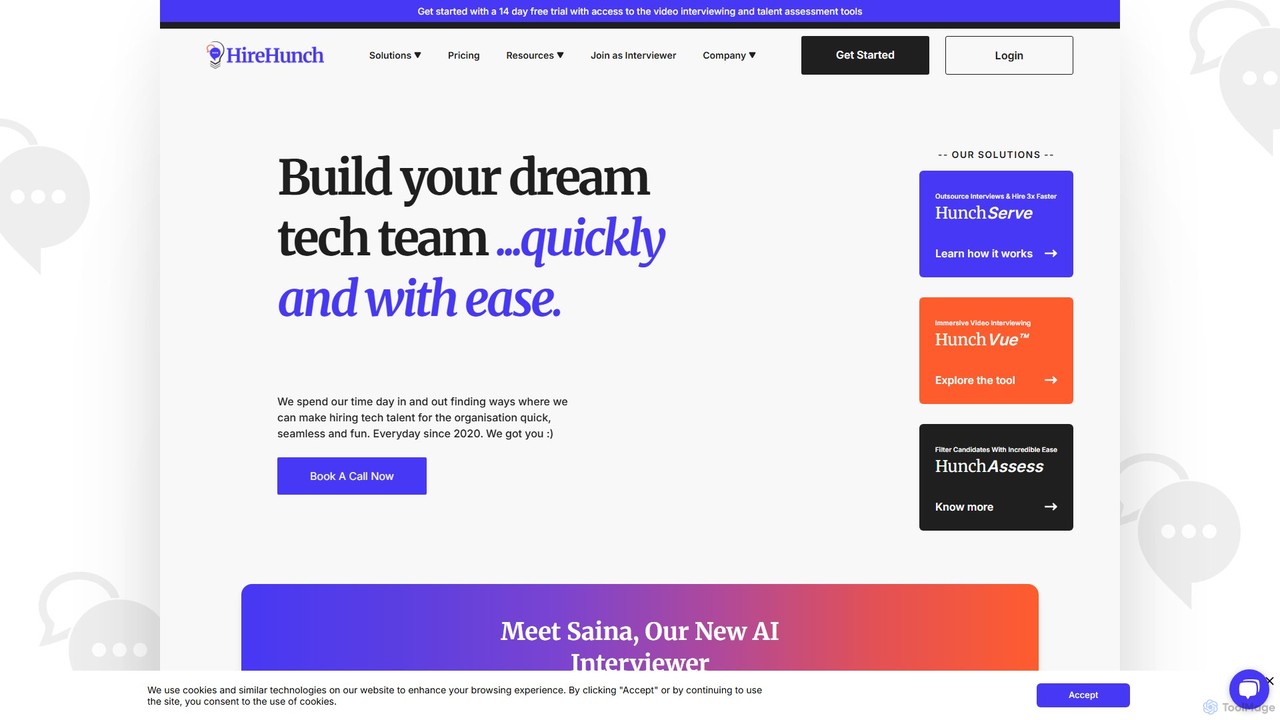
HireHunch is an AI-powered hiring platform offering Interview-as-a-Service (IaaS), a video interview environment, and candidate assessment tools. It streamlines tech recruitment by outsourcing interviews to experts, automating screening with AI, and providing a comprehensive suite to hire top talent 3x faster while reducing bias and saving engineering hours.

Code Assessment
Visits 14.4KFavorites 110Likes 120
Golden Record
Paid

Golden Record

Golden Record is an AI-powered platform designed to capture and preserve the voices and stories of your loved ones. It uses AI to generate meaningful interview prompts, making it easy to record precious memories. Users can organize these audio recordings into digital albums, share them with family and friends, and even create timeless custom lathe-cut vinyl records as physical keepsakes.

Memory Keeping
Visits 6.6KFavorites 169Likes 155

About Interviewing

AI Interviewing tools are specialized platforms that use artificial intelligence to automate, analyze, and streamline the job interview process. Leveraging technologies like Natural Language Processing (NLP) and computer vision, these tools assess candidate responses from video or text for relevant skills, keywords, and communication patterns. They provide recruiters with data-driven insights to make more objective and efficient hiring decisions. As a focused application within the broader Productivity category, AI Interviewing tools specifically target the enhancement of recruitment workflows, reducing manual screening time and standardizing evaluation criteria.

Core Features

  • Asynchronous Video Interviews: Allows candidates to record answers to pre-set questions on their own schedule.
  • AI-Powered Analysis: Evaluates verbal responses, tone of voice, and key competencies to generate performance insights.
  • Candidate Scoring & Ranking: Objectively scores and ranks applicants based on customizable, role-specific criteria.
  • Question Bank Management: Provides libraries of vetted questions and allows for the creation of custom interview scripts.
  • ATS Integration: Seamlessly connects with Applicant Tracking Systems to centralize candidate data and workflow.

Applicable Scenarios

These tools are primarily used by corporate HR departments, recruitment agencies, and hiring managers, especially in medium to large enterprises dealing with high-volume applications. Industries like technology, retail, consulting, and customer service benefit greatly from efficiently screening candidates for both technical and soft skills. They are ideal for initial screening stages, global recruitment drives, and roles requiring consistent evaluation standards.

Selection Criteria

When choosing an AI Interviewing tool, consider the sophistication of its AI analysis (e.g., keyword matching vs. competency modeling). Evaluate its integration capabilities with your existing HR tech stack, particularly your ATS. Assess the candidate experience to ensure it is user-friendly and professional. Finally, verify the tool's compliance with data privacy and anti-bias regulations like GDPR and EEOC guidelines.

Interviewing use cases

1

Screening High-Volume Applicants for Retail

A national retail chain needs to hire 500 seasonal employees across 50 stores. The HR team uses an AI Interviewing tool to deploy a standardized asynchronous video interview to all applicants. The AI analyzes responses for key customer service phrases, enthusiasm in tone, and availability. This allows the team to quickly shortlist the top 20% of candidates for in-person interviews, reducing screening time by 75% and ensuring a consistent evaluation standard across all locations.

2

Assessing Technical Skills for Software Engineers

A tech company is hiring for a senior software engineer role. They use an AI Interviewing platform that integrates with a coding challenge environment. Candidates first answer behavioral questions via video, which the AI analyzes for communication and problem-solving approaches. Then, they complete a timed coding task within the same platform. The AI scores the code for efficiency and accuracy, providing hiring managers with a combined report of soft skills and technical proficiency before scheduling a single live interview.

3

Standardizing Global Graduate Recruitment

A multinational consulting firm runs a global graduate recruitment program. To ensure fairness and reduce bias, they use an AI Interviewing tool to ask every candidate the same set of situational judgment questions. The AI transcribes and analyzes the answers against a predefined competency framework, scoring candidates on criteria like leadership potential and analytical thinking. This creates a standardized baseline for comparison, allowing recruiters from different regions to make consistent, data-backed decisions.

4

Evaluating Language Proficiency for Customer Support

A call center hiring for bilingual customer support agents uses an AI Interviewing tool to assess language proficiency. Candidates are asked to respond to several common customer scenarios in their second language. The AI analyzes their speech for fluency, pronunciation accuracy, vocabulary range, and grammatical correctness. It provides a CEFR (Common European Framework of Reference for Languages) equivalent score for each candidate, allowing recruiters to quickly filter for those who meet the required communication level without needing a human language assessor for initial screening.

5

Improving Candidate Experience with Flexible Scheduling

A fast-growing startup competes for top talent who are often currently employed. To accommodate their busy schedules, the company uses asynchronous AI interviews for the first round. Candidates receive a link and can complete the interview at any time within a 72-hour window, including evenings or weekends. This flexibility improves the candidate experience, leading to a higher completion rate and positioning the company as a modern, considerate employer. The recorded interviews can then be reviewed by the hiring team collaboratively.

6

Conducting Structured Behavioral Interviews for Managers

An organization wants to ensure its management hiring process is robust and identifies key leadership traits. They use an AI Interviewing tool to create a structured behavioral interview based on their leadership competency model. All candidates for a management role answer the same questions about past experiences in conflict resolution, team motivation, and strategic planning. The AI analyzes responses for STAR (Situation, Task, Action, Result) method components and flags answers that demonstrate strong leadership indicators, providing a consistent and in-depth initial assessment for the hiring committee.

Interviewing FAQ

What are AI Interviewing tools?

AI Interviewing tools are software platforms that use artificial intelligence to automate and enhance the recruitment screening process. They typically use asynchronous video interviews where candidates record answers to preset questions. The AI then analyzes these responses, evaluating factors like keywords, speech patterns, and competencies to provide recruiters with objective, data-driven insights and candidate rankings. Their main purpose is to increase efficiency and consistency in high-volume hiring.

How to choose the right AI Interviewing tool?

When selecting an AI Interviewing tool, consider these four key factors:

  • Analysis Depth: Does the tool simply perform keyword matching, or does it offer deeper analysis of competencies, sentiment, and communication style?
  • ATS Integration: Ensure it integrates smoothly with your existing Applicant Tracking System to avoid data silos and manual data entry.
  • Candidate Experience: The platform should be intuitive, professional, and accessible to all candidates to protect your employer brand.
  • Bias and Compliance: Ask vendors about their methods for mitigating algorithmic bias and ensuring compliance with regulations like GDPR and EEOC.
What is the difference between AI Interviewing and video conferencing tools like Zoom?

The key difference lies in purpose and functionality. Video conferencing tools like Zoom or Google Meet are designed for live, real-time communication between people. In contrast, AI Interviewing tools are specialized platforms for asynchronous (on-demand) interviews. They include features specifically for recruitment, such as question banks, structured evaluation criteria, automated transcription, and AI-powered analysis of responses. They are designed to screen and assess candidates, not just facilitate a conversation.

Can AI Interviewing tools completely replace human recruiters?

No, AI Interviewing tools are designed to augment, not replace, human recruiters. They are most effective at the top of the hiring funnel for screening large volumes of candidates and providing initial, data-driven assessments. This frees up recruiters' time from repetitive tasks. However, crucial aspects like final decision-making, assessing cultural fit, complex negotiations, and building candidate relationships still require the nuanced judgment and interpersonal skills of a human professional.

Are AI Interviewing tools biased?

The potential for bias is a significant concern with any AI system. Reputable AI Interviewing tools are designed to reduce human bias by applying the same evaluation criteria to every candidate. However, they can still introduce algorithmic bias if trained on historical data that reflects past biases. When evaluating a tool, it is crucial to ask the provider about their data sources, how their algorithms are trained and tested for fairness, and what features are in place to promote objective, skill-based assessments rather than analyzing subjective traits.