ToolMage
Sign in

Best 3 Prospecting AI tools for Productivity

Popular Prospecting AI tools in Productivity include Tomba, Zintlr, and Eserto, helping you work more efficiently.

Zintlr
Freemium

Zintlr

Zintlr is an AI-powered B2B sales intelligence and prospecting platform. It combines a massive database of over 250M business profiles with unique psychological personality insights to help sales, marketing, and HR teams identify, engage, and convert their ideal prospects and candidates more effectively. It features a powerful Chrome extension for seamless workflow integration.

Recruiting
Visits 13.7KFavorites 174Likes 167
Eserto
Freemium

Eserto

Eserto is an intelligent lead generation and sales outreach platform designed for tech companies, SaaS businesses, and agencies. It provides access to a comprehensive B2B database, enabling users to find ideal clients, identify key decision-makers, and launch effective email campaigns to accelerate sales cycles and drive growth.

Email Marketing
Visits 10KFavorites 192Likes 200
Tomba
Freemium

Tomba

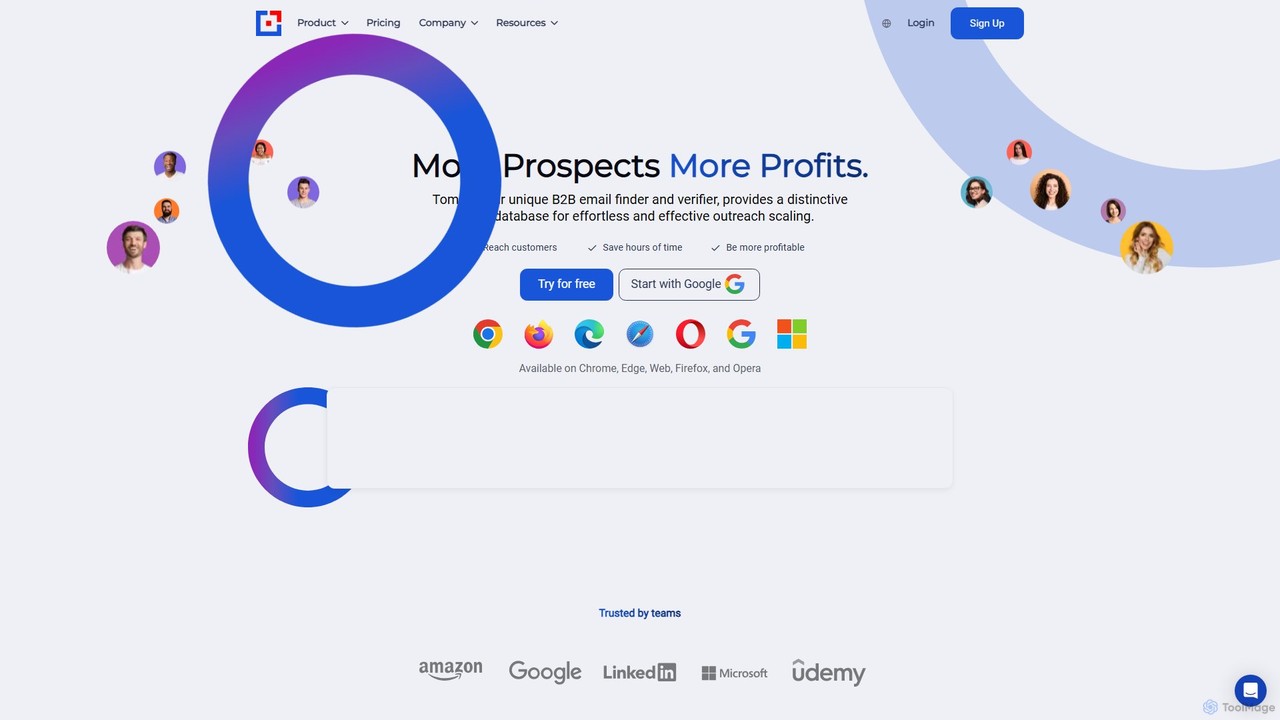
Tomba is a powerful B2B email finder and verifier designed for sales, marketing, and recruitment professionals. It helps users discover and validate professional email addresses from any company or domain in seconds. With a massive database of over 430 million contacts, advanced search filters, and real-time verification, Tomba streamlines lead generation and outreach efforts, making it a comprehensive solution for scaling business connections.

Email Marketing
Visits 106.6KFavorites 188Likes 190

About Prospecting

AI Prospecting tools are a specialized category of productivity software designed to automate and enhance the identification of potential customers. These tools leverage artificial intelligence and machine learning to analyze vast datasets, identifying leads that match an ideal customer profile. They significantly accelerate the top of the sales funnel by providing high-quality, relevant leads and contact information. This allows sales teams to focus on building relationships and closing deals rather than manual research.

Core Features

  • Lead Identification & Scoring: Automatically discovers potential leads from various sources and ranks them based on their likelihood to convert.
  • Contact Data Enrichment: Finds and verifies contact details like email addresses and phone numbers for targeted outreach.
  • Automated Outreach Sequencing: Creates and manages multi-step, personalized email and social media campaigns to engage prospects.
  • Buying Signal Detection: Monitors online data for triggers, such as job changes or company funding, that indicate a sales opportunity.
  • CRM Integration: Seamlessly syncs lead data, activities, and communication history with customer relationship management platforms.

Applicable Scenarios

These tools are essential for B2B sales development representatives (SDRs), account executives, and marketing teams. They are widely used for building sales pipelines, executing account-based marketing (ABM) strategies, and gathering market intelligence. For instance, a SaaS company can use them to find businesses that just adopted a complementary technology, creating a timely and relevant reason to connect.

Selection Criteria

When choosing an AI Prospecting tool, evaluate the accuracy and breadth of its data sources. Consider its integration capabilities with your existing CRM and marketing automation software. Assess the level of customization available for outreach sequences and lead scoring rules. Finally, analyze the pricing model—whether it's based on users, credits, or successful leads—to ensure it aligns with your budget and sales goals.

Prospecting use cases

1

Targeted B2B Lead Generation for SaaS

A sales development representative (SDR) at a SaaS company needs to build a pipeline of qualified leads. They use an AI prospecting tool to set up specific filters, such as company size, industry, geographic location, and technologies used. The AI scans millions of data points and generates a list of 200 companies that perfectly match the ideal customer profile. It then automatically finds and verifies the email addresses of key decision-makers, like VPs of Engineering, saving the SDR dozens of hours of manual research each week.

2

Automating Sales Outreach for Startups

A startup founder with a limited team needs to engage potential early adopters. Using an AI prospecting tool, they identify 500 professionals who fit their target audience on platforms like LinkedIn. Instead of manually sending connection requests and messages, they set up a 3-step automated sequence within the tool. The sequence sends a personalized connection request, a follow-up message after three days, and a final message with a case study a week later. This automation allows the founder to consistently engage prospects while focusing on product development.

3

Enriching Inbound Marketing Leads

A marketing team generates leads through a downloadable e-book on their website. However, the submission form only asks for a name and email. To help the sales team prioritize, they integrate an AI prospecting tool with their web form. When a new lead is submitted, the tool automatically enriches the contact by finding their company, job title, industry, and company size. This enriched data is then synced to the CRM, allowing sales to immediately identify high-value leads from large companies and tailor their follow-up conversation effectively.

4

Identifying Upsell Opportunities with Buying Signals

An account manager wants to find upsell opportunities within their existing customer base. They use an AI prospecting tool to monitor their key accounts for specific buying signals, such as recent funding announcements, significant new hires in relevant departments, or mentions of expansion in press releases. The tool sends an alert when one of their accounts, a mid-sized tech company, announces a $50 million funding round. The account manager uses this timely information to proactively reach out with a proposal for an enterprise-level plan, perfectly aligning with the customer's new growth phase.

5

Building Targeted Lists for Event Marketing

An event marketer is organizing a tech conference in New York. To maximize attendance, they need to invite relevant professionals. Using an AI prospecting tool, they filter for individuals with job titles like 'Software Engineer' or 'Product Manager' who work at tech companies with over 100 employees located within a 50-mile radius of the venue. The tool generates a clean, verified list of 1,000 potential attendees with their professional email addresses. The marketing team then uses this list to run a highly targeted email invitation campaign, resulting in a higher registration rate than previous, less targeted efforts.

6

Sourcing Passive Candidates for Recruitment

A corporate recruiter is tasked with filling a highly specialized senior developer role. The best candidates are likely passive and not actively looking for jobs. The recruiter uses an AI prospecting tool, typically used for sales, to search for professionals with a specific skill set (e.g., 'Kubernetes', 'Go') and years of experience on professional networks. The tool identifies 50 ideal candidates and finds their contact information. The recruiter then launches a personalized outreach sequence to gauge their interest, significantly expanding the talent pool beyond active job applicants.

Prospecting FAQ

What are AI Prospecting tools?

AI Prospecting tools are software applications that use artificial intelligence to automate and streamline the process of finding and qualifying potential customers (leads). They analyze large public and private datasets to identify individuals and companies that fit a predefined ideal customer profile. Key functions include lead discovery, contact data enrichment, lead scoring, and automated outreach, helping sales teams work more efficiently and focus on the most promising opportunities.

How to choose the right AI Prospecting tool?

Choosing the right tool depends on your specific needs. Consider these factors:

  • Data Quality and Coverage: Does the tool have accurate, up-to-date contact information for your target industry and region?
  • CRM Integration: Does it seamlessly integrate with your existing CRM (e.g., Salesforce, HubSpot) to avoid manual data entry?
  • Feature Set: Do you need simple contact finding, or advanced features like automated email sequencing and buying signal alerts?
  • Ease of Use: Is the interface intuitive for your sales team to adopt quickly?
  • Pricing Model: Evaluate if a per-user, credit-based, or flat-rate subscription best fits your budget and usage patterns.
What's the difference between an AI Prospecting tool and a CRM?

The main difference lies in their primary function in the sales process. An AI Prospecting tool is focused on the top of the funnel: its job is to find and qualify new leads that you don't know yet. A CRM (Customer Relationship Management) platform is for managing the entire lifecycle of your relationship with leads and customers you already have. Prospecting tools feed new, qualified leads into the CRM, where the sales team then manages communication, tracks deal progress, and nurtures the relationship.

Can AI prospecting tools guarantee high-quality leads?

While AI prospecting tools significantly increase the probability of finding high-quality leads, they don't offer a guarantee. Their effectiveness depends on the quality of their underlying data and the precision of the search criteria you provide. They excel at identifying leads that match specific, measurable attributes (like company size, technology used, or job title). However, human oversight is still valuable to assess qualitative factors like strategic fit or immediate need. These tools are best viewed as powerful assistants that dramatically improve efficiency and targeting, rather than infallible lead generators.

Who benefits most from using AI Prospecting tools?

Several roles benefit significantly from these tools, primarily in B2B environments. Sales Development Representatives (SDRs) and Business Development Representatives (BDRs) are the primary users, as these tools automate their core task of pipeline building. Account Executives (AEs) use them to find new opportunities and research accounts before a call. Marketing teams leverage them for building targeted lists for Account-Based Marketing (ABM) campaigns and events. Finally, startup founders and small business owners use them to efficiently build an initial customer base without a large sales team.