ToolMage
Sign in

Best 2 Sourcing AI tools for Productivity

Popular Sourcing AI tools in Productivity include Accio and Prog.AI, helping you work more efficiently.

Prog.AI
Paid

Prog.AI

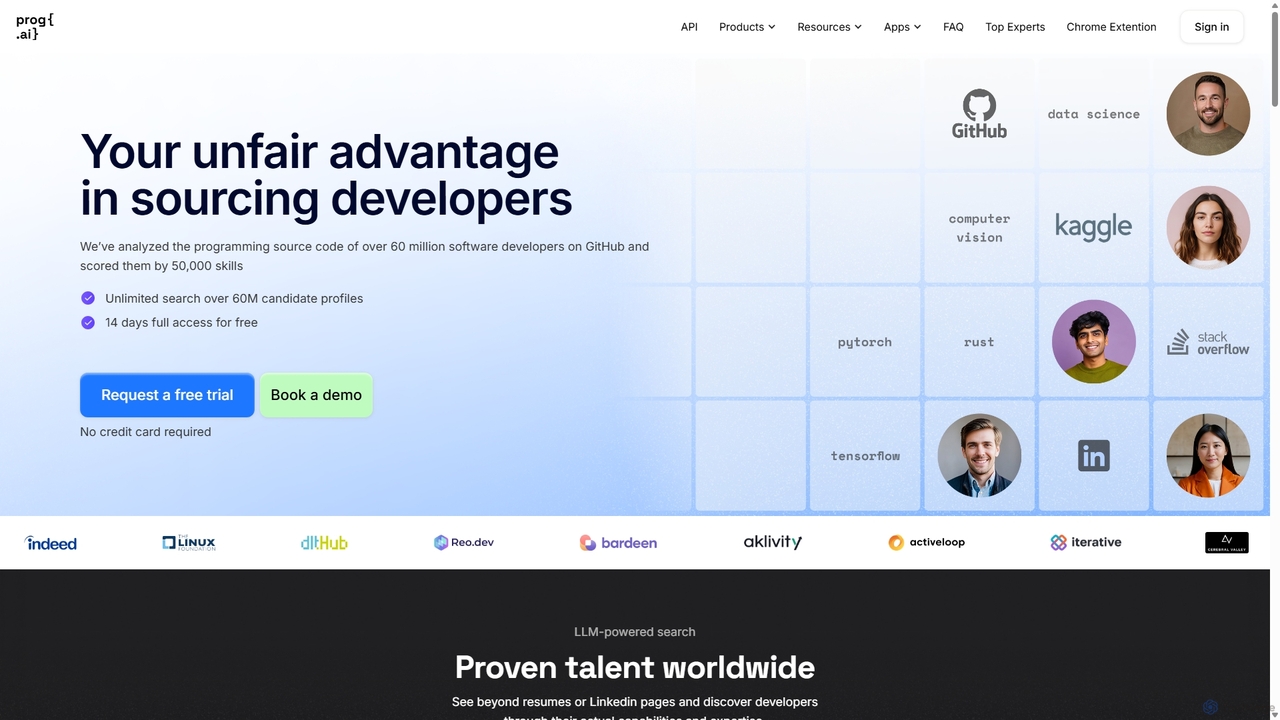
Prog.AI is an AI-powered platform for tech recruiting and developer relations. It analyzes developers' open-source contributions on GitHub, Stack Overflow, and Kaggle to identify and profile top technical talent, providing deep, verifiable insights into their real-world skills.

Developer Relations
Visits 64.8KFavorites 149Likes 147
Accio
Freemium

Accio

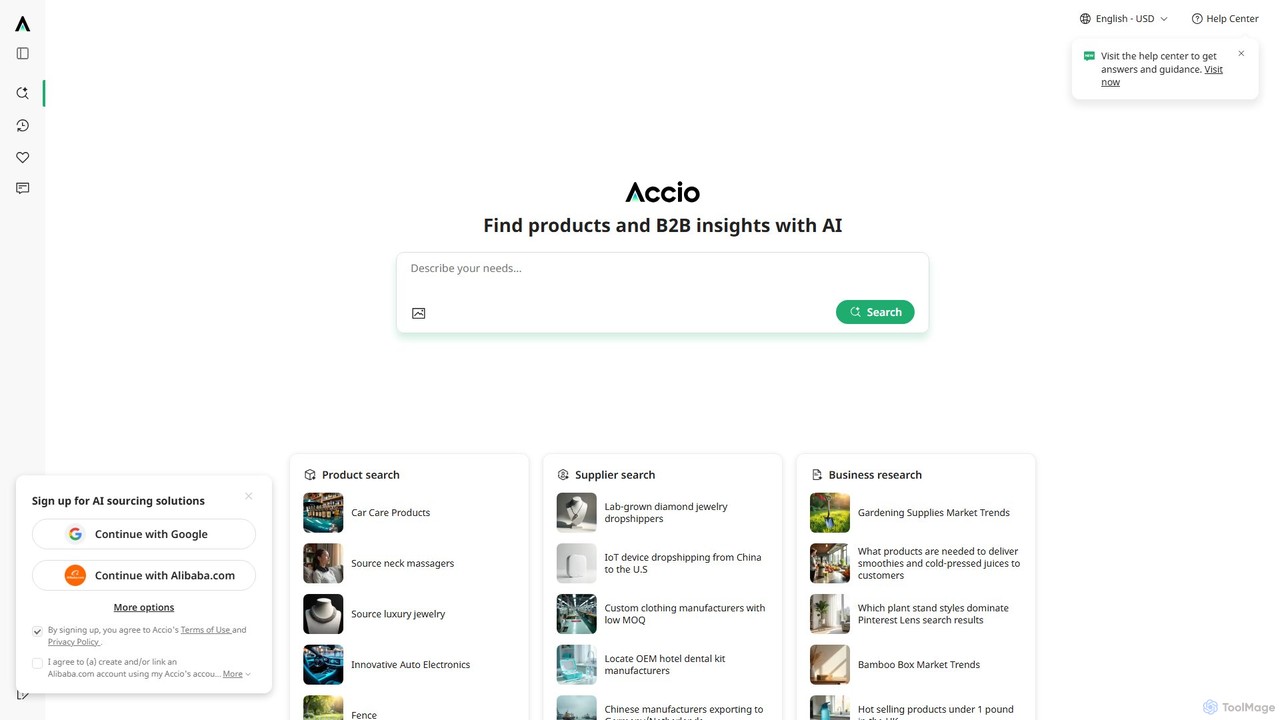
Accio is an AI-powered B2B search engine that helps businesses find products, discover suppliers, and gain market insights. Using natural language queries, users can streamline their sourcing process, from identifying private label manufacturers to analyzing industry trends.

Search Engine
Visits 2.9MFavorites 130Likes 134

About Sourcing

AI Sourcing tools are a specialized category of productivity software that automates the process of finding and qualifying resources, such as candidates, suppliers, or data. Leveraging machine learning and natural language processing, these tools scan vast online and internal databases to identify the best matches based on specified criteria. This significantly accelerates recruitment, procurement, and research workflows by replacing manual searching with intelligent, data-driven discovery. They enhance overall productivity by allowing teams to focus on engagement and decision-making rather than preliminary searching.

Core Features

  • Intelligent Matching: Uses AI to understand complex criteria and find relevant candidates or suppliers beyond simple keyword matches.
  • Automated Outreach: Generates and sends personalized initial contact messages to sourced contacts.
  • Data Enrichment: Augments profiles with additional information from public sources to provide a comprehensive view.
  • Diversity & Inclusion Filtering: Helps identify candidates from underrepresented groups to support DEI goals.
  • Market Intelligence: Provides insights into talent pools or supplier markets, such as availability and salary benchmarks.

Use Cases

These tools are widely used in human resources for talent acquisition, in procurement for identifying new vendors, and by sales and marketing teams for lead generation. Researchers also use them to source relevant academic papers or datasets efficiently, streamlining the initial phase of their projects.

How to Choose

When selecting an AI Sourcing tool, consider its integration capabilities with your existing ATS or CRM systems. Evaluate the quality and breadth of its data sources, the sophistication of its matching algorithms, and its customization options for search criteria and outreach campaigns. Also, assess the user interface and the level of analytics provided to track sourcing effectiveness.

Sourcing use cases

1

Automate Sourcing for Specialized Tech Talent

A tech recruiter needs to fill a senior Python developer role with specific experience in machine learning. Instead of manually searching LinkedIn for hours, they use an AI sourcing tool. They input criteria like 'Python,' 'PyTorch,' '5+ years experience,' and 'remote.' The AI scans millions of profiles, identifies top candidates who are likely open to new opportunities, and even drafts personalized outreach emails. This reduces the time-to-shortlist from days to hours, allowing the recruiter to focus on interviewing qualified candidates.

2

Identify and Vet New Manufacturing Suppliers

A procurement manager for an electronics company needs to find alternative suppliers for a specific microchip to mitigate supply chain risks. They use an AI sourcing platform to search for global manufacturers that meet strict quality certifications (e.g., ISO 9001), production capacity, and ethical standards. The tool provides a ranked list of potential suppliers, complete with risk profiles and financial health data, enabling the manager to quickly initiate contact with the most promising partners.

3

Generate Targeted B2B Sales Leads

A sales development representative (SDR) is tasked with finding new leads in the SaaS industry. Using an AI sourcing tool, they define their ideal customer profile (ICP), including company size, industry, technology stack used, and key decision-maker titles (e.g., 'VP of Engineering'). The AI scours company websites, news articles, and professional networks to build a list of highly relevant leads with verified contact information, significantly improving the quality and conversion rate of their outreach campaigns.

4

Find Industry Experts for Market Research Interviews

A market research firm needs to conduct interviews with 20 experts in the renewable energy sector. An AI sourcing tool helps them identify and contact relevant professionals—such as engineers, policy advisors, and executives—based on their publications, conference presentations, and professional history. The platform automates the initial outreach and scheduling, streamlining the process of assembling an expert panel for qualitative research.

5

Build a Diverse Candidate Pipeline

A company's DEI (Diversity, Equity, and Inclusion) officer aims to increase representation in their hiring pipeline. They utilize an AI sourcing tool with features designed to reduce unconscious bias. The tool can anonymize profiles and actively search for qualified candidates from underrepresented backgrounds and non-traditional talent pools, such as specific universities or professional organizations. This helps create a more equitable and diverse shortlist for hiring managers to review.

6

Source Relevant Datasets for Academic Studies

A university researcher is working on a climate change study and needs to find publicly available meteorological datasets. Instead of manually searching dozens of government and academic portals, they use an AI sourcing tool for research. The tool understands the semantic context of their query ('historical precipitation data for Southeast Asia') and retrieves relevant datasets, research papers, and author contacts, consolidating hours of search into a single, efficient process.

Sourcing FAQ

What are AI Sourcing tools?

AI Sourcing tools are software applications that use artificial intelligence to automate the identification and qualification of resources like job candidates, sales leads, or suppliers. They go beyond simple keyword searches by using machine learning to understand complex requirements, analyze vast amounts of data from various sources, and rank potential matches based on relevance. This helps businesses save significant time and improve the quality of their talent, sales, or procurement pipelines.

How do I choose the right AI Sourcing tool?

To choose the right tool, first define your primary need (e.g., talent, sales, or procurement). Then, consider these factors:

  • Data Sources: Ensure the tool accesses a wide and relevant range of data pools (e.g., professional networks, open web, internal databases).
  • Integration: Check if it integrates smoothly with your existing systems like an Applicant Tracking System (ATS) or Customer Relationship Management (CRM).
  • AI Capabilities: Evaluate the sophistication of its matching algorithm and its ability to learn from your feedback.
  • Customization & Control: Look for flexibility in defining search criteria and filtering results to fit your specific needs.
What is the difference between an AI Sourcing tool and a regular search engine?

The key difference lies in intent and intelligence. A regular search engine (like Google) returns a broad list of public web pages based on keywords. An AI Sourcing tool is a specialized platform designed for a specific task, like recruitment. It actively searches curated and proprietary databases, understands the context of a job description or ideal customer profile, enriches profiles with contact data, and often includes workflow features like automated outreach and candidate management. It provides actionable, ranked results rather than just information.

What are the main benefits of using AI for sourcing?

The primary benefits include:

  • Increased Efficiency: Drastically reduces the manual time spent searching for candidates, leads, or suppliers.
  • Improved Quality: AI algorithms can identify high-quality, passive candidates or niche suppliers that manual searches might miss.
  • Reduced Bias: Some tools offer features to anonymize profiles and focus on skills, helping to create more diverse and inclusive pipelines.
  • Data-Driven Insights: Provides analytics on talent pools or market trends to inform strategic decisions.
Are AI Sourcing tools only for large enterprises?

Not anymore. While large enterprises were early adopters, many AI Sourcing tools now offer scalable pricing plans, including options for small and medium-sized businesses (SMBs) and even individual recruiters or sales professionals. The key is to find a tool whose features and pricing model align with your team's size and sourcing volume. Many platforms offer free trials or entry-level tiers, making the technology accessible to a broader range of users.