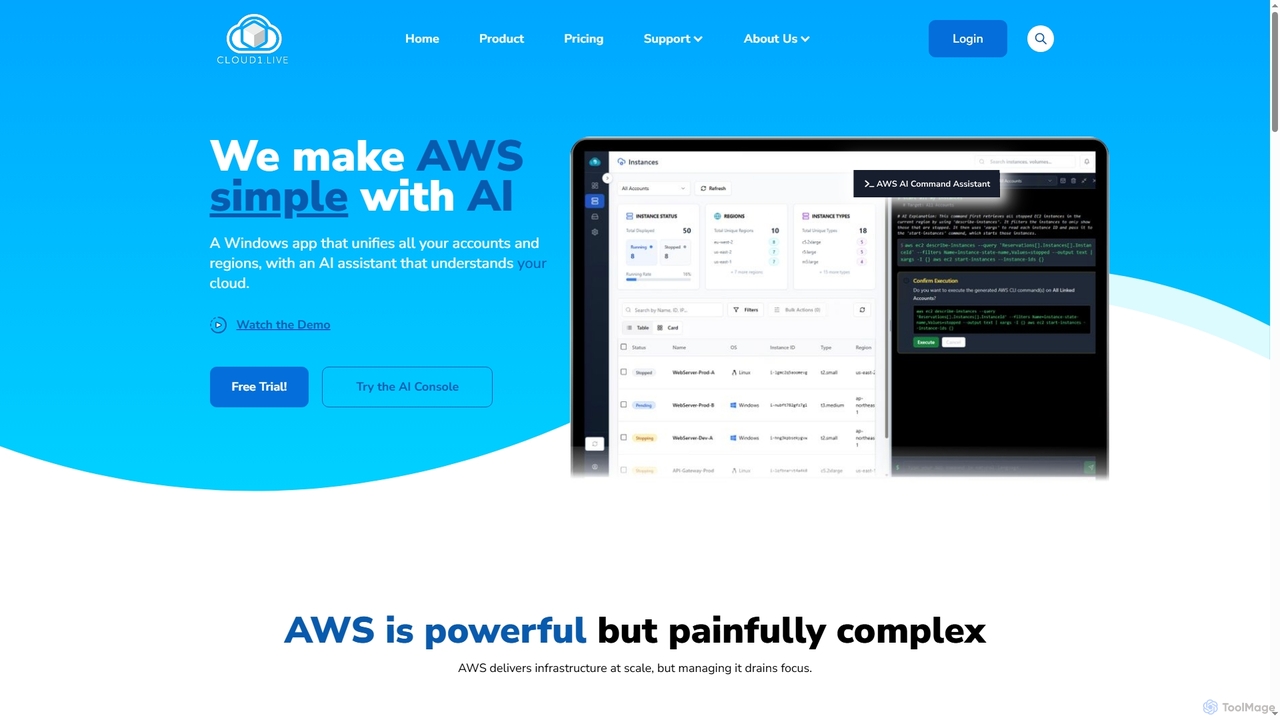
Cloud1
Cloud1 is an AI-powered Windows desktop application designed to simplify AWS EC2 management across multiple accounts and regions. …
Cloud1 is an AI-powered Windows desktop application designed to simplify AWS EC2 management across multiple accounts and regions. It unifies instances, enables natural language commands via an AI assistant, and offers powerful bulk actions and cost optimization insights.
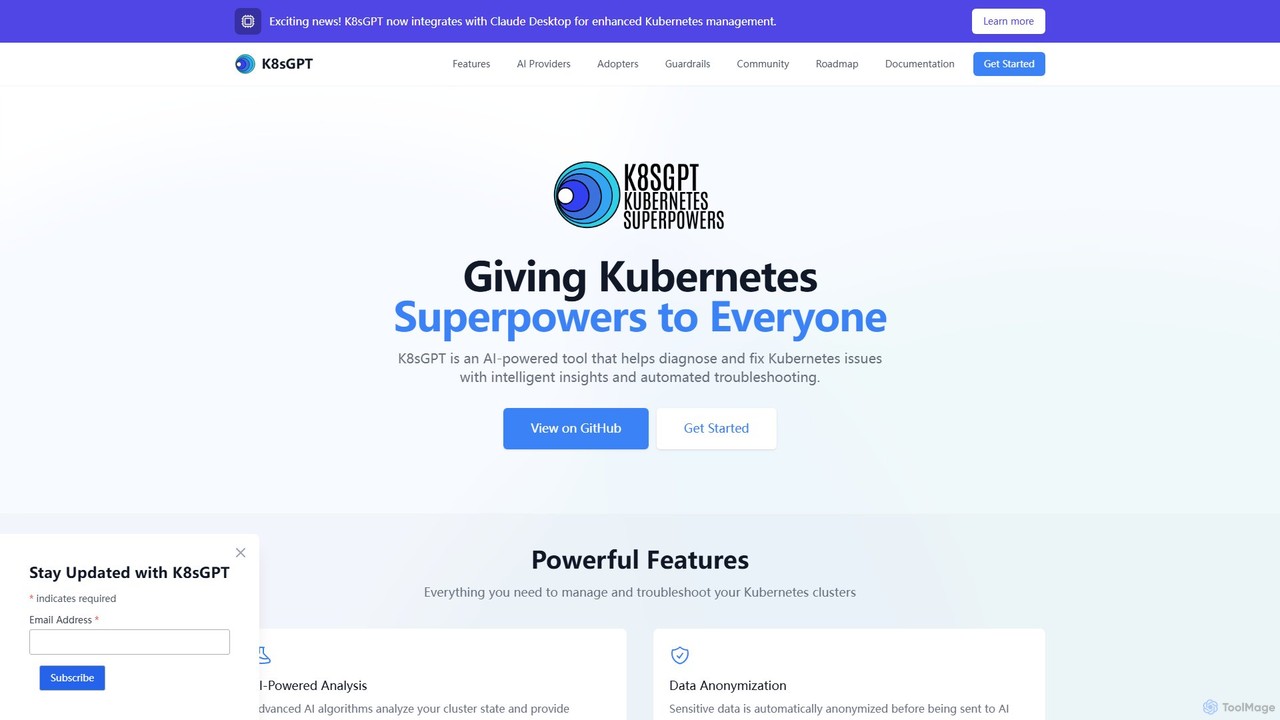
K8sGPT
K8sGPT is an AI-powered tool designed to supercharge Kubernetes (K8s) troubleshooting. It scans your clusters, diagnoses issues, and …
K8sGPT is an AI-powered tool designed to supercharge Kubernetes (K8s) troubleshooting. It scans your clusters, diagnoses issues, and provides intelligent, context-aware insights and solutions. By integrating with various AI providers, including local models, it helps SREs, DevOps engineers, and developers to quickly identify and resolve complex problems, significantly reducing downtime and manual effort.
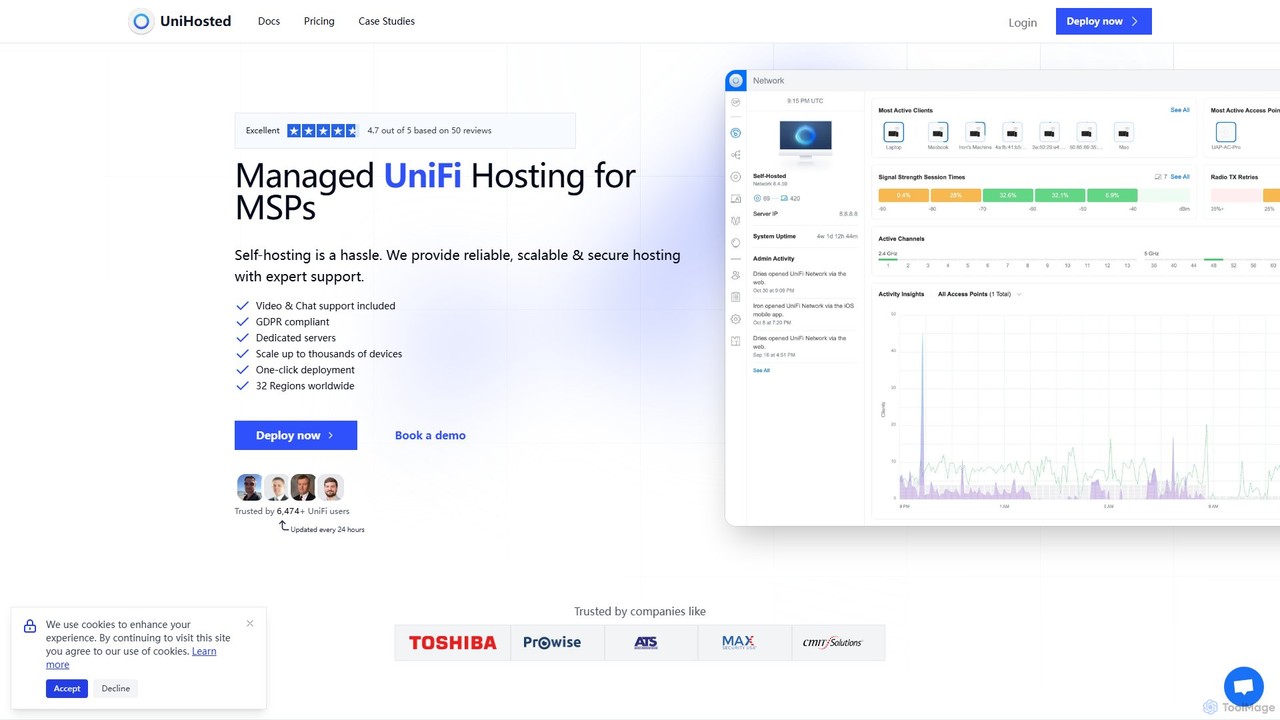
UniHosted
UniHosted offers specialized, managed UniFi hosting for MSPs and IT professionals. It provides a reliable, scalable, and secure …
UniHosted offers specialized, managed UniFi hosting for MSPs and IT professionals. It provides a reliable, scalable, and secure cloud-based platform to deploy and manage UniFi controllers, eliminating the complexities and security risks of self-hosting. Features include one-click deployment, daily backups, advanced security, and expert support.
e-chos
e-chos is an AI-powered platform featuring Phom, a DevOps assistant for Linux systems. It automates server monitoring, detects …
e-chos is an AI-powered platform featuring Phom, a DevOps assistant for Linux systems. It automates server monitoring, detects issues, applies self-healing fixes, and predicts outages in real-time. Designed for system administrators and DevOps teams, it simplifies infrastructure management, optimizes performance, and brings autonomous intelligence to any machine, anywhere.
About System Administration
System Administration AI tools are specialized solutions that leverage artificial intelligence to automate, optimize, and secure IT infrastructure and operations. These tools utilize machine learning algorithms to analyze vast amounts of operational data, predict potential issues, and execute proactive management tasks. They significantly enhance efficiency, reduce manual effort, and improve the reliability and security of complex IT environments, allowing IT professionals to focus on strategic initiatives rather than routine maintenance.
Core Features
- Predictive Analytics: Anticipates system failures, resource bottlenecks, and security vulnerabilities before they impact operations.
- Automated Remediation: Automatically resolves common issues, applies patches, and scales resources based on predefined policies and learned patterns.
- Resource Optimization: Intelligently allocates and manages computing, storage, and network resources to maximize performance and minimize costs.
- Anomaly Detection: Identifies unusual patterns in system behavior, logs, and network traffic that may indicate security breaches or operational problems.
- Intelligent Monitoring: Provides real-time insights and alerts, correlating data from various sources to offer a comprehensive view of system health.
Applicable Scenarios
These tools are indispensable for organizations managing large-scale, complex IT infrastructures, including cloud-native environments and hybrid setups. DevOps teams use them to automate CI/CD pipelines and infrastructure as code. Enterprises benefit from enhanced security posture and reduced operational overhead, while IT departments gain predictive capabilities for proactive problem-solving and resource planning.
How to Choose
When selecting System Administration AI tools, prioritize solutions with robust integration capabilities for your existing IT stack, strong security features, and proven scalability to handle your infrastructure's growth. Evaluate the accuracy of their predictive models, the extent of automation offered, and the clarity of their reporting and analytics dashboards. Consider the vendor's support, community, and the tool's ease of deployment and management.
System AdministrationUse Cases
Automating Cloud Resource Scaling
Cloud architects and operations teams use AI system administration tools to dynamically scale cloud resources (e.g., VMs, databases) up or down based on real-time demand and predictive analytics. This ensures optimal application performance during peak loads while minimizing unnecessary expenditure during off-peak hours, leading to significant cost savings and improved service availability.
Predictive Maintenance for Servers
Data center managers and IT operations personnel deploy AI tools to monitor server health metrics, such as CPU temperature, disk I/O, and memory usage. The AI identifies subtle anomalies and predicts potential hardware failures days or weeks in advance, enabling proactive component replacement or migration, thereby preventing costly downtime and service interruptions.
Real-time Security Threat Detection
Security operations centers (SOC) leverage AI system administration tools to continuously analyze network traffic, system logs, and user behavior for suspicious activities. The AI can detect sophisticated, zero-day threats and insider attacks that traditional rule-based systems might miss, providing immediate alerts and even initiating automated containment actions to protect critical assets.
Optimizing Database Performance
Database administrators utilize AI-powered tools to analyze query performance, index usage, and database configuration. The AI identifies bottlenecks, suggests optimal indexing strategies, and even automatically tunes database parameters to improve query response times and overall database efficiency, ensuring applications run smoothly and data access is fast.
Automated Patch Management and Compliance
IT compliance officers and system administrators use AI tools to automate the identification of missing security patches, prioritize their deployment based on vulnerability severity, and ensure compliance with regulatory standards. The AI can orchestrate patch rollouts across diverse environments, minimizing human error and maintaining a secure, compliant infrastructure with less manual oversight.
Intelligent Incident Response and Root Cause Analysis
IT support teams and SREs employ AI system administration tools to rapidly diagnose and resolve operational incidents. The AI correlates alerts from various systems, identifies the probable root cause of an outage or performance degradation, and suggests or even executes automated recovery steps, drastically reducing mean time to resolution (MTTR) and service impact.