ToolMage
Sign in

Best 2 Talent Sourcing AI tools for Productivity

Popular Talent Sourcing AI tools in Productivity include HireQuotient and TopDev, helping you work more efficiently.

TopDev
Freemium

TopDev

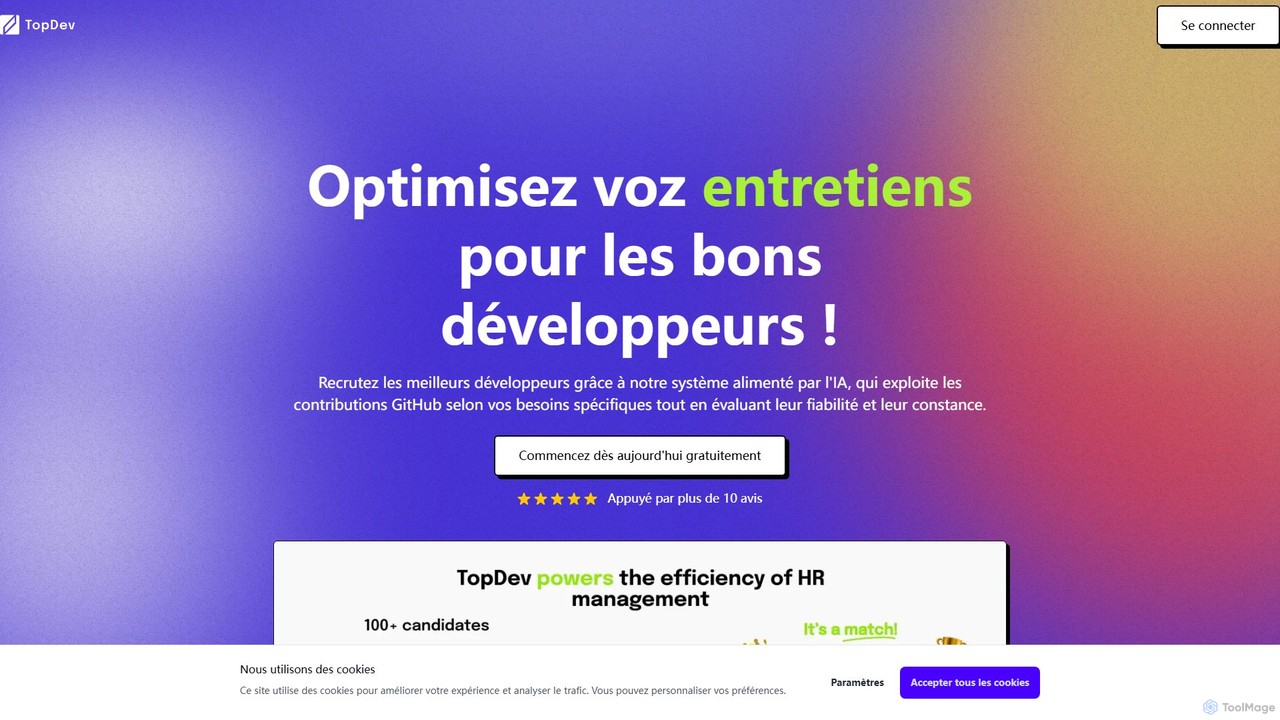
TopDev is an AI-powered recruitment platform that helps companies hire top developers by analyzing their GitHub profiles. It assesses technical skills, reliability, and consistency to provide deep insights, streamlining the hiring process and saving significant time for HR teams and startups.

Code Analysis
Visits 5.6KFavorites 110Likes 127
HireQuotient
Paid

HireQuotient

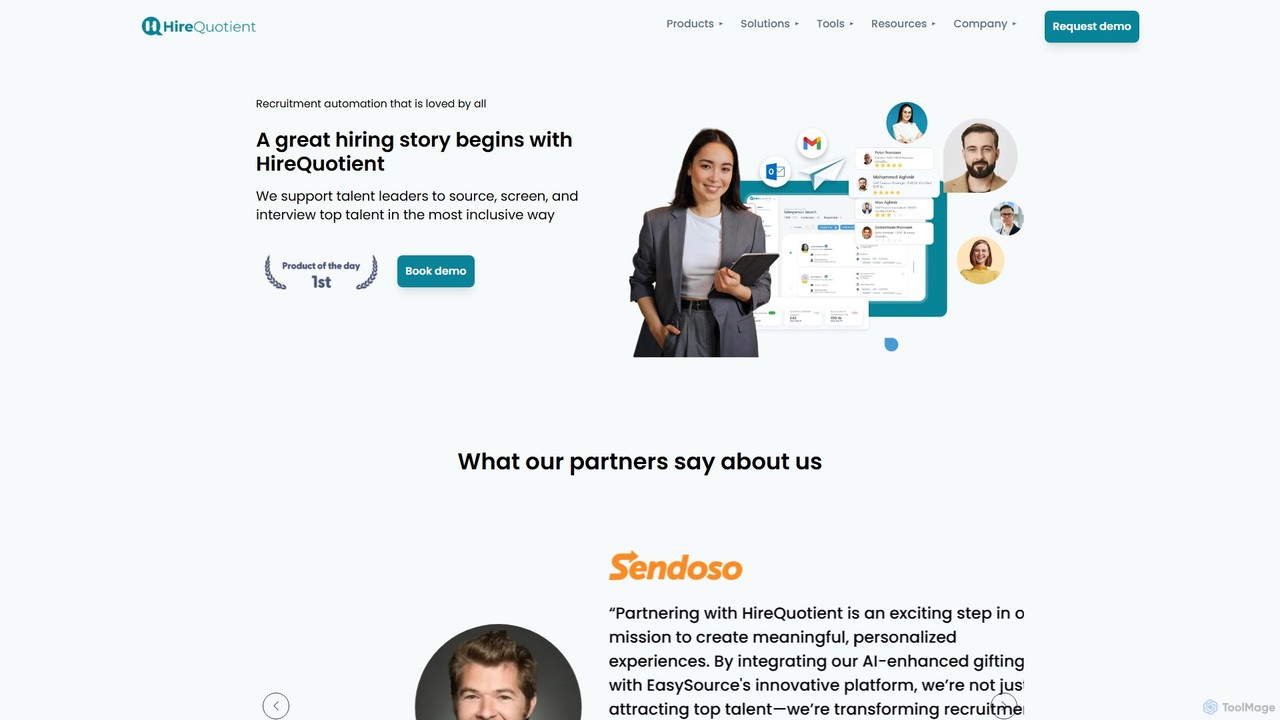
HireQuotient is an end-to-end recruitment automation platform designed for non-tech hiring. It leverages AI to streamline the entire hiring process, from sourcing and screening to interviewing. With modules like EasySource for automated talent discovery and EasyAssess for skills evaluation, it helps HR teams reduce time-to-fill, lower costs, and improve the quality of hires for roles in sales, marketing, and customer success.

Candidate Screening
Visits 85.8KFavorites 128Likes 131

About Talent Sourcing

Talent Sourcing AI tools are specialized platforms that leverage artificial intelligence to identify, attract, and engage potential candidates for job roles. These tools utilize machine learning, natural language processing, and data analytics to scan vast databases, social media, and professional networks, enabling recruiters to efficiently discover both active and passive talent. By automating repetitive tasks and providing data-driven insights, they significantly streamline the talent acquisition process, improve candidate quality, and help build diverse and robust talent pipelines.

Core Features

  • Candidate Identification & Matching: Automatically scans various sources to find candidates whose skills, experience, and profiles align with job requirements.
  • Automated Outreach & Engagement: Personalizes and automates initial contact with potential candidates, managing follow-ups and responses.
  • Resume Parsing & Skill Extraction: Extracts key information from resumes and profiles, standardizing data for easier analysis and searchability.
  • Diversity & Inclusion Analysis: Identifies potential biases in sourcing processes and helps build more diverse candidate pools.
  • Market Intelligence & Benchmarking: Provides insights into talent availability, salary trends, and competitor hiring activities.

Use Cases

Recruitment teams use these tools to quickly identify candidates with niche skills for hard-to-fill positions, while HR departments leverage them to proactively build diverse talent pipelines. They are also essential for talent acquisition specialists looking to automate initial candidate engagement and reduce time-to-hire for high-volume roles.

How to Choose

When selecting an AI Talent Sourcing tool, consider its integration capabilities with your existing Applicant Tracking System (ATS) or CRM, the accuracy and relevance of its matching algorithms, and its compliance with data privacy regulations (e.g., GDPR). Evaluate the customization options for outreach messages and the scalability to meet your organization's growth, alongside the quality of its analytics and reporting features.

Talent Sourcing use cases

1

Identifying Niche Tech Talent

A tech recruiter uses AI talent sourcing to find candidates with highly specialized skills like Rust programming and WebAssembly experience, quickly scanning GitHub, LinkedIn, and developer forums to pinpoint qualified individuals who might not be actively job searching. This significantly reduces the manual effort of sifting through generic profiles and accelerates the hiring of critical technical roles.

2

Building Diverse Candidate Pipelines

A diversity and inclusion manager employs AI tools to analyze candidate pools for potential biases and identify underrepresented groups. The AI suggests alternative sourcing channels and helps craft inclusive outreach messages, ensuring a broader and more equitable representation of candidates for all open positions, fostering a more diverse workforce.

3

Automating Initial Candidate Outreach

A talent acquisition specialist leverages AI to personalize and automate the initial contact with hundreds of potential candidates. Based on their profiles and job requirements, the AI drafts tailored emails or messages, schedules follow-ups, and tracks engagement, freeing up the specialist to focus on more strategic candidate interactions and relationship building.

4

Market Intelligence for Compensation Benchmarking

An HR analyst utilizes AI talent sourcing platforms to gather real-time market data on salary ranges, skill demand, and talent availability for specific roles across different geographical regions. This intelligence informs competitive compensation strategies, helps in negotiating offers, and provides a strategic advantage in attracting top talent.

5

Proactive Talent Pooling for Future Roles

A hiring manager uses AI to continuously identify and engage with passive candidates who possess skills relevant to anticipated future openings. The tool helps maintain a warm pipeline of potential hires, allowing the organization to quickly fill critical roles as they emerge, reducing reactive hiring pressure and ensuring a steady flow of qualified talent.

6

Reducing Time-to-Hire for High-Volume Roles

A recruitment agency deploys AI talent sourcing to rapidly screen and match candidates for numerous similar roles, such as customer service representatives or sales associates. The AI automates resume parsing, initial qualification, and candidate ranking, drastically cutting down the time spent on manual review and accelerating the entire recruitment cycle from weeks to days.

Talent Sourcing FAQ

What are AI Talent Sourcing tools?

AI Talent Sourcing tools are software solutions that use artificial intelligence, including machine learning and natural language processing, to automate and enhance the process of finding and engaging potential job candidates. They go beyond traditional job boards by actively searching diverse online sources, analyzing candidate data, and predicting suitability for roles, helping recruiters discover both active and passive talent more efficiently.

How do I choose the best AI Talent Sourcing tool for my needs?

To choose the best tool, consider its integration capabilities with your existing ATS or CRM, ensuring seamless data flow. Evaluate the accuracy of its candidate matching algorithms and its ability to identify diverse talent. Assess its compliance with data privacy regulations (e.g., GDPR, CCPA) and the level of customization it offers for outreach messages. Finally, consider its scalability, reporting features, and overall user-friendliness for your recruitment team.

What specific tasks can AI Talent Sourcing tools automate?

AI Talent Sourcing tools can automate several key tasks, including: candidate identification across various platforms (LinkedIn, GitHub, etc.), resume parsing and skill extraction, candidate matching against job descriptions, initial personalized outreach via email or messaging, scheduling initial interviews, and providing market intelligence on talent pools and salary benchmarks. This automation frees up recruiters for more strategic tasks.

How do AI Talent Sourcing tools improve the hiring process?

AI Talent Sourcing tools significantly improve the hiring process by: reducing time-to-hire through faster candidate identification and screening, improving candidate quality by more accurately matching skills and experience, expanding talent pools to include passive candidates, enhancing diversity by mitigating unconscious bias, and providing data-driven insights for better recruitment strategies. They make the process more efficient, objective, and strategic.

How do AI Talent Sourcing tools differ from traditional Applicant Tracking Systems (ATS)?

While both are crucial for recruitment, AI Talent Sourcing tools primarily focus on the *proactive discovery and engagement* of candidates, often before they apply. They actively search for talent. An ATS, conversely, is designed for *managing applicants* who have already applied to a job, tracking their progress through the hiring pipeline, and storing their data. AI sourcing tools feed candidates *into* an ATS, complementing its functions rather than replacing it.