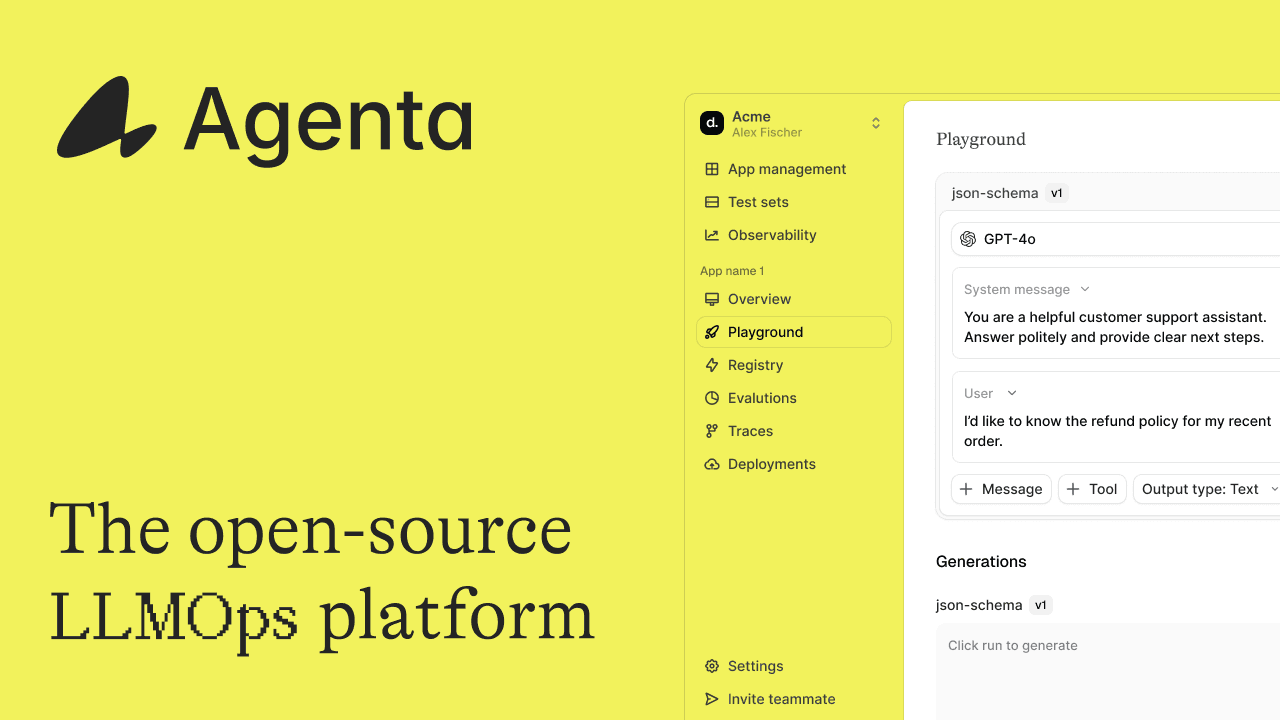
Agenta is an open-source LLMOps platform designed for teams to build reliable LLM applications. It integrates prompt management, systematic evaluation, and observability into a single, collaborative workflow, helping developers, product managers, and domain experts move from scattered processes to structured development.

Vaultic is a centralized prompt management platform for AI development teams. It enables users to version, test, collaborate on, and deploy AI prompts at scale, eliminating hardcoded prompts and streamlining the entire AI logic workflow from a single, organized interface.
Product overview
Agenta Product overview
Agenta is an open-source LLMOps platform designed for teams to build reliable LLM applications. It integrates prompt management, systematic evaluation, and observability into a single, collaborative workflow, helping developers, product managers, and domain experts move from scattered processes to structured development.
Vaultic Product overview
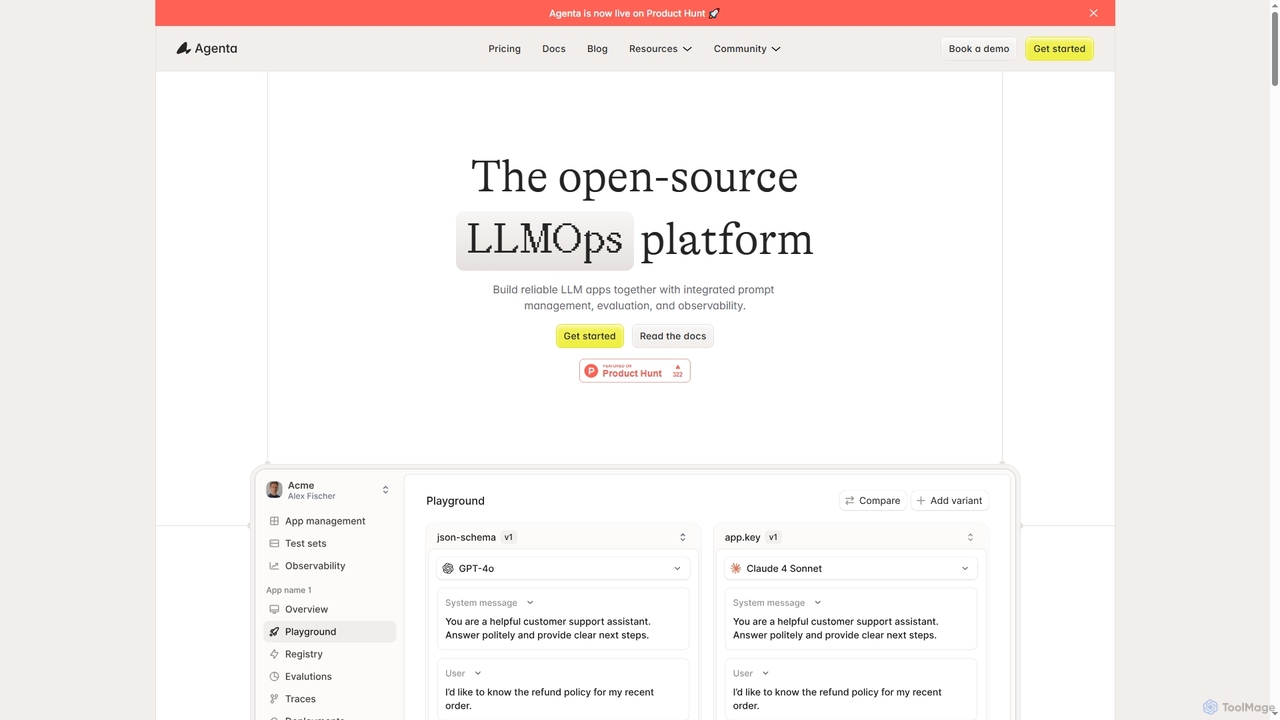
Vaultic is a centralized prompt management platform for AI development teams. It enables users to version, test, collaborate on, and deploy AI prompts at scale, eliminating hardcoded prompts and streamlining the entire AI logic workflow from a single, organized interface.
Detailed feature comparison
| Feature | Agenta | Vaultic |
|---|---|---|
| Primary category | Debugging | Prompt Management |
| Added | 2025-11-30 | 2025-12-05 |
| Pricing | Freemium | Freemium |
| Official website | agenta.ai | vaultic.io |
| Product type | Website | Website |
| Performance data | ||
| User rating | Not verified | Not verified |
| Comments | 0 | 0 |
| Monthly visits | 33.9K | 419 |
| Monthly growth | 9.5% | 193% |
| Favorites | 110 | 58 |
| Details | View details | View details |
Agenta vs Vaultic monthly traffic
Compare Agenta and Vaultic by monthly reach, traffic trend, visit depth, top regions, and acquisition sources.
How to interpret the traffic data
In the Agenta vs Vaultic monthly traffic comparison, Agenta currently shows 33.9K visits and Vaultic shows 419; Agenta has about 80.9 times the visible traffic of Vaultic, an absolute difference of about 33.5K visits. This reflects visible reach, not feature quality or paid users.
Both tools provide verified traffic details, so monthly trends, visit depth, regions, and acquisition sources can be compared on the same basis.
Agenta monthly traffic:
Latest traffic
Monthly traffic trend
- 2026/1: 63.7K Monthly visits
- 2026/2: 39.6K Monthly visits
- 2026/3: 35K Monthly visits
- 2026/4: 30.9K Monthly visits
- 2026/5: 33.9K Monthly visits
Top regions
Top 5 countries/regions
| Country/region | Percentage | Traffic |
|---|---|---|
| 🇺🇸United States | 44.41% | 15K |
| 🇳🇬Nigeria | 19.11% | 6.5K |
| 🇮🇳India | 15.68% | 5.3K |
| 🇻🇳Vietnam | 11.33% | 3.8K |
| 🇧🇷Brazil | 9.47% | 3.2K |
Traffic sources
| Source type | Percentage | Traffic |
|---|---|---|
| Referral | 66.19% | 22.4K |
| Direct | 33.81% | 11.5K |
Search keywords
Vaultic monthly traffic:
Latest traffic
Monthly traffic trend
- 2026/3: 118 Monthly visits
- 2026/4: 143 Monthly visits
- 2026/5: 419 Monthly visits
Top regions
Top 5 countries/regions
| Country/region | Percentage | Traffic |
|---|---|---|
| 🇵🇱Poland | 100% | 419 |
Search keywords
Usage comparison
Compare the core capabilities of Agenta and Vaultic
Agenta Core features
Vaultic Core features
Use cases
Agenta Use cases
Vaultic Use cases
Best suited roles
Agenta Best suited roles
Vaultic Best suited roles
Agenta vs Vaultic:In-depth comparison and selection guidance
First decide whether the products solve the same kind of need
This in-depth Agenta vs Vaultic comparison uses only the product records, taxonomy, audience, traffic, and community signals available on this page. Agenta is primarily listed under “Debugging”, while Vaultic is primarily listed under “Prompt Management”, so the first decision is whether your actual task matches their recorded scope.
The structured fields currently show these decision-relevant differences: Primary category (Agenta: Debugging; Vaultic: Prompt Management); Monthly visits (Agenta: 33.9K; Vaultic: 419); Monthly growth (Agenta: 9.5%; Vaultic: 193%); Favorites (Agenta: 110; Vaultic: 58); Website (Agenta: agenta.ai; Vaultic: vaultic.io). These facts are more useful for selection than brand visibility alone.
What market visibility and monthly traffic mean
In the Agenta vs Vaultic monthly traffic comparison, Agenta currently shows 33.9K visits and Vaultic shows 419; Agenta has about 80.9 times the visible traffic of Vaultic, an absolute difference of about 33.5K visits. This reflects visible reach, not feature quality or paid users.
Both tools provide verified traffic details, so monthly trends, visit depth, regions, and acquisition sources can be compared on the same basis.
If public market visibility is an important first-pass criterion, investigate Agenta first. The final choice should still follow taxonomy, use case, and a real trial because higher traffic does not prove broader capabilities or better workflow fit.
Product positioning, use cases, and roles
Agenta and Vaultic currently overlap in shared categories: Collaboration; shared tags: AI development, collaboration, LLMOps, and prompt management; shared roles: AI Engineer, DevOps Engineer, Product Manager, and Software Developer. This can place both on the same shortlist, but it does not prove equal implementation, depth, or cost.
Agenta's unique categories/tags are Debugging, Llmops, LangChain, LlamaIndex, LLM evaluation, observability, OpenAI, and open source; Vaultic's are Prompt Management, Api Management, A/B testing, AI infrastructure, API, prompt engineering, prompt versioning, and version control. These unique fields are the strongest differentiators: validate the product whose recorded scope matches the task instead of following traffic alone.
What ratings, comments, and favorites can tell you
Agenta has no verified rating, 0 comments, 110 favorites, and 117 likes;Vaultic has no verified rating, 0 comments, 58 favorites, and 63 likes。
Neither product has enough rating or comment samples for a credible reputation ranking.
Selection guidance by actual need
When to evaluate Agenta first
Put Agenta on the priority trial list when the task aligns with “Debugging” and especially Debugging, Llmops, LangChain, LlamaIndex, LLM evaluation, and observability, or the users include Data Scientist and Machine Learning Engineer. This follows recorded positioning and does not imply unlisted capabilities are absent.
Agenta also currently records: pricing is freemium, product type is website, 33.9K verified monthly visits, no verified user rating. Verify any hard requirement around price, platform, or reach before trial, and do not let sparse review data substitute for testing.
When to evaluate Vaultic first
Put Vaultic on the priority trial list when the task aligns with “Prompt Management” and especially Prompt Management, Api Management, A/B testing, AI infrastructure, API, and prompt engineering, or the users include Prompt Engineer and Technical Lead. This follows recorded positioning and does not imply unlisted capabilities are absent.
Vaultic also currently records: pricing is freemium, product type is website, 419 verified monthly visits, no verified user rating. Verify any hard requirement around price, platform, or reach before trial, and do not let sparse review data substitute for testing.
How to validate the recommendation before deciding
The available data describes positioning, public visibility, and community signals, but it cannot prove output quality, speed, integration effort, privacy, or long-term cost in your workflow. Before deciding, run the same representative tasks in Agenta and Vaultic, then record completion time, accuracy, manual corrections, and the real paid threshold. A like-for-like trial turns this comparison into a defensible adoption decision.
Comparison FAQ
How should I choose between Agenta and Vaultic?
Where does this comparison data come from?
What do unknown fields mean?
Related AI tools

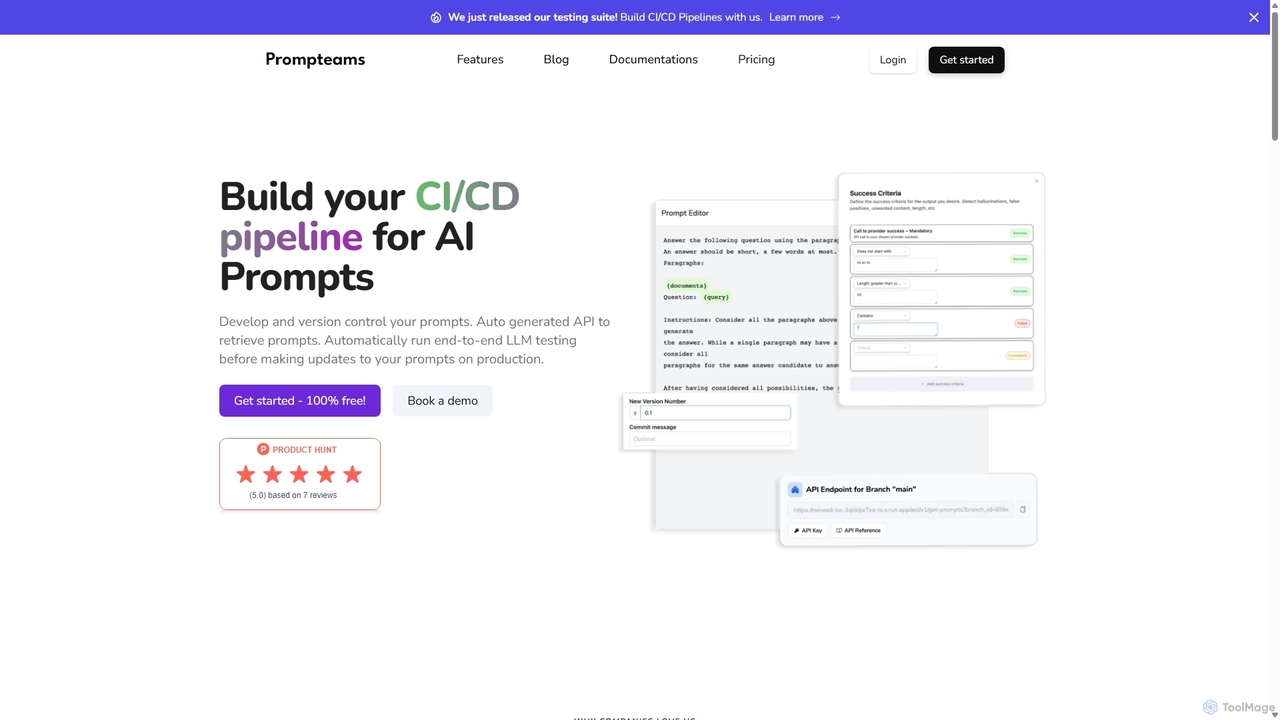
Prompteams
Prompteams is a comprehensive AI prompt management system designed for teams. It provides a Git-like workflow with versioning, branching, and commits to manage and iterate on LLM prompts. The platform features a robust testing suite for quality assurance, real-time APIs for instant deployment, and collaborative tools that bridge the gap between engineers and industry specialists. It's a one-stop solution for building a CI/CD pipeline for AI prompts, ensuring quality, consistency, and rapid development.
Model Management
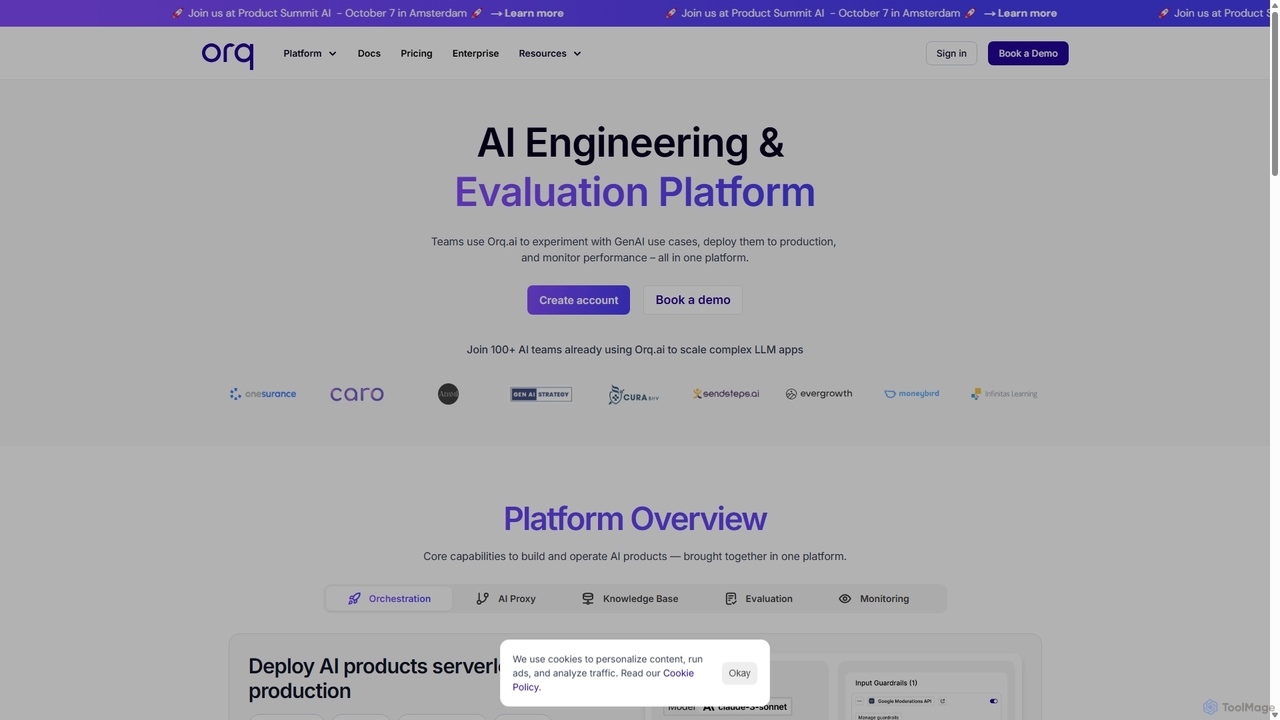
Orq.ai
Orq.ai is an end-to-end Generative AI Collaboration Platform for engineering and product teams. It enables users to experiment with GenAI use cases, deploy them to production, and monitor performance, all within a single, unified environment that supports the entire LLM application lifecycle.
Model Deployment
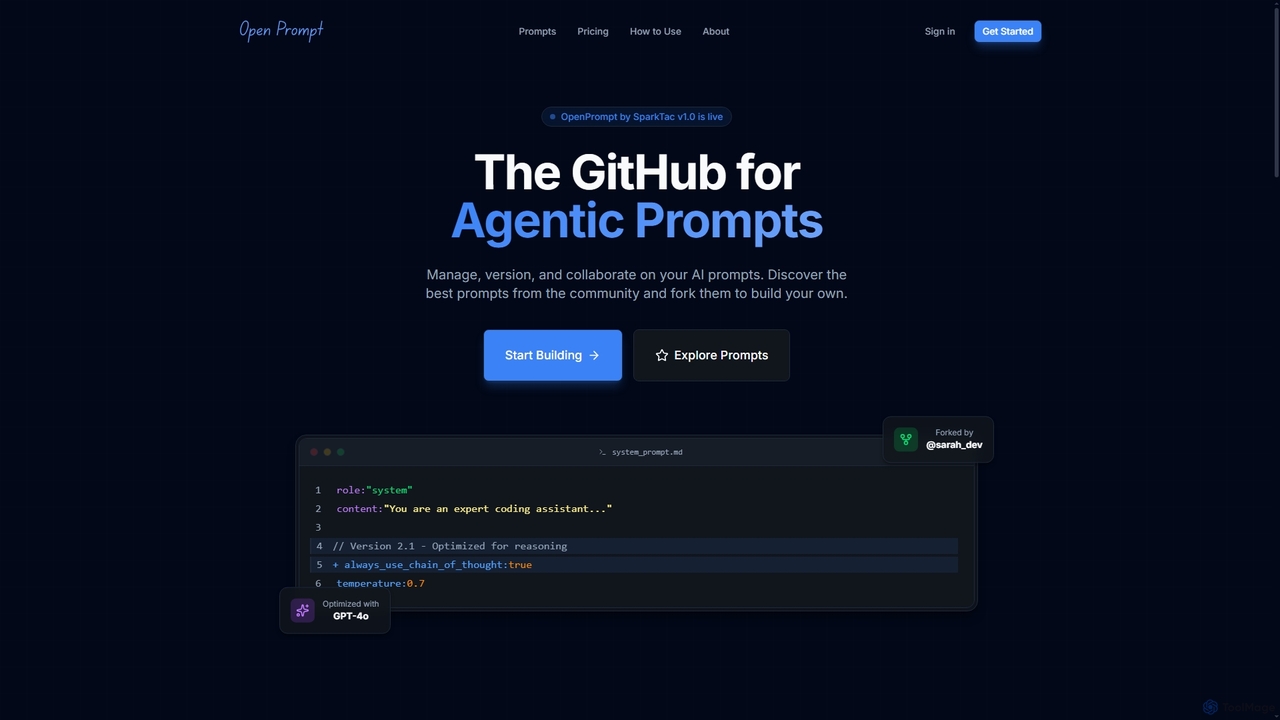
OpenPrompt
OpenPrompt is a collaborative platform for AI prompt engineering, designed for developers and teams. It functions like a GitHub for prompts, offering version control, real-time collaboration, instant forking, and API integration to manage, test, and deploy prompts efficiently.
Prompt Management
Unify
Unify is a developer-centric LLMOps platform designed to simplify building, monitoring, and optimizing AI applications. It provides a universal API and a hackable framework for logging, evaluation, tracing, and managing AI agents, enabling developers to create custom workflows and interfaces with ease.
Llmops
Portkey AI
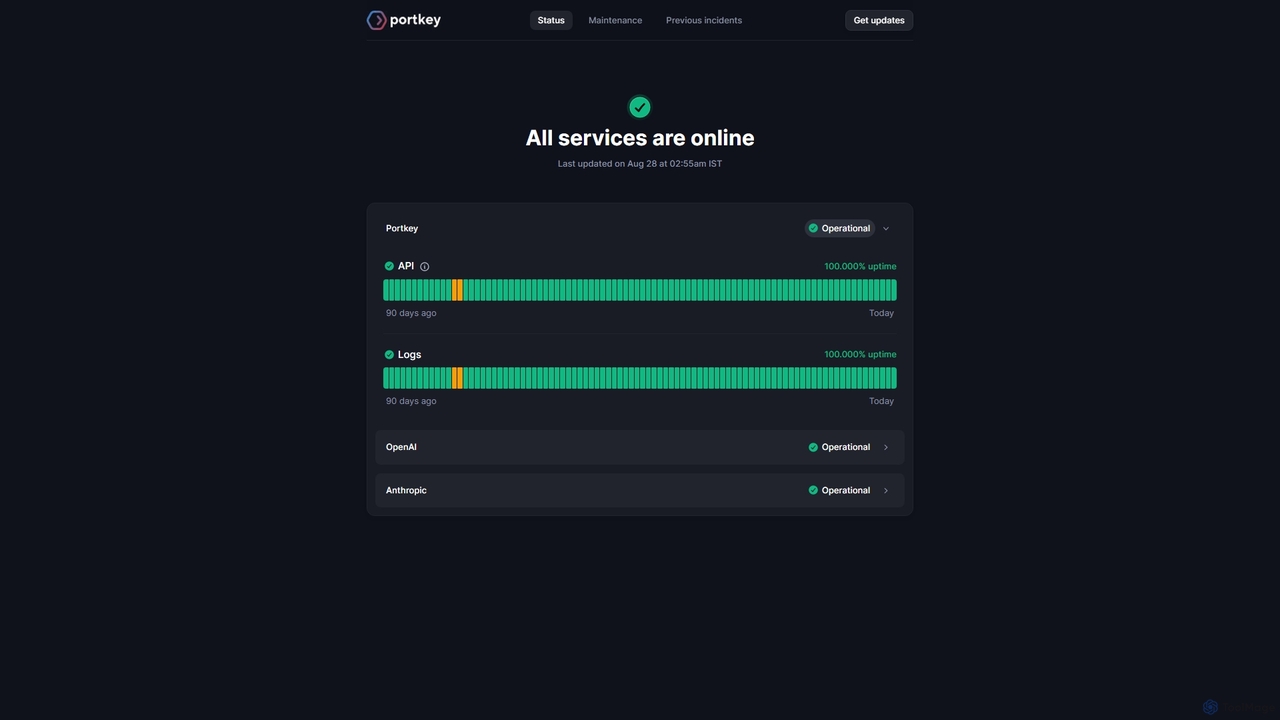
Portkey AI is an advanced AI gateway and LLM Ops platform designed for developers. It simplifies the development of reliable, scalable, and cost-effective AI applications by providing a unified API for various LLMs, real-time observability, semantic caching, and intelligent load balancing.
InfrastructureSiliconFlow
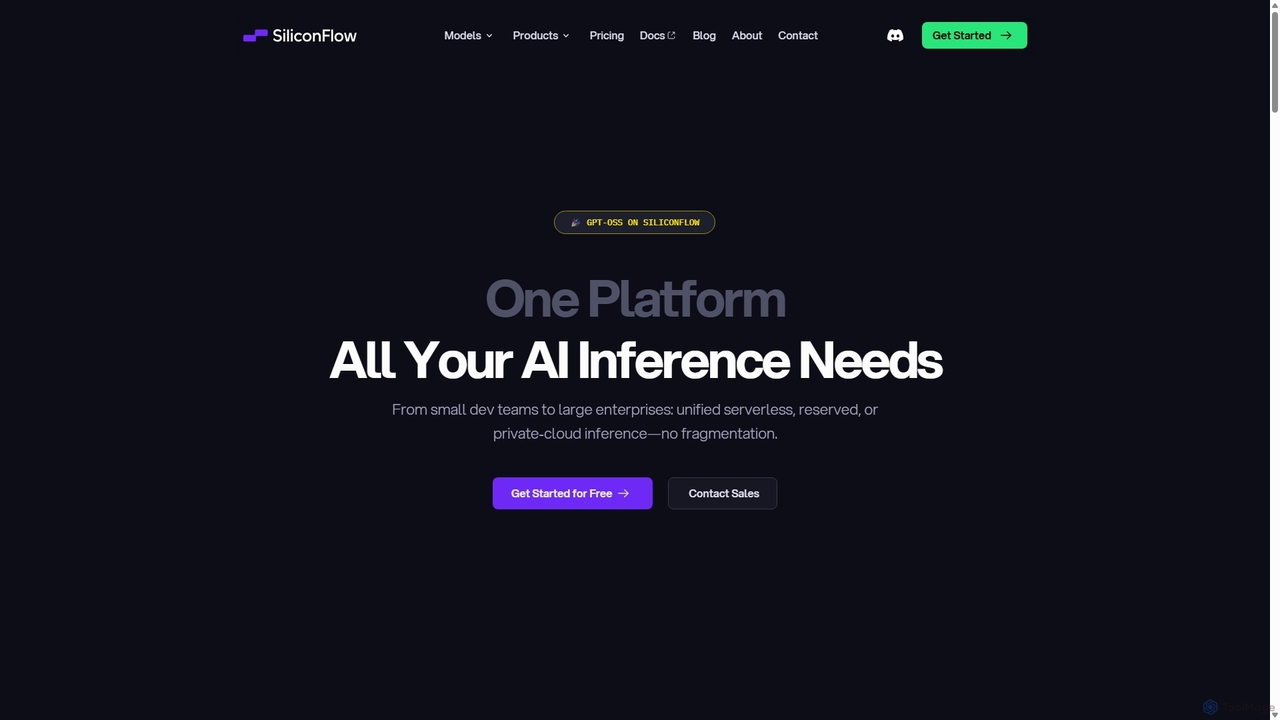
SiliconFlow is a unified AI infrastructure platform designed for high-performance inference of Large Language Models (LLMs) and multimodal models. It provides developers and enterprises with scalable, cost-effective, and flexible deployment options, including serverless APIs, reserved GPUs, and fine-tuning capabilities, all accessible through a single, OpenAI-compatible API.
Ai & Machine LearningHelicone
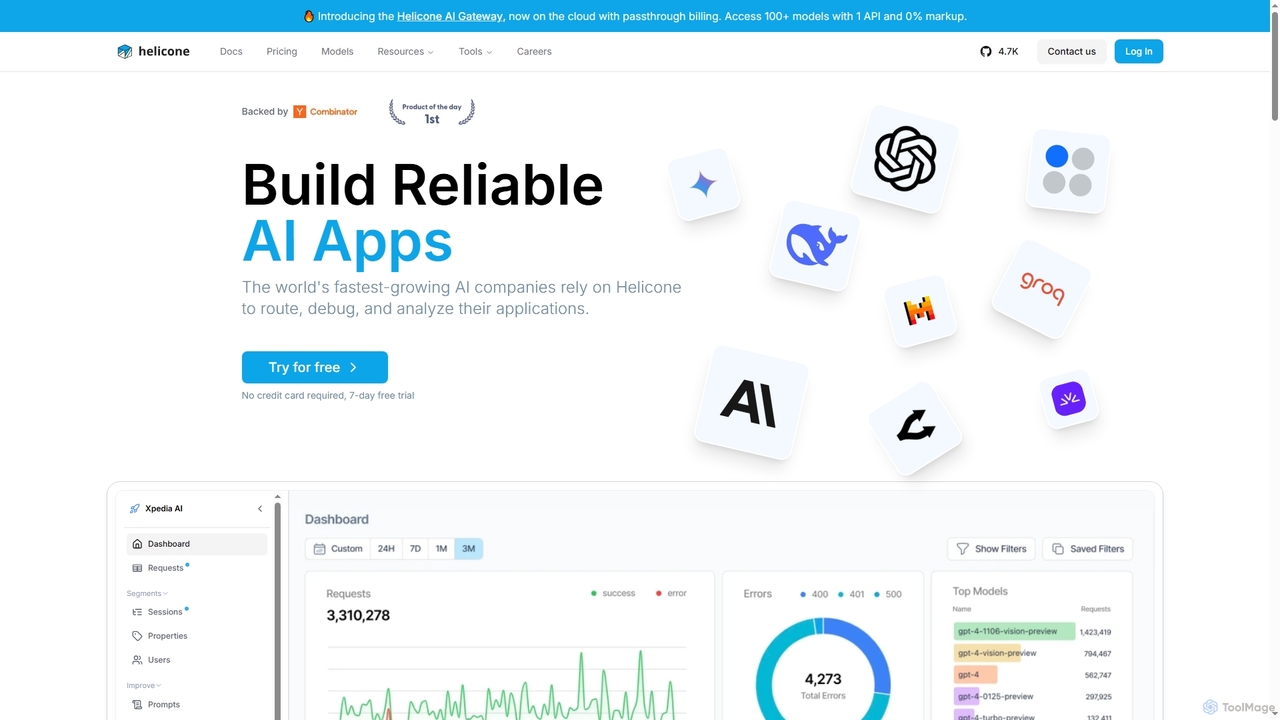
Helicone is an open-source platform offering an AI Gateway and LLM Observability for developers. It helps build reliable AI applications by providing tools to route, monitor, debug, and analyze LLM usage. Key features include a unified API for 100+ models, intelligent caching, rate limiting, prompt management, and detailed performance analytics.
Api Management
Metorial
Metorial is an integration platform for AI agents, enabling developers to quickly build, deploy, and monitor powerful agentic AI applications. It provides seamless connections to hundreds of tools, data sources, and APIs via its serverless Model Context Protocol (MCP) platform, offering robust SDKs, observability, and enterprise-grade security for scalable AI solutions.
Agentic Ai
Plano
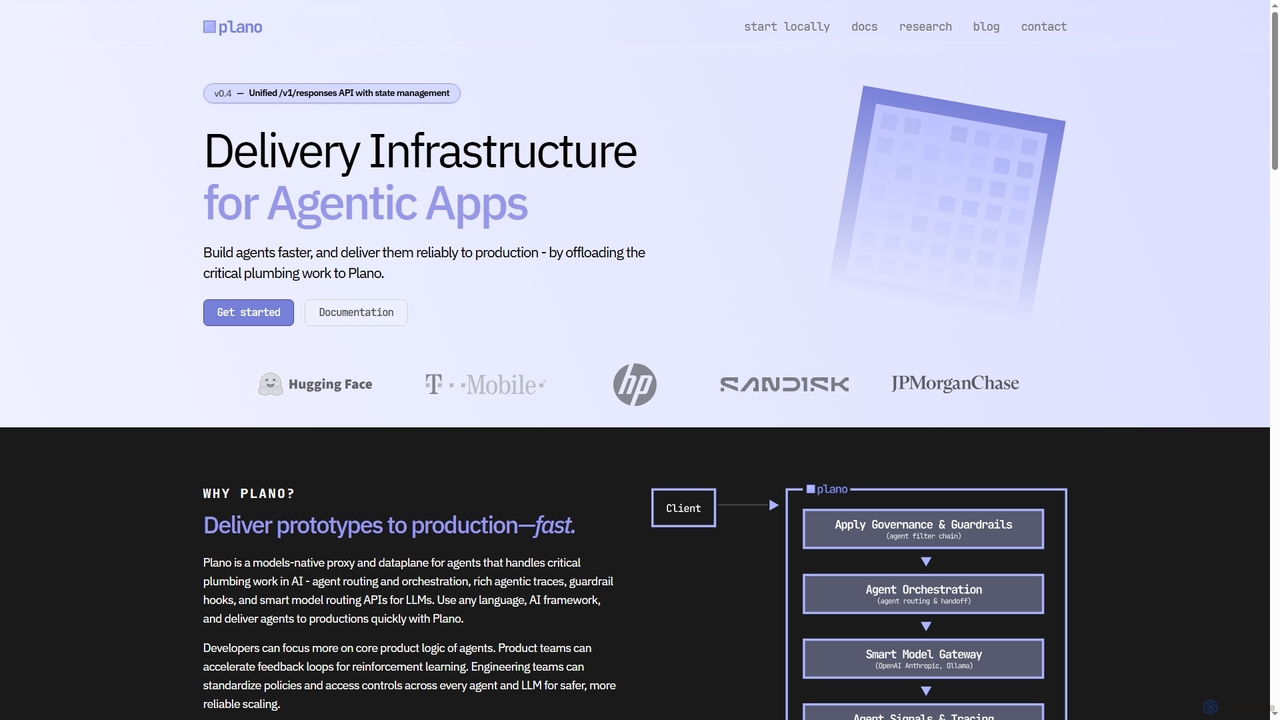
Plano is a models-native delivery infrastructure for agentic AI applications, offloading critical plumbing work such as agent routing, orchestration, rich observability, and guardrail hooks. It accelerates the development and reliable deployment of AI agents to production, allowing developers to focus on core product logic. Designed for speed and reliability, Plano simplifies complex AI infrastructure challenges.
Agent Orchestration
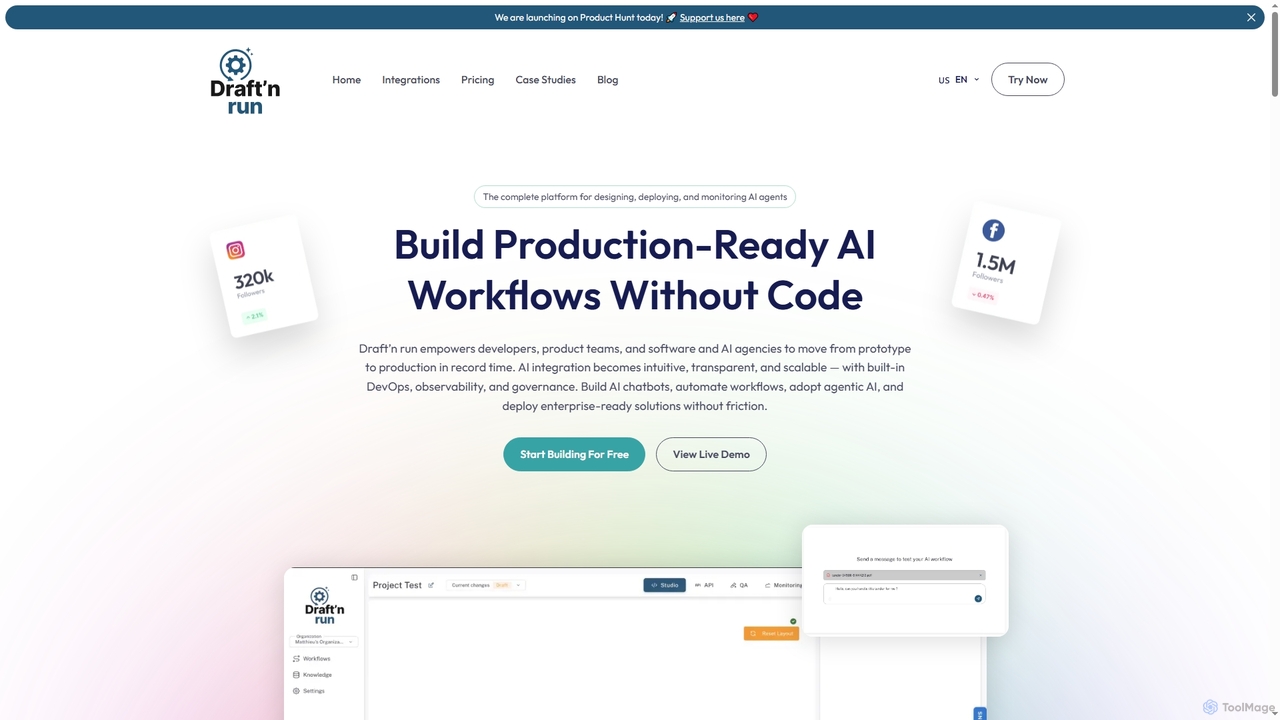
Draftnrun
Draftnrun is an open-source AI agent platform that empowers developers, product teams, and agencies to design, deploy, and monitor production-ready AI workflows without code. It offers a visual builder, comprehensive observability, and flexible deployment options, accelerating AI integration and ensuring full control.
Chatbot
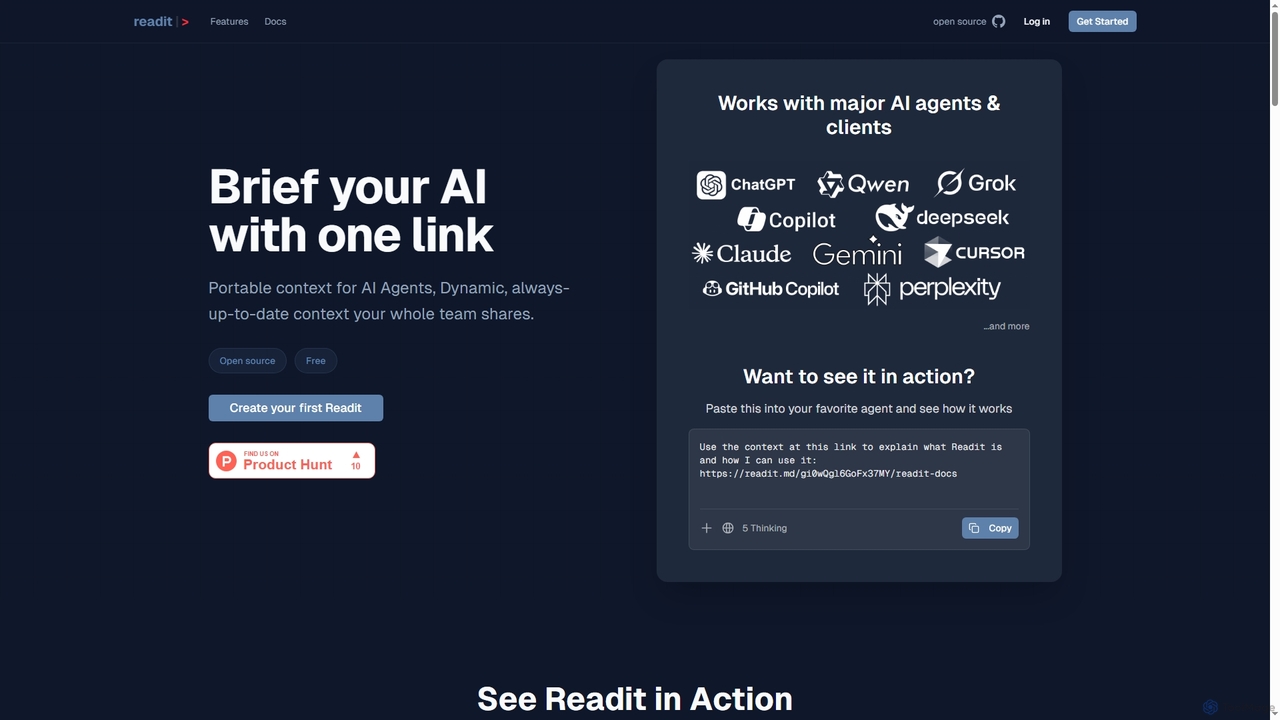
Readit
Readit is an open-core platform providing portable, dynamic, and always-up-to-date context for AI agents and teams. It centralizes instructions, files, and references into a single shareable link, eliminating the need for repetitive copy-pasting and ensuring consistent knowledge across different AI tools and collaborators.
Prompt Engineering
BlickState
BlickState is an advanced time-travel debugging tool for AI agents, enabling developers to restore and inspect the full memory state of agent tool executions at the exact millisecond of failure. It transforms black-box agent behavior into transparent, inspectable processes, significantly accelerating debugging for AI engineers.
Debugging
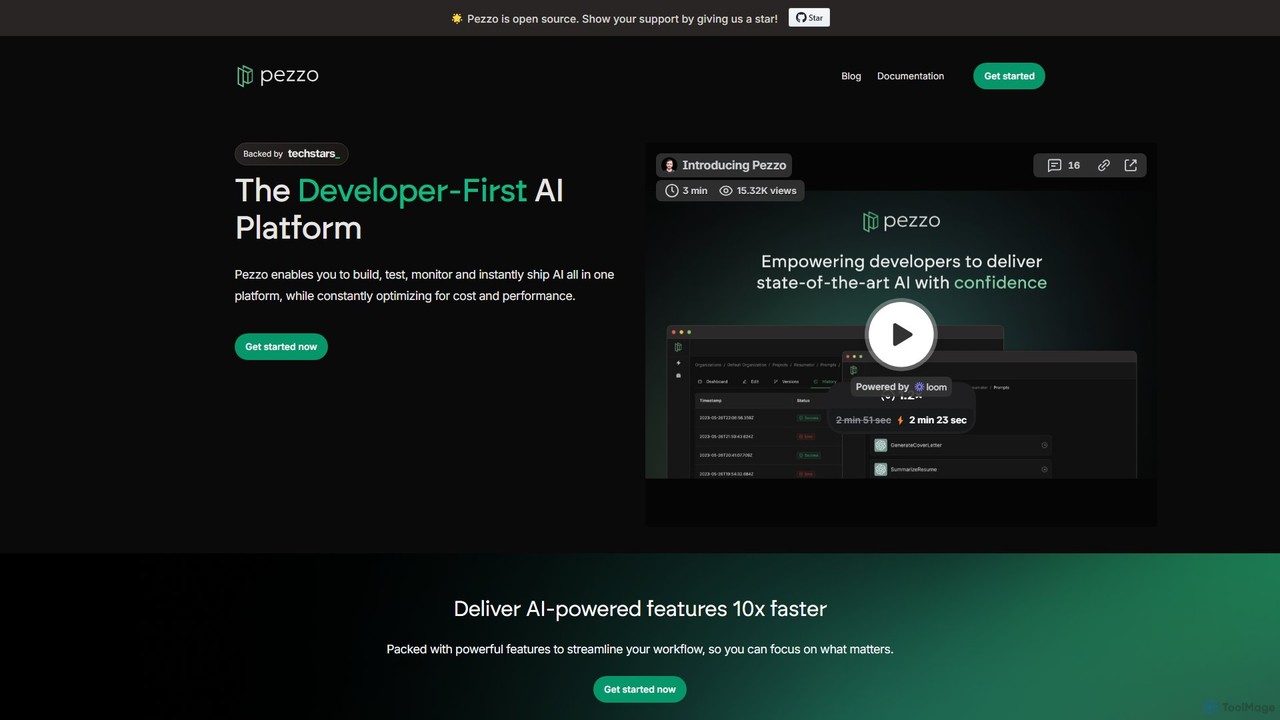
Pezzo
Pezzo is an open-source, developer-first AI platform designed to streamline the entire lifecycle of AI feature development. It enables teams to build, test, monitor, and ship AI-powered features up to 10x faster through centralized prompt management, real-time observability, and collaborative tools.
Ai Development
OpenRouter
OpenRouter is a unified API gateway for developers, providing access to over 400 AI models from 60+ providers like OpenAI, Google, and Anthropic. It simplifies development with a single API, offers competitive pay-as-you-go pricing, automatic failovers for high availability, and intelligent model routing to optimize cost and performance.
Model Deployment
Xano
Xano is a scalable no-code backend platform that empowers developers and teams to build production-ready applications and AI agents at speed. It provides a unified solution for APIs, a managed Postgres database, visual logic, and auto-scaling infrastructure, eliminating the need for complex DevOps.
Agent Building