ToolMage
Sign in
ContextStrata
Llm Management · 3.6K monthly visits

ContextStrata is an LLM rules and knowledge base platform designed to empower AI assistants with comprehensive context. It centralizes LLM rules and creates a searchable knowledge base from GitHub repositories, ensuring real-time updates and secure encryption for sensitive information.

VS
Readit
Prompt Engineering · 3.2K monthly visits

Readit is an open-core platform providing portable, dynamic, and always-up-to-date context for AI agents and teams. It centralizes instructions, files, and references into a single shareable link, eliminating the need for repetitive copy-pasting and ensuring consistent knowledge across different AI tools and collaborators.

ContextStrata vs Readit: pricing, features, traffic, and use cases

Compare ContextStrata and Readit across positioning, pricing, traffic, and user feedback using structured factual data.

Updated Aug 11, 2026

Product overview

ContextStrata Product overview

ContextStrata is an LLM rules and knowledge base platform designed to empower AI assistants with comprehensive context. It centralizes LLM rules and creates a searchable knowledge base from GitHub repositories, ensuring real-time updates and secure encryption for sensitive information.
Preview

Readit Product overview

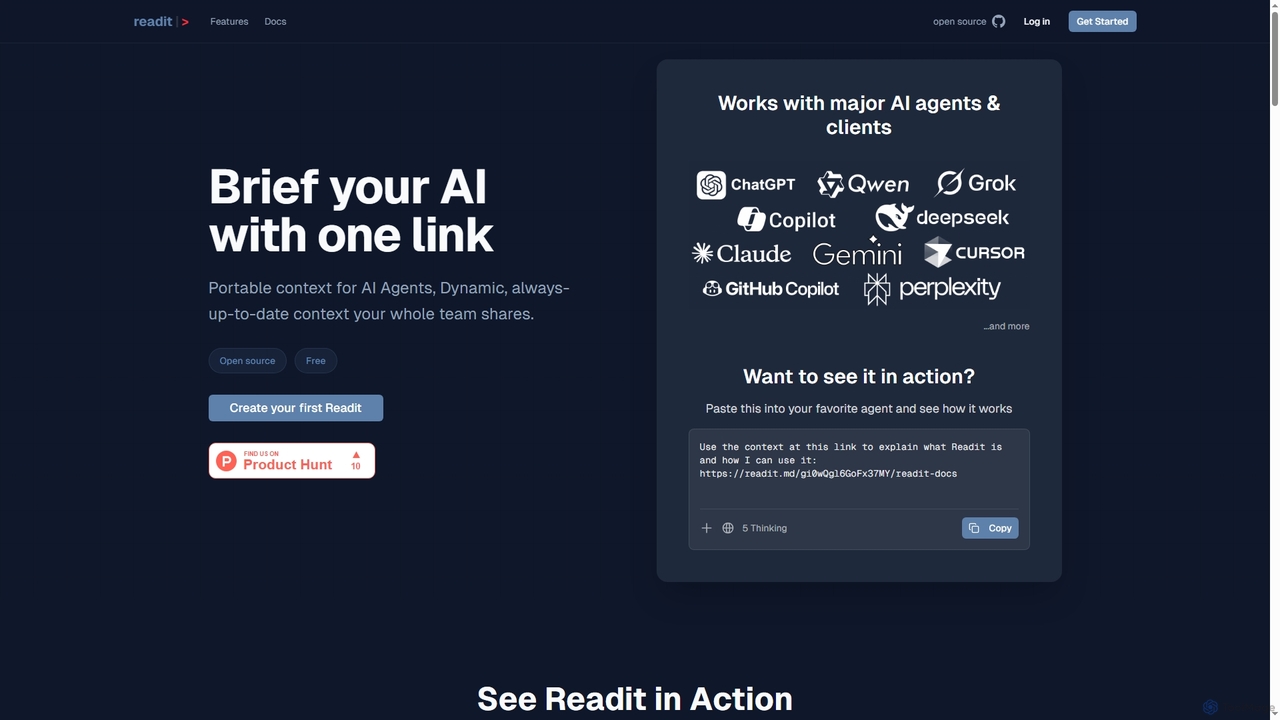
Readit is an open-core platform providing portable, dynamic, and always-up-to-date context for AI agents and teams. It centralizes instructions, files, and references into a single shareable link, eliminating the need for repetitive copy-pasting and ensuring consistent knowledge across different AI tools and collaborators.

Preview

Detailed feature comparison

FeatureContextStrataReadit
Primary categoryLlm ManagementPrompt Engineering
Added2025-10-242025-10-22
PricingFreemiumFreemium
Official websitecontextstrata.comreadit.md
Product typeWebsiteWebsite
Performance data
User ratingNot verifiedNot verified
Comments00
Monthly visits3.6K3.2K
Monthly growthNot verified-11.6%
Favorites7697
DetailsView detailsView details

ContextStrata vs Readit monthly traffic

Compare ContextStrata and Readit by monthly reach, traffic trend, visit depth, top regions, and acquisition sources.

How to interpret the traffic data

In the ContextStrata vs Readit monthly traffic comparison, ContextStrata currently shows 3.6K visits and Readit shows 3.2K; ContextStrata has about 1.1 times the visible traffic of Readit, an absolute difference of about 368 visits. This reflects visible reach, not feature quality or paid users.

Only Readit has complete third-party traffic details; ContextStrata uses visits recorded inside ToolMage. These scopes cannot estimate market share directly, and on-site views should not be treated as the product’s total website traffic.

ContextStrata monthly traffic:

Latest traffic

Monthly visits
3.6K

Readit monthly traffic:

Latest traffic

Monthly visits
3.2K
Avg. visit duration
0:03
Pages per visit
1.25
Bounce rate
37.61%
Data updated 2026-06-11

Monthly traffic trend

  • 2025/9: 636 Monthly visits
  • 2026/1: 467 Monthly visits
  • 2026/2: 1.6K Monthly visits
  • 2026/3: 2.3K Monthly visits
  • 2026/4: 3.6K Monthly visits
  • 2026/5: 3.2K Monthly visits

Top regions

Top 5 countries/regions
Country/regionPercentageTraffic
🇧🇪Belgium46.08%1.5K
🇬🇧United Kingdom33.76%1.1K
🇮🇳India20.16%642

Search keywords

read itread-itreaditreadit login
Traffic-based selection guidance: The current traffic scope is not sufficient for a reliable product ranking. Treat monthly visits as a market-interest signal, then decide using taxonomy, use cases, pricing, and a like-for-like trial rather than reading exposure as product capability.

Usage comparison

Compare the core capabilities of ContextStrata and Readit

ContextStrata Core features

Knowledge Management
Llm Management
Code Management

Readit Core features

Knowledge Management
Prompt Engineering
Content Sharing
Ai Tools

Use cases

ContextStrata Use cases

AI context
knowledge base
llm
AI assistant
code management
developer tools
GitHub integration
IDE integration
real-time updates
secure encryption
semantic search

Readit Use cases

AI context
knowledge base
llm
AI agent
AI workflow
collaboration
context management
Dynamic Context
Information Sharing
markdown
open source
prompt engineering
prompt management
Reusable Content
team productivity
version control

Best suited roles

ContextStrata Best suited roles

AI Engineer
Project Manager
Software Developer
DevOps Engineer
Solutions Architect
Technical Lead

Readit Best suited roles

AI Engineer
Project Manager
Software Developer
Content Creator
Knowledge Manager
Marketing Manager
Prompt Engineer
Team Lead
Technical Writer

ContextStrata vs Readit:In-depth comparison and selection guidance

First decide whether the products solve the same kind of need

This in-depth ContextStrata vs Readit comparison uses only the product records, taxonomy, audience, traffic, and community signals available on this page. ContextStrata is primarily listed under “Llm Management”, while Readit is primarily listed under “Prompt Engineering”, so the first decision is whether your actual task matches their recorded scope.

The structured fields currently show these decision-relevant differences: Primary category (ContextStrata: Llm Management; Readit: Prompt Engineering); Monthly visits (ContextStrata: 3.6K; Readit: 3.2K); Favorites (ContextStrata: 76; Readit: 97); Website (ContextStrata: contextstrata.com; Readit: readit.md); Added (ContextStrata: 2025-10-24; Readit: 2025-10-22). These facts are more useful for selection than brand visibility alone.

What market visibility and monthly traffic mean

In the ContextStrata vs Readit monthly traffic comparison, ContextStrata currently shows 3.6K visits and Readit shows 3.2K; ContextStrata has about 1.1 times the visible traffic of Readit, an absolute difference of about 368 visits. This reflects visible reach, not feature quality or paid users.

Only Readit has complete third-party traffic details; ContextStrata uses visits recorded inside ToolMage. These scopes cannot estimate market share directly, and on-site views should not be treated as the product’s total website traffic.

The current traffic scope is not sufficient for a reliable product ranking. Treat monthly visits as a market-interest signal, then decide using taxonomy, use cases, pricing, and a like-for-like trial rather than reading exposure as product capability.

Product positioning, use cases, and roles

ContextStrata and Readit currently overlap in shared categories: Knowledge Management; shared tags: AI context, knowledge base, and llm; shared roles: AI Engineer, Project Manager, and Software Developer. This can place both on the same shortlist, but it does not prove equal implementation, depth, or cost.

ContextStrata's unique categories/tags are Llm Management, Code Management, AI assistant, code management, developer tools, GitHub integration, IDE integration, and real-time updates; Readit's are Prompt Engineering, Content Sharing, Ai Tools, AI agent, AI workflow, collaboration, context management, and Dynamic Context. These unique fields are the strongest differentiators: validate the product whose recorded scope matches the task instead of following traffic alone.

What ratings, comments, and favorites can tell you

ContextStrata has no verified rating, 0 comments, 76 favorites, and 90 likes;Readit has no verified rating, 0 comments, 97 favorites, and 98 likes。

Neither product has enough rating or comment samples for a credible reputation ranking.

Selection guidance by actual need

When to evaluate ContextStrata first

Put ContextStrata on the priority trial list when the task aligns with “Llm Management” and especially Llm Management, Code Management, AI assistant, code management, developer tools, and GitHub integration, or the users include DevOps Engineer, Solutions Architect, and Technical Lead. This follows recorded positioning and does not imply unlisted capabilities are absent.

ContextStrata also currently records: pricing is freemium, product type is website, 3.6K on-site monthly views, no verified user rating. Verify any hard requirement around price, platform, or reach before trial, and do not let sparse review data substitute for testing.

When to evaluate Readit first

Put Readit on the priority trial list when the task aligns with “Prompt Engineering” and especially Prompt Engineering, Content Sharing, Ai Tools, AI agent, AI workflow, and collaboration, or the users include Content Creator, Knowledge Manager, Marketing Manager, and Prompt Engineer. This follows recorded positioning and does not imply unlisted capabilities are absent.

Readit also currently records: pricing is freemium, product type is website, 3.2K verified monthly visits, no verified user rating. Verify any hard requirement around price, platform, or reach before trial, and do not let sparse review data substitute for testing.

How to validate the recommendation before deciding

The available data describes positioning, public visibility, and community signals, but it cannot prove output quality, speed, integration effort, privacy, or long-term cost in your workflow. Before deciding, run the same representative tasks in ContextStrata and Readit, then record completion time, accuracy, manual corrections, and the real paid threshold. A like-for-like trial turns this comparison into a defensible adoption decision.

Comparison FAQ

How should I choose between ContextStrata and Readit?
Compare positioning, pricing, taxonomy, and traffic maturity, then verify the latest details on each official website.
Where does this comparison data come from?
The factual baseline is derived from product, taxonomy, traffic, and community data. Reviewed editorial conclusions show their source and verification date.
What do unknown fields mean?
Unknown means there is not enough reliable evidence; the page does not fill gaps with assumptions.

Related AI tools

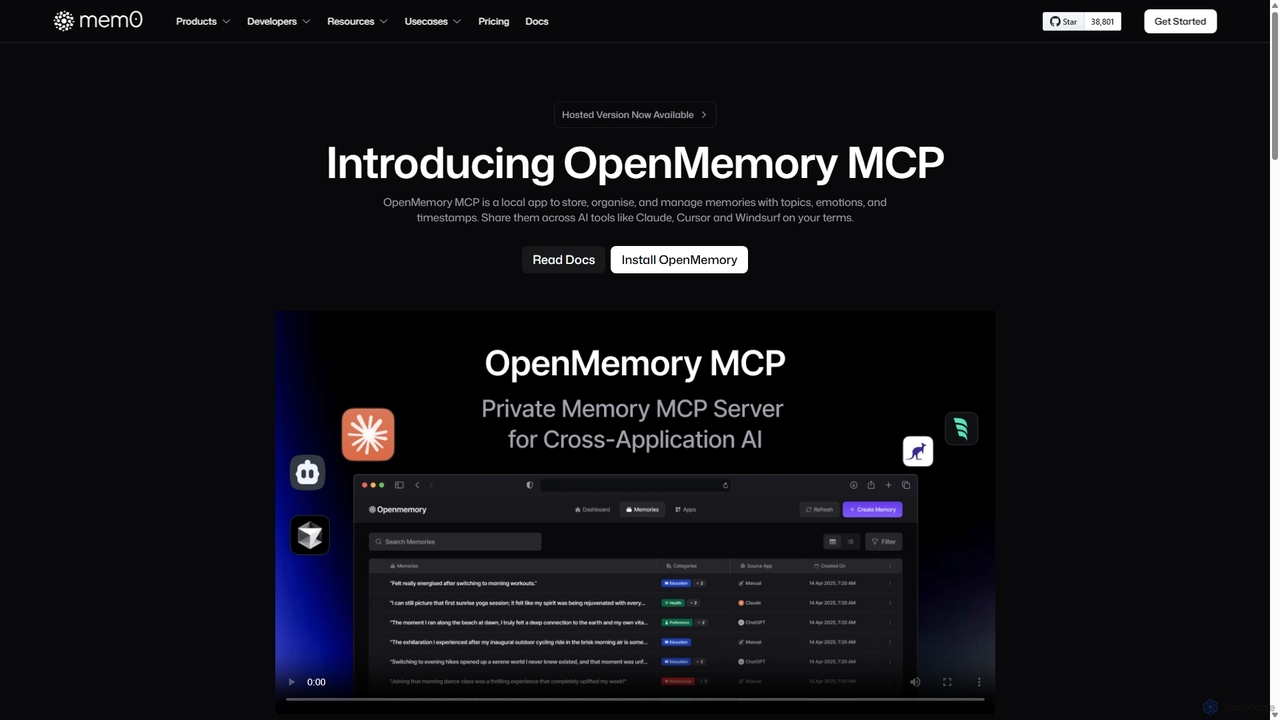
OpenMemory MCP
Freemium

OpenMemory MCP

OpenMemory MCP is a local-first application designed to give your AI tools a persistent, private memory. It allows you to store, organize, and manage context like project details, code snippets, and personal preferences, sharing them securely across different AI applications like Claude and Cursor to enhance personalization and workflow continuity.

Personalization
Visits 4.2KFavorites 117Likes 110
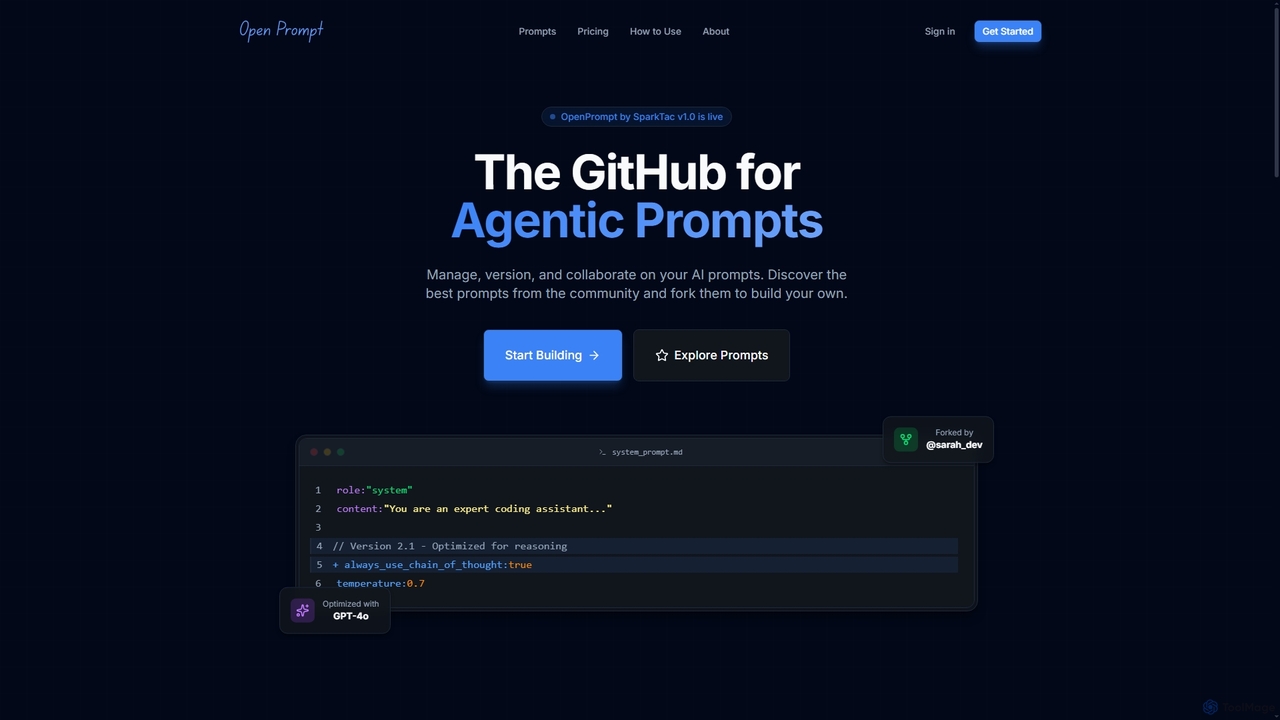
OpenPrompt
Freemium

OpenPrompt

OpenPrompt is a collaborative platform for AI prompt engineering, designed for developers and teams. It functions like a GitHub for prompts, offering version control, real-time collaboration, instant forking, and API integration to manage, test, and deploy prompts efficiently.

Prompt Management
Visits 3.6KFavorites 129Likes 132
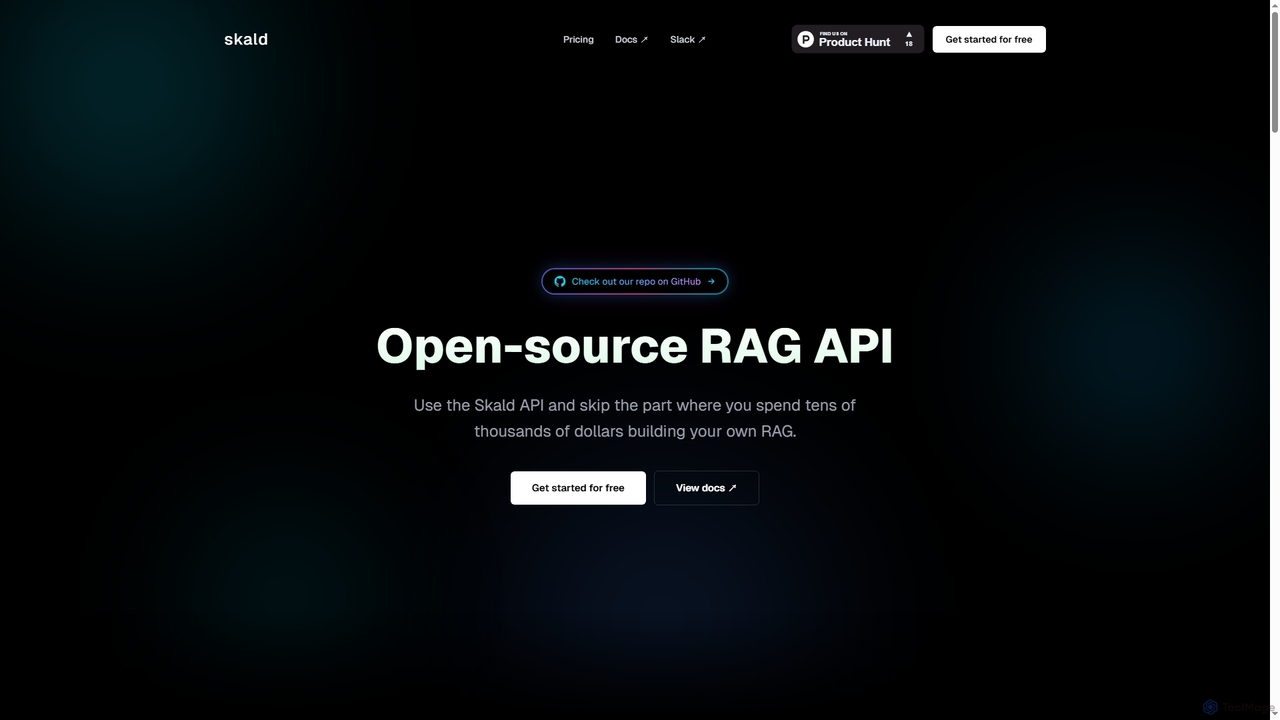
Skald
Freemium

Skald

Skald is an open-source RAG API designed for developers to quickly build AI agents without the complexity of managing RAG infrastructure. It simplifies knowledge storage, context management, and semantic search, offering a powerful solution for integrating long-term memory into AI applications.

Rag
Visits 3.6KFavorites 95Likes 117
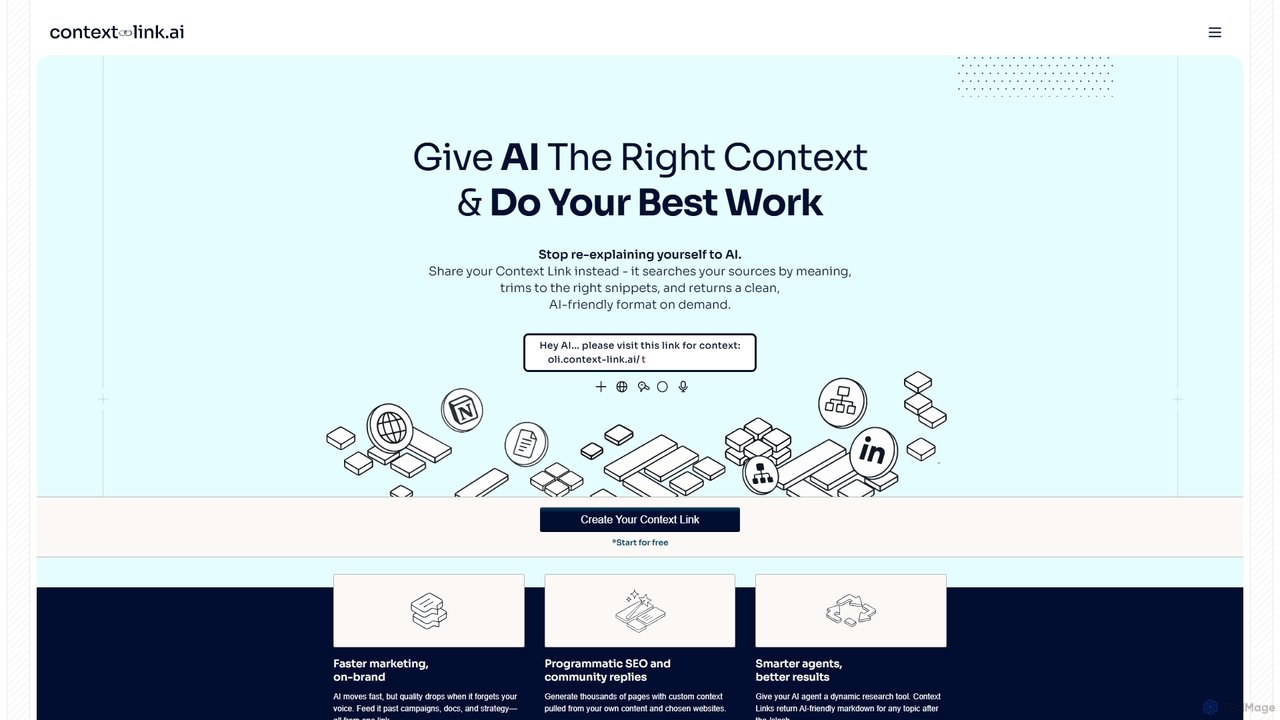
Context Link
Paid

Context Link

Context Link provides AI tools with persistent context from your sources like Google Docs, Notion, and websites. Share a single link to stop re-explaining yourself and ensure AI-generated content is accurate, on-brand, and based on your own knowledge base. It uses semantic search to deliver relevant snippets in an AI-friendly format.

Api
Visits 22.7KFavorites 138Likes 130
PromptlyClear
Freemium

PromptlyClear

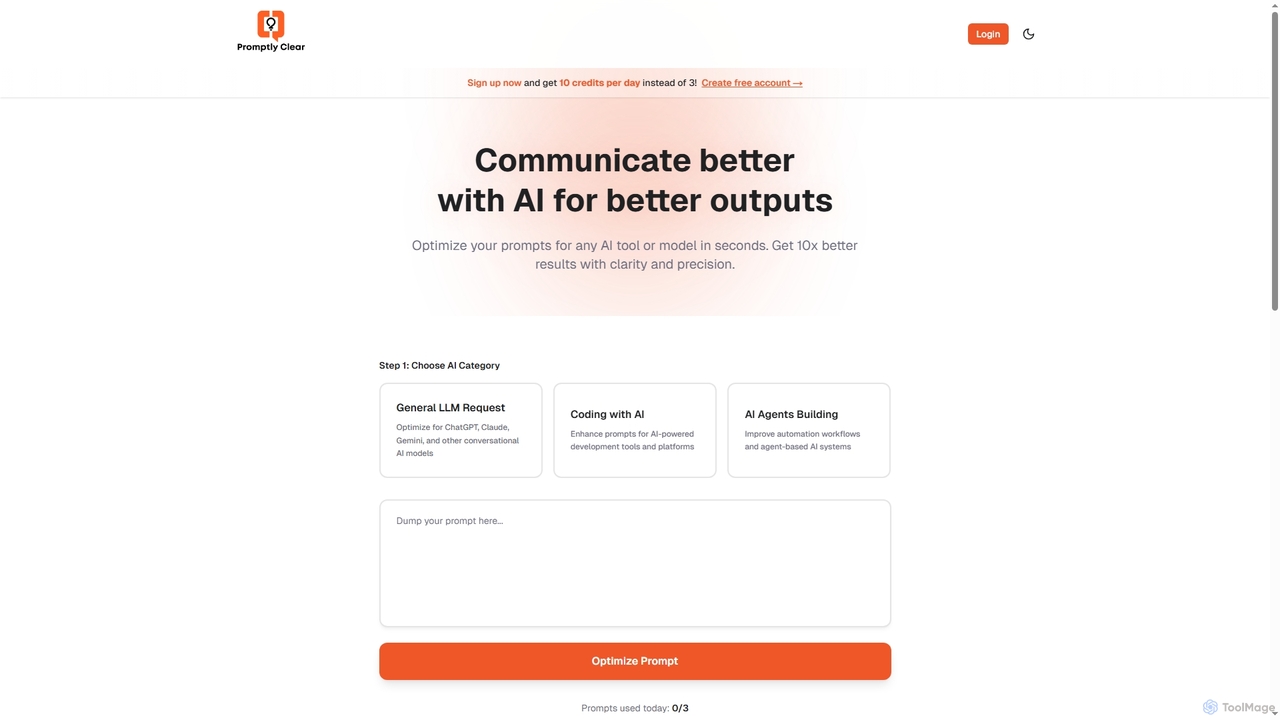
PromptlyClear is an AI prompt optimizer designed to refine user inputs for large language models like ChatGPT, Claude, and Gemini. It enhances clarity and precision, enabling users to achieve significantly better and more detailed AI outputs across various applications, from business research to coding.

Research Assistant
Visits 3.7KFavorites 140Likes 150
MultiLLM

MultiLLM

MultiLLM is a web-based platform designed to provide users with a personal AI assistant experience. It offers a centralized hub to access and manage various AI models, potentially integrating plugins and knowledge bases for enhanced productivity and personalized interactions. Users can sign in via email or Google to leverage its capabilities.

Automation
Visits 3.6KFavorites 118Likes 119
Dank
Freemium

Dank

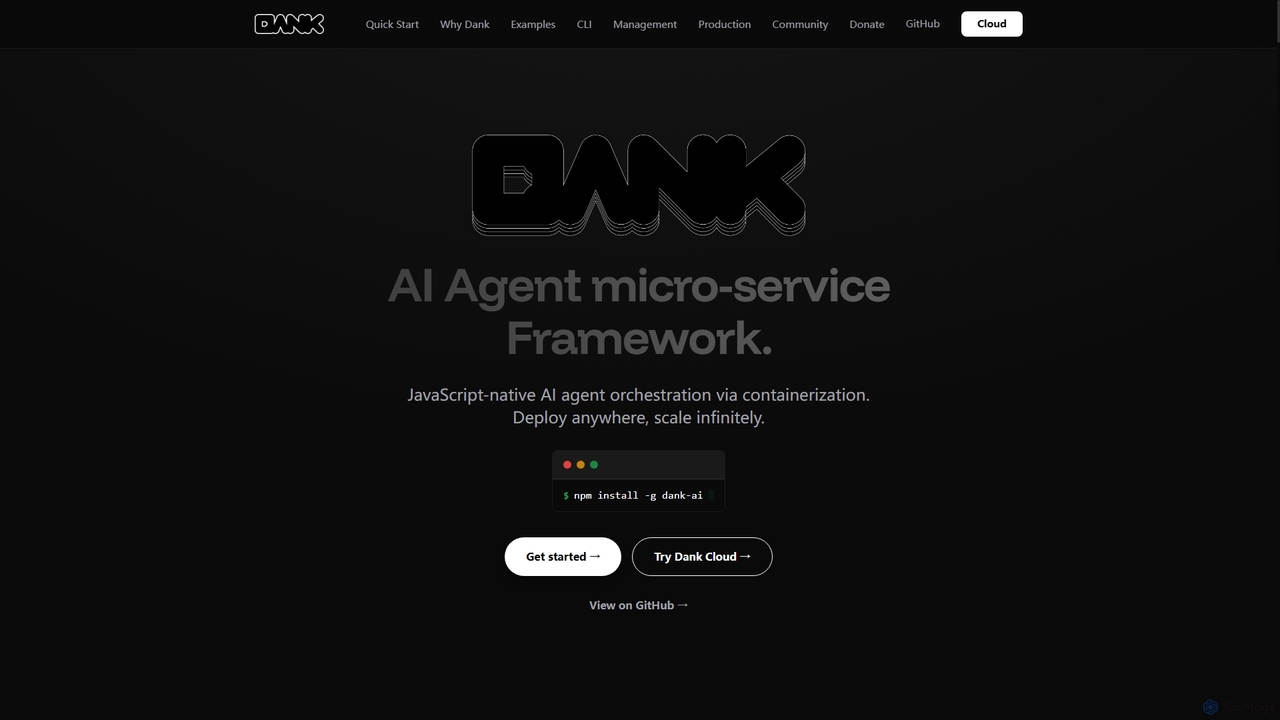
Dank is a JavaScript-native, open-source framework for orchestrating and deploying containerized AI agents. It enables developers to build, manage, and scale multiple AI agents as microservices across any cloud infrastructure, simplifying complex AI deployments with Docker-native architecture and real-time monitoring.

Agent Frameworks
Visits 3.6KFavorites 123Likes 130
Amarsia
Freemium

Amarsia

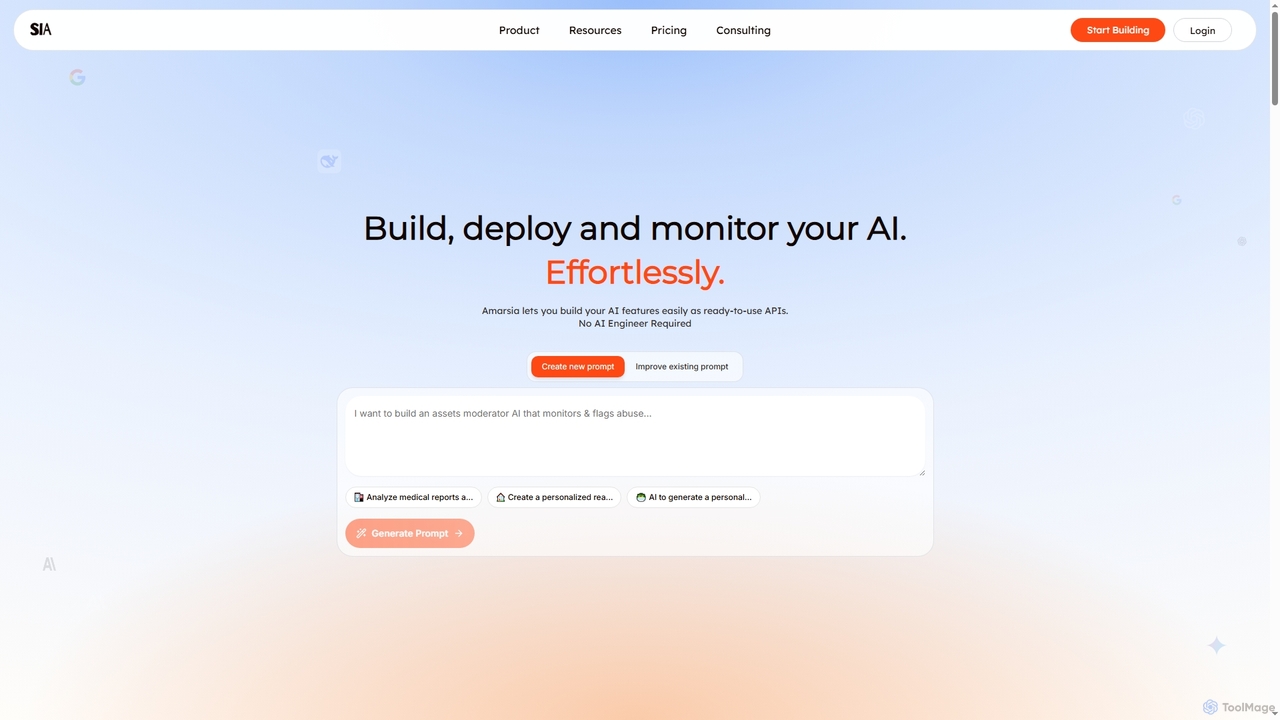
Amarsia is an intuitive platform designed to help teams effortlessly build, deploy, and monitor custom AI features as ready-to-use APIs. It eliminates the need for extensive coding or AI engineering expertise, enabling rapid development of intelligent workflows, knowledge bases, and multimodal AI solutions with built-in version control and performance monitoring.

Workflow Automation
Visits 3.5KFavorites 150Likes 145
AnythingLLM
Freemium

AnythingLLM

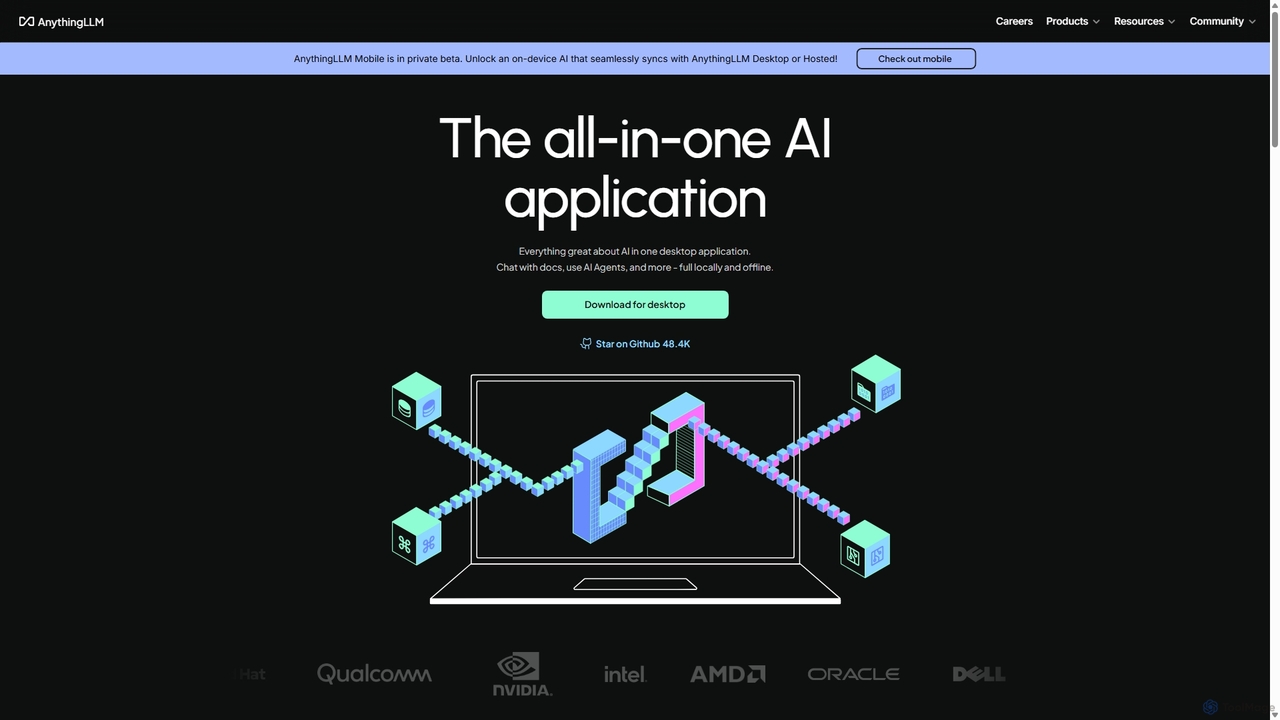
AnythingLLM is an open-source, all-in-one AI application that runs locally on your desktop or can be self-hosted. It allows you to create a private knowledge base from any document, chat with your data, and utilize powerful AI agents while ensuring complete data privacy and control.

Document Management
Visits 80.5KFavorites 108Likes 110
SuperDocs

SuperDocs

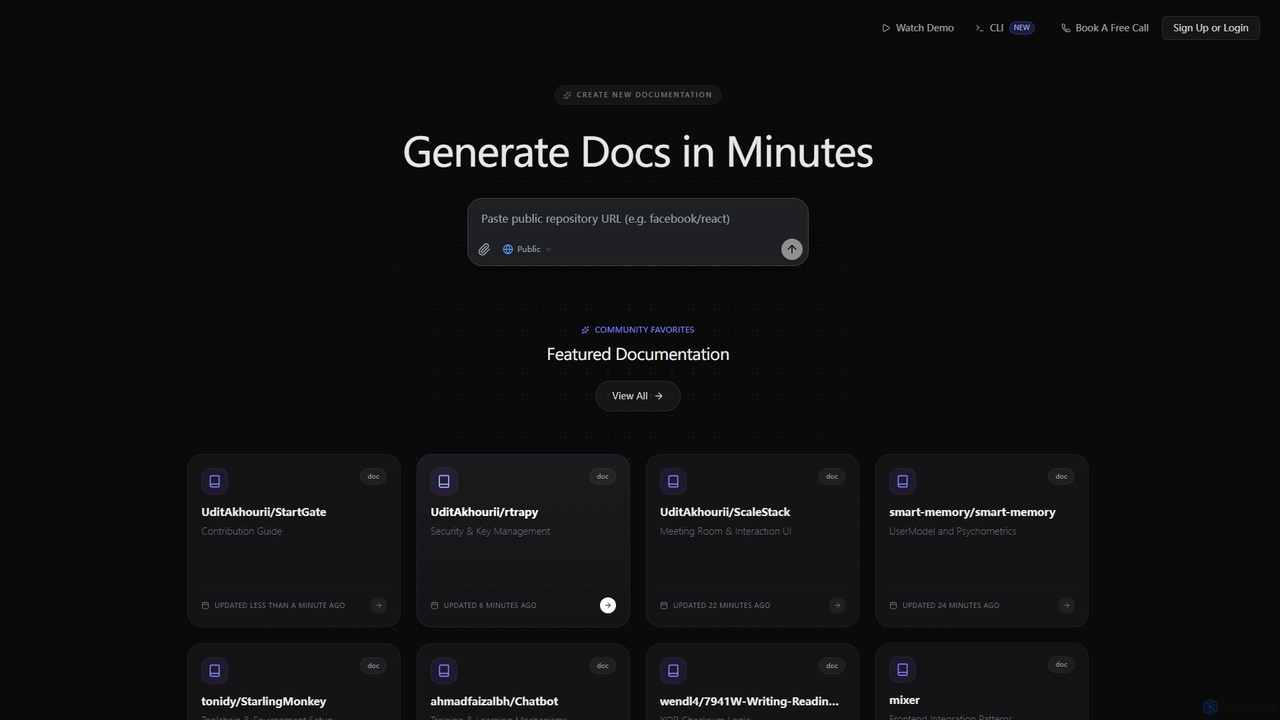
SuperDocs is an AI-powered platform designed to rapidly generate comprehensive and context-aware documentation. It helps developers, teams, and communities create, manage, and explore technical documentation in minutes, featuring an interactive AI assistant for enhanced user experience.

Api Documentation
Visits 5.2KFavorites 16Likes 14
Vaultic
Freemium

Vaultic

Vaultic is a centralized prompt management platform for AI development teams. It enables users to version, test, collaborate on, and deploy AI prompts at scale, eliminating hardcoded prompts and streamlining the entire AI logic workflow from a single, organized interface.

Prompt Management
Visits 4KFavorites 55Likes 60
Markdown Studio
Free

Markdown Studio

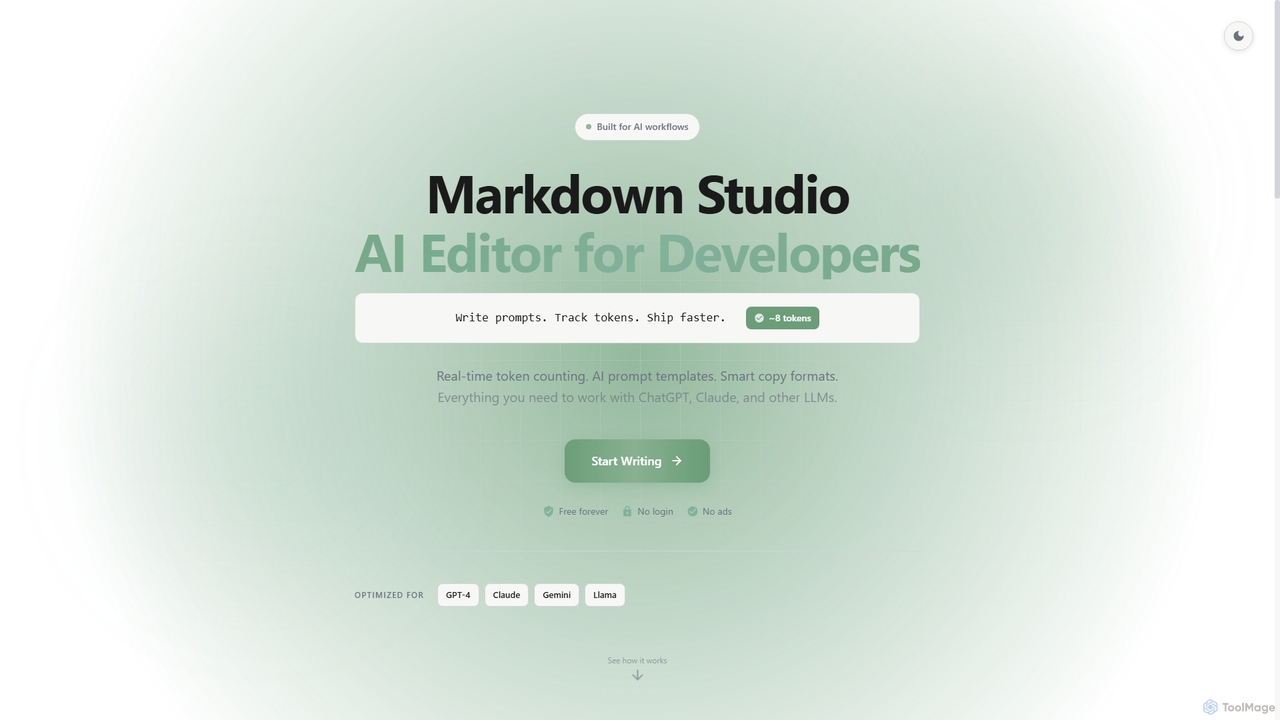
Markdown Studio is a free, AI-powered Markdown editor designed for developers and prompt engineers. It streamlines AI workflows with features like real-time token counting for LLMs (GPT-4, Claude, Gemini), AI prompt templates, and smart copy formats, all within a feature-rich, multi-tab editing environment that requires no login.

Text Generation
Visits 3.7KFavorites 94Likes 93
Omniverse
Freemium

Omniverse

Omniverse is an all-in-one AI-powered productivity platform designed to centralize your workflow. It integrates a powerful writing assistant, task management, knowledge base, and data analysis into a single, intuitive workspace. Streamline your projects, automate repetitive tasks, and unlock new levels of efficiency by leveraging a unified AI that understands the full context of your work.

All In One
Visits 4.3KFavorites 125Likes 121
Slite
Freemium

Slite

Slite is an AI-powered knowledge base and team collaboration tool. It serves as a single source of truth, helping teams organize their documents, share knowledge, and make decisions asynchronously. Its core AI feature, 'Ask', allows users to find answers from across the entire workspace using natural language questions, making information instantly accessible.

Internal Communication
Visits 3.7KFavorites 122Likes 110
Prompttokencounter
Free

Prompttokencounter

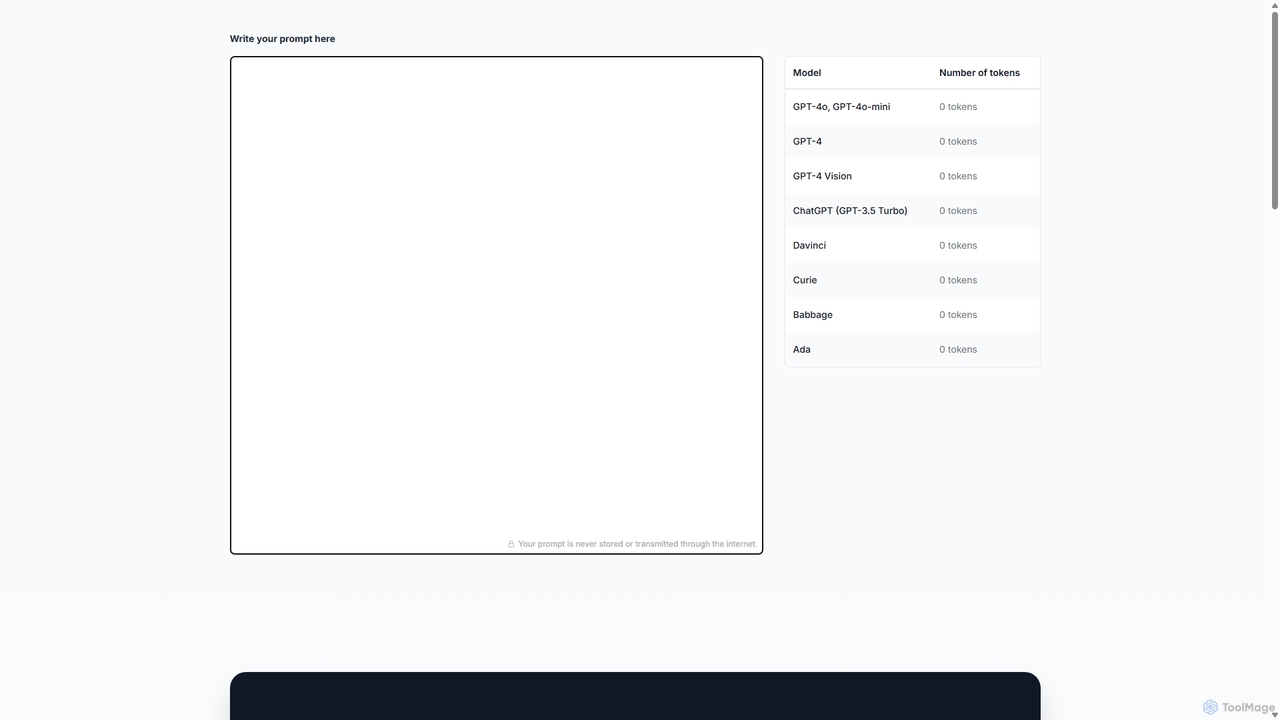
A free, online tool for developers and prompt engineers to accurately count tokens for various OpenAI models like GPT-4o, GPT-4, and GPT-3.5. It helps manage prompt length to stay within model limits, control API costs, and optimize interactions with LLMs. The tool operates entirely in your browser, ensuring your prompts remain private and are never transmitted over the internet.

Text
Visits 13.8KFavorites 128Likes 112